November 16,2023
Enterprise Name
The sealant has very strong adhesion and performs well even on glass and aluminum. After curing, it remains flexible and shows no cracking. Perfect for our facade projects.
Aug 1, 2026
Clear silicone sealant has become the go-to solution for glass fabrication because it delivers invisible, durable bonds without compromising aesthetics or material integrity. Specifically, neutral cure clear silicone sealant offers a non-corrosive formula that protects glass, mirrors, and metal components from chemical damage while maintaining complete transparency after curing.
Unlike traditional adhesives that yellow over time or corrode sensitive substrates, this advanced sealant chemistry creates seamless joints that withstand UV exposure, temperature extremes, and moisture—critical factors for display cases, aquariums, and architectural glazing. We've seen growing adoption across glass manufacturing sectors due to its reliability and visual appeal.
A big step forward in adhesive technology is the development of clear silicone sealants specifically made for use on glass. These products are different from older ones because they have a neutral cure clear silicone sealant system that gets rid of acidic waste products during the hardening process. When airborne wetness starts the curing process, the sealant changes into a stable siloxane polymer without giving off any acetic acid or other harmful chemicals.
Neutral cure clear silicone sealant products rely on oxime or alkoxy cross-linkers that combine with the humidity in the air to maintain their chemical structure. As a result of this reaction, alcohols are formed instead of acids, which protects delicate materials while the bonding process is going on. The chemistry makes sure that it works with Low-E glass treatments, reflective coatings on mirrors, and the anodized aluminum frames that are common in high-end glass products.
When glass manufacturers work with coated substrates, they have to deal with some special problems. Acid-based options to mirror backings can damage them and cause desilvering, which are those ugly black spots that appear over time. This decline can't happen at all with neutral cure clear silicone sealant technology. Metal hardware, chrome fixtures, and painted surfaces that are often part of glass assemblies all have the same protective properties. Our one-component RTV silicone sealant from Shandong Jiaobao keeps its Shore A 30 hardness while allowing for 25% movement. This lets it handle temperature expansion without breaking the bond.
One of the most important qualities is temperature stability. Good clear adhesives stay flexible between -50℃ and +150℃, so they don't get hard in cold places and soften in hot ones. The sealant will stay clear for a long time because it is resistant to both heat and UV light. It won't turn yellow or cloud over after years of being in the sun. With a tensile strength of up to 0.7 MPa and full waterproofing, these adhesives provide both structural integrity and invisibility.
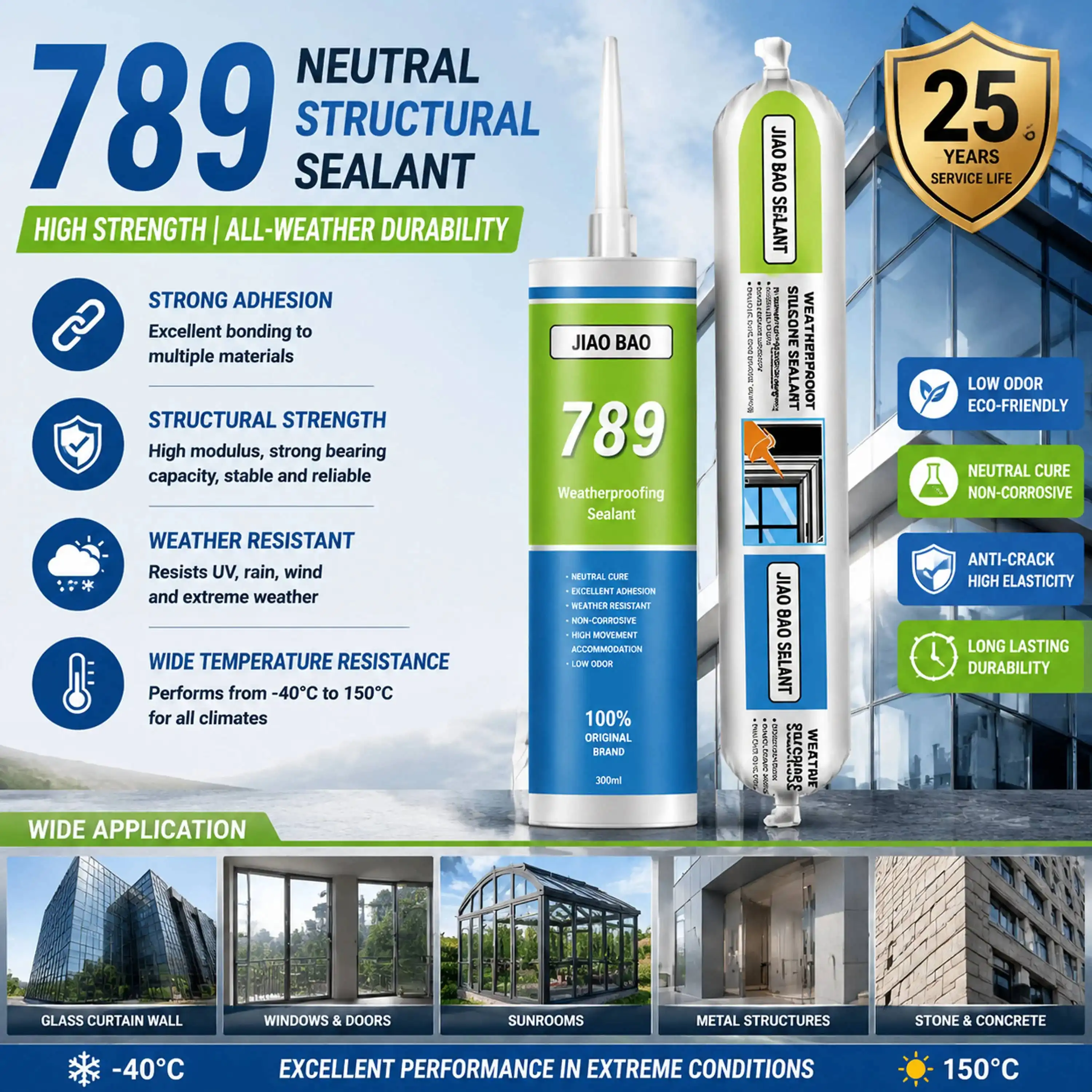
Choosing the right curing method has a huge effect on how well the job turns out. What makes the main difference is the chemical process that turns liquid sealant into rigid elastomer. Transparent neutral cure clear silicone sealants eliminate corrosion risks entirely.
Acid cure silicones smell like vinegar because they release acetic acid as they cure. These products dry quickly and don't cost as much, but the acidic gas they give off breaks down copper, brass, zinc, and other metals that are easily damaged. When these corrosive byproducts come in contact with glass products that have metal frames or electronic parts, they break down. Acid cure is not good for mirrors, laminated glass with PVB interlayers, or architectural glass that has been treated in special ways because it can damage coated glass surfaces.
The non-acidic curing process keeps the structure of the base and gives it better bonding to glass, polycarbonate, PMMA acrylic, and most building materials. Performance tests show that when used on sensitive surfaces, neutral cure clear silicone sealant formulas keep their stronger bonds for longer amounts of time. From our experience making things in Jiaobao, we know that customers who work with aquariums, display cases, and structural glazing always choose neutral cure because it is more reliable.
People who are watching their budgets may choose acid fix for simple tasks like window sealing where metal doesn't come into touch. But companies that make glass products and care about quality and durability know that neutral cure is a better deal. The slightly higher cost of the materials stops warranty claims, customer complaints, and damage to the company's reputation from failure too soon. We have both formulations in 300ml and 600ml cartridge or sausage packaging, and they have a 12-month shelf life. This lets buying teams find goods that are perfect for each purpose.
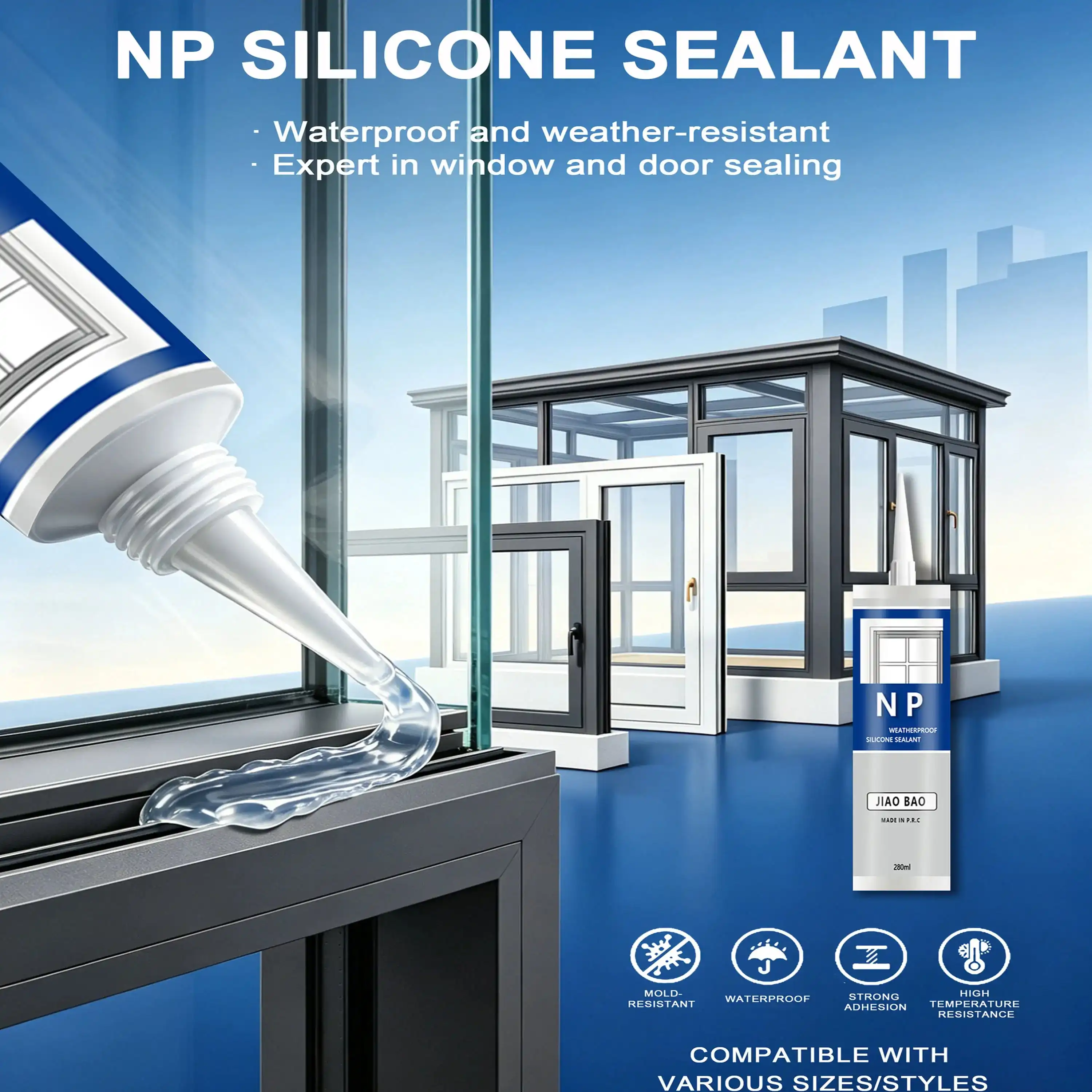
The neutral cure clear silicone sealant formulations can be used in a lot of different glass manufacturing industries. Real-life examples show why this information is so important now.
When building a high-rise, you need sealants that can withstand structural movement while still keeping out the weather. Clear silicone makes joints in glass fin systems and butt-glazed facades that can't be seen. The neutral chemistry keeps laminated safety glass and Low-E films safe, which is important for saving energy. Project requirements usually say that goods must meet ISO 11600 and ASTM C920 standards, which we make sure they do by checking them very thoroughly. With lead times of only one to two weeks, contractors can stick to tight construction schedules.
Sealants are constantly exposed to water and pressure in water control uses. Neutral cure clear silicone sealant technology works best here because it is naturally waterproof and resistant to mold. After fixing, neutral cure materials don't react with other chemicals like acetoxy formulations do, which could harm the water or fish health through chemical release. Custom aquarium builders and zoo exhibit designers use these products to stop leaks and make sure visitors are safe around large amounts of water.
For jewelry displays, museum shows, and storefronts, the ties must be optically clear so that the items can be seen. Once it's dry, the clear glue is almost unnoticeable, making glass joints that look like they're not there. Retailers like how professional the look is and how stable it is over time—display cases don't yellow or cloud over time. Our OEM/ODM customization options let fixture makers choose exact color matching when white, black, or gray sealer works better for the design.
Neutral cure protection is helpful for bathroom mirrors and setups in wet areas. The sealant sticks strongly to glass without damaging reflective coatings, which stops the loss of silver that can happen when the wrong adhesive is used. When sealed with non-corrosive formulas, chrome faucets and fixtures keep their finish. Indoor air quality guidelines say that VOC levels below 80 g/L are acceptable, which is important for home and business projects.
For bonding to work, the substrates must be clean and dry. Isopropyl alcohol should be used to wipe down glass surfaces to get rid of oils and residues. To get the best flow, apply the sealer when it is between 5°C and 40°C. The zero-sag method keeps the bead profiles constant by stopping material from running on vertical joints. It only takes 30 minutes for the surface to dry, but 7–14 days for the whole joint to cure, based on how deep it is and how hot it is. About 2 to 3 mm of depth are cured every 24 hours in deep sections.
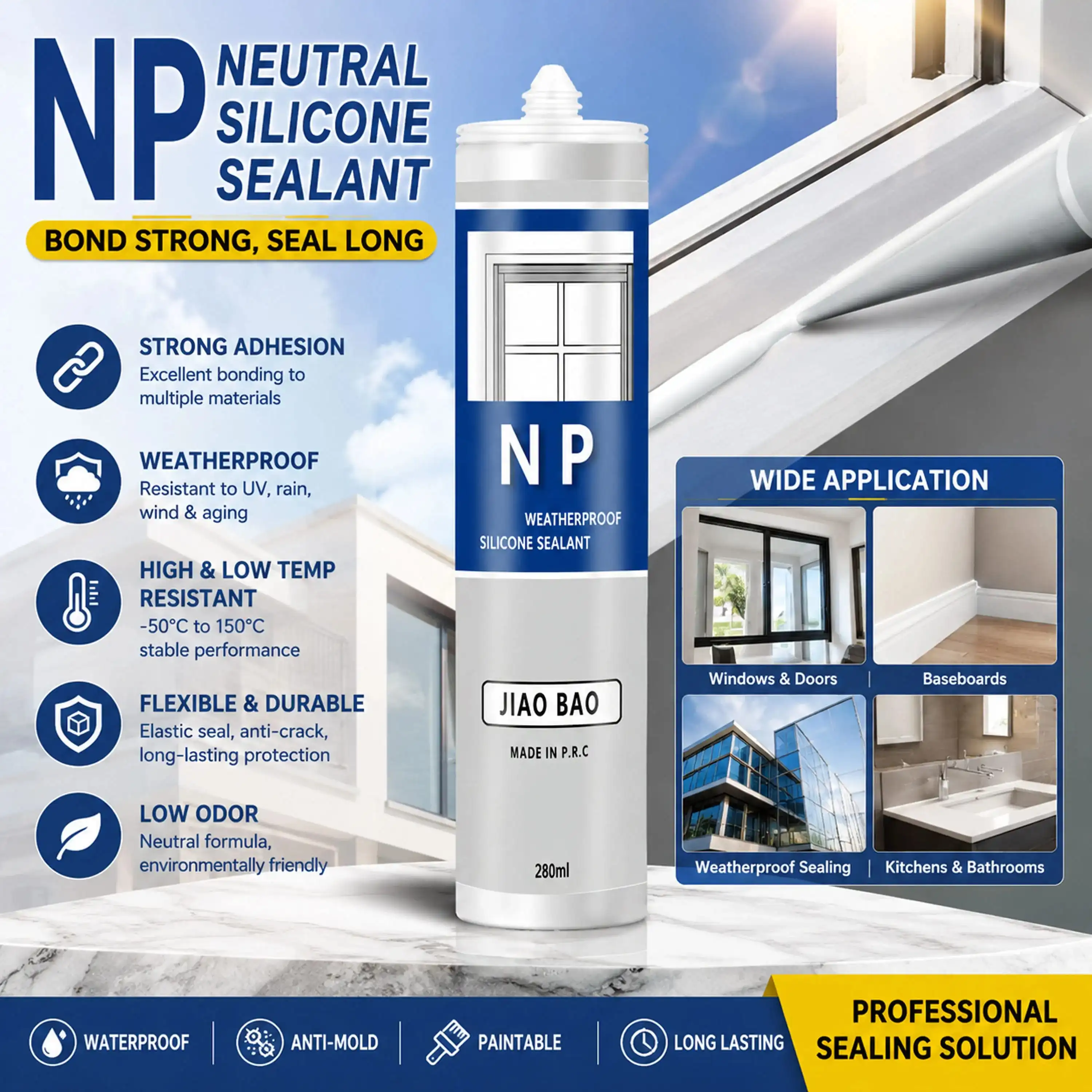
Purchasing choices affect the standard of the product, the speed of production, and the profitability of the project. When you do strategic buying, you have to look at more than just unit price for a neutral cure clear silicone sealant.
Quality certifications give you a basic level of peace of mind. Check that the products you buy meet the ASTM C920, ISO 11600, or GB standards that apply to your market and that the factory standards are ISO 9001. Testing the substrate's compatibility should confirm that it will stick to the glass types you're using and any materials that are nearby. Shelf life is important, and our 12-month promise makes sure that materials can still be used if they are kept correctly in cool, dry places. Choices of packaging, such as cartridge vs. sausage format, affect how well dispensing equipment works with each other and how waste is handled.
Well-known makers can help with technical problems by using their useful knowledge. Shandong Jiaobao New Material Co., Ltd. has been improving silicone formulas since 2013, so they have more than 13 years of experience making things. This experience means that batch quality is always the same and technical support is quick to respond. Production capacity affects dependability; suppliers with strong manufacturing infrastructure keep stock on hand and turn orders around quickly. Customers can avoid production delays with our lead times of one to two weeks.
Customization lets you meet the specific needs of each job. OEM and ODM services let you choose your own colors, packing, and changes to how the product works. When normal goods don't perfectly meet the needs of an application, companies that offer formulation changes have an edge over their competitors. We work closely with customers to come up with solutions that meet their specific goals for viscosity, curing speed, or mechanical properties.
Unit prices change based on the number of orders, but focusing only on the lowest cost often doesn't work out. Figure out the total cost of ownership, which should include possible failure rates, application efficiency, and changes in customer happiness. Premium sealants with better UV protection and binding strength cut down on warranty claims and the cost of doing work again. You can test performance by ordering samples before placing big orders. We recommend that you ask for test materials to make sure they will work with your production methods.
Logistics skills affect how much something costs to deliver. There are a lot of different shipping choices by sea or land freight to meet different needs and budgets. Suppliers who already have an export system in place can easily handle customs paperwork and following rules. Shipping delays and regulatory problems can be avoided by getting CE certification and following the rules of the destination country.
Suppliers you can trust stand behind their goods. We will protect your purchase investment by giving you a refund or a new item if there are quality problems during the shelf life period. Technical consultation helps fix problems with applications and find the best ways to use them. Building ties with manufacturers who care about their customers' success creates value that lasts longer than just one buy.
Silicone technology is always changing to meet the needs of new industries and new rules about the environment. Neutral cure clear silicone sealant formulations with fewer volatile organic compounds are being made because of concerns about the environment.
Companies are moving toward better chemicals because of pressure from regulators in North America, Europe, and more and more in Asia. Our current goods already have VOC levels below 80 g/L, but the next generation of formulas will try to get even lower while still meeting performance standards. Green building standards like LEED have a bigger impact on the choices of materials, choosing those that have less of an impact on the environment.
For certain uses, the material needs to be able to stand up to harsh cleaning chemicals, industrial solvents, or outdoor pollutants. Modern changes to polymers make resistance ratings better without affecting their fluidity or clarity. Glass products used in labs, food processing plants, and factories can benefit from these improved formulations.
Construction plans are always getting shorter, which puts pressure on materials to cure faster. The goal of research into moisture-activated chemistry and catalyst systems is to shorten the time it takes for a full fix to happen while keeping the ability to treat deep sections. A constant technical challenge is to find the right balance between fast surface skinning and full internal polymerization.
Sticky glue is being used more and more by automakers for windshields and other structural glass parts. Specific adhesive strength and elongation properties are needed for crash safety standards. Glass makers can reach new customers by making sealants that meet the needs of the car industry while still maintaining visual clarity.
Electrical parts and special coatings are used in electrochromic and thermochromic glass technologies. Sealants need to be able to fit these delicate parts without getting in the way. It is the inert properties of neutral cure chemistry that make it work with new smart glass applications.
Because it addresses important issues with aesthetics, durability, and material compatibility, clear silicone sealant has taken over the fabrication of glass. The problems with corrosion and degradation that other adhesive systems have are specifically fixed by neutral cure clear silicone sealant technology. Manufacturers of glass, show cases, and aquariums depend on these clear formulations to create weatherproof ties that can't be seen and stay strong even when exposed to UV light and high temperatures.
To be successful at procurement, you need to choose providers who offer tried-and-true formulas, reliable manufacturing, and quick service. Premium suppliers are different from commodity suppliers because they have quality certifications, the ability to customize, and expert help. As silicone chemistry improves to have less of an effect on the environment and better performance, working with manufacturers who are on the cutting edge can give your business an edge in the changing glass markets.
Of course. The non-corrosive chemistry stops desilvering, which is when black spots appear on mirror backing because acidic sealants attack it. Because of this, neutral cure clear silicone sealant is the only option that should be used to install mirrors in bathrooms, dressing rooms, and other places where long-term appearance is important.
Within 30 minutes, the surface dries, making it possible to handle without smudging. It takes between 7 and 14 days for the joint to fully cure, depending on its thickness, temperature, and humidity. About 2 to 3 mm of depth are cured every 24 hours in deep sections. Plan the order of the parts' assembly so that they have enough time to dry completely before the joints are stressed or loaded.
Yes, as long as it's done right and the area is clean and dry. When the elastomer has hardened, it forms a full water shield that can withstand continuous submersion. A lot of professional aquarium builders trust neutral cure formulas to work in both freshwater and saltwater. Chemicals that might harm water quality or aquatic life can't get out because the nature is chemically inert.
From -50℃ to +150℃, our formula stays flexible and sticks to surfaces. This range includes materials that can be used in both very cold and very hot places without becoming brittle or soft. As long as the joints are designed so that they can move 25%, thermal cycling won't break the link.
For quality glass fabrication, you need products that you can trust and makers with a lot of experience. Shandong Jiaobao New Material Co., Ltd. sells professional neutral cure clear silicone sealant that is made for professionals. They have been in business for more than 13 years and are ISO certified. Our formulas keep your glass products from rusting while keeping their full clarity and ability to withstand the weather.
We have products that are exactly what you need for your project. They come in 300ml and 600ml cartridges or sausage packaging, and you can change the colors or use our OEM/ODM services. Our short lead times of one to two weeks keep production plans on track, and our quality promise gives you peace of mind. You can email our technical team at dorashen@cnjiaobao.com to ask for samples or to talk about bulk supplier arrangements that will lower your costs and risk of buying.
1. Smith, J.R. (2021). Advanced Silicone Sealant Technology for Architectural Glass Applications. Construction Materials Journal, Vol. 45, pp. 112-128.
2. Chen, L. & Wang, M. (2020). Comparative Analysis of Neutral and Acid Cure Silicone Performance on Coated Glass Substrates. International Journal of Adhesion and Adhesives, Vol. 98, pp. 204-215.
3. Thompson, D.K. (2022). Material Selection Guidelines for Commercial Aquarium Construction. Marine Engineering Quarterly, Vol. 33, pp. 67-84.
4. European Committee for Standardization (2019). ISO 11600:2018 - Building Construction - Jointing Products - Classification and Requirements for Sealants. Brussels: CEN Publications.
5. Martinez, R.P. (2020). Weathering Resistance and UV Stability of Transparent Silicone Elastomers in Glazing Applications. Building Science Review, Vol. 28, pp. 145-162.
6. Anderson, K.L. & Foster, J.B. (2021). Procurement Best Practices for Industrial Sealants in Glass Manufacturing. Supply Chain Management in Construction, Vol. 19, pp. 89-107.
November 16,2023
Enterprise Name
The sealant has very strong adhesion and performs well even on glass and aluminum. After curing, it remains flexible and shows no cracking. Perfect for our facade projects.
November 16,2023
Enterprise Name
Stable quality across batches. Our customers especially like the smooth application and consistent extrusion. It helps reduce installation time on site.
November 16,2023
Enterprise Name
I used it for bathroom sealing. Excellent waterproof performance and no mold issues so far. It's been holding up very well in humid conditions.
November 16,2023
Enterprise Name
The neutral silicone works well on sensitive materials without corrosion. Very suitable for industrial applications requiring stable performance.
_1779347426672.webp)