November 16,2023
Enterprise Name
The sealant has very strong adhesion and performs well even on glass and aluminum. After curing, it remains flexible and shows no cracking. Perfect for our facade projects.
Aug 1, 2026
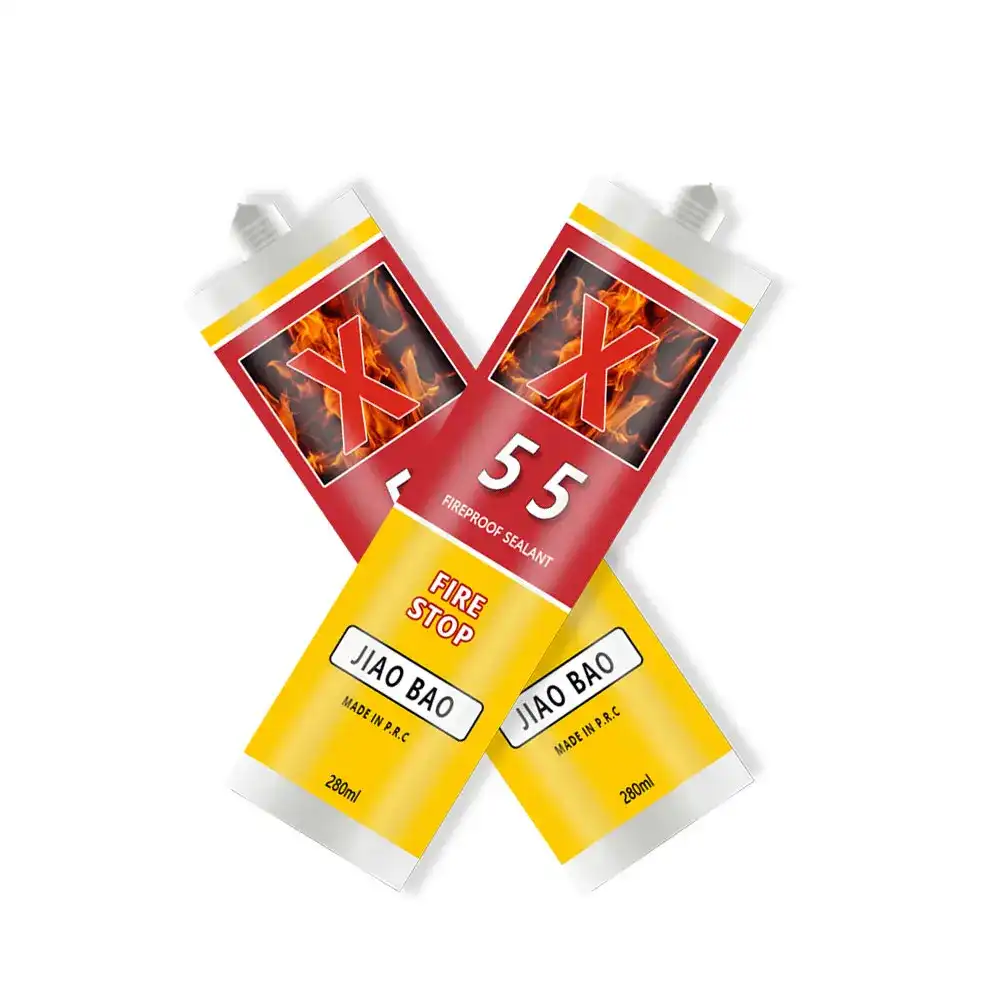
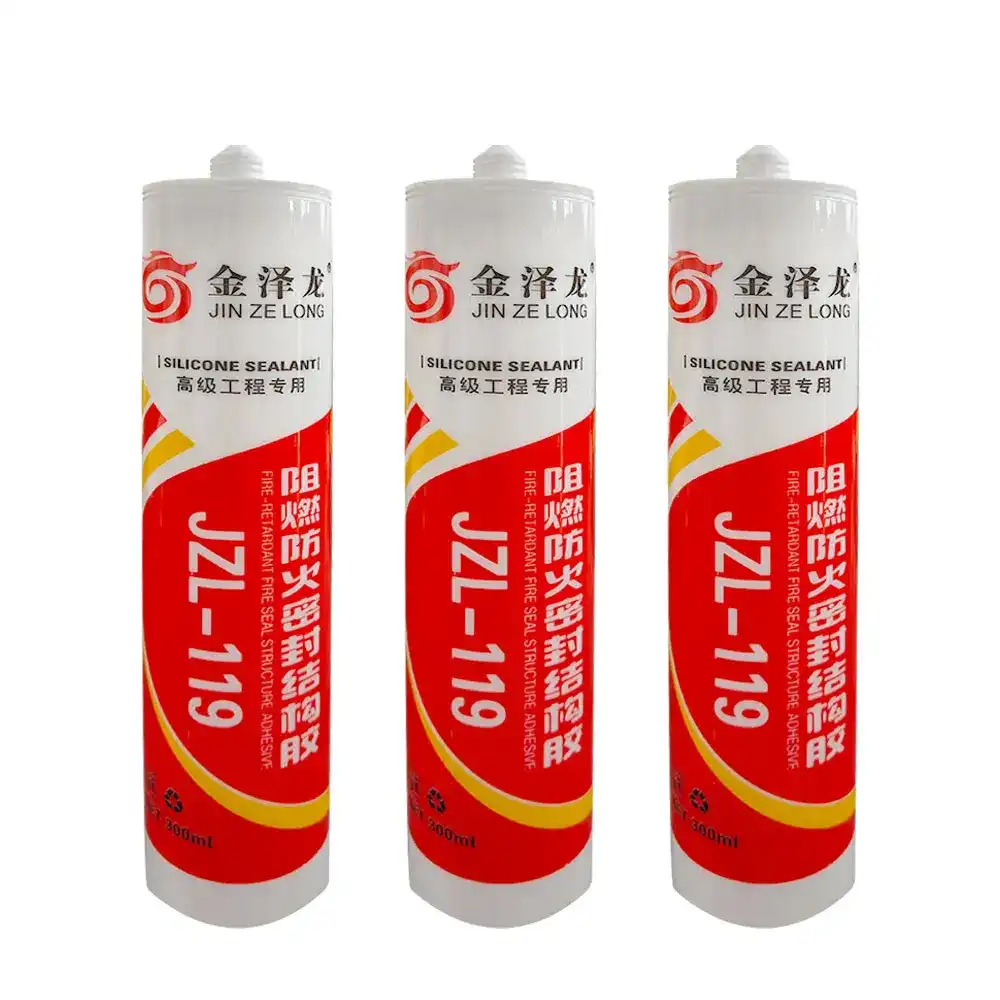
Fire rated silicone sealants deliver essential fire compartmentation by maintaining the integrity of construction joints and penetrations when exposed to flames, smoke, and extreme temperatures. These specialized sealants, like our Fireproof Silicone Sealant Fire Rated from Shandong Jiaobao New Material Co., Ltd., are engineered to resist thermal degradation while forming flexible, durable barriers that prevent fire spread across building compartments. With proven performance metrics including a Class 1 W Rating for water resistance and operational stability from -50℃ to +150℃, our formulation meets stringent international safety benchmarks essential for protecting lives and assets in commercial, industrial, and residential construction.
Fire-rated silicone sealants are a separate type of passive fire safety material that is not the same as regular building sealants. While regular seals deal with keeping out water and preventing joint movement, fire-rated versions are put through a lot of tests to show that they can keep fire and smoke inside for a certain amount of time, usually between one and four hours, based on the certification.
The main difference is how well they have been tested in fire conditions. When temperatures rise, our one-part RTV silicone sealer keeps its sealing strength by creating a char layer that stops air flow and heat transfer. Instead of expanding a lot when heated like intumescent products do, fire-rated silicone stays the same size and shape while blocking flames. Because of this, it is perfect for dynamic joints that will be subjected to changes in temperature, shaking from earthquakes, or wind load stress over the course of their life.
The mixture of high-purity silicone polymers and flame-retardant fillers makes a solid structure that can't be broken down by heat. The glue stays in place in vertical and ceiling uses while it cures because it has 99.5% non-volatile components and doesn't flow or sag. The density of 1.40 ± 0.05 g/m³ makes sure that the surface is evenly covered, and the controlled drying speed of 3 mm per 24 hours makes sure that the cross-linking is done correctly, which makes it stick best to surfaces like metal, glass, concrete, and treated wood.
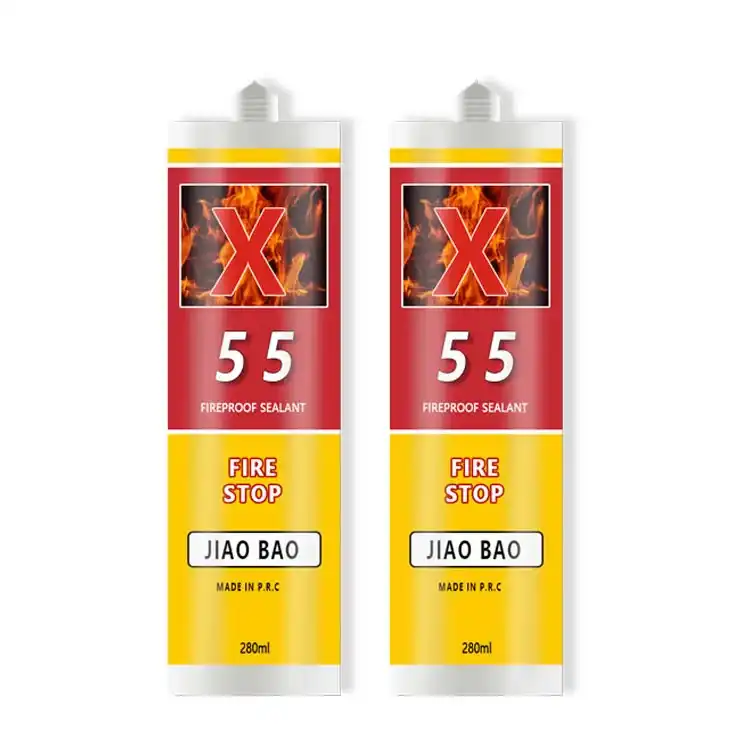
This firestop sealant can be ordered in white, black, gray, or custom colors to match architectural finishes. This way, there are no compromises on appearance in applications that people will see. The product comes in 300ml and 600ml sizes and can be packaged in either sausage or cartridge style. This makes it versatile for a wide range of projects, from small home improvements to large business developments. When stored properly below 27°C, the 12-month shelf life gives you good time to handle your supplies.
To get around the complicated world of fire safety rules, you need to know how certifications protect you in the real world. There are different rules that fire-rated seals have to follow based on the market and type of building.
For products to be sold in Europe, they need to have the CE mark and meet the EN standards that set fire resistance classes (EI grades) based on how well they keep their structure, insulate, and hold weight during a fire. Fireproof Silicone Sealant Fire Rated is commonly specified in such applications, as its performance directly influences these EI classifications.
UL listings and ASTM E814 testing protocols are often used in North American projects to measure F-rating (flame passage prevention) and T-rating (temperature transmission limits). For markets in Eastern Europe and Central Asia, GOST approval and EAC marking show that the product meets the standards of the Eurasian Economic Union. This addresses worries about how well it works in cold weather and how local testing methods are used.
Insurance underwriters, building inspectors, and legal compliance officers look closely at fire safety paperwork during project approvals and audits after the building is finished. Sealants that don't have the right certifications put people at risk of liability and can cause delays in getting occupancy permits, which can cause expensive project overruns. Our factory uses ISO quality management systems and can provide technical documents in multiple languages, such as Safety Data Sheets in both English and Russian. This helps foreign distributors who work with a variety of legal settings.
The temperature range given, from -50℃ to +150℃, covers both very cold areas in the north and hot places like mechanical rooms or near HVAC equipment. This temperature stability keeps the seal from hardening and breaking, which can happen in harsh settings. The 45–60-minute surface drying time and full cure profile help keep installation schedules on track and make sure the sealant fully develops its fire resistance properties before the construction phase moves forward.
To match sealant specifications to project needs, many technical and business factors must be taken into account, as they affect both performance and the efficiency of procurement.
Different parts of a building need different levels of fire safety. In residential construction, door and window edges may need one-hour ratings. In high-rise buildings, curtain wall head-of-wall joints usually need two-hour or more fire resistance to stop fires from spreading from floor to floor. For electrical lines, plumbing pipes, and HVAC ducts that go all the way through, you need firestop systems where the sealant works with backing materials to get tested assembly rates. Knowing these differences helps buying teams choose goods that meet project needs but don't go beyond what's needed, which saves money.
Choosing between fire-rated silicone and other technologies depends on how they will be used and whether they are compatible with the base. In situations where plastic lines will melt in a fire, intumescent acrylic seals are useful because they fill in the gaps left by the burned materials as they expand. However, silicone formulations have better resistance to weathering, UV light, and water, which makes them ideal for use outside and in wet places like bathrooms and mechanical rooms. Because neutral-cure silicones are chemically stable, they also keep metal substrates from rusting, which is very important in data centers and when installing electronic equipment.
When buyers from Eastern Europe and Central Asia look at Chinese companies, they should look at more than just technical specs. With production lead times of one to two weeks, orders can be filled quickly, which lowers the cost of keeping inventory and supports just-in-time shipping plans. Because OEM and ODM are available, wholesalers can make branded product lines that fit the needs of local markets.
Fireproof Silicone Sealant Fire Rated is one such product category where customized color matching and package arrangements can help differentiate offerings, especially given its critical role in fire-safe construction. They can do this by customizing color matching and package arrangements that help them stand out in the market. Letter of Credit and Telegraphic Transfer options for payment, along with well-established logistics networks for both sea and land freight, make it easier to do business across borders and lower the risks of procurement.
The right way to install fire-rated sealants directly affects how well they work in real fires, so knowing how to use them is just as important as choosing the right product.
Clean, dry surfaces allow for the best bonding, which keeps the seal from failing in a fire. Use mechanical cleaning or the right chemicals to get rid of dust, oil, old sealant residue, and small particles. Primers may help with porous bases like concrete, but high-quality silicones usually stick well to properly prepared surfaces without them. Before applying on a large scale, do small-scale adhesion tests on representative substrates. This is especially important when working with metals that have been chemically treated or unusual building materials.
Use the right tools to apply the sealant so that the bead shapes stay the same and no air pockets form. Tool the surface during the working time window to make sure that all of the joint surfaces are touched and to make a smooth finish that lets water run off in outdoor situations. The zero-sagging formula can be used for both horizontal and vertical installations without any slumping. However, proper joint design is still necessary—keeping the depth-to-width ratios between 1:2 and 1:1 makes sure the sealant can accommodate movement without putting too much stress on the bond lines.
Putting sealant on wet surfaces or in places that aren't within the right temperature and humidity ranges makes it less likely to cure and stick. When joints are overfilled, the sealant can't stretch as much when the building moves, which causes unified failure. On the other hand, not enough material leaves gaps that fire and smoke can get through. If you install sealer after its expiration date, it won't cure completely, which makes it less fire resistant. These mistakes can be avoided, which is why it's important to work with experienced installers and follow the manufacturer's instructions to protect your passive fire protection system investment.
Set up regular eye checks of fire-rated sealant joints, especially in places that get a lot of use or are likely to get damaged by machines. Check for cracks, separation, or other physical issues that might make the fire less safe. Buildings in areas that are prone to earthquakes or that are settling a lot may need to be checked more often. If there is damage, it is better to take out the whole piece of damaged material and replace it with new sealant following the original installation steps rather than trying to fix the surface in a way that makes the fire barrier weaker.
Procurement managers can better prioritize requirements and allocate funds when they know where fire-rated silicone offers the most value.
Each floor of a high-rise building has a perimeter fire barrier that stops fires from spreading to the outside. The space between the edge of the floor slab and the curtain wall system makes it easy for flames and smoke to travel up and out of the building. When our Fireproof Silicone Sealant Fire Rated is put in these head-of-wall gaps, it allows the structural frame and the non-load-bearing façade to move apart without affecting the fire integrity. Because it is resistant to weather and UV light, the seal will work for as long as the building does, even if it is constantly exposed to external stress.
Many holes have to be drilled through fire-rated walls and floors for mechanical, electrical, and water systems to work. Each hole or opening is a possible breach in the separation that needs to be properly sealed. Because it is both flexible and stable at high temperatures, the sealant can handle vibrations from HVAC equipment and the growth of metal lines without breaking. The viscosity that doesn't slump is especially useful for uses that are done above, where gravity would normally cause less durable goods to sag before curing, leaving holes in the fire shield.
Aside from commercial construction, fire-rated silicone is also very important in tunnels, petrochemical plants, and power plants, where there is a risk of fire, chemical exposure, and harsh working conditions. The seal is safe in places where there are fuel spills, strict cleaning rules, and constant contact to water because it is hydrophobic and chemically resistant. Because of how demanding these uses are, purchase requirements should look at the whole working environment instead of just fire test ratings.
The fire safety industry keeps growing thanks to stricter rules, concerns about the environment, and the use of new technology.
Demand for low-VOC formulations and goods made with cleaner methods is being driven by government regulations and business environmental promises. Maintaining fire safety is still very important, but when procurement managers compare sources, they look at environmental product declarations and embodied carbon footprints more and more. When companies invest in better ways to make things and longer-lasting ways to get raw materials, they gain a competitive edge in markets where environmental factors are taken into account along with technical performance and cost.
Researchers are still looking into how nanotechnology can be used to improve flame resistance and thermal insulation without making sealants denser or less flexible. Better recipes are meant to increase the temperature range, shorten the curing time so that building can be finished faster, and make it easier for the material to stick to difficult surfaces. These new developments could make it possible for fire-rated silicones to be used in more situations and may also make it possible to use less material to get the same level of protection.
New ideas include passive fire protection systems with sensors that check the quality of the seals and let site managers know when they start to break down before they fail completely. Even though these technologies are still mostly in the testing phase, they show a possible future where fire barriers change from inactive to actively watched parts of complete building safety ecosystems. Purchasing professionals who keep an eye on these trends set themselves up to be the first to use new technologies, which gives them an edge in competitive markets and makes their companies stand out.
When choosing the right fire-rated silicone seals, you have to balance technical performance, legal compliance, and business needs. Products must show that they are fire-resistant through official certifications and have the right physical properties for their intended use and environment. Our Fireproof Silicone Sealant Fire Rated is the result of rigorous testing and practical installation features, along with over 13 years of manufacturing experience. As important as knowing the chemistry of the sealant is for procurement managers working with markets in Eastern Europe and Central Asia; they also need to know about the technical requirements and the business infrastructure that supports international trade. This includes things like paperwork, payment terms, logistics, and certifications.
Fire-rated sealants go through standard tests that check how well they stop fire and smoke from getting through for certain amounts of time. They get certifications like UL listings or EN classifications. Standard fireproof goods may not catch fire, but they don't have official rates that say how long they will work in a fire. To make sure that regulations are followed, the requirements for purchases should call for verified fire ratings instead of general fireproof claims.
Because it can withstand both weather and a wide range of temperatures, our fire-rated silicone can be used in both places. For outside uses, the UV stability and hydrophobic qualities are helpful, and for inside uses, the neutral cure formula keeps sensitive materials from corroding. Because the product can be used for a variety of projects, it makes it easier for wholesalers to keep track of their supplies.
Fire-rated silicone usually keeps working well for decades as long as it is applied correctly to properly prepared structures and kept away from physical damage. Regular inspections find any damage that needs to be fixed. The 12-month shelf life only applies to containers that haven't been opened. Once the material is installed and cured, it has a much longer service life that matches the lifecycles of building components.
Jiaobao is ready to help you meet your fire safety needs by providing you with approved, high-performance fire-rated silicone seals that are made to meet international standards. Our ISO-certified production plant combines strict quality control with OEM/ODM capabilities, which lets us make changes to meet the needs of specific markets. For example, we can match colors, change the way packaging is set up, and provide paperwork in multiple languages. We offer competitive FOB prices that help wholesalers make good profit margins while keeping product quality high enough to meet strict regulatory requirements. We support efficient supply lines for markets in Eastern Europe, Central Asia, and around the world.
Our production lead times are only one to two weeks, and we know how to handle both sea and land freight routes. Contact our export team at dorashen@cnjiaobao.com to get detailed technical data sheets, certification paperwork, and sample products. We'll be happy to talk about how our manufacturing capabilities and commercial flexibility can help you become a more reliable supplier of Fireproof Silicone Sealant Fire Rated in your region.
1. National Fire Protection Association. NFPA 101: Life Safety Code – Requirements for Fire-Resistive Construction and Compartmentation. 2021 Edition.
2. European Committee for Standardization. EN 1366-4: Fire Resistance Tests for Service Installations – Linear Joint Seals. CEN Technical Report, 2020.
3. Underwriters Laboratories. UL 2079: Standard for Tests for Fire Resistance of Building Joint Systems. Updated Testing Protocols, 2019.
4. ASTM International. ASTM E814: Standard Test Method for Fire Tests of Through-Penetration Fire Stops. ASTM Volume 04.07, 2021.
5. Eurasian Economic Commission. Technical Regulation on Fire Safety Requirements – TR EAEU 043/2017. Certification Guidelines for Building Materials, 2018.
6. Fire Protection Research Foundation. Performance-Based Design of Fire-Resistant Sealant Systems in Modern Building Envelopes. Research Report, 2022.
November 16,2023
Enterprise Name
The sealant has very strong adhesion and performs well even on glass and aluminum. After curing, it remains flexible and shows no cracking. Perfect for our facade projects.
November 16,2023
Enterprise Name
Stable quality across batches. Our customers especially like the smooth application and consistent extrusion. It helps reduce installation time on site.
November 16,2023
Enterprise Name
I used it for bathroom sealing. Excellent waterproof performance and no mold issues so far. It's been holding up very well in humid conditions.
November 16,2023
Enterprise Name
The neutral silicone works well on sensitive materials without corrosion. Very suitable for industrial applications requiring stable performance.
_1779347426672.webp)