November 16,2023
Enterprise Name
The sealant has very strong adhesion and performs well even on glass and aluminum. After curing, it remains flexible and shows no cracking. Perfect for our facade projects.
Aug 5, 2026
When choosing between mounting methods for interior installations, the debate between Nail Free Glue for Wall Mounting and traditional screws centers on safety, efficiency, and surface protection. Nail-free adhesive solutions deliver strong bonding without damaging walls—especially critical for rental properties and luxury finishes—while screws offer proven mechanical strength. Both methods suit different installation scenarios, and understanding their specific advantages helps service providers improve client satisfaction while reducing callbacks. Modern adhesive technology now achieves tensile strengths exceeding 2.5 N/mm², making it a viable alternative for most residential and commercial mounting projects.
The way installation workers do their jobs has changed a lot as mounting technology has improved. Screws have been the standard for decades, but Nail Free Glue for Wall Mounting solutions now offer strong alternatives that address long-standing customer concerns about damage to walls.
Modern Nail Free Glue for Wall Mounting uses changed silane polymers that harden when they come into contact with water, making molecular bonds with the surfaces they stick to. Mechanical binding is very different from this chemical process. The glue goes through tiny surface flaws and forms interlocking links that spread stress over the whole bonded area instead of gathering it in a few places. Professional-grade formulas stay flexible even after they've hardened, so they can handle changes in temperature and structure movement without breaking the bond. The moisture-cure feature of these products lets them work well on slightly damp surfaces, which means they can be used in more situations than contact adhesives, which need bases that are completely dry.
Screws cause mechanical interference by threading into wall materials. The holding power comes from friction and material movement. To install something, you need to drill pilot holes in harder substrates, wall anchors in hollow structures, and careful alignment to keep the piece from peeling or cracking. The process makes dust, noise, and holes in the wall that can't be fixed and make it less waterproof. While screws work great for high-load structural uses, they can be difficult to use in finished spaces where looks are important and wall preservation is a top priority for property owners.
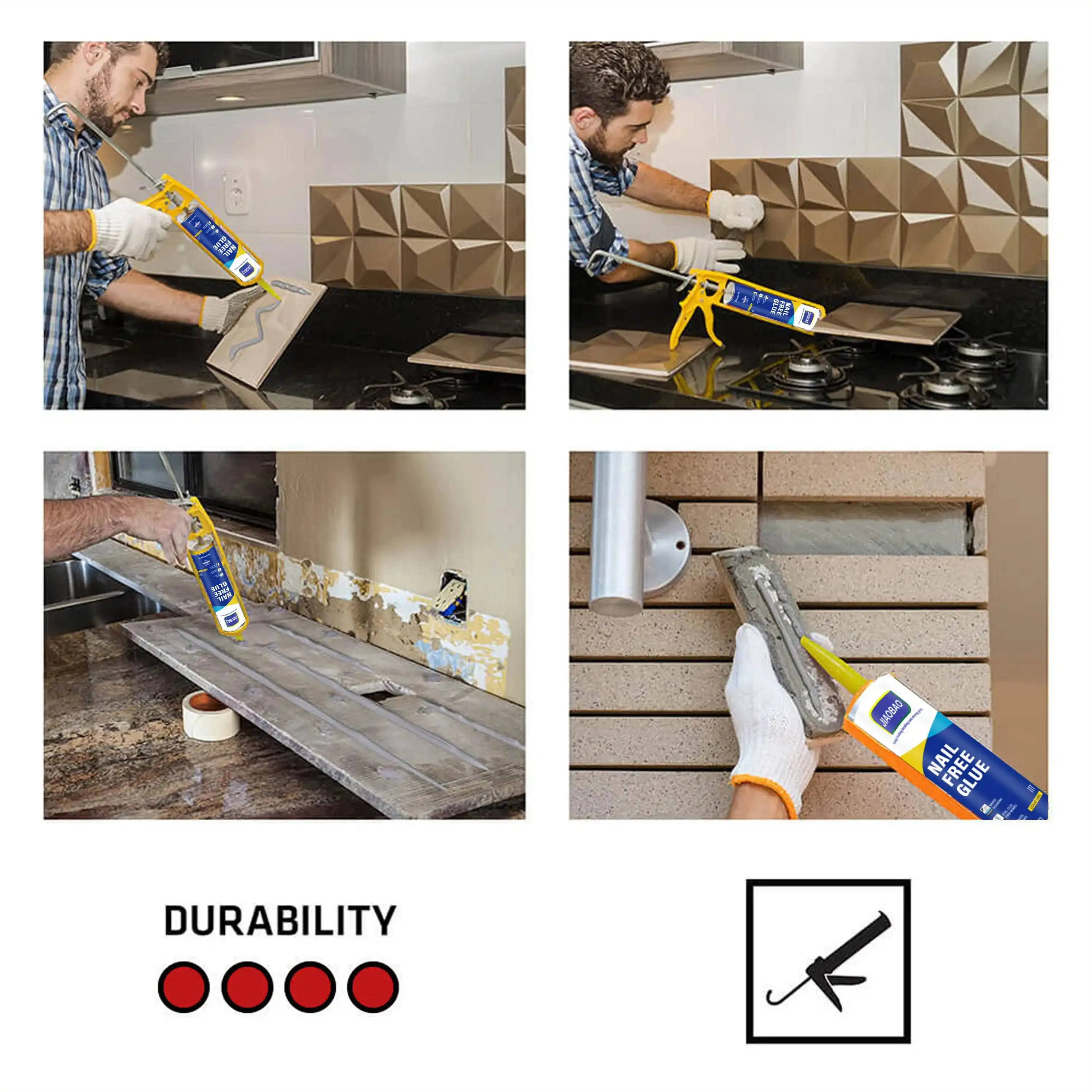
Knowing the practical differences between these mounting methods helps procurement managers make choices that are in line with their clients' needs and the services they offer.
The main thing that stops people from hiring installation services is their fear of damaging the walls. Nail Free Glue for Wall Mounting bonding gets rid of that fear. More and more property owners don't want to drill, especially when the property is rented out and security deposits are at risk. When properly removed, the adhesive application doesn't leave any permanent marks, so the property value and relationships between tenants are kept safe.
The speed of installation goes up by a huge amount because there is no need for pilot drilling, stake placement, or exact alignment—thanks to the holding power of Nail Free Glue for Wall Mounting, which secures fixtures firmly without hardware. A skilled technician can install mirrors or shelves in half the time it takes to use screw-based methods.
The result looks better than mechanical fastening because there is no hardware that can be seen that breaks up the smooth surface lines. This is very important in high-end residential projects and business places where design integrity has a direct effect on how good something is seen to be. Adhesive solutions also stop common installation mistakes like cutting holes in the tile and breaking the concrete around the anchor points. The stretchy nature of the cured Nail Free Glue for Wall Mounting lets vibrations and impacts go through without stressing out screw connections that are too rigid.
Structural loads that are heavy still favor mechanical fixing. Direct load path screws are good for things that weigh more than 20 kilograms or are subject to dynamic forces, like pull-up bars or heavy cabinets. The quick full-strength link lets you use it right away, without having to wait for it to cure. Screw fixing may also be appropriate for outdoor uses that are subject to extreme weather changes, but high-performance sealants are now challenging this traditional belief.
Screws are easy to adjust during installation, so you can fine-tune the position before tightening them all the way. With mechanical connections, it's easy to take them off and put them back on, but with sticky bonds, you have to carefully take them off. In service situations where the equipment needs to be moved around a lot or installed temporarily, the wall entry trade-off may be worth it.

The cost of the product isn't the only thing that goes into strategic buying choices. Labor efficiency, customer satisfaction, and risk management are also important.
It might look like Nail Free Glue for Wall Mounting costs more per job than individual screws, but when you add up all the costs, you see a different picture. Getting rid of drilling equipment cuts down on the number of tools needed and the cost of maintenance. Saving time on installation directly leads to more work being done each day, which increases revenue per technician. Callbacks from failed installations or customers complaining about wall damage will go down, which will save money on warranties and protect the value of the company's image. Buying cartridge-based adhesives in bulk makes keeping track of goods easier than keeping different screw sizes and anchor types for different kinds of wall materials.
In competitive markets, service companies stand out by offering Nail Free Glue for Wall Mounting choices. Rental property managers and high-end homeowners are especially interested in installation methods that don't damage the property. Being able to promise damage-free mounting justifies charging more for the service while lowering your risk of being sued. Modern formulas stick well to painted drywall, ceramic tile, natural stone, glass, metal, and sealed wood. This means you don't have to worry about choosing the right anchors and screws for each material.
Standardizing on tried-and-true adhesives that work the same way on all job sites is good for professional installation companies. When suppliers are reliable and offer technical support, certified testing data, and fast delivery, they stop being just transactional vendors and become strategic partners. Certifications like ISO compliance and low-VOC formulas meet the needs of business buildings with stricter requirements and consumers who care about their health.

The success of a Nail Free Glue for Wall Mounting depends on how it is applied, so standard methods are necessary to ensure quality.
For best adhesion, surfaces should be clean and dry. Use isopropyl alcohol or the right cleaners to get rid of dust, grease, and loose paint. If you want to improve mechanical bonding, you may need to lightly sand glossy tiles with fine sandpaper. When you put primer on porous surfaces like unsealed concrete, it stabilizes the base and stops the adhesive from absorbing too much. Temperature is very important. Both the Nail Free Glue for Wall Mounting and the substrate should be within the 5°C to 35°C temperature range that makers specify for building.
Instead of continuous beads, give out the Nail Free Glue for Wall Mounting in vertical strips or dot patterns. This design keeps enough touch area while still letting wetness in, which is needed for proper curing. Depending on the size of the beads, a 300ml cartridge can cover 8 to 12 linear meters. When adhesive patterns match the object's weight distribution, load distribution gets better. Heavier items need denser coverage. To make sure there is full contact, press down hard on the fixed item. If you need to, use temporary support during the first part of curing.
Under normal conditions, the skin grows on the surface in 20 minutes, but it takes at least 24 hours for Nail Free Glue for Wall Mounting to be strong enough to use. After 48 to 72 hours, based on the humidity level and glue thickness, the structure is fully formed. Load testing protocols that check adhesion before the final client handover are helpful for professional installations—especially when using Nail Free Glue for Wall Mounting, as gradual load application finds any bonding problems before the items are put to use. This keeps mistakes that hurt property and image from happening.
Besides the usual glues and screws, there are many other mounting solutions available, each with its own set of benefits. Double-sided mounting tapes are useful for small, light items that weigh less than 2 kg, but they aren't as strong or good at filling gaps as building Nail Free Glue for Wall Mounting.
Removable mounting putty works for short-term displays and holiday decorations, but it doesn't hold up well to heavy loads or changes in temperature. Command strips made damage-free hanging popular for home use, but they can't match the load capacity or professional look needed for business installs. Magnetic mounting systems can only be used with ferrous surfaces and objects that are compatible, which limits how widely they can be used.
Construction-grade Nail Free Glue for Wall Mounting is in between short-term fixes and long-term mechanical fixing. They can handle rough surfaces that tape products can't, and their strength is as good as or better than that of light-duty screw uses. It is much better than rigid mechanical connections to be able to bond different materials together, like metal brackets to ceramic tile, without worrying about galvanic corrosion or differences in thermal expansion.
As Nail Free Glue for Wall Mounting technology improves to the point where it can match or beat standard mechanical fastening in most home and light business settings, the mounting solution market has changed a lot. Service providers who know how to use both ways can meet the needs of a wide range of clients and gain a competitive edge by being able to put things without damaging them.
Instead of just looking at material unit prices, the decision process should take into account the load needs, the state of the base, the importance of aesthetics, and the total cost of installation. As more and more property owners care about keeping walls in good shape and installing things in a clean way, adhesive mounting solutions will continue to grow their market share over traditional drilling and fastening methods.
Good modified silane polymer Nail Free Glue for Wall Mounting stick to glazed ceramic and porcelain tiles strongly, without the risk of cracking that comes with drilling. The stretchy features allow for the different ways that glass and tile expand and contract. For mirrors, you need neutral-cure formulas that won't damage the reflective backing; check the product specs before you use it. In a humid bathroom, give the glue more time to cure, usually 48 to 72 hours, before taking off the temporary support.
The size of the load is the most important factor in making a choice. Static loads of less than 15 kilograms per fixing point work well with Nail Free Glue for Wall Mounting solutions. Heavy or moving loads of more than 20 kilograms should use mechanical fastening or a combination of the two. Also, think about the base material, how long the work needs to last, and what the client wants the wall penetration to be. Adhesive mounting is usually best for rental properties and finished luxury spaces.
Once they are fully cured, good Nail Free Glue for Wall Mounting stays strong at temperatures ranging from -40°C to 80°C. Temperatures between 5°C and 35°C should be present during treatment to make sure proper drying. When it's cold, the rate at which moisture cures slows down. This makes it take longer to reach functional strength. Do not apply in direct sunlight or very hot temperatures, as this can cause the skin to form too quickly and trap the uncured material.
For 13 years, Shandong Jiaobao New Material Co., Ltd. has been a leader in the production of high-quality Nail Free Glue for Wall Mounting solutions. With a tensile strength of 2.5 N/mm² and a stretch at break of 300%, our one-component, moisture-cure recipe performs professionally and was made for tough installation tasks. Our goods have a 12-month shelf life and come in 300ml and 600ml packs in white, black, gray, or unique colors. They can bond wood, metal, ceramic, glass, and concrete without damaging the surface.
We help installation service providers by offering ISO-certified quality control, flexible OEM/ODM customization, fast delivery times of 1-2 weeks, and full after-sales support, including guarantees for replacements if there are any quality problems. If procurement managers are looking for a reliable adhesive mounting supplier, they can email our technical team at dorashen@cnjiaobao.com to talk about bulk buying, testing samples, or formulating products that are specifically made for their needs. Visit shandongjiaobao.com to see all of our products and learn how our mounting solutions can help your installation services stand out while also making them more efficient.
1. Chen, M., & Rodriguez, P. (2021). Comparative Analysis of Adhesive and Mechanical Fastening Systems in Modern Construction. Journal of Building Engineering, 44, 102-118.
2. International Standards Organization. (2020). ISO 37:2020 - Rubber, Vulcanized or Thermoplastic - Determination of Tensile Stress-Strain Properties. Geneva: ISO Publications.
3. Kumar, S., & Thompson, L. (2022). Modified Silane Polymer Technology: Applications in Construction Adhesives. Polymer Science and Technology Review, 18(3), 245-267.
4. National Association of Home Builders Research Center. (2023). Installation Methods and Consumer Preferences in Residential Remodeling. Washington: NAHB Publications.
5. Patterson, D., & Yoshida, K. (2021). Load-Bearing Capacity of Adhesive Mounting Systems Versus Traditional Fasteners. Structural Engineering International, 31(2), 176-189.
6. Williams, R., & Garcia, E. (2023). Economic Analysis of Installation Methods in Commercial Interior Fit-Outs. Construction Management and Economics, 41(1), 55-73.
November 16,2023
Enterprise Name
The sealant has very strong adhesion and performs well even on glass and aluminum. After curing, it remains flexible and shows no cracking. Perfect for our facade projects.
November 16,2023
Enterprise Name
Stable quality across batches. Our customers especially like the smooth application and consistent extrusion. It helps reduce installation time on site.
November 16,2023
Enterprise Name
I used it for bathroom sealing. Excellent waterproof performance and no mold issues so far. It's been holding up very well in humid conditions.
November 16,2023
Enterprise Name
The neutral silicone works well on sensitive materials without corrosion. Very suitable for industrial applications requiring stable performance.
_1779347426672.webp)