November 16,2023
Enterprise Name
The sealant has very strong adhesion and performs well even on glass and aluminum. After curing, it remains flexible and shows no cracking. Perfect for our facade projects.
Sep 9, 2026
When choosing construction adhesives for industrial applications, procurement professionals often face a critical question: should you select solvent-free or solvent-based formulations? For bonding wood to metal without mechanical fasteners, Nail Free Glue for Wood & Metal offers both options, yet the choice directly impacts performance, compliance, and workplace safety.
Solvent-free variants, particularly modified silane polymer adhesives, deliver exceptional bonding strength while eliminating volatile organic compound (VOC) emissions, making them ideal for enclosed manufacturing environments. Solvent-based alternatives provide faster initial tack but present regulatory and health challenges that complicate their use in modern production facilities.
Construction adhesive made for bonding metal to wood has changed the way furniture is made, cabinets are put together, and architectural joinery is put together. Instead of traditional mechanical fasteners that need to be drilled in and can damage the base, these special adhesives make bonds that don't show any seams and spread stress evenly across the joint.
Modified silane polymer technology is a big step forward in the science of adhesives. These mixtures harden when they come in contact with water instead of the liquid evaporating. This makes bonds that are strong but flexible enough to handle the different rates of temperature expansion between metal and wood. The glue's science lets it stay strong at temperatures ranging from -40°C to 80°C, which is very important for uses that are subject to changing weather or industrial heating processes.
Our one-component paste adhesive has a stabilized consistency that keeps it from sagging on vertical surfaces, which is a problem that often happens when attaching metal wall fixtures to wooden structures. The bond can withstand 2.5 N/mm² of tension and 300% elongation at break. It also doesn't delaminate when there are vibrations or small movements, making it better than hard epoxy systems in dynamic load situations.
When you use mechanical fasteners, they create stress points that can split wood fibers or bend thin metal sheets. When you drill through pre-finished surfaces, you break the protection coatings and make it more likely for water to get in. Adhesive bonding gets rid of these worries and gives you a number of practical benefits as well. When workers don't have to match pilot holes or deal with different sizes of fasteners, installation time goes down by a lot. The fact that there are no visible fixings meets architectural standards for high-end commercial interiors that look clean and modern.
The surface dries in about 20 minutes, which lets you move things around while putting it together, and the curing speed of 2.5 mm per 24 hours lets you build in stages without having to wait for long periods of time. This controlled healing device is very useful on production lines where parts have to move through workstations in a certain order.
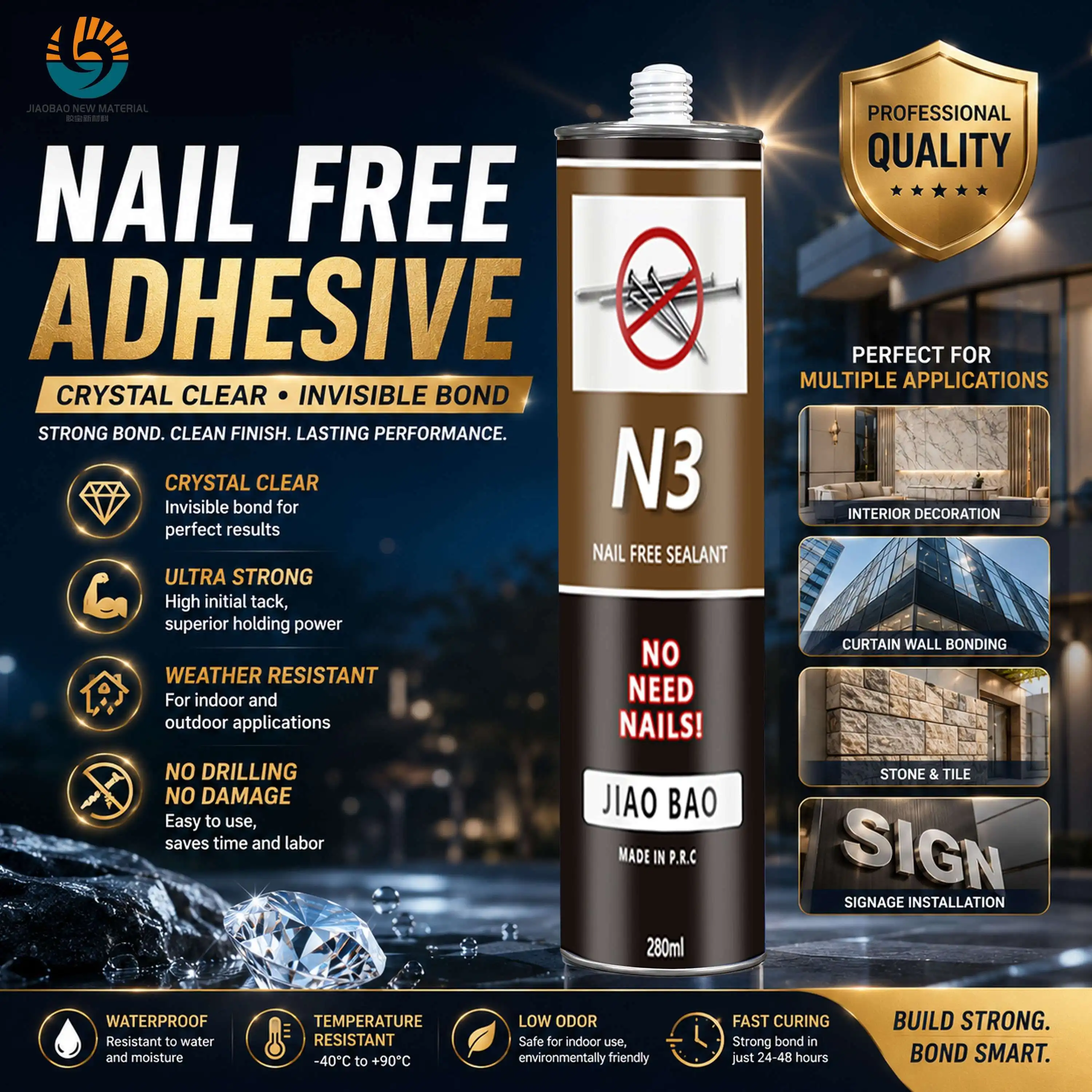
When procurement teams know the main differences between these types of adhesive, they can choose products that meet both operational needs and legal requirements.
Adhesives that are built on solvents use volatile carriers that disappear, leaving the joining polymer behind. This melting process happens quickly, giving the material a strong initial grab strength that workers who are working with heavy parts like. Synthetic rubber compounds are usually dissolved in petroleum distillates or ketone solvents for the chemistry.
Modified silane polymers that don't use solvents heal through an atmospheric moisture reaction, which starts on the top and works its way inside. This moisture-cure process doesn't make any harmful chemicals and makes ties that last longer than most. The polymer chains connect with each other to make an elastic matrix that stays flexible for as long as the glue is used.
When used to join common furniture-grade materials like MDF to aluminum extrusions, fully cured modified silane adhesives consistently have shear strengths higher than 2.5 N/mm². A hardness grade of 50 Shore A means that the material is somewhat rigid and can move loads well while also absorbing impact energy. For example, you can use this balanced profile to mount cabinet doors or put metal stair nosing on wooden treads. Nail Free Glue for Wood & Metal is a perfect fit for such applications, as its formulation delivers the required shear performance and impact resistance across these mixed-material joints.
Solvent-based products have faster handling strength, which means that workers can release clamping pressure in minutes instead of hours. This benefit isn't as useful in production settings where automatic filling equipment with built-in clamping systems that keep pressure up during the initial curing stages is used. The trade-off is in how long the bond will last. Solvent formulations are often less resistant to thermal cycling and UV degradation than silane polymer alternatives.
VOC fumes from solvent-based sealants cause strict exposure limits in the workplace, as required by OSHA and EPA rules. Facilities must install better air systems, give workers personal protective equipment, and keep thorough safety data sheets that all workers can view. These rules make things more expensive to run and make it harder for ISO-certified manufacturers to keep track of their compliance paperwork.
These worries go away completely with solvent-free formulations. Because they don't contain any VOCs, modified silane adhesives help green building projects get LEED certification and are in line with the EU's stricter chemical rules. The lack of flammable liquids lowers the cost of fire insurance and makes it easier to store dangerous materials.
Whether an adhesive bond meets its ideal performance standards or breaks early under service loads depends on how it was applied.
On metal surfaces, you need to get rid of all mill scale, rust, and protection oils that keep the glue from sticking. The best surface energy for bonding is reached by rubbing with 80-grit sandpaper and then wiping with isopropyl alcohol. At the time of bonding, wood surfaces should have a moisture level of 8 to 12% so that they don't shrink too much and put stress on the cured joint.
The final bond strength and how fast it cures are directly related to the temperature. Applying adhesive between 5°C and 35°C, which is the recommended temperature range for construction, lets the adhesive get the right amount of moisture during the curing process. Extremely low temperatures (below 5°C) make curing much slower, and too much heat can cause the surface to skin before enough material has been transferred.
Spreading adhesive in continuous beads instead of random dots increases the contact area and makes the stress more evenly distributed. For metal-to-wood ties that are likely to come apart, using adhesive in a serpentine design instead of parallel beads makes the bond stronger. Standard caulking guns can be used to accurately place beads because the stable paste consistency comes in 300ml and 600ml packs.
The clamping pressure should be just right to make the glue layer 1-2 mm thick without squeezing it out too much. This controlled thickness makes sure that enough water can get through for the glue to fully dry, while still keeping enough sticky mass to fill in small surface imperfections. Before letting go of the fixings, keep them clamped for at least 30 minutes so that the surface can cure and become stronger.
When an adhesive fails to stick together, it means that the surface was properly prepared, but there may not have been enough time for the adhesive to cure before it was loaded. When an adhesive fails and comes cleanly off of one base, it means that the surface is contaminated or not properly prepared.
If the wood fibers tear before the glue does, the joint is working perfectly, showing that the adhesive was stronger than the base. Nail Free Glue for Wood & Metal follows this same principle: when used correctly, its bond will outlast the substrate, and any failure mode you observe will reliably tell you exactly what went wrong with preparation or curing time.
If bonds don't get as strong as expected, check the humidity levels in the air while they cure. When relative humidity is less than 30%, moisture-curing glue fix much more slowly. Surfaces may need to be lightly misted before they can be put together. On the other hand, too much humidity can cause thick adhesive beads to bubble on the surface, which means that the beads' dimensions need to be changed.
When making procurement decisions, people weigh the needs for technical performance against factors like cost and supplier reliability that have an effect on the long-term efficiency of operations.
When cabinet makers glue metal handles to wooden doors, they make sure that the doors are strong enough to be handled quickly and that the color matches the finished surfaces. The fact that it comes in white, black, gray, and unique colors makes it easy to fit into a wide range of design schemes. When it comes to bathroom cabinets and outdoor furniture that is constantly exposed to water, waterproofing is very important.
When installing metal frames on wooden bases, they need to be as strong as possible and be able to handle high temperatures. Operating temperature ranges from -40°C to 80°C allow for use in both cold storage facilities and places where heating equipment is nearby. The shelf life of 12 months makes it easier for distributors to keep track of their stock across multiple warehouses.
Quality assurance includes more than just product specifications. It also includes how the supplier makes the product and the paperwork that shows they are following the rules. ISO approval shows that quality management is organized, and CE marking shows that the product meets European health and safety standards. Technical data sheets should have a lot of information about how to test for lap shear strength, how to make sure the material can handle temperature cycles, and how well it reacts with chemicals in common substrates.
Production lead times have a direct effect on how schedule projects and how much it costs to keep supplies on hand. Just-in-time purchasing strategies that cut down on storage needs are possible with suppliers who offer delivery windows of one to two weeks. Logistics choices that are flexible, such as sea freight for big orders and fast land shipping for urgent needs, make operations more adaptable.
OEM and ODM features let furniture brands choose their own special formulas or make color-matched glues that help keep the brand's personality across all of their products. Customization of packaging includes both sausage packs for pneumatic dispensing systems and capsules for hand application, so it can work with a range of production methods.
Premium suppliers are different from commodity sellers because they offer full after-sales help. Having access to technical advisors who can help with application problems keeps production from being held up, which costs a lot of money. Budgets for buying things are kept safe from sudden losses by quality guaranty policies that offer refunds or replacements for broken items within the shelf life period.
Nail Free Glue for Wood & Metal is a prime example of such premium-supplier offerings, as its technical support team can guide you on optimal curing times and surface preparation, while its robust quality guarantee ensures that any bonding defects within the shelf life are fully covered, protecting your procurement budget from unexpected write-offs.
As the market changes and rules about safety at work and protecting the environment get stricter, innovation in adhesive technology keeps speeding up.
The goal of research into bio-based polymer precursors is to reduce reliance on raw materials that come from oil while keeping performance levels the same. Early versions using changed plant oils look promising for uses that need a reasonable amount of strength and flexibility. However, synthetic polymer chemistry is still needed for effective high-load structural bonding.
As circular economy ideas catch on in the furniture and building industries, they are now used to guide the creation of adhesives. Adhesives that let you take parts apart without damaging them by using controlled heating or chemical debonding make it easier to get back parts and recycle materials when a product's time has come.
In production settings that use Industry 4.0, automatic adhesive dispensing with real-time quality tracking is becoming more common. Sensors that keep track of the accuracy of the bead placement, the flow rate of the material, and the conditions in the room allow for instant process changes that keep the bond quality uniform. These systems create sources of data that help with statistical process control and prediction maintenance.
For robotically applied adhesives to work, they need to have rheological qualities that make them easy for machines to use. The stable paste consistency of modified silane formulations works great for automatic systems, getting rid of the problems of tool clogging and stringing that slow down high-speed production lines. As the cost of labor goes up and the need for skilled workers grows, adhesive qualities that are easy for machines to use become important factors for buying things.
When choosing between solvent-based and solvent-free building adhesives, you have to weigh the needs of the current application against the needs for long-term performance, safety in the workplace, and following the rules. Modified silane polymer adhesives offer strong bonding, care for the environment, and a range of uses that are in line with today's production objectives.
With the right surface preparation and application methods, these improved products can replace mechanical fasteners with long-lasting, better-looking bonds that can be used in a wide range of wood-to-metal situations. Nail Free Glue for Wood & Metal exemplifies this solvent-free technology perfectly, delivering reliable adhesion across wood-to-metal joints while meeting workplace safety and regulatory standards. In the end, the choice to buy relies on the needs of the project, but solvent-free technology is becoming more and more the standard for professional setups.
Modified silane polymer glue with a tensile strength of 2.5 N/mm² and an elongation capacity of 300% can bond structures together well enough for most furniture and cabinet building tasks. The flexible bond works better than rigid mechanical fasteners when there is different thermal expansion between metal and wood substrates. For safety-critical systems in particular, engineering teams should test performance under real-world service conditions by applying specific loads.
The level of relative humidity in the air directly affects how fast things cure. For best results, the humidity should be between 40 and 70% RH. Temperature changes chemical activity; warmer temperatures speed up the curing process within the 5-35°C building range. The thickness of the adhesive affects how deep water can penetrate, so the smallest beads that can be used for even curing are about 10 mm in diameter. Substrate porosity lets water pass through wood, which means that wood-to-metal joints cure a little faster than metal-to-metal joints.
Modified silane sealants don't give off any VOCs, which means they don't harm indoor air quality and can help you earn LEED Indoor Environmental Quality credits. Not using dangerous solvents cuts down on pollution on building sites and backs up policies for sustainable buying. Material transparency paperwork that lists ingredients helps builders meet the strict green building material standards that environmentally conscious building owners are asking for more and more.
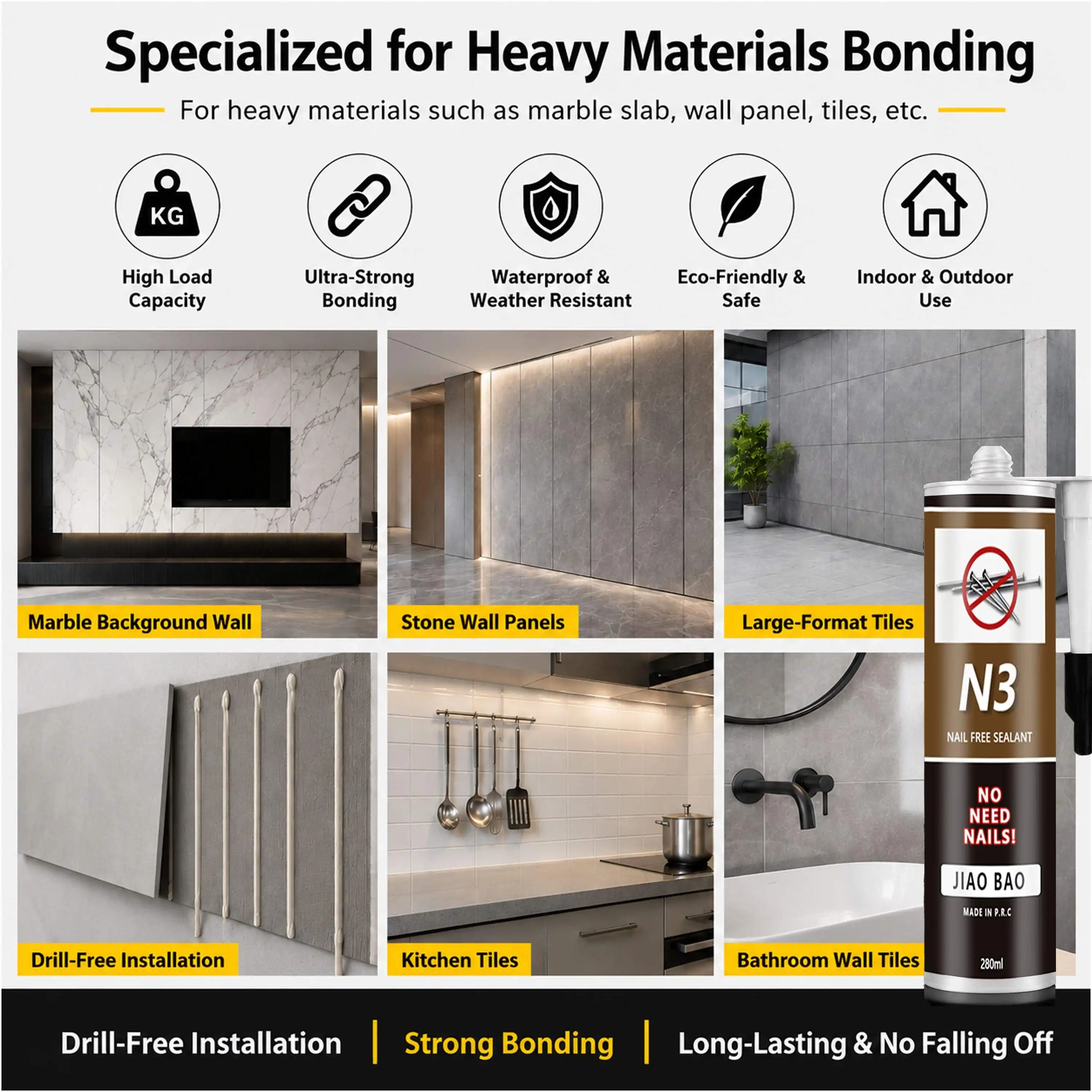
Shandong Jiaobao New Material Co., Ltd. has been making specialized products for over 13 years and works with construction professionals, furniture makers, and cabinet installers who need reliable wood-to-metal bonding solutions. Our modified silane polymer glue technology gives your output the 2.5 N/mm² tensile strength and 300% elongation it needs. It also comes in unique colors that fit your design needs. As a reliable Nail Free Glue for Wood & Metal provider, we keep our ISO and CE certifications up to date to make sure that every batch meets the strict quality standards used around the world.
We know the problems that manufacturers face when they try to buy things. Our production lead times of one to two weeks work with your just-in-time inventory plans, and our flexible logistics choices can handle both container exports and urgent orders. OEM and ODM capabilities allow for private label development with technical support during the choice of formulation and design of the package. Quality guaranty policies protect your investment by replacing the item if it goes bad during its shelf life.
Email our technical team at dorashen@cnjiaobao.com to talk about the needs of your unique application, get technical data sheets, or set up a sample evaluation. You can look at our full line of industrial sealants and building glue on shandongjiaobao.com. They are made for tough professional uses.
1. Smith, J. R. (2021). Advances in Modified Silane Polymer Technology for Construction Applications. Industrial Adhesives Quarterly, 45(3), 112-128.
2. European Adhesive Manufacturers Association. (2020). Best Practices for Wood-to-Metal Bonding in Furniture Manufacturing. Brussels: FEICA Technical Publication.
3. Anderson, K. & Chen, L. (2022). Environmental Impact Assessment of Solvent-Free vs. Solvent-Based Adhesive Systems. Journal of Sustainable Construction Materials, 18(2), 67-84.
4. International Organization for Standardization. (2019). ISO 37:2017 - Rubber, Vulcanized or Thermoplastic: Determination of Tensile Stress-Strain Properties. Geneva: ISO Standards.
5. Williams, T. D. (2023). Modern Adhesive Selection for Automated Furniture Assembly Lines. Manufacturing Technology Review, 31(1), 45-59.
6. National Institute of Building Sciences. (2022). Construction Adhesive Performance in Multi-Material Applications. Washington, DC: NIBS Technical Report Series.
November 16,2023
Enterprise Name
The sealant has very strong adhesion and performs well even on glass and aluminum. After curing, it remains flexible and shows no cracking. Perfect for our facade projects.
November 16,2023
Enterprise Name
Stable quality across batches. Our customers especially like the smooth application and consistent extrusion. It helps reduce installation time on site.
November 16,2023
Enterprise Name
I used it for bathroom sealing. Excellent waterproof performance and no mold issues so far. It's been holding up very well in humid conditions.
November 16,2023
Enterprise Name
The neutral silicone works well on sensitive materials without corrosion. Very suitable for industrial applications requiring stable performance.
_1779347426672.webp)