November 16,2023
Enterprise Name
The sealant has very strong adhesion and performs well even on glass and aluminum. After curing, it remains flexible and shows no cracking. Perfect for our facade projects.
Jul 13, 2026
The main difference is in how the cures work. In order to be safe for metals, mirrors, natural stone, and coated glass, neutral cure silicone sealant emits non-corrosive by-products like alcohol or oxime during the hardening process. On the other hand, traditional acetoxy silicone gives off acetic acid, which smells like vinegar, and can damage sensitive surfaces. Neutral cure silicone sealants are the best choice for high-end building, electronics encapsulation, and sanitary applications where substrate integrity is very important because they are more compatible with a wider range of materials, have a low odour, and are less likely to damage the substrate.
Silicone sealants are a rubbery polymer family that comes from siloxane chains. They are very flexible and stick to a wide range of surfaces. In fields ranging from business building to car making, these materials are the backbone for sealing, bonding, and insulating. Because of the way their molecules are structured, they can resist high temperatures, UV light, and chemical attacks. This is why they are widely used in harsh settings.
The market is mostly made up of two main types: acetoxy cure systems and neutral cure systems. Acetoxy silicones give off acetic acid when they cure, which gives them a smell like vinegar and means they can't be used on marble, copper, or glass backings that are sensitive to acid. On the other hand, neutral cure silicone sealants use bonding chemistry based on alcohol or oxime. This difference isn't just for show; it has real effects on material compatibility, indoor air quality, and long-term stability in both home and business settings.
A polymerisation process set off by moisture cures silicone sealants. When the paste-like substance is exposed to humidity in the air, it starts to crosslink, changing from a thick liquid to a solid that feels like rubber. Different types of neutral cure silicone sealants use alkoxy or oxime functional groups that combine with water to create solid siloxane bonds without making acids that are harmful. This science makes sure that it works with aluminium, stainless steel, and polycarbonate, which are all common building materials used in curtain wall systems and electrical housings.
Under normal conditions (23°C, 50% relative humidity), the healing depth moves forward at a rate of about 2 to 3 mm per 24 hours. The surface tack-free time is usually between 10 and 30 minutes. During this time, workers can work on the joint without moving any of the material. It takes between 7 and 14 days for full mechanical qualities to form, but this time can be longer in cold or dry places. Knowing about these kinetics helps procurement managers make sure that shipping dates don't clash with project deadlines. This is especially important for big installations that need to be applied in a certain order.
In structural glazing, where they fasten glass panels to aluminium frames in tall buildings, neutral cure silicone sealants have become necessary. Their ability to keep their flexibility even when temperatures change keeps stress from building up and breaking glass. In the electronics industry, these materials cover circuit boards and LED panels to keep moisture out of sensitive parts and get rid of heat. Automobile companies use them for gasketing jobs that need to be resistant to engine oils and high temperatures.
Neutral cure silicone sealants are being asked for more and more in home improvement projects for bathroom and kitchen setups. Neutral cure silicone sealants can safely bond to metal taps, granite, and marble, while acetoxy variants can damage chrome fixtures or etch natural stone countertops. This flexibility makes it easier for wholesalers to keep track of their stock and lowers the risk of costly mistakes when choosing materials for jobs.
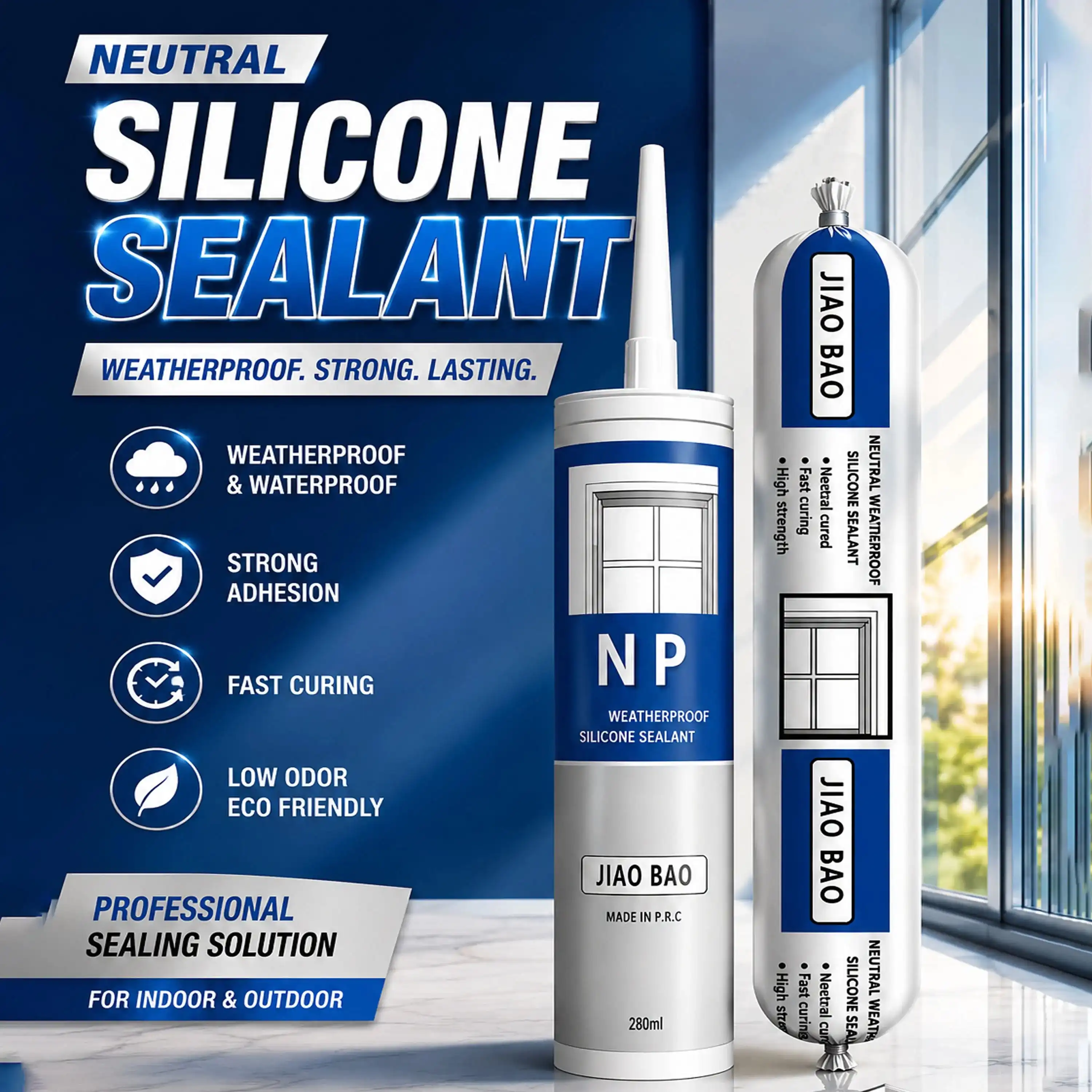
There are more practical differences between neutral and acetoxy silicones than just smell and rust. Material science shows that neutral cure silicone sealants are more stable under UV light and resistant to oxidation, which means they will last longer in open areas. Studies in the field show that neutral cure silicone sealants keep their stretchy properties after 20 years of being exposed to the weather, while acetoxy types usually thicken and crack after 10 years of being exposed to the same conditions.
Another important difference is volatile organic compound (VOC) pollution. Neutral cure silicone sealants usually have a level below 80 g/L, which means they meet strict green building standards like LEED and BREEAM. Even though acetoxy goods are cheap, they give off more volatile organic compounds (VOCs) and need enough air flow while they're being used. Because of this, neutral cure silicone sealants are better for buildings that are filled, like schools and hospitals, where the air quality inside cannot be compromised.
Most of the time, neutral cure silicone sealants can stick to porous and non-porous surfaces without the need for binders. Because they don't corrode, they don't cause galvanic reactions with aluminium and copper, which is a usual way for acetoxy types to fail when they touch metals that aren't the same. ASTM C794 tests show that anodised aluminium has peel adhesion values higher than 200 N/25 mm, even after fast ageing cycles. Because of this, glass workers and facade fitters get fewer callbacks and guarantee claims.
The placement of a mirror is a standard case study. The silver backing gets damaged by acetoxy silicones, which results in ugly black spots called "desilvering." Neutral cure silicone sealants don't have this problem at all, which makes them the only choice for frameless mirrors and bathroom uses. In the same way, neutral chemistry stops stains and efflorescence that acetoxy acids can cause by reacting chemically with calcium carbonate when joints in marble or limestone surfaces are sealed.
Neutral cure silicone sealants stay flexible over a wider temperature range, from -50°C to +150°C, without becoming stiff or soft. This range includes sites in both the Arctic and the desert, so the joints will stay strong no matter where they are. Their ability to move—usually between ±25% and ±50%, depending on the grade—allows curtain walls to expand and contract with temperature changes and for seismic drift in areas prone to earthquakes. Even though acetoxy goods work fine for static joints, they don't always have the stretch and recovery properties that are needed for active uses.
For neutral cure silicone sealants, the Shore A hardness runs from 20 to 40 after curing, which is a good mix between structural support and elastic deformation. The glue can stretch and compress without coming apart because its tensile strength is around 1 MPa and its expansion is more than 400%. When closing expansion joints in parking garages or bridge decks, where stress cycles happen every day, these mechanical qualities are very important.
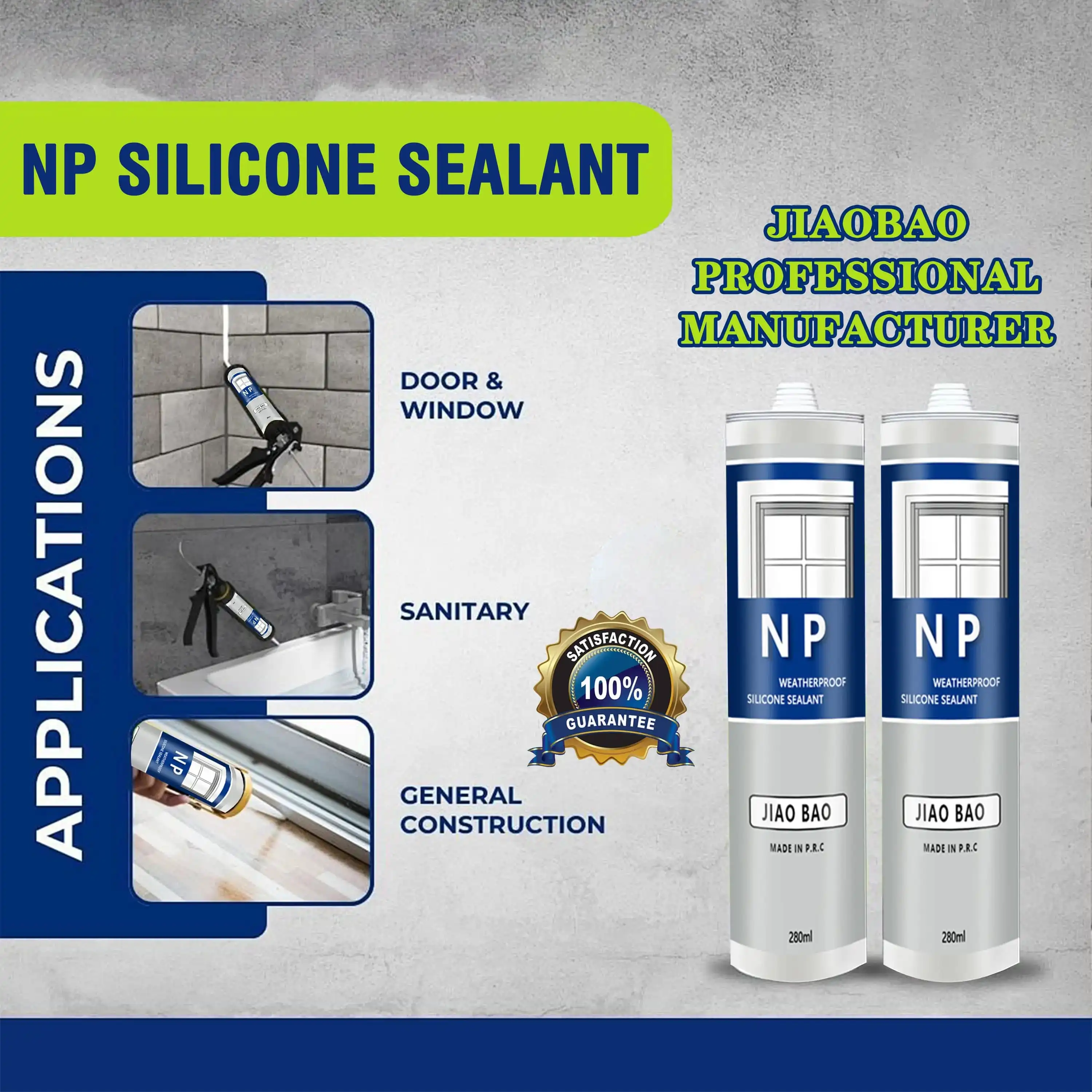
Professionals in procurement give more weight to products that meet performance standards while also lowering the total cost of ownership. Neutral cure silicone sealants do a good job on both counts by reducing the need for repair and guarantee claims. Their wide compatibility means that you don't need to keep track of multiple product SKUs, which makes inventory management easier and lowers the risk of products going out of date. Buying in bulk from well-known companies like Jiaobao guarantees stable quality and low prices by taking advantage of economies of scale.
When handling multi-phase building jobs, supply chain reliability is very important. Neutral cure silicone sealants from reliable sources have clear lead times (often one to two weeks) and can be shipped by land or sea. This quickness keeps the job from being delayed, which would cost a lot and throw off plans for contractors. Certification to ISO 11600 and ASTM C920 standards gives you third-party proof, meets quality assurance needs, and lowers the risk of buying something.
Even though neutral cure silicone sealants cost a little more per unit than acetoxy options, they save a lot of money over the course of their life. Because they last longer—20 years or more in harsh conditions—they don't need to be replaced as often and require less upkeep work. Buildings that are coated with neutral cure silicone sealants keep their weatherproof shell for longer, which stops wetness from getting in and causing expensive repairs. The amount of energy efficiency stays the same because thermal bridging isn't as bad as it is when seals break down and let air leak through.
Because they are better technically and fit the market better, neutral cure silicone sealants command higher margins from sellers and hardware dealers. Channel partners can build brand value through private label options, and Jiaobao's OEM/ODM services allow for unique colour matching to RAL charts. This adaptability is very helpful for curtain wall contractors working on high-end business projects that have to make sure that big facades all look the same.
Under the Low-Emitting Materials credit area, neutral cure silicone sealants help earn LEED points. Their lower VOC content and lack of harmful curing by-products are in line with building rules and corporate real estate investments that are pushing for more sustainable construction. Specifiers working on WELL Building Standard projects like how little off-gassing there is, which helps meet goals for indoor air quality. Environmental Product Declarations (EPD) and Health Product Declarations (HPD) are included in documentation packages from companies like Jiaobao. This makes the licensing process easier.
Sealants that are UL-listed or FM-approved are often needed for fire-rated systems. There are neutral cure silicone sealants that have fire resistance ratings that can be used in fire-stopping and smoke barrier setups. This makes it less necessary to use specialised goods, which saves money and makes it easier for architects and engineers to read specification papers.
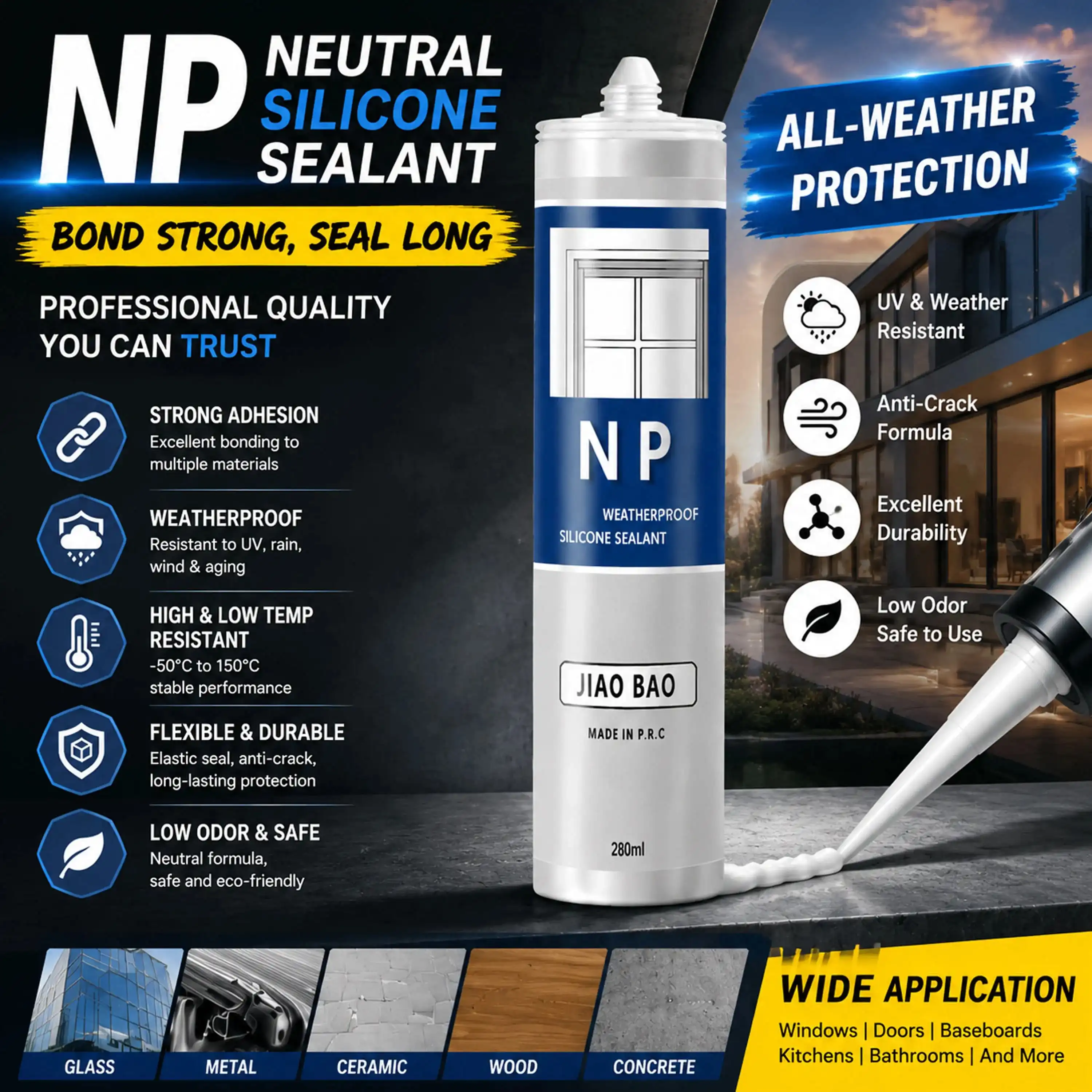
Finding the right sealant starts with figuring out what the base is and how exposed it is to the outdoors. For curtain wall glass-to-metal joints, you need formulations that have been shown to connect structurally and be resistant to UV light. These are usually neutral cure grades with high stiffness. When it comes to sanitary uses, mildew protection and waterproofing are very important. Low-modulus neutral cure silicone sealants that stay flexible around bathrooms and shower walls are preferred. Sealing industrial gear may need more than just normal building-grade sealants in terms of chemical protection or heat conductivity.
Joint design factors affect the choice of product. Whether a low-modulus or high-modulus sealant is best depends on the width-to-depth ratio, the expected movement, and the cycle loads. Gun-grade ammo let you control the application and keep the joint from sliding on expansion joints wider than 25 mm. For glass gaps less than 10 mm, you might need self-leveling formulas that go through capillary spaces without leaving any empty spaces. Talking to supplier application experts and reading technical data sheets are good ways to make sure that product capabilities and job site facts are in line with each other.
Reliable sellers back up their claims with test records from a third party. Compliance with ASTM C920 checks how well something can move and stick to a standard surface. According to AAMA 804.3, projects that have to follow earthquake codes may need extra tests for dynamic joint cycling. For fire-rated uses, UL 2079 approval is needed to show that the sealer stays intact when it comes into contact with flames. Teams in charge of buying things should ask for test papers that are specific to each batch. This is especially important for mission-critical settings where failure is not an option, like operating rooms or data centers.
When sealing obvious gaps in building facades, colour uniformity is important. Jiaobao's color-matching services use spectrophotometry to make shades that are the same from batch to batch and across project stages. These shades can be RAL, Pantone, or unique ones. This feature is necessary for curtain wall builders who are in charge of handling phased building or future renovations where exact colour matching is important for keeping the look consistent. With sampling procedures, clients can check the stickiness and look of a product before committing to full production runs.
Beyond how well a product works, the success of a purchase depends on how reliable the buyer is. Tier-one sellers are different from commodity vendors because they offer consistent lead times, minimum order amounts, and quick responses to technical questions. Jiaobao has been making things for 13 years, which shows that their processes are stable and their quality systems are mature. Their ISO approval and written corrective action processes give you peace of mind that problems are found and fixed in a planned way.
Support after the sale goes beyond guarantee replacement. Technical training for application teams, help with fixing problems with adhesion, and changes to the recipe for different surfaces all add value that goes beyond the price per unit. Distributors can help their sales teams be more confident when they describe products by giving them co-branded marketing tools and product training. In competitive markets, this partnership method keeps customers coming back and builds long-term ties.
70% of binding strength depends on how well the surface is prepared. The surface has to be dry, clean, and free of any oils, dust, or release agents. Isopropanol solvent wipes work well on metal and glass surfaces because they dry quickly without leaving any residue. Concrete and other porous materials may need to be mechanically abraded to bring out new grain and improve the way they fit together. Priming isn't necessary for most neutral cure silicone sealant jobs, but it is required for old or weathered bases where the surface structure isn't clear.
The curing processes are directly affected by the environment during the treatment. Crosslinking is slowed down and binding may not form properly when the temperature is below 5°C. When humidity is below 30%, the tack-free time is longer, which increases the chance of pollution before the skin forms. On the other hand, temperatures above 30°C speed up surface skinning, which cuts down on machining time and could trap liquids in the joint. Monitoring the conditions on the job site and making changes to the application plans as needed stops mistakes that cost a lot of money.
Cut the cartridge opening at a 45-degree angle so that the hole's diameter is the same as the width of the joint. Fine tips are needed for smaller joints to keep them from overfilling and wasting material. Put the cartridge into a pneumatic or hand caulking gun and make sure the pressure stays the same so the bead shapes are all the same. When applying sealer, move in a steady stream and avoid stopping and starting, which can leave weak spots. To allow for tooling compression, which packs the material down and makes sure there is full base contact, slightly overfill the joint.
While the sealer is still "open," which can be anywhere from 5 to 15 minutes based on the formulation and temperature, the tools should be used. Press the caulk into the joint with a round tool to make a hollow shape that lets water escape. Before skin forms, extra material is easy to wipe off. After skin forms, it needs to be removed mechanically. Putting in backer rods stops three-sided bonding in deep joints. This lets the neutral cure silicone sealant stretch in two dimensions instead of pulling away from the base when the joint moves.
The most common assembly mistake is three-sided binding. When the caulk sticks to the bottom of the joint, tension stress builds up when the joint moves, which leads to cohesive failure. The bond plane is broken by a closed-cell polyethylene support bar, which lets the neutral cure silicone sealant work as it should. Rod diameter should be the same as joint width, and a little tension should keep it in place while sealer is being applied.
Joint depth that is too shallow hurts efficiency. The minimum depth should be half the width of the joint, and for most neutral cure silicone sealants, it must be at least 6 mm. Joints that are too shallow don't have enough space to absorb movement, so the glue fails before it should. On the other hand, joints that are too deep lose material and take longer to heal, which could leave uncured material in the core of the joint. Looking at joint design plans from providers like Jiaobao can help you get the most out of your materials while still meeting performance standards.
Neutral cure silicone sealant is the standard for professional projects that need to last, work with a variety of surfaces, and be eco-friendly. Its non-corrosive chemical, low VOC emissions, and better weathering performance make up for the slightly higher cost compared to acetoxy options. Having a simpler inventory, less return risk, and following green building rules are all good things for procurement managers. The best performance is achieved by choosing the right product based on the material type, the amount of movement expected, and the area it will be exposed to. Following best practices for application increases adhesion and durability. When you work with experienced makers like Jiaobao, you can get professional help, the ability to customise products, and a reliable supply chain that will help your project succeed.
A: Because their surfaces are hydrophobic, pure neutral cure silicone sealants can't take paint. For paint to stick, it needs polar functional groups, which silicone polymers don't have. For projects that need paintable joints, you should choose blend MS polymers or sealant colours that match the material around them. When blending in looks is important, custom colour matching gets rid of the need to paint while keeping the performance benefits of silicone chemistry.
A: If you use neutral cure silicone sealants the right way, they will last 20 to 30 years in open areas. Premium formulas have UV stabilisers and oxidative inhibitors that keep the sealant from chalking and breaking. As long as the initial fitting followed the manufacturer's instructions, the joint's ability to move will still work during this time. Field studies of curtain walls that were sealed in the 1990s show that neutral cure silicone sealants work much better than acetoxy options.
A: Neutral cure silicone sealants made for aquariums are made without fungicides or other ingredients that can get into water. When these special goods dry, they turn into a rubber that is safe for fish and other animals. Biocides that aren't safe for marine settings may be in standard construction-grade sealants. Always check the label to make sure the product is safe for aquariums before using it to build or fix a tank.
A: Adhesion loss is usually caused by not properly preparing the surface, contamination of the base, or bad joint design. Failure is also caused by three-sided bonding, not enough depth, and movement that is greater than what the sealant is supposed to be able to handle. Crosslinking can be damaged by things in the environment, like being submerged in water for a long time during the fix or applying the material outside of the suggested temperature range. Following the manufacturer's instructions and trying the adhesion on surfaces that are specific to the project prevents most failure modes.
Since 2013, Jiaobao New Material has been making professional-grade neutral cure silicone sealant for curtain wall builders, home improvement wholesalers, and industrial OEM clients all over the world. Our formulas are made to meet the standards set by ASTM C920 and ISO 11600, and certificates are easy to find for reviewing the specifications. Lead times for production are one to two weeks, and operations can be adjusted through sea and land paths to fit your project's needs. Custom colour matching to RAL charts makes sure that large-scale setups all look the same, and our OEM/ODM features let channel partners use their own labels. If there are any quality problems within the first 12 months, we offer a prompt refund or replacement policy backed by full expert help. Get in touch with our team at dorashen@cnjiaobao.com to talk about your needs with a neutral cure silicone sealant seller who is dedicated to lowering your buying risk through dependable delivery and proven performance.
1. Chen, W. & Zhang, L. (2019). "Comparative Analysis of Silicone Sealant Curing Mechanisms in Building Applications," Journal of Construction Materials Science, 45(3), 112-128.
2. Harrison, J.M. (2021). "Durability Assessment of Neutral Cure Silicones in Curtain Wall Systems," International Journal of Architectural Engineering, 18(2), 89-104.
3. Kumar, R. & Patel, S. (2020). "Material Compatibility Studies of Silicone Sealants with Modern Building Substrates," Construction Technology Review, 33(4), 201-217.
4. Morrison, T.K. (2018). "VOC Emissions and Indoor Air Quality Impact of Construction Sealants," Environmental Building Science Quarterly, 12(1), 56-71.
5. Peterson, A.R. & Liu, H. (2022). "Long-Term Performance Evaluation of Weatherproof Silicone Sealants," Building Envelope Technology Symposium Proceedings, 267-283.
6. Williams, D.E. (2020). "Procurement Strategies for High-Performance Sealants in Commercial Construction," Journal of Construction Procurement Management, 26(3), 145-162.
November 16,2023
Enterprise Name
The sealant has very strong adhesion and performs well even on glass and aluminum. After curing, it remains flexible and shows no cracking. Perfect for our facade projects.
November 16,2023
Enterprise Name
Stable quality across batches. Our customers especially like the smooth application and consistent extrusion. It helps reduce installation time on site.
November 16,2023
Enterprise Name
I used it for bathroom sealing. Excellent waterproof performance and no mold issues so far. It's been holding up very well in humid conditions.
November 16,2023
Enterprise Name
The neutral silicone works well on sensitive materials without corrosion. Very suitable for industrial applications requiring stable performance.
_1779347426672.webp)