November 16,2023
Enterprise Name
The sealant has very strong adhesion and performs well even on glass and aluminum. After curing, it remains flexible and shows no cracking. Perfect for our facade projects.
Oct 6, 2026
Choosing the right Acrylic Sealant for Interior Use on painted walls comes down to understanding three core priorities: paintability, drying speed, and indoor safety. You need a water-based sealant that bonds seamlessly with latex or alkyd finishes, cures quickly to avoid project delays, and maintains low VOC levels to protect indoor air quality. This decision impacts not only the visual finish of your interior spaces but also long-term durability and compliance with building regulations. Whether you're sourcing for renovation projects, retail distribution, or private label branding, selecting a reliable acrylic sealant ensures smooth operations and satisfied clients.
There is a specific type of water-based joint filler made just for indoor settings called acrylic seals. Unlike silicone or polyurethane options, these formulas cure by evaporating water instead of chemical cross-linking. This makes them safer for enclosed areas and suitable with paint coats that come after.
Acrylic sealants are unique because they can be painted over. When you put latex or alkyd paint over an acrylic bead that has dried, the paint sticks evenly and doesn't run or change color. This feature comes from the sealant's thin polymer structure, which lets the color go through. Silicone sealants, on the other hand, don't let paint stick to them at all because they are non-polar.
Acrylic formulas also stick very well to weak surfaces like concrete, walls, plaster, and wood trim. These materials and the water-based polymer chains form hydrogen bonds, which make seals that last even without starters. Modern acrylics have flexibility modifiers that let them move by 7.5% to 12.5%. This is enough for interior joints that aren't structural and can expand or settle due to temperature changes.
Pay attention to the solid content percentage when you're looking at interior acrylic sealants. Good products have between 80 and 85% solids, which keeps shrinkage to a minimum while they cure. Lower-quality formulations that have too much water in them shrink a lot, leaving hollow joints that need more filling. Another important factor is the time it takes for skin to form. Within 30 minutes to an hour, professional-grade acrylics form a surface that doesn't stick, which speeds up the project turnover. Depending on the humidity in the air and the depth of the joint, a full repair usually takes 24 to 48 hours.
How easy something is to use depends on its rheological features. It is important that the sealant has thixotropy, which means it should flow smoothly under gun pressure but keep its shape in vertical joints without sagging. Zero slump performance makes sure that the beads on the walls and around window frames are clean and even.
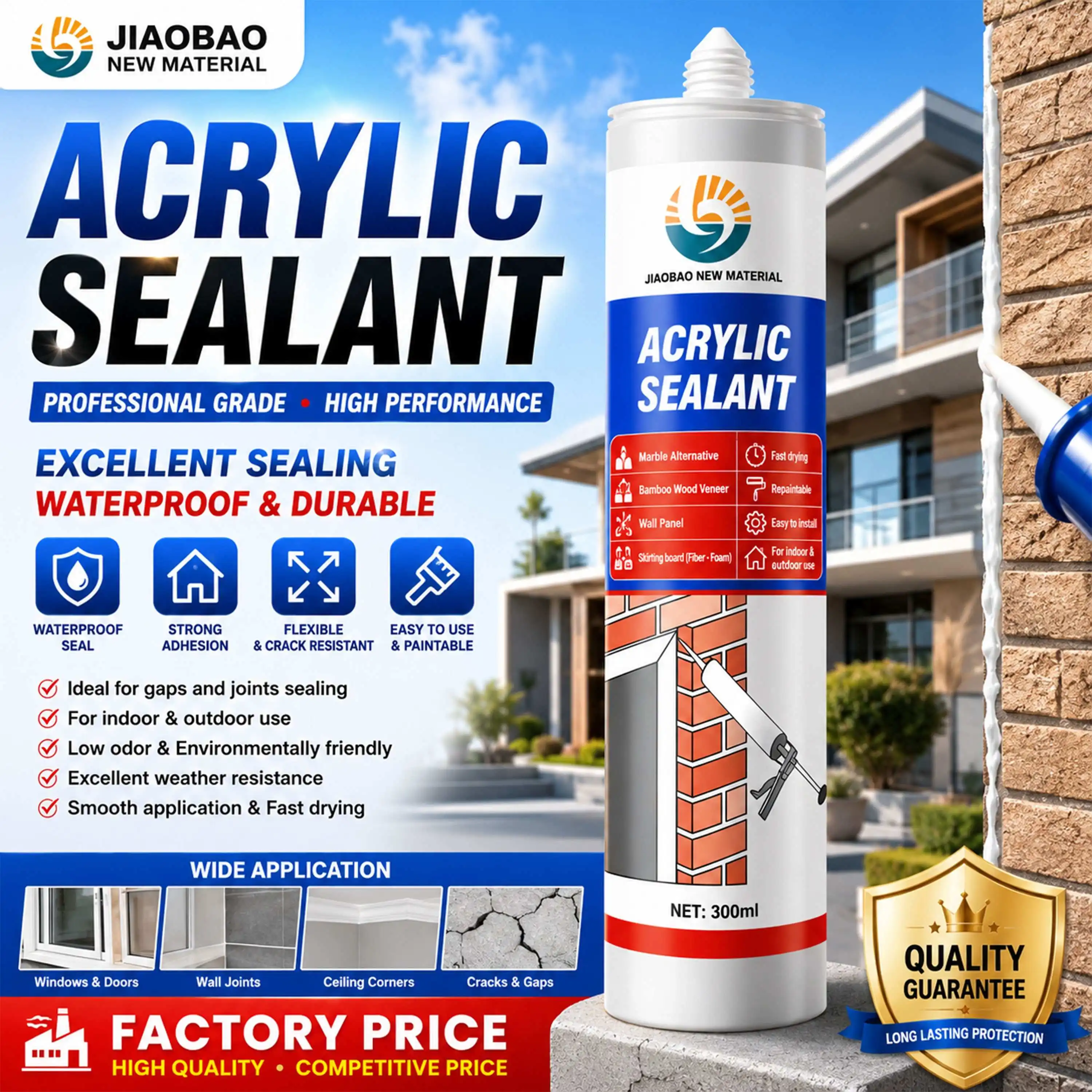
Finding the right sealer means matching how well it works technically with how easy it is to get. If you make the wrong choice, you could get called back, have your paint fail, or have your professional image hurt.
Not every acrylic sealant works the same way on all types of paint. Standard acrylic paints stick well to latex paints, which are most common in homes and businesses. Alkyd and oil-modified paints, on the other hand, need binders with certain surface energy properties to keep them from not sticking. To see if the sealant is compatible, put it on a sample board, wait for it to dry, then paint it and do a cross-hatch adhesion test.
It's also important to match colors. White sealants work best with light-colored paints, while gray or custom-colored sealants work better with darker paints. Some companies make sealants that come in black, gray, and white, and if you buy a lot of them, they can even match the colors to your exact specifications. Acrylic Sealant for Interior Use is especially well‑suited for this purpose, as its formulation adheres smoothly to painted surfaces and allows for easy color blending. This flexibility gets rid of seam lines that you can see after painting, especially on wood trim or baseboards.
Surface dry time has a direct effect on when workers are scheduled to come in. Painters can come back the same day to finish coating work on a sealant that dries in 0.5 hours, but they have to schedule multiple days for products that take 3 hours or more. Our one-part RTV acrylic sealant dries to the touch in just 30 minutes at room temperature (23°C) and 50% relative humidity, which cuts project timelines by a large amount.
The extrusion rate affects how much work a tool can do. Standard sealing guns should be able to spray more than 80 ml/min of good coatings. Our recipe makes 163 ml/min, which is twice as much as other goods of lower quality. This economy cuts down on the cost of work for big projects with hundreds of linear meters of joints.
More and more, building codes are limiting the release of volatile organic compounds into occupied areas. Standard acrylic sealants don't give off as many volatile organic compounds (VOCs) as solvent-based alternatives, but the way they are made does matter. Look for goods that meet LEED standards and have third-party approvals, such as GREENGUARD or similar standards for indoor air quality.
When working on a house that is already occupied, low-odor formulas are necessary. Water-based acrylics don't smell as bad as solvent-based acrylics, but ammonia or other chemicals can still irritate the skin. Choosing ultra-low VOC products protects workers and people who live or work in the building while also making sure that regulations are followed.
Buyers in large quantities should look at more than just the product specs when choosing a dealer. The time it takes to get an order to the customer affects how the job is planned. Just-in-time inventory control is easier when manufacturers offer production periods of one to two weeks. Shipping options by sea or land freight meet the needs of both domestic and international buyers.
The type of packaging affects how it is handled and how trash is managed. Sealants come in cartridges (usually 300ml for retail use) and sausages (300ml and 600ml for professional bulk use). Rigid plastic trash is cut down by sausage packing, which often costs less per volume unit. Another thing is the shelf life. Standard acrylic sealants work for 12 months as long as they are kept in the right way, between 5°C and 25°C.
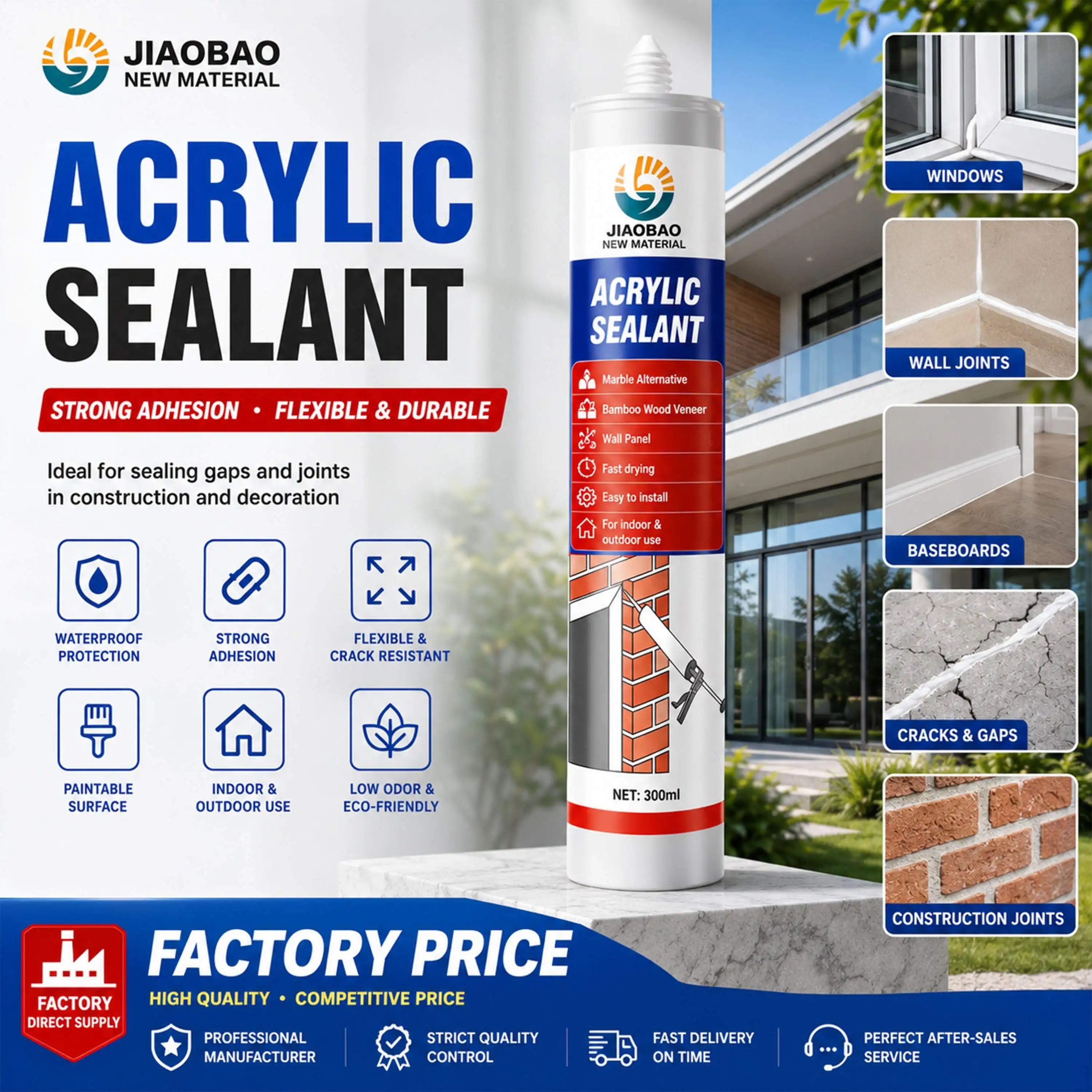
With the right method, even high-end seals can look like they were done by a professional. Following organized steps stops common mistakes and improves long-term performance.
Before they are used, joint surfaces must be clean, dry, and physically sound. Use the right cleaning methods to get rid of loose paint, dust, oils, and release agents. Cut out the old sealant from joints that have already been sealed with a utility knife or scraper to make sure it is all gone. It's especially bad when silicone dust is left behind because new plastic can't stick to it.
Putting masking tape on the walls around the joint makes the edges clean and covers areas that have been painted. Place the tape about 3 to 5 mm away from the joint line on each side. When working on finished walls, this step of preparation is necessary to avoid getting sealant on the walls, which is hard to clean up.
Put the cartridge or sausage into the right caulking gun. Cut the tip at a 45-degree angle so that the opening's diameter is the same as the width of the joint. Even beads are made by gun pressure that stays smooth and steady. Move the gun slowly along the joint, making sure to slightly overfill to account for the casting. Acrylic Sealant for Interior Use is ideal for this application, as its smooth consistency responds well to steady gun pressure and allows for clean, even bead formation without sagging or running.
Tool the bead right away with a finger that has been wet, a spoon tool, or a profiling spatula. The tooling squeezes the sealant into the joint, getting rid of any air spaces and making the hollow shape that is wanted. To keep the sealant from tearing, take off the masking tape within 10 to 15 minutes while it is still wet.
Wait until the skin is fully formed before painting it. Even though our fast-cure acrylic hardens to a smooth, tack-free surface in 30 minutes, we suggest waiting one to two hours if the area is wet. If you paint too early, water vapor can get trapped and cause blisters or bad bonding. For important projects, wait 24 hours after curing before painting to make sure that all the polymers have mixed.
Use the same method and paints that were used on the other surfaces to paint this one. Without any special primers, acrylic sealants can be put on with a brush, a roller, or a spray. Two coats usually give the best covering and color consistency.
There are a lot of choices on the market, and each one has its own benefits for different uses and buying habits. Knowing these differences helps buyers choose products that meet the needs of their projects.
Brands like Sika, GE, 3M, and DuPont have built their names on providing consistent quality and a lot of expert help. Most of the time, these names have full lines of products with different formulas for different surfaces or performance needs. Their distribution networks make sure that products are available on markets around the world, which helps multinational contractors who are in charge of projects in more than one area. Pricing shows how the brand is positioned, and it usually commands high prices that may be hard for buying managers who are trying to save money.
These companies spend a lot of money on licenses and compliance paperwork, which makes writing specifications and getting governmental approval easier. Technical data sheets give specific information about how well something works, like how easily it moves, how well it sticks, and how well it resists the environment. Many offer color matching for big custom orders, but smaller sellers often can't handle the minimum order amounts.
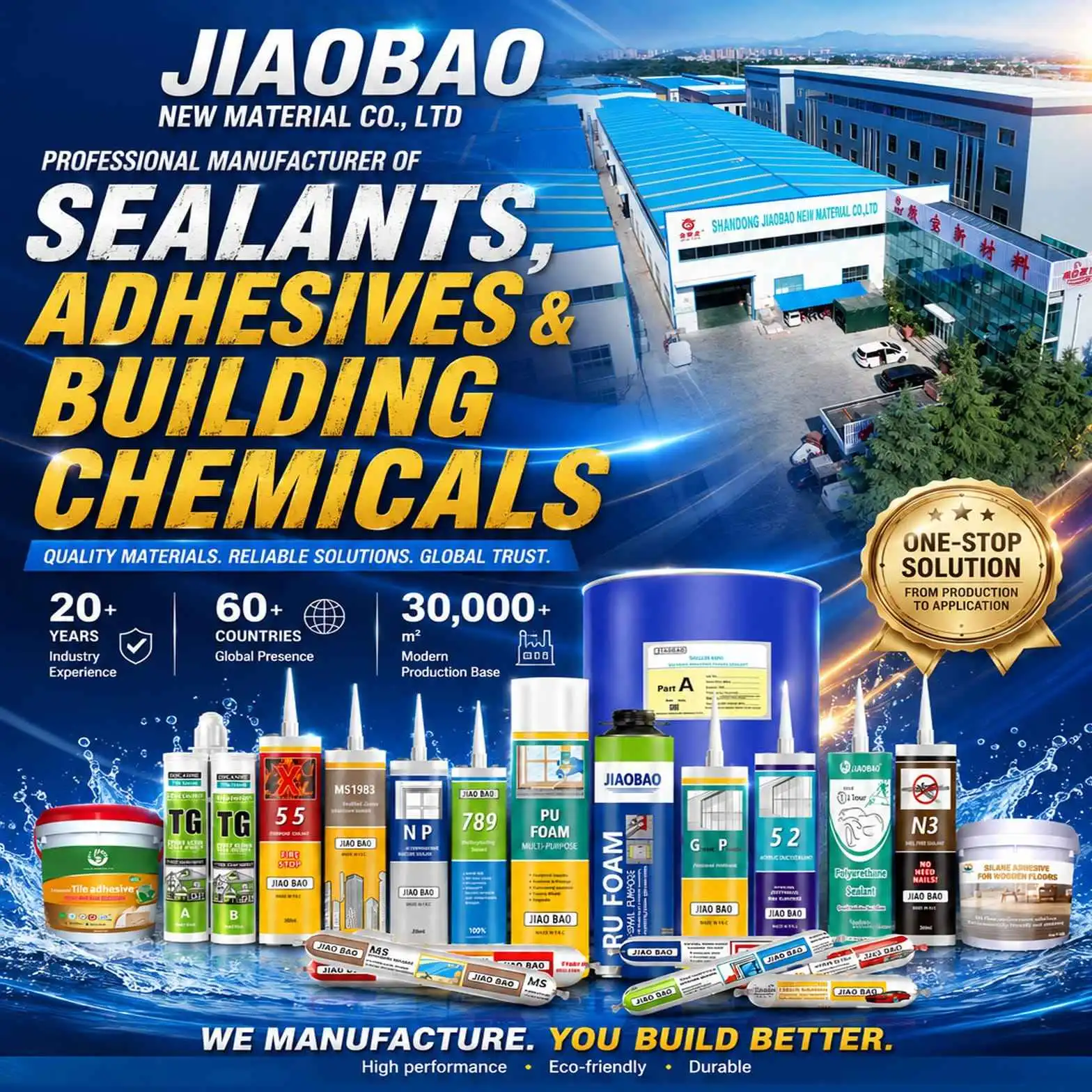
Jiaobao and other regional makers and OEM providers offer competitive options with a focused range of products. Our professional-grade one-part RTV acrylic glue has a tensile strength of 0.64 MPa at 23°C, doesn't sag when used vertically, and sticks very well to porous surfaces. We've been making it for over 13 years and have ISO/CE standards to back it up.
Specialized manufacturers are better because they can be flexible and quick to respond. Customization options go beyond just matching colors; they also include private labeling, package design, and changing the formula to meet the needs of a specific market. Lower minimum order quantities make it easier for new brands and regional distributors to build their inventory without having to spend a lot of money.
When compared to high-end foreign names, specialized manufacturers' pricing structures usually offer savings of 15 to 30 percent while keeping similar technical performance. This low cost is especially helpful for people who use a lot of it, like renovation workers, building care departments, and store distributors who have to compete in price-sensitive markets.
When you're comparing products, you should look at their technical specs and how well they meet your needs. Our acrylic sealant doesn't sag in vertical joints, so you don't have to deal with the hassle and waste that comes with products that sag. Acrylic Sealant for Interior Use is specifically formulated for indoor environments, offering excellent adhesion to common interior substrates while maintaining the same non-sag properties and fast extrusion rate. The 163 ml/min extrusion rate helps applicators finish projects faster, which cuts down on labor costs, which are often much higher than material costs.
The product comes in 300ml and 600ml sizes and in both sausage and cartridge packing, so it can be used by a wide range of people, from individuals doing their own projects to professionals working in large quantities. The 12-month shelf life makes sure that goods can be used even when demand changes with the seasons. Color options in white, black, gray, and custom formulations meet a range of esthetic needs without the need to stock too many SKUs.
Systematic review based on the goals of the project leads to the best sealant choice and good results.
First, write down the basic needs. What sizes and shapes of joints are you going to seal? What kinds of surfaces are being used? Are they drywall, wood, concrete, or a mix of these? What kinds of paint will be used afterward? What kinds of weather are there during the application and work life? Answering these questions narrows down the products that would be good for you.
Supplier selection is based on budget limits and volume needs. For small-batch custom work, high-end names with large color libraries may be worth it, while for regular production jobs, it's better to work directly with the maker. Instead of just looking at the price per unit, figure out the overall cost, which should include freight, storage, and getting rid of the waste.
Ask the shortlisted suppliers for full technical data sheets and safety documentation. Check that the goods you're buying meet the standards that matter, like the ones set by ASTM C834 or ISO 11600 F-class. Check the standards to make sure they say the product has low VOC emissions, especially if you want to get LEED points or other green building programs.
Carefully look over the efficiency requirements. Tensile strength between 0.4 and 0.6 MPa means the material is flexible enough without being too soft. When movement accommodation factors are above 10%, they leave room for unexpected joint dynamics. Skin development in less than three hours and extrusion rates higher than 80 ml/min make it possible to work with.
Beyond product standards, the long-term success of procurement depends on how reliable the provider is. Compare your method to managing inventory with production wait times and minimum order numbers. Check to see if the shipping company is flexible—can they handle both container loads and smaller LTL shipments? What quality guaranties and return policies protect against batches that aren't good enough?
Having access to technical support helps solve program problems quickly. Beyond just giving low prices, suppliers who offer formulation advice, compatibility tests, and debugging help add value. For private label buyers, you should look at how well the company can create, how well their labels follow the rules for your target market, and how well they protect your intellectual property.
To choose the best acrylic sealer for painted interior walls, you need to think about how well it works technically, how well it looks, and how easy it is to get. To meet project requirements and protect indoor environments, put paintability, fast cure times, and low VOC content at the top of your list. Don't just look at price when choosing a supplier; also look at how flexible they are with customization, how reliable their delivery is, and how much expert help they offer.
Acrylic Sealant for Interior Use is a prime example of such a product, combining low odor, easy tooling, and excellent adhesion to painted drywall and trim—making it a reliable choice for indoor finishing work. Quality products, like our one-part RTV acrylic sealant, which has an ISO/CE certification, 30-minute surface dry time, and zero sag performance, give professional projects the consistency they need. By using organized evaluation criteria and working with responsive manufacturers, you can be sure that the installations will go well, which will keep your clients happy and protect your professional reputation.
Most internal wall treatments are latex paints, so standard acrylic sealants work well under them. When closing parts that will be painted with oil- or alkyd-based paints, test a sample to make sure they are compatible. Cover a test board with sealant, let it dry completely, then paint it and use score and tape to test its adhesive. Most current acrylics can be used with both types of paint, but checking first keeps finished projects from failing in ways that cost a lot of money.
Surface dry time and paint-ready time are not the same thing at all. Our fast-cure acrylic makes a skin that doesn't stick in 30 minutes, but in most cases, you should wait 1-2 hours before painting to make sure the skin is fully formed. Allow 24 hours to cure for the best results, especially in places with a lot of moisture or thick paint coatings. Painting too soon can trap wetness, which can lead to blisters or problems with the paint's bonding.
Standard acrylics shouldn't be used in places that are constantly wet or have a lot of wetness, like shower walls. These water-based mixtures can re-emulsify if they are exposed to water all the time. If the area is going to be wet, choose siliconized acrylics with biocides added or neutral silicone sealants. Standard acrylics work well for bathroom walls that don't come into direct touch with water, like frame joints and the edges of the roof.
In the acrylic sealant market, Jiaobao has more than 13 years of experience making specialized goods for contractors, distributors, and private label brands around the world. Our one-part RTV acrylic glue works very well, drying on the surface in 30 minutes, extruding at a rate of 163 ml/min, and not sagging in vertical applications—meeting the strict needs of professional interior projects. Our goods come in 300ml and 600ml sizes, and you can change the colors and packing to fit your needs. They can be bought in a variety of ways, from small quantities for stores to in bulk for contractors.
Our ISO and CE certifications make sure that the quality is always the same, and our OEM/ODM skills let us do private marking and formulation customization. With production lead times of only one to two weeks, we can manage our inventory quickly, and our experienced team is here to help with technical questions during the whole specification and application process. If you're a supplier of Acrylic Sealant for Interior Use looking to add more products to your line or a contractor looking for reliable performance, Jiaobao has low prices without lowering quality standards.
Email our team at dorashen@cnjiaobao.com to talk about your particular needs, get technical information, or set up product examples. You can look at all of our products on shandongjiaobao.com and learn how our production know-how can help your business succeed.
1. Building Sealants Association. (2021). Guidelines for Selection and Application of Interior Acrylic Sealants. Technical Publication Series.
2. Chen, W., & Martinez, R. (2020). Performance Evaluation of Water-Based Joint Sealants in Commercial Construction. Journal of Construction Materials, 45(3), 287-301.
3. Environmental Protection Agency. (2022). Indoor Air Quality and Low-VOC Sealant Specifications. EPA Building Standards Document.
4. International Organization for Standardization. (2019). ISO 11600: Building Construction - Jointing Products - Classification and Requirements for Sealants. Geneva: ISO Standards.
5. Thompson, J. (2023). Modern Sealant Technology for Interior Applications. New York: Construction Publishing Group.
6. Wang, L., & Anderson, P. (2021). Adhesion Mechanisms of Acrylic Polymer Sealants to Porous Substrates. International Journal of Adhesion Science, 38(2), 156-173.
November 16,2023
Enterprise Name
The sealant has very strong adhesion and performs well even on glass and aluminum. After curing, it remains flexible and shows no cracking. Perfect for our facade projects.
November 16,2023
Enterprise Name
Stable quality across batches. Our customers especially like the smooth application and consistent extrusion. It helps reduce installation time on site.
November 16,2023
Enterprise Name
I used it for bathroom sealing. Excellent waterproof performance and no mold issues so far. It's been holding up very well in humid conditions.
November 16,2023
Enterprise Name
The neutral silicone works well on sensitive materials without corrosion. Very suitable for industrial applications requiring stable performance.
_1779347426672.webp)