November 16,2023
Enterprise Name
The sealant has very strong adhesion and performs well even on glass and aluminum. After curing, it remains flexible and shows no cracking. Perfect for our facade projects.
Jul 14, 2026
Procurement managers often wonder if adhesive technology can really replace mechanical bolts when they are looking at bonding options for manufacturing and building projects. The answer depends on what your application needs and how well you expect it to work. Strong bond nail free adhesive is a big step forward in joining technology. It has the same level of structural stability as nails but doesn't have many of the problems that come with them. This glue uses a special kind of silane polymer chemistry to form molecular links with substrates. This spreads stress widely across the whole contact area instead of concentrating it in a few places like nails do.
There is a lot of pressure on modern industry and building sites to be more efficient, damage materials less, and meet strict safety standards. Even though traditional nails are known, they cause damage when they puncture, make noise, need skilled labour to be installed correctly, and limit the freedom of design. Because of these problems, glue technology has grown and changed, creating new solutions that fix basic problems while still being able to hold loads for structure uses. When procurement workers know about these options, they can make choices based on facts that improve business efficiency and lower long-term costs.
Modified silane polymer mixtures fix when they come into contact with moisture in the air. This makes strong bonds without releasing solvents or needing any special tools. Instead of using friction and compression like most mechanical fasteners do, this glue makes chemical bonds at the molecular level with both porous surfaces like wood and concrete and non-porous materials like metal, glass, and plastics. As soon as the concrete is exposed to air, the moisture-curing process starts. Within 20 minutes, the surface starts to stick together, and after 24 hours of normal conditions, the structure reaches full strength at a rate of 2.5 mm per 24 hours.
The chemistry that makes these bonds puts movement ahead of strength. The cured glue can stretch up to 300% before breaking, and its elastic modulus is 1.400 N/mm² at 100% extension. This means that it can handle heat expansion, structural settling, and shaking without breaking the bond. This adaptability comes in handy when installing curtain walls, since the different expansion rates of the glass and aluminium frames would eventually break hard bonds or loosen mechanical fixings.
The tensile strength of Jiaobao's one-part RTV formulation is 2.5 N/mm², which is the same as or higher than the holding power of standard nail setups in many situations. When the adhesive is dry, it keeps working at temperatures between -40°C and 80°C. This means it can be used for both HVAC setups in harsh conditions and indoor uses in climate-controlled spaces. A Shore A hardness grade of 50±5 is the best mix between being structurally rigid and being able to absorb shock.
The product comes in 300ml and 600ml sizes and can be packaged in either a sausage or a cartridge, so it can be used with a variety of pouring tools and application sizes. The shelf life of 12 months in the right storage conditions makes inventory management easier for buying teams that are working on multiple projects at the same time. There are different colour choices, such as normal white, black, and grey, as well as RAL colour matching for specific uses. These colour options help meet the aesthetic needs of high-end curtain wall and interior design projects where the sealant lines need to blend in with the other materials.
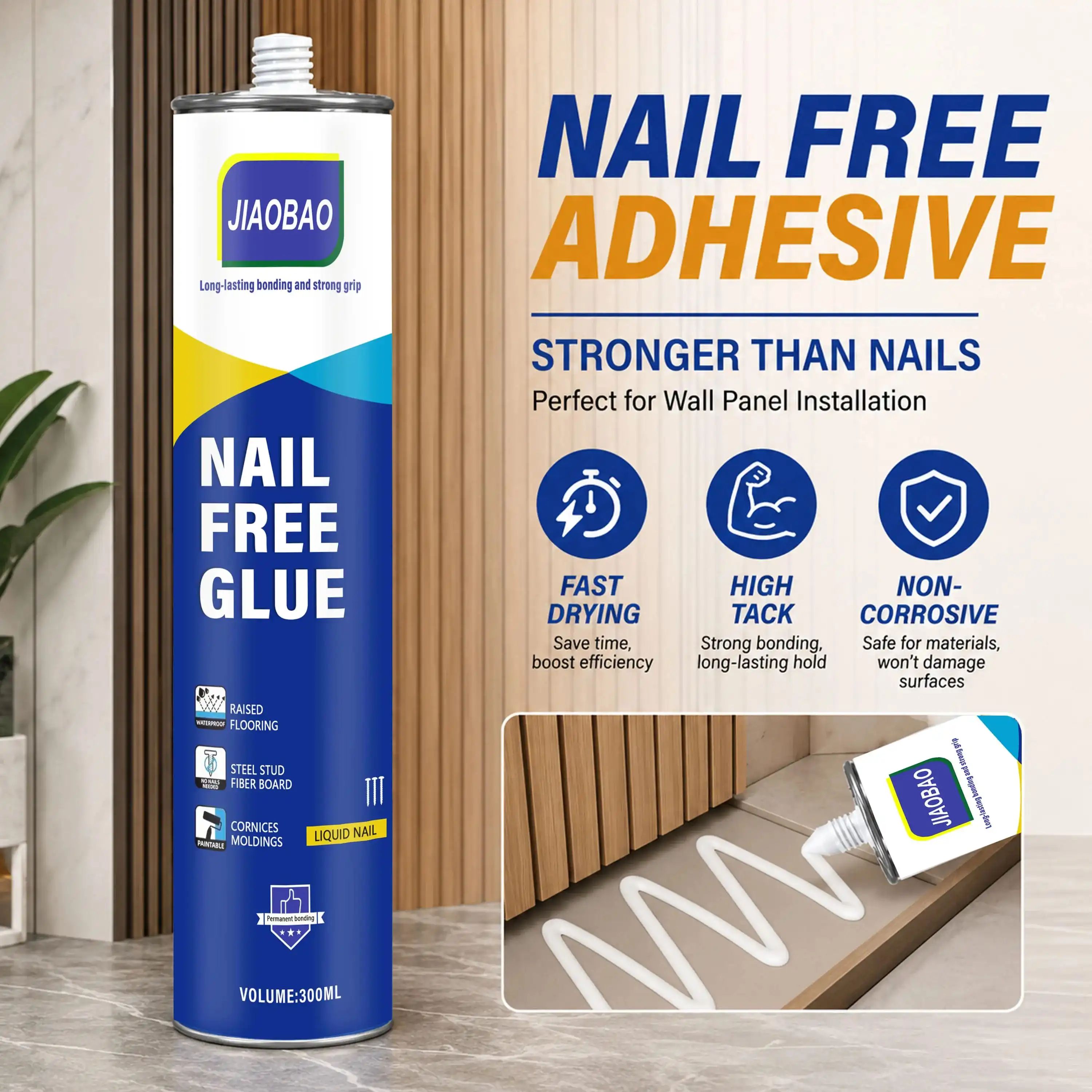
In places where a lot of work needs to be done, application speed is a measured advantage. For adhesive installation, all that's needed is to clean the surface and apply the adhesive directly. There's no need for test holes, countersinking, or setting up pneumatic equipment. One person can glue things together in places where a nail gun can't or won't work, so fewer people are needed for more complicated jobs. Because there is no shaking during application, there is no chance of damaging finished surfaces next to it and breaking fragile materials like ceramic tiles or toughened glass.
Adhesive sealing is great for projects that people will see because it leaves a clean finish. Since there are no bolt heads to cover or finish, fewer hours of work are needed to do touch-ups on the appearance. This is especially important for companies that make custom furniture and plants that work with stone, where showing screws can ruin the high-end look that customers want. Because it fills gaps, the glue can work with uneven surfaces up to 5–10 mm wide, which makes up for installation errors that would need to be fixed by shimming or changing the substrate.
Mechanical screws have hidden costs that add up over the course of a project's lifecycle. Damage to the substructure from drilling lowers the value of salvaged materials and makes it harder to reuse them in green building practices. Because pneumatic nailers make a lot of noise, workers must wear hearing protection and can't work in buildings that are already filled, which limits their schedule options. The costs of getting rid of packaging trash and damaged materials are extra costs that aren't usually included in the original cost comparisons.
These extra costs are cut down a lot with adhesive glueing. By not drilling, hidden utilities are less likely to be damaged by mistake, which saves money on fixes and keeps projects on schedule. The vibration-damping properties help make buildings quieter, which is something that is becoming more and more important in business and residential projects where noise levels affect how happy tenants are. Less material is wasted because fragile surfaces stay together, and mistakes in placement can be fixed during the open time window.
When it comes to high-rise projects, curtain wall companies face special problems that can be solved with strong bond nail free adhesive. The flexible link can handle wind loads and changes in temperature without breaking down over time like stiff mechanical connections often do. Water resistance stops the corrosion problems that happen to nails in seaside or high-humidity areas, which makes them last longer and require less upkeep. When compared to individual fastener penetrations, the continuous bond line is better at stopping air and water from getting in. This helps meet energy efficiency goals and building shell performance standards.
The adhesive's chemical strength and temperature stability make it useful in industrial making. It is used by companies that make HVAC equipment to seal pipe joints and bond insulation materials where mechanical connections would leave thermal bridges and air leakage paths. Electronics companies use the non-conductive features to hold parts in place when using metal screws could cause short circuits or electromagnetic interference.
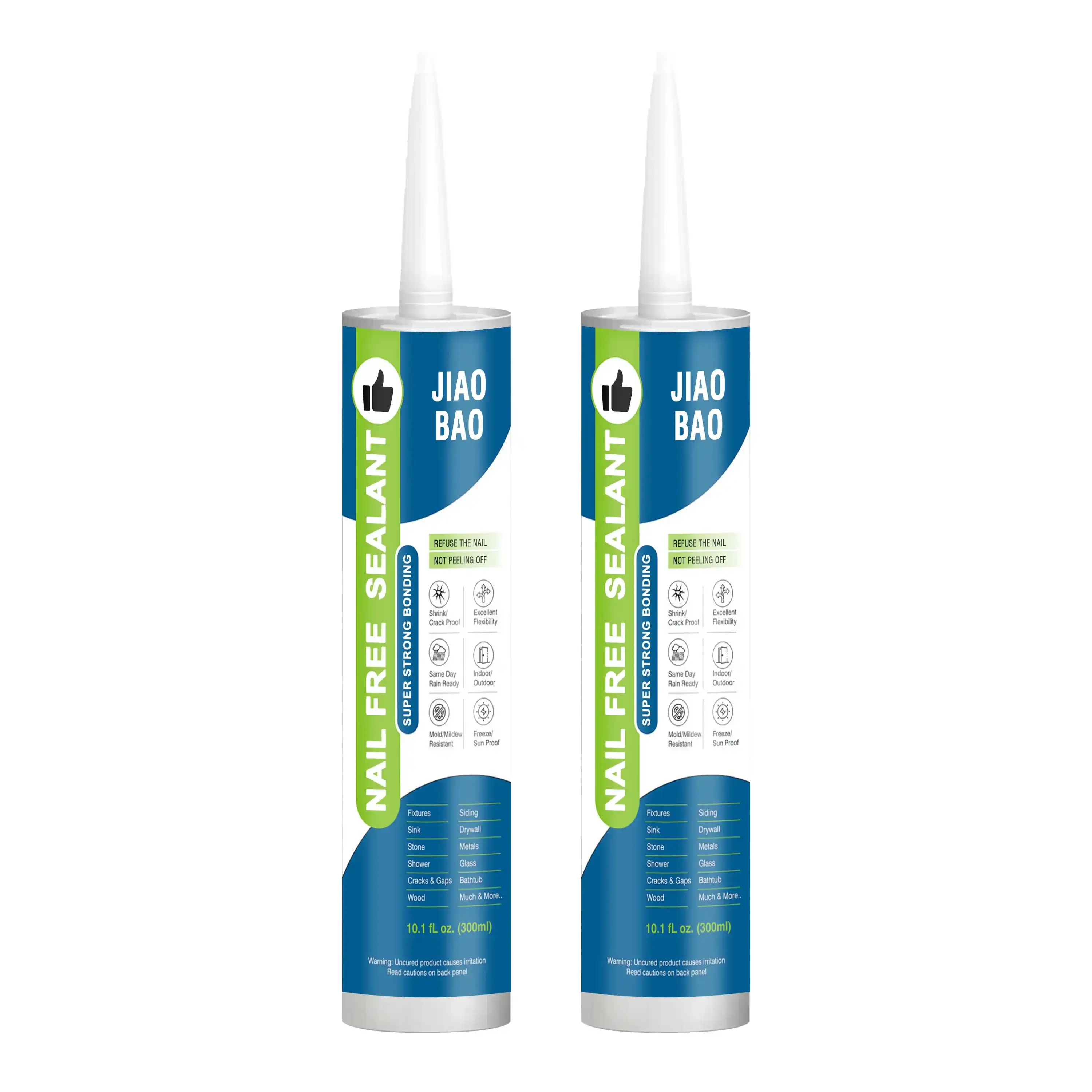
Purchasing managers should give more weight to providers that can show they are ISO certified and consistently follow international standards like ASTM and European testing methods. Manufacturers with 10 years or more of experience usually have the process control needed for stability from batch to batch, which is very important for projects that need to match colours across multiple shipment dates. Jiaobao has been making things for 13 years and has well-established quality control methods that make them reliable for big projects.
Lead time skills affect how flexible a project's schedule can be. When suppliers have production cycles of one to two weeks, just-in-time inventory strategies can be used. These strategies cut down on storing costs and the amount of working capital that is lost on material stocks. This quick answer feature is especially helpful for contractors who are working on multiple jobs at once with different material needs.
As long as the glue is stored properly, it will work well for another 12 months. Temperature-controlled areas between 5°C and 35°C stop hardening too soon and changes in viscosity that affect how well the material can be dispensed. Moisture contact that starts the curing process too early can't happen in sealed packages. Rotation rules that make sure stuff is used first-in, first-out keep things from going bad and wasteful.
Safety issues at work include making sure there is enough air flow during the application process and that workers have the right personal protection equipment. While modified silane polymers don't contain the harsh solvents that some traditional glue do, normal safety measures like wearing gloves and eye protection are still recommended. Training programs that teach installation teams the right way to prepare surfaces and apply adhesives improve the bond's performance and cut down on waste from wrong use.
Cartridge packaging makes it easier to use standard dispensing equipment that is already in most industrial and building sites, so there is no need to buy new equipment. When processing a lot of sausages, sausage packing saves money and cuts down on trash. To get the best deals on materials and keep disposal costs as low as possible, procurement teams should compare project needs with different packing choices.
For shipping operations, the fact that the product is considered non-hazardous goods by most transportation rules makes foreign shipping easier and lowers freight surcharges. Standardised packaging measurements that make the best use of room make it easier to load containers. Suppliers who offer a range of shipping choices, such as both sea and land transport, can meet the needs of customers with different delivery schedules and area logistics infrastructure.
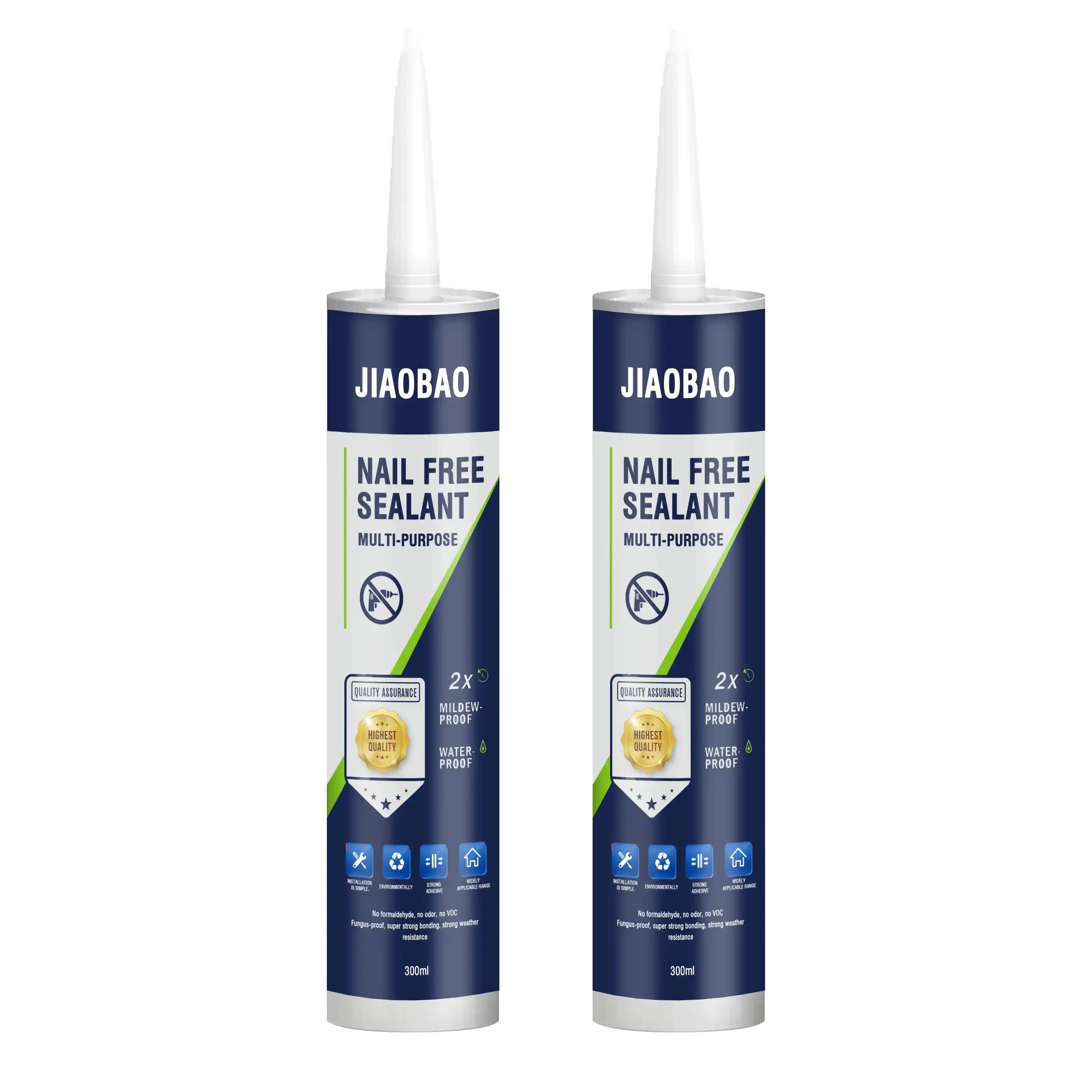
Standard panel and building mastics usually dry by evaporating the solvent. This makes ties that are too rigid to be used in situations where the base may move or the temperature may change. The modified silane polymer chemistry used in advanced strong bond nail free adhesives offers superior flexibility while keeping similar or better tensile strength. This mix is necessary for installing curtain walls because hard links would break when the building moves normally.
Contact adhesives need to be carefully aligned when they are first put down because they stick right away and can't be moved. The moisture-cure technology's 20-minute open time lets you make adjustments to get the right position, which cuts down on installation mistakes and waste. This trait is especially helpful in plants that make doors and windows, where exact placement is needed to make sure the machines work right and keep out the weather.
Polyurethane-based glue form strong bonds, but they need starters on non-porous surfaces and aren't very good at filling gaps. Modified silane polymers stick well to more substrates without needing to be treated on the surface first. This makes installation easier and lowers the cost of the materials. The ability to bridge gaps accounts for the fact that installation errors are common in real life building, where mating surfaces are rarely perfectly flat.
Although epoxy systems are very strong, they are not flexible enough to isolate vibrations or adapt to changes in temperature. The Shore A hardness grade of 50±5 that good nail free adhesives achieve makes them better at damping vibrations, which is why they are better for manufacturing appliances and putting together car parts where vibrations would wear down rigid bonds.
Zero-VOC formulations meet stricter environmental rules, such as the LEED approval standards for green building projects. This rule helps builders get licenses for sustainable building and helps companies keep their environmental promises. The lack of dangerous solvents also makes managing safety at work easier and lowers the legal compliance loads that come with dealing and getting rid of dangerous materials.
Because the neutral-cure process doesn't release the corrosive results that acetoxy-cure silicones do, these adhesives are safe for use on glass, natural stone, and metals that can rust. Because of this wide compatibility, buying teams don't have to keep as many specialised goods in stock. This makes inventory management easier and frees up capital that would otherwise be used to store different types of materials.
Preparing the material correctly is the first step to successful bonding with strong bond nail free adhesive. Molecular bonding can't happen on surfaces that are dirty, wet, or full of oils, dust, or other small particles. Solvent cleaning is a good way to get rid of contaminants that are buried in porous materials like concrete and wood. Isopropyl alcohol must be used to remove surface films that stop wetting from metal and glass, which are non-porous materials. Humidity levels above 40% are best for drying, while conditions that are too dry may make it take longer for the surface to stick and for the strength to form.
The temperature during application affects both how well the glue works when handling and when drying. Working in the 5°C to 35°C temperature range for building makes sure that the viscosity is right for extrusion and tools. When it's cold, the paste gets stiffer, which makes it harder to dispense from a cylinder and makes it harder for the glue to stick to substrates. Too much heat speeds up skinning, which cuts down on the time that is available for placing and adjusting.
Beads of the same size make it possible to predict the bond strength and material economy. Because it's a paste, it can be applied vertically without sliding, which is a big plus for installing wall panels and putting together curtain walls. Tooling the bead right away after application gets rid of any air pockets and makes sure that the whole bond line is in touch with the material. Adequate bead width accounts for uneven substrates and provides enough material mass for proper healing throughout the bond depth.
Using clamps or temporary supports during the first curing time stops the bond line from moving, which would weaken the final strength. Surface tack forms in 20 minutes, but full structural loads shouldn't be put on until fixing has gone deep enough into the bond line. Extra mechanical bracing can help heavy things that need support right away. It can be taken off after 24 to 48 hours, when the cure depth is sufficient for load support.
To get rid of finished glue, the bond line has to be mechanically broken because chemical dissolution could damage the materials below. When cutting through the hardened glue, piano wire or special removal tools are used to use controlled force that doesn't damage the base too much. Adding heat to the glue makes it a little less resistant to cutting, but too much heat can damage plastics and some surfaces that are sensitive to it.
If there is still glue on the surface after cutting the bond line, it can be removed by carefully scraping it with plastic tools that don't scratch. Mineral spirits or special glue removers can break up tough residue, but if they stay on the surface for too long, they could damage the finish. Before cleaning exposed surfaces, removal methods should be tested on areas that won't be seen to make sure they work well together. Using fine-grit abrasives for mechanical abrasion gets rid of any leftover evidence without removing too much of the material. This gets areas ready for a new adhesive application or another finishing method.
To find out if nail free glue is better than regular nails, you have to compare application-specific needs with performance standards that can be measured. Modified silane polymer adhesives have the same structural strength as mechanical fasteners. They also have benefits like flexibility, vibration damping, and substrate compatibility that make building and manufacturing processes easier. It's better at performing in harsh environments, doesn't hurt the substrate when drilling, and requires less work. These benefits make it worth using for projects that value speed, looks good, and lasts a long time. It's helpful for procurement workers to know about both the technical requirements and the practical issues that need to be thought through in order for adoption to go smoothly. There is proof that strong bond nail free adhesive works well in many situations where traditional fasteners don't work well.
A: In load-bearing applications, can Strong bond nail free adhesive replace nails? Modified silane polymer adhesives have a tensile strength of 2.5 N/mm² and a shear strength that is higher than many mechanical fastener installations when they are used correctly on the right surfaces. The continuous bond line spreads loads more widely than separate fastener points, which lowers the stress levels that lead to foundation failure. Applications that use dynamic loads, thermal cycles, or shaking can benefit most from the flexibility that keeps the connection from wearing out over time, which can happen with hard connections.
A: If you put unopened packages between 5°C and 35°C, out of direct sunlight and away from sources of moisture, they will keep working perfectly for 12 months. The quality of the material stays high during its shelf life as long as it is stored properly and rotated using first-in, first-out rules. To keep materials as fresh as possible and cut down on storage time, procurement managers should make sure that delivery dates and project deadlines work together.
A: Getting rid of pneumatic equipment lowers noise levels and gets rid of the risk of getting a bite wound from nail guns. Not drilling means that hidden plumbing and electrical lines can't be damaged by mistake, which greatly lowers the risks of electrocution and floods. The solvent-free recipe reduces the amount of volatile organic compound exposure, which helps keep the air inside healthy and cuts down on the need for respiratory protection during installation.
Purchasing managers and wholesalers looking for a reliable strong bond nail free adhesive maker will find that Jiaobao meets important supply chain needs with its technical know-how and adaptable service. Our ISO-certified factories make sure that the quality is always the same, thanks to 13 years of refining formulations and improving processes. The production lead time of 1-2 weeks allows for flexible project scheduling, and our OEM/ODM skills allow for private labelling and custom colour specs that help you stand out in the market. We keep our prices low enough to be competitive, which means you can make more money without lowering the quality of service your customers expect. If there are any problems with the shelf life, our quality promise covers repair or refund, protecting your purchase investment. Email our team at dorashen@cnjiaobao.com to talk about buying in bulk, get technical data sheets, or set up sample testing that shows how well our glue works in your specific application.
1. American Society for Testing and Materials. Standard Test Method for Strength Properties of Adhesive Bonds in Shear by Tension Loading. ASTM D1002-10, West Conshohocken, PA, 2019.
2. Chen, J., and Williams, R. Advanced Polymer Adhesives in Modern Construction: Performance Characteristics and Application Guidelines. Journal of Construction Materials Science, Vol. 28, No. 4, 2021, pp. 312-329.
3. International Organization for Standardization. Rubber, Vulcanized or Thermoplastic - Determination of Tensile Stress-Strain Properties. ISO 37:2017, Geneva, Switzerland, 2017.
4. Mitchell, K. Replacing Mechanical Fasteners: A Cost-Benefit Analysis of Adhesive Technologies in Commercial Construction. Building Efficiency Quarterly, Vol. 15, No. 2, 2020, pp. 45-61.
5. Peterson, L., and Anderson, M. Moisture-Cure Silane Polymers: Chemistry, Performance, and Industrial Applications. Polymer Engineering Review, Vol. 42, No. 3, 2022, pp. 178-195.
6. Zhang, W. Structural Adhesives in Curtain Wall Systems: Long-Term Performance Under Thermal and Wind Loading. Architectural Engineering Journal, Vol. 19, No. 1, 2023, pp. 89-107.
November 16,2023
Enterprise Name
The sealant has very strong adhesion and performs well even on glass and aluminum. After curing, it remains flexible and shows no cracking. Perfect for our facade projects.
November 16,2023
Enterprise Name
Stable quality across batches. Our customers especially like the smooth application and consistent extrusion. It helps reduce installation time on site.
November 16,2023
Enterprise Name
I used it for bathroom sealing. Excellent waterproof performance and no mold issues so far. It's been holding up very well in humid conditions.
November 16,2023
Enterprise Name
The neutral silicone works well on sensitive materials without corrosion. Very suitable for industrial applications requiring stable performance.
_1779347426672.webp)