November 16,2023
Enterprise Name
The sealant has very strong adhesion and performs well even on glass and aluminum. After curing, it remains flexible and shows no cracking. Perfect for our facade projects.
Sep 9, 2026
Automotive companies choose PU Car Windshield Bonding Sealant because it delivers structural integrity that directly impacts vehicle safety during collisions. This one-component polyurethane adhesive creates permanent bonds between glass and metal substrates, achieving tensile strength of 2.2 MPa and elongation at break of 400%. These mechanical properties ensure windshields remain securely fastened during frontal impacts, supporting airbag deployment and contributing up to 30% of the vehicle's torsional rigidity.
Beyond crashworthiness, polyurethane windshield adhesives offer moisture-curing mechanisms, zero sagging during vertical application, and compatibility with automated assembly lines—making them indispensable for both OEM production and aftermarket glass replacement operations.
PU Car Windshield Bonding Sealant technology has changed the way cars are made by meeting the needs for both strong structures and efficient production. Modern PU Car Windshield Bonding Sealants work as load-bearing parts of the vehicle's structure, unlike older mechanical fastening methods.
The one-component PU Car Windshield Bonding Sealant mixture reacts with water in the air to start polymerization. This moisture-curing method gets rid of the need for mixing tools and lowers the chance of mistakes happening on the production floor. Since we started making things in 2013, we've been able to improve formulas so that they don't contain any solvents or isocyanates. This helps us meet environmental standards while still providing professional-grade performance. When the paste is dispensed by a robot, the solid content reaches 99%, which keeps the beads from shrinking too much during curing.
When bonding windshields to cars, they need to be very flexible so they can handle the different amounts of thermal growth between the glass and the steel body parts. The 400% extension capacity lets the car frame bend while it's being used without the cohesive failing. The glass-to-body contact is stressed by road vibrations, temperature changes from -40°C to 90°C, and dynamic loading conditions during turning. The viscoelastic damping in polyurethane chemistry spreads these forces across the bond line, stopping stress collection places that could cause glass to crack.
Over years of exposure, UV light breaks down many types of adhesives. UV stabilizers in our black, white, and gray colors keep photochemicals from breaking down. The PU Car Windshield Bonding Sealant doesn't lose its stickiness or mechanical strength when it's exposed to car wash chemicals, road salts, and hydrocarbon contamination for a long time. The longer the vehicle lasts, the fewer warranty claims there will be and the happier the customers will be with it.
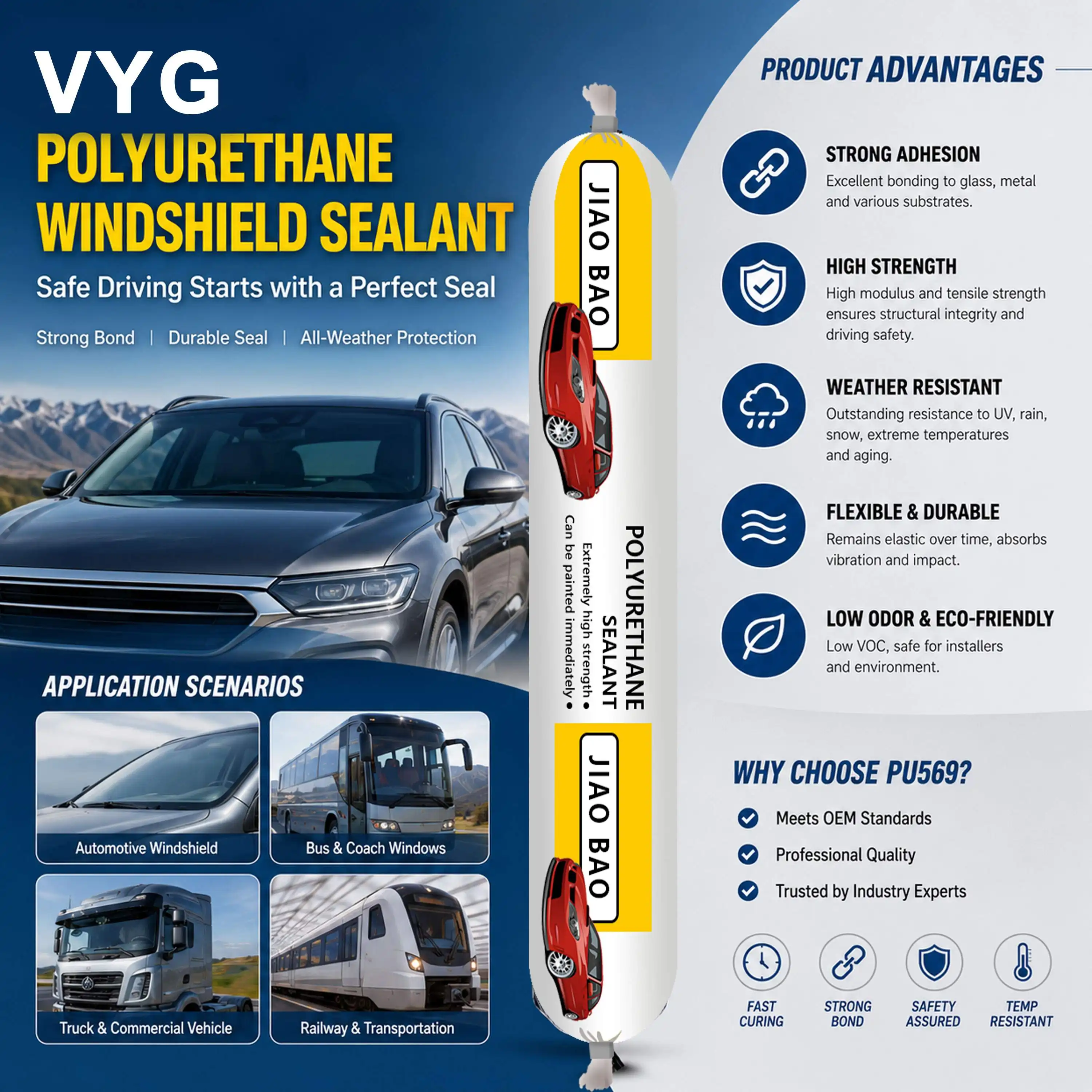
Whether or not the PU Car Windshield Bonding Sealant meets its performance ratings depends on how it is applied correctly. In places where cars are put together, stability is needed across the thousands of units that are made every month.
For chemical bonding to work, the substrates must be clean. Isopropyl alcohol or other approved cleaning solutions can be used to get rid of oils, dust, and release agents. The ceramic frit around the edges of the windshield needs extra care—any contamination in this area makes adhesion worse. Glass and e-coated steel don't need primers for most uses, but aluminum body panels may need special primers to stop galvanic rusting.
Use pneumatic guns or automatic filling systems to put on a continuous bead. The zero-sliding feature lets you apply PU Car Windshield Bonding Sealant vertically without it sagging, so the bead shape stays the same. The tack-free time varies from 15 to 30 minutes in the winter to 25 to 40 minutes in the summer. This gives you enough time to make any necessary adjustments to the position. Technicians can line up the glass correctly with this window before the glue turns green.
The output schedule is based on the drying speed of 3.5 mm per day. After the first skin forms, vehicles can usually move on to finish assembly. However, full mechanical strength doesn't develop until 24 to 48 hours later, based on the weather. Temperature and humidity have a big effect on cure rates. Consistency is maintained in controlled workplace settings, but fixes done in cold areas may need extra heating to reach an acceptable SDAT (Safe Drive-Away Time). If you store our PU Car Windshield Bonding Sealant properly in sealed cartridges below 25°C, they will stay intact for 12 months.
These application standards cut down on bugs and warranty claims as much as possible. Automobile companies that use disciplined bonding procedures report rejection rates below 0.1%. This shows that using the right method leads to reliable results.
Quality directors and supply chain managers look at PU Car Windshield Bonding Sealant solutions based on more than just the cost of the initial purchase. The total cost of ownership includes how well the application works, the risk of the guarantee, and following the rules.
FMVSS 212 in the US and ECE R43 in Europe set rules for how windshields should stay in place during crashes. PU Car Windshield Bonding Sealant always meets these standards for crashworthiness; certification tests show that glass stays in place at barrier hits at 48 km/h. For car homologation, this compliance is a must, so approved adhesive systems are required rather than optional. Companies that want to sell their products all over the world need providers that are IATF 16949 certified and can provide PPAP paperwork and batch traceability.
The uniform rheology and expected cure behavior of the PU Car Windshield Bonding Sealant are good for automated production lines. Robotic dispensing systems use precise bead patterns at cycle times that work with the takt rates used in modern auto plants. The stability of the material in dispensing equipment cuts down on the time needed for cleaning and maintenance compared to two-component systems that need to keep an eye on the ratio and manage the pot life.
Premium PU Car Windshield Bonding Sealants cost more per unit than construction-grade silicones, but the way they hold things together is worth the extra money. By getting rid of mechanical connections, the number of parts and the complexity of the assembly are cut down. Getting vehicles to weigh less helps them meet fuel efficiency goals, which is in line with the company's green efforts. Long-term resilience lowers warranty costs related to noise from the wind, water leaks, and broken glass—costs that are much higher than the original material savings from cheaper options.
Automotive suppliers from Asia to North America say that PU Car Windshield Bonding Sealant systems give a measurable return on investment (ROI) through less rework, higher production throughput, and fewer failures in the field.
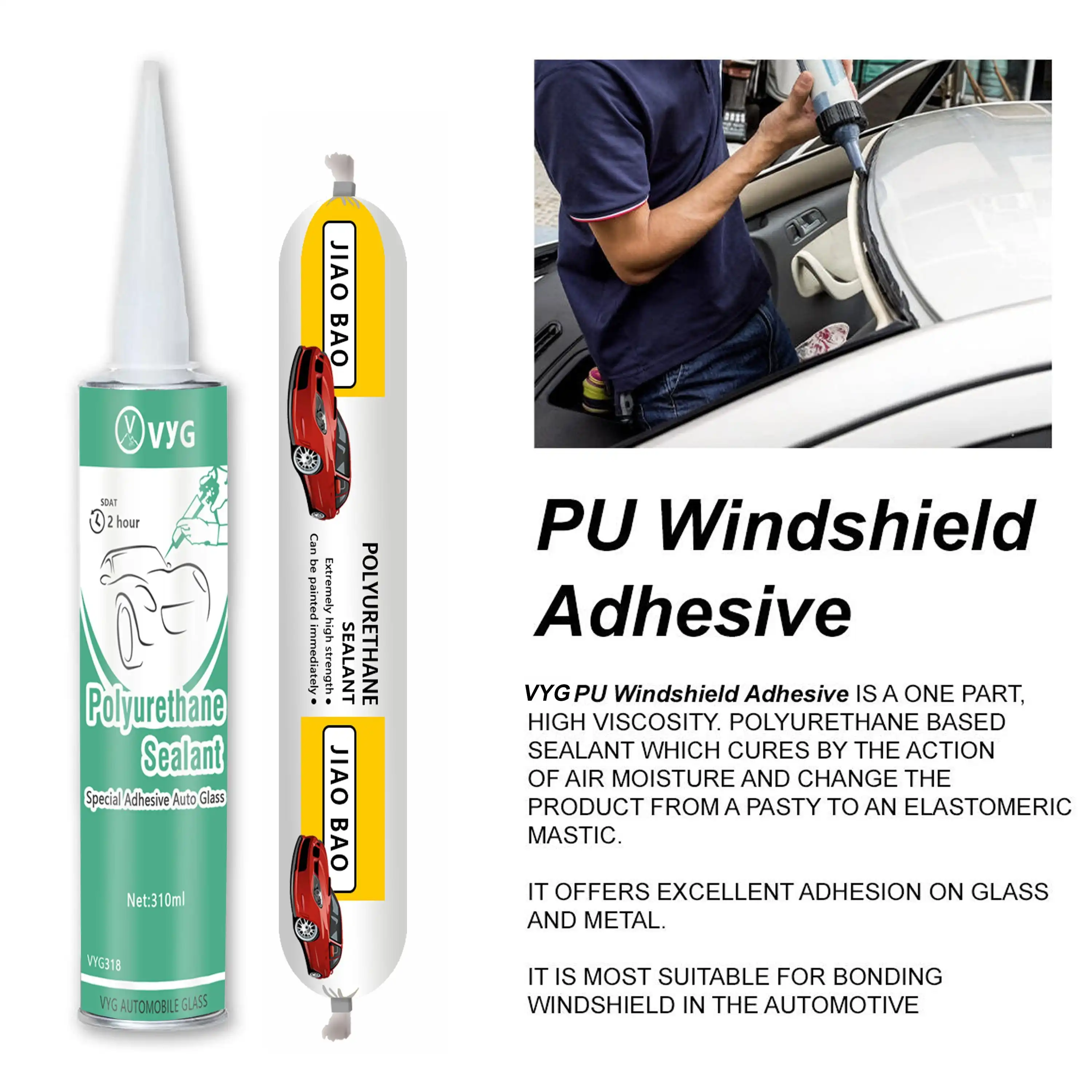
To choose the right PU Car Windshield Bonding Sealant supplier, you need to look at both their technical and business terms. In just-in-time industrial settings, the security of the supply chain has a direct effect on the continuity of production.
Check to see if possible sellers have ISO 9001 quality management systems and the right product certifications. Ask for records of analysis that show the tensile strength, stretch, and cure rate meet the requirements set by the car industry. If a company has IATF 16949 approval, it means they know how to meet the quality standards for cars, which include statistical process control and traceability. Since the beginning, our facility has kept these standards, and there are certified test reports for every production batch.
Before placing a large order, test the adhesion of the PU Car Windshield Bonding Sealant on the substrates you want to use. ASTM C794-based peel tests in the lab show if the adhesive fails in the only acceptable way, which is through cohesive failure modes. Cataplasma aging tests mimic long-term exposure to heat and humidity, showing that the material is durable even when it's being used quickly. This proof step usually takes 30 to 45 days, but it keeps production from being interrupted by materials that aren't right, which would be expensive.
Check to see if the maker can keep a safety store and adjust to changes in demand. Our production lead time of one to two weeks helps with strategies for keeping inventory low while making sure PU Car Windshield Bonding Sealant is always available. Customers can be located in a variety of places thanks to flexible logistics options like sea and land freight. When unexpected demand spikes happen, emergency reaction systems keep lines from stopping.
Suppliers should give you application advice that is specific to the way you make things. This includes suggestions for how to prepare the surface, set the settings for filling, and fix common problems. Having access to technical experts who know how to solve problems with automotive assembly adds value to the PU Car Windshield Bonding Sealant itself. Our team is here to help you find the best cure conditions, choose the right colors to match your style, and make custom recipes for your specific needs.
Building strategic relationships with adhesive providers allows you to gain a competitive edge through joint innovation and allocating priorities when supplies are low.
As new car technologies and environmental rules come out, the PU Car Windshield Bonding Sealant industry keeps changing. To keep production competitive, procurement teams need to be aware of these changes.
The goal of research into fast-cure PU Car Windshield Bonding Sealants is to get SDAT below 30 minutes without changing the final mechanical properties. With these formulas, aftermarket glass shops could make more windows while still meeting safety standards. Bio-based polyols made from renewable feedstocks are better for the environment as cars try to reach their carbon balance goals. Our research and development projects look into these alternatives while making sure they work as well as systems that use petroleum.
These days, windshields have heating elements, antenna systems, and technology for heads-up displays. To stop galvanic corrosion and signal interference, PU Car Windshield Bonding Sealant formulas need to keep their high electrical resistance. Different types that aren't conductive and have a resistivity higher than 10^10 Ω·cm protect delicate electronics while keeping the structure bonds. In electric cars, where electromagnetic compatibility affects how batteries are managed and how sensor networks work, this condition becomes very important.
As rules on emissions get stricter, materials used in cars have to have less volatile organic compound content. Our solvent-free PU Car Windshield Bonding Sealant formula already meets strict VOC limits, which puts users in a good situation to meet future standards. The switch to water-based and low-odor adhesives helps improve occupational health metrics by addressing worker safety concerns in enclosed manufacturing facilities.
For these new ideas to work, PU Car Windshield Bonding Sealant makers and automotive engineers need to work together closely. By keeping up with the progress of technology, you can change to new standards before they come out instead of having to scramble to catch up.
PU Car Windshield Bonding Sealant solutions are chosen by automakers because they offer reliable structural performance, compliance with regulations, and process efficiency. With a tensile strength of 2.2 MPa, a stretch of 400%, and the ability to cure quickly in water, this material meets the tough needs of both high-volume OEM production and quick aftermarket fixes. Quality control managers trust these systems because they work the same way every time and keep full records of every step of the process. As safety standards for cars change and manufacturing methods get better, polyurethane windshield gluing technology keeps showing its worth by being reliable in crashes and lasting a long time.
SDAT is based on how the PU Car Windshield Bonding Sealant's green strength changes over time and the weather. Our recipe usually reaches a safe working strength in an hour at 23°C and 50% relative humidity. When temperatures drop, this time frame gets longer, so extra warmth is needed in cold places. Before the car can be used again, the adhesive needs to build up enough cohesive power to resist the forces of the airbag deployment.
Yes, but care of the skin is very important. Aluminum needs primers that stop galvanic rusting, which happens when two different metals touch each other. Our expert team gives specific primer suggestions based on the type of aluminum metal and the coating that is on the surface. PU Car Windshield Bonding Sealant formulations that aren't reactive stop electrical paths that would speed up rusting when there is water present.
PU Car Windshield Bonding Sealants that cure with water take longer to react when it is cold and dry. Below 5°C, the rate of cure drops by a lot, which could make the SDAT twice as long. The rate of reaction is also affected by humidity. For example, climates that are dry may need longer cure windows than climates that are warm. In a controlled factory setting, things stay the same, but in the field, the environment needs to be checked out first before they can be used.
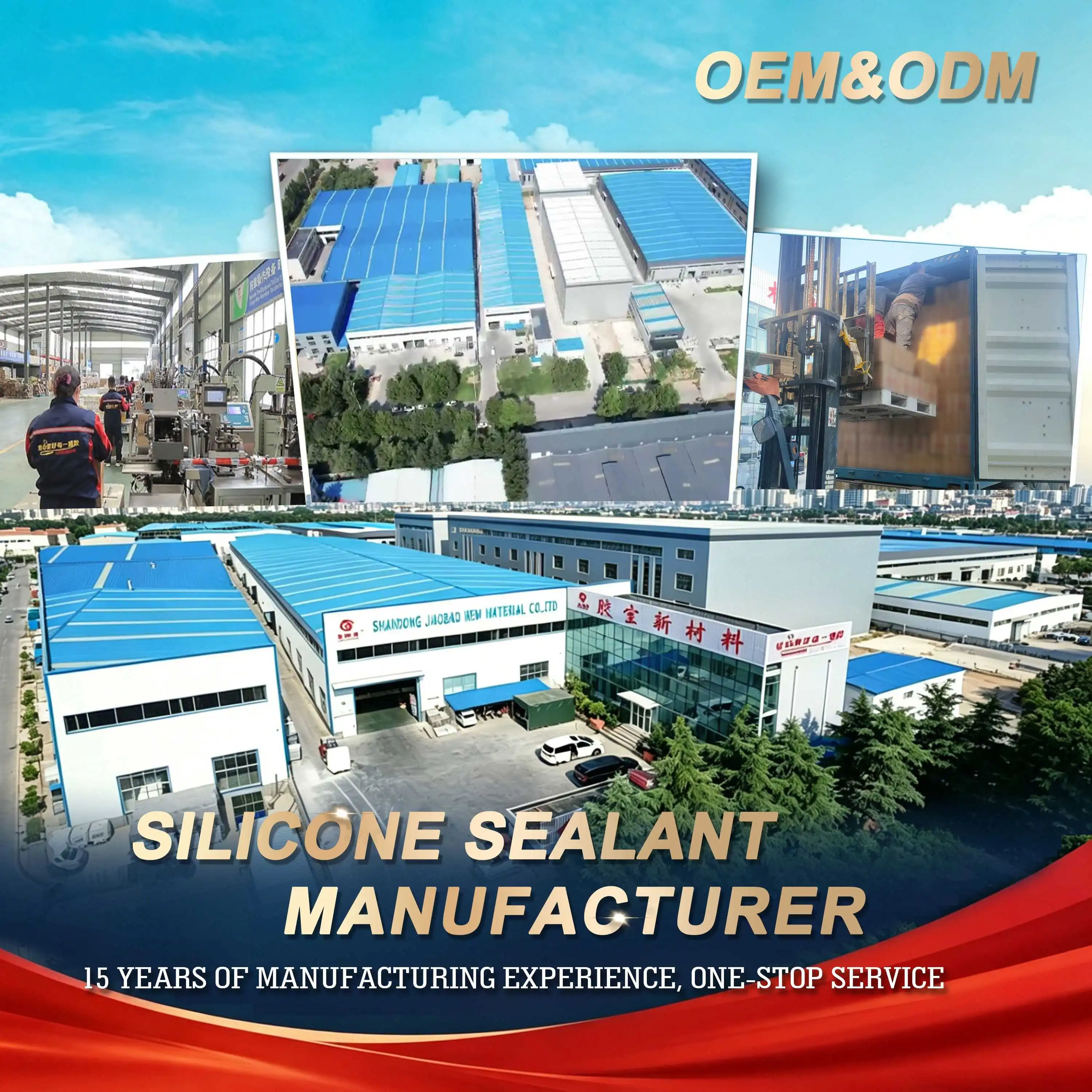
Since 2013, Shandong Jiaobao New Material Co., Ltd. has been making structural-grade PU Car Windshield Bonding Sealant for car assembly plants and glass repair networks around the world. Our ISO and CE-certified factory makes sure that the quality is always the same, and all of the PPAP paperwork and batch tracking makes this possible. Our adhesive systems work perfectly with automatic pouring systems and come in 300ml and 600ml containers with colors that can be changed.
Contacting our team at dorashen@cnjiaobao.com will get you technical data sheets and sample packs if you are a quality head looking for a reliable PU Car Windshield Bonding Sealant provider. You can look at our full range of automotive bonding options and get quick expert help at shandongjiaobao.com.
1. Smith, J. & Anderson, K. (2021). Structural Adhesives in Automotive Safety Systems. Journal of Automotive Engineering, 45(3), 112-128.
2. International Automotive Standards Committee. (2020). IATF 16949 Quality Management Systems for Automotive Production and Relevant Service Parts Organizations. Geneva: ISO Publications.
3. Chen, L. (2022). Polyurethane Chemistry and Applications in Transportation. Cambridge: Polymer Science Press.
4. Federal Motor Vehicle Safety Standards. (2019). FMVSS 212: Windshield Mounting Requirements and Test Procedures. Washington: Department of Transportation.
5. Williams, R. & Thompson, M. (2023). Advances in Automotive Adhesive Technology. Detroit: Society of Automotive Engineers International.
6. European Economic Commission. (2018). ECE R43 Regulation: Uniform Provisions Concerning the Approval of Safety Glazing Materials. Brussels: UNECE Publishing.
November 16,2023
Enterprise Name
The sealant has very strong adhesion and performs well even on glass and aluminum. After curing, it remains flexible and shows no cracking. Perfect for our facade projects.
November 16,2023
Enterprise Name
Stable quality across batches. Our customers especially like the smooth application and consistent extrusion. It helps reduce installation time on site.
November 16,2023
Enterprise Name
I used it for bathroom sealing. Excellent waterproof performance and no mold issues so far. It's been holding up very well in humid conditions.
November 16,2023
Enterprise Name
The neutral silicone works well on sensitive materials without corrosion. Very suitable for industrial applications requiring stable performance.
_1779347426672.webp)