November 16,2023
Enterprise Name
The sealant has very strong adhesion and performs well even on glass and aluminum. After curing, it remains flexible and shows no cracking. Perfect for our facade projects.
Sep 9, 2026
Choosing the right acrylic sealant for interior use determines whether your trim work looks flawless after painting or develops cracks and color mismatches within weeks. Water-based acrylic sealants remain the professional standard for sealing gaps around door frames, baseboards, window casings, and drywall joints precisely because they accept paint seamlessly while maintaining flexibility.
Unlike silicone alternatives that repel coatings, quality acrylic formulations bond to porous substrates and cure through water evaporation, creating paintable surfaces that blend invisibly into finished interiors. For contractors managing tight schedules and distributors seeking reliable inventory, understanding technical specifications like extrusion rates, tensile strength, and VOC compliance transforms purchasing decisions from guesswork into strategic advantage.
Acrylic sealants that are water-based work as plasto-elastic compounds that are designed to fit non-structural interior joints. The chemistry is based on acrylic polymer dispersions that are mixed with water carriers. The materials dry by evaporation instead of chemical reactions. Because acrylics cure differently than polyurethanes and silicones, they are safer for busy areas by nature.
The mixture has acrylic resins, calcium carbonate fillers, plasticizers to make it flexible, and thixotropic agents to keep it from slumping on vertical surfaces. As the seal is being put on, the water slowly evaporates, concentrating the polymer matrix into a solid rubber seal. High-quality formulas keep between 80 and 85% of their solid material, which keeps the volume from shrinking too much and causing joints to fail. Since there are no solvents, there are no strong smells, and the building meets the standards for LEED approval for sustainable construction.
Interior acrylic seals solve problems with maintaining a consistent look across a number of different surfaces. They are used by contractors to seal the joints between painted millwork and walls, fill in tiny cracks in gypsum board, and make smooth edges around window frames. The material allows joints to move up to 12.5%, which is enough for temperature-related growth in climate-controlled spaces. In commercial settings, they are used in acoustic divider systems where good sealing increases the sound transmission rates. Specialized intumescent versions can stop fires in penetration seals.
Modern formulations have VOC levels below 50 g/L, which is a lot less than solvent-based alternatives that have levels above 250 g/L. This drop is especially important for renovations in buildings that are already occupied, since the air quality directly affects the health of the people who live or work there. Concerns about getting rid of toxic trash are taken care of by the water cleanup process, and the lack of isocyanates or strong solvents lowers the risk of lung damage for installation teams working long shifts.
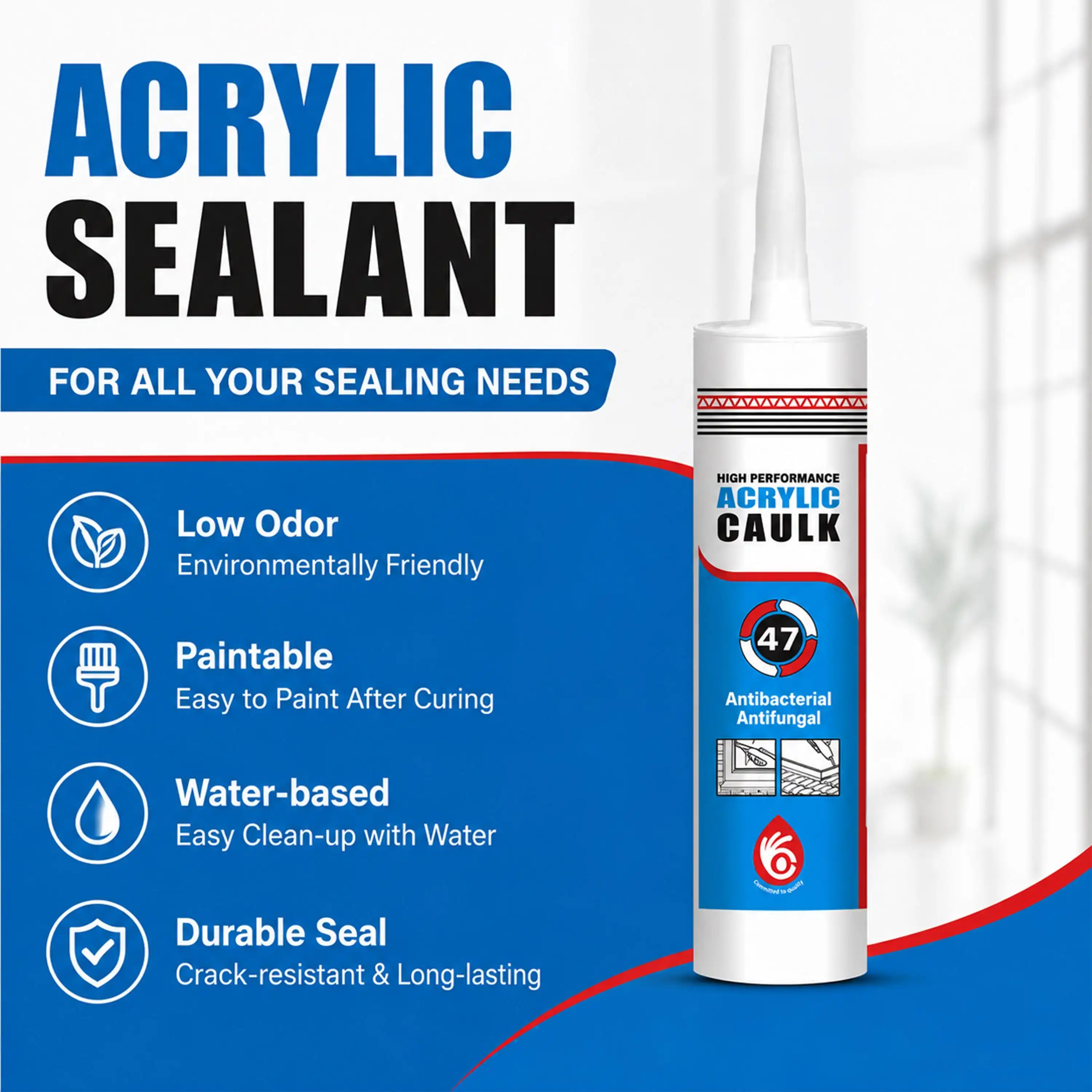
For professional-level picking, you need to look at performance measures that have a direct effect on how well the product installs and how long it lasts. The following factors separate high-end formulas from low-cost options that are likely to fail early.
Workflow timing is based on how long it takes for skin to form. Painting can be done the same day with products that dry the surface in 30 minutes or less, which cuts project timelines by a lot. Acrylic Sealant for Interior Use fits this need perfectly: our one-part RTV acrylic sealant has a verified skin dry time of 0.5 hours, which is an advantage that lets contractors finish seal-and-paint sequences in a single visit. Depending on the depth of the joint and the humidity in the air, a full cure usually takes 24 to 48 hours. However, surface readiness is what matters most for production efficiency.
Tensile strength shows how well a sealer can keep its shape when it's under stress. The normal range of 0.4 to 0.6 MPa at 23°C works well enough for inside uses without spending too much on engineering. Our formula gets to 0.64 MPa, which is within the range of professional standards while still allowing for the needed flexibility. Zero sinking in vertical applications (a slump degree of 0 mm) stops needless redoing and makes sures clean bead profiles on upright joints, where gravity can damage cheaper products.
Adhesion to porous materials like drywall, wood, concrete, and plaster without primer cuts down on the cost of both work and materials. Testing should check for cohesive failure modes instead of glue separation, which would show that the polymer and base are properly bonded. When different types of materials meet at joints, their expansion coefficients must be able to work together without delamination or cracking when temperatures change with the seasons.
The best thing about acrylic technology is that it can handle latex and alkyd paints without bead crawling or failing to stick. Because it comes in white, black, gray, and custom colors, it's easy to match the color to a specific design scheme. This keeps high-end finishes from showing sealant lines. Testing for compatibility with the topcoats that will be used stops crazing, which happens when chemicals that aren't compatible cause the surface to crack after painting.
Specification mistakes can be avoided by understanding the differences between things that matter. Each type of sealer has different performance needs that are matched to certain application situations.
Silicone products are better at allowing for movement (25%+) and keeping water out, but paint coatings won't stick to them because they have low surface energy. Because of this, silicone can only be used in places that can't be painted, like bathroom fixtures and glass parts. Acrylic sealants give up some water resistance so that they can be painted, which makes them indispensable for obvious building parts that need to be coated. Acrylics can be cleaned up with water, while silicone tools and equipment need to be cleaned with solvents.
Traditional rubber caulks have less acrylic polymer in them, which makes them less flexible and long-lasting. Even though they are cheaper at first, rubber versions shrink more quickly and don't last as long. Professional-grade acrylics are more expensive because they can fill gaps better, crack less, and stick to a wider range of substrates better. The difference in performance is clear in business settings with a lot of foot traffic, where regular upkeep costs a lot.
Polyurethane chemistry has great adhesive and wear resistance, but it can be dangerous when used because it releases isocyanates. The material also cures more slowly and has fewer paintable windows. Acrylic Sealant for Interior Use offers a clear advantage here: acrylics are easier to work with and accept paint right away, which speeds up processes where different trades work together one after the other. Because they are cheaper, acrylics are often used for non-structural interior sealing, since polyurethane doesn't need to have better mechanical properties.
The quality of the installation directly affects how well and how long the sealing lasts. Standardized application procedures cut down on callbacks and warranty claims, which hurt profits.
Surfaces that are clean and free of dust, grease, and other small bits will stick well. Drywall dust can be cleaned up by wiping joints with wet cloths, and wood trim can be cleaned of oils with degreasing solvents. Before applying, surfaces must be completely dry, since water slows down bonding and increases fix times. Putting masking tape along the edges of the joints makes beads that look professional and makes cleanup easier.
A steady gun pressure and a steady travel speed are needed for a bead to stay the same size. With extrusion rates of about 163 ml/min, cartridge guns with 6:1 or 10:1 thrust ratios can produce products with enough pressure that meet the needs of our formulation. Most interior gap widths can be met by cutting nozzles at 45-degree angles and keeping openings between 6 and 8 mm. Using wet fingers or spatulas to smooth out surfaces and push material into joint holes makes the contact area and bonding better.
Temperatures in the room between 5 and 35℃ are best for cure rates and keeping the formulation from becoming unstable. When it's very dry, the surface may skin before it's ready to be tooled, and when it's very humid, the drying time is longer. Advanced formulations have skins that form quickly (in just 0.5 hours), so you can paint in hours instead of days. However, it takes 24 to 48 hours for the full mechanical strength to develop. During this drying time, don't let any water or mechanical stress touch the new sealant.
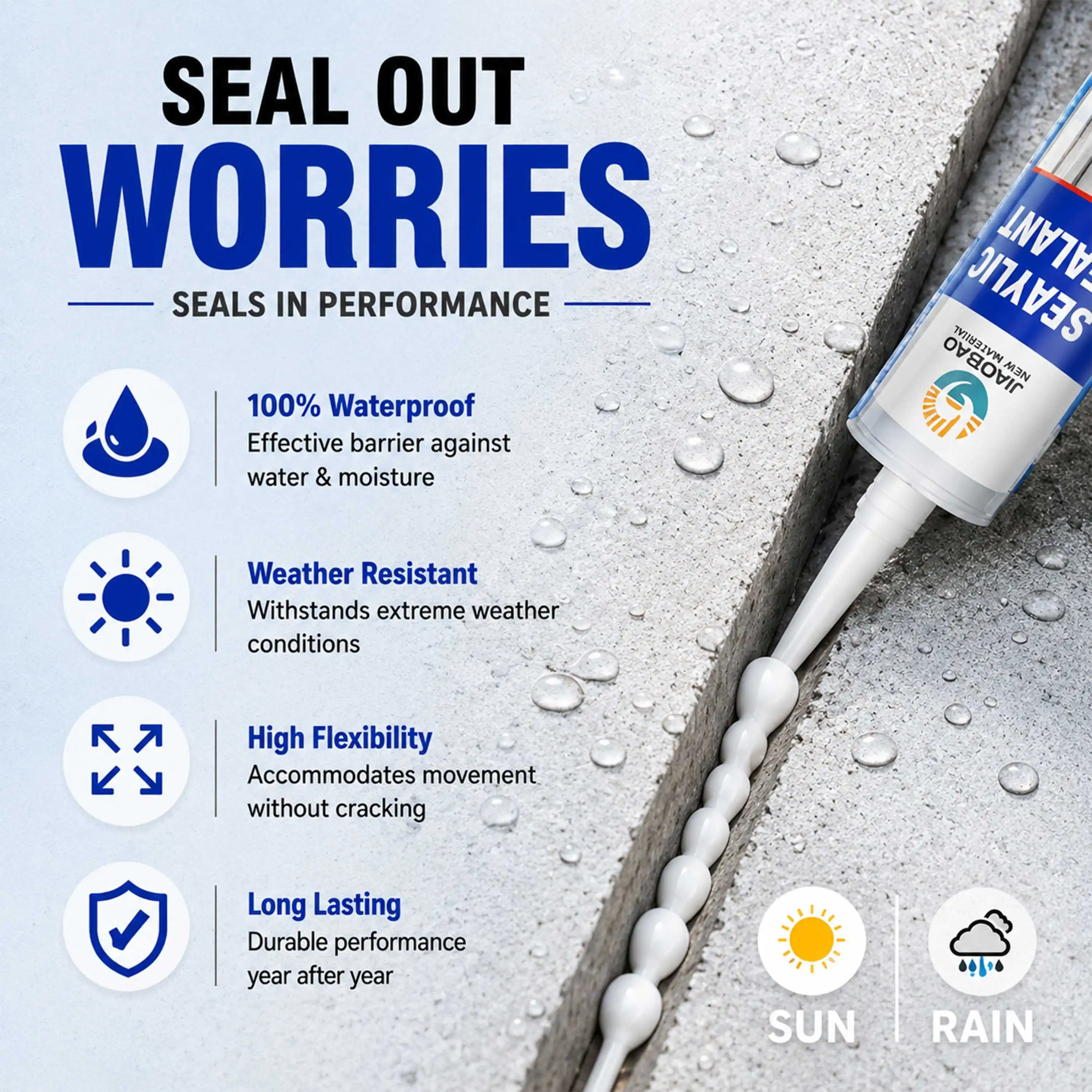
Strategic buying strikes a mix between making sure quality and cutting costs. Knowing what your provider can do and how certified their products are can help you avoid getting low-quality materials that hurt the results of your project.
Companies that have both ISO and CE certifications show that they are committed to using consistent quality management systems. Production history of more than ten years shows that the recipe is well-known and the supply chain is stable. Acrylic Sealant for Interior Use is a core product in this stable portfolio. Jiaobao has been making things for 13 years, which makes us one of the most experienced sources that can meet strict business needs. Check the testing options for important factors like VOC measurement, adhesion testing, and shrinkage analysis.
Different application sizes can be fit into sausage and cartridge packing. For large projects, bulk sausages cut down on packaging waste, while standard 300ml and 600ml cartridges are better for smaller jobs and retail distribution. Making sure that the product is freeze-thaw stable saves packages during cold weather logistics. Keeping the storage temperature above 5℃ also keeps the 12-month shelf life that is recommended for quality formulations. Lead times of one to two weeks allow for just-in-time product control without having to pay too much for storage.
Unit prices are very different between buying from a store and buying directly from the plant. OEM deals that offer private labeling and custom color matching are good for distributors who want to keep their profit margins high. Volume discounts encourage people to place bigger orders, and flexible minimum order amounts let stores serve a wide range of customers by offering a wider range of SKUs. Clear pricing that separates base costs from certification premiums lets you do a good job of weighing the costs and benefits.
When choosing the right interior acrylic sealants, you have to weigh the technical performance against the costs and time constraints of the project. Acrylic Sealant for Interior Use stands out as a reliable option in this evaluation. Products that show fast skin formation, no slump, strong tensile strength, and confirmed paintability provide real value by lowering labor costs and improving finish quality.
Environmental compliance through low VOC mixtures meets government rules and protects the health of installers. When skilled contractors and wholesalers buy from well-known companies with clear quality control systems and the ability to make changes as needed, they lower the risks of the purchase and ensure a steady supply over time.
Standard acrylic formulations work well when they are exposed to short periods of wetness, like in baths, but they are still not ideal for long periods of immersion in water. For shower enclosures and bathtub surrounds, you need silicone sealants that are very good at keeping water out. Acrylic materials work well around bathroom trim, the edges of vanities, and the points where walls and ceilings meet, where humidity can build up without direct touch with water.
Cracking usually happens when paint is applied before the skin has had a chance to fully form or when low-quality seals shrink too much. If you wait at least one to two hours for the area to dry, paint won't trap water that stops it from curing. When high-shrinkage versions don't have enough acrylic polymer, interior stresses build as water evaporates, which breaks down painted surfaces over time. This risk is reduced by choosing goods with 80% or more solid material.
Emulsion breakdown can happen in water-based formulations when they freeze, leaving behind a permanent separation that makes the material useless. Quality goods go through freeze-thaw stability testing according to ASTM C731 standards, and they can handle many cycles without losing any of their performance. Even goods that have been fixed should be kept above 5°C to make sure they last as long as possible. Before using, check the cartridges for separation or a chunky feel that could mean they were frozen.
Jiaobao makes high-performance plastic water-based sealants for indoor use that meet strict international standards. Our one-part RTV mixture dries on the skin in half an hour and extrudes at a rate of 163 ml per minute, which helps installation go smoothly. Our goods are sold to builders, wholesalers, and OEM partners in both the domestic and industrial markets. They come in 300ml and 600ml containers and can be white, black, gray, or a unique color. With 13 years of production experience and ISO and CE certifications, you can be sure of consistent quality and a reliable supply.
You can email us at dorashen@cnjiaobao.com to talk about bulk prices, custom formulas, or technical details. Find out why top providers of acrylic sealer choose Jiaobao for reliable service and performance. Go to shandongjiaobao.com to find detailed product information and instructions on how to use the products.

1. American Society for Testing and Materials. "Standard Specification for Latex Sealing Compounds." ASTM C834-17, 2017.
2. International Organization for Standardization. "Building Construction - Sealants - Classification and Requirements." ISO 11600:2018.
3. U.S. Green Building Council. "LEED v4.1 Indoor Environmental Quality Credit: Low-Emitting Materials." Washington, 2020.
4. Beech, James C. "Construction Sealants and Adhesives: Performance Requirements and Application Methods." Building Science Press, 2019.
5. Wolf, Alan T. "Durability of Building Sealants: State-of-the-Art Report." Technical Committee 139-DBS, RILEM Publications, 2018.
6. National Institute of Building Sciences. "Whole Building Design Guide: Interior Finishes and Coatings." Building Enclosure Council, 2021.
November 16,2023
Enterprise Name
The sealant has very strong adhesion and performs well even on glass and aluminum. After curing, it remains flexible and shows no cracking. Perfect for our facade projects.
November 16,2023
Enterprise Name
Stable quality across batches. Our customers especially like the smooth application and consistent extrusion. It helps reduce installation time on site.
November 16,2023
Enterprise Name
I used it for bathroom sealing. Excellent waterproof performance and no mold issues so far. It's been holding up very well in humid conditions.
November 16,2023
Enterprise Name
The neutral silicone works well on sensitive materials without corrosion. Very suitable for industrial applications requiring stable performance.
_1779347426672.webp)