November 16,2023
Enterprise Name
The sealant has very strong adhesion and performs well even on glass and aluminum. After curing, it remains flexible and shows no cracking. Perfect for our facade projects.
Aug 7, 2026
Acrylic Sealant Construction Grade has become a cornerstone material in modern home improvement and commercial renovation due to its remarkable balance of performance and affordability. This water-based sealing solution addresses common construction challenges such as air infiltration, moisture ingress, and joint movement while maintaining paintability and environmental compliance. The versatility of acrylic-based sealants makes them indispensable for contractors managing multiple project types, from residential remodeling to large-scale building envelopes.
Material suppliers and construction firms benefit from products that reduce installation time without sacrificing joint integrity, especially when coordinating tight project schedules and budget constraints. Understanding the strategic applications and technical specifications of construction-grade formulations enables procurement managers to make informed decisions that enhance both operational efficiency and project outcomes across diverse building scenarios.
Acrylic Sealant Construction Grade is a high-performance, water-based plasto-elastic emulsion that was made to work well in professional building settings. Construction-grade versions are different from general-purpose DIY versions because they have a higher solid content (75–85%), which drastically lowers volume shrinkage during the curing process and makes sure that critical joints stay the same size.
The mix works great on water-loving surfaces like concrete, brick, plaster, and drywall, and it doesn't even need priming. This feature solves a long-standing problem in the industry: regular sealants don't stay in contact with surfaces that absorb water, which causes the bond to fail early and requires expensive repairs.
This material is easy to paint with latex paints and other building finishes once it has dried. The surface doesn't make paint run or make "shiners" that are noticeable and ruin the look of finishes. This feature sets acrylic formulations apart from silicone alternatives, making it possible for them to blend in with decorating schemes without the need for extra surface treatments.
To meet the standards for LEED and BREEAM approval, modern building projects need low-VOC materials more and more. Water-based acrylic sealants give off very few volatile organic compounds, which makes them safe to use in small interior spaces without needing extra ventilation or special masks for installation crews.
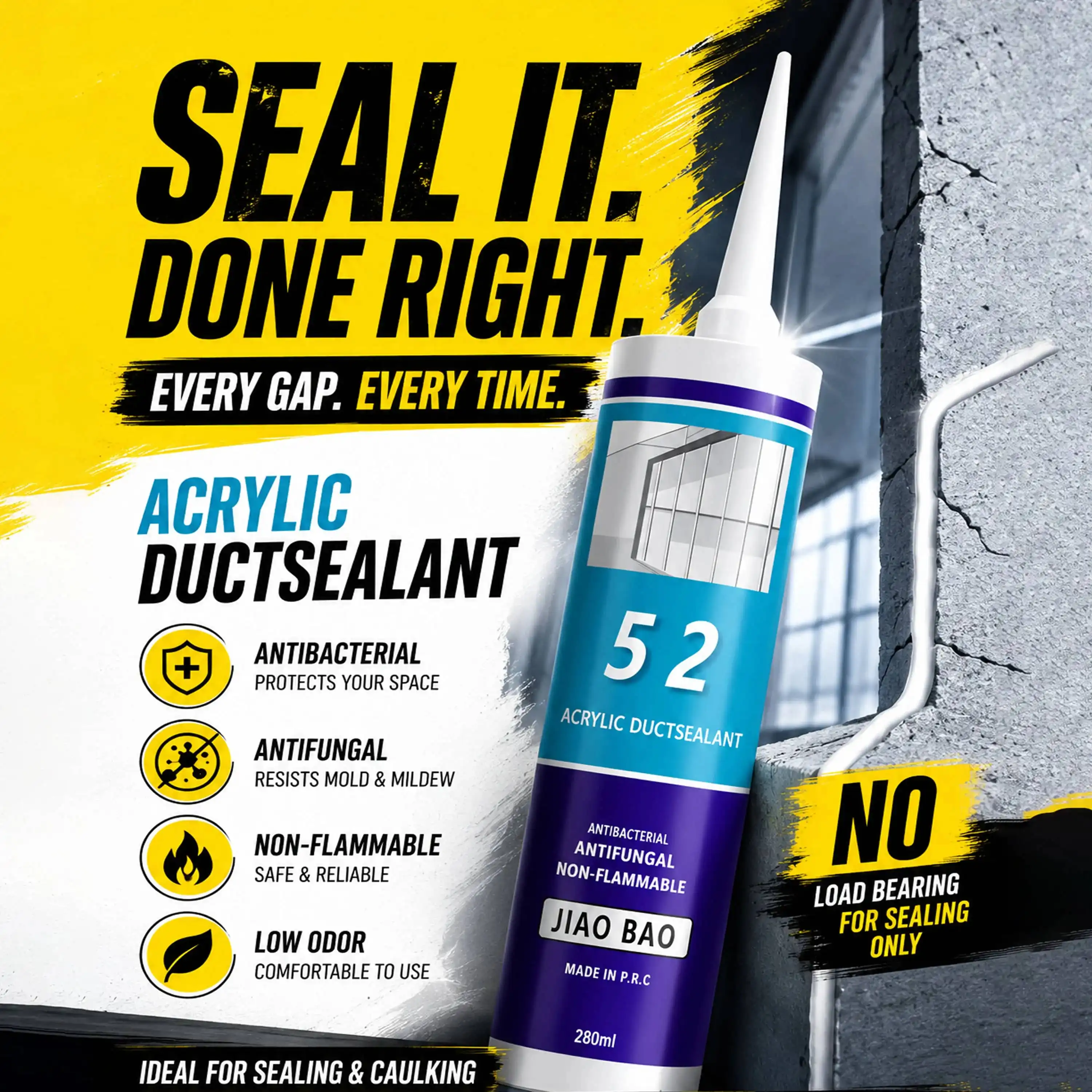
Acrylic Sealant Construction Grade formulations are useful in many building situations where they can be used for flexible sealing and are compatible with a wide range of finishes. This is good for both contractors and material suppliers.
Sealing the joint between window or door frames and the masonry or drywall next to them is one of the most important uses. Differential thermal expansion happens at these points because frame materials react to changes in temperature in a way that is different from the wall structures around them. The sealant allows for these movements while stopping air drafts that lower the energy efficiency of the building. Contractors like how the material's tooling qualities let them make clean bead shapes that make the area around building spaces look better.
Controlling sound transfer is becoming more and more important in business office spaces and buildings with multiple units. When used around service holes and the edges of drywall tracks, Acrylic Sealant Construction Grade's high-density formula successfully blocks sound transmission. This application helps directly with meeting the minimum Sound Transmission Class rates without using only expensive acoustic insulation materials. It is an affordable part of larger noise control plans.
Wall-to-ceiling joints, corner beads, and surface cracks need fills that are flexible enough to move with the structure without breaking. Because the material can stretch, it can accommodate small changes in the building while still maintaining a tight seal. Painters like how these fixes blend in with the finish coats, making surfaces that are smooth and meet quality standards for both commercial and residential projects.
Galvanized ductwork flanges and mechanical equipment holes in fire-rated assemblies need sealants that can stand up to vibrations and changes in temperature. The formula keeps its flexibility over a wide range of service temperatures that are common in mechanical spaces. This stops air from leaking, which lowers the efficiency of HVAC systems and raises building owners' working costs.
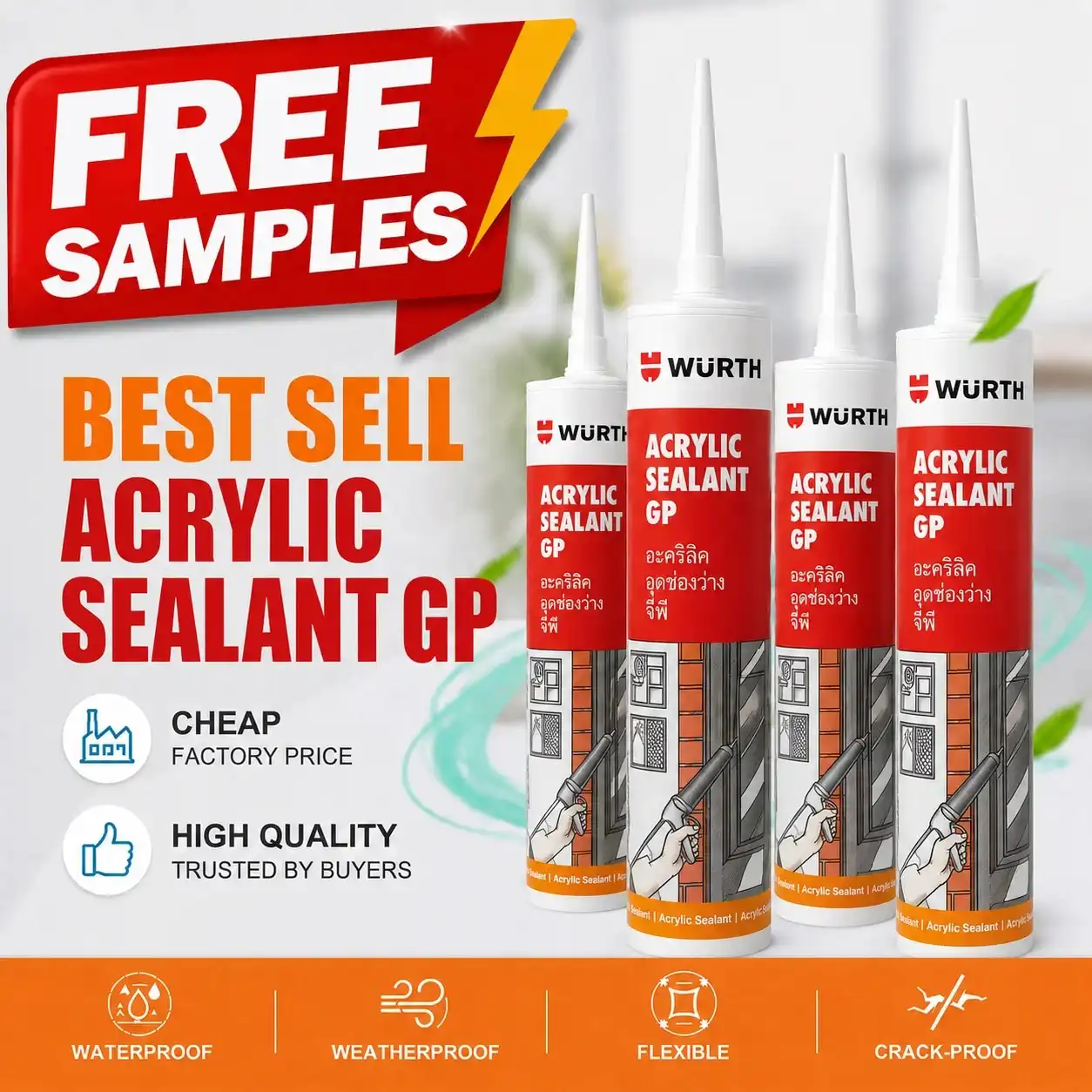
To get the best performance from Acrylic Sealant Construction Grades, you need to follow the right steps for preparation and application to get the best bonding and durability.
For bonding to work, the substrates must be clean and dry. Use the right brushing or solvent wiping to get rid of dust, loose particles, old sealant residue, and any other contamination. When you apply something, having moisture around can make it harder for it to stick, especially on surfaces like concrete and brick that hold water. Make sure the base is ready by giving it enough time to dry after cleaning.
For professional installations, cartridge guns or gas carriers that keep the extrusion pressure steady are used. For the best bead form, cut cartridge holes at a 45-degree angle so that the opening diameter is the same as the joint width. Keep the gun at a steady angle and apply the material at a steady rate to get a bead with even shape and no gaps or air pockets. Use the right finishing tools on the bead surface within the skin formation window to make sure it has the right shape and makes good contact with the joint sides.
Under normal conditions, the surface skin forms in 30 minutes, which lets early machine changes happen. Depending on the depth of the joint, the temperature, and the relative humidity, full adhesion takes between 24 and 48 hours. To keep the link from breaking or the surface from being imperfect, don't paint or load joints until they have had enough time to set. These time requirements should be shared by procurement managers with project schedulers so that there are no workflow conflicts that hurt the quality of the installation.
Shandong Jiaobao New Material Co., Ltd. makes a one-part RTV Acrylic Sealant Construction Grade that works really well and should be taken into account when selecting goods for large-scale material supply contracts. The formula achieves a sag degree of 0mm in vertical applications, which is much higher than the industry standard of ≤3mm and gets rid of the problems caused by gravity that happen with lower-quality products. With an extrusion rate of 163 ml/min instead of the normal 80 ml/min, installation crews can get more done because the product is dispensed faster without affecting bead control.
The fast surface drying time of only 0.5 hours speeds up the project, which is especially helpful when deals need to be coordinated quickly. As well as basic White, Black, and Grey colors, the product comes in 300ml and 600ml sizes and can be color-matched to any specification. It can meet the aesthetic needs of a wide range of building types. The 12-month shelf life gives wholesalers who manage stock turnover in regional warehouses more options for their goods.
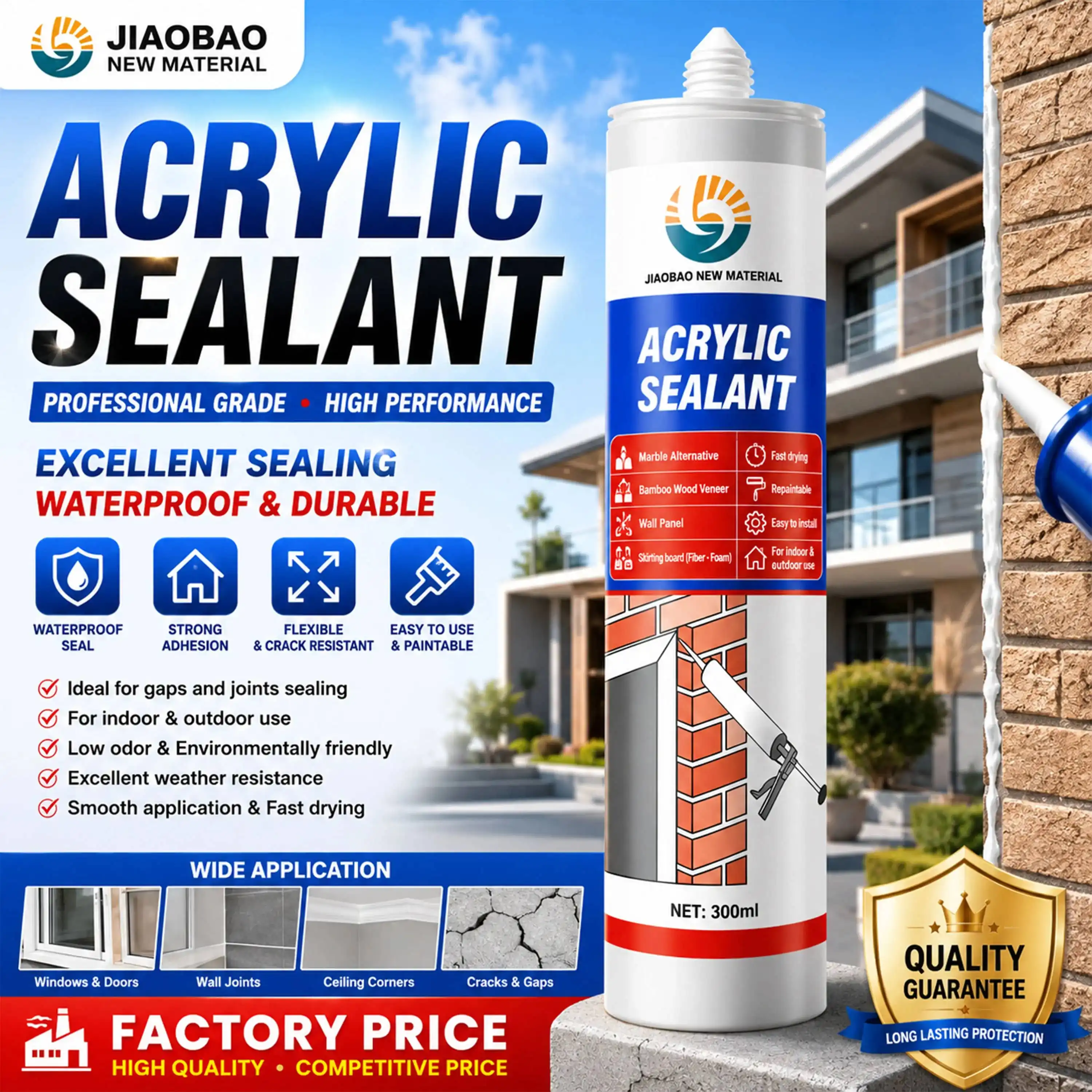
To choose the right materials, you need to know how Acrylic Sealant Construction Grade and other types of sealant work in key areas that are important for different building projects.
Silicone sealants are better at keeping water out and blocking UV rays, so they are better for situations where the joint will be exposed to water for a long time. But silicone will never work with paints, and many surfaces need special primers to protect them. Acrylic formulas are easy to paint on and stick to porous materials without primers. This makes them better for interior projects where the finished look is important and water exposure happens sometimes instead of all the time.
Polyurethane seals are more flexible and last longer in harsh environments, which is why they are more expensive but worth it for demanding situations like horizontal expansion joints and places with a lot of foot traffic. The moisture-cured chemistry makes stronger bonds, but it needs to be handled more carefully and smells bad when it's being used. Acrylic choices provide good performance for low to medium movement joints at lower material costs. They are also easy to use, so teams of all skill levels can be successful.
Material requirements are often set by the budget for the project. Most of the time, acrylic sealants are 30–40% less expensive than high-end polyurethane or silicone products, but they still work well for most interior sealing jobs. When material providers buy large amounts of construction-grade acrylic mixtures, they can offer contractors lower prices without lowering the quality standards. This cost-effectiveness is especially important when sealing long stretches of land in large housing developments or commercial tenant improvement projects.
To make sure that projects are always delivered on time, strategic procurement decisions weigh the needs for technical performance against budget constraints and the dependability of the supply chain.
Check the elongation at break properties. They should be higher than 200% to allow for thermal expansion without cohesive failure. Check the solid content specs; formulas with 80–85% solids have fewer shrinkage problems that lead to joint voids that need to be fixed. Make sure that you're following the right standards, like ASTM C834 or ISO 11600 labels for your local market. Look over low-temperature flexibility data if your projects include installs in cold climates where sealants need to stay flexible in the winter.
Reliable manufacturing partners offer quality that is the same from batch to batch, backed by thorough quality control testing. Shandong Jiaobao New Material Co., Ltd. has been making silicone and Acrylic Sealant Construction Grade for more than 13 years, during which time they have developed mature process controls that ensure stable product performance.
The business has ISO and CE certificates, which show that it follows international quality management systems that are accepted by all places around the world. Production lead times of one to two weeks allow for quick order fulfillment that supports just-in-time inventory strategies. This lowers the cost of carrying inventory for distributors while keeping products available for contractor clients.
Volume purchasing lets you get better prices, which increases the project's profit margins. Material providers can make private-label goods that are specific to market groups or customer tastes by working with manufacturers that can do both OEM and ODM production. Customization options, such as matching colors and packaging formats, give you a chance to stand out in competitive bidding situations. Different regional logistics systems can be accommodated by different shipping choices by sea or land. This ensures reliable delivery whether it's for urban markets on the coast or construction zones in the middle of the country.
Acrylic Sealant Construction Grade is necessary for sealing in many home improvement and commercial building projects where being able to paint, having a variety of substrates, and being eco-friendly are all important factors. The technical qualities of the material help with real-world building problems like stopping air from leaking in, blocking out noise, and making sure that finished assemblies look good. It is helpful for procurement managers to know how these formulations compare to other sealant chemicals.
This lets them make decisions about specifications that improve both project performance and material costs. Building relationships with experienced manufacturers as a supplier guarantees consistent product quality, reliable shipping schedules, and expert help that makes installation go more smoothly in a wide range of building situations.
Water-based Acrylic Sealant Construction Grade doesn't give off many volatile organic compounds (VOCs) and don't contain any dangerous solvents, so they can be used in protected areas, such as buildings that are already occupied. Because it doesn't smell bad, it can be installed without requiring a lot of ventilation. This makes renovations easier when people are still living in the building while work is being done.
At standard conditions of 23°C and 50% relative humidity, skin forms on the surface in 30 to 60 minutes. It takes between 24 and 48 hours, based on the joint design and external factors, for full adhesion and mechanical property development to happen. As wetness evaporates, the healing process moves from the surface to the deeper parts. This makes the curing process take longer.
Construction-grade acrylic sealants work well in moderately exposed outdoor areas where they come into touch with water from time to time. They work well for sealing around covered window frames and door thresholds that are protected. For parts that are constantly submerged in water or exposed to high UV light, silicone or polyurethane chemicals last longer and should be chosen instead.
The success of procurement depends on choosing suppliers whose products are of good quality and whose logistics and customer service are reliable. Jiaobao sells Acrylic Sealant Construction Grade that meets strict performance standards and has low wholesale prices for people who buy in bulk and distribute materials. Custom formulations and private-label creation are supported by our production skills. This lets your business set itself apart in competitive markets. Qualified buyers who are looking at source partnerships can get technical datasheets and product samples. You can email our procurement team at dorashen@cnjiaobao.com to talk about your specific needs, ask for volume discounts, or set up quality assurance tests.
Our full after-sales service includes replacement warranties for any quality problems that happen during the product's shelf life. This lowers your risk of buying something. Find out how working with an experienced acrylic sealant manufacturer can improve the reliability of your supply chain and the way your project turns out.
1. Johnson, M. (2021). Construction Sealants: Selection and Application Guide for Building Professionals. Technical Publishing Group.
2. Anderson, R. & Chen, L. (2020). Water-Based Sealant Technology: Performance Characteristics in Modern Construction. Journal of Building Materials Science, 15(3), 145-162.
3. National Association of Home Builders. (2022). Residential Construction Performance Guidelines for Professional Builders and Remodelers. NAHB BuilderBooks.
4. Williams, T. (2019). Acoustic Sealing Methods for Multi-Family Housing: Materials and Best Practices. Construction Specifier Magazine, 72(8), 34-41.
5. Thompson, K. (2023). Comparative Analysis of Elastomeric Joint Sealants in Commercial Building Envelopes. International Journal of Construction Engineering, 28(2), 89-104.
6. Davis, P. & Martinez, S. (2020). Low-VOC Building Materials: Meeting Green Building Standards in Commercial Construction. Sustainable Architecture Quarterly, 11(4), 56-68.
November 16,2023
Enterprise Name
The sealant has very strong adhesion and performs well even on glass and aluminum. After curing, it remains flexible and shows no cracking. Perfect for our facade projects.
November 16,2023
Enterprise Name
Stable quality across batches. Our customers especially like the smooth application and consistent extrusion. It helps reduce installation time on site.
November 16,2023
Enterprise Name
I used it for bathroom sealing. Excellent waterproof performance and no mold issues so far. It's been holding up very well in humid conditions.
November 16,2023
Enterprise Name
The neutral silicone works well on sensitive materials without corrosion. Very suitable for industrial applications requiring stable performance.
_1779347426672.webp)