November 16,2023
Enterprise Name
The sealant has very strong adhesion and performs well even on glass and aluminum. After curing, it remains flexible and shows no cracking. Perfect for our facade projects.
Aug 1, 2026
When we talk about achieving flawless interior finishes in commercial and residential projects, the choice of joint sealing materials becomes a critical decision point. An Acrylic Sealant Decorative Joint Seal is a water-based, one-component sealing compound specifically engineered to create seamless, paintable connections between building materials such as drywall, wood trim, plaster, and concrete. Unlike generic caulks, these specialized products deliver superior aesthetic outcomes by offering smooth surface finishes, minimal shrinkage, and excellent color matching capabilities—qualities that matter immensely when client satisfaction hinges on visual perfection.
Getting interior finishing materials has changed a lot over the years, especially when it comes to how designers and builders look at joint sealing options. Acrylic Sealant Decorative Joint Seals are one of a kind in the market because they can be used for both protection and appearance. This guide is tailored to the needs of interior design firms, high-end decorating firms, and project managers who care about both dependability and quality of look.
This article talks about the technical differences between high-quality acrylic sealants and cheaper ones. It also talks about the best ways to use them to get long-lasting results and gives you suggestions on how to buy them. If you're looking for materials for high-end home projects or business interior fit-outs, knowing these basics will help you make smart choices that improve project quality while staying within your budget.
Along with other sealants, Acrylic Sealant Decorative Joint Seals are their own unique type. Because they are made from water, they don't have the smell or cleanup problems that come with solvent-based options. They also stick well to a wide range of substrates. The mixture usually has between 80 and 85% solids mixed in with an acrylic emulsion. This lets the material stay flexible while it's being applied and then harden into a strong, flexible bond.
The main difference is that one can be painted. Most paints won't stick to silicone seals because their surface isn't porous, but water-based and synthetic paints can be used directly on acrylic mixtures without primers. When seamless color blending between walls, trim, and building features is needed for a project, this trait comes in very handy. The thixotropic properties of the material keep it from sagging on vertical surfaces, so the bead profiles stay the same even when the material is used overhead, like when crown molding is installed.
Modern Acrylic Sealant Decorative Joint Seals have performance metrics that take into account common installation issues. At normal temperatures (23°C, 50% relative humidity), skin forms in 10 to 30 minutes. This gives enough time for tooling while speeding up project timelines. Movement accommodation usually falls between ±7.5% and ±12.5%. This means that these goods are better for low-movement ornamental joints than for structural growth gaps.
One big benefit is that it doesn't fade in UV light, which is especially important for uses near windows or skylights, where sunlight could turn less durable materials yellow. Quality formulations keep colors stable for long periods of time, so the desired look is kept without any discoloration. Shore A hardness numbers between 20 and 40 after full curing show that the material stays flexible without becoming brittle. This makes it less likely that cracks will form when buildings drop or temperatures change.
These sealants are used in many places in interior design and decorating projects. The most common use is for installing crown molding and baseboards. In these cases, the gaps between the trim and the wall need to be filled with a flexible material that blends in with the paint. The material's ability to keep air out helps the edges of door and window frames, and it can handle small changes in temperature without harming the paint finish.
Another important use case is for drywall corner connections and ceiling joints. As buildings settle, these stress points are often where traditional rigid joint materials break. Acrylic seals take in vibrations and small movements, stopping the tiny cracks that ruin the look of high-end surfaces. Contractors can make smooth transitions that won't show up when painted because they can sand cured material.
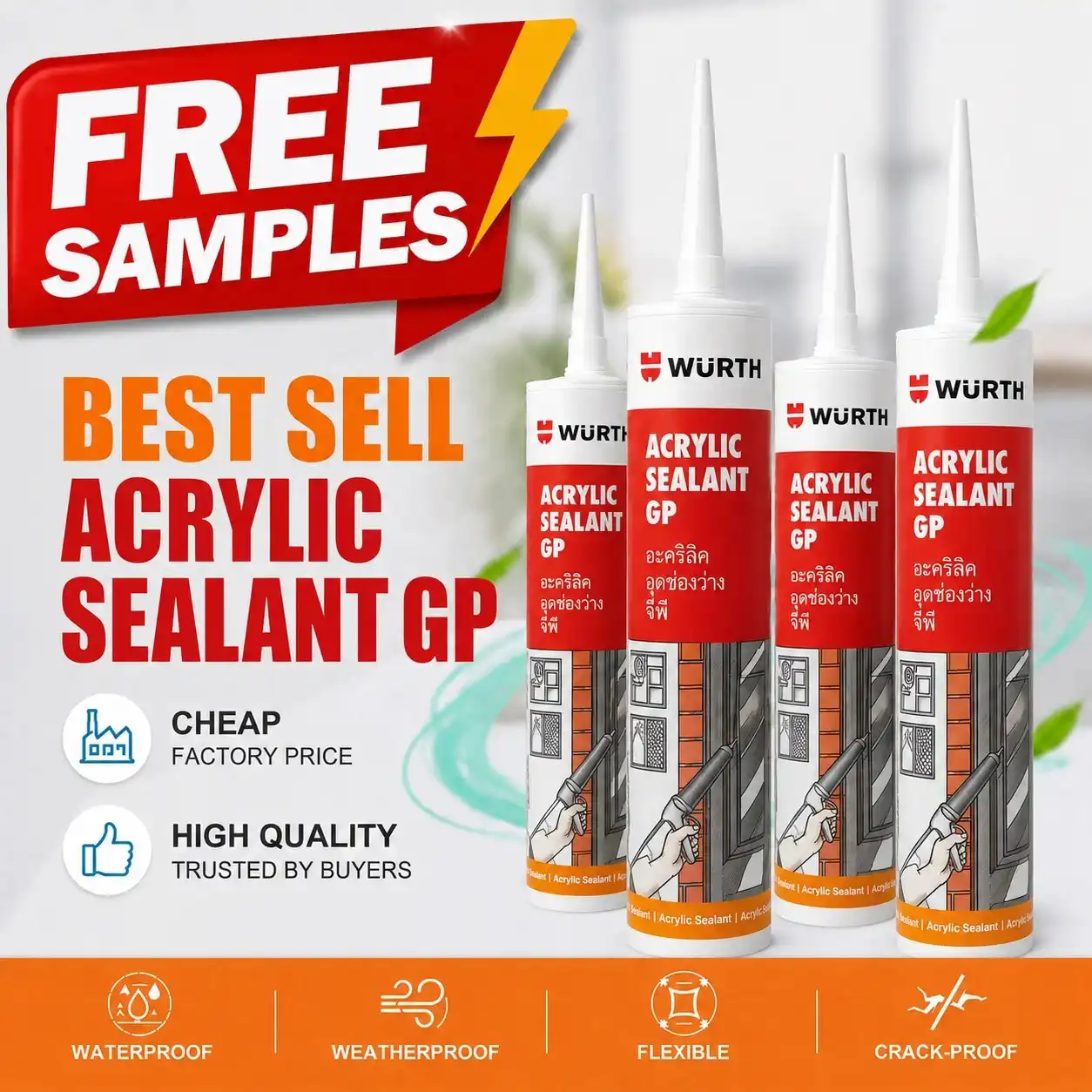
Instead of marketing claims, choices about what to buy should be based on performance traits of the Acrylic Sealant Decorative Joint Seal. The extrusion rate shows how easily the material flows from the application tools. High-quality goods usually have an extrusion rate higher than 200 grams per minute at standard pressure, which keeps the applicators from getting tired during big projects. When thousands of linear meters need to be sealed, this metric has a direct effect on the cost of labor.
When it comes to decorative uses, volume shrinkage is probably the most important factor. When the water in lower-quality acrylics evaporates, they may shrink more than 25%, leaving behind depressions that can be seen after painting. Professional-grade formulas keep shrinkage below 15% by using the right amount of filler, which keeps the joint profile you want during the curing process. Checking technical data sheets for shrinking guidelines can save you a lot of money on repairs.
Adhesion testing reveals how well the sealant bonds to common substrates without primers. When you do ASTM C794 peel tests on anodized aluminum, wood, and concrete, the tests should show cohesive failure (material breaks) instead of adhesive failure (material splits from base). This difference shows that the bond is strong enough to withstand cleaning, changes in temperature, and small physical impacts without coming apart.
Figuring out how acrylic sealants compare to silicone and polyurethane alternatives helps you decide when they should be used. Silicone goods are great for wet areas and structural parts because they are better at keeping water out and can handle more movement (±25–50%). Their higher costs and inability to accept paint, on the other hand, make them less suitable for interior decorative finishing where a smooth visual fit is very important.
Polyurethane sealants have great adhesion strength and abrasion resistance, but they usually need a more carefully prepared surface and smell worse when they're being used. Their longer cure times can make project schedules longer, while acrylic alternatives can be used in some situations faster without sacrificing quality.
The choice of which option to use should be based on the needs of the project. Wet places, like bathroom enclosures, need silicone's waterproofing properties. Painted internal trim work, on the other hand, benefits from acrylic's ability to match colors and be easy to work with. Knowing these things about the material stops design mistakes that cause speed problems or compromises in the way it looks.
No matter how good the product is, the long-term stability of the seal depends on how well the surface is prepared. The substrates need to be clean, dry, and free of anything that could get in the way of bonding. Using the right chemicals or mechanical cleaning to get rid of dust, grease, old sealant residue, and loose paint sets the stage for strong ties. If you try to put sealant on surfaces that are already damaged, it will fail quickly.
Joint design factors also have an effect on success rates. When you overfill joints, you make the material too thick, which makes shrinkage more noticeable and extends the time it takes to cure. Maintaining the right depth-to-width ratios (usually 1:2) improves efficiency by letting the material cure properly without loss. When you use backer rod in lower joints, you stop three-sided bonding, which creates internal forces that can lead to cohesive failure.
Temperature and humidity levels during application have a big effect on how the hardening process works. Extremely low temperatures make it take longer for water to evaporate, which could cause the sealant to sag before the skin forms. When there is a lot of humidity in the air, the surface may split or paint may not stick well if it is painted before enough moisture has been released. These problems can be avoided by keeping an eye on the surroundings and changing the times of applications as needed.
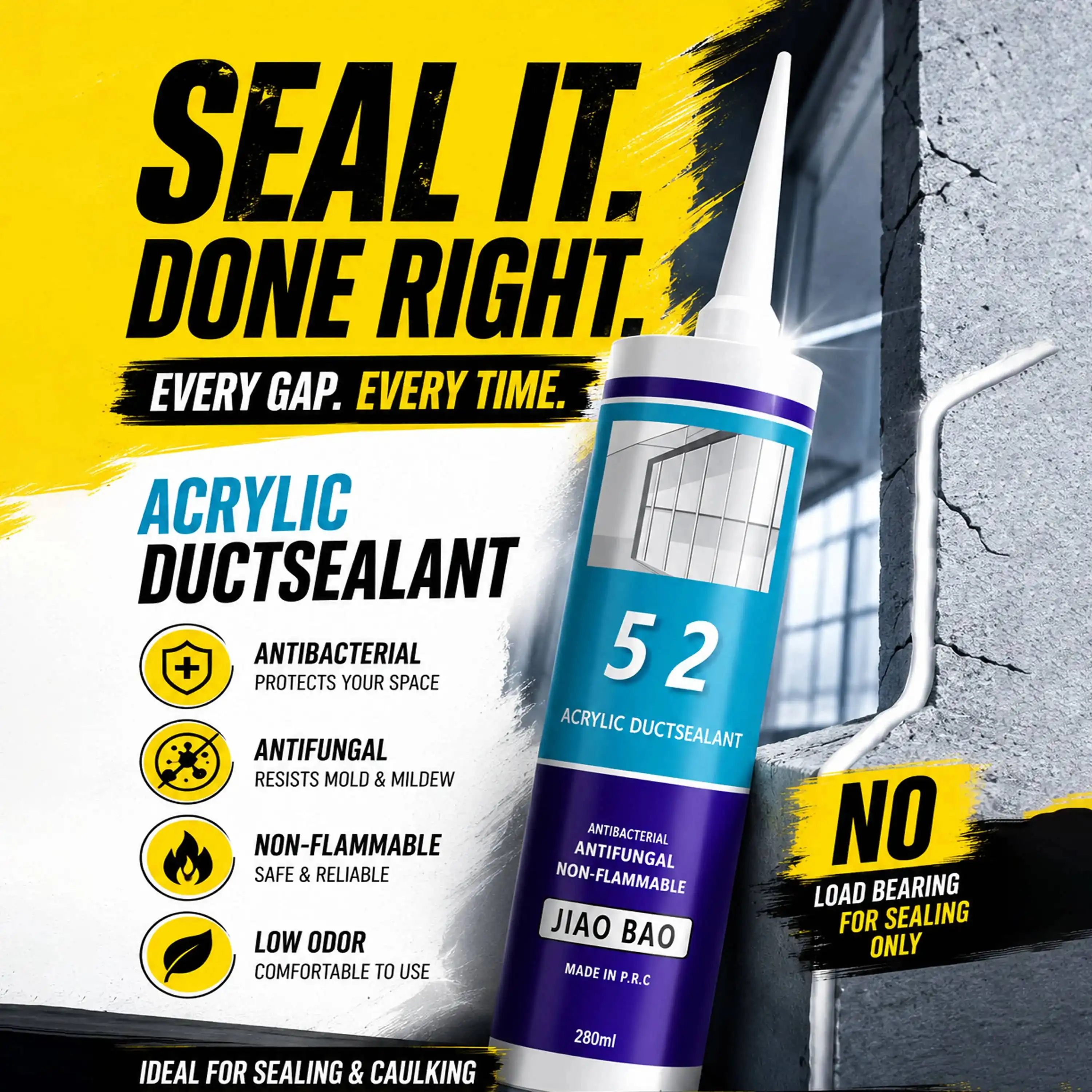
Choosing the right equipment is the first step to a successful installation. Professional-grade caulking guns that are driven by air or batteries have constant extrusion pressure, which makes uniform bead profiles with little stress for the user. Cut the tips of the nozzles at 45-degree angles to fit the width of the bead you want. The Acrylic Sealant Decorative Joint Seal bead should be slightly wider than the joint gap to make sure there are no gaps in the filling.
The way you apply something has a big effect on how it looks in the end. By keeping the gun speed steady and applying steady pressure, you can make beads that are the same size along the whole length of the joint. Using purpose-made smoothing tools or simple soap-and-water solutions to get clean, concave finishes that hide shrinkage is the best way to shape the bead profile right after application while the material is still workable.
When beads are used for decoration, they need to have the right shape. Slightly concave profiles allow for small shrinkage while keeping the look of continuity with surfaces next to them. Don't leave extra material sticking out from the surface, because cleaning after it's hardened creates dust and extra work. Skilled applicators make sure that the tooling moves consistently so that all of the project joints look the same.
Some acrylic sealants let you paint while they're still wet, but for the best results, wait until the skin has fully formed before applying finish coats. This usually takes between 2 and 24 hours, but it depends on the thickness of the beads, the temperature, and the humidity. Different cooling rates create surface tension, which can cause "mud cracking" in the paint film if you paint too early.
The choice of paint affects how well it works with other things and how long it lasts. Latex paints that are water-based stick to finished acrylic seals very well, and you don't even need a special primer. This is because the chemistry of the materials is right for cohesive bonding. For oil-based paints, compatibility must be confirmed through product specifications or small-scale testing, since some formulations may have trouble sticking or changing color over time.
When smooth merging is important, color matching needs to be done with care. A lot of companies offer unique color matching services, which involve tinting sealant material to colors that are very close to the end paint colors. Small flaws in the tooling or shrinking are less noticeable this way because the base color of the sealant fits in with the painted surfaces around it instead of standing out like white or clear sealants do.
When acrylic seals are put correctly, they don't need much upkeep, but they do benefit from being checked on a regular basis. Early signs of cohesive failure (cracking), adhesive failure (edge separation), or too much soiling should be found visually. Setting inspection times based on environmental exposure—once a year for climate-controlled rooms and more often for places where temperatures can change a lot—allows for early detection of small problems before they get worse.
When cleaning, soft cloths and light soaps should be used instead of rough materials that could damage the sealant or the finishes around it. Avoiding strong chemical cleaners keeps the material flexible and stops it from breaking down too quickly. When painting adjacent surfaces during renovation cycles, carefully masking sealed joints protects the integrity of the materials and improves the look of the area.
When joint performance drops below what can be tolerated, reapplication is needed. Getting rid of all of the old sealant by mechanical scraping or chemical strippers keeps the new material from sticking. Following the original instructions for surface preparation makes sure that new installations work as well and last as long as the first ones. This keeps the quality of the project high throughout the lifecycle of the building.
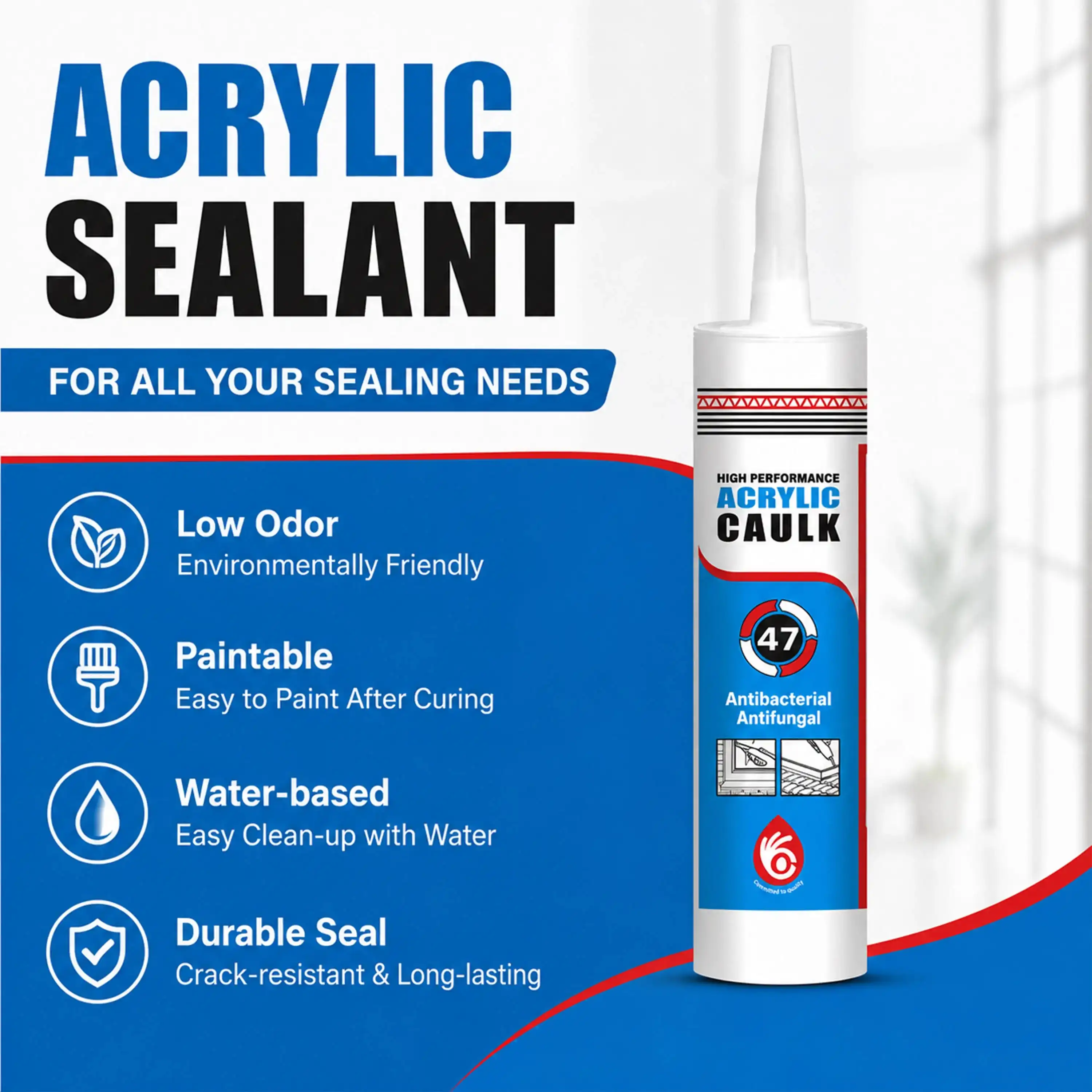
To be a professional buyer, you need to look at more than just name recognition. You need to look at objective success data. Shandong Jiaobao New Materials' Acrylic Sealant Decorative Joint Seal is a good example of how careful buyers should compare features to other products on the market. This one-part paste-like product forms skin quickly—in just 0.5 hours—much faster than the standard 3 hours in the industry. This means that projects can be finished faster without sacrificing quality.
The extrusion speed reaches 163 ml/minute, which is much faster than the 80 ml/minute minimum requirement for professional-grade products. This higher flow rate cuts down on application work while keeping bead sizes the same. This has a direct effect on the costs of large-scale installations. Tensile strength tests at 0.64 MPa is within the ideal range of 0.4 to 0.6 MPa, which means that the structure is strong enough without being too stiff, which could lead to brittle failure.
The product's ability to not sag on vertical surfaces solves a common installation problem where weight makes the material slump before the skin forms. When combined with the fact that they don't deform when used in parallel, these properties make sure that the bead profiles stay the same no matter how the joint is oriented. The mixture can be customized in colors like white, black, and gray and comes in 300ml and 600ml sizes. It can meet the needs of a wide range of projects without the need for multiple product lines.
To build trusting supply relationships, you need to look at suppliers in more than just price terms. Manufacturing experience shows that a process is mature and that the quality is consistent. Shandong Jiaobao's 13-year production history shows that they have set routines and learned things that make batch-to-batch variation risks lower. ISO and CE approvals show that quality control systems and product safety rules are being followed by a third party.
The ability to deliver directly affects the reliability of the project schedule. Just-in-time purchasing strategies that keep materials available while lowering inventory costs are possible with suppliers who offer flexible sea or land shipping choices and production wait times of one to two weeks. Because OEM/ODM agreements allow for customization, specifications can be changed to meet the needs of a particular project or local legal standards.
Support services after the sale show that the supplier believes in the quality of the product. When there are warranty terms that cover problems with shelf life and offer refunds or replacements, the performance risk moves from the buyer to the manufacturer. This protects procurement budgets against the costs of bad materials and project delays. When you look at these service commitments when choosing a supplier, you can avoid problems after the sale and build a foundation for long-term partnerships.
When you buy in bulk, you save money, but you have to carefully plan your purchases to make the most of the savings while also taking into account storage space and shelf life. The performance of most acrylic seals lasts for 12 months if they are stored properly (at a temperature above 5°C and away from freezing). By comparing project usage rates to these times, you can avoid throwing away materials that have already gone bad.
When negotiating pricing models, it's important to think about the total landing costs as well as the price per unit. Overall, you get more value from suppliers who offer consolidated shipments, flexible payment terms, or volume discounts that cover the costs of logistics. When you ask for specific quotes that list the costs of materials, different types of packing (like sausage vs. cartridge), and shipping costs, you can accurately compare prices from different sources.
Setting up framework agreements with preferred suppliers makes sure that prices are always the same while still allowing for flexibility in procurement. In exchange for guaranteed pricing and first choice when supplies are low, these deals usually require a minimum amount of goods to be shipped each year. For businesses that are working on multiple projects at the same time and know how much sealant they will need, these kinds of deals help them make better budget plans and make handling purchases easier.
When choosing the right Acrylic Sealant Decorative Joint Seals, you have to balance technical performance requirements with aesthetic requirements and the cost of purchase. Products that form a skin quickly, shrink very little, are easy to paint, and stick to most substrates reliably allow for the flawless finishes that set high-quality interior projects apart. Knowing the best ways to use a material, from preparing the surface to painting instructions, makes it last longer and costs less to fix mistakes. Strategic relationships with suppliers based on proven production skills, flexible delivery, and full after-sales support protect project schedules and budgets by making the supply chain resilient.
Some paint systems let you apply them while they are still wet, but it is generally better to wait until the skin has fully formed and the first water has been released. This can take anywhere from two to twenty four hours, depending on the thickness of the bead and the temperature. When you paint too soon, the paint film gets stressed because of the different drying rates, which can cause the surface to crack.
Acrylic Sealant Decorative Joint Seals are mostly made for use inside. It's still possible for rain to wash away the water-based mixture before it's fully cured. For exterior facade uses, you need special exterior-grade acrylics that don't get damaged by rain right away, or you can use other chemicals, like silicone or polyurethane hybrids, that hold up better against weathering.
Cracking usually happens when joint movement goes beyond the material's tolerance range (±7.5–12.5% for most acrylics) or when low-quality formulations with a lot of water cause the material to shrink too much. These problems can be avoided by designing joints correctly, choosing the right products for the amount of movement that is expected, and using professional recipes with a high solids content. Cracking that happens too soon can also be caused by a dirty surface or poor bonding.
Acrylic sealants work great in indoor paintable projects where smooth color blending is most important. They are also easier to clean up and have less smell. Silicone products are better at keeping water out and allowing for movement, but they can't be painted, which makes them less useful for decorative finishing. The choice relies on what function is most important to you—water exposure favors silicone, while painted looks favor acrylic.
With professional-grade goods and over 13 years of experience making them, Shandong Jiaobao New Materials is ready to meet your artistic joint sealing needs. Our Acrylic Sealant Decorative Joint Seal has the performance specs that serious designers need: a skin that forms in half an hour, extrusion rates of 163 ml/min, and colors that can be customized in 300ml and 600ml sizes. As a reliable company that makes Acrylic Sealant Decorative Joint Seal, we offer high-quality products at reasonable prices and can deliver them in one to two weeks. Email our team at dorashen@cnjiaobao.com to get technical specs, set up product samples, or talk about customization options that will work perfectly for your project.
1. American Society for Testing and Materials. (2019). ASTM C834-19: Standard Specification for Latex Sealing Compounds. ASTM International, West Conshohocken, PA.
2. International Organization for Standardization. (2020). ISO 11600:2020 Building Construction — Jointing Products — Classification and Requirements for Sealants. Geneva, Switzerland.
3. Construction Specifications Institute. (2021). MasterFormat Division 07 92 00: Joint Sealants. CSI Technical Publications.
4. National Association of Home Builders Research Center. (2018). Sealant Selection and Application Guide for Residential Construction. Upper Marlboro, MD.
5. Building Research Establishment. (2022). Digest 469: Sealant Joints in the External Envelope of Buildings. BRE Press, Watford, UK.
6. Panek, J.R., and Cook, J.P. (2017). Construction Sealants and Adhesives, Fourth Edition. John Wiley & Sons, Hoboken, NJ.
November 16,2023
Enterprise Name
The sealant has very strong adhesion and performs well even on glass and aluminum. After curing, it remains flexible and shows no cracking. Perfect for our facade projects.
November 16,2023
Enterprise Name
Stable quality across batches. Our customers especially like the smooth application and consistent extrusion. It helps reduce installation time on site.
November 16,2023
Enterprise Name
I used it for bathroom sealing. Excellent waterproof performance and no mold issues so far. It's been holding up very well in humid conditions.
November 16,2023
Enterprise Name
The neutral silicone works well on sensitive materials without corrosion. Very suitable for industrial applications requiring stable performance.
_1779347426672.webp)