November 16,2023
Enterprise Name
The sealant has very strong adhesion and performs well even on glass and aluminum. After curing, it remains flexible and shows no cracking. Perfect for our facade projects.
Aug 3, 2026
When commercial renovation projects demand speed without surface damage, nail free glue heavy duty emerges as the superior fastening solution. This advanced modified silane polymer adhesive eliminates drilling, preserves finished surfaces, and delivers exceptional load-bearing capacity—addressing the core challenges faced by exhibition and retail space contractors who operate under tight deadlines and strict aesthetic requirements.
Modern construction adhesives have evolved far beyond traditional bonding agents. The technology behind professional-grade mounting solutions represents a fundamental shift in how we approach commercial installations.
Modified silane polymer adhesives are very different from regular glues because of the way they cure when they come in contact with water. When these mixtures are put on, they react with the humidity in the air to make strong, stretchy bonds. Our product has a moisture-cure system that dries the surface in about 20 minutes under normal conditions and cures completely in 24 hours, at a rate of 2.5 mm per 24 hours. According to ISO 37 standards, this chemistry lets the adhesive stay flexible while holding a lot of weight. It can achieve 300% elongation at break. The formula stays stable at temperatures ranging from -40°C to 80°C, which means it can be used in a wide range of commercial settings, such as stores, exhibition halls, and office renovations.
The scientific details explain why this adhesive technology works better in business settings than mechanical connections. The cured bond has a maximum tensile strength of 2.5 N/mm² and an elastic modulus of 1.400 N/mm² at 100% extension. This means that stress is spread out evenly across the bonded surface instead of concentrating in one place. The density of 1.55 g/ml makes sure that the product can be used consistently without using too much material. The Shore A hardness of 50 ± 5 keeps the balance between stiffness and shock absorption. When mounting display fixtures, signage systems, and decorative panels that move or expand when heated or cooled in busy commercial spaces, these qualities become very useful.
For exhibition and store builders, being able to use a variety of materials is a big plus. When building fixtures, the adhesive sticks well to wood and engineered lumber. It also sticks to PVC and plastic materials found in modern display systems, ceramic tiles and natural stone in high-end stores, metal surfaces like aluminum frames, gypsum board and drywall in offices, glass and mirrors for showroom installations, and skirting boards and trim that finish off the look. Because of this wide compatibility, commercial renovation companies don't have to keep a lot of different types of fastening products on hand. This makes buying things easier and lowers the cost of keeping things in stock.
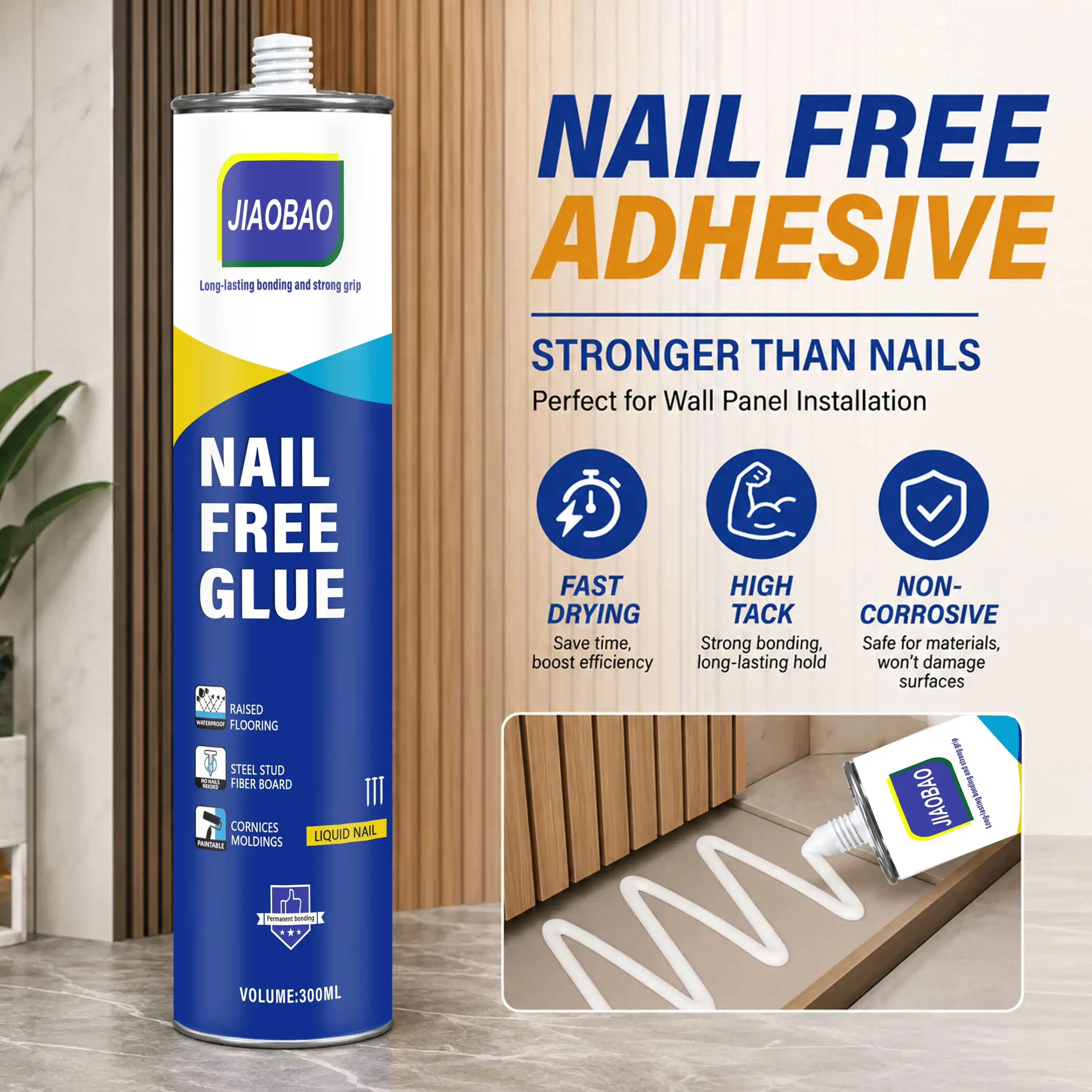
The commercial construction landscape increasingly favors adhesive solutions over mechanical fasteners due to measurable operational advantages and superior long-term performance.
When using traditional drilling methods, the surface integrity is immediately compromised. Every nail or screw makes a permanent hole that can damage waterproof membranes, break tiles, splinter decorative panels, or break glass. When business spaces are being remodeled and the current finishes must be kept, this damage directly leads to higher repair costs and longer project timelines.
These worries are completely taken away by adhesive bonding with Nail Free Glue Heavy Duty, which leaves surfaces unharmed and keeps the aesthetic value that building owners expect. When show stands need to be rearranged or store displays need to be moved, adhesive-mounted parts can be moved without leaving damage that would need to be fixed and painted over.
When it comes to business remodeling projects, saving time is what makes them profitable. Marking positions, drilling pilot holes, inserting anchors, and securing screws are all steps that are needed for traditional mechanical fastening. This process takes a lot of time and effort. Using adhesive application makes this process a lot easier. Basic cleaning is all that's needed to prepare the surface. The glue can be applied directly from the cartridge packing using normal dispensing guns. The initial grab strength lets the piece be placed right away without bracing.
When compared to drilling methods, this simplified process cuts installation time by about 40–60%. This lets crews finish mounting fixtures, installing panels, and trimming work within tight commercial renovation schedules. Less specialized labor is needed, so electricians don't have to avoid wiring and technicians don't have to map out where utilities are. This lowers the cost of the project even more.
When you use mechanical fasteners, they create stress concentration points that can weaken the substrate over time. Under long-term loads, nails and screws depend on localized bearing pressure, which can make wood split, drywall fall apart, or metal bend. Adhesive ties work very differently because they spread the force of application over the whole joined area. This even load distribution stops the common ways that point-fastened assemblies fail. Because the finished modified silane polymer is stretchy, the bond can bend with changes in temperature and building movement without losing its stickiness. This flexibility is very important for keeping the installation strong over time in business settings where temperatures can change, people walk on it, and the building settles.
During renovations, commercial spaces are often still partially used, which makes noise control and dust management very important. Drilling operations make loud noises that bother people who live nearby and make other people in the building feel bad. The dust that is made when drilling in concrete and brickwork needs to be cleaned up a lot, and it can get on goods and tools.
Adhesive installation makes very little noise—just the quiet clicking of pouring guns—and doesn't release any particles into the air. This method is cleaner and quieter, and it lets renovations happen in buildings that are still occupied without having to close businesses or take complicated control measures. Maintaining a professional image during the installation process helps contractors build their reputations and keep clients coming back.
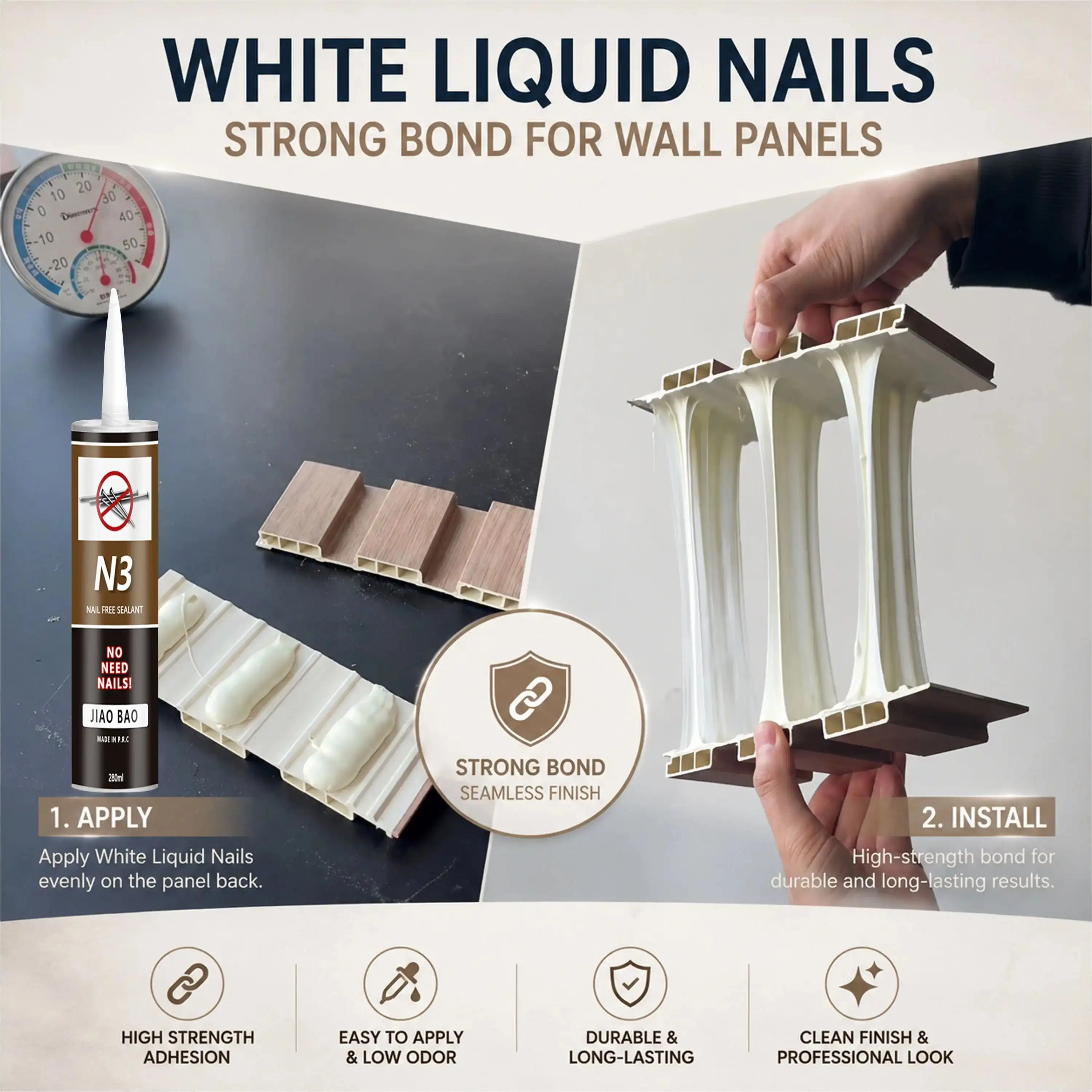
Understanding how different fastening approaches perform across key criteria helps procurement managers select optimal solutions for specific commercial applications.
When comparing glue gluing to nails and screws, it's clear that they don't work as well together. Mechanical connections are the strongest right away, but they damage the surface permanently and may weaken over time because of rust or vibrations. Adhesive ties only need a short time to cure, but they are more stable over time and keep their surface look. Installation speed is much better for glue because they don't need to be drilled, which cuts down on work time by a lot. Material compatibility is another difference.
Screws need anchors that are matched to each substrate, but Nail Free Glue Heavy Duty sticks to wood, metal, glass, stone, and composites without the need for special hardware. When removing something, it's important to think about how to do it right. For example, mechanical bolts leave holes that need to be fixed, but adhesive ties with Nail Free Glue Heavy Duty can be cleaned up with little surface preparation needed for reinstallation.
Not all adhesives work well enough for commercial applications that need to hold weight. Standard construction adhesives don't always have the initial grab strength to hold fixtures in place while they cure, so they need to be temporarily braced, which takes away from the speed of installation. In most situations, our heavy-duty formula gives enough instant adhesion to support placement without extra support. Professional-grade goods are different from consumer ones because they can handle higher and lower temperatures better.
Many standard adhesives lose their bond power at very low and very high temperatures, but modified silane polymer stays effective from -40°C to 80°C. Curing flexibility is important, especially in commercial settings where humidity levels change. Moisture-cure chemistry works reliably in a wider range of environments than solvent-evaporation or contact adhesives, which may need specific temperature and ventilation conditions to work properly.
Temporary adhesives and foam bands can be useful in some situations, but they can't be used instead of structural gluing solutions in business settings. For light tasks, adhesive tapes are convenient, but they don't have the shear strength needed for fixtures that will hold heavy loads. Tape ties also often break when they are put under long-term stress or when they are subject to changes in temperature that make the substrate and mounted element expand at different rates.
Because of their thickness, tape goods can leave gaps that are easy to see and don't give retail and show areas the smooth, professional look that is expected. Heavy-duty glue that comes in paste form lets you precisely control the thickness of the application, smooths out small surface imperfections, and cures to form bonds that are structurally integrated with mounted elements instead of just sticking to the surface.
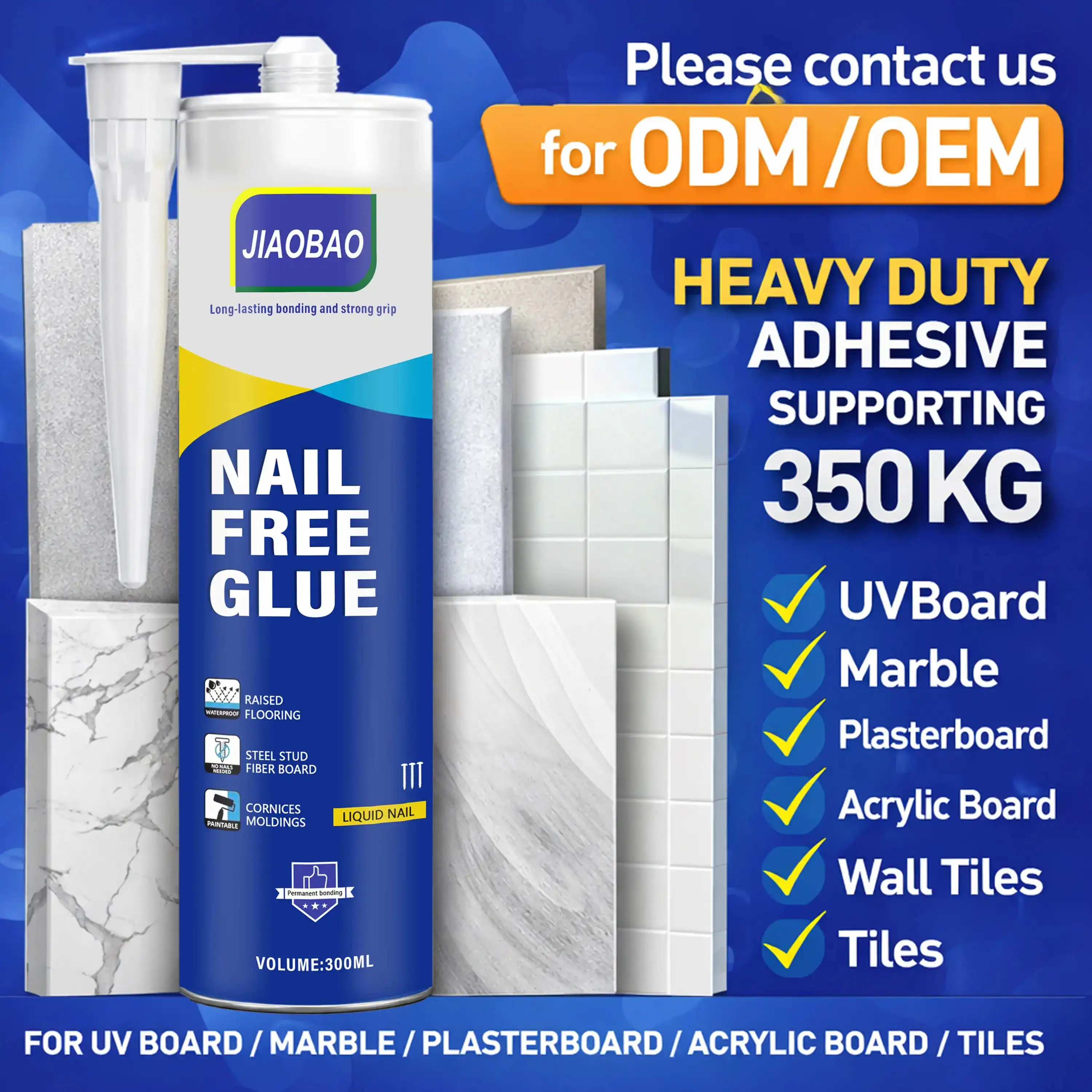
Strategic sourcing decisions impact both immediate project costs and long-term operational efficiency for commercial renovation firms.
Choosing a supplier has big effects that go beyond unit pricing. Manufacturers that have been around for a while and have ISO certification have quality control systems that are consistent and lower variation from batch to batch. This is very important because adhesive performance directly affects the success rate of installations. Our factory follows ISO quality standards that have been upheld over 13 years of manufacturing experience.
This makes sure that all orders get the same high-quality product. Certification compliance includes safety standards for formulations and the environment, meeting government needs in places with strict chemical rules. To make sure that installation teams are properly trained and that the right products are chosen, procurement managers should make sure that sellers provide full technical data sheets that list curing parameters, strength characteristics, and application limits.
The purchase price is only one part of the total cost of getting adhesive. A full analysis should look at the time and money saved by installing things faster, not having to drill as much, reducing waste by not damaging as many materials during installation, reducing the number of callbacks for failed installations that need to be fixed, and better project timeline adherence that allows for higher throughput. When exhibition contractors can install fixtures 50% faster by using Nail Free Glue Heavy Duty instead of mechanical fastening, they usually save more on labor costs than the difference in material costs for a single moderate-sized project. Not having to keep extra anchors, drill bits, and fasteners in stock cuts costs even more and makes logistics easier.
Commercial builders gain when providers can customize products to meet the needs of a particular job. As part of our manufacturing services, we can match colors to specific aesthetic needs. Our products come in white, black, gray, or custom formulations that match interior design schemes. With 300ml and 600ml cylinder volumes, you can get the right amount of fluid for any job.
Packaging that comes in both sausage and cartridge shapes makes sure that it works with common delivery equipment. Businesses that use the same amount of goods every month can save money by buying in bulk, and the products have a shelf life of 12 months, so they can be kept in stock without worrying about them going bad. As part of OEM agreements, suppliers can create custom formulations for companies that work with narrow markets or need better performance for specific uses.
Proper installation technique determines whether adhesive bonds achieve their full performance potential in commercial applications.
The right preparation of the material is the first step to a successful bond. Surfaces need to be clean, dry, and free of anything that could stop the adhesive from sticking to them. Oil, dust, loose paint, and wetness all mess up the chemistry of adhesion and make the link much weaker. Using the right solvents to clean gets rid of greasy residues from making or handling things.
Applying glue to wet materials dilutes the formulation and unexpectedly extends cure times. Dry surfaces are necessary for proper moisture-cure activation. In some cases, priming may be needed on porous materials like open wood or concrete to keep the glue from absorbing too much and starving the bond line. When applying, temperature is important—a building temperature of 5°C to 35°C makes sure that the right flow qualities and cure development happen. Cold substrates make curing go much more slowly, and too much heat can cause skinning to happen too soon, which traps solvents.
When applied the same way every time, the bond lines are the same, and the performance is always the same. The size of the beads is controlled by cutting the cartridge holes at the right angles. For most uses, 45-degree cuts are best. Applying beads that are joined together without any holes makes sure that the whole surface of the bound area is covered. For vertical uses, the paste's consistency keeps it from sagging during the first curing time. On the other hand, very smooth surfaces may slump if the beads are too big.
By putting mounted elements in place right away after application, you can take advantage of the 20 minutes or so that are available before the surface starts to skin. Using moderate pressure while positioning makes sure there is close contact and gets rid of any air pockets. Curing moves inward at a rate of 2.5 mm per 24 hours from the outside in. Thick bond lines need longer to cure before they reach full strength. The rate of cure is affected by the humidity in the air. Higher humidity speeds up the reactions that cause wetness to fix, while very dry conditions may slow the process down.
By understanding how strength develops, you can avoid loading the bond too soon, which can damage it. The surface dry time shows the basic tack and placement stability, but it doesn't show the full strength of the structure. As polymerization moves through the glue mass, it continues to build strength gradually during the cure time. After the surface has dried, light loads can be put on it, but full-rated loads should not be put on it until the full cure depth has been reached.
Failures in installation can be avoided by figuring out the cure time based on the thickness of the bond line. For example, a 5mm bead needs about 48 hours to cure completely under normal conditions. When commercial contractors plan installation sequences, they should make sure to take this cure schedule into account. For example, they could put lighter elements that cure overnight before installing heavier fixtures, or they could time installs so that there is enough cure time before the space is occupied.
Moving from mechanical fastening to advanced adhesive technology is more than just a change of materials; it fundamentally improves how business rehab projects balance the competing needs of maintaining structural performance, preserving aesthetics, and maximizing installation speed. It is possible to measure the benefits of Nail Free Glue Heavy Duty, a modified silane polymer adhesive. They protect surfaces so they don't need to be fixed, install things faster so they cost less, spread loads more evenly so they last longer, and make work processes quieter and cleaner, which is good for the environment.
By using these fastening solutions, commercial builders who work in the office, retail, and show markets can stay ahead of the competition and finish projects faster while still meeting the high standards that building owners expect. Strategic decisions about buying things that put an emphasis on dependable suppliers, full technical support, and consistent product quality lead to successful implementation in a wide range of business settings.
Modified silane polymer adhesives work well as alternatives to mechanical fasteners in most business situations involving display fixtures, decorative panels, trim work, and medium-weight mounting. The technology works well with the kinds of loads that you'll find in stores and show halls. Hybrid methods that combine adhesive bonding with minimal mechanical fastening for redundancy may still be useful in specialized applications that need to be very resistant to vibration or carry huge loads.
Moderate humidity is actually good for moisture-cure chemistry while it's healing. Once it's fully set, the rubber glue won't let water in and will still stick even when it's wet. From -40°C to 80°C is the temperature range that most commercial settings are in. When using certain items outside, you should make sure they are stable against UV light. However, modified silane plastics usually hold up well against weathering.
The initial surface dry time of approximately 20 minutes gives you time to make changes to the position. During this time, parts can be moved around without affecting the strength of the bond. Once the surface has dried, it's not possible to move it again without removing the glue and putting down new material. Careful planning and exact setting at the start keep you from having to make any adjustments.
To successfully renovate a commercial space, you need to get reliable materials from well-known companies that know how to handle the complex needs of show and store installations. When it comes to making high-performance modified silane polymer adhesives, Shandong Jiaobao New Materials Co., Ltd. has 13 years of experience in specialized manufacturing. Our ISO-certified factories follow strict quality control rules that make sure performance is the same from batch to batch. This is very important for contractors whose names rest on installing things correctly.
Our flexible delivery options and production lead times of 1-2 weeks help you plan your project. Our competitive pricing structures will help you save money, and we offer a wide range of customization services, such as OEM manufacturing and custom color matching. Our Nail Free Glue Heavy Duty supplier network helps commercial contractors all over the world with safe shipping options by land and sea. Quality control doesn't stop with production; we stand behind our goods by offering replacement guarantees for any quality problems that happen within 12 months of purchase.
You can email our team at dorashen@cnjiaobao.com to talk about your unique business installation needs, get technical specs, or set up product samples that show how professional-grade mounting adhesives work better. You can look at our whole product line at shandongjiaobao.com and learn how Jiaobao adhesive solutions can help you compete in the commercial renovation markets.
1. Thompson, R.L. (2021). Structural Adhesives in Modern Construction: Performance Characteristics and Application Guidelines. Industrial Materials Press.
2. Chen, W. & Martinez, J. (2020). "Comparative Analysis of Mechanical Fastening versus Adhesive Bonding in Commercial Installations," Journal of Construction Technology, 45(3), 178-194.
3. European Adhesive Manufacturers Association (2022). Technical Standards for Modified Silane Polymer Adhesives in Building Applications. Brussels: EAMA Publications.
4. Davidson, K.P. (2019). Commercial Space Renovation: Materials Selection and Installation Best Practices. McGraw-Hill Professional.
5. Liu, S., Anderson, M., & Roberts, D. (2023). "Load Distribution Characteristics of Adhesive versus Mechanical Bonds in Substrate Materials," International Journal of Adhesion Science, 58(2), 412-429.
6. Williams, A.T. (2020). Cost Analysis in Construction Procurement: Evaluating Total Ownership Economics for Fastening Systems. Construction Management Institute.
November 16,2023
Enterprise Name
The sealant has very strong adhesion and performs well even on glass and aluminum. After curing, it remains flexible and shows no cracking. Perfect for our facade projects.
November 16,2023
Enterprise Name
Stable quality across batches. Our customers especially like the smooth application and consistent extrusion. It helps reduce installation time on site.
November 16,2023
Enterprise Name
I used it for bathroom sealing. Excellent waterproof performance and no mold issues so far. It's been holding up very well in humid conditions.
November 16,2023
Enterprise Name
The neutral silicone works well on sensitive materials without corrosion. Very suitable for industrial applications requiring stable performance.
_1779347426672.webp)