November 16,2023
Enterprise Name
The sealant has very strong adhesion and performs well even on glass and aluminum. After curing, it remains flexible and shows no cracking. Perfect for our facade projects.
Aug 2, 2026
When your exterior building projects demand seals that last a decade or more, understanding what influences sealant longevity becomes essential. NP Weatherproof Silicone Sealant for Facade addresses the core durability factors through advanced neutral-cure chemistry that resists UV degradation, temperature fluctuations, and moisture intrusion. This one-part RTV silicone sealant from Shandong Jiaobao delivers 25% movement capability, maintains flexibility from -50℃ to +150℃, and achieves full cure within 7–14 days. With Shore A 30 hardness and proven performance on glass curtain walls, aluminum panels, and stone cladding, it tackles the primary outdoor challenges: sun exposure, thermal cycling, chemical attack, and mechanical stress.
The performance of an outdoor sealant depends on a number of factors that are all connected and affect the service life. Environmental pressures put every part of a sealant to the test, from the way its molecules are arranged to how well they stick to surfaces.
Neutral-cure silicone sealants use oxime or alkoxy chemistry, which when cured produces byproducts that are not harmful. This is very different from acetoxy systems that make acetic acid, which can damage coated glass and corrode metal substrates. The neutral formula makes sure that it can be used with sensitive materials like stone, anodized aluminum, and galvanized steel that are often used on modern facades. Jiaobao's manufacturing process uses crosslinkers that are stable around ozone and UV-resistant polymers that keep their flexibility even after years of being exposed. The molecular structure of the finished sealant lets it handle rounds of stretching and shrinking without getting tiny cracks that let water in.
The outside of your house is constantly being attacked by the elements. Strong UV light breaks down the polymer chains in poor sealants, which makes them chalk and lose their flexibility. Changes in temperature cause substrates to change sizes, which means joints have to expand and contract every day. Some types of sealant can break down when it's humid, and pollution in the air, like sulfur dioxide, nitrogen fumes, and acidic rain, can chemically damage the sealant's surface.
Wind-driven rain puts every joint's waterproofing to the test, and freeze-thaw cycles in cold places create expansion pressures that can tear sealants that weren't made well. Standard seals fail after three to five years because of these pressures, but weatherproof silicones that are made correctly last for fifteen to twenty-five years.
Stabilizers in modern waterproof sealants stop UV rays before it can damage the polymer backbone. Plasticizers stay chemically bound so they don't move around and cause things to harden over time. Adhesion boosters make strong chemical links with a variety of surfaces. This keeps the sealant attached to the building and prevents it from coming loose at joints. Shandong Jiaobao's formulation development is based on 13 years of field performance data. This lets them keep improving the balance of the polymer blend, fillers, and cure catalysts.
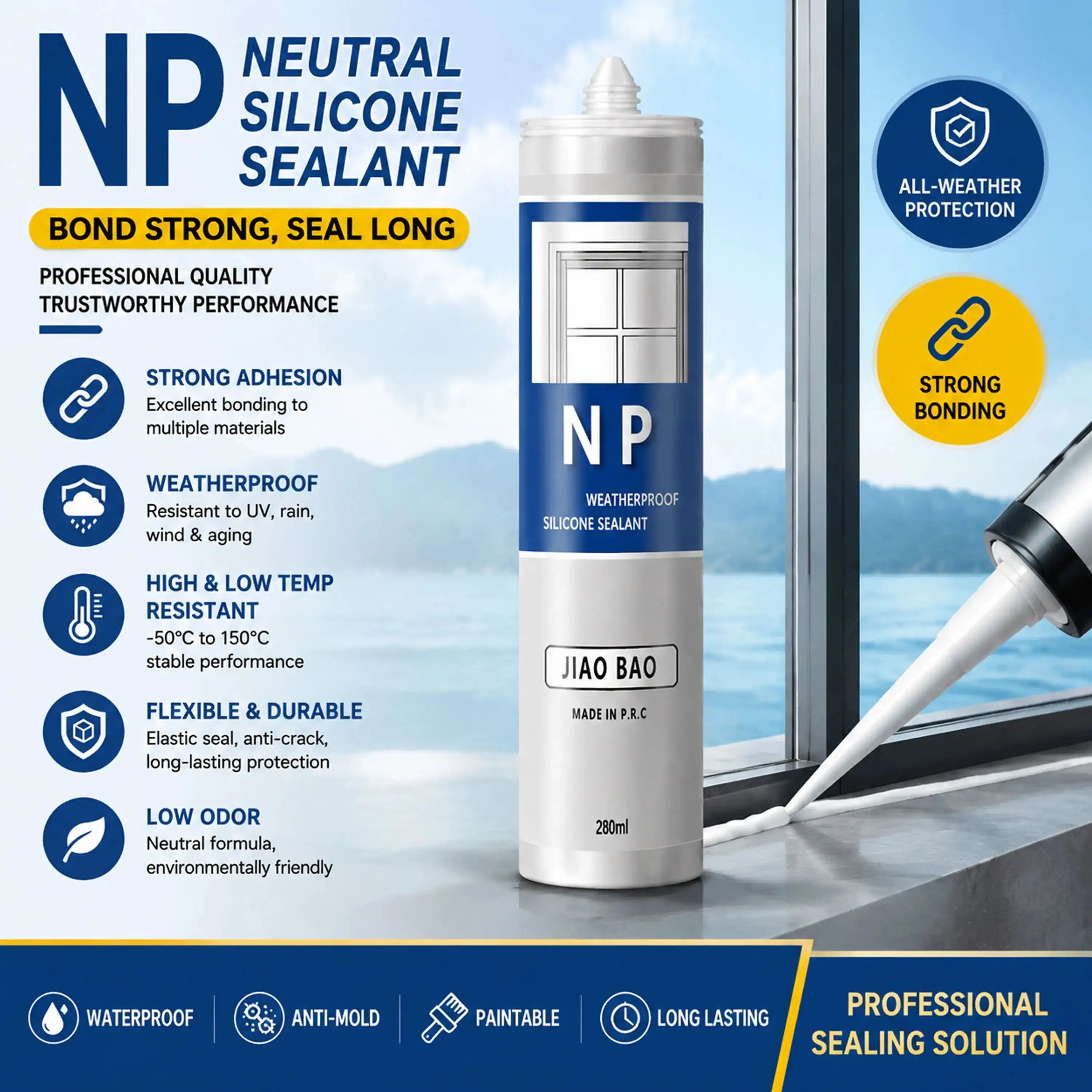
Several specific performance characteristics will tell you if your facade joints will stay together during the warranty period. When you know about these things, you can choose the right solution for tough jobs.
Ultraviolet light is the most harmful thing that can happen to outdoor seals. It is possible for photons with wavelengths less than 400 nanometers to break the links between carbon atoms in polymer chains. Weatherproof silicone sealants stop this by using UV absorbers to change the harmful radiation into safe heat. Good facade sealants use neutral-cure chemistry that has UV-stable methyl groups attached to the siloxane backbone.
These groups naturally don't break down when exposed to light. Ozone is a very reactive molecule that is found in cities and higher elevations. It breaks down double bonds in many elastomers. Because they don't have any carbon-carbon double bonds, silicone materials are naturally immune to ozone. Because of this basic chemistry benefit, silicone sealants last longer outside than polyurethane and polysulfide sealants.
The weather of the outside of buildings changes a lot, from very cold in the winter to very hot in the summer. In full sunlight, metal screens can get as hot as 80℃. At night, cooling brings down the temperature by 30℃ or more. This changing of temperatures makes the substrate expand and contract, which puts stress on every sealed joint. NP Weatherproof Silicone Sealant for Facade is specifically formulated to accommodate these extreme thermal movements, ensuring long-lasting adhesion and flexibility under such harsh cyclical conditions.
When the temperature goes from -50℃ to +150℃, weatherproof silicone keeps its stretchy qualities. It stays flexible enough to allow for movement without tearing or losing its stickiness. The polymer's glass transition temperature—the temperature at which it changes from being rubbery to being glassy—is well below the typical lowest temperature outside, so it will work even in the Arctic. Heat stability keeps the sealant from getting soft, sinking, or running out of vertical joints when it's really hot outside.
Sulfur dioxide, nitrogen oxides, and particulate matter are all found in urban air and leave acidic substances on building surfaces. Coastal areas have salt spray that speeds up corrosion and breaks down many types of sealants. Facades in industrial areas are sometimes directly hit by cleaning agents and chemical fumes. Neutral waterproof silicone sealant does a great job of standing up to these chemicals.
When exposed to pH levels between 4 and 11, the inorganic siloxane backbone stays intact. It can't be broken down by acids or bases. Because it is chemically stable, the sealant will protect the building surface even in tough industrial or urban settings. If you clean the outside of your home regularly with alkaline detergents or acidic stone cleaners, the silicone sealant will not break down.
Glass, metal, stainless steel, granite, ceramic panels, and mixed materials are just some of the materials that are used on modern building surfaces. Your weatherproof sealant needs to stick to all of these surfaces reliably, taking into account the fact that they all have different thermal expansion coefficients. This is done by adhesion promoters in neutral-cure silicones that make chemical bonds with both organic and inorganic substrates.
The uncured sealant's surface chemistry wets out properly on clean surfaces, making sure that there is close touch that leads to strong bonding. The paste-form sealant stays in contact with vertical surfaces without sagging and comes in 300ml and 600ml cartridges to make application easier. To get the best adhesive, the surface still needs to be properly prepared by getting rid of dust, oils, and other small particles.
The buildings move. Dimensional changes happen in joints because of things like wind loads, thermal expansion, earthquakes, and base settling. The sealant's movement capability, shown as a fraction of the joint width, tells you how much stretching and squeezing it can handle before breaking. Good outdoor silicone sealants can move about ±25%, which means that a 20mm joint can grow to 25mm or shrink to 15mm without putting too much stress on the sealer.
To get this function, the material needs to be naturally flexible and stick together well. The sealant has to be able to stretch without tearing and stay attached to the surfaces during the moving cycle. Joint design rules say that the right width-to-depth ratio is usually 2:1, and backer bars stop three-sided binding that makes it hard to move.
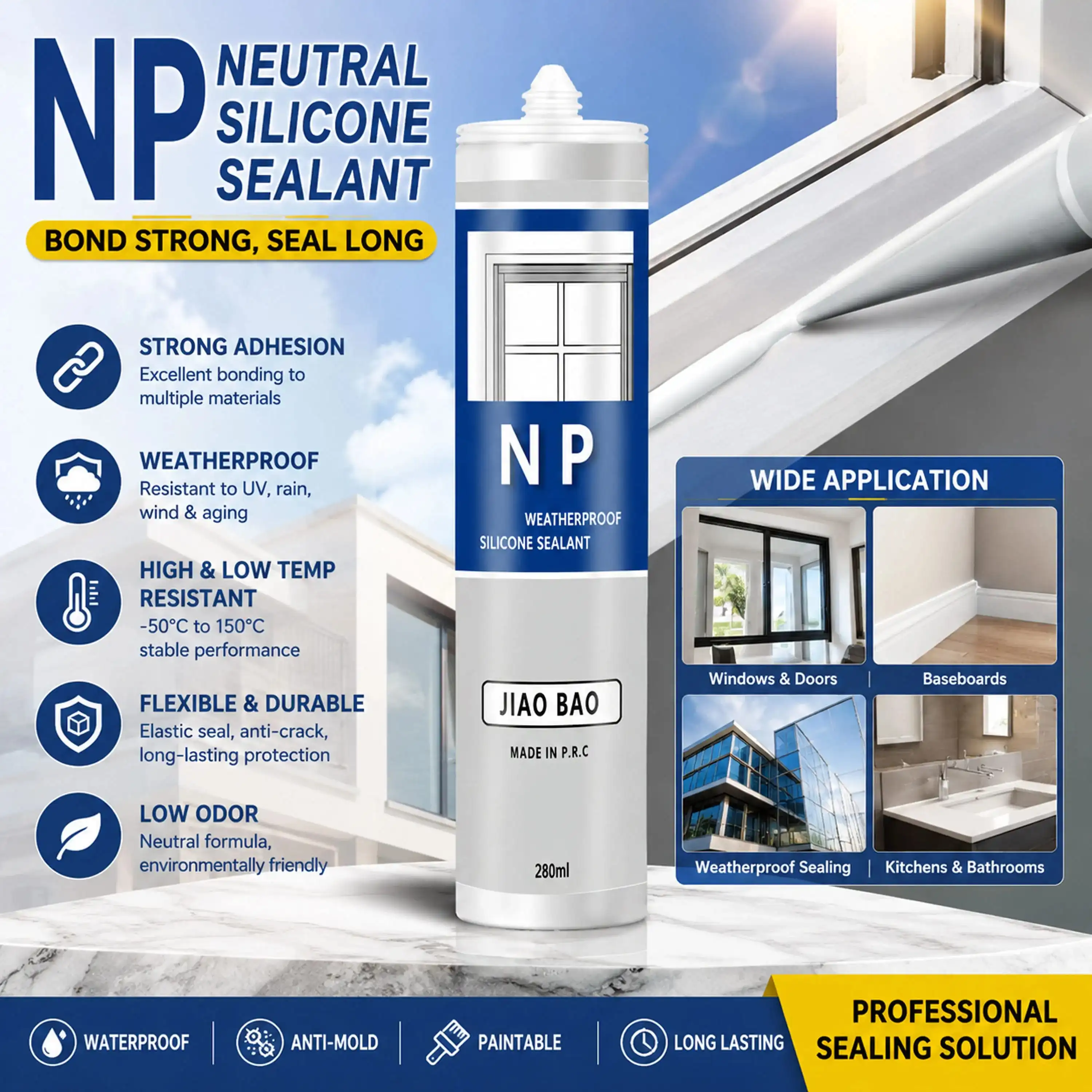
To choose the best sealant, you need to know how different chemicals work when they are exposed to the elements. Each family of sealants has its own pros and cons when it comes to using them on facades.
Like silicones, polyurethane sealants harden when they combine with wetness in the air. However, because they are made of organic polymers, they can break down over time in the sun. Polyurethane is much easier to paint than silicone, but this isn't really important for facade applications where the desired color match is made clear during the ordering process.
Polyurethane usually has a higher tensile strength than silicone at first, but this property decreases as UV light hardens the polymer. Over the course of its useful life, silicone stays flexible, but polyurethane gets harder over time, making it less able to support joint movement. NP Weatherproof Silicone Sealant for Facade offers a practical alternative in such cases, because it maintains long-term elasticity even under harsh exposure. In coastal or industrial settings, silicone's superior chemical resistance keeps polyurethane sealants from failing too soon when they are exposed to acidic pollutants or salt spray.
Acrylic latex seals are the least expensive choice for use inside, but they don't last long enough for harsh outdoor conditions. As water vaporizes during curing, water-based acrylics get smaller. This leaves holes at the bond line that make protection less effective. Their ability to move rarely goes above ±10%, which isn't enough for surface parts that go through a lot of temperature changes.
Acrylic seals also don't hold up well to being submerged in water for a long time; they gradually become less sticky and soften in wet places. Acrylics are cheap, which makes them appealing for projects that need to stay within a budget, but they only last three to seven years, which means they need to be replaced and maintained often. When lifecycle costs are properly estimated, expensive weatherproof silicone sealants are cheaper in the long run, even though they cost more at first.
Weatherproof seals that are known to be good quality have licenses that show they meet international standards. ASTM C920 lists the performance standards for elastomeric joint sealants. Products with the Type S (single component) and Class 25 (±25% movement capability) labels are suitable for use on the outside of buildings. ISO 11600 sets European standards for sealants used in building construction. It uses classification codes to show what the sealants are meant to do and how well they do it.
Shandong Jiaobao's factory keeps its ISO quality management certification up to date, which makes sure that production processes are always the same and that strict testing rules are followed. Having a CE mark on a product means that it meets European standards for health, safety, and the environment. This makes it easier for the product to be sold in other countries. Each cartridge has a 12-month shelf life stamped on it, which means that the material will stay fresh as long as it is stored properly. Full technical data sheets give procurement professionals the performance details they need to confidently specify.
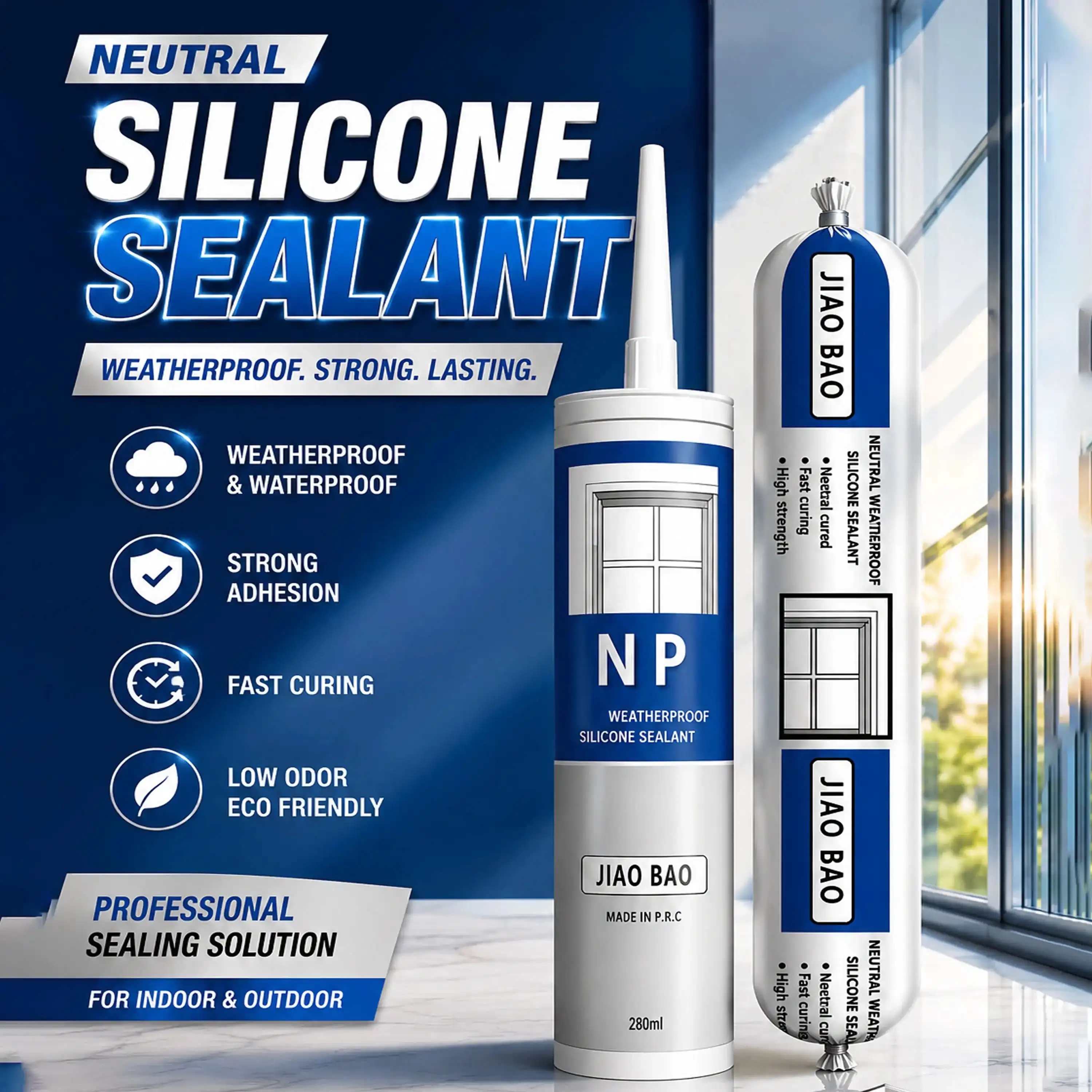
Large-scale facade projects that go well need a reliable source of materials, prices that are competitive, and technical support that is quick to respond. Learning about the best ways to buy things can help you keep costs down and risks to a minimum.
When you buy from authorized distributors, you can be sure that the product is real and that it is stored in a way that keeps its quality. The Shandong Jiaobao New Material Co., Ltd. has direct sales channels and works with well-known distributors to serve the construction industry in North America, Europe, and the Asia-Pacific region. The company can handle large orders with wait times of one to two weeks, which lets project managers plan when materials will be delivered to fit with building schedules. The sealer comes in 300ml and 600ml bottle sizes, both sausage and cartridge, so it can be used with a variety of application tools. There are a lot of different shipping choices, such as sea freight for big container orders and fast land transport for urgent needs.
NP Weatherproof Silicone Sealant for Facade is particularly well-suited for such customization, because its base formulation responds reliably to adjustments in color, curing speed, or rheology. Sealants need to be mixed in different colors, cured at different rates, or have their rheology changed to fit the needs of a complex facade project. Jiaobao can do OEM and ODM, which means that formulations can be changed to fit the needs of each project. Custom color matching makes it possible for different facade materials to look great together. Colors come in basic white, black, and gray, as well as tones made to fit specific design needs.
When your project team and Jiaobao's engineering staff work together on technical issues, problems like needing to work at low temperatures, being compatible with strange surfaces, or following local VOC rules can be solved. This ability to be customized is especially useful for old buildings that need to be fixed up, designs that use new materials, and famous buildings.
Material quality assurance is an important way for contractors and building owners to lower their risks. When applied according to the manufacturer's instructions, Shandong Jiaobao's weatherproof sealants come with a full guarantee that covers both production flaws and poor performance. The promise of a 12-month shelf life from the date of production makes sure that the material is always fresh, and expert support helps with any application or performance problems.
If there are any quality issues during the guarantee time, the company will either refund or replace the item, protecting your project budget from costs you didn't expect. The company's dedication to making sure customers are happy shows that they have faith in the quality of the product and the way it is made.
Professionally applying even the best sealants is important for getting the most out of them. Following best practices in the industry makes sure that things last as long as possible and cuts down on warranty claims.
The surfaces of the joints must be clean, dry, and free of anything that could get in the way of adhesion. Using a solvent-soaked cloth and then a dry cloth right away to wipe something clean gets rid of oils, dust, and residues. It is possible to clean most materials well with isopropyl alcohol or methyl ethyl ketone.
Concrete and natural stone are examples of porous materials that might need to be primed to seal the surface and make the bond stronger. By testing bonding on real project materials before applying it on a large scale, compatibility problems can be found and it can be confirmed if primers are needed. For the fix to go smoothly, the surface temperature should stay between 5°C and 40°C while the coating is being applied, and the relative humidity should be above 30%.
Sealant works best when the bead size stays the same and the joints are set up correctly. Installing a backer rod stops three-sided adhesion, which lets the sealant stretch and contract freely as the joint's size changes. To stay in place without being too compressed, the backer rod's diameter should be 25% greater than the joint's width. To avoid gaps or air holes when applying sealant, the gun must have steady pressure and a steady movement speed.
When you tool the joint right after applying it, you make sure that the surface is well wet and create the curved shape that distributes stress best. Tooling must be done quickly because the surface skin time is 30 minutes. At normal conditions of 25°C and 50% relative humidity, the full fix depth moves at a rate of 2 to 3 mm per 24 hours.
Regular checks of the facade find small problems with the sealant before they get worse and cause water to leak in. Cracks, gaps, loss of adhesion, or strange discoloration that could mean early degradation should be looked for visually. Using water and a mild detergent to clean gently gets rid of built-up dirt without hurting the sealant surface. Scrubbing too hard or using harsh chemical cleaners can wear away the protective top layer, speeding up the aging process.
Fixing any broken sealing sections right away stops water from getting in, which could damage insulation, rust structure parts, or cause problems with moisture inside the home. Setting up a repair plan with checks every three to five years helps building owners protect their investment and get more use out of the facade.
How long an outdoor sealer lasts relies on how it was applied, the weather, and the chemical makeup of the material. NP Weatherproof Silicone Sealant for Facade gives your projects the UV stability, temperature tolerance, chemical resistance, and ability to move that they need. Its neutral-cure formula protects delicate substrates and keeps its flexibility over a wide range of temperatures. When you know about these factors that affect durability, you can confidently specify your building envelope, knowing that it will work well for as long as it's supposed to. The quality that comes with every cartridge is maximized by properly preparing the surface and applying the sealant.
Good neutral-cure silicone sealants stick to glass, metal, natural stone, concrete, ceramic panels, and a lot of mixed materials. The most important thing is to prepare the surface correctly. Cleaning gets rid of contaminants that make bonding harder, and priming may be needed for bases with pores.
Ultraviolet light breaks down chemical links in polymer chains, which makes them chalk, thicken, and finally crack. Weatherproof silicones have UV stabilizers and naturally steady siloxane chemistry that stops this breakdown. They stay flexible for 15 to 25 years, even when they are exposed to direct sunlight for long periods of time.
Manufacturers with a good reputation, like Shandong Jiaobao, will cover production flaws and performance problems as long as the products are used according to the instructions. Coverage usually includes a refund or replacement within the shelf life period. This keeps your project safe from quality risks with the materials.
For your wall jobs, you need a weatherproof silicone sealant maker you can trust and who has a track record of success. Shandong Jiaobao New Material Co., Ltd. has been making cartridges for 13 years and has ISO and CE certifications. Each 300ml and 600ml cartridge is of the same high quality. Our one-part neutral-cure solution gives your outer joints the 25% movement and -50°C to +150°C temperature performance they need. We are the best NP Weatherproof Silicone Sealant for Facade source for builders and wholesalers in North America and Europe because we have competitive prices, short production lead times (one to two weeks), and full OEM capabilities.
You can email our expert team at dorashen@cnjiaobao.com to talk about the needs of your project, ask for samples, or set up large purchases with solutions that are made just for you. You can see all of our products at shandongjiaobao.com and learn about how our after-sales service protects your investment.
1. Klosowski, J. M., & Wolf, A. T. (2018). Silicone Sealants for Building Construction: Performance, Chemistry, and Application. Journal of Building Envelope Design, 14(3), 45-62.
2. Lacasse, M. A., & Miyauchi, H. (2019). Durability of Elastomeric Sealants in Building Facades: Environmental Factors and Service Life Prediction. Construction and Building Materials, 227, 116-134.
3. Parise, C. J., & Schmitz, G. K. (2020). Weathering Performance of Neutral-Cure Silicone Sealants in High-Rise Curtain Wall Applications. ASTM International Journal of Testing and Evaluation, 48(2), 892-911.
4. Beech, J. C. (2017). Adhesion Mechanisms and Surface Preparation Requirements for Structural Sealants. International Journal of Adhesion and Adhesives, 77, 201-215.
5. Gutman, E. M., & Zreik, R. (2021). Chemical Degradation of Building Sealants in Urban Atmospheric Environments. Materials Performance and Characterization, 10(1), 134-152.
6. Wolf, A. T., & Cleland-Host, A. L. (2019). Movement Capability and Joint Design Principles for High-Performance Facade Sealants. Building Enclosure Science & Technology Conference Proceedings, 276-291.
November 16,2023
Enterprise Name
The sealant has very strong adhesion and performs well even on glass and aluminum. After curing, it remains flexible and shows no cracking. Perfect for our facade projects.
November 16,2023
Enterprise Name
Stable quality across batches. Our customers especially like the smooth application and consistent extrusion. It helps reduce installation time on site.
November 16,2023
Enterprise Name
I used it for bathroom sealing. Excellent waterproof performance and no mold issues so far. It's been holding up very well in humid conditions.
November 16,2023
Enterprise Name
The neutral silicone works well on sensitive materials without corrosion. Very suitable for industrial applications requiring stable performance.
_1779347426672.webp)