November 16,2023
Enterprise Name
The sealant has very strong adhesion and performs well even on glass and aluminum. After curing, it remains flexible and shows no cracking. Perfect for our facade projects.
Jul 21, 2026
Heavy Duty Nail-Free Glue is safe to use as long as you follow the directions on the package. New mixtures made with modified silane polymers or MS polymer technology have low VOC emissions, neutral curing processes that stop corrosion, and meet international safety standards, such as ISO and ASTM approvals. There aren't many health risks associated with using these adhesives correctly in well-ventilated areas while wearing the right safety gear. They work professionally to bond things together in construction, manufacturing, and interior design. Knowing the technical details of the product and following the right way to handle it will protect workers and keep the structure stable.
Learn about Heavy Duty Nail-Free Glue and how safe it is. Construction sealants today are very different from the solvent-heavy ones that were used decades ago. The latest bonding technologies put safety and performance first, so they can be used instead of traditional mechanical fasteners in tough industrial settings.
Heavy Duty Nail-Free Glue gets rid of the need to drill, hammer, or screw, all of which usually damage the substrate. To attach molecules to surfaces, these items use changed silane polymer chemistry. Heavy Duty Nail-Free Glue spreads the pressure evenly across the bonded area, unlike mechanical connections that create stress spots and possible failure zones. The one-part RTV mixture cures through water contact instead of chemical catalysts, which means that fewer harmful byproducts are created during application.
The Heavy Duty Nail-Free Glue stays in place on vertical surfaces without slumping because it looks like paste and has a stable viscosity. With a curing speed of 2.5 mm per 24 hours and a surface dry time of about 20 minutes under normal conditions, installers have enough time to do their jobs while projects move along quickly. The neutral curing mechanism stops metal from rusting, which is a very important issue for installing curtain walls and putting together HVAC systems.
Modified silane polymers are a big step forward in making Heavy Duty Nail-Free Glue safer. Compared to solvent-based options, these formulas have fewer volatile organic substances, which makes them good for use in enclosed areas. With a density of 1.55 g/ml and a Shore A hardness of 50±5, it is flexible enough to handle structure movement and heat expansion without breaking the bond.
Safety data sheets from reliable makers list the toxins, how to handle them safely, and what to do in an emergency. Products that meet ISO 37 standards have a tensile strength of 2.5 N/mm² and an elongation at break of 300%, which proves that they are mechanically reliable under stress. The temperature range of -40°C to 80°C makes sure that the product works well in a variety of weather conditions. This lowers the chance that the Heavy Duty Nail-Free Glue will fail, which could put workers at risk or damage the structure.
Surfaces made of wood, clay, stone, metal, glass, PVC, and concrete are all compatible. This versatility means that different types of Heavy Duty Nail-Free Glue don't need to be brought to job sites, which makes inventory management easier and lowers the risk of exposure to different chemical mixtures. The 12-month shelf life lets buying teams keep enough stock on hand without worrying about it going bad too soon.
Many people in charge of buying things wonder if Heavy Duty Nail-Free Glue bonds can be as reliable as mechanical fasteners. Testing methods, such as evaluating the shear strength according to ASTM D1002, show that cohesive failure within the substrate usually happens before Heavy Duty Nail-Free Glue bond failure, which means that the adhesion is stronger. Accelerated ageing tests that mimic UV exposure and temperature cycle show that the material will last for a long time without breaking or chalking.
When drilling noise, airborne dust, and vibration hazards go away, workplace safety goes up. Installation teams don't have to worry about getting repetitive stress injuries from using hammers, and they don't have to worry about flying debris during drilling operations. The clean application process cuts down on cleanup time and worries about how to get rid of sharp metal fasteners. These practical benefits mean that general builders and curtain wall companies can save money on workers' compensation and get projects done faster.
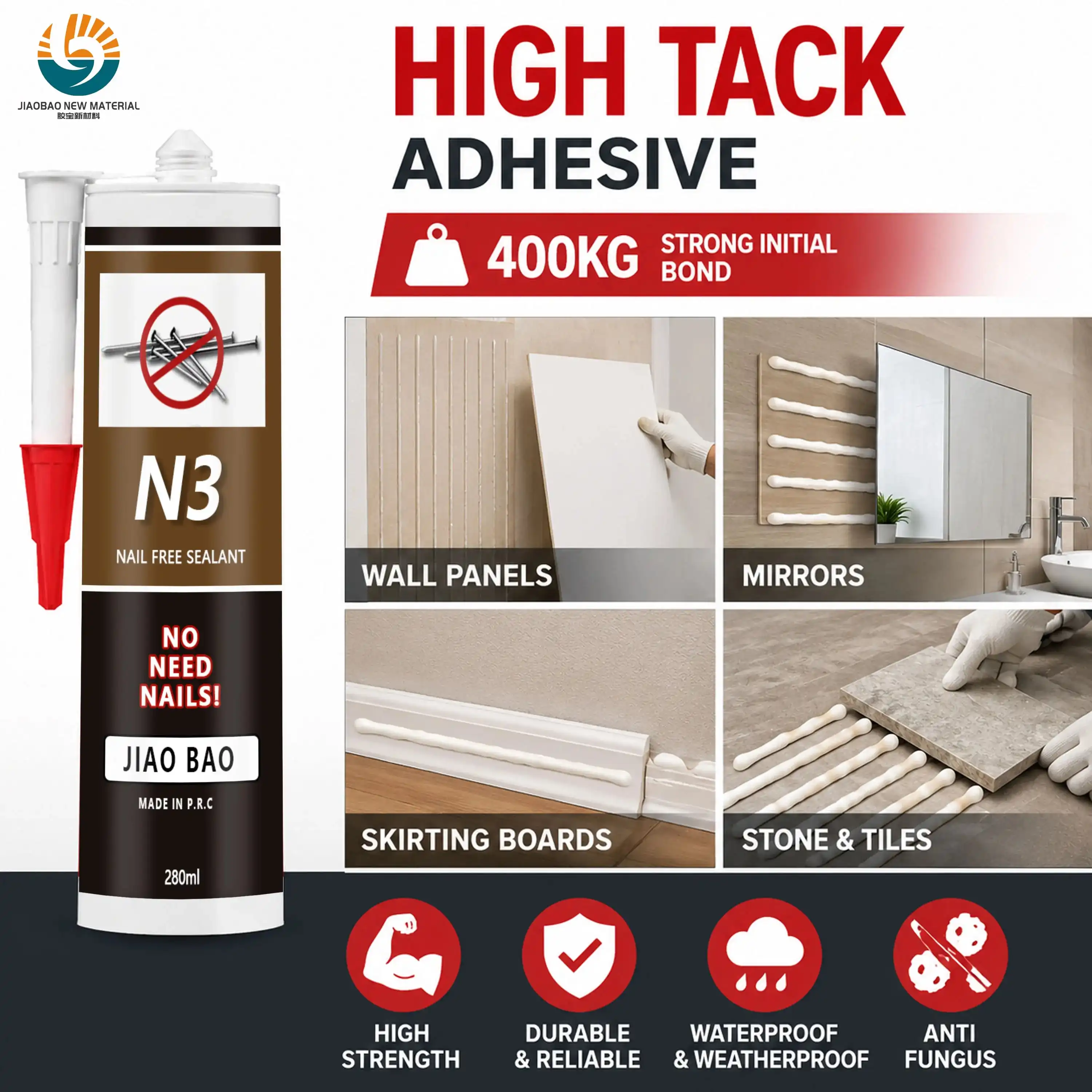
In order to choose the right Heavy Duty Nail-Free Glue recipe, you need to know how different polymer technologies work in different situations. A product meets project standards if it is compatible with other materials, cures properly, and doesn't react badly with the surroundings.
Modified silane polymer formulations are the most popular in the professional construction market because they work well in a range of situations. Most of the time, these Heavy Duty Nail-Free Glues can stick different types of materials together without primers, which cuts down on the number of steps needed to install them. The moisture-curing process starts when the material is exposed to air. This gets rid of the need to worry about mixing ratios or catalyst shelf life, which can make two-part systems more complicated.
Polyurethane-based Heavy Duty Nail-Free Glues are great for sticking things together that have uneven surfaces because they are flexible and can fill in gaps very well. Because they have a higher initial grab strength, they can hold weight right away in vertical applications. Epoxy formulations offer the strongest structural strength for metal-to-metal bonding in industrial manufacturing settings. However, they usually need to be prepared on the surface and are less flexible after curing.
Hybrid polymer technologies take the best parts of several chemical families and combine them. This makes them resistant to UV light for outdoor use while still letting you paint them and keeping their low smell. These new ideas solve certain problems that come up in glass deep processing plants and stone fabrication plants that can't skimp on the quality of the finish.
How well the surface is prepared has a direct effect on how strong and long-lasting the bond is. The surface must be dry, clean, and free of oil, dust, and other small particles. Concrete and other porous materials may need to be primed to keep the Heavy Duty Nail-Free Glue from absorbing too much. On the other hand, light scratching can help non-porous surfaces work better with mechanical keys.
Application methods change depending on the size of the project and the shape of the material. Cartridge guns that you load by hand are good for small jobs and precise work in companies that make custom furniture. For repetitive tasks in door and window processing plants, pneumatic dispensing systems make sure that the beads are always the same size. Automated robotic application makes sure that all areas are covered evenly in high-volume factories that make car parts or home appliances.
Conditions in the environment during application have a big effect on how well the curing works. The suggested temperature range for application is 5°C to 35°C. This makes sure that the polymers cross-link properly. Moisture-cure Heavy Duty Nail-Free Glues are affected by humidity levels. For best results, 50% relative humidity is recommended. When planning when to do installation work, project managers need to think about these things. This is especially important for businesses that sell prefabricated buildings, where controlled factory conditions are different from on-site assembly environments.
The amount of time needed to cure has a direct effect on project schedules and output. The surface can be moved if needed during the 20-minute dry time, and the cure speed of 2.5 mm per 24 hours helps estimators figure out when materials can support design loads. When bonding heavy materials, it's important to keep in mind that thicker uses need proportionally longer full-cure times. Temperature tolerance tells us if a Heavy Duty Nail-Free Glue will work in harsh conditions. Products rated for -40°C to 80°C can be used in both cold storage areas and process equipment that needs to work at high temperatures. UV resistance keeps things from breaking down on the outside, like business building facades and hotel curtain wall panels.
The cured Heavy Duty Nail-Free Glue's response to stress can be seen in its 1,400 N/mm² elastic modulus at 100% elongation. This adaptability smooths out vibrations in installing HVAC equipment and lets bonded materials expand and contract at different rates. The 300% elongation at break gives you a safety margin in case the loading conditions aren't what you expected, which lowers the risk of a catastrophic bond failure.
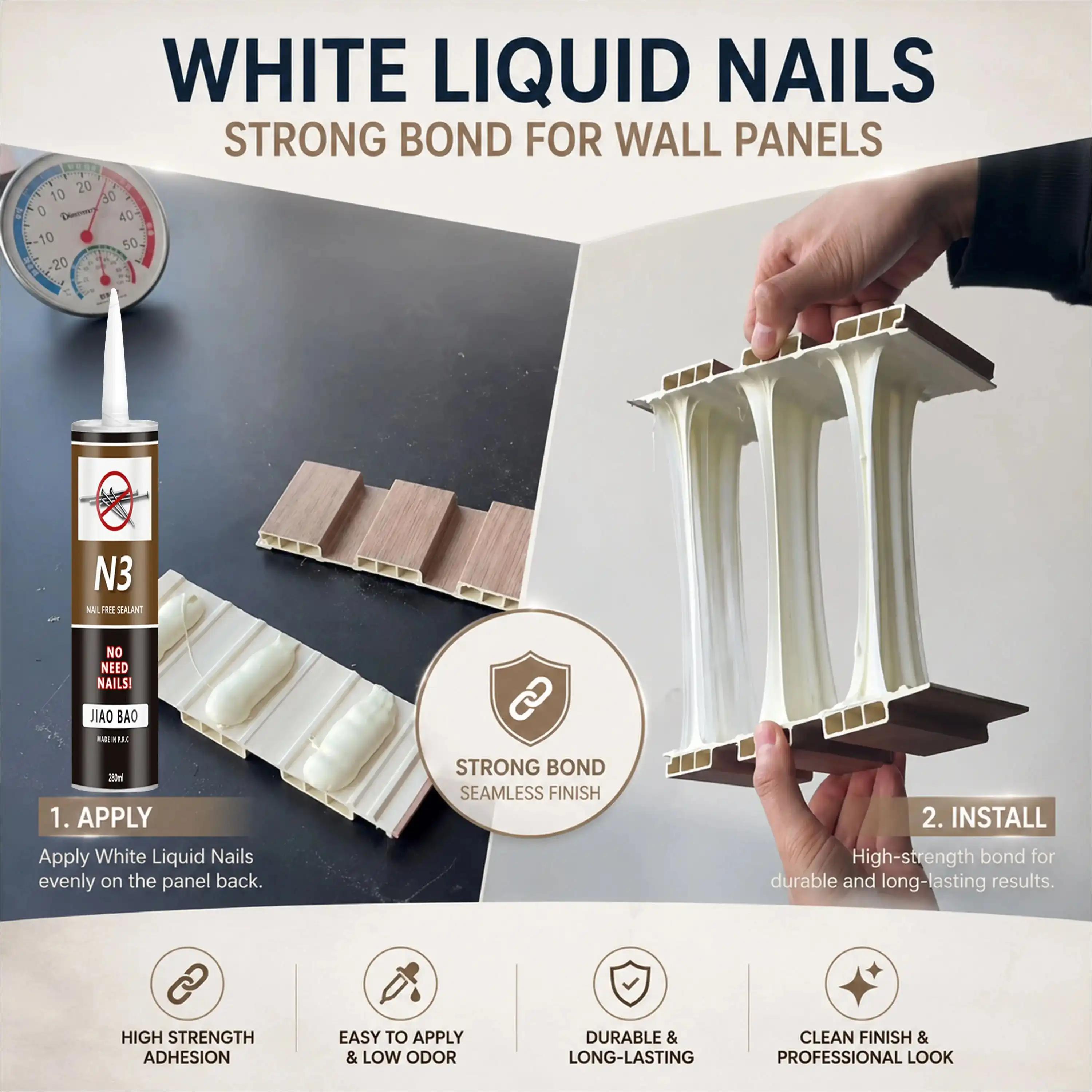
Procurement teams can make choices based on facts when they know the pros and cons of both Heavy Duty Nail-Free Glue bonding and mechanical fastening. Each method has its own benefits that depend on the needs of the application and the limitations of the process.
When you load and unload mechanical fasteners, they create localised stress concentrations that can cause materials to fail. Peak stress levels are lowered because Heavy Duty Nail-Free Glue ties spread forces across the whole contact area. This trait is especially useful for thin materials like aluminium composite panels, where screw holes make the structure less strong. Test results from curtain wall applications show that when properly applied, Heavy Duty Nail-Free Glue-bonded assemblies are often stronger than mechanically fastened equivalents.
Durability is more than just the original power of the bond. Mechanical fasteners become less tight over time because of vibrations, changes in temperature, and material creep. Heavy Duty Nail-Free Glue ties work the same way for as long as they're used, as long as the weather conditions stay within the limits set by the manufacturer. According to ISO 37, the maximum tensile strength is 2.5 N/mm². This gives engineers a way to measure how well their calculations are working.
More and more, choices about what to specify in high-end residential and business buildings are based on how they look. Heavy Duty Nail-Free Glue bonding hides fastener heads, making surfaces look smooth, which is something that interior design firms and luxury decorating contractors like. Because Heavy Duty Nail-Free Glue beads come in white, black, grey, and special versions, they can match the colour of the materials around them. This makes them suitable for mid- to high-end projects that care a lot about how they look.
The initial cost of materials is only one part of the total cost of the job. Productivity at work has a big effect on the economy as a whole. Usually, applying Heavy Duty Nail-Free Glue moves faster than mechanical fastening, especially when working with complicated parts that need to be lined up perfectly. If you stop drilling, you'll save money on tools, lessen the need for maintenance, and use less electricity. When Heavy Duty Nail-Free Glues are used instead of screws, less material is wasted. The 300ml and 600ml sizes of sausage and cartridge packages make it easier to get rid of products that aren't used. When you use mechanical fastening, you end up with scrap, damaged, and offcuts from drilling mistakes. This makes cleanup costs and landfill fees go up.
In many situations, Heavy Duty Nail-Free Glue bonding is better because it costs less in the long run to maintain. Joints that are sealed stop water from getting in and starting corrosion, which can happen with automatically fastened parts. The neutral curing process stops galvanic corrosion between metals that are not the same, which is a common way for aluminium curtain wall systems with steel fasteners to fail. When guiding clients on product choice, building material wholesalers are becoming more aware of these lifetime cost benefits.
When purchasing managers look at Heavy Duty Nail-Free Glue providers, they should give more weight to companies that show steady quality control. When an ISO system is certified, it means that the production and testing procedures have been formed. Compliance with ASTM and EN standards lets you know that a product meets performance standards that are known around the world. Ratings for fire protection are very important for business construction projects that have to follow building codes.
Even with certifications, sample testing is still necessary. Heavy Duty Nail-Free Glue performance changes depending on the substrates used and the environment they are exposed to. Companies that make curtain walls usually test their products on-site in situations that are similar to what they would be like during a real installation. Before full-scale procurement commitments are made, this validation process finds any possible compatibility problems.
Suppliers with a good reputation offer technical help during both the application and buying stages. Having access to data on material suitability, application training, and help with fixing problems lowers the risk of a project. Suppliers who give customised colour formulas and batch consistency promises can meet the needs of customers who need to match the look of different parts of a project.
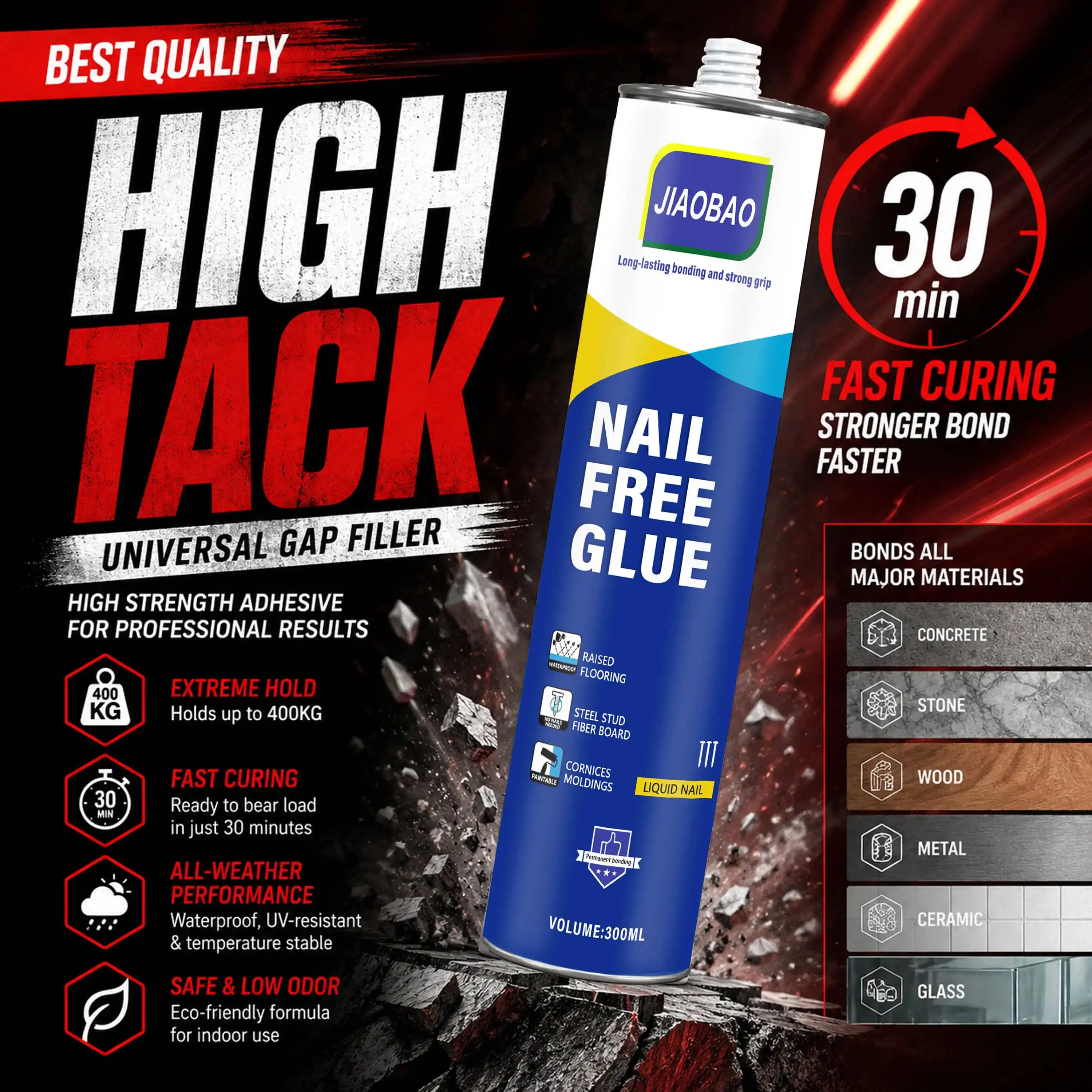
To get around in the Heavy Duty Nail-Free Glue market, you need to know how to evaluate suppliers, negotiate good terms, and make sure that the product is the same from one purchase cycle to the next. To get the best value, procurement professionals have to find a balance between technical needs and business concerns.
When looking for Heavy Duty Nail-Free Glue, the most important thing is to make sure that the materials are compatible. Suppliers should give thorough technical data sheets that list how well the bonding works with all the important substrate types. Ceramic tiles, metal surfaces, glass, PVC, gypsum board, and concrete are some of the most common materials used in construction and manufacturing. Instead of general marketing statements, claims about compatibility need to be backed up by test data that meets recognised standards.
Lead times and production capabilities have a direct effect on project scheduling. Manufacturers that can turn around orders in one to two weeks let you use flexible purchasing strategies that keep your store costs as low as possible. This flexibility is especially helpful for engineering clients whose needs change based on projects. Making sure there is backup production capacity and a stable source of raw materials protects against supply interruptions during times of high demand.
Customisation makes suppliers stand out in markets that need color-matched Heavy Duty Nail-Free Glues. RAL colour chart matching and batch stability promises take care of the main concerns of curtain wall companies and high-end home builders. OEM and ODM production services let companies that sell hardware and do business across borders make their own brand-name products that are different from generic ones. Different types of dispensing tools can be used in a variety of settings thanks to the freedom of packaging in sausage and cartridge forms.
International procurement is more complicated than local purchase. Export certification standards, such as ISO, CE, and governmental approvals specific to the market, must be checked before a buy is made. When goods come into the United States market, they have to go through strict inspection procedures and show lots of paperwork. This makes doing business with suppliers you don't know much about harder. Getting to know makers who have experience with foreign shipping cuts down on clearance delays and compliance problems.
Total landed costs are affected by shipping logistics in a big way. Shipping by sea or land is a flexible option that lets you get the best deal based on the size and urgency of your order. When you combine shipments, you get bulk savings and lower freight costs per item. Bulk sellers of building materials can save money on shipping costs by coordinating deliveries with other products that go well with their own.
Low minimum order quantities can affect both cash flow and the amount of space needed in a warehouse. Lower MOQs from suppliers are good for distributors that serve niche markets or are trying out new products. Larger buyers who negotiate yearly supply deals get better prices and a sure spot when supplies are low. These strategic partnerships give businesses an edge in markets where the supply of a product affects how many customers they keep.
Volume-based price levels keep things flexible while rewarding customers who commit to buying a lot. Setting quarterly volume goals instead of single-order minimums fits with how general contractors and subcontractors usually need to be paid, which is based on projects. Including price adjustment mechanisms that are linked to raw material indices protects both parties from changes in the market and keeps budgeting stable.
Acceptance standards, testing methods, and corrective action steps should be spelt out in quality assurance provisions. Right-to-audit terms let you check the way things are made and how they control quality. If there are any problems with the storage or formulation of the product during its 12-month shelf life, the warranty covers those problems. Problems are solved quickly when there is clear documentation of when expert help is available and how long it takes to respond.
Payment terms that balance the needs of the buyer to protect their cash flow with the needs of the supplier help relationships last. Letters of credit are a safe way to do business across international borders, and large orders can be paid for in installments based on delivery milestones. Early payment rates encourage quick settlement while keeping healthy supply margins that are needed to keep investing in quality and new ideas.
When people use Heavy Duty Nail-Free Glue according to the manufacturer's instructions and best practices in the business, they don't have to worry about safety. Modern modified silane polymer formulas meet strict safety and environmental standards and link things together just as well as professional-grade materials. When purchasing these goods, teams should give more weight to sellers who can show they have quality certifications, expert help, and consistent production standards. In the right situations, switching from mechanical fasteners to other options is a good idea because it improves worker safety, looks better, and costs less in the long run. Knowing about the product's specs, how it should be used, and the supplier's abilities helps you make smart choices that improve project results while keeping safety and performance standards high throughout the product's lifecycle.
A: The time it takes to cure varies on the temperature, humidity, and thickness of the treatment. At normal temperatures of 23°C and 50% relative humidity, the surface dries in about 20 minutes, which lets you handle it without moving it. A full cure moves 2.5 mm deeper every 24 hours, which means that a 5 mm bead of Heavy Duty Nail-Free Glue needs 48 hours to fully polymerise. Cure times are relatively longer for thicker coatings. The moisture-curing process moves more quickly when it's warmer and there is more humidity than when it's cooler and there is less humidity.
A: Moisture and other toxins weaken bonds by a large amount. Before you put Heavy Duty Nail-Free Glue on a surface, it needs to be clean, dry, and free of oils, dust, or release agents. The molecular bonding process is slowed down by water, which stops molecules from sticking properly to surfaces. Oil forms a barrier that stops surfaces from touching closely, which is needed for chemical and mechanical bonding to work. For the best results, make sure the surface is properly prepared by degreasing it with the right solvents and letting it dry completely.
A: For best healing results, the application should happen between 5°C and 35°C. When temperatures drop below 5°C, the moisture-curing reaction slows down a lot, which could stop the polymerisation process from finishing. Too much cold also makes Heavy Duty Nail-Free Glue thicker, which makes it harder to dispense and less fluid for properly wetting substrates. When temperatures are above 35°C, surface skinning happens faster, which limits the amount of time that can be used for placing and adjusting. The finished Heavy Duty Nail-Free Glue can work in temperatures ranging from -40°C to 80°C, so it keeps its performance even as the seasons change and in different climate zones.
The Shandong Jiaobao New Material Co., Ltd. has been making professional-grade Heavy Duty Nail-Free Glue for more than 13 years. Our modified silane polymer Heavy Duty Nail-Free Glue formulations meet the performance requirements of curtain wall contractors, custom furniture manufacturers, and industrial assembly operations. They also meet ISO and CE certification standards. We keep our production lead times low, at just one to two weeks. This way, even during busy project times, your procurement schedules will stay on track. Our expert team offers full application support to help you get the best bonding results on a wide range of substrates, from metal fabrication parts to glass curtain walls.
Jiaobao stands out in the market for coloured Heavy Duty Nail-Free Glue and speciality formulas because it can be customised. We match RAL colour specifications and keep batch consistency across repeat orders, which are very important for high-end architectural projects. With private labelling, our OEM and ODM services help trade and wholesaler companies make their products stand out. Different transportation needs in North American areas can be met by flexible logistics that use both sea and land transport. Quality assurance goes beyond manufacturing. If there are any quality problems within the shelf life, we will refund or replace the item, lowering your procurement risk. Email our team at dorashen@cnjiaobao.com to talk about your unique needs and get samples to try.
1. American Society for Testing and Materials. (2021). ASTM D1002 - Standard Test Method for Apparent Shear Strength of Single-Lap-Joint Adhesively Bonded Metal Specimens. ASTM International Standards Organization.
2. International Organization for Standardization. (2019). ISO 11600: Building Construction - Jointing Products - Classification and Requirements for Sealants. ISO Technical Committee 59/SC 8.
3. European Committee for Standardization. (2020). EN 15651: Sealants for Non-Structural Use in Joints in Buildings and Pedestrian Walkways. CEN Technical Committee 349.
4. Construction Specifications Institute. (2022). MasterFormat Division 07 90 00: Joint Protection - Technical Guidelines for Sealant Selection and Application. CSI Standards Development.
5. American Architectural Manufacturers Association. (2021). AAMA 800: Voluntary Specifications and Test Methods for Sealants. AAMA Sealants Council Publication.
6. Adhesive and Sealant Council. (2023). Industrial Adhesive Safety and Handling Best Practices for Professional Contractors. ASC Technical Education Series Volume 12.
November 16,2023
Enterprise Name
The sealant has very strong adhesion and performs well even on glass and aluminum. After curing, it remains flexible and shows no cracking. Perfect for our facade projects.
November 16,2023
Enterprise Name
Stable quality across batches. Our customers especially like the smooth application and consistent extrusion. It helps reduce installation time on site.
November 16,2023
Enterprise Name
I used it for bathroom sealing. Excellent waterproof performance and no mold issues so far. It's been holding up very well in humid conditions.
November 16,2023
Enterprise Name
The neutral silicone works well on sensitive materials without corrosion. Very suitable for industrial applications requiring stable performance.
_1779347426672.webp)