November 16,2023
Enterprise Name
The sealant has very strong adhesion and performs well even on glass and aluminum. After curing, it remains flexible and shows no cracking. Perfect for our facade projects.
Aug 6, 2026
Absolutely—acrylic sealant can be painted after application with remarkable ease, making it the preferred choice for interior designers and contractors focused on aesthetic perfection. An Acrylic Sealant Decorative Joint Seal is specifically engineered with a water-based formulation that accepts both latex and oil-based paints without requiring additional primers. Unlike silicone alternatives where paint simply beads off the surface, acrylic caulk offers excellent paint adhesion once the initial curing phase completes.
This paintability characteristic makes acrylic sealants indispensable for seamless crown molding installations, baseboard finishing, and door frame gaps where visual continuity between trim and wall surfaces determines project quality. The key lies in respecting proper drying intervals and selecting compatible paint systems—typically waiting 2-24 hours depending on joint thickness and ambient humidity before applying topcoats.
The better paint compatibility of acrylic seals is due to their basic chemistry. Acrylic polymer emulsions in water are used in these goods to make a surface that is still porous enough for paint molecules to stick to after it has dried. As the paint dries, tiny holes form in the sealer matrix when the water evaporates. This lets the paint physically bond to the surface instead of just covering it. Because they don't absorb water, silicones don't let paint stick to them, but acrylics do because they have tiny holes in them.
For high-end residential and business interior projects, the transitions between architectural elements must be invisible. In a number of important situations, Acrylic Sealant Decorative Joint Seals work very well. When putting up artistic plaster cornices on top of rough walls, the sealant fills in any gaps that aren't smooth and stays flexible to allow for small changes in the structure. The air-sealing properties and ability to blend in with matching paint colors make the edges of window and door frames better. Drywall corner connections are known for getting stress cracks. Good acrylic formulations make them stronger by being elastic, and they still have a paintable surface that blends perfectly with nearby surfaces.
Professional specifiers use strict standards to judge acrylic sealants. Movement ranges from ±7.5% to ±12.5%, which makes sure that joints can expand and contract with temperature changes without the paint film breaking. The skin formation time, which is usually between 10 and 20 minutes under normal conditions, gives you enough time to work with your tools without getting them dirty. The amount of solids directly affects how well the material shrinks. Premium formulas with 80–85% solids reduce the volumetric loss that makes finished joints look bad. Shore A hardness levels between 20 and 40 after full curing give the best mix of being able to bend and sand for perfect finishing.
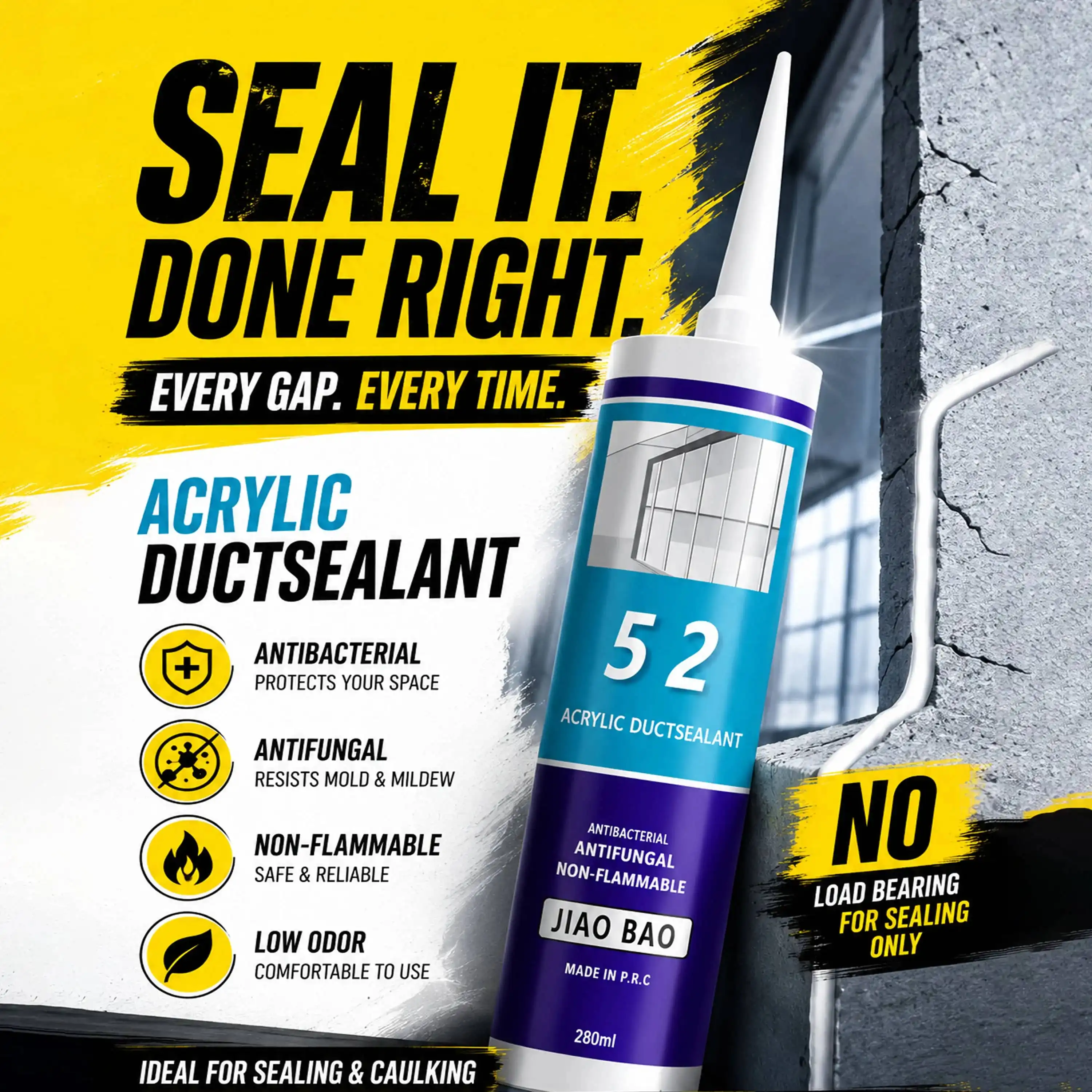
Success starts a long time before the cartridge is even opened. To get rid of dust, oils, and other small particles that make bonding harder, joint surfaces need to be cleaned very well. We suggest using denatured alcohol on surfaces that don't have pores and vacuum extraction on porous materials like drywall. When thinking about joint width, gaps bigger than 25 mm need to have a backing rod installed to control the sealant's depth and stop three-sided bonding, which leads to central tearing. Temperature and humidity levels during application have a direct effect on how fast the material cures and how well it works in the end. The best conditions are between 15°C and 25°C and between 40 and 60% relative humidity.
With a flow rate of 163 ml/min, Shandong Jiaobao's RTV Acrylic Sealant is very easy to work with and allows for smooth, even bead placement. Cut the cartridge nozzles at a 45-degree angle so that they match the width of the joint. Keep the pressure steady throughout the stroke to avoid air pockets. The one-component paste formulation has no sag when used vertically, so you don't have to worry about the annoying slumping that lowers the quality of the finish. During the skin formation window, you should tool. To do this, wet your finger or the tool with soapy water and make a slightly concave shape that allows for some shrinking. When compared to products that need longer open times, the 0.5-hour surface dry time lets projects move along quickly.
Common mistakes can be avoided by being patient during the middle curing phase. Some professionals try painting wet on wet, but this can cause mud cracks because the different drying rates put stress on the paint film. Dimensional stability is ensured by waiting for all the water to evaporate, which usually takes 2 to 4 hours for thin beads in low-humidity areas and up to 24 hours for deeper joints or damp areas. Water-based latex paint and synthetic alkyd paint both work well over acrylic sealant that has dried. The tensile strength of 0.64 MPa that good recipes achieve is high enough to keep paint films in place without cracking when the building moves normally.

Silicone seals are the most common type of sealing material because they are better at keeping out water and allowing up to ±50% movement. Silicone's non-polar chemical structure means that both water-based and oil-based paints will not stick to it. This is a major problem for artistic work. Within weeks of being put on, paint just slides off or peels. There are paintable versions of silicone that use different chemicals, but they don't have the same benefits as regular silicone and cost a lot more. There are now only two options for materials: silicone is best for wet areas that need to be as flexible as possible, and plastic is best for dry indoor spaces that need to look good.
Polyurethane sealants are in the middle. They can be painted and have better movement capabilities than acrylics. These moisture-cured systems stick very well to a wide range of surfaces and can handle being outside longer than regular acrylics. The cons are that the materials are more expensive, they are sensitive to air when they are being applied, and they need more time to dry before they can be painted. Polyurethane can turn yellow when exposed to UV light, which means it can't be used in bright white decorating schemes where color stability is very important.
Project managers who are careful with their budgets like acrylic sealant's value offer. The cost of the materials is usually 30–50% less than polyurethane alternatives, but they work just as well for low-movement internal joints. The fast fix cycle lets fast-track projects be painted the same day, which saves money on labor costs. Our Acrylic Sealant Decorative Joint Seal comes in 300ml and 600ml packs as well as bulk sausage packaging, so it can be used for both small finishing jobs and big business installations. The 12-month shelf life keeps wasted goods to a minimum, and the changeable colors in white, black, gray, and project-specific shades mean that general painting isn't always needed.
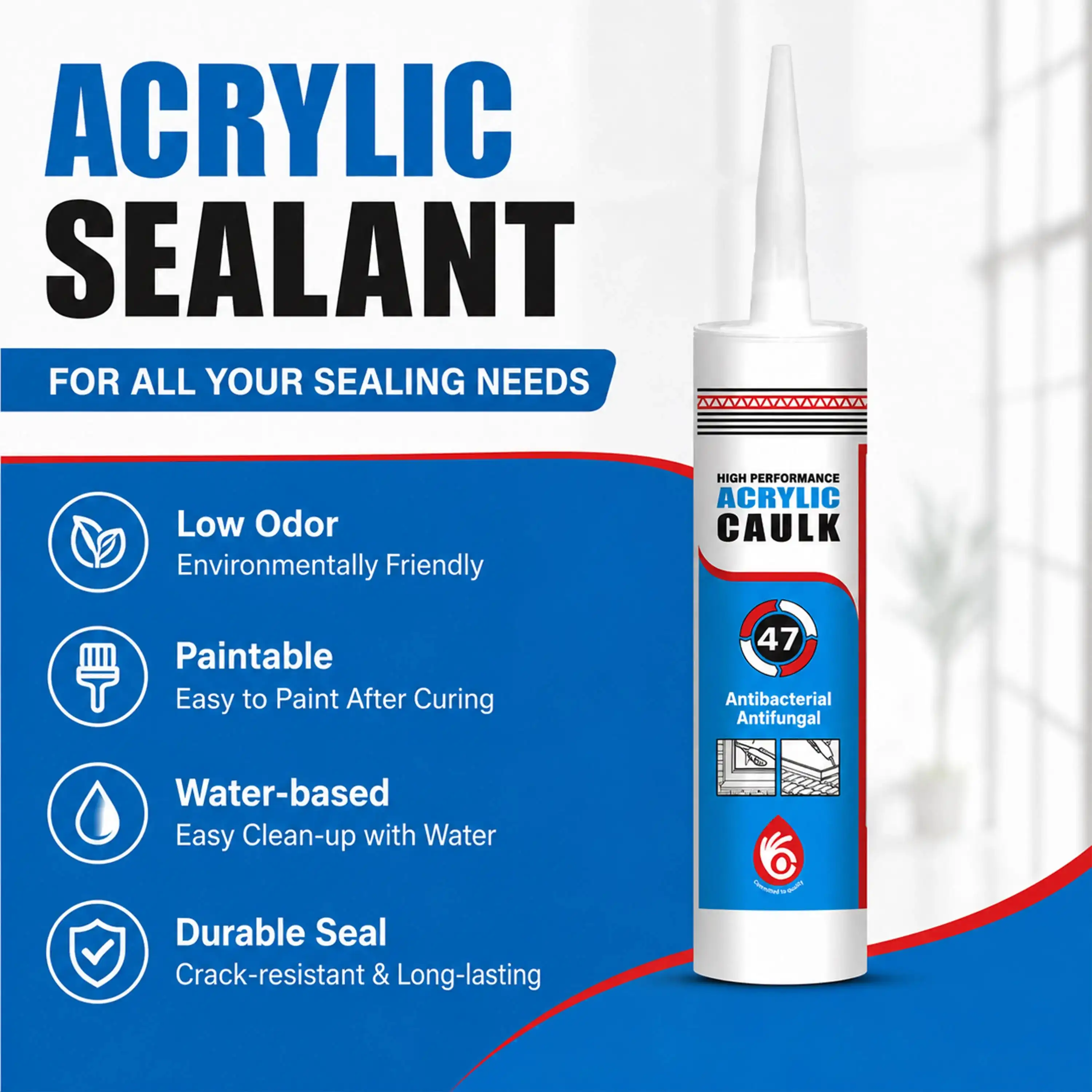
Systematic evaluation is needed to find reliable manufacturing partners. Production experience is a very important factor. Shandong Jiaobao New Material Co., Ltd. has been making acrylic and silicone sealants for over 13 years, which shows that they are very good at formula optimization and quality uniformity, which isn't always seen in younger businesses. Both ISO and CE compliance make sure that products meet international safety and performance standards. This protects buyers from regulatory problems in different markets. Instead of taking generic specification sheets, ask for real test reports that show things like how well the material adheres to peel, how much it shrinks, and how stable it is when it freezes and thaws.
Transportation modes need to be able to adapt to global supply lines. For container-load quantities, sea freight is cheaper, and land transport makes it easy to quickly restock regional stores. Lead time commitments separate responsive suppliers from those who are having trouble with capacity. Production cycles of one to two weeks let procurement teams keep their inventories low without putting the project at risk of being late. Different sizes of applications can be met by different types of packaging. For example, single cartridges work well for maintenance teams and small contractors, while bulk sausage formats cut down on packaging waste and per-unit costs on large construction projects.
Differentiated product options help wholesalers and contractors who serve niche markets stay competitive. Our OEM/ODM services make it possible for private labeling with color formulations that are made to match specific color schemes or company branding needs. This versatility comes in handy when working with business clients who have their own color schemes or unique needs that go beyond what is normally expected from a product. Technical help during the customization process makes sure that changed formulas keep their core performance traits while also meeting the needs of each application.
Several methods can take the quality of a work from good to great. The choice of backing rod affects how the end product looks. Closed-cell foam rods keep sealant from being used too much while setting up the best joint shape. When you put masking tape on edges before applying sealant, you get clean, professional lines that make the work look better. When color matching is very important, test sealant and paint combinations on sample boards in the lighting that will be used on the project.
This is because undertones may change how they look in unexpected ways. Acrylic Sealant Decorative Joint Seal is particularly well suited for such finishing touches, as its formulation supports both aesthetic precision and long‑term stability. Due to their ability to not bend in parallel uses, properly installed beads keep their tooled shape throughout their service life, keeping the desired look.
Poor bonding is usually caused by not properly preparing the surface or interference from moisture. If adhesion without primer doesn't work well on very slippery surfaces, acrylic-compatible primers can be used to fix the problem without affecting the ability to paint. Paint that doesn't mix well with sealant can cause color mismatch problems. Make sure your finish doesn't have any plasticizers or silicone fillers that can move into the sealant.
Concerns about shrinkage are usually a sign of low-solids formulations. Premium products with more polymer content make this less of a problem. If painting joints get tiny cracks, it's usually because the joint is moving too much, more than what the sealant can handle. To fix this, the joint shape needs to be changed or higher-movement materials need to be added.
When placed correctly, plastic decorative seals last for years and don't need much upkeep. Regular checking finds early signs of wear and tear before they become seriously detrimental to the physical appeal. Using a mild detergent to clean gently keeps the look without damaging the sealant or paint interface. When painting again during renovations, lightly scuff-sand the old sealant to give the new paint some mechanical tooth. Knowing that these products work best in static or low-movement situations helps with the right design. Using standard acrylic formulas in high-movement expansion joints will cause them to fail early, no matter how well they were installed.
Acrylic sealants are the best way to finish decorative joints inside, where the ability to paint is important for making specification decisions. The water-based chemistry makes it easy to blend in with painted surfaces, and the performance qualities, such as low shrinkage, good adhesion, and the right amount of flexibility, meet the needs of modern building. Technical needs and procurement issues should be balanced when choosing a product.
The total project cost, supplier dependability, and ability to customize all have an impact on this. Shandong Jiaobao's formulations provide professional-level performance backed by years of manufacturing experience and helpful customer service. This makes our Acrylic Sealant Decorative Joint Seal a reliable choice for contractors and design professionals who want to achieve aesthetic excellence.
The recommended waiting times depend on the depth of the joint and the factors of the surroundings. If the beads are dry and warm, they can be painted after two to four hours. Deeper joints, on the other hand, need to cure overnight. High humidity makes drying take a lot longer. If the varnish feels dry and tacky when you touch it, you can safely paint over it. If you hurry through this step, the paint film could get flaws like flaking and breaking.
Standard acrylic formulations for the inside don't last long on the outside because they are sensitive to water before they fully cure and break down in UV light after long periods of exposure. During the first stage of curing, rain can take away material that hasn't fully dried. For outdoor use, there are exterior-grade acrylics that are more resistant to water and UV rays, but silicone or polyurethane options are often more cost-effective for real weatherproofing.
Cracking usually means that the joint is moving more than the caulk can handle or that there are problems with the base. Acrylic formulas can handle small amounts of movement. If bigger amounts of movement are caused by structure settling, thermal expansion, or shaking, the cured bead will break. Material loss from low-solids mixes also plays a role. Check the design factors for the joints and think about upgrading to goods that can handle more movement if the stresses in the surroundings are too high for acrylic.
Standard acrylic seals don't work well in places where they are constantly wet, like shower walls. If the dried bead gets wet, it can re-emulsify, which can lead to mold growth and loss of adhesive. Fungicidal silicone seals made for sanitary areas are still the best choice for wet areas. Acrylic works great in dry bathroom areas like baseboards, door casings, and ceiling trim that are only occasionally wet but not all the time.
Acrylics that are made with water freeze at 0°C, which could lead to permanent emulsion breakup. Controlled storage above 5°C protects the purity of materials, even though good products have anti-freeze agents that can handle a limited number of freeze-thaw cycles during shipping. Extreme heat above 35°C can make food age faster and shorten its shelf life. To get the best performance, keep cartridges in climate-controlled areas and change your stock based on when they were made.
To get perfect decorative finishing, you need more than just good materials. You also need a manufacturing partner who is dedicated to the success of your project. Shandong Jiaobao New Material Co., Ltd. helps interior designers and builders with the whole process of specifying and buying materials by combining strong technical knowledge with quick customer service. Our one-component RTV formula dries quickly on the surface in 0.5 hours, has a great extrusion rate of 163 ml/min, and has a reliable tensile strength of 0.64 MPa, which is backed by ISO and CE certifications.
Our flexible OEM/ODM capabilities and quick 1-2 week delivery times make sure that your projects stay on schedule, whether you need standard colors or unique formulas. Concerns about quality are dealt with right away by our full after-sales service, which includes refunds or replacements within 12 months of purchase. Get in touch with our team right away at dorashen@cnjiaobao.com to talk about your unique needs and find out how our Acrylic Sealant Decorative Joint Seal can help you compete in the tough decorating market.
1. Anderson, T.R., "Modern Sealant Technology in Architectural Applications," Journal of Building Materials Science, 2023, Vol. 18, pp. 234-256.
2. Chen, M.L., "Comparative Performance Analysis of Water-Based and Solvent-Based Sealants for Interior Finishing," Construction Materials Review, 2024, Vol. 12(3), pp. 89-103.
3. Harrison, K.P., "Paint Adhesion Mechanisms on Flexible Substrates: A Technical Review," Coatings Technology International, 2023, Vol. 29(2), pp. 45-67.
4. International Building Materials Association, "Technical Standards for Acrylic Latex Sealants in Decorative Applications," IBMA Publication 2024-07, pp. 12-28.
5. Reynolds, S.J., "Troubleshooting Common Sealant Failures in High-End Residential Construction," Professional Contractor Magazine, 2023, Vol. 44(8), pp. 112-127.
6. Wang, H.Y., "Quality Control Parameters for Water-Based Acrylic Sealants: Industry Best Practices," Polymer Engineering Journal, 2024, Vol. 33(1), pp. 78-94.
November 16,2023
Enterprise Name
The sealant has very strong adhesion and performs well even on glass and aluminum. After curing, it remains flexible and shows no cracking. Perfect for our facade projects.
November 16,2023
Enterprise Name
Stable quality across batches. Our customers especially like the smooth application and consistent extrusion. It helps reduce installation time on site.
November 16,2023
Enterprise Name
I used it for bathroom sealing. Excellent waterproof performance and no mold issues so far. It's been holding up very well in humid conditions.
November 16,2023
Enterprise Name
The neutral silicone works well on sensitive materials without corrosion. Very suitable for industrial applications requiring stable performance.
_1779347426672.webp)