November 16,2023
Enterprise Name
The sealant has very strong adhesion and performs well even on glass and aluminum. After curing, it remains flexible and shows no cracking. Perfect for our facade projects.
Jul 7, 2026
When closing bathrooms, it's important to choose the right materials so that they work well for a long time in damp places. When asked if acrylic seals can be used in bathrooms, the answer is "yes," but only under certain circumstances. Acrylic Sealant Waterproof Grade goods are made to be exposed to water sometimes instead of all the time. These water-based mixtures do a good job of closing gaps around door frames, window edges, baseboards, and wall corners outside of the shower area.
But they shouldn't be used instead of silicone seals in places where water flows directly or stays submerged for a long time, like around the edges of bathtubs or shower stalls. Knowing what acrylic products can and can't do when it comes to waterproofing helps buying teams make smart choices that balance cost-effectiveness with performance needs.
The waterproof rating of acrylic seals tells you how well they fight water damage and penetration. Normal ornamental caulks re-emulsify when they come in contact with water. But Acrylic Sealant Waterproof Grades have hydrophobic modifiers and polymer improvements that keep the structure intact when it gets wet and dry.
Specific testing methods are used by the business to tell Acrylic Sealant Waterproof Grades apart. ASTM C834 sets the basic standards for extrudable sealants, and ASTM C790 checks how well they stick to surfaces after being submerged in water. After seven days in water, products that meet these standards show cohesive failure instead of adhesive failure. This means that the bond is still stronger than the sealer body itself. Tensile strengths of 0.64 MPa, which are found in good formulas, are higher than the minimum of 0.4 MPa. This means that they are flexible enough to allow for thermal movement in joint uses.
Since acrylic seals dry when the water evaporates, they can't really be used in places that are always wet. The dispersion-based chemistry can't stand up to atmospheric pressure or being submerged in water for a long time without breaking down. Because of this, bathroom apps need to tell the difference between splash zones (which are fine) and direct water touch zones (which are not). People who work in procurement should know that waterproof grading only looks at how well something works in water, not how well it works in rain or humidity. Movement ability usually falls between 12.5% and 15% joint expansion, which means these goods are best for link joints rather than high-movement uses.
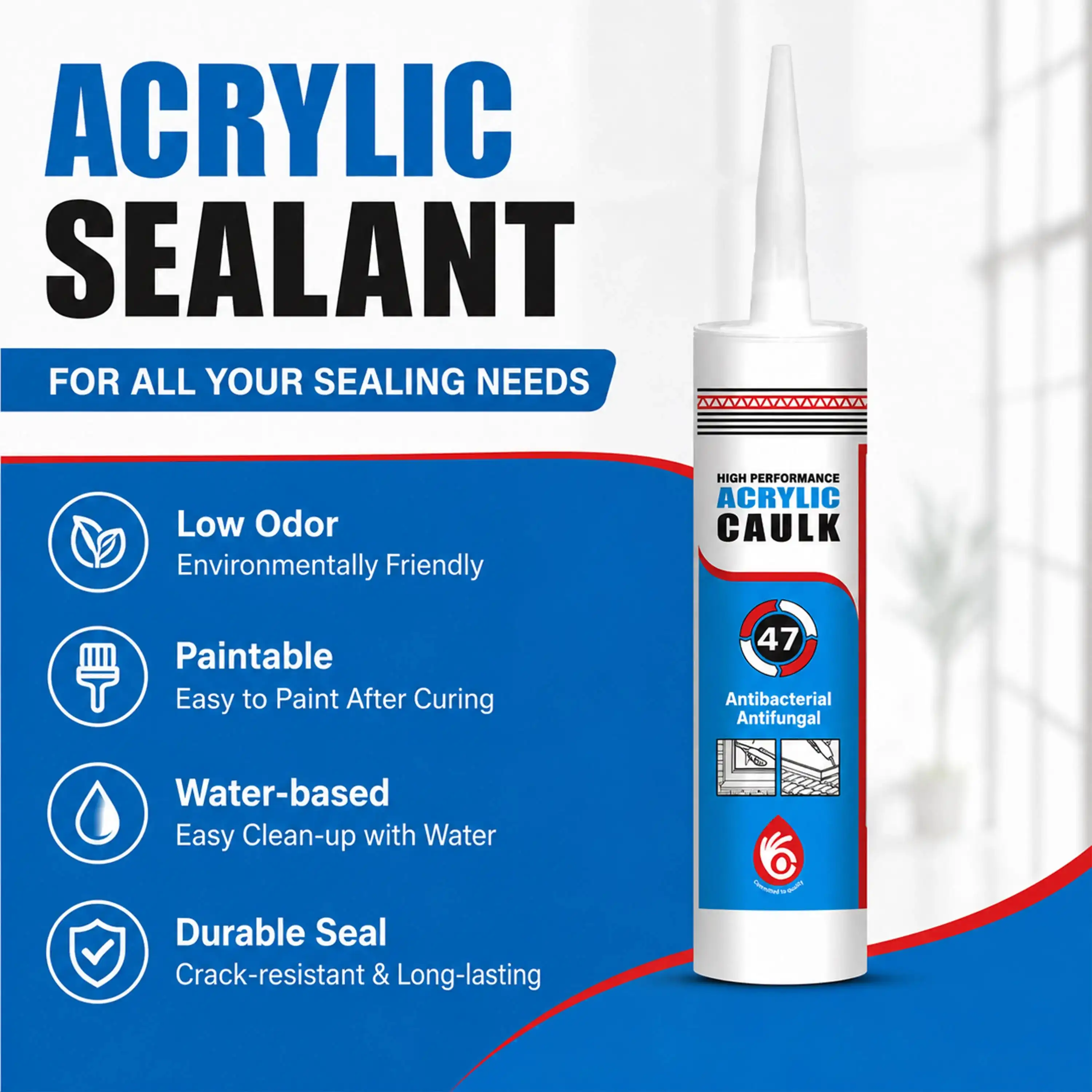
The problems of bathrooms are unique, so the chemistry of the sealant needs to be matched to the conditions of contact. Knowing when acrylic formulations work best and when other items are needed will ensure the best binding performance.
Acrylic seals have a lot of great benefits when used in the right places in the bathroom. Because they stick better to porous surfaces like cement board, plywood, and ceramic tile, you don't need to use primers, which cuts down on the number of steps needed to put them. The ability to be painted is a key difference—once the sealant has hardened, latex paints and coats stick directly to the surface, making it possible to match the color of the walls next to it. Custom furniture makers and interior design firms that need silent closing solutions will find this feature very useful.
The water-based, low-VOC formula keeps the smell to a minimum during application, which is important for living areas that are already occupied and business buildings that don't have a lot of air flow. Material compatibility includes painting surfaces, wood, metal, and glass. This means that you don't have to use different types of products when remodeling your bathroom. Quick skin creation in 30 minutes speeds up the project, but it needs 12 to 24 hours to fully fix before it can be exposed to water.
Even though Acrylic Sealant Waterproof Grades have some benefits, they can't be used instead of silicone seals in areas with a lot of wetness. Acrylic Sealant Waterproof Grade is simply not designed for continuous water exposure, whereas polydimethylsiloxane chemistry is perfect for shower walls, bathtub edges, and sink tops because it is highly resistant to water and flexible. Silicone stays flexible even when it's constantly wet and allows joints to move more (usually ±25% to ±50%), which makes it the only material that can be used to cover wet areas.
Polyurethane sealants are another option. They have great adhesion and moving qualities and don't absorb water. But because they are more expensive and can't take paint, they can only be used in certain commercial settings. Acrylic formulations offer the best mix of performance and cost-effectiveness for bathroom door frames, window edges, and vertical corner joints that don't come into direct touch with water. To make sure that vertical applications are stable, procurement managers should ask for ASTM C920 Grade NS (non-sag) ratings.
To choose the right Acrylic Sealant Waterproof Grade, you have to compare a number of performance factors with the needs of the job. People who make decisions have to find a balance between technical details and practical things like how the product will be used and how much upkeep will be needed in the long run.
Adhesion-in-peel test results should be used to start checking the waterproof grade. More than 90% of quality goods fail to stick together after being submerged in water for seven days, showing that the bond integrity survives water contact. Extrusion rates of about 163 ml/min show that the rheology is right for efficient use, which cuts down on labor costs for big projects. Tensile strengths between 0.6 and 0.8 MPa give the material enough flexibility to go through temperature cycles without affecting its stability.
The features of the cure have a big effect on the schedule for the job. Skin-dry times of 30 minutes make handling go faster, but the full cure relies on the joint depth and humidity in the air. Temperature performance ranges usually cover -18°C to 80°C, which is good enough for most home and business bathrooms. Chemical resistance to common cleaning agents stops materials from breaking down too quickly, which extends the life of well-kept buildings.
Manufacturers with a good reputation use ISO 9001 quality management systems and give detailed technical data sheets that show the results of tests. Certification that meets ASTM C834, ASTM C920, and appropriate regional standards (EN 15651 for European markets) shows that the product has been tested and proven to work by a third party. Warranty clauses that cover failures in bonding or cohesive breakdown lower the risk for buying teams that are in charge of big orders.
Customization options, such as RAL color matching, are available from well-known sources. This is very important for curtain wall companies and high-end home projects that need to look consistent. Minimum order amounts, wait times, and packing choices (such as cartridge vs. sausage forms) should all be in line with the application equipment and project timelines. Wholesalers of building materials and tools can benefit from OEM/ODM agreements because they let them use their own labels while still meeting performance standards.
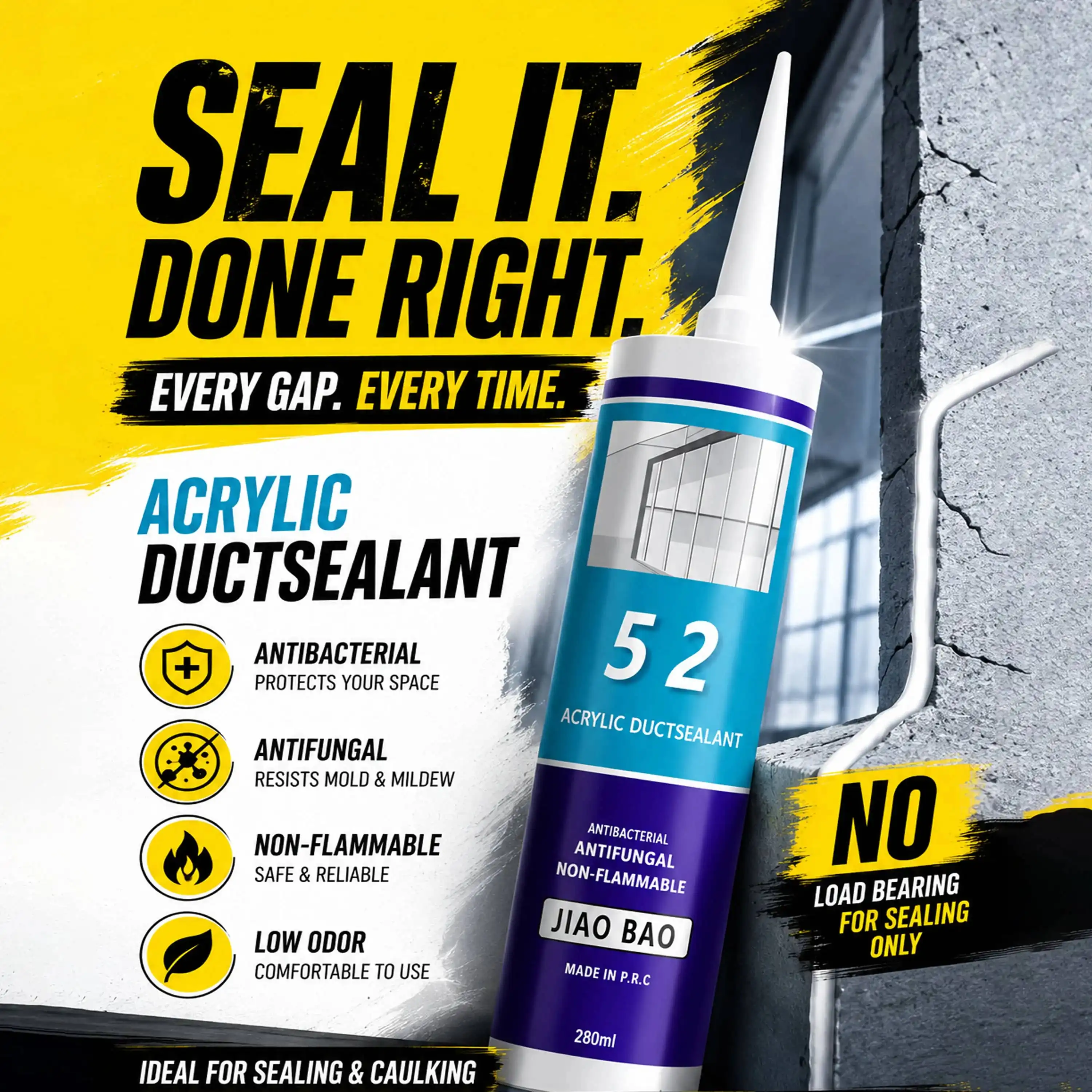
The right way to apply something directly affects how waterproof it is and how long it lasts. Following organized steps for preparation and fitting will bring out the best in Acrylic Sealant Waterproof Grade formulas.
The surfaces of the joints must be clean, dry, and free of anything that could make them less sticky. To get rid of oil leftovers, mildew, old sealant bits, and dust, you need to use mechanical cleaning or liquid wiping. The amount of water in the substrate shouldn't be more than 10%, because too much water gets in the way of drying and bond formation. Three-sided bonding, which creates internal stress and leads to early failure, can be stopped with backing bars or bond-breaker tape.
Temperatures between 5°C and 35°C are best for applications because they allow for the best working conditions and drying process. If you tool the sealant within five to ten minutes of extrusion, you can make sure it has a good surface finish before skin formation starts. Water can't get in because the beads are smooth and continuous, with no holes or breaks. Acrylic Sealant Waterproof Grade is also influenced by these same application parameters, but its performance in wet conditions remains inferior to silicone. The joint should have a width-to-depth ratio of 2:1 so that it can accommodate movement properly and avoid putting too much stress on one area.
There are a few fitting mistakes that make waterproofing less effective, no matter how good the product is. When you put sealant on wet surfaces, it doesn't stick because the water stops the right base touch. When you don't use the right tools, you end up with uneven surfaces that have air gaps that trap water and speed up degradation. Painting before the sealant has completely dried traps any remaining wetness, which makes the film crack and the sealer soften.
When joints are overfilled, they can't move as freely and are put under too much stress during heat cycle. When there isn't enough sealant volume, on the other hand, small parts are more likely to fail cohesively. If it rains or is cleaned within the first 24 hours, the uncured material is washed away, leaving gaps that need expensive repairs. Before handing over the project, engineering teams should set up quality control processes that make sure the surface is properly prepared, joints are the right size, and there is enough time for drying.
For big bathroom building and remodeling jobs, you need to find smart ways to source materials that balance quality control with cutting costs. Acrylic Sealant Waterproof Grade is one such material that procurement teams often evaluate, but its limited moisture resistance means it must be carefully specified for non-wet areas only. Professionals in procurement have to choose suppliers, coordinate supplies, make sure that specifications are followed, and keep projects on schedule.
Wholesalers of building materials that have been around for a while offer reliable product availability and expert help. For large orders, having a direct connection with the maker can be helpful because it lets you get customized formulas, better prices, and faster lead times. Online business-to-business (B2B) sites make it easier to compare suppliers and get preliminary approval, but real samples are still needed before making large purchases.
The way the packaging is set up affects both how well it works and how much space it needs. Standard cartridge forms work well for smaller projects and routine upkeep, while sausage packaging cuts down on waste and costs per unit for big installs. The 300ml and 600ml sizes are available to fit a range of project sizes and application tools. When you think about a 12-month shelf life, you need to plan how to rotate your goods so that the times you buy things work with your project dates.
When negotiating a bulk order, you should talk about tiered pricing systems, which lower costs as the number goes up. Container-load numbers usually save the most money, but the minimum order requirements need to be in line with how much space is available and how fast the goods are used. Payment terms, quality guarantee clauses, and policy for replacing defects protect purchase investments and set clear responsibility frameworks.
For shipping operations to work, production wait times (usually one to two weeks) and installation plans for projects need to be coordinated. Sea freight is cheaper for orders that don't need to be delivered right away, while land transportation gives you more options for delivering goods within North America. Freeze-thaw harm that weakens products is avoided with temperature-controlled storage. To meet government rules and quality assurance procedures, packages should come with certification paperwork like ISO compliance reports, ASTM test reports, and material safety data sheets.
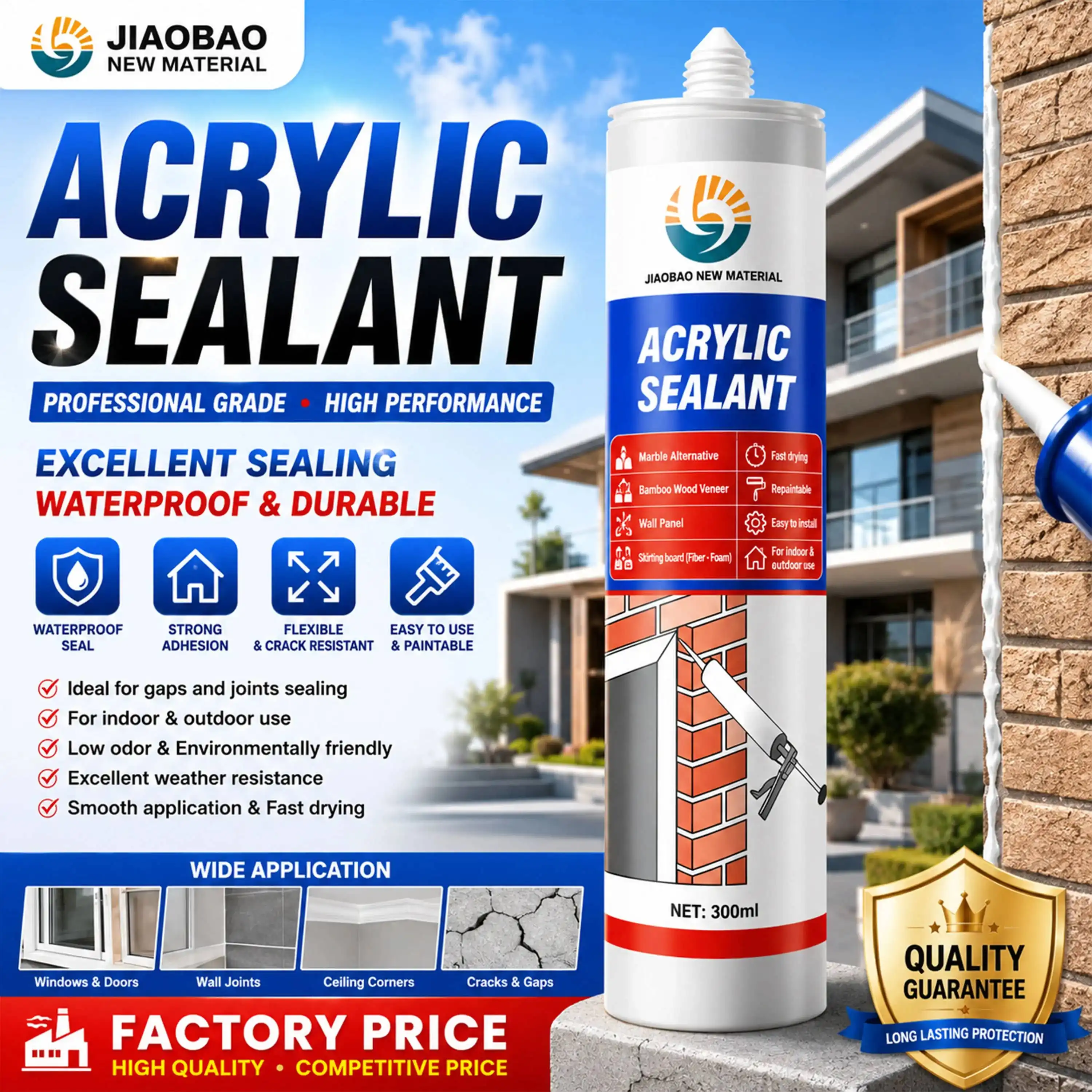
Acrylic Sealant Waterproof Grade seals are very useful in bathrooms because they can be painted over, have a low smell, and don't get damaged by short-term contact to water. Because they can't stand being wet for long periods of time, silicone products should only be used around the edges of bathtubs and shower areas, while acrylics should be used to seal door frames, window joints, and cosmetic trim.
The success of procurement rests on looking at technical specifications, making sure that suppliers have the right certifications, and following the right application methods that get the best performance out of the materials. Knowing the difference between waterproof grades and full submersion capability can help you avoid making mistakes that cost a lot of money and make sure that the seal stays strong over time in a variety of bathroom settings.
Some types of Acrylic Sealant Waterproof Grade don't mind splashes and humidity, but they shouldn't be used in shower walls or on the edges of bathtubs, where water flows directly and stays wet all the time. In these places, silicone seals made for areas that stay wet all the time are needed.
A skin forms on the surface in 30 minutes, but it takes 12 to 24 hours for the joint to fully cure, based on the dampness level and the depth of the joint. During this first healing time, don't let any water touch the surface to stop washout and make sure the bond forms properly.
Fungistatic chemicals are added to high-quality Acrylic Sealant Waterproof Grades to stop mold and mildew from growing on the sealant surface. Biological growth risks are lower in bathrooms where moisture builds up when the area is cleaned regularly and has enough air flow.
Formulations that are Acrylic Sealant Waterproof Grade have hydrophobic stabilizers and often silane binding agents that stop the emulsification process from starting up again when they come in contact with water. When they get wet, regular cosmetic caulks soften and wash off, so they can't be used in bathrooms where moisture protection is needed.
Bathroom caulking projects need materials that are both reliable in their performance and easy to use. Jiaobao's Acrylic Sealant Waterproof Grade has been used for 13 years and is known for its strong bonding, quick drying, and paintable finishes. Our one-component mixture comes in white, black, gray, or custom colors and meets ASTM standards. We also offer reasonable price that keeps project costs low without sacrificing quality. ISO and CE standards make sure that rules are followed in areas in North America and Europe.
As a reliable acrylic sealant waterproof grade supplier, we offer a range of flexible packing choices, including 300ml and 600ml cartridges or sausages, quick lead times of one to two weeks, and full OEM/ODM customization. Our expert support team helps you choose the right specifications, get help with your applications, and organize bulk orders so that your buying process runs more smoothly. We stand behind the quality of our products with happiness warranties that cover how well they work over time.
Email our expert team at dorashen@cnjiaobao.com to get detailed data sheets, sample goods, and price quotes for large orders that are specific to your bathroom building or remodeling projects. Visit shandongjiaobao.com to see our full line of sealants and learn how Jiaobao's production skills can help you meet your sealing needs with reliable quality and quick service.
1. American Society for Testing and Materials. (2020). ASTM C834-20: Standard Specification for Latex Sealing Compounds. West Conshohocken, PA: ASTM International.
2. American Society for Testing and Materials. (2018). ASTM C920-18: Standard Specification for Elastomeric Joint Sealants. West Conshohocken, PA: ASTM International.
3. Beech, J. C. (2019). Construction Sealants and Adhesives. London: Taylor & Francis.
4. Klosowski, J. M., & Wolf, A. T. (2016). Sealants in Construction (2nd ed.). Boca Raton, FL: CRC Press.
5. Panek, J. R., & Cook, J. P. (2021). Building Seals and Sealants: A Practical Guide. Philadelphia: Building Research Establishment Press.
6. Wolf, A. T. (2017). Durability of building sealants: Performance criteria and assessment methods. Construction and Building Materials, 143, 592-601.
November 16,2023
Enterprise Name
The sealant has very strong adhesion and performs well even on glass and aluminum. After curing, it remains flexible and shows no cracking. Perfect for our facade projects.
November 16,2023
Enterprise Name
Stable quality across batches. Our customers especially like the smooth application and consistent extrusion. It helps reduce installation time on site.
November 16,2023
Enterprise Name
I used it for bathroom sealing. Excellent waterproof performance and no mold issues so far. It's been holding up very well in humid conditions.
November 16,2023
Enterprise Name
The neutral silicone works well on sensitive materials without corrosion. Very suitable for industrial applications requiring stable performance.
_1779347426672.webp)