November 16,2023
Enterprise Name
The sealant has very strong adhesion and performs well even on glass and aluminum. After curing, it remains flexible and shows no cracking. Perfect for our facade projects.
Jul 3, 2026
Water-based acrylic sealant is designed for construction and industrial applications that require flexibility, paintability, and moisture resistance. Acrylic Sealant Waterproof Grade is a high-performance composition with hydrophobic ingredients that resist water penetration and adhere to various construction substrates. A robust, elastic seal is formed by moisture evaporation in this one-component, ready-to-use sealant for door frames, window perimeters, expansion joints, and interior finishing work where traditional caulks fail under continuous humidity.
Acrylic Sealant Waterproof Grades comprise acrylic copolymer dispersions and silane coupling agents that change moisture interaction. Rain causes washout and adhesion failure in standard acrylic caulks, which absorb water and re-emulsify within hours. Acrylic Sealant Waterproof Grade formulations use hydrophobic modifiers to generate a protective barrier when skinned, providing rain resistance within 12 to 24 hours depending on ambient circumstances. Water vapor passes through the molecular structure during curing but repels liquid water when the seal forms.
The grading system measures water immersion adhesion retention per ASTM C794, elongation capacity per ASTM D412, and weathering durability using accelerated aging procedures. Acrylic Sealant Waterproof Grade products retain cohesive integrity following seven days of submersion testing, exhibiting little bond strength deterioration. They differ from painter's caulk, which softens and fails under similar conditions. Most solid content is 75–85%, limiting shrinkage that threatens joint integrity in dynamic construction applications.
Acrylic sealants differ from silicone and polyurethane in basic chemistry and performance. Silicone sealants cure by reacting alkoxy or acetoxy groups with ambient moisture to form permanent elastomeric seals with 400–800% elongation. Silicone is paint-incompatible and costs extra per linear foot. Polyurethane sealants may move joints over 25%, however they require meticulous surface preparation and lack paintability contractors value.
Acrylic Sealant Waterproof Grade formulas accept latex and oil-based paints after drying and provide 12.5 to 15% extension for low-to-moderate movement joints. Water-based carrier technology streamlines pre-skinning cleaning using normal water, lowering labor expenses and solvent exposure. Acrylic Sealant Waterproof Grade sealants are appropriate for door frame perimeters, window trim connections, and outside wall penetrations when painting achieves aesthetic integration over excessive joint movement.
Acrylic Sealant Waterproof Grades are evaluated across important performance aspects using international standards. ASTM C834 describes one-component latex sealing compounds by type (OP), grade (service temperature), and usage. Exterior products must resist weathering under ASTM G154, preserving flexibility and adhesion after 500 hours of enhanced UV exposure. ISO 9047 classifies movement capabilities, with Acrylic Sealant Waterproof Grade items achieving Class 12.5 for joints with reduced heat expansion.
ASTM C794 adhesive testing is the most rigorous waterproof confirmation. After bonding to concrete, glass, and aluminum substrates, test specimens are submerged in water for seven days before peel testing. Acrylic Sealant Waterproof Grade formulations must rip rather than debond from surfaces to show that hydrophobic alteration inhibits water-induced adhesion loss. ASTM D2202 tests slump resistance to ensure vertical joint applications don't sag, and ASTM C1183 tests extrudability to ensure cartridge-wide gunning rates.
Quality Acrylic Sealant Waterproof Grade goods have tensile strength above 0.4 MPa at 23°C, skin development within three hours, and tack-free drying within 24 hours for paint application. Our composition exceeds standards with 0.64 MPa tensile strength after 30 minutes. The product has 0% droop in vertical applications and 163 ml/minute extrusion rates, making large-scale installations efficient.
Acrylic Sealant Waterproof Grades save money by extending service life and reducing maintenance. Standard acrylic fillers yellow and chalk after 18–24 months of outdoor exposure. UV-resistant formulas avoid this. The frequency of resealing projects and labor expenses are reduced by Acrylic Sealant Waterproof Grade materials' five to seven-year durability in temperate climates. Stabilized acrylic copolymers resist photo-oxidation and hydrolytic degradation that cause premature failure.
Mold resistance is another important durability factor, especially for humid areas or damp interiors. Fungal colonization on Acrylic Sealant Waterproof Grade sealants is prevented by fungistatic additives, preserving aesthetics and polymer matrix integrity. Quality goods are tested from -18°C to 82°C without cracking or losing adhesion, keeping seals flexible throughout seasonal expansion and contraction. Thermal stability is crucial for outdoor door and window applications with regular joint movement.
When examined across project lifecycles, water resistance, UV stability, and adaptability minimize total cost of ownership. When choosing Acrylic Sealant Waterproof Grade infill, curtain wall builders reduce callbacks by 40%. Window fabricators get less water intrusion and frame staining warranty claims. These real-world performance benefits justify the minor price premium—typically 15 to 25% above basic products—especially when cleanup labor expenses exceed material savings.
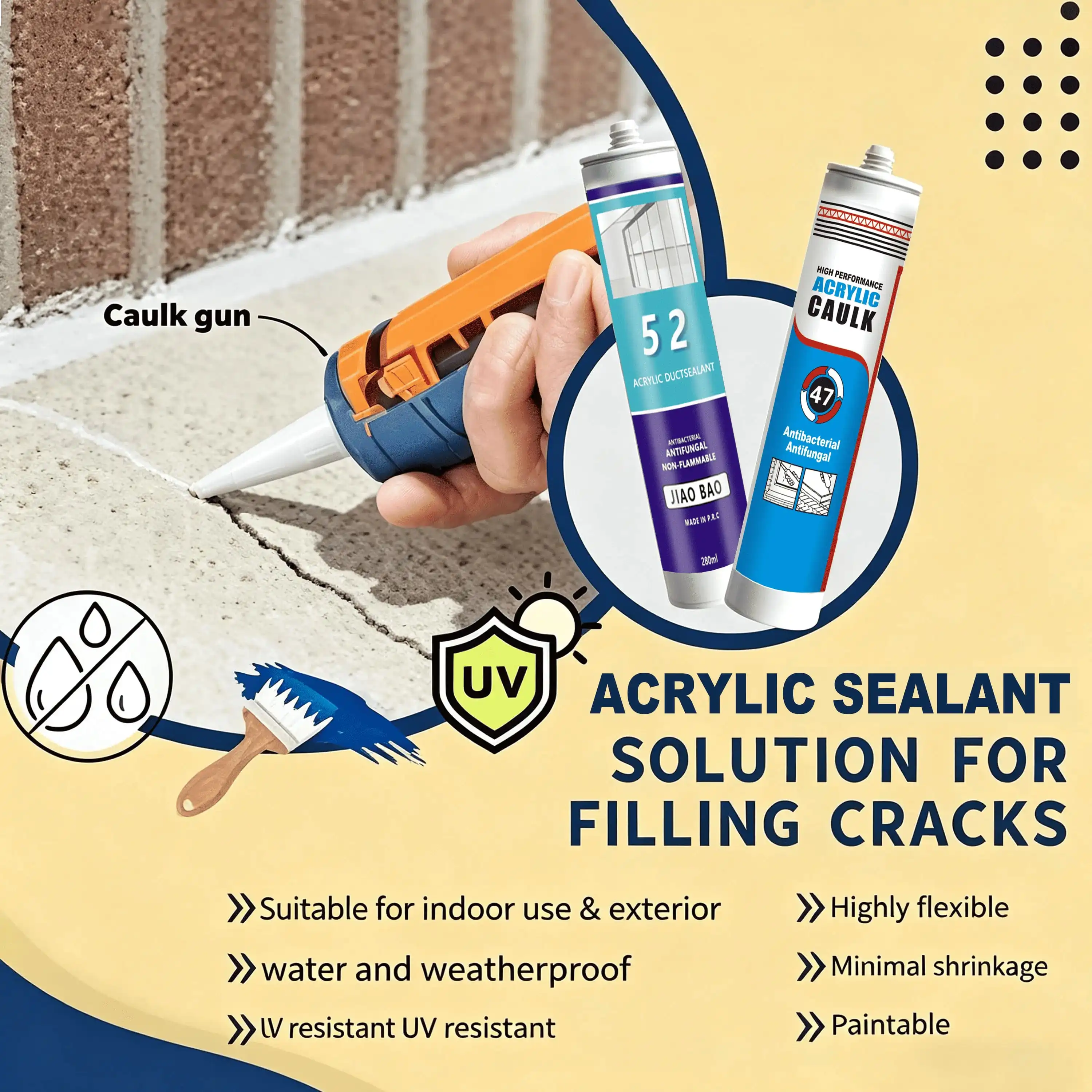
Material qualities must match climatic conditions and substrate combinations to choose the best sealant grade. Baseboard gaps and drywall corner sealing can use typical acrylic formulas without waterproofing. Although Acrylic Sealant Waterproof Grade performance resists occasional splash exposure and moisture accumulation, bathroom perimeter sealing outside shower enclosures, kitchen backsplash joints, and window sill connections benefit greatly.
Exterior applications need cautious exposure severity and joint movement assessment. Acrylic Sealant Waterproof Grade materials are best for non-structural door and window perimeter sealing, when mild weather exposure is unlikely to cause joint displacement. Paintable surfaces match trim color, offering perfect aesthetic integration unattainable with silicone alternatives. Acrylic Sealant Waterproof Grade sealants work well in expansion joints on brick facades with less than 10% movement, while polyurethane or silicone systems are needed for joints over 15% displacement.
Substrate compatibility affects selection. Unprimed Acrylic Sealant Waterproof Grade sealants adhere well to porous materials including concrete, brick, mortar, wood, and gypsum board. Silane coupling agents in premium waterproof formulations enhance non-porous substrates like glass, glazed tile, and painted metal, although surface cleanliness is still important. Projects using natural stone should include non-staining formulations to prevent plasticizer migration into porous marble or limestone.
Structured assessment helps procurement experts handle supplier claims and technical specs. The selection matrix should emphasize three key questions: Does the application require frequent water exposure beyond rain? Will sealed joint thermal movement reach 12%? Would painting the sealant match adjacent surfaces improve project aesthetics? Affirmative responses to the first and third questions and negative to the second imply Acrylic Sealant Waterproof Grade is best.
Cost-benefit analysis should include installation cost, not just material price. Quicker skin times and better extrusion rates minimize labor hours, which may offset increased cartridge prices. Our formulation's 30-minute skin time permits same-day painting, reducing repeat trips that quadruple labor costs. The 163 ml/minute extrusion rate speeds joint filling compared to bulkier materials needing high gun pressure. These productivity gains save 20–30% labor on big sealing jobs with hundreds of linear feet.
Project circumstances should be reflected in sample testing processes. Submit substrate samples—window frame materials, concrete blocks, or trim—to suppliers for adhesion testing. Request UV and thermal cycling performance accelerated aging data. Check appropriate criteria before believing "waterproof" marketing promises. Reputable manufacturers give technical datasheets including ASTM C794 immersion testing results and movement capability data for product comparison.
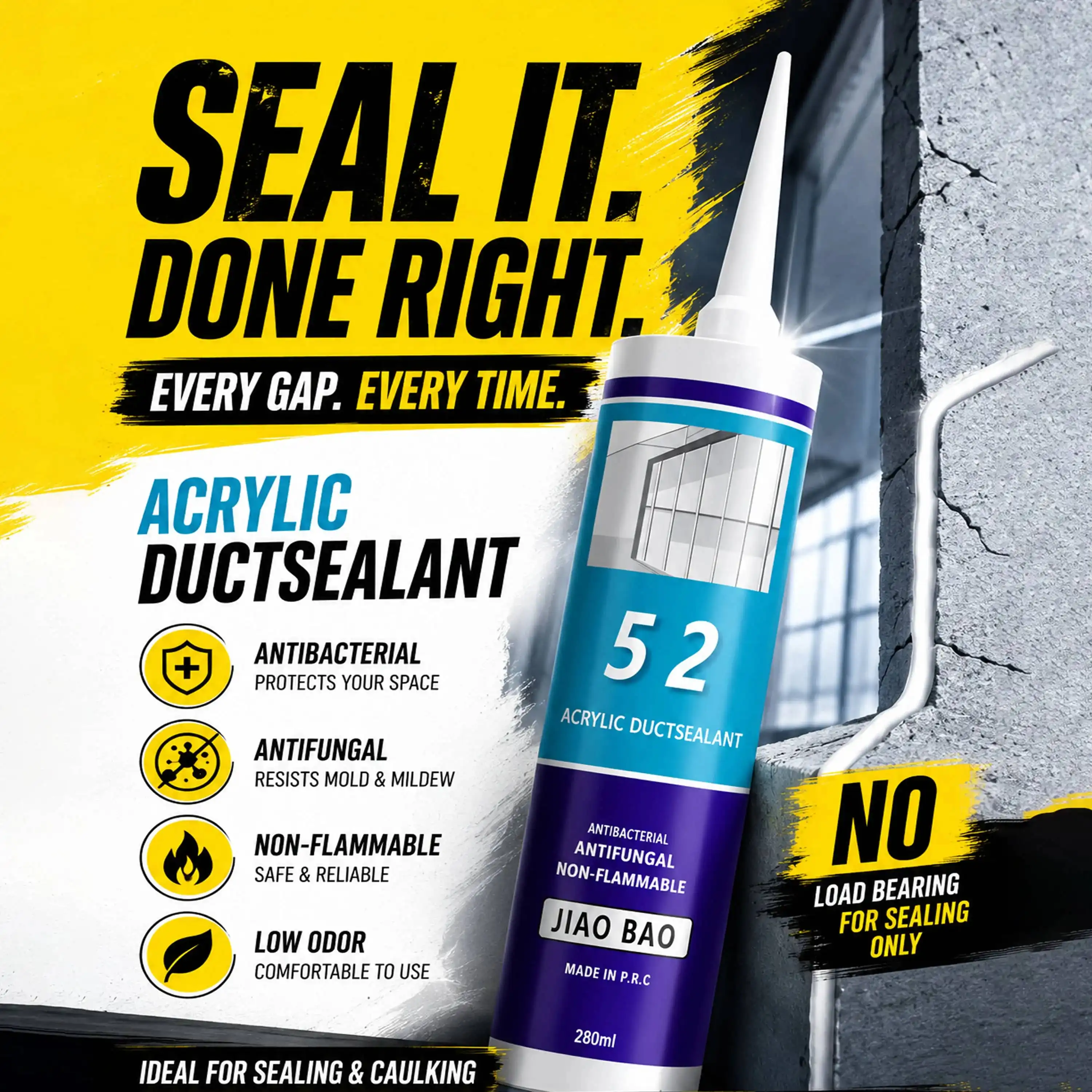
Manufacturing capabilities and quality management systems must be verified to find certified manufacturers. ISO 9001 certification verifies process controls and paperwork, whereas sealant-specific standards like ASTM C920 give higher performance assurance. Suppliers with ten or more years of sealant production expertise tend to produce more consistent batches than newcomers. Production capacity should meet project demand, with typical color lead times of one to two weeks and bespoke color matching of three to four weeks.
Quality assurance goes beyond certificates to actual testing. Reliable vendors have in-house adhesion, rheology, and accelerated aging labs. Request manufacturing facility access when possible to observe raw material storage, mixing equipment, and filling activities that affect product uniformity. Suppliers should submit certificates of analysis for critical attributes of each production lot and batch testing records to prove internal standards are met.
Before placing bulk orders, sample evaluation should be structured. Assess color, viscosity, and skin time consistency by ordering cartridges from various batches. Field test project substrates in representative environmental conditions to assess adhesion and paint compatibility. Verify extrusion rates and tooling ease using the same application guns that installation crews use. This due diligence expenditure minimizes costly mid-project material failures and supplier changes that delay construction.
Distributors and major contractors seeking brand distinction benefit from OEM and private label capabilities. Universal pigment systems allow Acrylic Sealant Waterproof Grades to match RAL or Pantone for architectural projects that need aesthetic coherence. Custom color minimum order numbers vary by manufacturer from 500 to 2,000 cartridges, with setup charges including color formulation and quality verification.
Packaging impacts job site efficiency and waste savings. Most applications use 300ml and 600ml cartridges, with 600ml sausage packing decreasing high-volume project costs and disposal waste. Factory door and window makers seal hundreds of pieces daily using bulk pails from 5 to 20 liters for automated distribution. Avoid costly adaptor purchases and process delays by checking package compatibility with your application equipment.
Quality technical support distinguishes vendors when application issues develop. Manufacturers with skilled field representatives train installation crews on-site, resolve adhesion concerns, and offer surface preparation techniques for unique substrates. Clear warranty terms, such as material problems within the 12-month shelf life, and quick batch replacement should be part of after-sales assistance. Technical datasheets, safety data sheets, and application guidelines in different languages simplify international procurement and assure local regulatory compliance.
In the curtain wall system of a 24-story southeastern office tower, 2,400 linear feet of aluminum window perimeters needed weather sealing. The general contractor chose basic acrylic caulk to save money, but afternoon thunderstorms three days later caused severe washout. Resealing with Acrylic Sealant Waterproof Grade kept joints intact for six months despite rain.
The experiment showed that Acrylic Sealant Waterproof Grade materials need curing before heavy rain. Early morning installation and afternoon weather projections avoided water contact. The sealant could be painted within 24 hours to match bronze anodized window frames, enabling visually smooth transitions that silicone alternatives could not. Total project cost rose 8% compared to the unsuccessful conventional acrylic application, however removing the whole resealing process saved 35% compared to the initial budget forecast including rework.
Performance evaluation during two yearly temperature cycles proved the 12.5% movement capability accommodated seasonal expansion and contraction. The aluminum-to-concrete contact did not break or debond, proving silane coupling agent performance on non-porous metal substrates. This instance shows that sealant grades should be chosen based on exposure circumstances rather than initial material prices. The curtain wall contractor now requires Acrylic Sealant Waterproof Grade for window perimeter installations.
A 180-room hotel refurbishment requires sealing baseboard gaps and door frame perimeters in guest rooms and hallways. The project required paintable sealants to match trim colors in five paint schemes. Acrylic Sealant Waterproof Grade was suitable for this application since it resists moisture on bathroom door frames and accepts latex paint finishes throughout the home.
Installation staff sealed rooms room-by-room and painted them the same day to meet the rigorous remodeling pace of 10 rooms per day. Slow-curing materials that required overnight waiting times had bottlenecks, but the quick skin time and paintability erased them. Mildew-resistant formulas avoided black stains in high-humidity bathrooms.
No seal failures or paint delamination were found during the six-month post-completion examination. Project manager credited success to good surface cleaning to remove dust and oils, enabling skin development before painting, and using Acrylic Sealant Waterproof Grade materials for moisture-prone areas. This application shows how Acrylic Sealant Waterproof Grade sealants protect interior finishes from moisture exposure.
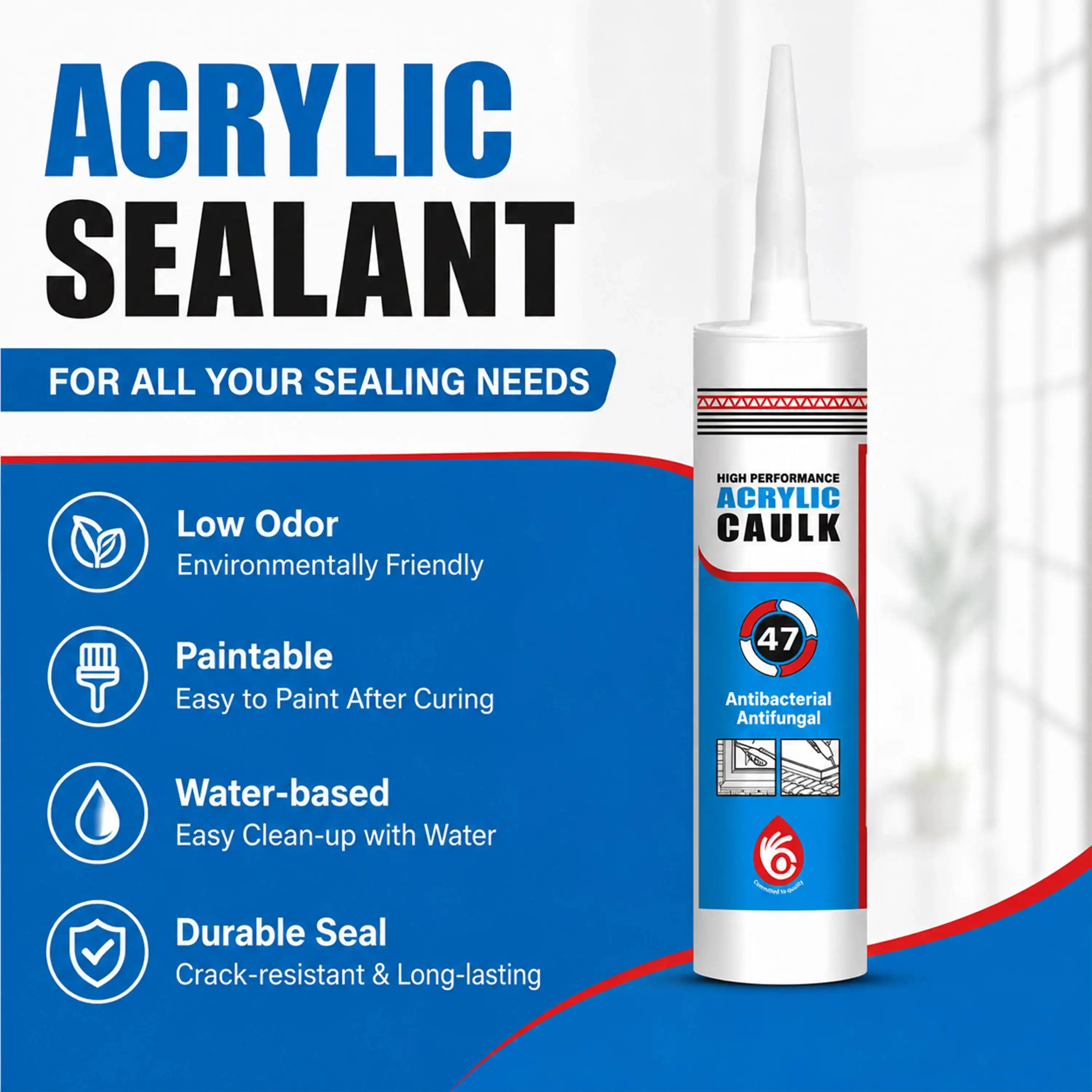
Paintability and moisture resistance make Acrylic Sealant Waterproof Grades crucial in the sealant industry for B2B applications. Understanding the technological differences between standard and waterproof formulations helps procurement professionals make accurate specification selections that balance performance and budget. This section provides testing standards, material attributes, and real-world case studies for supplier evaluation and product matching to project circumstances. Supplier verification and sample testing are critical procurement processes because waterproof designation represents measurable performance characteristics—validated by ASTM testing protocols—not marketing rhetoric.
When properly applied on prepared substrates, Acrylic Sealant Waterproof Grade formulas last five to seven years in temperate climates. UV intensity, temperature cycling severity, and joint movement magnitude affect service life. ASTM C834 products with UV stabilizers prevent fading and chalking that damages acrylics in two years. Monitoring flexibility loss and replacing it promptly reduces water ingress and substrate damage.
Acrylic Sealant Waterproof Grade sealants usually cure at 5°C, however brands vary. Cold temperatures inhibit water evaporation vital to cure growth, prolonging skin time from 30 minutes to several hours. Adhesion requires substrates to surpass minimal temperatures. Winter treatments should be made during noon warmth with nighttime freezing protection until cure strength develops.
The substrate must be clean, dry, and free of dust, oils, releasing agents, and loose particles to adhere. Laitance and efflorescence can be removed from concrete by wire brushing or grinding. Glass and aluminum need solvent wiping to remove manufacturing remains. For best results, joint depth should be half the breadth and backer rod placement should prevent three-sided adhesion that concentrates stress. Properly cleaned construction materials rarely need priming.
Jiaobao is a trusted Acrylic Sealant Waterproof Grade producer with 13 years of expertise servicing construction and industrial sectors globally. Our ASTM C834-compliant one-component RTV acrylic sealer comes in white, black, grey, or bespoke colors suited to your RAL requirements. Our ISO accreditation and strict quality control systems ensure batch consistency, with competitive lead times of one to two weeks for typical orders and flexible OEM/ODM customisation.
Our technical assistance includes sample provision, adhesion testing advice, and application problems across project lifecycles for procurement teams. Our 300ml and 600ml cartridge and sausage packing meet different application equipment needs. We guarantee quality with a 12-month shelf life warranty and refund or replacement for performance concerns. Ask our procurement specialists at dorashen@cnjiaobao.com for technical datasheets, sample assessment, or bulk pricing as your trusted Acrylic Sealant Waterproof Grade supplier for demanding sealing applications.
1. American Society for Testing and Materials. "ASTM C834-20 Standard Specification for Latex Sealing Compounds." ASTM International, West Conshohocken, 2020.
2. Klosowski, John M. and Wolf, Arthur T. "Sealants in Construction, Second Edition." CRC Press, Boca Raton, 2016.
3. International Organization for Standardization. "ISO 9047:2001 Building Construction - Jointing Products - Determination of Adhesion/Cohesion Properties of Sealants After Exposure to Heat, Water and Artificial Light." ISO, Geneva, 2001.
4. Panek, Julian R. and Cook, J.P. "Construction Sealants and Adhesives, Third Edition." John Wiley & Sons, New York, 1991.
5. Building Research Establishment. "Digest 380: Sealant Joints in the External Envelope of Buildings." BRE Publications, Watford, 1993.
6. Flannery, Michael J. "Handbook of Adhesives and Sealants in Construction." McGraw-Hill Professional, New York, 2005.
November 16,2023
Enterprise Name
The sealant has very strong adhesion and performs well even on glass and aluminum. After curing, it remains flexible and shows no cracking. Perfect for our facade projects.
November 16,2023
Enterprise Name
Stable quality across batches. Our customers especially like the smooth application and consistent extrusion. It helps reduce installation time on site.
November 16,2023
Enterprise Name
I used it for bathroom sealing. Excellent waterproof performance and no mold issues so far. It's been holding up very well in humid conditions.
November 16,2023
Enterprise Name
The neutral silicone works well on sensitive materials without corrosion. Very suitable for industrial applications requiring stable performance.
_1779347426672.webp)