November 16,2023
Enterprise Name
The sealant has very strong adhesion and performs well even on glass and aluminum. After curing, it remains flexible and shows no cracking. Perfect for our facade projects.
Jul 21, 2026
MS polymer sealant, which is also called modified silane polymer sealant or silyl-modified polymer (SMP), is a big step forward in adhesive technology that has changed how people seal things in the industrial and construction sectors. This hybrid material has a polyether backbone and silane terminal groups that harden when they come into contact with moisture in the air. This creates an elastomer that is permanently stretchy. Normal silicone sealants give off acetic acid or ammonia when they cure, but MS polymer sealants have a neutral cure process that doesn't give off any harmful solvents or volatile organic compounds. This creates a flexible sealant that sticks very well to a wide range of surfaces, like glass, metal, stone, concrete, and plastics, and often doesn't need starters. It also has weather resistance, UV stability, and paintability that regular sealants just can't match.
The science behind modified silane technology shows why this substance is now needed for so many tough tasks. When the silane end groups come into contact with water vapour in the air, they go through hydrolysis and condensation processes. This makes a three-dimensional crosslinked network that stays flexible even when temperatures change from -40°C to 120°C. This way of curing gets rid of the bubbling problems that polyurethane sealants often have on damp surfaces. This makes it perfect for building projects outside, where controlling moisture can be hard.
In professional settings, good hybrid polymer sealants stand out because of their mechanical properties. The stretchiness at break is usually more than 400%, which means that the material can handle big changes in the joint caused by things like thermal expansion, structural settling, or vibration without tearing or losing its stickiness. Shore A hardness ranges from 20 to 60 depending on the formulation. Low-modulus versions are best for facade applications that need to be able to move freely, while high-modulus versions are best for structural bonding in automotive assembly. Tensile strength of about 2.2 MPa is enough to keep the structure together while still allowing for elastic rebound, which is very important for expansion joints in curtain walls and precast concrete panels.
One distinct benefit is that it doesn't contain silicone oils, which are a problem with other silicone seals. This feature of zero contamination stops oil from bleeding and colouring porous materials like natural stone, marble, and granite, which is very important for high-end building projects and luxury interior design. The chemical stability of the material means that it doesn't break down when exposed to UV light, ozone, or common cleaning products. It passed the ASTM G154 accelerated weathering tests without cracking, chalking, or yellowing on the surface. Temperature tolerance covers a wide range of industrial and environmental temperatures, keeping the bond strong and flexible where other materials would harden or soften too much.
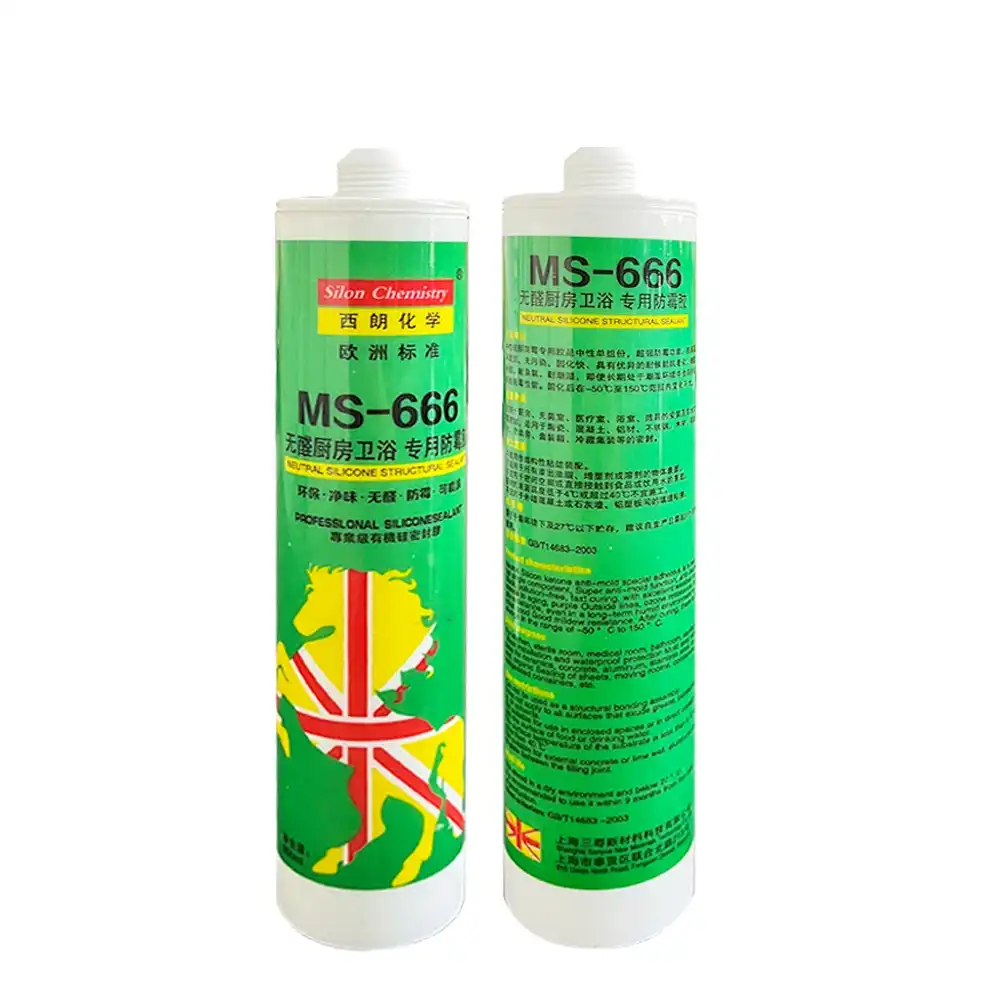
Knowing how MS polymer sealants stack up against other technologies helps purchasing managers make smart choices that meet the needs of the project and stay within budget. Silicone, polyurethane, acrylic, and epoxy are just a few of the binding materials that are available. Each has its own pros and cons that affect long-term performance and lifecycle costs.
Even though silicone sealants are very good at withstanding high temperatures and last a long time, they have some major problems. Silicone can't be painted, which limits its use in public places where it needs to look good. The problem with oil movement stains nearby porous surfaces, which makes upkeep difficult and causes flaws that lower the quality of the project. Primerless adhesion doesn't work well on many common substrates, which adds steps to the process and costs more materials. All of these problems can be fixed with hybrid polymer technology, which also has good resistance to UV light and weather. This makes it the best choice for exteriors, window edges, and artistic parts where looks are important.
Polyurethane seals stick well and can be painted over, but they contain isocyanates that are bad for your health when they are applied and make surfaces bubble when they get wet. Because they are sensitive to moisture during storage, their shelf life is only 9–12 months, while it is 12–18 months for modified silane formulations. Polyurethanes also turn yellow when they are exposed to UV light, which makes them look bad when used outside. The hybrid polymer alternative gives the same structural performance without the safety concerns or application limits. This is especially helpful in transportation manufacturing and sealing containers where the substrate's moisture level isn't always under control.
Acrylic sealants are cheap, but they don't last long or bend easily enough for high-performance uses. They can't stretch very far and don't heal well after being compressed, which causes joints to fail early in dynamic settings. Modified silane polymers offer better value for money than basic acrylics and premium silicones, bridging the performance gap between them. They are perfect for projects that need reliability without spending a lot on materials. Because of this balance, they are appealing to general contractors, companies that make doors and windows, and companies that sell building materials who want consistent quality in a wide range of situations.
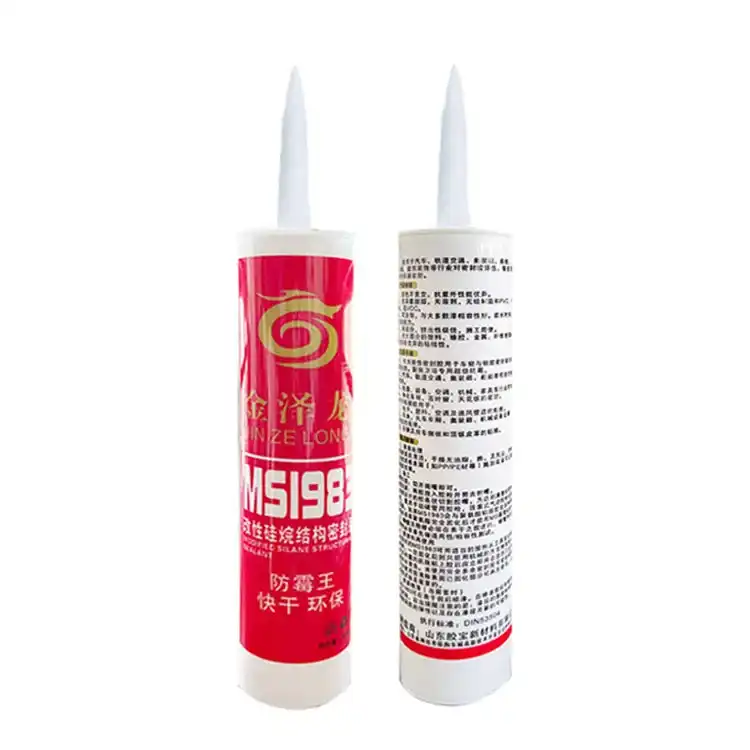
Because this technology can be used in many different ways, it has been widely adopted in fields where standard seals don't work well enough. MS polymer sealants deal with specific technical issues that have a direct effect on the success of a project and the satisfaction of its clients. These issues can happen anywhere, from tall glass facades to marine environments.
The high movement capacity and weather resistance of these sealants are huge benefits for curtain wall systems. In precast concrete walls, the expansion joints are constantly changing temperatures and moving, which would tear most materials. However, the 400% extension capacity can handle this stress without breaking. The primerless binding to aluminium, glass, and composite panels cuts down on labour costs and speeds up the fitting process for big business projects. Color-matching lets them blend in perfectly with architectural finishes, meeting the strict aesthetic requirements of high-end apartment buildings, restaurants and office structures that must have a consistent look.
When you place doors and windows, you need materials that tightly block air flow, water leakage, and sound transfer while still allowing the structure to move. One-component RTV formulas have a paste-like consistency that makes them easy to use precisely in small gaps and complicated shapes that are common in broken bridge aluminium and system window parts. Because it doesn't sag, the material stays in place on vertical surfaces while it cures, so you don't have to use temporary supports or do any extra work. Being able to paint over cured sealant makes finishing work easier for both inside and outside remodelling projects.
In the transportation industry, vibration, chemical exposure, and extreme temperatures test the limits of what materials can handle. Companies that make automotive parts, HVAC equipment, and home appliances use structural elastic bonding to join different types of materials together. For example, they use it to join fibreglass to aluminium or plastic to steel. It does this by soaking rotational energy that would otherwise cause noise and wear on parts. The elastic polymer matrix's dampening features lower sound transfer and mechanical stress. This makes the material last longer in places like buses, trains, trucks and cooling units where reliability is very important.
Electronics and electrical device companies need waterproofing and dustproofing that stays in place even after being heated and cooled many times and cleaned with chemicals. Chemically stable, the material doesn't break down when exposed to industrial solvents and cleaning products, and it seals tightly to protect sensitive parts. Custom formulations can be made to fit specific curing and bonding needs, making them suitable for automated application systems in high-volume production settings.
Materials that cure consistently in high-humidity settings and don't rust in saltwater are needed for marine and container sealing. Both shipping containers and yacht decks are constantly exposed to water, UV rays, and mechanical stress from moving cargo or waves. It is possible for modified silane polymers to cure well even on wet surfaces, where polyurethanes would foam and silicones might not bond well enough. This dependability in tough conditions cuts down on warranty claims and maintenance needs for shipping companies and fleet operators.
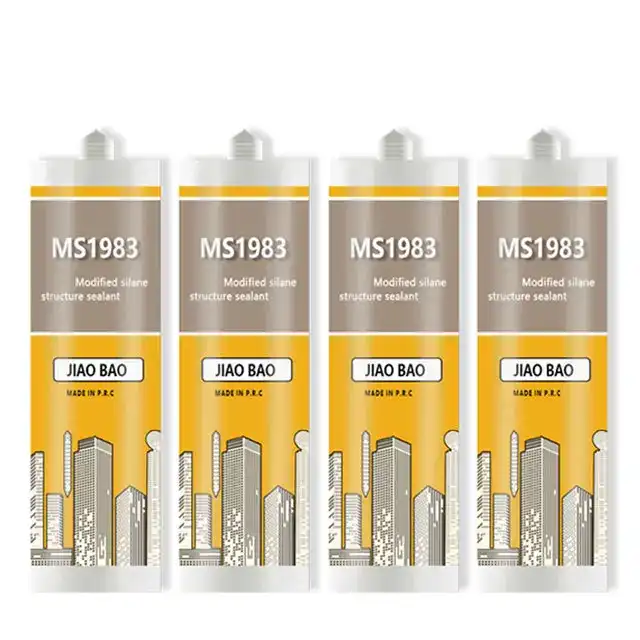
To choose the right MS polymer sealant, you have to balance performance needs, regulatory compliance, and cost factors within the context of the project. To minimise risk and maximise value across their supply chains, procurement managers have to look at a lot of different factors.
Movement capabilities are often set by the needs of the project. ASTM C920 classifications range from ±12.5% (Class 12.5) to ±50% (Class 50) for joint movement accommodation. Most of the time, Class 25 or Class 50 movement ratings are needed for facades and expansion joints. Lower movement ratings may be okay for interior uses. To make sure long-term success, the material qualities must match the temperature ranges, chemical resistance needs, and substrate compatibility. Understanding whether applications involve primerless bonding to metal, glass bonding requiring structural strength, or stone sealing demanding stain-free performance leads material selection toward formulas optimized for those circumstances.
Compliance requirements for building rules and industry standards vary by location and type of application. Certain types of facade sealants (ISO 11600 grades), performance standards (ASTM C920), and VOC limits (LEED v4 and California SCAQMD rules) affect which materials can be used on projects. Teams in charge of buying things must make sure that sellers show proof of their certifications, such as ISO 9001 quality systems, ASTM test records for adhesion and durability, and, if needed, fire resistance ratings. Distributors and wholesalers that serve many markets need providers that can meet a wide range of legal requirements without causing long delays in custom formulation.
Reliable suppliers show their technical know-how by providing quick customer service, application advice, and help with fixing problems. Production capacity and lead times affect project timing. Delivery cycles of one to two weeks allow for just-in-time purchasing, which lowers the cost of keeping stockpiles. The total cost of ownership includes more than just the unit price. Customisation options for colour matching using RAL colour charts, different types of packaging (such as sausage and cartridge formats), and pricing based on volume all affect the total cost of ownership. With OEM and private labelling options, distributors can build brand recognition while using the expertise and quality control systems of the manufacturer.
To get the best performance, you need to know the best ways to apply the MS polymer sealant, how it cures, and the most common mistakes that make it less effective. Technical knowledge is what separates setups that work from ones that fail too soon and hurt the company's image and cost more.
The healing process is driven by wetness in the air. Depending on temperature and humidity, skin forms in 15 to 40 minutes. In the summer, the surface tack-free time is sped up to 25 to 40 minutes. In the winter, when humidity is lower, this time is slowed down to 15 to 30 minutes. The full cure depth moves forward at a rate of about 3.5 mm per day. This means that bigger beads need more time to cure before they can withstand mechanical stress or joint movement. Tooling should be done during the first skin formation window to get smooth profiles and make sure the base is properly wet for the best bonding.
Surface preparation has a direct effect on the durability of the bond. Dust, oil, or release agents can stop the material from sticking properly, even though it doesn't need a primer. Cleaning surfaces with the right chemicals and letting them dry completely before applying stops interface failures that show up as loss of adhesion in service. Joint design must follow width-to-depth ratios, which are usually kept at 2:1 to keep stress from building up too much and tearing the sealant when the joint moves. Backing rods, also called bond breakers, make sure that there is only two-sided adhesion and not three-sided adhesion, which makes it hard to move and leads to cohesive failure inside the sealant body.
Proper storage keeps materials usable for longer and stops waste from curing too quickly or changing viscosity. Cartridges and sausages that haven't been opened will stay fresh for a year if they are kept in a cool, dry place out of direct sunlight and high temperatures. Once opened, the healing process starts when it comes in contact with moisture, so cartridges that are only partly used should be sealed and used right away. Following the first-in, first-out rule for inventory rotation keeps old stock from losing its quality. This is especially important for builders and distributors who keep material stockpiles for multiple projects.
As of 2013, Shandong Jiaobao New Material Co., Ltd. has been focusing on professional-grade sealing solutions. They have built a good name among construction companies, industrial manufacturers, and distributors who need consistent quality and reliable supply. The unique problems that procurement managers and technical engineers face every day are taken care of by our MS polymer sealant formulation.
The promise of zero contamination gets rid of the oil staining problems that happen with natural stone installations and high-end architectural finishes. The marble walls, granite countertops, and decorative panels stay spotless, and clients won't be able to complain about discolouration or maintenance issues. Paintability gives you more options when it comes to how the product looks than silicone alone. You can use any water-based paint directly on top of the hardened surface without using bases or other surface treatments. This saves time and gives you more design options for home improvements and artistic uses.
When compared to traditional systems that need multiple parts, primerless glueing to glass, metal, stone, concrete, tiles, wood, and plastic cuts down on material costs and application steps. This simplified process speeds up project timelines while lowering the level of skill needed for proper installation. This makes it easier to train teams and keep quality high on a variety of substrates. The solid content, which is close to 99%, makes sure that the joint doesn't shrink too much during curing, keeping the joint's size and avoiding gaps that would make closing less effective.
With a 2.2 MPa tensile strength, 400% extension at break, and 0 mm of sagging on vertical surfaces, the technical performance meets the needs of professional uses. Temperature resistance from -40°C to 120°C covers a wide range of environments, from cold places in the Arctic to hot places in the tropics and in factories. A Shore A hardness of about 45 strikes a good balance between flexibility and structural integrity. It can be used for expansion joints, perimeter seals, and bonding in the manufacturing and construction industries.
Our products come in 300ml and 600ml sizes and come in both sausage and cartridge packaging. They can be used by hand for small projects or with pneumatic dispensing systems in places where a lot of products need to be made. Architectural and design specs can be met by custom colour matching services. Standard colours include white, black, and grey, and RAL colour chart matching can be used for unique projects. This versatility helps general contractors handle a wide range of project types, curtain wall fabricators who need to coordinate the look of their work, and custom furniture manufacturers who add sealants to finished goods.
MS polymer sealant technology has changed the standards for expert seals by getting rid of the problems that come with using old materials. The fact that it can be painted, sticks well without primer, doesn't stain, and lasts a very long time solves problems that construction workers, industrial manufacturers, and material distributors face in the real world. Knowing the technical benefits, how to use them, and what to think about when buying something helps you make smart choices that lower project risks, keep costs down, and give you better long-term performance. This technology can be used to waterproof marine environments, seal curtain walls on commercial towers, and bond parts together in the assembly of cars. It is reliable and meets the high standards of modern B2B applications.
A: It is usually possible to apply MS polymer sealant down to 0°C as long as the surfaces are dry and frost-free. Water-based acrylics freeze, but the chemical curing mechanism works in cold temperatures. Cure rates are slower than in normal conditions of 23°C/50% RH, though. During the winter, tack-free times are extended to 15 to 30 minutes, and it may take a few more days for the full cure depth development to reach the same level of power.
A: The chemically neutral mixture doesn't damage the PVB or EVA layers between the layers of laminated safety glass like acetoxy-cure silicones or high-solvent polyurethanes do, which can separate the layers. Because of this, it can be used as a glazing material in building walls and car windscreens, where safety glass consistency is very important.
A: When the resin-to-plasticizer ratio is off or the curing process isn't finished, surfaces become tacky and dirty, which isn't good for looks. With good formulas, you can get dry, tack-free surfaces that don't get dirty easily. This feature is especially important for outdoor uses, where dust and pollution could otherwise cause streaking and surface wear that looks bad.
A: Many polyurethane formulations lose their quality after 9 to 12 months, but unopened containers usually keep their quality for 12 to 18 months. The lower sensitivity to moisture during storage gives distributors and contractors more inventory flexibility. This cuts down on waste from expired materials and makes managing stock easier across project timelines.
Your sealing challenges deserve solutions backed by manufacturing expertise and supply chain reliability. Jiaobao's ISO-certified production facility delivers consistent quality refined through 13 years of specialized experience in professional-grade sealants. Our 1-2 week production lead times support just-in-time procurement strategies that minimize inventory carrying costs while ensuring material availability when project schedules demand it. Flexible shipping options by sea or land accommodate diverse logistics requirements across North America and global markets.
Procurement managers benefit from our OEM and private labeling capabilities that build brand equity while leveraging our technical expertise and quality control systems. Custom color matching services address the specific aesthetic requirements of architectural projects and decorative applications where visual consistency determines client satisfaction. Our after-sales commitment includes refund or replacement for any quality issues within the shelf life, protecting your investment and minimizing procurement risk.
As a trusted MS polymer sealant manufacturer, we understand that reliable supply relationships form the foundation of successful projects. Contact our technical team at dorashen@cnjiaobao.com to discuss your specific requirements, request samples for testing, or obtain volume pricing for upcoming projects.
1. Pethrick, R.A. (2015). Polymer Structure Characterization: From Nano to Macro Organization in Small Molecules and Polymers. Royal Society of Chemistry, Cambridge.
2. Habenicht, G. (2009). Applied Adhesive Bonding: A Practical Guide for Flawless Results. Wiley-VCH, Weinheim.
3. Klosowski, J.M. and Wolf, A.T. (2016). Sealants in Construction, Second Edition. CRC Press, Boca Raton.
4. Cognard, P. (2006). Adhesives and Sealants: General Knowledge, Application Techniques, New Curing Techniques. Elsevier, Oxford.
5. Petrie, E.M. (2007). Handbook of Adhesives and Sealants. McGraw-Hill Professional, New York.
6. Chew, M.Y.L. (2015). Construction Technology for Tall Buildings, Fourth Edition. World Scientific Publishing, Singapore.
November 16,2023
Enterprise Name
The sealant has very strong adhesion and performs well even on glass and aluminum. After curing, it remains flexible and shows no cracking. Perfect for our facade projects.
November 16,2023
Enterprise Name
Stable quality across batches. Our customers especially like the smooth application and consistent extrusion. It helps reduce installation time on site.
November 16,2023
Enterprise Name
I used it for bathroom sealing. Excellent waterproof performance and no mold issues so far. It's been holding up very well in humid conditions.
November 16,2023
Enterprise Name
The neutral silicone works well on sensitive materials without corrosion. Very suitable for industrial applications requiring stable performance.
_1779347426672.webp)