November 16,2023
Enterprise Name
The sealant has very strong adhesion and performs well even on glass and aluminum. After curing, it remains flexible and shows no cracking. Perfect for our facade projects.
Jun 16, 2026
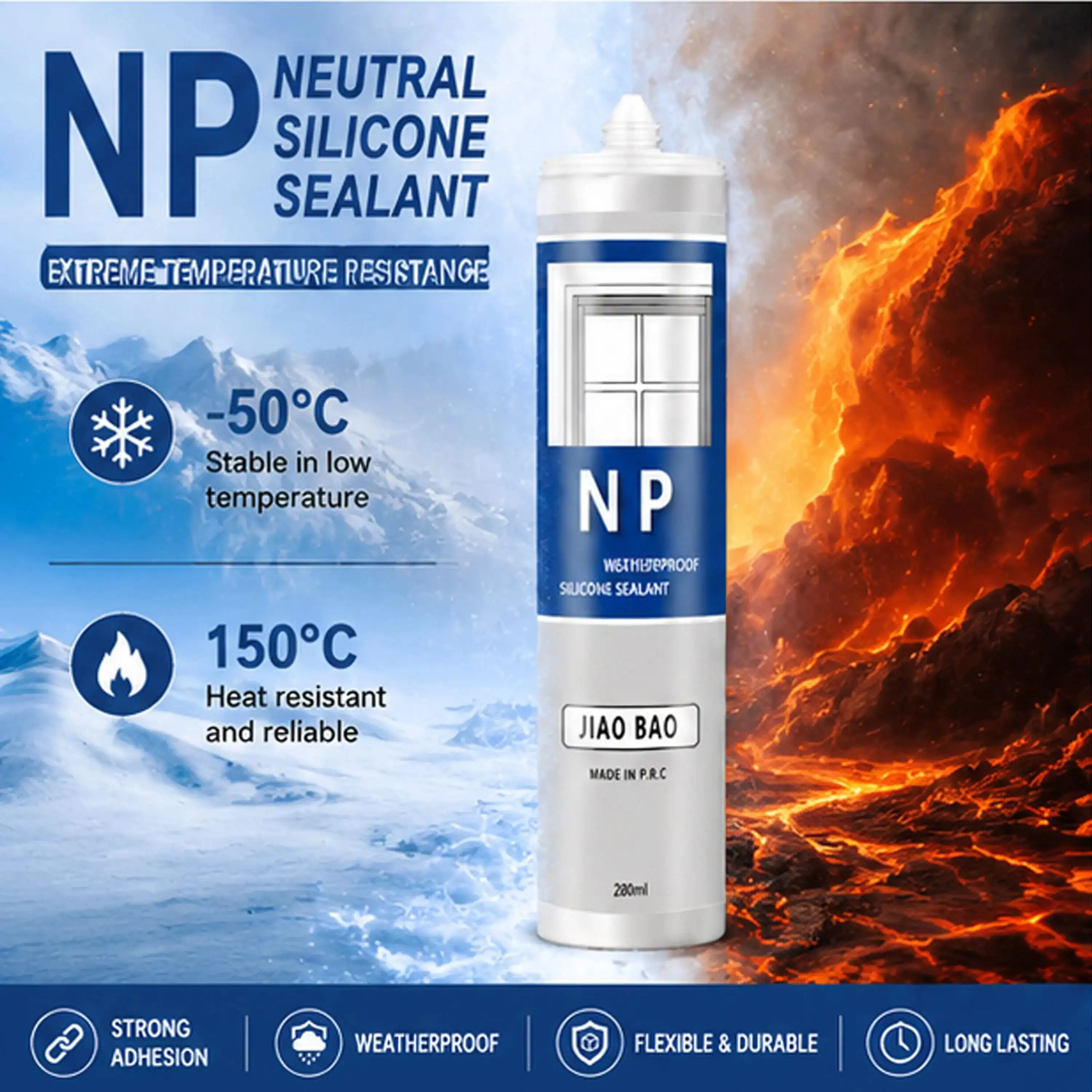
Silicone sealants are basically different from other sealants and grouts because of the chemicals they are made of and how they work. The neutral-cure process in NP Silicone Sealant Exterior Grade makes it different from acrylic, polyurethane, and regular grouts. Grouts fill in large gaps with stiff structures, but silicone sealants make waterproof seals that are bendable enough to allow joints to move. Neutral silicone sealants have a siloxane backbone that makes them very resistant to UV light and stable at temperatures ranging from -50°C to +150°C. This makes them perfect for curtain walls, window edges, and expansion gaps where other materials fail in harsh conditions.
Knowing the difference between sealants and grouts is important for choosing the right materials for industry and building uses. Grouts are usually made of cement- or epoxy-based substances that are meant to fill gaps between tiles or structure parts with little give. They harden into stiff structures that can hold weight, but they aren't flexible enough for dynamic joints that are open to structural movement or thermal expansion.
Sealants, on the other hand, stay flexible even after they've dried. Their main job is to make shields that keep water and air out of joints that are constantly moving. For exterior-grade sealants like NP Silicone Sealant Exterior Grade, the performance standards are even higher because they have to stand up to direct UV exposure, temperature changes of more than 100°C, cycling of wetness, and chemical exposure from pollutants or cleaning agents.
There are a lot of different chemical groups on the market for sealants, and each has its own pros and cons. Acrylic sealants harden when water evaporates, which makes them cheap and easy to paint. However, they don't fight water well and can't move around much, and in outdoor uses, they usually break down after three to five years. Polyurethane seals stick well and don't wear down easily, but they turn yellow and chalky when exposed to UV light, which means they need to be maintained more often, which raises their lifetime costs.
Polysulfide adhesives are very resistant to chemicals and work well in industrial settings. However, they need to be mixed with two different parts, which makes them harder to use and less stable on the shelf. In order to get the best of different chemicals, hybrid polymer seals often have to make trade-offs when it comes to temperature range and long-term flexibility. Knowing these limits makes it clearer why purchasing managers are choosing neutral-cure silicone formulations more and more for important external uses, where failure directly leads to water damage, structural damage, and expensive repairs.
Exterior-grade versions have special ingredients added to them that make them last longer in harsh environments. Some of these are UV stabilizers, which stop polymer chains from breaking apart in the sun, fungicides, which stop living things from growing in damp places, and rheology modifiers, which keep the structure of the substance while it is being applied at different temperatures. Standard products and exterior-grade products are clearly different in the first two years of exposure. Less durable products start to crack, lose their adhesive, or fade in color, which means they need to be replaced too soon.
Neutral-cure silicone sealants are different because they are made of an artificial siloxane polymer structure, which makes them naturally stable against environmental decay. Unlike organic polymer seals like polyurethane or acrylic, silicone's Si-O links don't break down when exposed to UV light. This means that silicone will stay flexible and stick together for over twenty years in outdoor settings. This difference in chemicals directly leads to better performance in tough outdoor settings.
The hardening chemistry has a big impact on how the sealer works and how well it sticks to other materials. Acetic-acid fix silicones give off byproducts that smell like vinegar. These byproducts eat away at metals and attack alkaline surfaces like concrete, which limits how they can be used. NP Silicone Sealant Exterior Grade uses neutral-cure systems, such as oxime and alkoxy versions, that make leftovers that aren't corrosive. This means that they can stick to sensitive surfaces like copper, natural stone, and powder-coated metal without the need for a primer. This flexibility is very important for companies that make curtain walls and windows that use a lot of different types of materials.
Polyurethane coatings harden when they come in contact with water and isocyanate groups. This makes urethane bonds that can be broken down by water and UV light. When this happens, the loss of flexibility makes high-movement joints fail cohesively. Acrylic sealants dry by evaporating the solvent, leaving behind plasticized polymer films that get harder over time, losing their original flexibility and breaking when stressed over and over again.
Temperature efficiency is what sets superior silicone formulas apart from other options. Our neutral-cure silicone stays flexible from -50°C to +150°C, so it can be used in cold winters in the arctic and hot summers in the desert. When temperatures drop below -20°C, polyurethane seals often break, cracking and becoming rigid. On the other hand, acrylic products soften above 50°C, causing vertical joints to sag. This temperature range is very important for building walls that go through daily temperature changes of 40°C or more between areas that are in the shade and those that are in the sun.
Resistance to moisture is another important factor. Silicone is hydrophobic, which means it constantly repels water, even when hydraulic pressure is applied. When acrylic sealants get wet, they grow and lose their mechanical qualities. This difference is very important for door and window setups because water getting in can cause frame rot, insulating damage, and mold growth inside.
As environmental laws around the world get stricter, VOC emissions have a bigger impact on buying choices. Our NP Silicone Sealant Exterior Grade has less than 80 g/L of VOC, which means it meets strict standards like California's SCAQMD Rule 1168 and the European Union's emissions guidelines. Installers won't be exposed to health risks during the coating process, and this low VOC profile meets LEED certification standards for green building projects. Solvent-based polyurethane and acrylic seals, on the other hand, often have VOC levels above 200 g/L, which means they need to be handled carefully and can't be used in busy areas.
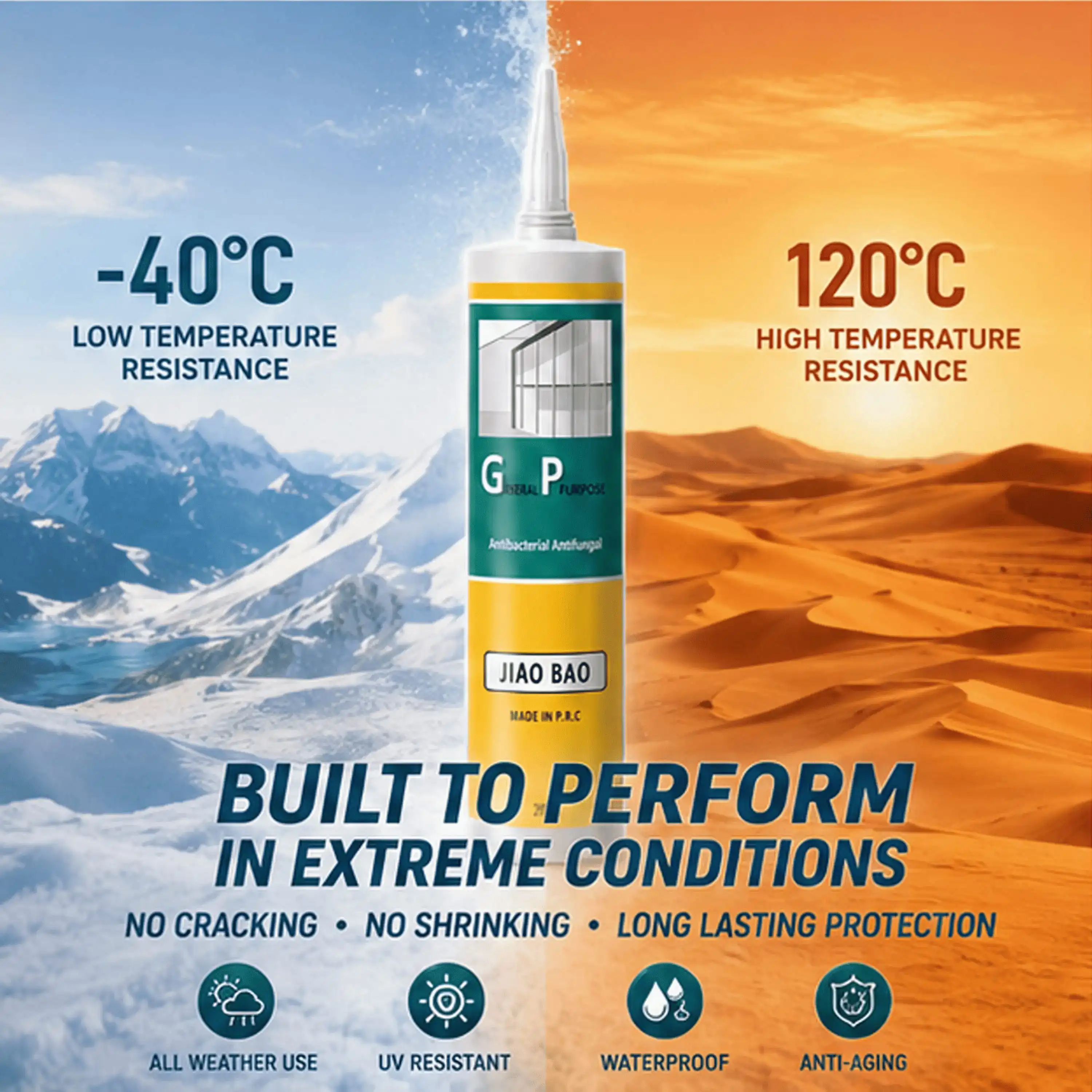
Our one-component neutral-cure formula solves the problems that curtain wall builders, window makers, and building care teams have. The consistency of the paste stays the same at all storage temperatures, so there are no mixing mistakes or waste that come with two-component systems. The cartridges and sausages come in 300ml and 600ml sizes, and the packaging works with both pneumatic and hand dispensing equipment that is used on building sites.
The thirty-minute surface drying time lets you quickly remove tools and tape, which speeds up installation times without lowering the quality of the seal. Full cure takes seven to fourteen days, based on the depth of the joint and the humidity in the air. The cure rate is about 2 to 3 mm per twenty-four hours. Because the curing process can be planned ahead of time, project managers can easily arrange inspections and following trades, which shortens the overall building timeline.
The 25% moving allowance allows for normal building growth without unified failure. This standard is necessary for metal curtain walls that have a coefficient of thermal expansion of about 23 × 10⁻⁶/°C. When the temperature changes by 50°C, a three-meter panel increases by about 3.5 mm. This means that the sealant joints need to be built with enough width and the right depth-to-width ratios. Our recipe keeps its adhesion and flexibility even when these moves happen over and over again for decades.
Long-term binding depends on how well the surface is prepared. The substrates need to be dry, clean, and free of oils, release agents, and anything that could break easily. For surfaces that don't have pores, we suggest wiping them down with rubbing alcohol and using abrasives to clean surfaces like concrete that do have pores. Following industry standards for joint sizes is recommended, with depth-to-width ratios usually staying between 1:2 and 1:1 for movement joints. To ensure two-sided adhesion instead of three-sided adhesion that limits movement, use bond breaker tape or a backing rod.
For best flow and stickiness of NP Silicone Sealant Exterior Grade, the application temperature should stay between 5°C and 40°C. When you tool right after application, you make smooth, squeezed surfaces that are better at withstanding weather. You can choose from colors like white, black, gray, and custom RAL matches to make sure they look good with architectural finishes. This is important for high-end home and business projects where obvious sealant lines can change the way the wall looks.
Installation of glass curtain walls is one of the most difficult sealing jobs. Over 15,000 square meters of metal composite panels had to be weatherproofed for a new industrial complex project in the Southwest. Temperature differences between panels that were in the shade and those that were in the sun were more than 50°C, which caused a lot of movement at the panel joints. Our neutral-cure recipe kept its perfect stickiness and flexibility for two years, with no leaks or failures that needed to be fixed. This performance proof shows that the material can work in very hot places where acrylic or polyurethane options usually fail within the first year.
When closing the edges of windows in prefabricated building systems, they need to stick well to several surfaces at once, like concrete panels, metal frames, and EPDM seals. The neutral-cure chemistry allows primer-less bonding to this substrate combo, which cuts down on installation time and gets rid of the problems that happen when sealant and primer from different makers are mixed. Project managers like how this versatility makes planning easier and cuts down on the amount of goods that needs to be kept on hand.
When choosing a strategic material, you need to look at both the current costs and the costs over the material's life. Neutral-cure silicone sealants cost more per unit than plastic options, but when you look at the total cost of ownership, you can see that they are much better. When used outside, acrylic seals usually need to be replaced every three to five years, which costs more in work than the material itself. Things made of polyurethane might last seven to ten years, but silicone lasts twenty years or more.
Take a look at a normal office building that has 500 square meters of wall joints. At $3 per square meter, acrylic sealer needs to be replaced three times over the course of twenty years, which costs a total of $4,500 just in materials. The labor costs to get to, take down, clean the surface, and put up the scaffolding again add about $50 per square meter, or $75,000 per replacement cycle, or $225,000 in total. At $8 per linear meter, silicone sealant costs $4,000 up front, but it saves over $220,000 over the life of the product because it doesn't need to be replaced. It also keeps the building running smoothly and keeps tenants from complaining about maintenance work.
Data on UV resistance measures this benefit in terms of longevity. According to ASTM G154, neutral-cure silicone keeps more than 90% of its original tensile strength and flexibility after being exposed to light for 5,000 hours, which is the same amount of time that Florida is in the sun for fifteen years. Under the same conditions, polyurethane loses 40% of its properties, while acrylic seals break down within 2,000 hours. These lab results directly match how things work in the field, proving that silicone lasts longer than other materials.
If you choose a dependable maker, you can avoid quality problems that hurt the results of your project. Certification to the ISO 9001 quality management standards makes sure that the whole production process is controlled in a planned way. Meeting the requirements of ASTM C920 Type S, Grade NS, Class 25 for a product is an objective way to confirm its success. When manufacturers give technical support, such as joint design advice and adhesion tests for project-specific substrates, they add value to their products that goes beyond the product itself.
Warranty terms show how confident the company is in the product's success. We offer replacement warranties for our neutral-cure silicone if it fails to stick or stick together within the shelf life time when used according to the instructions. This guarantee is especially important for distributors who are in charge of their customers and curtain wall builders whose names depend on the integrity of their installations over time.
Lead times affect when projects get done, especially when they are big. Standard colors in both 300ml and 600ml sizes can be delivered in one to two weeks thanks to our production ability. Custom color matching to RAL standards needs sample approval, but most orders ship within three weeks, which works with the planning cycles that are usual in business building. Costs can be optimized based on project deadlines and budget limits thanks to the variety of shipping choices by sea freight or land transport.
Pricing based on volumes takes into account the savings of scale that come with big projects. Tiered discounts are available for orders over 5,000 units, and OEM deals for private labeling give sellers chances to build their own brands. Low minimum order amounts help smaller contractors and repair teams get the products they need without having to keep a lot of stock on hand. These open business terms make it easier for everyone in the supply chain, from makers to end users, to work together.
Because of their unique chemical makeup and ability to withstand the weather, neutral-cure silicone sealants like NP Silicone Sealant Exterior Grade are the best for use outside. Compared to acrylic, polyurethane, and grout options, it has clear benefits in terms of UV stability, temperature range, ability to move, and service life that lasts longer than twenty years. When lifetime cost analysis is used to make purchasing choices, silicone is always chosen over other materials, even though it costs more at first, because it lasts longer and costs less to maintain. If you choose a qualified maker with good technical support and flexible transportation, your project will be successful from the start to the end. Because of its known benefits, neutral-cure silicone is the best choice for tough closing jobs in building and industry.
A: Neutral-cure silicone makes surfaces that are hydrophobic, which means they don't stick to water-based or oil-based oils well. This causes the paint to peel off over time. Hybrid polymer seals work better with paint because they are more compatible. When maximum weather protection is more important than paint adhesion, unpainted silicone performs better over time.
A: Acetoxy-cure silicone gives off acetic acid as it cures, which is what gives it its distinctive vinegar smell. Copper, zinc, and aluminum alloys are among the metals that are easily corroded by this acidic waste. It also attacks alkaline materials like concrete, mortar, and natural stone. Neutral-cure chemistry makes leftovers that are not corrosive, so it can be used safely on almost all popular building materials without the need for a primer.
A: It's important that the surface is dry because water or cold breaks down bonds and stops things from sticking together. The temperature of the surface should be between 5°C and 40°C while the sealant is being applied. Once it has dried, it can work in temperatures ranging from -50°C to +150°C. Joint design that uses the right depth-to-width ratios and a base bar stops three-sided adhesion that makes it hard to move.
Shandong Jiaobao New Material Co., Ltd. is the NP Silicone Sealant Exterior Grade provider you can trust. With thirteen years of experience in specialized manufacturing, they can help you with even the most difficult closing problems. Our ISO-certified factory consistently produces high-quality goods that meet ASTM C920 and other international standards. We can turn orders around quickly—within one to two weeks—to meet tight project deadlines. We offer full customization, including RAL color matching to make sure that our products look good with building finishes.
If there are any quality problems, we'll either return or replace your order. Our engineering team provides technical support for joint design, substrate suitability testing, and application advice. This helps make sure that curtain walls, window systems, and expansion joints work at their best. To talk about bulk discounts, OEM possibilities, or to get product samples and detailed datasheets that show why top contractors and wholesalers choose Jiaobao for reliable exterior sealing solutions, email our team at dorashen@cnjiaobao.com.
1. ASTM International. (2018). ASTM C920: Standard Specification for Elastomeric Joint Sealants. West Conshohocken: ASTM International.
2. Klosowski, J.M. & Wolf, A.T. (2016). Sealants in Construction (2nd ed.). Boca Raton: CRC Press.
3. Panek, J.R. & Cook, J.P. (2020). Construction Sealants and Adhesives (4th ed.). New York: John Wiley & Sons.
4. Building Research Establishment. (2019). Durability of Sealants for Curtain Wall Applications. Watford: BRE Press.
5. International Organization for Standardization. (2017). ISO 11600: Building Construction—Jointing Products—Classification and Requirements for Sealants. Geneva: ISO.
6. Beech, J.C. (2021). Modern Sealant Technology: Applications and Performance. London: Construction Technology Publications.
November 16,2023
Enterprise Name
The sealant has very strong adhesion and performs well even on glass and aluminum. After curing, it remains flexible and shows no cracking. Perfect for our facade projects.
November 16,2023
Enterprise Name
Stable quality across batches. Our customers especially like the smooth application and consistent extrusion. It helps reduce installation time on site.
November 16,2023
Enterprise Name
I used it for bathroom sealing. Excellent waterproof performance and no mold issues so far. It's been holding up very well in humid conditions.
November 16,2023
Enterprise Name
The neutral silicone works well on sensitive materials without corrosion. Very suitable for industrial applications requiring stable performance.
_1779347426672.webp)