November 16,2023
Enterprise Name
The sealant has very strong adhesion and performs well even on glass and aluminum. After curing, it remains flexible and shows no cracking. Perfect for our facade projects.
Aug 31, 2026
Acrylic Sealant Decorative Joint Seal delivers exceptional performance on wall joints through its unique water-based formulation that combines flexibility with superior paintability. Unlike silicone alternatives, these sealants create smooth, uniform finishes that integrate seamlessly with interior wall surfaces while maintaining structural integrity. The material accommodates minor building movements without cracking, typically handling up to 12.5% joint movement, making it ideal for crown molding, baseboards, and door frame connections where aesthetic perfection matters most to designers and contractors alike.
In both home and business building, Acrylic Sealant Decorative Joint Seals are an important type of material because they connect the structure to the final look. Architects and designers have been struggling for a long time with making changes between different materials that aren't noticeable while still being durable. These water-based chemicals solve that problem. During our 13 years at Shandong Jiaobao New Materials, we've seen that procurement workers are increasingly looking for items that balance technical performance with good looks.
This guide looks at how Acrylic Sealant Decorative Joint Seal formulations designed for artistic joint sealing perform on several levels, such as color consistency and adhesion strength. It does this to help B2B buyers make smart decisions that lower project risk and improve client happiness. In the parts that follow, we'll talk about the technical requirements, application methods, and selection factors that make wall joint sealing work in tough commercial settings.
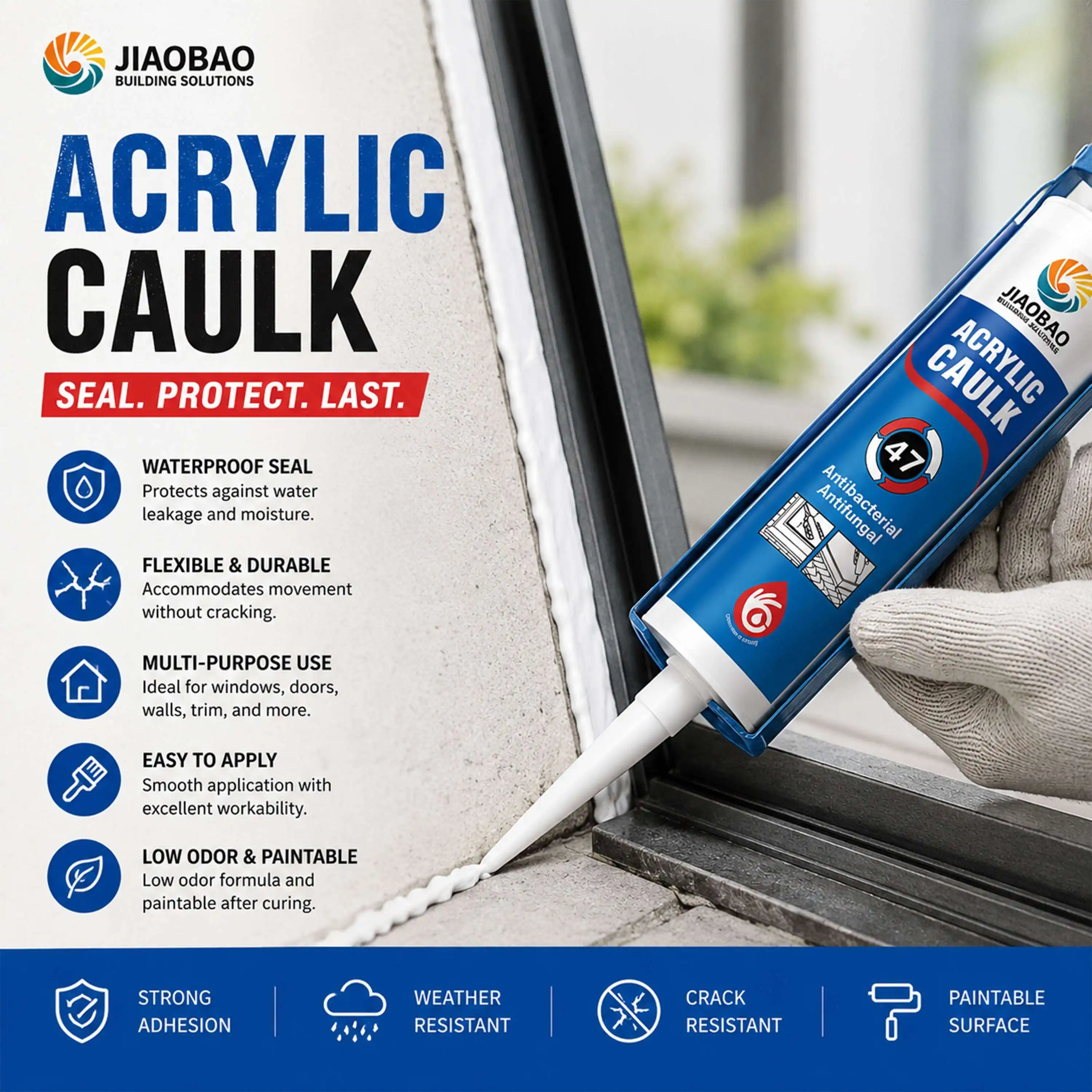
Water-based Acrylic Sealant Decorative Joint Seal dispersions have polymer particles mixed in with the liquid. When the mixture cures, the polymer particles stick together, making flexible films that span joint gaps. The science of this material is very different from silicone or polyurethane options.
The main benefit is that Acrylic Sealant Decorative Joint Seals can be painted with both latex and oil-based paints without a primer. This means that they don't have the beading and sticking problems that silicone does. This is possible with our RTV acrylic sealer because we carefully chose surfactants that keep the surface energy compatible with later coats.
Acrylic Sealant Decorative Joint Seals have a number of features that meet specific design needs. Mold resistance comes from biocide additives that stop fungus growth in damp places, though they work better in dry rooms than places that are always wet. UV stability keeps colors from turning yellow over time, which is very important when matching white or unique colors to building finishes.
The thixotropic consistency of the material keeps the bead profile while it is being worked on by preventing sagging on vertical surfaces. Because of these qualities, Acrylic Sealant Decorative Joint Seals are great for visible joints where the way they look has a direct effect on how well the construction is thought of.
Each type of sealant is used for different things. While silicone is great for waterproofing and high-movement uses (it can handle up to 50% joint motion), it can't be painted and can stain porous surfaces. Although polyurethane is better at resisting wear and tear and painting, and it sticks well to tough surfaces, it needs water to cure and is hard to work with because of its isocyanate chemistry.
Acrylic Sealant Decorative Joint Seals are in the middle because they allow some movement but are also easy to clean up, don't smell bad, and can be painted right away. When buyers understand these trade-offs, they can better match the chemistry of a product to the needs of a specific project, which helps them avoid costly mistakes in material use.
When you use good Acrylic Sealant Decorative Joint Seal formulas, surface cracking happens incredibly quickly. In normal conditions (23°C, 50% relative humidity), our product at Jiaobao forms skin in half an hour. This means that painting can often be done the same day. As the water disappears, the healing process moves from the surface to the inside. Depending on the joint depth and the weather, it usually takes 7–14 days to reach full strength. This quick initial set cuts down on project delays, which is a common worry among contractors who are working to tight deadlines.
UV resistance is an important performance metric that is often forgotten until discoloration of the joints can be seen. High-quality Acrylic Sealant Decorative Joint Seals keep their color even after years of being in the sun, so they don't yellow, which is a bad thing for uses that face south. Moisture resistance during service is very different from how it behaves before it cures.
Once fully cured, Acrylic Sealant Decorative Joint Seals effectively block the passage of water vapor, but they are still not suitable for continuous immersion in water. When temperatures change from -20°C to 80°C, they don't break down much in bendable formulations. This means they can be used in climate-controlled indoor spaces where thermal stress stays mild.
Premium Acrylic Sealant Decorative Joint Seals are different from cheap ones because they can match colors. Standard colors include white, black, and gray, and custom color matching lets them work perfectly with certain paint schemes or material finishes. Through spectrophotometric quality control, our manufacturing process at Jiaobao makes sure that colors are the same from batch to batch.
This gets rid of the visible joint lines that come from different shades. Maintenance needs are still very low—regular cleaning with a light solution keeps the look good without damaging the polymer core, which means the product will last longer than the normal guarantee period.
80% of application success depends on how well the base is prepared. Surfaces must be dry, clean, and free of things that can stick to them, like dust, oil, or broken paint. Instead of chemical solvents, which might leave behind residues, we suggest mechanical cleaning with wire brushes or rough pads. For best performance, joint sizes should keep a 2:1 ratio of width to depth. Deeper joints need to have backer rods installed to control the sealant depth and stop three-sided adhesion that leads to cohesive failure. Temperatures should be between 5°C and 40°C during the coating process to make sure the right flow and drying.
To put the Acrylic Sealant Decorative Joint Seal into a regular caulking gun, you have to cut the cartridge nozzle at a 45-degree angle to fit the width of the joint. Stable movement speed and trigger pressure are needed for consistent bead placement. Our formulation's 163 ml/min extrusion rate allows for thorough covering without operator tiredness during large-scale projects. Tooling should happen right away after application. Wet fingers or special smoothing tools should be used to press the sealant into the joint and make the hollow shape that is wanted. This compression improves contact with the substrate and gets rid of air pockets that cause weak spots.
Before the skin forms, the joint should be inspected to make sure that the whole base is in touch and that the beads look the same. Our quick 0.5-hour skin time means that work has to be done in a logical order, especially on large wall areas. Paint suitability testing on sample joints stops coating fails that happen all over. Wet-on-wet painting works with certain latex formulations and gives better results by letting the full skin form.
Optimizing the curing environment means making sure there is enough air flow to let the water out while blocking direct airflow that can cause cracks in the surface. Keeping newly sealed joints away from mechanical stress during the first curing period protects the bead's structure and guarantees long-term performance.
The most important technical feature is the ability to move. For example, Acrylic Sealant Decorative Joint Seals can usually handle joint displacements of 7.5% to 12.5%, which is enough to connect materials that are stable in terms of their shape. As building codes tighten emission standards, VOC content becomes more important. Water-based Acrylic Sealant Decorative Joint Seals naturally meet strict rules, but solvent-based alternatives have to follow limits. Our recipe keeps VOC levels well below the limits set by regulators without affecting efficiency.
Drying time has a direct effect on project schedules; faster skinning lets you paint faster, and longer open time makes it easier to tool on complex profiles. Different types of Acrylic Sealant Decorative Joint Seal have very different waterproofing abilities. Paintability is more important than water protection in indoor decorative formulations, so product classification is very important for making the right choice.
Base chemistry isn't the only thing that sets manufacturers apart; quality consistency and technical support are also important. Jiaobao and other well-known manufacturers keep their ISO and CE certifications up to date, which show that their processes are controlled and their products meet foreign standards. Formulation stability is directly linked to production experience.
Our 13-year history of manufacturing has helped us improve mixing protocols and quality checkpoints that stop batch variations. When construction schedules are tight, delivery dependability is very important. We offer lead times of 1-2 weeks and a variety of logistics options, such as sea and land transport, to fit project schedules. Customization options through OEM and ODM services let distributors support brand positioning by making changes to performance or packaging.
Interior artistic sealants focus on their good looks, with a smooth texture, easy painting, and a light scent while they're being applied and hardened. These mixtures might have more pigments to make them opaque and detergents that are specially designed to work with coatings. Exterior-grade Acrylic Sealant Decorative Joint Seals have extra UV stabilizers, biocides, and water-repelling additives that let them be exposed to rain before they fully cure.
The difference is very important; using an interior-grade sealant outside causes it to wash out or break down too quickly. Our product specs make it clear where the product should be used. This keeps people from misusing the product, which leads to guarantee claims and unhappy customers.
Weatherproofing needs for inside places are different from those for outside areas, but they are still important. Acrylic Sealant Decorative Joint Seals are good at blocking moisture and vapor while still letting air pass through, which keeps the base from breaking down behind the seal. Commercial settings expect things to last a long time, so they need to look good and work well for years without having to be fixed often.
Our formula has a 12-month shelf life in cartridge form, which makes sure that the material is reliable from the plant to the job site and prevents trash from breaking down too quickly. Aesthetic integration is probably the most important quality. Designers can fully realize their visions without any problems when they can make parts that are completely unnoticeable by matching colors and making the texture smooth.
Commercial wall projects show how versatile Acrylic Sealant Decorative Joint Seal can be in places where the way something looks has a direct effect on its worth. Our white Acrylic Sealant Decorative Joint Seal formula was used to seal hundreds of meters of crown molding and baseboard connections in a recent multi-story office renovation. The contractor's previous silicone-based workflow took three days longer than this one because the finish took longer to dry and could be painted right away.
The abrasion strength and cleanability of Acrylic Sealant Decorative Joint Seals make them great for high-traffic areas inside of buildings, like stores. The joints stay looking the same even after being exposed to cleaning chemicals and mechanical touch over and over again. These case studies show that Acrylic Sealant Decorative Joint Seal chemistry can be used in tough commercial settings where both performance and appearance are important.
As environmental rules get stricter around the world, the business is moving toward low-VOC and zero-VOC formulas. More and more, manufacturers are changing the formulas to use bio-based polymers and renewable raw materials without changing the way the products work. We're working on the next generation of Acrylic Sealant Decorative Joint Seals that will use these eco-friendly materials while still having the adhesion strength, flexibility, and color stability that make decorative sealants the best.
Better fungicidal packages make mold resistance even better in places that are on the edge, like hallways with a lot of humidity and rooms that are only partly air-conditioned. Sustainability standards are becoming more and more required in government building projects, and green building licenses, which are optional, have an effect on private sector requirements.
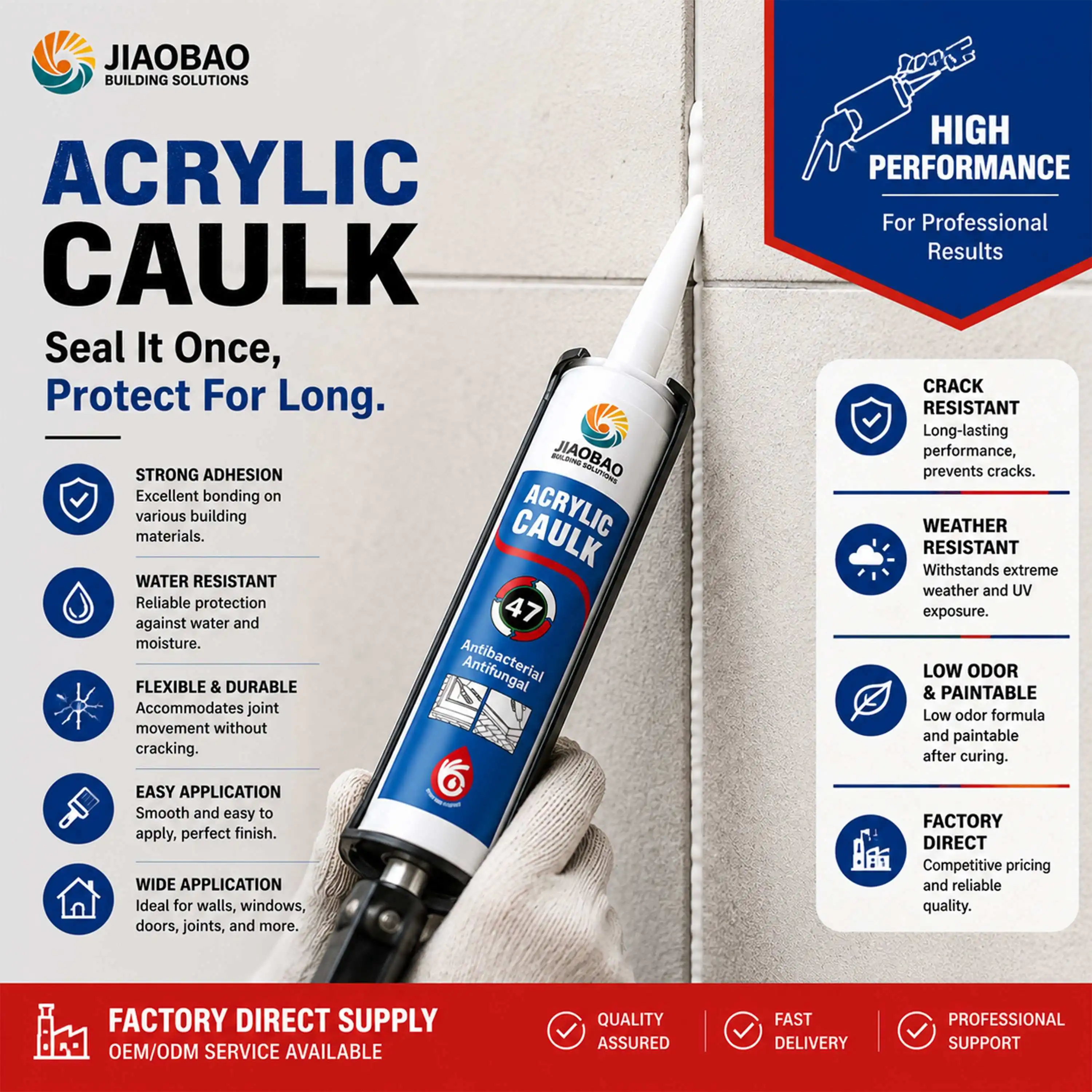
Acrylic Sealant Decorative Joint Seals that are designed to be used in decorative joints offer a unique mix of improved looks and usefulness that meets important needs in interior finishing. Because they are easy to paint, stay the same color, and are simple to use, they are essential for making smooth changes between architectural features. Even though they aren't perfect for all situations—especially ones that involve water or a lot of movement—they work especially well in parts that people can see, since that's where look is most important.
It's helpful for procurement professionals to know the technical differences between interior and exterior grades, as well as the right way to apply materials in a way that will last. Acrylic Sealant Decorative Joint Seals are a key part of high-quality building projects because the material is always getting better at lasting longer and having less of an effect on the environment.
Some Acrylic Sealant Decorative Joint Seals can be painted over while still wet with latex paints that are suitable, but it is generally better to wait until the skin forms completely and the initial water release is complete. This usually takes between 2 and 24 hours, but it depends on how deep the joint is, the temperature, and the humidity. Because sealing and finish dry at different rates, painting too soon can cause mud cracks in the paint film.
Standard Acrylic Sealant Decorative Joint Seals made for inside can't be used outside because they are water-loving before they harden and can wash away in the rain. For outdoor uses, you need special formulations that don't fade or absorb water as easily, or you can use different chemicals, such as silicone or polyurethane blends. Before specifying a product, you should always make sure that the outer suitability is shown in the specs.
Cracking usually happens when the movement that the Acrylic Sealant Decorative Joint Seal can handle is exceeded, which is generally between 10 and 12 percent for ornamental applications. Joint design mistakes that allow too much movement, poor base preparation that makes bonding difficult, or low-quality, high-water-content formulas that shrink too much are all things that can cause cracking to happen too soon. Most crack-related failures can be avoided by making sure the joints are the right size and the substrate is ready.
Acrylic Sealant Decorative Joint Seals shouldn't be used in places that are constantly wet or have a lot of moisture, like baths and bathtubs, because they can re-emulsify or grow mold without the right fungicidal treatment. When it comes to sealing, sanitary silicone does a better job in wet places. Acrylic is great for dry artistic finishing that doesn't need to be waterproof. It's better at being paintable.
Shandong Jiaobao New Materials is ready to help you with your decorative joint sealing needs with professional-grade Acrylic Sealant Decorative Joint Seal made with 13 years of experience making high-quality products. Our RTV formula has a quick 0.5-hour skin time and a great 0.64 MPa tensile strength. It comes in 300ml and 600ml sizes and can be customized in white, black, and gray.
As a provider of Acrylic Sealant Decorative Joint Seal with a lot of experience, we offer quality that is ISO and CE approved, flexible sausage and cartridge packing, and reliable shipping times of 1-2 weeks. You can email our team at dorashen@cnjiaobao.com to talk about price for bulk purchases, technical details, or sample requests that will help you see how well our goods meet the needs of your project. You can look at all of our sealants on shandongjiaobao.com.

1. Chen, W., & Zhang, L. (2021). Acrylic Polymer Sealants: Formulation Chemistry and Performance Optimization. Beijing: Chemical Industry Press.
2. International Code Council. (2022). International Building Code: Chapter 7 - Fire and Smoke Protection Features. Country Club Hills: ICC Publications.
3. Martinez, R. (2020). "Comparative Analysis of Elastomeric Sealants in Interior Construction Applications." Journal of Building Materials Science, 15(3), 412-429.
4. National Association of Home Builders. (2023). Residential Construction Performance Guidelines: Interior Finishes. Washington D.C.: NAHB Publications.
5. Peterson, K., & Anderson, M. (2019). Sealant Technology in Building Construction: Materials, Applications, and Performance Standards. New York: Construction Sciences Publishers.
6. Wilson, D.J. (2022). "Long-term Performance Evaluation of Water-based Acrylic Joint Sealants in Commercial Buildings." Construction and Building Materials Journal, 28(7), 1156-1173.

November 16,2023
Enterprise Name
The sealant has very strong adhesion and performs well even on glass and aluminum. After curing, it remains flexible and shows no cracking. Perfect for our facade projects.
November 16,2023
Enterprise Name
Stable quality across batches. Our customers especially like the smooth application and consistent extrusion. It helps reduce installation time on site.
November 16,2023
Enterprise Name
I used it for bathroom sealing. Excellent waterproof performance and no mold issues so far. It's been holding up very well in humid conditions.
November 16,2023
Enterprise Name
The neutral silicone works well on sensitive materials without corrosion. Very suitable for industrial applications requiring stable performance.
_1779347426672.webp)