November 16,2023
Enterprise Name
The sealant has very strong adhesion and performs well even on glass and aluminum. After curing, it remains flexible and shows no cracking. Perfect for our facade projects.
Jun 16, 2026
Silicone seals can be used on car windshields to fix small problems like leaks or cracks for a short time, but they are not good for structural gluing or installing a whole windshield. Normal silicone doesn't have the tensile strength and binding qualities that keep a car's structure intact during crashes or rollovers. The industry standard for professional fitting of car glass is PU Auto Glass Sealant High Strength. It offers better bonding performance, crash safety compliance, and long-term longevity than silicone.
Picking the right glue for installing autoglass can affect both the safety of the car and how well it works. Silicone sealants have been used in building and manufacturing for a variety of sealing tasks, but they aren't as useful for car glass as more advanced polyurethane formulas.
Most silicone seals are made of just one ingredient and harden when they come in contact with water, turning into bendable siloxane polymers. Because of this, they can withstand high temperatures and bad weather very well. But because they don't stick well to car starters and have a low tensile strength (often less than 2.5 MPa), they can't be used for load-bearing tasks. In contrast, PU Auto Glass Sealant High Strength harden through a chemical reaction that is set off by wetness. This forms urethane linkages that are much stronger mechanically, often topping 6 MPa in tensile performance. Because of this basic difference, automakers require polyurethane to be used for sealing windshields on assembly lines.
Procurement managers and technical experts have to look at a lot of different performance factors when choosing sealants for installing windshields. Polyurethane mixtures stick very well to glass clay frits and electrophoretic painted surfaces, which are two important parts of current car design. The material also makes the car's structure more stiff, which turns the windshield into a load-bearing part that keeps the roof from falling in during crash accidents. Silicone sealants are flexible and don't absorb water, but they don't have the shear modulus to support the forces needed for passenger airbag release, which can be more than several hundred pounds of pressure against the window at once.
Standards for automotive safety, like FMVSS 212 in the US and ECE R43 in Europe, spell out the base levels of performance that a glue must meet. These rules say that window adhesives have to keep their hold even when a crash simulation is used. Because they have high-modulus elastomeric features, polyurethane systems meet these strict requirements. On the other hand, silicone-based goods can't meet the structural load requirements set out in these safety codes.
Knowing when silicone might be a good choice and when it could be dangerous helps people who work in the car industry make good material choices.
Silicone has a number of useful properties for certain non-structural uses. It is very stable at both high and low temperatures, so it can keep working well through strong heat and cold cycles. The material is very good at blocking UV rays, so it doesn't change color or become weak over time. Additionally, silicone is very good at keeping water out, which makes it useful for closing window channels, door frames, and other parts that don't need to be very strong. Silicone is better for high-volume, low-risk uses because it is cheaper and works well enough without needing too much engineering.
Even with these benefits, silicone sealants have a number of problems that make them impossible to use for window fitting. The main problem is that the structure isn't strong enough—silicone can't handle the torsional stress that a car's frame goes through while moving normally, especially on bumpy roads or when emergency moves are needed. Failures in adhesion are another big risk, since silicone doesn't stick well to the bases and surface treatments that are used in car glass systems. This mismatch can cause the link to slowly break down, let water in, and eventually cause the seal to fail. When repair shops use silicone to fix windshields, they put car owners in real danger and may even be breaking the law by not following safety rules.
There are only a few times when silicone is actually useful in car glass work. Silicone's quick application and instant waterproofing make it a good choice for temporary leak fixes on older cars while they wait for professional service. As long as there is no structural load transfer, sealing trim pieces, moldings, and artistic elements around glass openings is also a good use case. But even in these cases, pros should make it clear to car drivers that silicone is only a temporary fix and not a long-term answer.
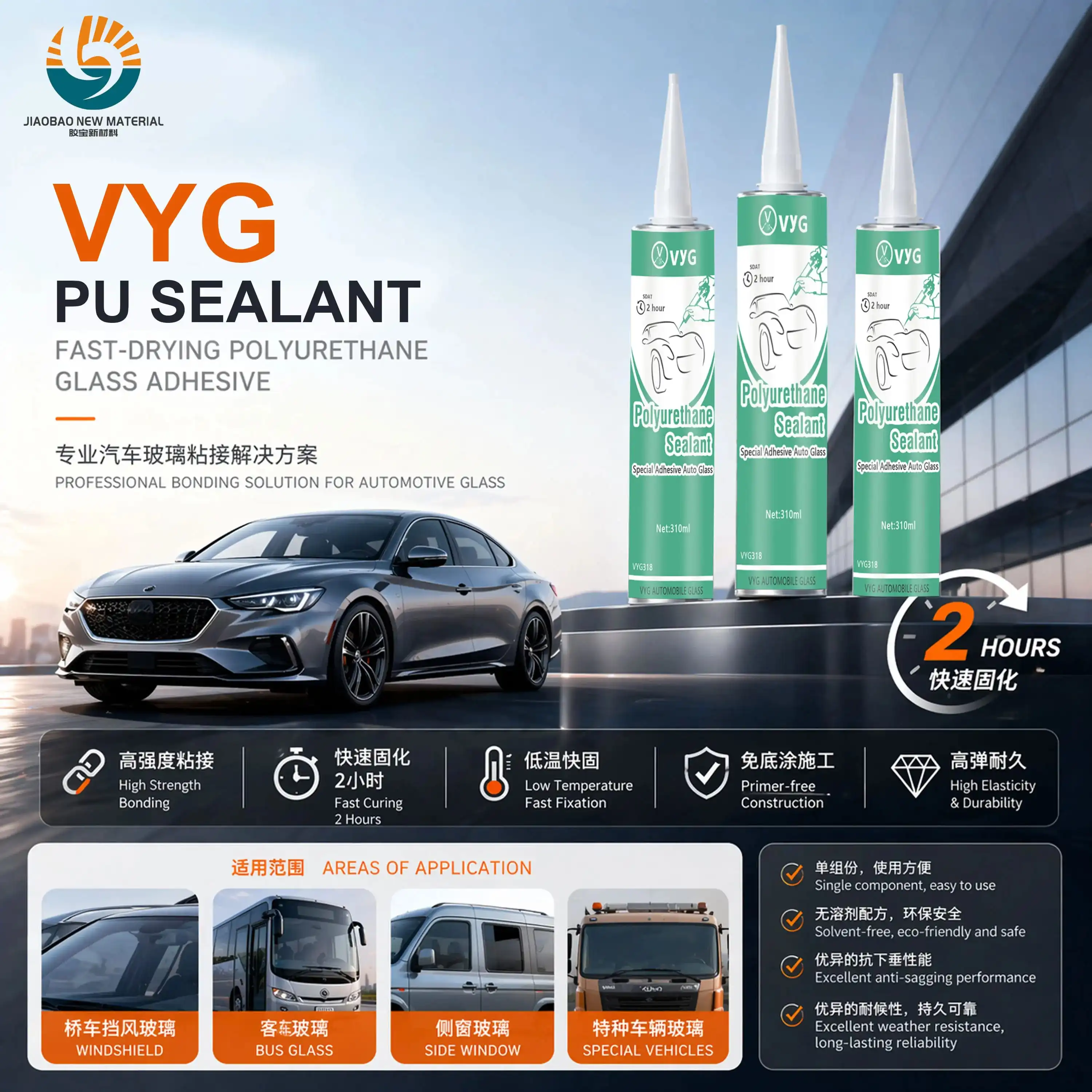
Understanding the different performance qualities of various adhesive solutions is important when choosing materials for installing autoglass.
Tensile strengths for PU Auto Glass Sealant High Strength range from 6 to 9 MPa, which means they can handle a lot of mechanical force without breaking the link. Because of this, the windshield can be an important part of the structure, making up to 30% of the vehicle's total rigidity in some designs. Silicone seals can't give this much structural support because their tensile values are usually only about 2.2 MPa. Sealants made of modified silane polymer (MS polymer) are in the middle. They are stronger than silicone but not as good as polyurethane when it comes to crash safety.
One of the most important things for car glass repair shops to think about is their Safe Drive-Away Time (SDAT). This is the amount of time that must pass before a vehicle can be safely used again. When the humidity level is average, polyurethane mixtures that are made to cure quickly reach SDAT in 60 to 90 minutes, which strikes a balance between safety and customer ease. Silicone seals dry more slowly; it can take up to several hours for them to become even slightly strong. Silicone can't be used for industrial glass repair because it takes too long to cure, which increases shop dwell time and slows down output.
Adhesives for cars have to be able to stand up to years of changing temperatures, humidity, road salt, and UV light without breaking down. The mechanical qualities of polyurethane products stay the same at temperatures ranging from -40°F to 200°F. They also don't break down or oxidize, which can damage the bond. Silicone is very stable at high temperatures, but because it isn't as strong at first, any damage can quickly lower its performance below safe levels. Long-term field studies in the industry show that properly placed polyurethane bonds stay strong for more than 15 years, while silicone uses in the same conditions usually start to lose their strength within 5 years.
Professional-level windshield installation requires paying close attention to how the surface is prepared, how the windshield is applied, and the conditions of the area where it will be installed. Learn how to use PU Auto Glass Sealant High Strength for the best results.
Preparing the surface well is the first step to good sealing. To get rid of things that make it hard for the windshield to stick, clean the glass frit area (the black ceramic band around the edge) with rubbing alcohol or special glass starters. The pinchweld on the car body, where the glue touches the coated metal frame, needs to be cleaned the same way and then the right primer should be put on it. These starters build a chemical link between the base material and the polyurethane glue, which makes the bond much stronger. Most windshield replacement mistakes happen in the field because this planning step is skipped or done too quickly.
The glue bead needs to be put on the glass in a straight, even triangle shape around the whole edge. Professional workers use air guns that keep the pressure and shape of the beads constant. The bead height should be between 8 and 10 millimeters, which is enough material to make sure it touches both the glass frit and the car pinchweld completely. When there are gaps or thin spots in the bead, stress builds up and can cause the bond to break. Temperature affects application. Whenever possible, work in temperatures between 60°F and 80°F. Colder temperatures slow down the curing process, and too much heat can cause the sticky surface to skin over too quickly.
Polyurethane cure depends on humidity because these systems need water in the air to start the chemical crosslinking process. The best humidity range for healing is between 40% and 70%. Some workers lightly mist the bonding surfaces with water before putting in the glass in places that are very dry to speed up the curing process. If you can help it, don't put during the rain or when it's dusty, because the wetness or dust can ruin the bond. After the glass is in place, the car should stay still during the SDAT time so that the curing glue doesn't have to work too hard. During this important time, driving on rough roads or hitting doors can damage the bond interface before it reaches full strength.
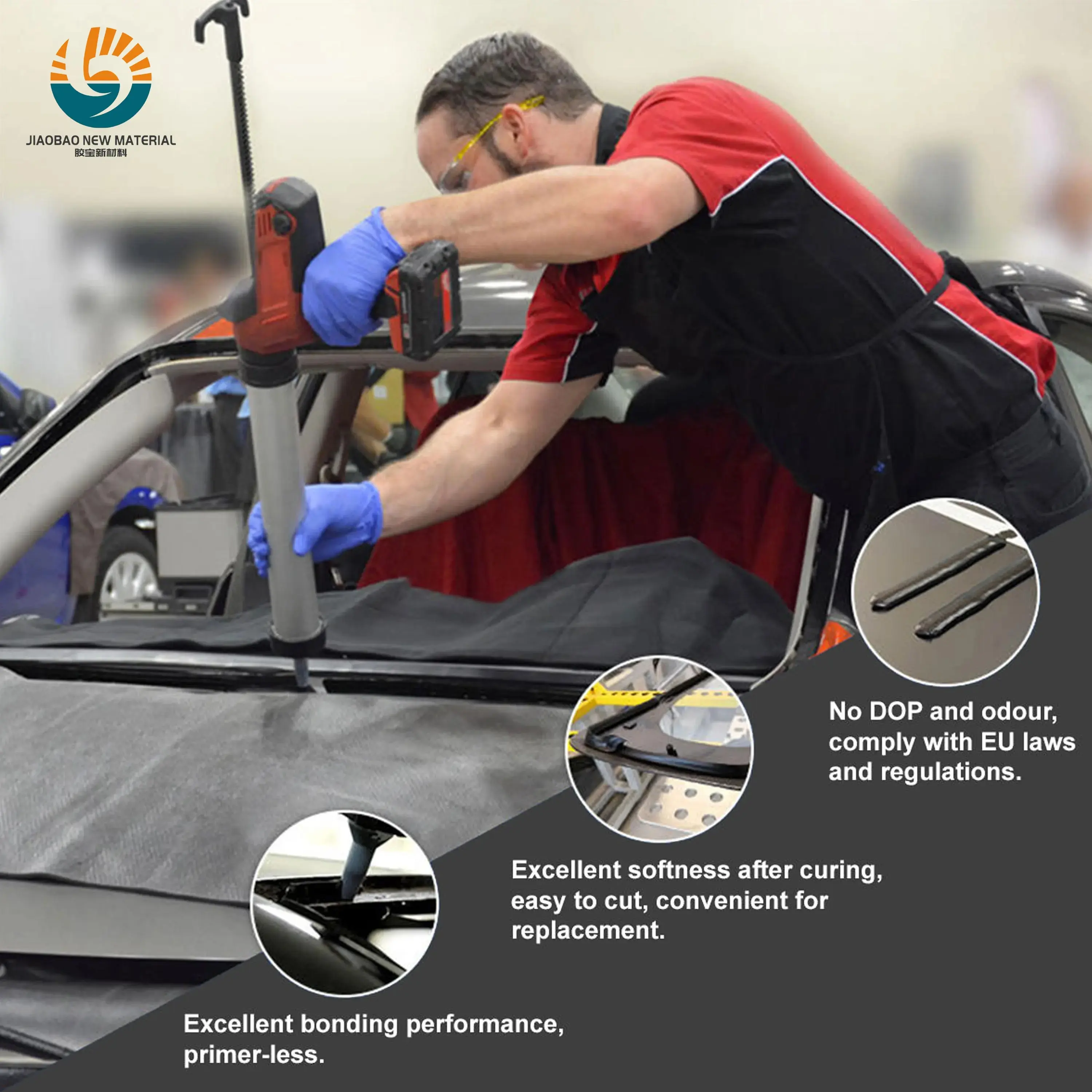
When looking for PU Auto Glass Sealant High Strength, you need to look at technical specs, seller qualifications, and logistical skills to make sure the product always works well.
Managers in charge of buying things should make sure that sellers give full Technical Data Sheets (TDS) and Safety Data Sheets (SDS) for all adhesive goods. These papers describe the mechanical qualities, curing traits, volatile organic compound (VOC) content, and safe handling methods. Certifications are important. Check to see if the product has ISO 9001 quality management system compliance and safety approvals for your particular product. Suppliers to the car aftermarket should show that they follow the rules set by the Auto Glass Replacement Safety Standards (AGRSS). Ask for batch testing results that show tensile strength, elongation, and Shore A hardness measurements to make sure that goods always meet the stated specs during production runs.
Adhesives for cars usually come in tubes or sausages that are the right size for professional dispensers. Standard sizes are 300ml and 600ml, and bigger businesses often buy in bulk to save money on the cost per unit. Cartridge packing is convenient and clean, while sausage packaging saves money for people who use a lot of cartridges. Check the stability of the packing. Adhesives that are stored in air or water will start to cure in the container, making them useless. Suppliers who offer vacuum-sealed packing help products last longer and waste less by not fixing them too soon.
Check the supplier's skills that affect the success of the buying process in addition to the product specs. The length of time it takes to make something is important. Manufacturers with a turnaround time of one to two weeks can handle their goods more efficiently than suppliers who need six to eight weeks. Minimum order numbers (MOQ) should match how often you use the product.
Suppliers who are open can handle both small orders and large purchases. For wholesalers who work with niche markets, being able to customize becomes important. OEM/ODM services let you add your own name, match colors to RAL standards, and change the formula to meet specific performance needs. Shipping prices and transit times are affected by how close the package is to you, so using local sellers is best for people who make lots of small orders.
Cost plays a role in buying choices, but procurement professionals should look at the overall value instead of just the unit price. Lower-cost goods with inconsistent quality have hidden costs that show up in the form of failed installations, warranty claims, and damage to the company's image. Before making large purchases, ask for samples to test in-house. In buy deals, include clear quality standards that say what levels of key properties, like tensile strength and cure rate, are okay. Talk to the seller about the warranty terms that cover problems with the product. Reliable suppliers will stand behind their goods and offer replacements or refunds if materials fail within the stated shelf life.
Choosing the right adhesive method for installing autoglass has a direct effect on the safety, economy, and long-term performance of the car. Silicone seals are useful for non-structural car uses, but they can't be used instead of high-strength polyurethane systems to bond windshields. PU Auto Glass Sealant High Strength is the only choice for professional glass fitting because of its technical qualities, ability to cure, and compliance with government regulations. Professionals in procurement have to look at technical specs, seller credentials, and application needs in order to find adhesives that meet strict safety standards for the car industry and help shops run smoothly.
A: If your windshield leaks around the lip or trim, silicone can temporarily stop it, but it shouldn't be used on cracks or as a replacement for proper structural glue. PU Auto Glass Sealant High Strength and silicone don't stick well together, so any application will probably fail after a few weeks or months of standard driving stress. The fix should only be used as a temporary measure until professional glass service can be found.
A: Safe Drive-Away Time (SDAT) for high-strength polyurethane glue is usually between 60 and 90 minutes. This means that the car can be driven slowly after this time. Depending on the weather and humidity, it takes 24 to 48 hours for the full fix to reach its full strength. During the first few days, stay away from fast speeds, rough roads, and other things that put too much stress on the window bond.
A: Quality polyurethane car glass sealants keep their mechanical qualities from -40°F to 200°F, which is the full range of temperatures and conditions that automobiles are exposed to. This temperature stability makes sure that the glass bond stays strong whether the car is stopped in the desert heat or the winter cold. Some sealants break when it gets cold or soften when it gets hot, but properly mixed polyurethane keeps its flexibility at all temperatures.
Since 2013, Jiaobao has been a specialist in making high-performance car sealants for OEMs, auto glass repair shops, and wholesalers in the US and other countries. In our line of products, we have modern polyurethane car glass adhesives that are made to meet FMVSS safety standards, as well as silicone sealants that are designed for non-structural automobile uses. Our ISO and CE licenses mean that we make sure that every batch meets strict quality standards.
With production wait times of only one to two weeks, you can keep your inventory low, and our OEM/ODM skills let you make custom formulations and private label products that meet the needs of your market. Whether you're a provider of PU Auto Glass Sealant High Strength looking for a dependable maker or a repair shop that needs steady product performance, our technical team can help you find the right adhesive properties for your needs. Email us at dorashen@cnjiaobao.com to get samples, talk about bulk prices, or look into customization choices that will help you stand out from the competition.
1. Federal Motor Vehicle Safety Standards (FMVSS) 212: Windshield Mounting. National Highway Traffic Safety Administration, U.S. Department of Transportation.
2. Auto Glass Replacement Safety Standards (AGRSS) Council. Standard 001-2023: Windshield Replacement Installation Procedures and Quality Standards.
3. Society of Automotive Engineers (SAE). "Automotive Adhesives and Sealants: Performance Requirements and Testing Methods." SAE Technical Paper Series.
4. European Committee for Standardization. "EN 1279: Glass in Building – Insulating Glass Units – Part 4: Methods of Test for the Physical Attributes of Edge Seals."
5. Polyurethane Manufacturers Association. "Technical Guide to Polyurethane Sealants in Transportation Applications." Industry White Paper, 2022.
6. International Organization for Standardization. "ISO 11600:2018 – Building Construction – Jointing Products – Classification and Requirements for Sealants."
November 16,2023
Enterprise Name
The sealant has very strong adhesion and performs well even on glass and aluminum. After curing, it remains flexible and shows no cracking. Perfect for our facade projects.
November 16,2023
Enterprise Name
Stable quality across batches. Our customers especially like the smooth application and consistent extrusion. It helps reduce installation time on site.
November 16,2023
Enterprise Name
I used it for bathroom sealing. Excellent waterproof performance and no mold issues so far. It's been holding up very well in humid conditions.
November 16,2023
Enterprise Name
The neutral silicone works well on sensitive materials without corrosion. Very suitable for industrial applications requiring stable performance.
_1779347426672.webp)