November 16,2023
Enterprise Name
The sealant has very strong adhesion and performs well even on glass and aluminum. After curing, it remains flexible and shows no cracking. Perfect for our facade projects.
Jun 16, 2026
Procurement managers and technical experts often ask, "Which is the strongest silicone sealant?" when they need to choose sealants for high-performance building projects. The answer depends on the needs of your job, but NP Building Grade Silicone Sealant is always one of the best options. This one-part RTV acidic silicone sealant has a tensile strength of 0.7 MPa, stays flexible from -50°F to +150°F, and allows for 25% movement. This makes it perfect for curtain walls, door and window installations, and industrial settings where weather resistance and structural integrity are essential.
There isn't just one way to measure how strong silicone seals are. It includes things like tensile strength, adhesive, stress-strain flexibility, and long-term resilience. In order to rate the strength of a sealant, we check how well it stays together when bonded to different surfaces and how well it handles external stresses like UV rays, changes in temperature, and chemical exposure.
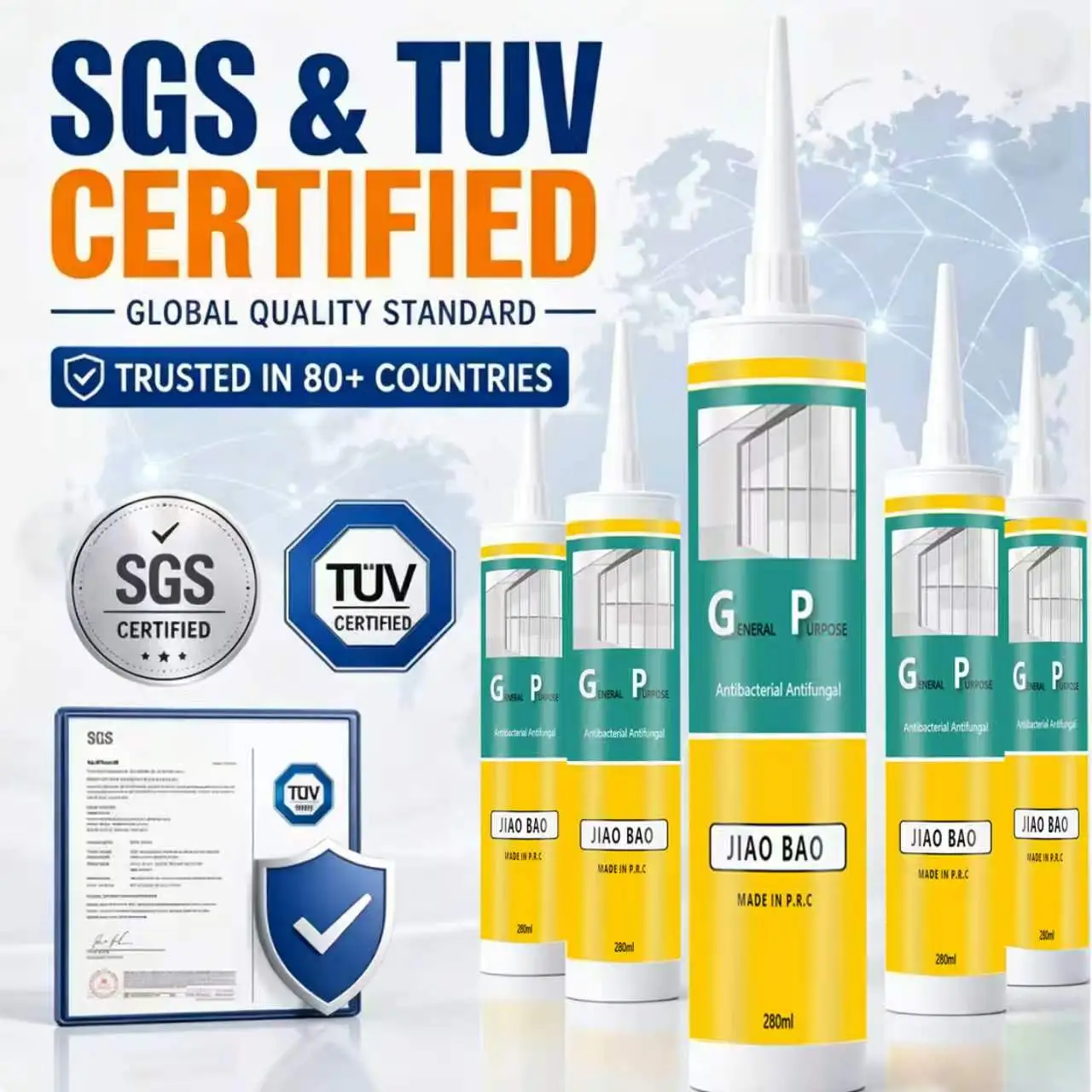
Tensile strength is the amount of force needed to separate two pieces of hardened sealant. Products made for professionals usually have a range of 0.6 to 1.2 MPa. The NP Building Grade Silicone Sealant reaches 0.7 MPa, which puts it in a safe middle range that makes it good for most industrial and business sealing jobs. This level makes sure that the caulk won't break under regular structural stress but is still flexible enough to allow the building to move.
How well the caulk sticks to different surfaces is based on its adhesion power. It sticks very well to glass, metal, stone, ceramic tiles, concrete, and plastic steel, so you don't need to use a bunch of different items. The acidic cure method bonds these materials chemically, so they will work well for a long time, even in joint settings that move around a lot.
When the temperature changes, buildings get bigger and smaller. Strong sealants that can't be bent will break and crack. So joints can grow or shrink by a quarter of their original width without breaking the seal because this silicone sealant can move 25%. This quality is very useful in curtain wall uses where the metal frames and glass panels expand and contract at different rates. The fact that the material is rated as Shore A 30 means it is still flexible enough to bend without losing its shape.
In real life, extreme weather resistance is what makes NP Building Grade Silicone Sealant powerful. Outdoor seals are constantly tested by UV rays, ozone, rain, and temperature changes. The polysiloxane backbone in this silicone recipe makes it naturally UV stable, so it doesn't chalk, change color, or become less flexible like some organic seals do. The temperature stability range of -50℃ to +150℃ makes sure that it works in all kinds of climates, from the cold to hot roofing uses.
The fast healing profile (surface dries in 30 minutes, full cure in 7–14 days) strikes a good mix between being able to work with and protecting. The quick skin formation keeps the joint clean, and the slow deep-section cure makes sure that all the polymers are cured, even in thicker uses.
The market for sealants has a lot of different chemicals, and each one works differently. Knowing about these differences helps buying teams make smart choices based on the needs of the project.

Polyurethane seals are good for some uses because they are more tear-resistant and easier to paint. However, they break down when exposed to UV light for a long time, which causes the surface to chalk and eventually crack. On the other hand, silicone mixtures stay intact for decades when they are exposed to strong sunlight. For exterior glazing, facade joints, and curtain walls that are open to the weather, silicone's weather protection is better than polyurethane's tear strength. On the other hand, silicone can't be coated, so the right color of sealing has to be chosen when it's bought.
It is cheap, water-based, and possible to paint over acrylic seals. They work well for indoor uses where there isn't much moving. But they aren't flexible enough or waterproof enough to be used for exterior parts that get wet and are open to changes in temperature. Acrylic mixtures also shrink a lot when they dry, which can cause the bond to break in moving joints. Silicone's ability to stay the same size and prevent water makes it a better long-term choice for closing doors, windows, and the outside of buildings that need to be waterproof.
The salt spray, constant wetness, and UV rays in the ocean make it a tough place to live. There are special marine sealants, but high-quality silicone seals work well for building jobs along the coast. Because this acidic silicone mixture doesn't corrode, it won't hurt metal surfaces when they are wet. NP Building Grade Silicone Sealant has a VOC level below 80 g/L, matching environmental standards without lowering performance—meeting both legal requirements and sustainability goals.
Chemical protection changes from type to type of sealant. Most of the time, silicone seals are better than organic ones at standing up to water, weak acids, and alkaline solutions. This means they can be used in industrial settings where chemicals are sometimes present, though special preparations are needed for long-term soaking or strong solvent contact.
The initial price doesn't show how much it will cost to own the car in the long run. Over a 20-year service life, silicone's strength means that it doesn't need to be replaced as often as polyurethane or acrylic seals do. When thousands of linear meters of joints are used in big projects, the lifetime cost benefit gets big. Cost-effectiveness is increased by bulk purchases and original equipment maker (OEM) agreements. Companies that make curtain walls, doors and windows, and general contractors who are working on multiple projects at the same time can get big savings.
Most of the time, border sealing is used around doors and windows. The glue makes watertight seals that can stand up to years of opening and closing and being out in the weather. The 300ml and 600ml cartridges can be used for a range of job sizes, from installing a single unit to making windows on a production line. Installers can move on to the next unit quickly because the surface dries in just 30 minutes. This makes big projects more efficient by using workers more efficiently.
For current building designs, glass curtain walls need to be sealed by professionals. The clear and customizable color choices—white, black, gray, or shades made just for the project—go well with the design requirements. The non-corrosive features of the sealant help aluminum curtain wall systems avoid the problems that acidic formulations can cause when applied incorrectly to bare metal through galvanic rusting. The strong connection to metal shapes guarantees the facade's long-term strength.
Exterior building joints, roof seams, and expansion joints all need protection that lets the structure move. The 25% movement capacity can handle the increase of temperature in metal, concrete, and brick structures. The sealant doesn't sag (as defined by ASTM C679), so it stays in place during curing on both vertical and ceiling joints. In many cases, this means that backer bars aren't needed.
When making HVAC equipment, seals that don't harden at high or low temperatures are needed. The temperature range of -50°F to +150°F covers both cooling and heat exposure near furnace parts. Silicone is used to waterproof and seal off electrical device and electronics companies. Its dielectric qualities and non-corrosive cure are very important in these applications.
More and more, NP Building Grade Silicone Sealant is used to seal and dampen vibrations in automotive parts manufacturing. Its chemical stability makes it compatible with oils, coolants, and cleaning agents commonly found in factories. For high-volume production lines needing specific colors or performance characteristics, custom formulas can be developed.
Adhesion strength depends on how well the surface is prepared. Every surface needs to be dried, clean, and free of oil, dust, and other loose things. For open bases like concrete or unglazed brickwork, primers may make the bond stronger and stop the ground from absorbing water too quickly during the curing process. Field contact testing using ASTM C1521 guidelines makes sure that the primer meets the needs before it is used on a large scale.
How the joint is used affects how well it works. Making a 45-degree cut in the tip to match the width of the joint makes sure that the bead is the right size. Using a regular sealant gun to apply makes the material move smoothly. Tooling the surface during the skin-over process makes it look smooth and professional and makes sure that it makes full touch with the sides of the joint. For best stress distribution, the joint depth-to-width ratio should stay at 1:2. Deeper joints can cause cohesive failure because they collect stress.
Conditions of curing affect both how fast it cures and what its end qualities are. When temperature and humidity are higher, healing happens faster. When they are lower, the process takes longer. Enough air flow during application gets rid of leftovers of the cure and keeps people comfortable in tight spaces. To keep the food fresh for 12 months, it needs to be kept in a cool, dry place out of direct sunlight and away from freezing temperatures.
To choose the best sealer, you have to make sure that the product's features match the needs of the project and the limitations of the buying process.
Start by making a list of the main things that will put stress on your joints. High-rise curtain walls have to deal with wind loads, changing temperatures, and earthquakes, so they need to be able to move easily and stick to surfaces consistently. Installations of doors and windows need to be able to stand up to the weather and be flexible over time, but they don't have to be very strong. In industrial settings, chemical protection or temperature stability may be more important than the ability to move.
Check the scientific data sheets to find out the numbers for tensile strength, elongation at break, and modulus. NP Building Grade Silicone Sealant can withstand a tensile strength of 0.7 MPa and a movement capacity of 25%, making it suitable for most business building projects. For projects that need structural glazing (where the sealant supports the weight of the glass), you need special high-modulus structural silicones that can pull apart more than 1.5 MPa.
The procurement teams need to make sure that the project requirements and local building rules are being followed. Baseline guarantee comes from meeting ASTM C 679 standards for not sagging and GB 13477 standards for building sealants. When a company gets ISO certification, it means that its quality control methods are reliable. For projects that want to get LEED approval or meet SCAQMD air quality guidelines, a VOC content below 80 g/L makes sure that the rules are followed without affecting performance.
Ratings for fire protection are important in some situations. Silicone doesn't burn on its own, but certain types may be needed for fire-rated systems or smoke-control joints. Ask for test results and certificates that are related to the fire safety requirements of your project.
Evaluation of suppliers goes beyond just looking at product specs. Delivery time affects project timelines. Manufacturers with lead times of one to two weeks keep product costs low and can reply quickly to change orders. Production experience is important. A provider with more than 13 years of experience shows that their processes are mature and their formulations are consistent.
Customization lets you make solutions that fit your unique project needs. OEM and ODM production let curtain wall businesses choose custom colors that match building finishes or make their own products to sell through distribution networks. Because sausage and cartridge packing are both available, they can be used with a range of tools, from hand guns to pneumatic dispensers on production lines.
Service after the sale and warranties guard against quality problems. Buying from suppliers who will return or repair defective goods within the shelf life lowers the risk of buying from them. Clear technical support channels help answer questions about applications and fix problems with stickiness during installation.
To find the best silicone sealant, you have to weigh the product's tensile strength, adhesion performance, flexibility, and resistance to external factors against the needs of the project. When it comes to these factors, NP Building Grade Silicone Sealant works well and has been shown to last in industry and building settings. Because it can move 25% of the way, stays stable at a wide range of temperatures, and is very resistant to weather, it is a good choice for curtain walls, doors, windows, and specialized industrial settings. The fast-curing profile, substrate versatility, and customization choices meet the needs of general builders, door and window makers, and commercial buyers who want sealing solutions that will last for a long time.
Strength is not just a single number; it includes tensile strength, adhesive quality, and the ability to move. A strong building sealant firmly sticks to a variety of surfaces, stays flexible at high and low temperatures, and doesn't break down in the environment for decades. Good silicone mixtures have the mechanical traits needed for dynamic building joints, with a tensile strength of 0.7 MPa and a movement range of 25%.
That's right, this sealer works in both places. Because it doesn't absorb water, it's good for bathrooms and kitchens where humidity is always high. It works well for external doors, windows, curtain walls, and roofing joints because it is resistant to UV light, a wide range of temperatures, and water. The low amount of VOCs meets guidelines for indoor air quality in busy areas.
The surface drying in 30 minutes keeps the joint clean and lets you handle it carefully, but it takes 7–14 days for the joint to reach full strength. Temperature and humidity affect how fast something cures. When it's warmer and more humid, the process goes faster. It takes less time for shallow joints to heal than deep ones. Giving joints enough time to fix before putting them under stress or letting water in will ensure the best bond strength and service life.
When you buy in bulk, the prices are usually tiered based on how much you order. Companies that make curtain walls, doors, and windows, as well as general builders who are in charge of many projects, can save money by signing volume deals that lower the cost per unit. OEM agreements for private marking or custom colors may have minimum order amounts, but they also offer cost savings. Get in touch with suppliers directly to talk about prices and delivery schedules that work with your building schedule.
Jiaobao has been making professional-grade color silicone sealant since 2013. They have been doing this for building and industry clients in China and around the world. With 13 years of production experience and ISO and CE certifications, our NP Building Grade Silicone Sealant is always of high quality and meets world standards. We have wait times of 1-2 weeks for delivery, flexible OEM/ODM customization, and full after-sales support, including refund or replacement for quality problems. Our team offers quick and helpful service that is specifically designed to meet the needs of businesses that buy things in bulk. This includes custom color matching for architectural specs, private-label solutions for marketing, and bulk quantities for big projects. You can email us at dorashen@cnjiaobao.com to talk about the details of your project, ask for samples, or look into ways that we could work together as your trusted silicone sealant source.
1. American Society for Testing and Materials. (2020). ASTM C920: Standard Specification for Elastomeric Joint Sealants. ASTM International.
2. Wolf, A.T. (2018). Durability of Building Sealants: State of the Art. RILEM Publications.
3. Panek, J.R., & Cook, J.P. (2019). Construction Sealants and Adhesives (4th ed.). John Wiley & Sons.
4. Beech, J.C. (2017). The Technology of Building Defects. Routledge Publishing.
5. Klosowski, J.M., & Wolf, A.T. (2016). Sealants in Construction (2nd ed.). CRC Press.
6. International Organization for Standardization. (2021). ISO 11600: Building Construction—Jointing Products—Classification and Requirements for Sealants. ISO Standards.
November 16,2023
Enterprise Name
The sealant has very strong adhesion and performs well even on glass and aluminum. After curing, it remains flexible and shows no cracking. Perfect for our facade projects.
November 16,2023
Enterprise Name
Stable quality across batches. Our customers especially like the smooth application and consistent extrusion. It helps reduce installation time on site.
November 16,2023
Enterprise Name
I used it for bathroom sealing. Excellent waterproof performance and no mold issues so far. It's been holding up very well in humid conditions.
November 16,2023
Enterprise Name
The neutral silicone works well on sensitive materials without corrosion. Very suitable for industrial applications requiring stable performance.
_1779347426672.webp)