November 16,2023
Enterprise Name
The sealant has very strong adhesion and performs well even on glass and aluminum. After curing, it remains flexible and shows no cracking. Perfect for our facade projects.
Sep 23, 2026
If you work with marble, granite, aluminum cladding, or coated glass, you already know how much damage the wrong sealant can cause. NP neutral cure silicone sealant is engineered to bond and seal sensitive substrates without releasing acetic acid during curing. That single chemical difference protects your materials from discoloration, corrosion, and premature joint failure. This guide walks you through how the product works, where it performs best, what to look for when buying, and how to source it reliably—so you can make a confident procurement decision.
Standard acetoxy silicones fix and give off acetic acid. In a process called "desilvering," that acid eats away at metal surfaces, changes the color of natural stone, and destroys mirror backings. Instead, neutral cure silicones use oxime or alkoxy mechanisms that give off byproducts that are not corrosive. The end result is a seal that doesn't react with chemicals and works just as well to protect stainless steel, anodized aluminum, marble, copper, and protected glass. This difference isn't just a small technicality for people who work with stone and metal—it's at the heart of what makes a project look good or bad.
The one-part RTV (Room Temperature Vulcanizing) neutral cure formula from Jiaobao NP neutral cure silicone sealant cures through the moisture in the air, without mixing, heating, or pressurizing. It only takes 30 minutes for the surface to dry, so crews can keep working without long breaks. Depending on the temperature and humidity, the full cure takes between 7 and 14 days. The hardened rubber is Shore A 30 hard, has a tensile strength of 0.7 MPa, and can move 25% of the way. This is enough for joints in curtain walls, window frames, and stone panel systems. The working temperature range is from -50°C to +150°C, which covers almost all weather conditions that are common in building.

This type of sealant can be used in more than one trade. Because it works with a lot of different materials, it is truly cross-sector. For reliable results, neutral cure silicone works best in the following situations:
These use cases involve finishes that get a lot of attention and can't be fixed if they don't work with chemicals. If you choose the right type of sealant from the start, you won't have to pay anything to fix mistakes.
Polyurethane sealants have a high tensile strength, but they break down when exposed to UV light for a long time, so they need to be replaced on exterior walls on a regular basis. MS plastics can be painted on and don't smell bad, but they cost more per unit and don't hold up as well against high and low temperatures. NP neutral cure silicone sealant is a good compromise because it is naturally resistant to UV light, can be used in a wide range of temperatures, has a low volatile organic compound (VOC) content of less than 80 g/L, and doesn't stain porous surfaces as shown by ASTM C 1248 tests. Silicone's molecular structure simply lasts longer than natural alternatives for stone and metal applications that are left outside for decades.
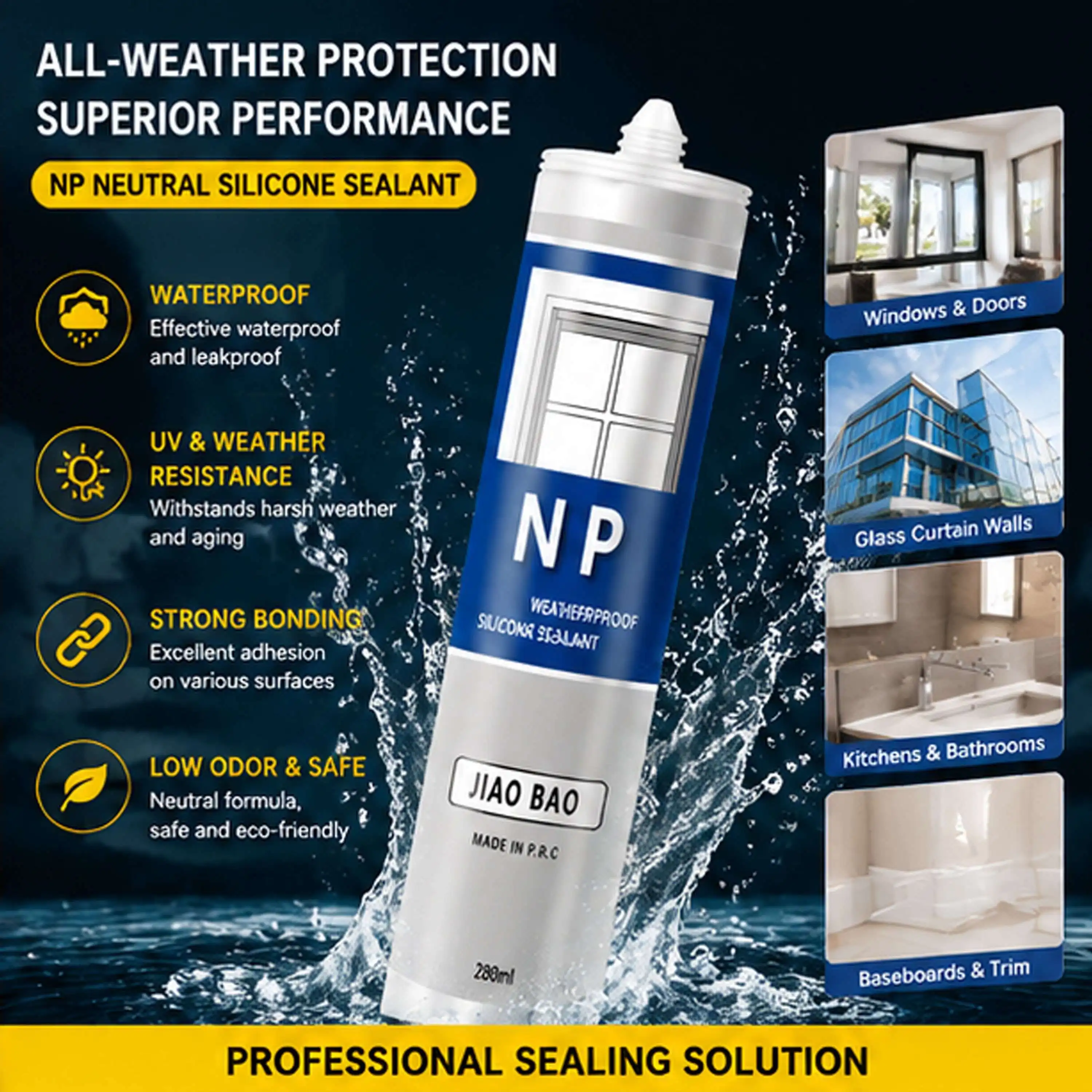
To choose the right product, you need to meet three factors: the sensitivity of the substrate, the movement of the joints, and the exposure to the surroundings. Stone facades need products that don't pollute the environment. Metal parts need to be sure they will stick to coated or oxidized surfaces. Joints in areas prone to earthquakes or high winds must be able to move at least 25% of the way they're supposed to.
When buying something, certification guidelines are important. Look for glazing that meets ISO 11600 and building joint sealants that meet ASTM C920. Products with these certificates have been tested by a third party to make sure they work well in binding, flexibility, and weathering tests. For big stone jobs, batch uniformity is just as important—color differences between production runs cause obvious joint mismatches that need expensive repairs.
Color availability is a useful but underrated factor in choosing what to buy. The formula from Jiaobao comes in white, black, gray, and unique colors, so it can be perfectly matched to stone tones or metal panel finishes. Custom color matching gets rid of the need to paint over joints again, which wouldn't work on silicone surfaces anyway because they don't like water.
When businesses buy specialty sealants from each other, there is a real risk if the suppliers aren't qualified. Before you take a sample, ask for scientific data sheets that confirm the ASTM and GB test results. Check to see if the maker is ISO certified and can provide quality records that can be used to track each batch. Standard shelf life is 12 months; make sure that the conditions of storage and shipping are written down to protect that shelf life while it's in transit.
Your choice to buy is safe because of a disciplined testing process. Put the sample on the real substrate, which could be anodized aluminum, granite, or coated glass, and wait 7–10 days. Check for staining around the edge of the joint, measure peel adhesion by hand or with a simple probe, and make sure the color that has dried matches the information given. For joints with a lot of movement, bend a healed bead by hand to check its flexibility and make sure it doesn't crack.
You can get neutral cure silicone in 300 ml tubes and 600 ml sausage packs. The cartridge format works well for precise installation and smaller teams. For large projects, sausage packs cut down on the cost per unit and the amount of trash from packing. A qualified manufacturer's standard lead time for production is one to two weeks, which works well with most construction procurement cycles. When comparing providers, look at both the unit price and how reliable their delivery is. A cheaper price with unpredictable delivery will cause delays in the project that cost more than the savings.
The NP neutral cure silicone sealant solves a specific and important issue: it bonds delicate materials without causing chemical damage. Its cure process doesn't eat away at stone, metal, or coated glass, which is something that acetoxy products would do. It is the best choice for exterior facades, curtain walls, and decorative interiors because it is resistant to UV light, can handle a wide range of temperatures, and doesn't stain. If procurement professionals check out suppliers by trying samples and reviewing certifications, they will find a product that works the same way on every job site.
No. Pure silicone surfaces are hydrophobic, and conventional paint cannot bond to them. If the joint needs to match a painted surface, select the sealant color carefully from available options (white, black, grey, or custom). Color matching at the product selection stage eliminates the need for paint.
Surface drying occurs in approximately 30 minutes under standard conditions (25°C, 50% relative humidity). Complete through-cure takes 7–14 days. Higher ambient temperature and humidity accelerate the process; cooler, drier environments slow it.
Yes. Unlike acid-cure silicones that attack silver backings and cause permanent black spotting, this neutral cure formula is chemically inert toward mirror coatings. It is specifically recommended for mirror bonding in high-end interior applications.
High-quality neutral cure grades typically bond directly to sound, clean concrete. For older, dusty, or highly porous concrete, applying a compatible primer consolidates the surface and ensures maximum movement capability is achieved.
The shelf life is 12 months from the production date when stored below 27°C in dry conditions. Exposure to humidity before opening can trigger premature curing inside the cartridge, so proper storage is non-negotiable.
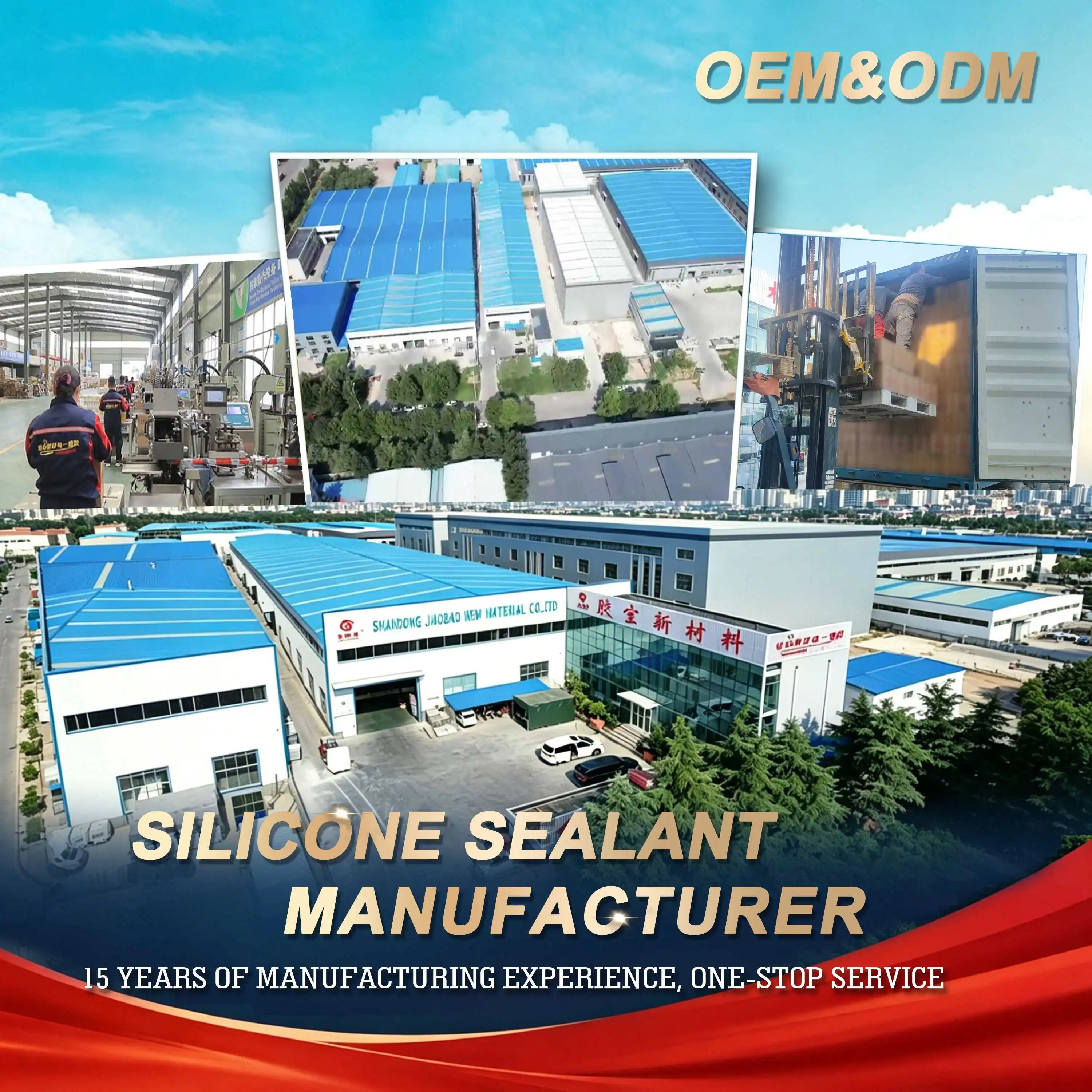
Jiaobao has manufactured professional-grade silicone sealants since 2013, with ISO and CE certifications backing every batch. Our NP neutral cure silicone sealant is available in custom colors, with a 1–2 week lead time and flexible sea or land shipping. We support OEM/ODM orders and provide refund or replacement guarantees for any quality issue within shelf life. Contact our technical team at dorashen@cnjiaobao.com to request a sample kit today.
1. ASTM International. ASTM C920: Standard Specification for Elastomeric Joint Sealants. ASTM International, 2022.
2. ISO. ISO 11600: Building Construction — Jointing Products — Classification and Requirements for Sealants. International Organization for Standardization, 2021.
3. ASTM International. ASTM C1248: Standard Test Method for Staining of Porous Substrate by Joint Sealants. ASTM International, 2018.
4. Wolf, A. T. Durability of Building Sealants. RILEM Publications, 1999.
5. Cognard, P. Handbook of Adhesives and Sealants, Volume 2: General Knowledge, Application of Adhesives, New Curing Techniques. Elsevier Science, 2006.
6. Construction Sealants Market Report: Trends, Applications and Material Innovations. Freedonia Group, 2023.
November 16,2023
Enterprise Name
The sealant has very strong adhesion and performs well even on glass and aluminum. After curing, it remains flexible and shows no cracking. Perfect for our facade projects.
November 16,2023
Enterprise Name
Stable quality across batches. Our customers especially like the smooth application and consistent extrusion. It helps reduce installation time on site.
November 16,2023
Enterprise Name
I used it for bathroom sealing. Excellent waterproof performance and no mold issues so far. It's been holding up very well in humid conditions.
November 16,2023
Enterprise Name
The neutral silicone works well on sensitive materials without corrosion. Very suitable for industrial applications requiring stable performance.
_1779347426672.webp)