November 16,2023
Enterprise Name
The sealant has very strong adhesion and performs well even on glass and aluminum. After curing, it remains flexible and shows no cracking. Perfect for our facade projects.
Jul 24, 2026
Selecting certified fire resistant silicone sealant requires evaluating fire rating certifications such as ASTM E119, UL 2079, or EN 1366-4, ensuring the product meets required integrity (E) and insulation (I) performance standards for your specific application. Fire Rated Silicone Sealant for Joints must demonstrate proven adhesion to your substrate materials, appropriate movement capability (typically ±25% to ±50%), and verified third-party testing documentation that confirms compliance with local building codes and project specifications for curtain walls, expansion joints, or penetration seals.
Commercial building codes for fire safety require materials that actively stop flames from spreading and smoke from getting through building joints. Standard seals can crack when building parts move, grow, or settle, making it easier for fires to spread. This weakness is fixed in fire-rated silicone formulas by using special chemical mixes that keep the material's flexibility and strength even at temperatures above 1000°C.
Unlike regular sealants that are only meant to keep out the weather, fire-resistant types have intumescent additives and heat-stable polymers. During a fire, these parts work together. The material grows to fill gaps that are getting bigger, and its silicone backbone doesn't break down in the heat. This two-part device stops the "chimney effect" that happens in tall buildings when flames move up and down through joints between floors that aren't blocked.
This way of engineering can be seen in Jiaobao's one-part RTV silicone sealant. The acidic mixture sticks to glass, aluminium, and concrete, which are popular building materials for curtain wall systems. It has a density of 1.40 g/m³ and 99.5% non-volatile parts. Under normal conditions (25℃, 50% relative humidity), the product dries at a rate of 3 mm per 24 hours. This forms a flexible seal that can handle temperature expansion while keeping fire compartmentation.
In exterior applications, the service temperature directly affects how long a sealant lasts. Products have to be able to handle both fire and daily changes in temperature. Good fire-rated silicones work well from -50°F to +150°F, so they can handle the wide range of temperatures in the United States, from the cold winters in Minnesota to the hot summers in Arizona.
Several aspects of performance are measured by testing standards. The ASTM E1966 standard rates how well joint systems perform in fire tests, while the ISO 11600 standard rates how well they can move. Managers in charge of buying things should make sure that the technical data sheets include specific test methods like these instead of general claims like "fire resistant." Real certification papers have the names of the test labs, dates, and information about how the system was put together, which shows which bases and backing materials were used during the evaluation.
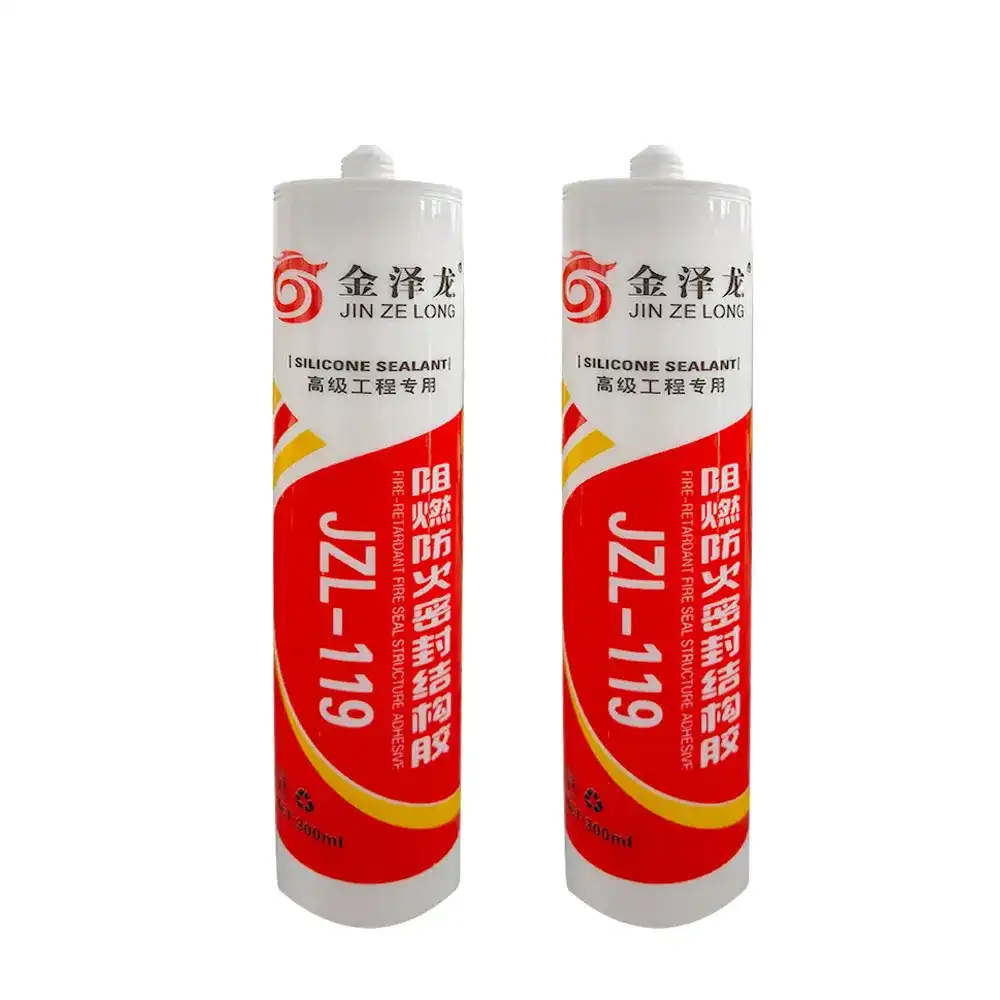
By matching the properties of the sealant to the needs of the project, you can avoid making mistakes that cost a lot of money. Different uses have different performance requirements that affect the choice of product.
Curtain wall border parts are the most difficult to work with. In these places, there is constant wind loads, UV exposure, water seepage, and movement between the building foundation and wall system. The sealant like Fire Rated Silicone Sealant for Joints needs to be able to stop both weather and fires, and it usually needs to have a grade of EI 120 (maintaining structure and insulation for two hours) or higher. Fire Rated Silicone Sealant for Joints is designed for these demanding conditions.
Sealing door and window frames has smaller joints, but the fire protection is just as important. Building rules say that openings in fire-rated walls must keep the rating of the unit. When used here, sealants must harden without shrinking too much, stick to powder-coated aluminium frames consistently, and stay flexible enough that frame distortion doesn't pull the seal apart.
When HVAC systems go through fire-rated walls, they make the geometry less regular. Sealants used in these situations need to be able to fill gaps well and work with mineral wool backing materials. The product must keep its rating when used in overhead positions and not sag before it's fully cured.
Curing time changes the schedule for a job. Single-component silicones harden when they come in contact with water from the outside. Jiaobao's formulation has a 3 mm per day cure rate, which makes it possible to plan an installation that is sure to go as planned. It's not always better to go faster. Curing too quickly can trap solvents or make surface flaws that make bonding less reliable in the long run.
Joint design factors are based on how much the joint can move. Low-modulus silicones that can move up to 50 percent can handle larger temperature expansion ranges and building settling without pulling away from the base. This is very important in places where there are a lot of earthquakes or in buildings with weak, easily deformed frames.
When sealants come in contact with cleaning products, de-icing salts, or industrial environments, their chemical resistance is important. Silicone chemistry naturally doesn't break down in UV light, ozone, or most water-based solutions. But some metals can rust while the fix is happening with acidic cure methods. For substrates that are sensitive, there are neutral cure alternatives that are available, but they usually cost more.
Polyurethane seals can be painted on and stick well, but they don't stay stable at high temperatures for long. They work well for internal parts that don't need to be fire-rated. Intumescent acrylics grow a lot when they come into contact with fire. This makes them good for static joints in dry places, but they can't move or stand up to the weather well enough for outdoor facades. All of these needs are met by silicone-based systems, which is why they are so popular in commercial curtain wall applications, even though they are more expensive.
Knowing about these trade-offs helps buying managers make the best use of specs. For projects with limited funds and lower performance needs, hybrid polymer sealants could be used in non-critical areas, while certified Fire Rated Silicone Sealant for Joints would be used in areas where it is required by code. This smart method cuts down on overall material prices while still following the rules.
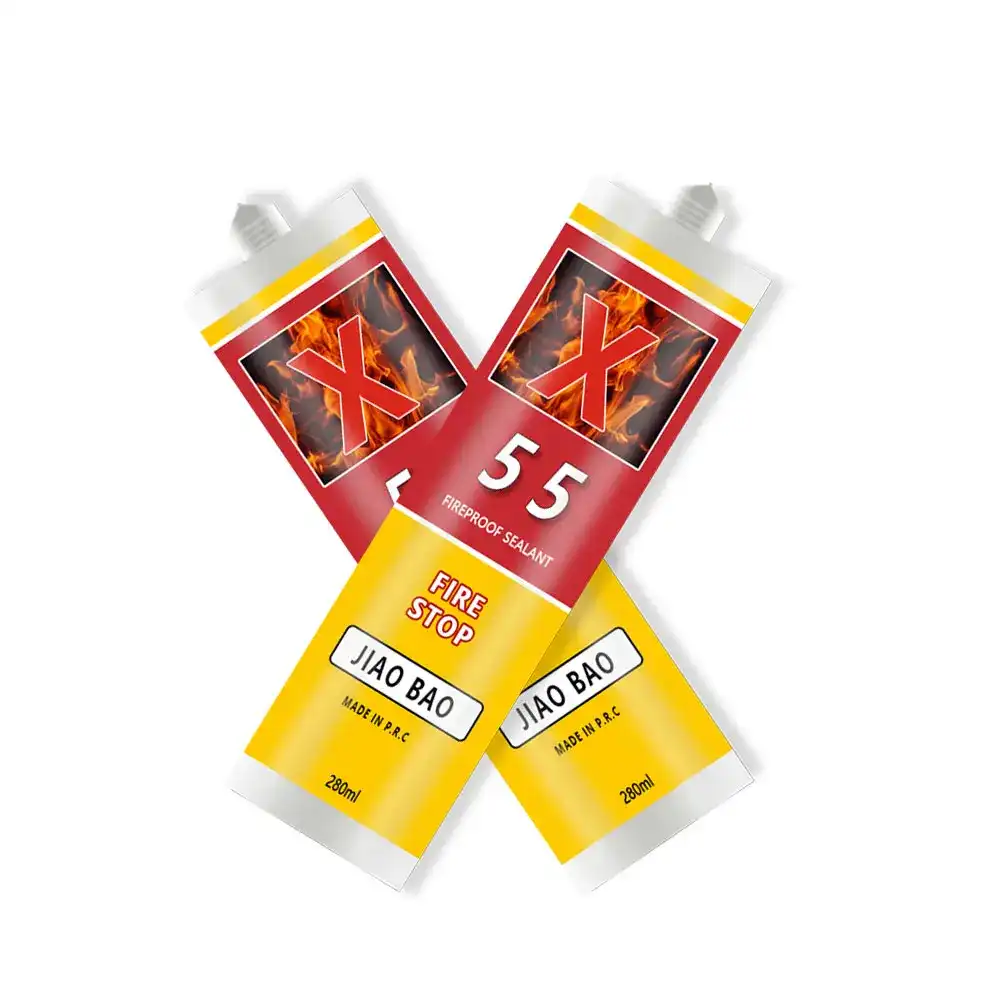
The difference between real fire protection and marketing claims is the authenticity of the certification. Participants in a project are protected from risk by strict verification methods.
As of now, ASTM E119 is still the main U.S. standard for checking fire protection. A full-size joint assembly is put through a time-temperature curve as part of the process. This is done to measure heat transfer and check for flame passing. Products are given scores every hour (1-hour, 2-hour, 4-hour) based on when failure factors are met. The European counterpart is EN 1366-4, which uses the same method but with metric measurements.
In test reports, the whole assembly configuration must be written down, including the substrate materials, joint sizes, backing materials, and how the assembly was put together. You can't assume that a coating that is approved for 25 mm-wide aluminum-to-concrete joints will work the same way in 50 mm glass-to-steel joints. Smart buyers ask for test results that match the exact conditions of their application.
When a third party does legitimate testing, they make detailed paperwork. Buyers can use the file number in UL ads to find the product in the online UL Product iQ database. The listing lists the allowed uses, the largest and smallest sizes, and sometimes installation instructions. In Europe, to get a CE mark, you need a Declaration of Performance paper that links to a certain harmonised standard.
Instead of depending only on marketing materials, procurement teams should ask for copies of test results for Fire Rated Silicone Sealant for Joints. Reports include important information like how to prepare specimens, how many times the test was done, and the pass/fail scores for Fire Rated Silicone Sealant for Joints. Products like Fire Rated Silicone Sealant for Joints that just barely meet the minimum requirements have less safety margin than products that go above and beyond the standards by large amounts.
Batch tracking adds one more level of checking. Manufacturers with a good reputation set up quality control systems that connect production lot numbers to the sources of raw materials and tests for quality assurance. When there are disagreements between specifications during building, this paperwork trail shows that the materials are real and were handled correctly.
When something is called "fire resistant" without specific test standards, it should be taken with a grain of salt. Real fire-rated items have testing agency names, standard numbers, and rating groups displayed in a clear manner. Marketing materials that focus on colour choices or how easy they are to use while leaving out certification information often mean that products meant for less important uses are being sold for more than what they were approved for.
When compared to well-known names, the very low prices make people worry that the formulas may not be as good. Heat-stable additives that are expensive are used in certified fire-rated silicones. Products that are priced much lower than the market average might have lower-quality base plastics or filler systems that aren't up to par, which can hurt their performance at high temperatures. Failures in fire safety cost a lot more than the money saved on purchases.
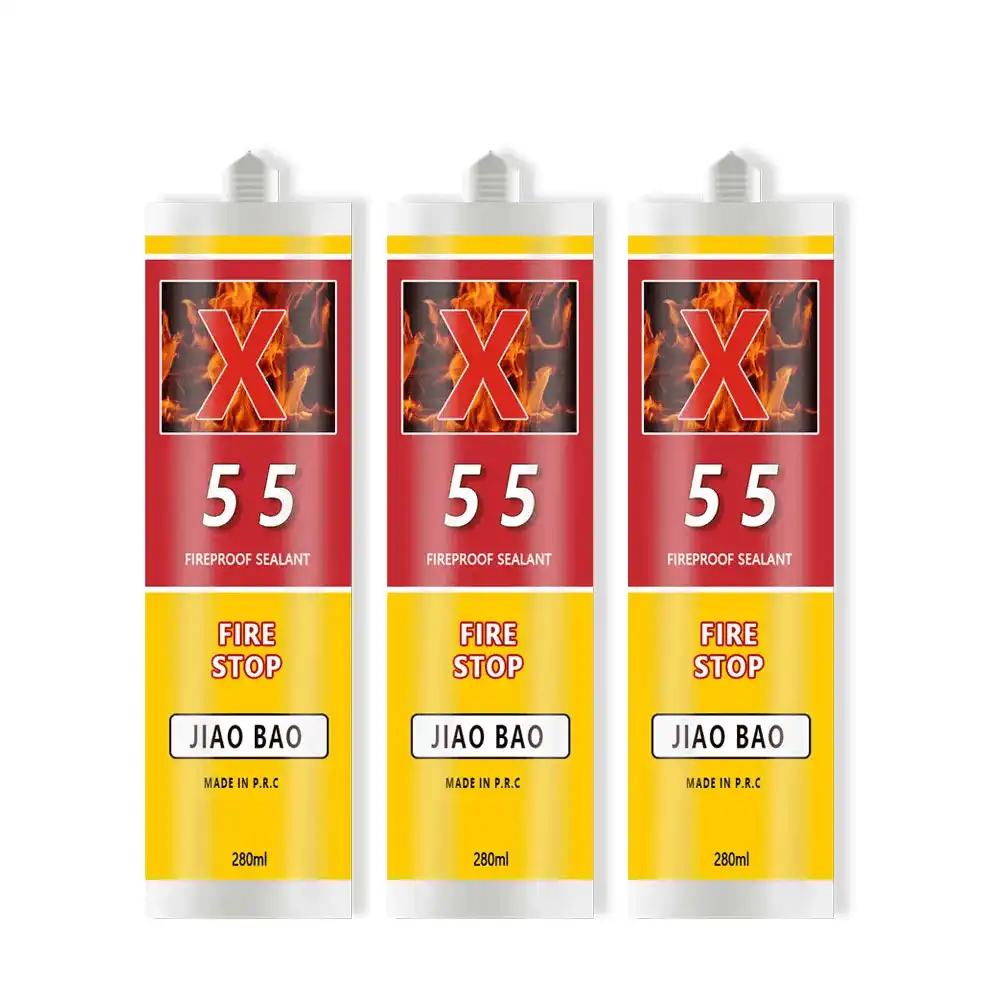
A good sourcing strategy strikes a balance between cost, quality guarantee, and supply dependability. It's helpful for business-to-business buyers to know both the technical needs of the product and the operating skills of the seller.
Direct relationships with manufacturers are helpful for big projects or programs that run at more than one site. Through bulk savings, factory-direct purchasing usually lowers the cost per unit while still guaranteeing the authenticity of the product. Manufacturers can help with technical issues while specifications are being made and can send sample batches for trying adhesion on real project surfaces.
Authorised distributors work with buyers of Fire Rated Silicone Sealant for Joints who don't need to buy a lot of or projects that need deliveries quickly. Local inventory of Fire Rated Silicone Sealant for Joints is kept up to date by established distribution networks, which cuts lead times from weeks to days. In exchange, distributor margins make unit prices for Fire Rated Silicone Sealant for Joints higher than when you buy directly from the plant. Buyers should check the websites of manufacturers to see if a dealer is authorised for Fire Rated Silicone Sealant for Joints. This will protect their warranties and make sure they get real Fire Rated Silicone Sealant for Joints.
Online B2B markets make prices clear and give buyers choices for suppliers, but they need to be carefully checked out. Ratings and transaction records on platforms can give you some peace of mind, but they can't replace checking licenses and manufacturing skills. It is easier to judge a supplier's quality systems when you ask for factory audit reports or ISO 9001 certificates.
With volume commitments, you can get better pricing. A curtain wall builder who is working on several projects at the same time might be able to get yearly supply deals with different prices based on the total volume. These agreements also keep supplies stable when materials are in short supply, giving priority to buyers who have already agreed to buy.
Minimum order quantities (MOQ) are different for each product and each manufacturer. Standard colours like white, black, and grey tend to have lower MOQs—sometimes as little as 50 cartridges—because they work for a lot of different users. For custom colour matching to meet architectural needs, MOQs of 500 units or more might be needed to cover the costs of setting up the production line. Jiaobao can make custom colour formulations that are matched to RAL or project-specific needs. This is especially useful for facade contractors who want to make sure that the new building looks good with the old one.
The choice of packaging affects how well it can be handled. Sausage wrapping costs less per unit, but you need tools that work with it to open it. Standard caulking guns are easier to use with cartridge packaging, which makes it better for smaller maintenance teams or jobs that need more than one tool. With 300ml and 600ml volume choices, buyers can find the best balance between material waste and applicator tiredness during long installation sessions.
Limits on shelf life mean that inventory needs to be planned. If you store silicone seals the right way, in a cool, dry place out of direct sunlight, they should keep working perfectly for a year. Buyers should figure out how much they will actually use so they don't order too much and risk running out. Rotation methods that make sure older stock is used up before newer supplies keep things from going to waste.
Shipping costs have a big effect on the total landing cost. When sales are combined to fill up container loads, the cost of goods per unit goes down. Buyers working on projects with long timelines might be able to negotiate staged deliveries, which would weigh the costs of keeping inventory against the time and money saved by shipping. Jiaobao's flexible logistics choices can handle both situations: quick small-lot shipments for urgent fixes and cost-effective full-container loads for the main building stages.
Application mistakes that slow things down can be avoided by getting technical help during startup. Manufacturers who offer on-site training or thorough installation guides give customers more than just the product. If you have questions about how to prepare the surface, what kind of filler you need for special substrates, or how to use the right tools for deep joints, you should talk to an expert.
Quality problems can happen even when strict controls are in place during production. Clear warranty policies that spell out how to replace parts and when to expect a response protect buyers from project delays. Jiaobao's promise to refund or replace products with confirmed quality problems within the shelf life period shows that they trust that their products will be made consistently and reduces the risk for procurement teams.
When choosing certified fire-resistant silicone sealants, it's important to pay attention to the trust of the provider, the accuracy of the certification, and the performance needs of the application. Fire Rated Silicone Sealant for Joints must show that it meets well-known testing standards like ASTM E119 and also have the flexibility to move, resistance to weather, and connection with the material that your project needs. A good procurement process strikes a balance between strict scientific specifications and practical issues like price, shipping, and help after the sale. You can protect project partners and meet code requirements by checking third-party test documentation, matching product characteristics to joint conditions, and working with makers who have open quality systems. Investing in fire protection sealants that are properly formulated pays off for decades of passive safety performance.
Need proof from a third party that the product meets the standards set by ASTM E119, UL 2079, or EN 1366-4, along with specific hourly rates (EI 60, EI 120, and EI 240). Make sure that the test results meet your needs when it comes to base materials, joint sizes, and backing products. Ask for UL file numbers that you can check on your own using the UL Product iQ online database. ISO 9001 certification shows that the company has quality management systems in place, but it doesn't directly back up claims about fire performance.
Silicone science makes a finish with low surface energy that doesn't let paint stick to it. Paint will crack and peel off as the joint moves. Instead of expecting to paint afterward, tell the supplier what colour sealant you need during the buying process. Custom colour matching services from companies like Jiaobao solve this problem by giving you factory-tinted goods that look the same for as long as the sealer lasts.
Find the amount per foot by multiplying the joint width (in millimetres) by its depth (in millimetres) and then multiplying that number by 1000. It takes 200ml per metre to fill a joint that is 20mm wide and 10mm deep. For tooling, cutting, and applicator changes, add 10 to 15 percent for loss. We need about 384 300ml cartridges for a job with 500 meters of 20x10mm joints, which is 500 meters times 200ml times 1.15 and 300ml per cartridge.
For fire-rated uses, mineral wool backing (with a density of at least 100 kg/m³) or ceramic fibre is needed instead of regular polyethylene backer rod. The backing material needs to be in the fire test record for the sealant in order for the system to keep its grade. Even if the sealant is qualified, the certification is null and void if you use backing materials that aren't allowed. Always check your backing specification against the approved system details from the manufacturer.
With more than 13 years of experience, Shandong Jiaobao New Material Co., Ltd. has been making high-performance silicone seals, such as approved fire-resistant formulations for tough industrial and commercial uses. As a top provider of Fire Rated Silicone Sealant for Joints, we keep our ISO and CE certifications up to date to meet strict international quality standards. This makes sure that your purchase meets both performance requirements and legal requirements in markets around the world.
Our production capabilities offer lead times of one to two weeks and flexible OEM/ODM customisation, so you can use RAL charts to find exact colour matches, change the way the products are packaged, and make the formulas fit local building codes. When you buy in bulk, you can get reasonable pricing without sacrificing the quality control systems that have helped us build long-term relationships with curtain wall builders, general contractors, and building material distributors across North America and beyond.
We stand behind our products with full after-sales support. If quality problems happen within the shelf life, we offer prompt replacements or refunds to protect your project deadlines and your relationships with clients. Connect with our technical team at dorashen@cnjiaobao.com to talk about your needs for a fire-rated sealant, ask for samples to test for material compatibility, or get full certification paperwork for your specification review process.
1. American Society for Testing and Materials. (2020). ASTM E1966-20: Standard Test Method for Fire-Resistive Joint Systems. West Conshohocken, PA: ASTM International.
2. International Organization for Standardization. (2019). ISO 11600:2019: Building Construction – Jointing Products – Classification and Requirements for Sealants. Geneva, Switzerland: ISO.
3. National Fire Protection Association. (2021). NFPA 5000: Building Construction and Safety Code. Quincy, MA: NFPA.
4. Underwriters Laboratories. (2018). UL 2079: Standard for Tests for Fire Resistance of Building Joint Systems. Northbrook, IL: UL LLC.
5. European Committee for Standardization. (2017). EN 1366-4: Fire Resistance Tests for Service Installations – Part 4: Linear Joint Seals. Brussels, Belgium: CEN.
6. Glass Association of North America. (2019). GANA Glazing Manual: Chapter 9 – Sealants for Glazing Applications. Topeka, KS: GANA.
November 16,2023
Enterprise Name
The sealant has very strong adhesion and performs well even on glass and aluminum. After curing, it remains flexible and shows no cracking. Perfect for our facade projects.
November 16,2023
Enterprise Name
Stable quality across batches. Our customers especially like the smooth application and consistent extrusion. It helps reduce installation time on site.
November 16,2023
Enterprise Name
I used it for bathroom sealing. Excellent waterproof performance and no mold issues so far. It's been holding up very well in humid conditions.
November 16,2023
Enterprise Name
The neutral silicone works well on sensitive materials without corrosion. Very suitable for industrial applications requiring stable performance.
_1779347426672.webp)