November 16,2023
Enterprise Name
The sealant has very strong adhesion and performs well even on glass and aluminum. After curing, it remains flexible and shows no cracking. Perfect for our facade projects.
Jun 30, 2026
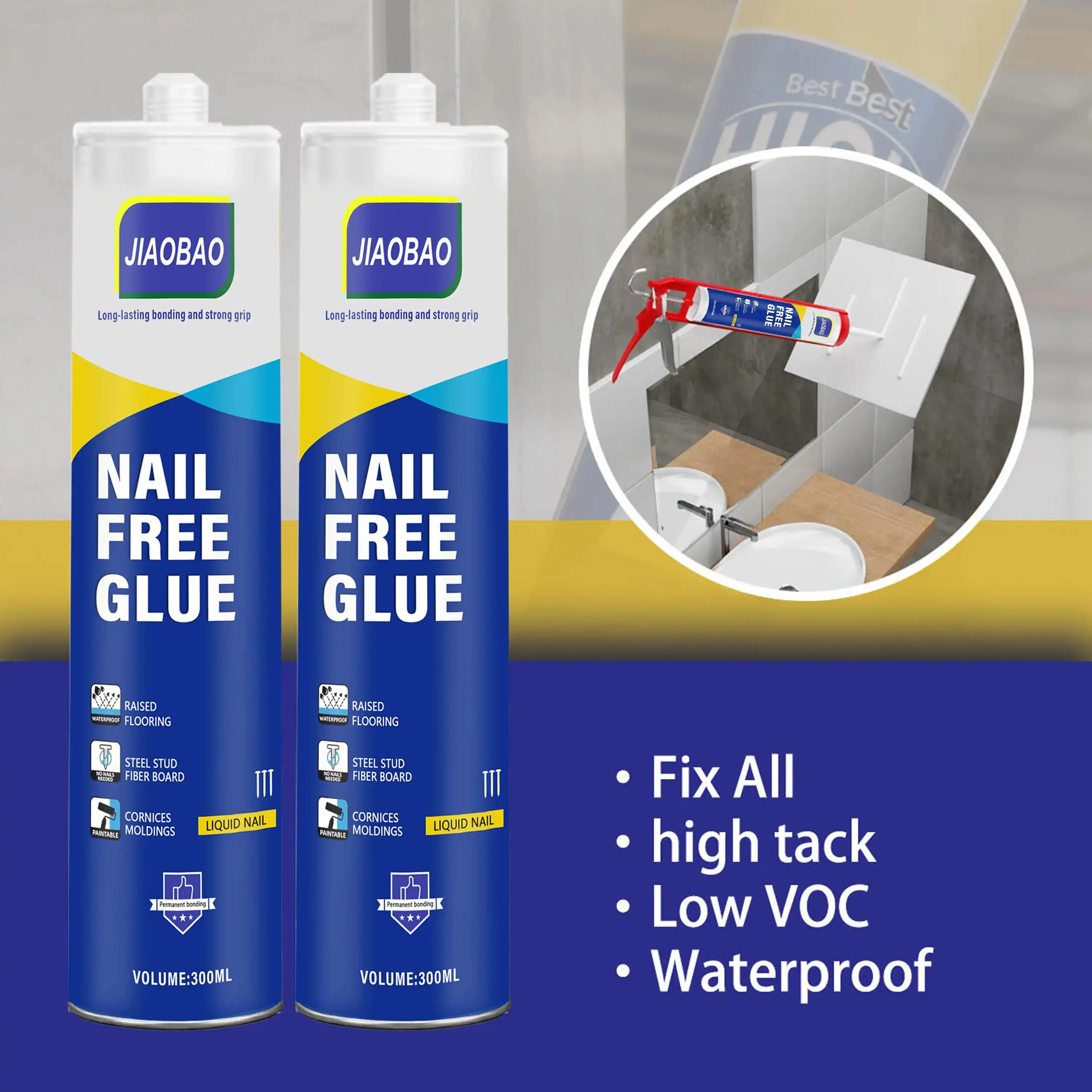
In building and manufacturing, nail free glue is a special kind of structure adhesive that can be used instead of mechanical fasteners like nails, screws, and bolts. Heavy Duty Nail-Free Glue uses advanced modified silane polymer technology to connect with surfaces at the molecular level through moisture-activated curing. This glue doesn't damage the substrate and keeps the aesthetic integrity. It bonds metal, wood, glass, ceramic, and concrete, among other materials, in a flexible but strong way. This makes it essential for installing curtain walls, cladding interiors, and putting things together in factories where drilling could damage the waterproofing or material integrity.
Heavy Duty Nail-Free Glue formulations use modified silane polymers that fix through a neutral moisture-curing process. Because of the dampness in the air, these polymers cross-link to make a strong elastomeric framework. Our one-part RTV (Room Temperature Vulcanizing) recipe cures without making any corrosive residue, so it can be used with sensitive materials like aluminum curtain walls and stainless steel fittings. This is different from solvent-based adhesives that give off volatile organic compounds.
Chemical binding and mechanical coupling are both parts of the bonding process. Because the glue is a paste, it can fill in tiny bumps on the base surfaces, which increases the contact area. At the same time, silane functional groups combine with hydroxyl groups found on glass, metal oxides, and masonry to make covalent bonds that don't break down easily in the environment. This two-part system gives the bond a tensile strength of more than 2.5 N/mm² and an elongation at break of 300%. This means that the bond can withstand changes in temperature and structure movements without breaking.
Knowing the performance requirements helps purchasing managers match the adhesive's properties to the needs of the project. Our changed silane polymer glue stays at a Shore A hardness of 50±5, which is the best mix between being flexible and being able to hold weight. When two different metals are bonded together, the neutral cure system stops galvanic corrosion. This is very important for curtain wall assemblies that use aluminum frames and stainless steel bases.
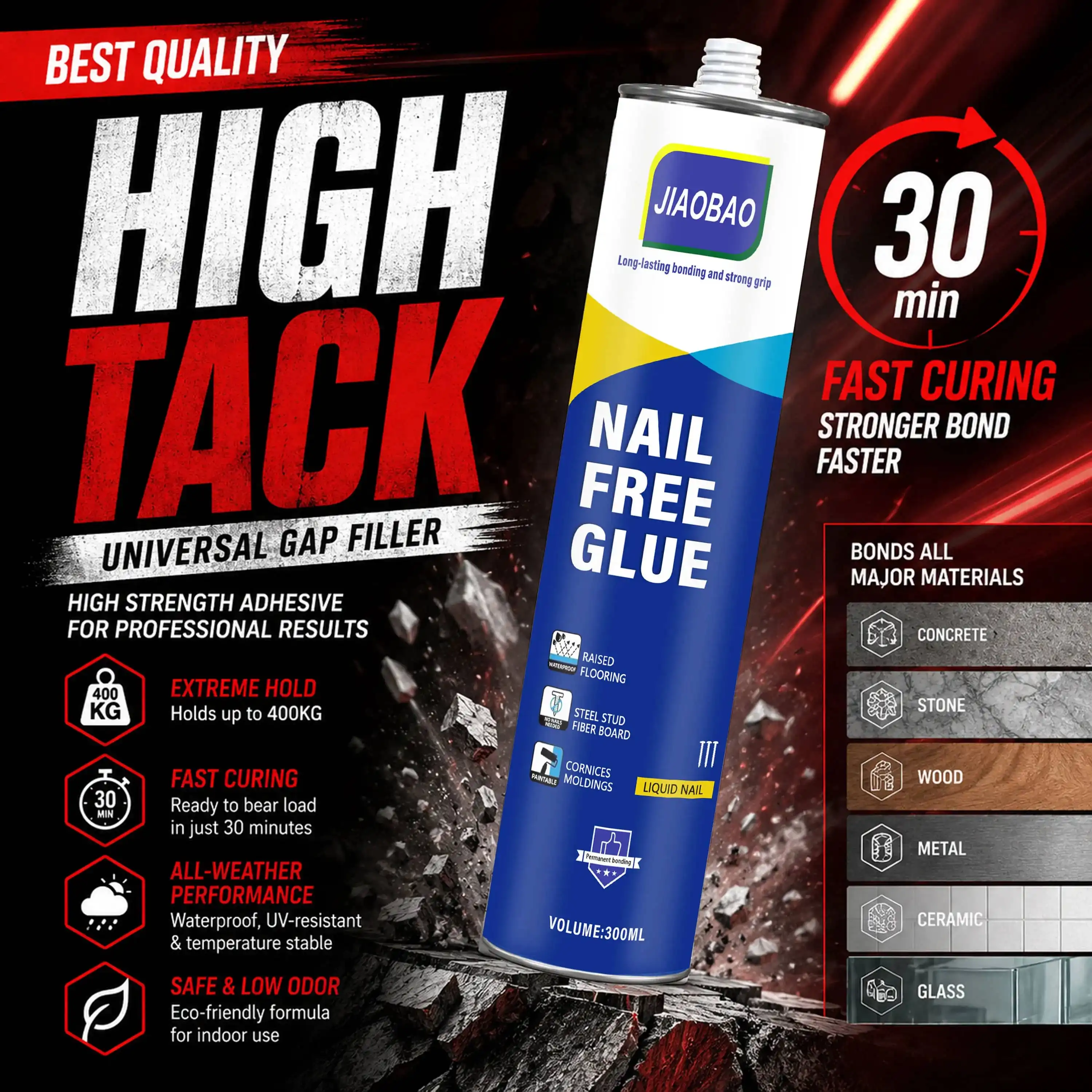
Temperature resistance goes from -40°C to 80°C, so it can be used in places with harsh climates, from industrial buildings in the north to business complexes in the equator. Under normal conditions (23°C, 50% relative humidity), the glue hardens at a rate of 2.5 mm per 24 hours. After 20 minutes, the surface is no longer tacky. This healing profile lets you make instant changes to the position of the pieces while still making sure the structure stays strong and the project stays on schedule.
Adopting sticky glue technology changes how projects are done in many ways. Protecting the material is very important—drilling through big ceramic tiles or toughened glass panels could cause them to crack badly, which would cost a lot to fix. When adding decorative stone veneers or custom glass walls, where replacement materials may have long lead times or be hard to color match, adhesive application is especially important to keep the base continuous.
Measurably more work gets done with less effort. Putting up panels and using Heavy Duty Nail-Free Glue can be done faster by a two-person crew than by making test holes, putting in anchors, and tightening screws. Since the quick grab feature can support loads of up to 30 kg/cm² before the full cure, there is no need for temporary buffering. This sped-up installation cuts down on project time, which lowers labor costs and lets people move into the building earlier.
The vibration-damping features of the glue improve the sound quality. When installing HVAC ducts, the flexible bond absorbs vibrations that would otherwise pass through hard mechanical connections. This keeps occupied areas quieter. In the same way, furniture makers say that joints that are glued together with structural adhesives don't creak as much as joints that are put together with traditional dowels and screws.
When putting weather-resistant seals and structural glazing, curtain wall builders have to deal with some unique problems. Our glue sticks metal mullions to glass panels without affecting the thermal break that is built into current wall systems. The neutral fix keeps anodized metal finishes from getting oxidation stains, so the building's appearance stays nice for as long as it's used.
Stone processing plants use the glue to place heavy chunks of marble and granite onto metal frames so that there are no obvious fasteners. The gap-filling features can handle base irregularities of up to 3 mm, so you don't have to do time-consuming shimming operations. Custom furniture companies like how precise it is—using pneumatic dispensers to apply glue ensures a uniform bead thickness, which improves quality control compared to human fastening methods that can cause panels to warp and become too tight.
Electronics companies use the adhesive's ability to keep heat sinks stable and keep electricity from flowing between them and metal housings to attach them. The moisture-cure process keeps temperature-sensitive parts from getting damaged by the heat that epoxy systems need. When manufacturers of HVAC equipment seal the joints in ducts, they make airtight connections that improve energy efficiency scores and can handle condensation and changes in temperature.
Mechanical rivets provide instant maximum strength, but they also focus stress at point contacts, which makes them easy to break when loaded and unloaded repeatedly. Heavy Duty Nail-Free Glue spreads stress over the whole bond area, making it more resistant to wear. This is very important for uses that will be vibrating or expanding and contracting many times. However, adhesives need time to cure and prepare the surface, which means that work processes need to be changed compared to screw fixing, which works right away.
Construction adhesives, such as polyurethane-based products, have a strong initial stickiness but often harden into rigid blocks that aren't good for parts that move in different directions. Our changed silane mixture stays flexible after it cures, and it can handle material expansion factors from 12×10⁻⁶/°C for concrete to 23×10⁻⁶/°C for aluminum without bond line cracking. In curtain wall uses, where glass and metal parts grow at different rates when heated by the sun, this flexibility is very important.
Epoxy glue have better tensile strength, but they need to be mixed exactly right and give off amine vapors when they fix. The one-part ready-to-use style gets rid of mixing mistakes and makes supplies easier to manage. Silicone sealants keep out the weather, but they don't usually have the structural load-bearing ability needed for installing heavy panels. Our glue, on the other hand, does both sealing and gluing in one product.
Adhesives need to be able to stick to a range of substrates. Our mixture chemically bonds to porous materials like concrete and gypsum board by absorbing them and connecting them mechanically. On the other hand, hydroxyl groups react with oxide layers on steel and aluminum. The glue can wet surfaces and fix without reactive sites, which is good for non-porous materials like PVC and powder-coated metal.
The ability to match colors makes building uses better. Standard formulations in white, black, and gray go well with most building materials. For high-visibility installs, special color matching to RAL or Pantone standards makes sure that bond lines are unnoticeable. This is often what determines the choice of glue for high-end hotel fit-outs and store settings where visible fasteners ruin the design.
To find skilled adhesive makers, you need to look at both their technical and business skills. ISO certification shows that a company has quality management systems in place, and meeting ASTM C557 and ISO 11600 standards proves that a product works as it should. Instead of depending only on what the datasheet says, get third-party test results for Heavy Duty Nail-Free Glue that show the tensile strength, weathering resistance, and low-temperature flexibility.
An estimate of production ability keeps supplies from being interrupted during the busiest parts of a project. Manufacturers with various production lines can handle pressing orders and make sure that colors are matched consistently from batch to batch, which is important when architectural requirements call for exact aesthetic coordination. Lead times of one to two weeks allow for just-in-time inventory management, which lowers the cost of storage while keeping the building plan flexible.
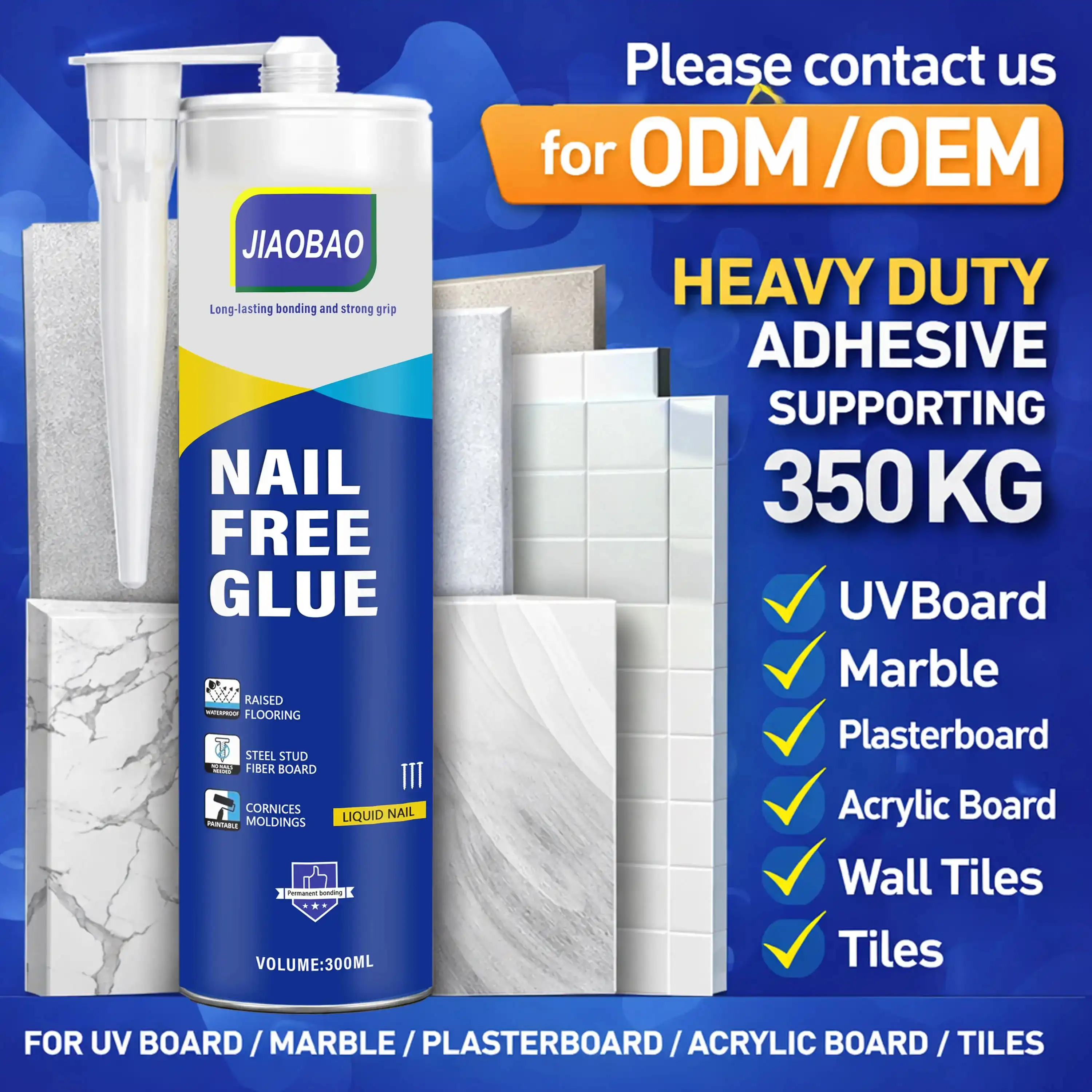
Customization gives you an edge over your competitors. Distributors can private-label goods with OEM services, which helps build brand value in regional markets. Through ODM agreements, formulation changes can be made to fit the environment or substrate mixtures that are common in target areas. Different application scales and dispensing tools can use the different 300ml and 600ml amounts that come in sausage and cartridge forms.
Comparing unit prices only gives you part of the cash picture. Volume prices have a big effect on the economics of a project. For example, buying pallet numbers directly from makers like Jiaobao lowers the cost per unit by 15–25% compared to buying through retail outlets. When buying things from other countries, freight issues are especially important. Container load management and flexible shipping terms (FOB, CIF) affect landing costs.
Values of technical help often go beyond short-term price differences. When suppliers offer on-site application training, installation mistakes that waste materials and require extra work are less likely to happen. Costly delays can be avoided by getting help with troubleshooting while a job is being done. Warranty terms that let you get a new product if there are any quality problems within 12 months protect buying budgets from the risk of getting a bad batch.
How strong a bond is depends on how clean and rough the surface is. Use isopropyl alcohol or acetone to get rid of dust, oils, and release agents. Let the solvent evaporate completely before applying the Heavy Duty Nail-Free Glue. Priming is helpful for porous materials like concrete because it seals the pores and stops the glue from absorbing too much, which starves the bond line. To improve mechanical fitting, smooth, non-porous surfaces may need to be lightly roughened with 80-grit sandpaper.
Temperature of the substrate affects how fast the bond forms and how strong it is in the end. Applying the glue between 5°C and 35°C makes sure it flows and wets properly. Substrates that are colder than 5°C slow the movement of water, which makes repair times longer and early strength growth slower. On the other hand, temperatures above 35°C speed up surface cracking, which could trap chemicals and make holes in the bond that weaken it.
Pneumatic caulking guns provide uniform bead extrusion pressure, which speeds up the application process and keeps operators from getting tired during large-scale installs. Triangular or wavy bead patterns make the best use of material while still covering enough. Continuous beads use 30% more glue than intermittent patterns without increasing strength by the same amount. The height of the beads should match the expected gap width, which is usually between 3 and 5 mm for general building uses.
Managing assembly time strikes a balance between skin formation and placement freedom. The roughly 20-minute tack-free time lets you fix and line the panels, but going beyond this window weakens the bond because surface cure stops molecules from moving between layers. Firmly press joined parts together to squeeze the glue bead and increase the area that contacts the base. Avoid over-compressing, which forces the glue past the edges of the panel and makes cleanup difficult and wasteful.
Using quality control methods protects the results of a project. Before agreeing to a full-scale installation, use measured force gauges to do pull tests on representative samples to make sure the minimum adhesive shear strength is met. Peel tests show how well two surfaces stick together. If the adhesive layer fails, it means the bonding is good, and if the base and adhesive separate, it means the surface wasn't prepared well and needs to be fixed during the process.
Environmental training tests prove that something will last for a long time. Test bonded samples by changing the temperature between -20°C and 60°C 100 times, and check the bond's stability after each test. In just a few weeks, UV exposure rooms can mimic years of exposure to sunlight, finding signs of possible damage before they happen in the field. These steps of proof are especially helpful when working with new mixtures of substrates or in harsh environments.
Heavy Duty Nail-Free Glue changes the way building and manufacturing are done by bonding structures together without damaging the base, making installation faster, and better distributing stress than mechanical fasteners. The changed silane polymer chemistry makes a lot of different materials work with it, protects it from the environment, and gives it elastic qualities that let it bend and move with heat and shaking. To apply something successfully, you need to know the technical details, prepare the surface correctly, and choose a supplier in a way that balances cost, ability to customize, and expert support. When purchasing glue solutions, people in charge should put performance data that has been checked, production capacity, and application training at the top of their list. This will help them get the most out of the project and reduce the risks that come with it.
A: Modified silane polymer glue provide structural bonding that works well for most building and assembly tasks, especially when drilling hurts the base or makes sealing less effective. Building rules still say that mechanical fasteners are needed for some high-reliability structural links, though. Most of the time, hybrid methods work best, with adhesives distributing stress and few mechanical fasteners for regulatory compliance and extra load routes.
A: At 23°C and 50% relative humidity, the surface is no longer tacky in about 20 minutes, allowing for instant handling. The glue hardens at a rate of 2.5 mm per 24 hours, which means that a 5 mm bead takes about 48 hours to fully harden. However, functional strength that is good enough for mild loads develops in 24 hours for most uses. Low humidity and cold temperatures make cure times longer, while high humidity and warm temps shorten cure times.
A: Standard PPE, like nitrile gloves and safety glasses, keeps skin and eye contact from happening, even though our neutral-cure mixture doesn't make any corrosive leftovers. Even if the VOC levels are low, make sure that enclosed areas have enough air flow. Uncured glue should be kept away from food and thrown away in a way that follows the rules in your area. The finished rubber doesn't pose many health risks and meets standards for low-emission building materials.
In the 13 years that Jiaobao has been in the structure adhesive business, they have helped curtain wall builders, furniture makers, and industrial assembly operations all over the world. Our seller of modified silane polymer Heavy Duty Nail-Free Glue guarantees stable batch quality and backs it up with ISO certification. They can also match colors to RAL standards, which makes sure they fit right into your design needs. We keep production lead times between one and two weeks and offer flexible operations by sea or land to meet your project deadlines without adding to your inventory.
During the review and implementation steps of your product, our technical team helps you with application training and fixing problems. Quality assurance doesn't stop when the product is delivered; we offer substitute warranties for any performance problems that happen within the product's 12-month shelf life. You can use our OEM/ODM services to get exactly what you need, whether it's standard 300ml cartridges for repair work or bulk 600ml sausages for big building jobs. You can email our team at dorashen@cnjiaobao.com to talk about bulk pricing, technical details, and sample requests that will help you figure out if our Heavy Duty Nail-Free Glue maker can help you with your next project.
1. Zhang, L., & Chen, M. (2021). Advanced Polymer Adhesives in Modern Construction: Chemistry and Applications. Building Materials Research Institute Press.
2. Thompson, R. (2020). "Comparative Analysis of Mechanical Fastening Versus Adhesive Bonding in Curtain Wall Systems." Journal of Architectural Engineering, 26(3), 112-125.
3. Williams, K., & Patel, S. (2022). Silane-Modified Polymer Technology: Formulation Science and Performance Characteristics. Industrial Adhesives Consortium.
4. Martinez, J. (2019). "Stress Distribution in Bonded Joints: Finite Element Analysis of Adhesive Versus Mechanical Fastening." International Journal of Structural Integrity, 15(4), 301-318.
5. European Sealant Association. (2023). Technical Guidelines for Structural Glazing Adhesives: Standards and Best Practices. ESA Publications.
6. Anderson, P., & Liu, H. (2020). "Long-Term Durability of Moisture-Cure Silane Adhesives in Building Envelope Applications." Construction and Building Materials, 254, 119-134.
November 16,2023
Enterprise Name
The sealant has very strong adhesion and performs well even on glass and aluminum. After curing, it remains flexible and shows no cracking. Perfect for our facade projects.
November 16,2023
Enterprise Name
Stable quality across batches. Our customers especially like the smooth application and consistent extrusion. It helps reduce installation time on site.
November 16,2023
Enterprise Name
I used it for bathroom sealing. Excellent waterproof performance and no mold issues so far. It's been holding up very well in humid conditions.
November 16,2023
Enterprise Name
The neutral silicone works well on sensitive materials without corrosion. Very suitable for industrial applications requiring stable performance.
_1779347426672.webp)