November 16,2023
Enterprise Name
The sealant has very strong adhesion and performs well even on glass and aluminum. After curing, it remains flexible and shows no cracking. Perfect for our facade projects.
Aug 6, 2026
When selecting silicone sealants for glass manufacturing and display cabinet assembly, packaging plays a surprisingly pivotal role in ensuring product performance and project efficiency. Silicone sealants—particularly neutral cure clear silicone sealant formulations used in transparent bonding applications—arrive in various packaging formats including cartridges, sausages, tubes, and bulk containers.
Each format influences how the sealant maintains its chemical stability, how easily workers can apply it, and ultimately how cost-effective your procurement becomes. Understanding these options helps production managers like you optimize application workflows while protecting the transparent finish and non-corrosive properties critical for aquarium seals and glass display cases.
The kind of packing you pick has a direct effect on how long clear silicone adhesives used in glass production last and how well they stick to glass. There are several different types of modern packaging for silicone sealant, and each one is designed to keep the material's curing chemistry and application consistency.
The most common shape for small to medium-sized glass bonding processes is cartridge packing. These stiff tubes, which are usually made of polyethylene or composite materials, can hold anywhere from 280ml to 600ml and are compatible with normal caulking guns. At Jiaobao, we sell 300ml and 600ml cartridges of neutral cure clear silicone sealant that is made just for manufacturers of display cabinets.
The rigid structure of the cartridge stops air from getting in, which could cause the curing to start too soon. The threaded nozzle connection lets you precisely control the beads during glass-to-glass bonding. Assembling lines where workers move between different display case units all day should use cartridges because they are the perfect size and weight for the job.
Sausage packaging, which is also known as foil packs or soft packs, is made up of multi-layer metal foil tubes that are sealed on both sides. These tubes come in sizes of 300ml, 600ml, and 1000ml. This format needs pneumatic dispensing equipment that works with it, but it has big benefits for glass manufacturers who have to keep making things all the time. The barrier qualities of the flexible metal construction against moisture and oxygen are better than those of hard plastics.
This means that when kept properly, the product will last for 12 months. We've seen glass fabricators working on more than 50 aquarium units every day. They like sausage packs because they get rid of the rigid waste of empty cartridges and cut the volume of the packaging by about 60%, which lowers the cost of disposal and the amount of space needed for storage.
Smaller squeeze tubes, between 50ml and 100ml, are used for specific repair and upkeep tasks instead of main production. These laminate or aluminum tubes are great for touch-up work on display cabinets or small-batch custom glass installations that only need a small amount of sealant. The squeeze-tube style doesn't need dispensing tools, but it's harder to make sure that the beads are all the same size compared to container systems. Most glass makers keep these on hand so that quality control teams can fix any small bonding problems that are found during the final inspection process.
Large makers or OEM partners who make a lot of standard glass goods can buy pails and drums with 20L to 200L of sealant in them. For this type of packing, you need special air pumping systems, and it's hard to move around in a way that's good for glass shops with 20 to 100 workers. When you buy in bulk, though, the price per unit drops by a lot—often 40–50% compared to the price of a cartridge. Manufacturers need to carefully consider whether the monthly demand is high enough to justify the cost of the equipment and the shorter use period. This is because opened bulk bins have a shorter shelf life, even in controlled storage conditions.
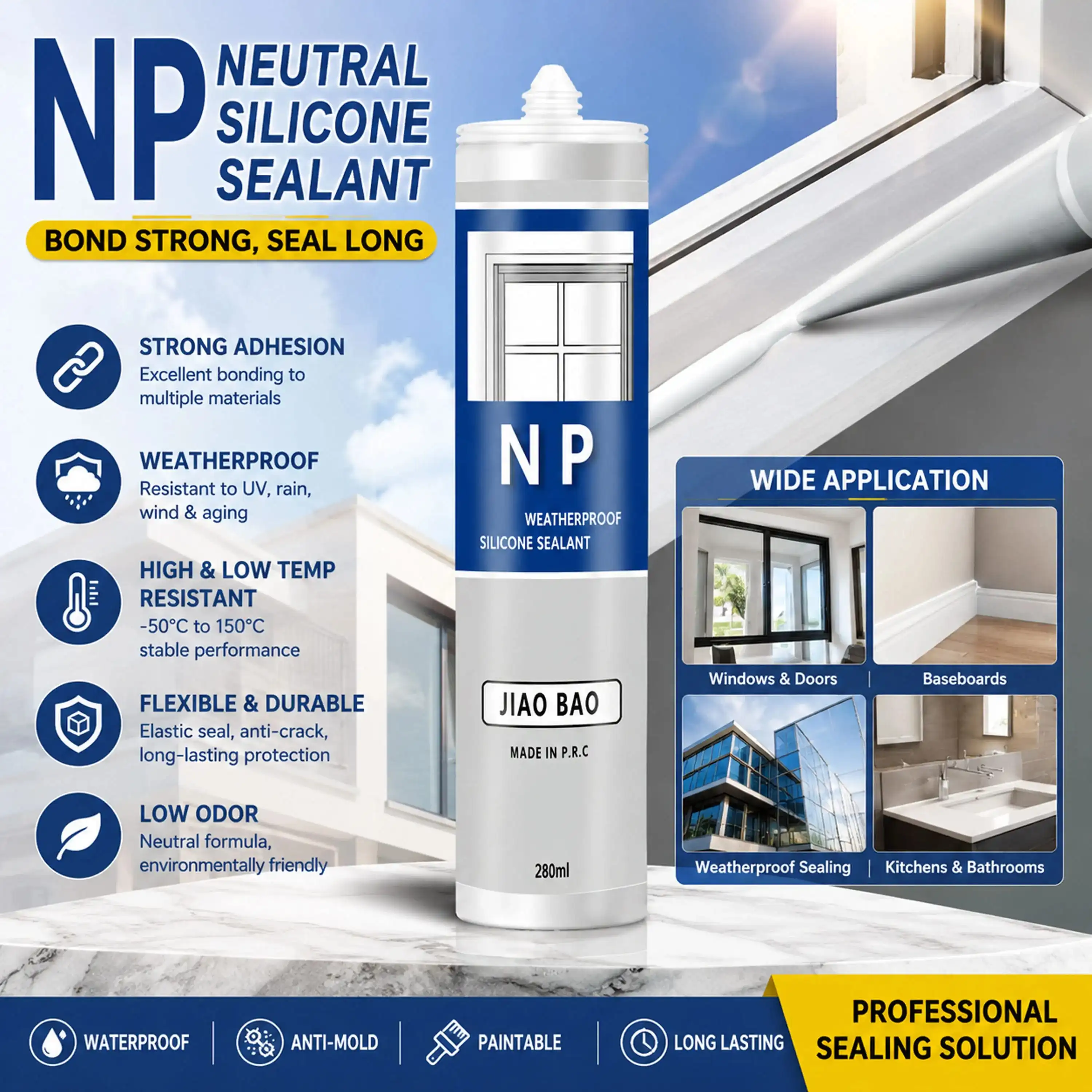
There's more to choosing the right package than just figuring out the amount. When choosing packaging, production managers need to think about how it will work with their unique working setting and application needs.
Which packaging format is most efficient for you depends on the size and scope of your glass fabrication projects. Smaller display cabinet shops that make 10 to 30 units a week often find that 300ml cartridges are the best size for them. Depending on the joint measurements, each cartridge can seal 4-6 medium-sized display cases. Larger aquarium companies that put together more than 100 tanks every day can benefit from switching to 600ml sausage packs and pneumatic dispensing systems.
These systems make it easier for workers to do repetitive sealing tasks and keep the bead consistent. Jiaobao's technical team helps glass makers figure out how much sealant they need each month based on the mix of products they make and the specs of the joints. They then suggest packing that reduces both the cost per unit and the amount of waste that happens during application.
The type of packaging you use has a direct effect on how long your neutral cure clear silicone sealant stays flexible before you open it. Both cartridges and sausages keep out the wetness that causes premature curing, but the success of their barriers varies. Our tests show that sausage packaging that is stored properly keeps its full curing power for 12 months. On the other hand, lower-quality cartridges may start to lose their viscosity after 9 to 10 months if they are stored in a warehouse where the temperature changes often.
Manufacturers of glass should use first-in, first-out inventory movement and keep all types of packing in climate-controlled areas that are 5°C to 27°C. We put production date codes on all of our packaging to help buying teams keep track of how old it is and make sure that the sealing works at its best when it gets to your production floor.
The type of packaging has a big effect on how much it costs to ship and how quickly it can be handled throughout your supply chain. When compared to rigid cartridges of the same size, sausage packs make packaging lighter by about 30%. This means that shipping containers from our Shandong facility to international ports costs less. When glass companies regularly import goods, they should figure out the total landing cost, which should include the weight of the box, not just the price per unit of sealant.
Cartridges stack more reliably in storage racks and can handle rough handling better, which lowers the number of damaged items that get sent within the United States. We offer flexible logistics support through both sea and land transport options. This way, we can help you find the best combination of packaging and shipping that gives you the best overall value for your location and order frequency.

There are pros and cons to each type of packing that affect your overall cost of ownership and the way you run your business. To make smart choices, you need to know about these practical differences in your production setting.
Cartridge Advantages and Limitations
Cartridges are very flexible and easy to use. Any worker can load one into a manual caulking gun and start using it right away, with little or no training. This packaging can be used with a range of applicator tools, from simple manual guns to battery-powered dispensers, so you can choose the right one for your needs. The rigid structure keeps the product's integrity throughout the supply chain by preventing accidental punctures during storage and transport.
However, cartridges produce more plastic trash per liter of sealant than other forms, and the cost per unit is usually 15 to 20 percent higher than the same-sized sausages. Glass companies that work in places with strict rules about plastic waste should think about how much it will cost to get rid of the cartridges they buy.
Sausage Pack Advantages and Limitations
Sausage packing has the least amount of waste and the best protection against moisture, so it's the best choice for work settings that want to save money and keep food fresh for a long time. As the neutral cure clear silicone sealant is released, the foil structure falls apart. This keeps air from getting into the leftover product and extends the time it can be used after being opened. Because pneumatic dispensers let you control the bead more precisely than manual guns, our glass production partners say that moving from cartridges to sausages cuts material waste by 8–12%.
The main problem is that you have to pay a lot of money up front for the tools. Depending on their features, pneumatic delivery systems that work with sausage packs cost $300 to $800. Smaller shops need to figure out if the amount of sealant they use every month is high enough to justify this capital investment or if they can keep using cheaper cartridge applicators.
Sustainability Considerations in Packaging Selection
Environmental responsibility is becoming more important in buying decisions as retail partners and government agencies put pressure on glass manufacturers to cut down on packaging waste. Aluminum sausages are easier to recycle than composite cartridges, which are made of different materials that are hard to separate. We've seen that display cabinet makers that supply big U.S. stores now require their suppliers to use recyclable packing. This makes sausage format compliance a business necessity rather than a choice.
Jiaobao is working hard to come up with packaging solutions that meet both performance and environmental goals. For example, we are looking into using post-consumer recycled content in the production of cartridges. To back up claims that packaging materials can be recycled, procurement teams should ask suppliers for proof of this information. This will help them with their corporate sustainability reporting.

When you buy neutral cure clear silicone sealants strategically, you need to do more than just compare unit prices from different sellers. Experienced production managers look at the whole system of packing and products to keep costs low and application success high.
When you're looking at new sealant providers, you should ask for detailed information about all of their packaging options and how they can make things fit your needs. Jiaobao keeps its packing choices open because glass makers have different needs. For example, a workshop that makes special museum display cases has very different needs than a factory that puts together standard fish tanks.
Ask potential suppliers what the minimum order quantities are for different types of packaging. Some manufacturers make the minimums too high for less common sizes, making them impossible to meet. Smaller glass fabricators can use our MOQ structure to test new products. Samples come in both 300ml and 600ml sizes, so you can see how the transparency, adhesion, and curing work in your real production environment before committing to larger orders.
Don't say what kind of packaging you want or place a big order before trying out samples in the exact packaging you want to buy. Sealant can be dispensed in slightly different ways in cartridge and sausage formats, even if the formulations are the same. This is because air exposure and pressure application during dispensing are different. Ask for samples along with all the scientific information, like Material Safety Data Sheets and test reports that confirm qualities like maintaining clarity, being resistant to UV light, and sticking well to glass surfaces.
We give glass manufacturers detailed application guidelines for each type of packaging, including the best nozzle sizes and dispensing pressures for making the best bead profiles on a range of joint configurations. When you choose the wrong packaging for your application equipment and worker skill levels, you could make mistakes that cost a lot of money. This technical support helps you avoid those mistakes.
By building strategic relationships with your suppliers, you can customize the packaging and get big deals that make your purchasing much more cost-effective. Manufacturers of glass whose monthly production stays the same should talk to their suppliers about scheduled delivery programs that balance the costs of keeping inventory with the savings that come from buying in bulk. We can help you with production planning so that you can figure out the best order numbers and shipping schedules based on your storage space and shelf-life restrictions.
By committing to certain package forms, procurement teams can get better prices. For example, putting all of your stock into 600ml sausages instead of splitting it up between different sizes makes suppliers more efficient, which cuts costs. Communication is still very important during this process. Telling providers like Jiaobao about your expected growth and regular demand patterns helps them set up production schedules that meet your shipping needs while also making our factories more efficient.
The way glass bonding neutral cure clear silicone sealants are packaged is always changing because of new technologies, changes in the environment, and shifting dynamics in the supply chain. Forward-thinking procurement professionals keep an eye on these changes to stay ahead of the competition.
New types of packing have digital tracking and dispensing optimization features that make it easier to keep track of supplies and make sure that applications are always the same. More and more people are interested in packaging that has NFC chips or QR codes built in that link to application examples, technical specs, and batch-specific quality data. These technologies help glass makers keep track of their materials throughout the whole production process, which is very important for business projects that need proof of all the materials used.
In the future, dispensing systems might be able to connect to packing and change the pressure and flow rate automatically based on the viscosity of the sealant and the temperature of the environment. This would make it easier for operators to get consistent clear bead profiles. To get early-adopter benefits in application efficiency and quality control, procurement teams should work with innovative suppliers that are looking into these technologies.
Regulatory requirements and corporate responsibility commitments are speeding up the move toward packaging materials that are better for the environment. The packaging waste directives of the European Union and similar new state-level rules in the U.S. will have a bigger impact on the types of packaging that can still work in different markets. When glass companies ship finished display cabinets or tanks, they need to think about whether the sealant packaging choices they make cause problems in the markets where the products are sold.
Jiaobao is spending money on research into packaging materials to prepare for these changes in regulations. We're looking for ways to keep the important barrier properties and shelf-life protection while also making it easier to recycle at the end of its useful life. When picking a long-term supplier, procurement workers should think about how regulations will change over time. They should choose partners who are seriously committed to sustainable packaging growth over those who offer only basic compliance.
Recent problems in global supply chains have shown how fragile supply chains for packaging materials are. This is especially true for specialty barrier films and aluminum foil used to make sausages. In 2021 and 2022, when packaging materials were in short supply, it made it harder for glass manufacturers to get sealants, which caused lead times to be longer. Because of this experience, procurement strategies are moving toward using a wider range of suppliers and buying from local areas when they are possible.
We keep working ties with a number of providers of packaging materials in different parts of the world so that we are less likely to be affected by problems in one area. Our production wait time of just one to two weeks shows how strong our supply chain is, which lets us keep up our constant delivery performance even when the market is unstable. For long-term dependability, procurement teams should look at more than just a supplier's current shipping performance. They should also look at their packing supply chain structure and how they plan for what to do if something goes wrong.
The type of packaging you choose for neutral cure clear silicone sealant has a big effect on how well they work, how quickly you can use them, and how much they cost overall. For smaller businesses, cartridges are flexible and easy to use, while sausage packs save money and protect food better for longer for larger businesses.
Knowing your specific production scale, equipment compatibility, and storage conditions will help you make the best packaging choices that will protect the important properties of being clear and not corroding that are needed for aquariums and display cabinets. As rules about the environment get stricter and the way the supply chain works changes, working with suppliers who offer flexible packaging options and a commitment to sustainability will give your glass manufacturing business a long-term edge over the competition.
When it comes to protecting sausages from moisture and oxygen, multi-layer aluminum foil packaging is better than plastic cartridges. If stored properly, it can usually keep its full curing performance for 12 months. The foil structure stops air from getting in, which can cause curing to happen too quickly and changes in viscosity. For the longest shelf life, both formats need to be kept in climate-controlled spaces that are between 5°C and 27°C. No matter what kind of package it comes in, you should always check the production date codes and use first-in, first-out inventory turnover.
For sausage packs to work, you need special air dispensing equipment that is made to work with flexible foil wrapping. Standard manual caulking guns are made to hold hard cartridges and can't hold or pressurize sausage packs properly. Pneumatic systems cost between $300 and $800 for equipment, depending on its features and capacity. Manufacturers of glass that process large amounts of glass every day usually get their money back within 6 to 12 months thanks to the less wasteful use of materials and more consistent application that air systems provide.
Find out how much sealant you use each month by multiplying your average production volume by the amount of sealant each unit needs. When monthly consumption goes over about 60 to 80 liters, bulk packaging becomes cost-effective. However, this level can change depending on your storage space and ability to handle shelf life. Think about how much the equipment for pneumatic pumping systems costs and how much product could be wasted if bulk containers are opened before they go bad. Procurement teams should also think about how much storage room they'll need and whether the monthly demand is stable enough to justify the large commitment that bulk buying requires.
With more than 13 years of experience, Jiaobao has been making neutral cure clear silicone sealant that is specially made for use with clear glass. During years of use, our goods stay very clear without turning yellow, stick well to glass and metal, and don't break down when exposed to UV light. We offer 300ml and 600ml sizes in cartridge or sausage shapes, and they have a 12-month shelf life. Our products are ISO certified and have been through a lot of quality testing. As a provider of neutral cure clear silicone sealant that is dedicated to quick service, we offer production lead times of one to two weeks and full OEM/ODM customization to meet the needs of your project.
Our expert team helps you make the best use of your applications to improve your production processes. Our flexible logistics can handle both big container shipments and smaller trial orders. Email us at dorashen@cnjiaobao.com to talk about your glass fabrication needs and find out how our packing choices and product performance can help you make more products and make them better.
1. American Architectural Manufacturers Association. (2019). Sealant Application and Joint Design Guidelines for Glass Fabrication. Chicago: AAMA Publications.
2. Chen, W., & Rodriguez, M. (2021). Packaging Materials Impact on Silicone Sealant Shelf Life and Curing Performance. Journal of Adhesion Science and Technology, 35(8), 892-911.
3. International Organization for Standardization. (2020). ISO 11600: Building Construction - Jointing Products - Classification and Requirements for Sealants. Geneva: ISO Standards.
4. National Glass Association. (2022). Best Practices for Procurement and Storage of Construction Sealants. Vienna: NGA Technical Publications.
5. Sustainable Packaging Coalition. (2023). Adhesives and Sealants Packaging: Environmental Impact Assessment and Recycling Guidelines. Charlottesville: SPC Research Reports.
6. Williams, J.K. (2020). Modern Dispensing Systems for Single-Component Sealants: Equipment Selection and Application Optimization. Sealant Technology Review, 14(3), 45-62.

November 16,2023
Enterprise Name
The sealant has very strong adhesion and performs well even on glass and aluminum. After curing, it remains flexible and shows no cracking. Perfect for our facade projects.
November 16,2023
Enterprise Name
Stable quality across batches. Our customers especially like the smooth application and consistent extrusion. It helps reduce installation time on site.
November 16,2023
Enterprise Name
I used it for bathroom sealing. Excellent waterproof performance and no mold issues so far. It's been holding up very well in humid conditions.
November 16,2023
Enterprise Name
The neutral silicone works well on sensitive materials without corrosion. Very suitable for industrial applications requiring stable performance.
_1779347426672.webp)