November 16,2023
Enterprise Name
The sealant has very strong adhesion and performs well even on glass and aluminum. After curing, it remains flexible and shows no cracking. Perfect for our facade projects.
Aug 5, 2026
Neutral silicone sealants bond better because they cure without releasing corrosive acidic compounds, allowing safe adhesion to sensitive materials like metals, painted surfaces, and electronic components. The NP Silicone Sealant Non-Corrosive Type employs an alcohol-based curing mechanism that forms strong molecular bonds across diverse substrates without causing oxidation or degradation. This chemistry delivers consistent adhesion strength while maintaining flexibility—critical for joints experiencing thermal expansion or vibration. The absence of acetic acid byproducts also means zero risk of metal corrosion or contact contamination in precision assemblies.
There is a special group of moisture-curing polymers called neutral cure silicone seals that are meant to fix the problems with acid-cure goods. When these sealants are exposed to humidity in the air, they go through a crosslinking process that releases alcohol molecules instead of acetic acid. This makes them compatible with materials that are prone to corrosion.
Alkoxy-functional silanes combine with water vapor to make siloxane networks, which are what neutral cure products are made of. Unlike acetoxy-cure variants, which give off acidic vapors that can tarnish copper and damage zinc coatings, neutral variants stay pH-neutral while they cure. This quality is very important when covering metal window frames, stainless steel panels, or painted building parts, since even small amounts of chemical damage can damage the surface.
Modern neutral sealant mixtures have silane coupling agents that connect the polymer matrix chemically to the substrate surfaces. The hydroxyl groups on glass, ceramics, and oxidized metals form covalent bonds with these promoters. This makes adhesion strengths that are often higher than 0.7 MPa. The managed cure rate—the surface is tack-free in 30 minutes and fully cures over 7–14 days—allows enough time for molecules to penetrate into the micro-textures of the substrate without skin forming too quickly, which could trap liquids or weaken the depth cure.
Neutral silicone sealants are very flexible, with stretch values above 400%. This means that they can handle up to 25% joint movement without breaking apart. A Shore A hardness of 30 is the best balance between supporting the structure and letting it stretch again. This keeps stress from building up at bond lines during repeated loading. Operating temperature ranges from -50℃ to +150℃ ensure stable performance in harsh climates. Built-in UV protection stops polymer breakdown that leads to chalking or breaking when exposed to UV light outside.
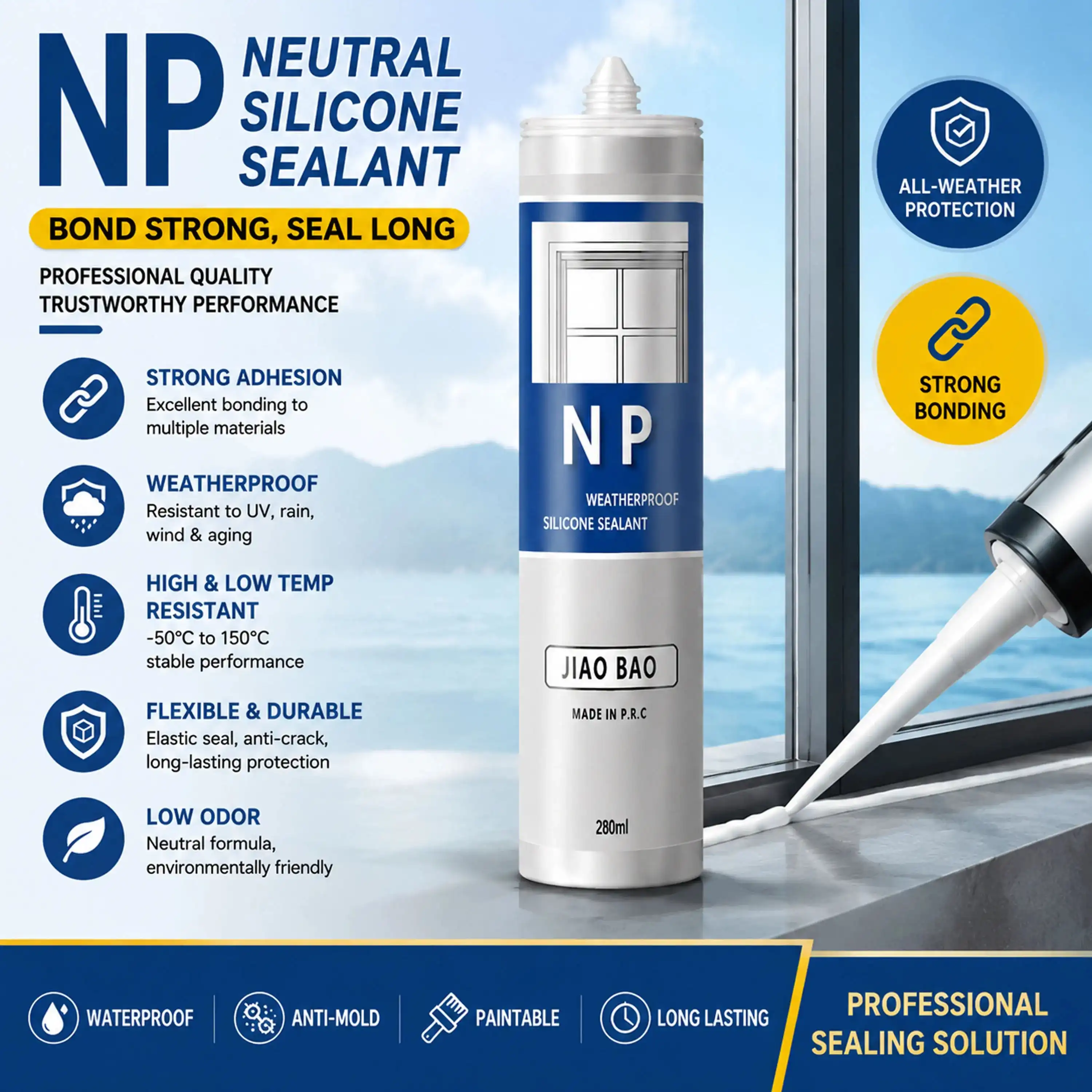
When engineering teams look at sealing options for important uses, it's very important to know how different chemicals work under real-world stresses. Neutral fix silicones are clearly better than other methods in a number of important ways.
Acetoxy-cure silicones harden quickly and use cheaper materials, but when they release acetic acid, they can damage metal and electronic parts. Acid fumes can damage solder joints and reflective coats in LED lighting units, causing them to fail early. Neutral formulations get rid of this risk completely, which is why they are the only way to seal PCB enclosures and keep siloxane from getting on relay contacts. The NP Silicone Sealant Non-Corrosive Type specifically addresses these issues by keeping a volume resistance higher than 1×10¹⁴ Ω·cm. This makes sure that electrical protection stays intact in high-voltage settings.
Acrylic latex seals can be painted on and are easy to clean up, but they can't move with the joint or stand up to the weather like dynamic joints do. Even though polyurethane seals are very resistant to wear and tear, they can still be damaged by UV light and break down when they get wet. Neutral silicones keep their shape and stickiness even after decades of being exposed to the elements. Studies in the field have shown that they can last for more than 20 years in curtain wall installations. Because they last longer, facility managers who are in charge of many buildings will have lower total costs of ownership and fewer upkeep rounds.
When choosing a sealant, the decision matrix needs to take into account how fast it cures, how well it works with the substrate, how much the joint is expected to move, and the weather. Neutral silicones can be mixed with aluminum oxide fillers to make them thermally conductive up to 0.8 W/m·K while still being electrically insulating. This can be used in battery enclosures for cars. Low-modulus neutral sealants stop stress from moving to the edges of glass in construction windows. This lowers the risk of breaking in high-rise buildings that are subject to wind loads. When procurement workers know about these application-specific strengths, they can choose materials that give the best performance right away and stability over time.

Getting the strongest bond possible with neutral silicone sealants depends on how they are applied as much as the properties of the material itself. How long a joint lasts depends on how well the surface is prepared and how the environment is controlled while it cures.
For reliable adhesion, the substrate surfaces must be clean. Solvent wiping with isopropyl alcohol or methyl ethyl ketone is needed to get rid of oils, dust, release agents, and moisture barriers. For porous materials like natural stone or concrete, wire brushes should be used to remove surface dust. Only then should solvent cleaning be done. When bonding to plastics like polycarbonate or acrylic, make sure the two are compatible by applying a small amount of the adhesive to a test piece first. Some formulations may cause stress cracks in these materials. Neutral sealants are generally safe for sensitive plastics because they don't have any corrosive byproducts of curing. However, it is still a good idea to test each batch for quality control reasons.
When the joint sizes are right, the sealant works within its mechanical limits. It is thought that a width-to-depth ratio of 2:1 is best because it lets the sealant deform in shear rather than tension when the joint moves. In deep joints, backing rods or bond breakers should be put in place to control the depth of the sealant and stop three-sided adhesion, which makes it hard to move and can cause cohesive failure. The NP Silicone Sealant Non-Corrosive Type comes in both 300ml and 600ml cartridges, which make it easy to use standard pneumatic or battery-powered guns to dispense the product. Before skin starts to form, make sure the sealant is properly wet by working it in with your hands within 10 minutes of applying it.
Relative humidity between 40–60% and temperatures between 15–30℃ provide ideal drying conditions. Extremely dry conditions slow moisture-cure processes, while excessive humidity can cause surface bubbling. Cold temperatures stretch both skin-over and through-cure times, possibly needing longer joint protection periods. When sealing in controlled manufacturing settings, keeping constant climate conditions ensures batch-to-batch performance uniformity—a critical factor for quality-sensitive electronics manufacturing where production line reliability depends on predictable material behavior.
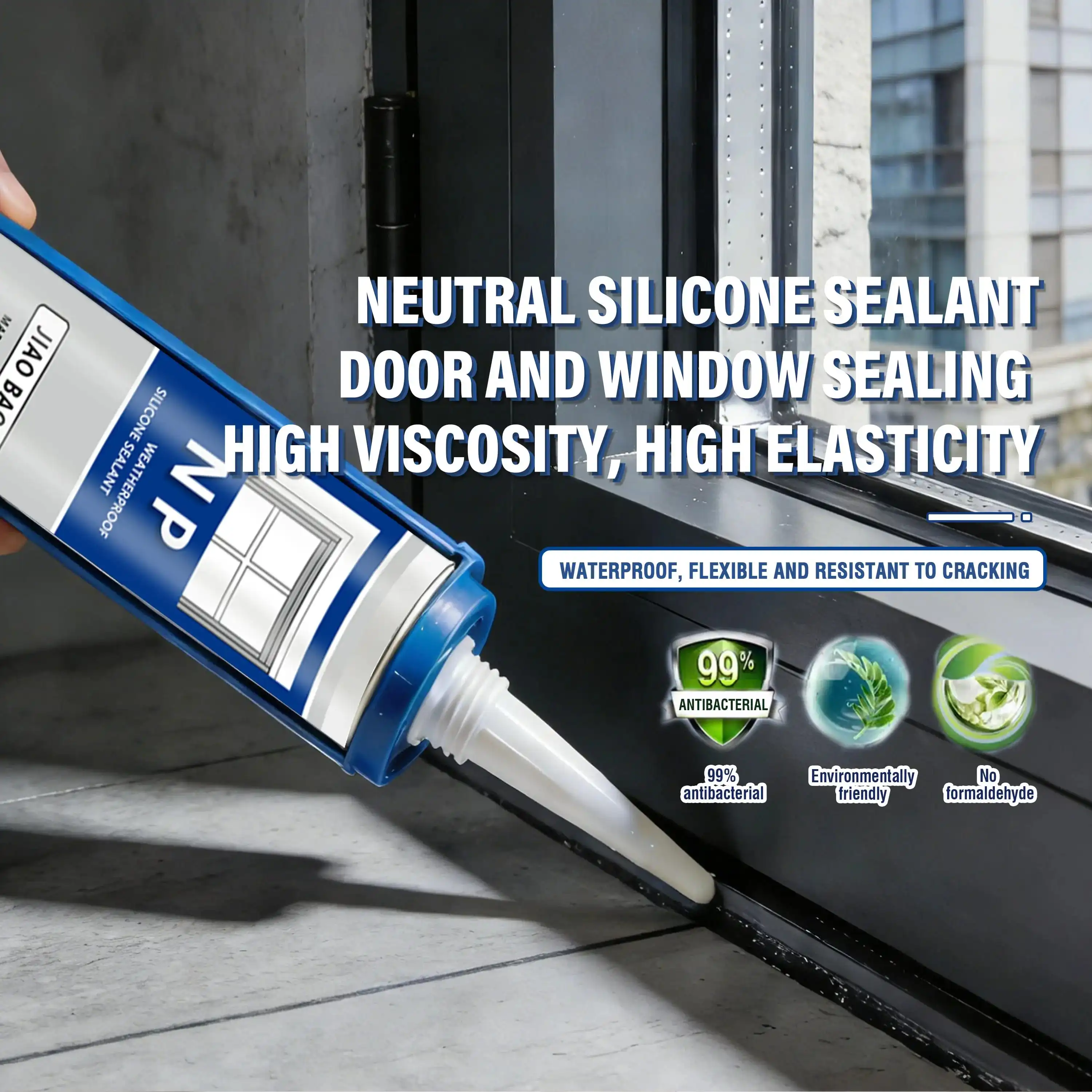
Strategic buying of industrial sealants requires more than price comparison; it demands evaluation of seller skills, product consistency, and long-term relationship potential. Electronics manufacturers operating with tight quality tolerances cannot afford batch variability or supply interruptions that halt production lines.
Reputable neutral silicone suppliers provide comprehensive technical documentation including material safety data sheets, test reports certifying ASTM C920 or ISO 11600 compliance, and RoHS/REACH declarations confirming regulatory conformance. Manufacturers with ISO 9001 quality management certification show orderly process control that lowers batch-to-batch difference. Companies like Shandong Jiaobao New Material Co., Ltd., operating since 2013 with over 13 years of manufacturing experience, have refined production protocols that deliver consistent rheological properties and cure characteristics essential for automated dispensing systems in high-volume assembly operations.
Bulk purchasers should evaluate whether 300ml cartridges or 600ml sausages better match their dispensing equipment and consumption rates. Cartridge packaging offers cleaner handling and decreased waste for smaller projects, while sausage forms prove more cheap for large-scale operations equipped with bulk dispensers. Understanding that neutral silicones keep a 12-month shelf life when kept below 27℃, buying teams can optimize order amounts to balance inventory costs against supply security. When a supplier offers both sea and land freight options, buyers can avoid delays in important materials arriving because of crowded ports or limited regional logistics.
Premium neutral silicones may have 15–20% higher unit prices than acid-cure alternatives, but when failure rates, rework costs, and guarantee claims are added in, the total cost equation changes dramatically. In the electronics industry, one batch of corrosion-damaged assemblies can cause warranty costs that are higher than the budget for buying sealant every year. These terrible risks can be avoided by buying tested non-corrosive formulations with proven electrical insulation properties. This protects both production efficiency and brand reputation in markets that value quality.
When you look at how neutral silicones solve specific technical problems and make measurable performance improvements in the real world, you can put theoretical material features into context.
When used in outdoor lighting systems, LED driver units are exposed to water, changing temperatures, and airborne pollutants. When you use NP Silicone Sealant Non-Corrosive Type to seal the joints in enclosures and pot electronic parts, it keeps the electronics waterproof and electrically insulated from -50°F to +150°F. After field failures were linked to corrosion at PCB mounting places, a streetlight maker switched from acid-cure to neutral formulations. This cut warranty claims by 73% in the next product generation. The neutral fix chemistry also got rid of the siloxane outgassing that had gotten into the relay contacts and ruined them. This made the switching element last longer than the 10-year design goal.
For high-rise building projects, sealants are needed that keep the structure weatherproof while also allowing for structural movement caused by wind loads and thermal expansion. A business tower project chose neutral silicone for the perimeter glazing joints after tests in the lab showed that it could move 25% without losing its adhesion. This was twice as good as rival polyurethane products. The project's five-year inspection showed that there were no joint failures and no stains on the natural stone cladding next to it. This proved that the choice of materials was good and eliminated the need for planned maintenance. When comparing projected reseal intervals, this durability saves more than $180,000 over the life of a single building.
Neutral silicones are used by automakers to seal lighting systems, connect electronic sensor housings, and gasket battery compartments in electric cars. The non-corrosive mixture stops galvanic corrosion at metal-to-metal contacts that aren't the same, which happens a lot in modern vehicles with aluminum bodies and steel supports. Thermal stability across the -40℃ to +120℃ automotive operating range protects the seal from freezing cold starts to heat under the hood. An electric vehicle (EV) maker chose neutral silicone to seal the battery pack after testing confirmed that it wouldn't interfere with voltage sensors. This was because standard construction-grade sealants had caused early prototypes to fail in a way that made it hard to accurately measure the state of charge.
Neutral silicone sealants stick better because they have chemical properties that stop the base from rusting and make the sealer flexible, weatherproof, and stable over time. These benefits are shown by the NP Silicone Sealant Non-Corrosive Type, which has been used successfully in protecting electronics, glazing buildings, and making cars. The best way to bond is to properly prepare the surface and apply the material. Strategic partnerships with suppliers ensure consistent materials and reliable supplies.
By preventing early failures and extending maintenance intervals, investing in neutral cure formulations that have been tested and proven to work lowers the overall cost of ownership. When engineering teams are looking for sealing solutions, knowing the pros and cons of neutral silicones helps them choose materials that meet both short-term performance needs and long-term durability expectations.
Most of the time, painting straight over silicone sealants doesn't work because the polymer releases silicone oils that make it impossible for the paint to stick. Hybrid MS polymer or polyurethane sealants should be used instead if you need a joint your can paint. You could also paint the areas around the sealant before putting it on to get the look you want without affecting the bond's strength.
It usually takes 10–20 minutes for neutral formulations to cure, which is a little longer than acid-cure products. But this slower initial fix lets the base wet better, which makes the long-term adhesion better. Full through-cure happens at a rate of 2–3 mm per 24 hours in normal conditions (23℃, 50% RH). This takes time for thick-section applications but results in a stronger bond in the end.
Standard neutral sealants, such as NP Silicone Sealant Non-Corrosive Type, are great at keeping out the weather. However, they are not the same as high-modulus structural glazing silicones that are certified to ASTM C1184. For structural uses that don't need mechanical fixings and need to hold glass weight, special formulas with higher tensile strength and modulus are needed. Before choosing materials for these important uses, you should always make sure that the product specs meet the load needs for the structure.
The standard 12-month shelf life can be kept by keeping storage temperatures below 27°C and keeping the area dry. Higher temperatures or being exposed to humidity can cause reactions inside sealed cylinders to start fixing too soon, which makes the material thicker and harder to dispense. Proper temperature control in the warehouse saves the investment in materials and makes sure that products have the same performance traits when they get to the production floor.
To get a steady supply of neutral silicone sealant, you need to work with manufacturers who can meet your needs in terms of production capacity, quality control, and quick customer service. Since 2013, Shandong Jiaobao New Material Co., Ltd. has been making professional-grade silicone sealants. They have become very good at making non-corrosive products that meet strict requirements in electronics and industry.
Our factories can get orders to you in one to two weeks, and they use ISO-certified quality control methods to make sure that each batch is the same, which is important for automated assembly operations. We can fully customize OEM/ODM products, making sure that formulations meet the exact needs of your applications in terms of thermal conductivity, flame resistance, or viscosity. We can work with your supply chain limits whether you run sites in the United States or another country because our logistics are flexible enough to handle both sea and land freight.
Contact our technical team at dorashen@cnjiaobao.com to talk about your NP Silicone Sealant Non-Corrosive Type needs. We'll send you samples to test for compatibility and work with your engineering team to find the best solution for your production environment.
1. Habenicht, G. (2009). Applied Adhesive Bonding in Science and Technology. Wiley-VCH Verlag GmbH & Co.
2. Cognard, P. (2006). Adhesives and Sealants: General Knowledge, Application Techniques, New Curing Techniques. Elsevier Science Ltd.
3. Plueddemann, E. P. (1991). Silane Coupling Agents. Plenum Press, New York.
4. ASTM International. (2020). ASTM C920: Standard Specification for Elastomeric Joint Sealants. West Conshohocken, PA.
5. Klosowski, J. M., & Smith, T. L. (1998). Advances in Silicone Sealant Technology for Building Construction. Journal of Building Materials Science, 15(3), 245–267.
6. Wolf, A. T. (2001). Durability of Building Sealants: State-of-the-Art Report. RILEM Publications S.A.R.L., Bagneux, France.
November 16,2023
Enterprise Name
The sealant has very strong adhesion and performs well even on glass and aluminum. After curing, it remains flexible and shows no cracking. Perfect for our facade projects.
November 16,2023
Enterprise Name
Stable quality across batches. Our customers especially like the smooth application and consistent extrusion. It helps reduce installation time on site.
November 16,2023
Enterprise Name
I used it for bathroom sealing. Excellent waterproof performance and no mold issues so far. It's been holding up very well in humid conditions.
November 16,2023
Enterprise Name
The neutral silicone works well on sensitive materials without corrosion. Very suitable for industrial applications requiring stable performance.
_1779347426672.webp)