November 16,2023
Enterprise Name
The sealant has very strong adhesion and performs well even on glass and aluminum. After curing, it remains flexible and shows no cracking. Perfect for our facade projects.
Aug 6, 2026
When I look at high-end residential projects or beautifully finished commercial spaces, the quality of the joint finishing is always the one thing that sets good work apart from great craftsmanship. Acrylic Sealant Decorative Joint Seal is the unsung hero of interior design. It fills in the gaps between different materials and makes transitions look smooth, which improves the overall look.
This water-based, one-component solution solves one of the most important problems in interior finishing: getting the joints between trim, walls, ceilings, and frames to be perfectly flat and paintable. Decorative joint seals are different from general-purpose gap fillers because they are designed to look good. They offer better paint compatibility, less shrinkage, and a smooth finish that blends in with the other surfaces. When used on the edges of window frames or to connect crown molding, these special sealants fix the problem of cracks and uneven joints that show and hurt the purity of the design.
The chemistry behind Acrylic Sealant Decorative Joint Seals shows why they work better in finishing tasks than regular ones. Acrylic polymer dispersions dissolved in water are used in these seals. When the water disappears during curing, they form a link that is both flexible and strong. The formula usually has an 80–85% solids content, which has a direct effect on performance by lowering volumetric shrinking during drying. This is a key difference between high-end goods and cheaper ones.
The acrylic emulsion that is based on water is the base of these sealants. It has several benefits over silicone or solvent-based options. Because it is thixotropic, it doesn't sag on vertical surfaces and keeps its shape during application and shaping. When sealing overhead cornices or tall wall-to-ceiling transitions, where gravity can be a problem, this non-slump consistency is very important. The molecular structure usually allows for movement accommodation of 7.5% to 12.5%, which is enough for ornamental joints that don't experience much structural settling or heat expansion.
Acrylic Sealant Decorative Joint Seals are unique because they can be painted right over without the need for primers. The surface chemistry evenly accepts both water-based latex and synthetic alkyd paints, so there are no problems with beading or staining that are common with silicone goods. This is because acrylic polymers are polar, which means they chemically bond with paint coatings instead of pushing them away. The recipe that doesn't stain stops plasticizer from moving onto porous surfaces like natural stone or wood that hasn't been prepped, which is a common way for expensive finishes to fail.
The process of drying is very different from how moisture-curing silicones do it. Acrylic sealants dry by loss of water instead of reacting with wetness in the air. This means that skin formation times are usually between 10 and 20 minutes under normal conditions. This system lets workers work on the surface within a safe range of temperatures while ensuring complete healing without releasing acetic acid or other chemicals that could harm delicate surfaces.

Quality Acrylic Sealant Decorative Joint Seals work well in certain situations that interior designers and builders have trouble with during the finishing stages. Our RTV acrylic sealant from Shandong Jiaobao New Materials shows these qualities through specifications that were made possible by 13 years of improving the manufacturing process.
The main benefit is that it makes transitions between architectural elements look smooth. When properly applied and painted, joints are almost impossible to see, giving the material the solid look that designers want. This visual integration depends on three technical factors: little shrinkage that keeps the profiles flush, a smooth surface that paints evenly, and color consistency throughout the cured mass. Our formula gets a 0 mm sag degree in vertical uses, which means that the tooled profile stays exactly as it was finished and doesn't slump or change shape.
The quick skin creation time of 0.5 hours, which is much faster than the normal 3 hours in the industry, keeps dust from getting into the early curing phase, which is when the seal is most fragile. This quick drying top layer protects the joint's integrity in busy construction sites where airborne particles would normally get stuck in slow-curing products and make the top layer rough, which can be seen through paint layers.
Professional applicators like that our product can extrude 163 ml/min, which is more than double the minimum standard of 80 ml/min. This high flow rate directly means that workers won't get as tired when working on big projects with hundreds of linear feet of joints. The smoothness of the paste lets you place the beads precisely without applying too much pressure. This improves accuracy and reduces wrist pain during long application sessions.
The water-based recipe makes cleanup easy with just water and a cloth, so you don't have to use chemical cleaners, which can be harmful to your health and are hard to get rid of. This practical benefit is important for renovations that are going on in occupied areas where strong chemical smells are not acceptable. Because they don't have a lot of volatile organic compounds (VOCs), these seals are safe for use in healthcare facilities, schools, and homes where people's health is important.
The tensile strength of 0.64 MPa puts our product in the best range for artistic uses. It has just the right amount of flexibility to handle small joint movements without being too soft, which could damage or dent the surface. Because of this mechanical property, the sealed joint can handle accidental touch during furniture placement or wall cleaning without getting permanently deformed.
UV stability stops the yellowing process that wears down white or light-colored joints over time. This is especially important in rooms with a lot of natural light. The strong binding properties—proven by tests that didn't damage different types of substrates, like wood, drywall, plaster, and concrete—ensure a long-lasting bond that doesn't fail at the important point where the sealer meets the substrate.

When buying Acrylic Sealant Decorative Joint Seals, you should think about how much they will cost, how well they will work in the long term, and what the project needs right now. The selection process works better when it looks at a lot of different factors that affect both the success of the applications and the end results.
It depends on the adhesion strength of the sealant whether it stays stuck even when the temperature, humidity, and substrate move during service. The testing procedures should make sure that the adhesive sticks to all of the surfaces that will be used in the project, such as stone, painted drywall, wood trim, or bare plaster. It doesn't matter what kind of failure it is; cohesive failure within the sealant mass means that it is adhering properly, while adhesive failure at the base contact means that it isn't bonding properly, which will cause the joint to open too soon.
The shrinkage percentage has a direct effect on how the final product looks, with lower values keeping the tooled joint profile. Formulations with a lot of water may shrink by 25% or more, leaving hollow spots that need to be filled in and refinished. Professional-grade products, like ours, keep loss below 15% by using the right amount of solids and fillers. This makes sure that the finished joint stays flush with the surfaces around it during the whole drying process.
Standard colors like white, black, and gray cover most interior design needs, but the ability to match colors exactly gives you more options for projects with colored trim or unique design schemes. With our customization service, purchasing managers can be very specific about the colors they want. This way, joints will match the finishes around them perfectly, instead of just relying on paint coverage. Cartridges with 300ml and 600ml capacities are available to meet the needs of a wide range of projects, from small home improvements to big business setups that need consistent product batches.
ISO and CE certifications are objective ways to make sure that quality control in manufacturing and product consistency are met. These standards, which are known all over the world, make sure that every production batch meets the written requirements. This cuts down on the unpredictability that makes project planning harder. The 12-month shelf life in the right storage conditions gives buyers more options. They can buy in bulk to get better prices without worrying that the material will go bad before they can use it.
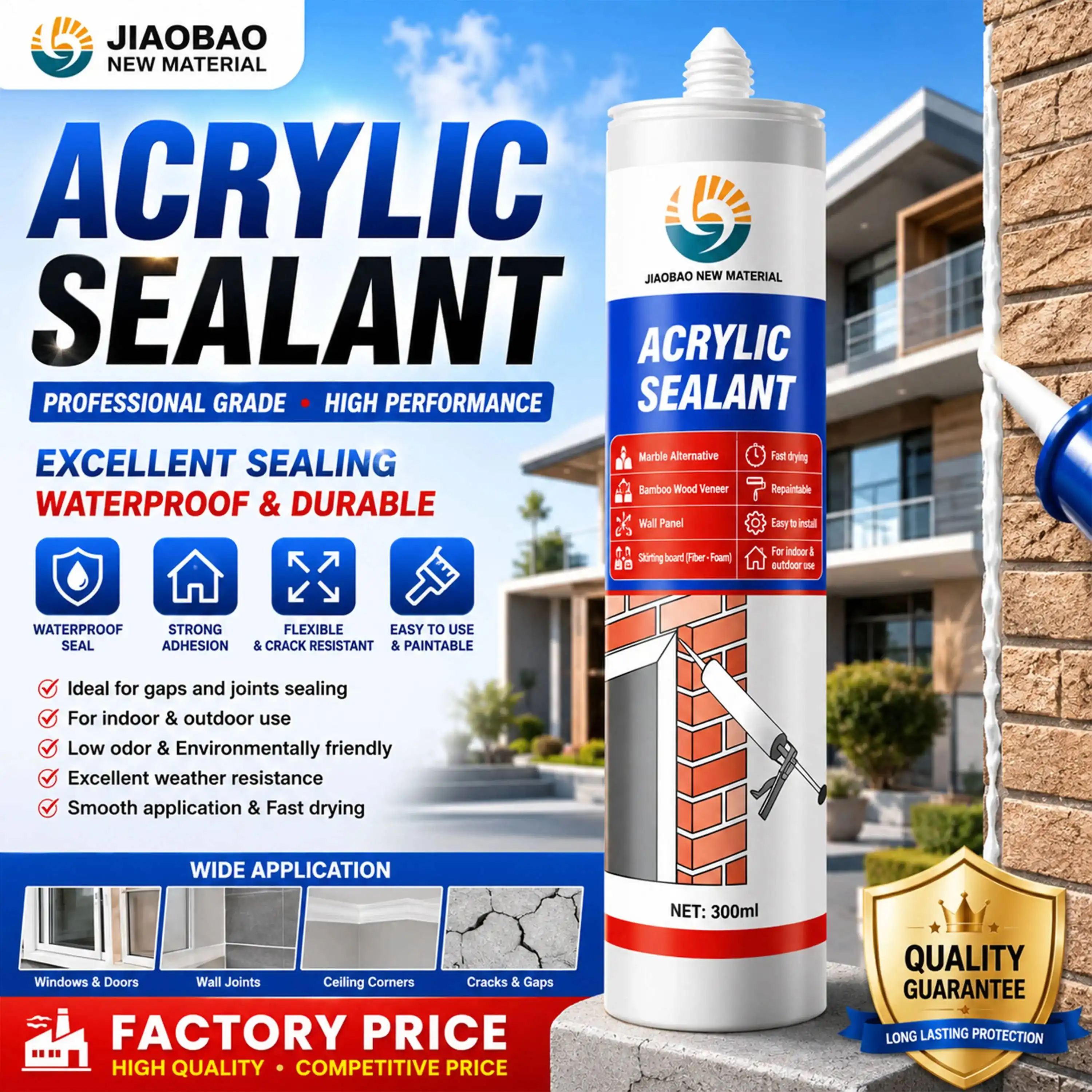
To get professional results with Acrylic Sealant Decorative Joint Seals, you need to pay attention to how the surface is prepared, how the sealant is applied, and how long it takes to cure. The method is a little different from structural sealing applications because it puts appearance ahead of maximum bond strength or movement capability.
The sides of the joints must be clean, dry, and free of anything that could make them stickier. To get rid of dust, oils, release agents, and loose paint, you can wipe them off with the right cleaners or lightly sand them. Light misting can sometimes help porous substrates slow down the initial absorption of water, which stops the surface from skinning too quickly before proper tooling. The shape of the joint should allow enough bonding area—usually at least 6 mm of contact width on each side—for the adhesive to become strong enough.
Masking tape along the edges of joints makes clean lines and makes cleanup easier. This is especially helpful when sealing against finished surfaces where sealer smudges would need a lot of work to fix. The tape should be taken off right away after shaping, while the sealant is still usable, so it doesn't get stuck in the material that is curing.
The sealant bead should slightly overfill the opening to allow for some shrinking and give you extra material to work with. Using steady, consistent pressure makes the diameter of the beads the same and stops air pockets from forming, which would otherwise leave holes on the surface. Because our formulation has a high extrusion rate, it can be used continuously along long joint runs without having to stop and reload cartridges. This increases efficiency while keeping the look consistent.
To avoid dragging and surface tearing, tooling should happen during the open time window, which is usually between 15 and 20 minutes depending on temperature and humidity. Tools should be wet before they are used. The action of the tooling forces the sealant into the joint while smoothing the surface. This makes the slightly concave profile that stays flat after the sealant has dried and shrunk. At this stage, extra material can be easily removed with a wet cloth. Hardened residue, on the other hand, needs to be scraped off mechanically, which could damage the base.
Compared to solvent-based alternatives, the water-based formulation poses less of a health risk. However, basic safety gear like gloves and safety glasses should still be worn during application. Most situations don't need respirators or other special exhaust systems because there is enough air flow. The material isn't explosive and doesn't give off any dangerous fumes, which makes it easier to move and handle.
When stored above 5°C, freeze damage to the emulsion structure is avoided. The structure can't be fixed after ice crystals form and stop the polymer dispersion. Our formula has some freeze-thaw protection to make it more durable during transport. However, controlled warehouse conditions extend the shelf life to 12 months while keeping the product's original properties. Once a cartridge is opened, it should be quickly resealed and used within a few weeks to keep the material from cracking and breaking down.
When you strategically source Acrylic Sealant Decorative Joint Seals, you have to look at more than just the price of each supplier. You have to think about how their skills will affect the overall cost of the project and the value of the partnership in the long term.
Experience in manufacturing shows that a process is mature and that a quality system is developing. Shandong Jiaobao New Materials has been making things for 13 years, which shows that they are well-liked by customers and can keep getting better. Because of this knowledge, product specifications are always the same, expert help is quick to respond, and supply chain management is reliable, which keeps projects on schedule.
Project schedule and product management are affected by how much can be made and when it needs to be delivered. Our 1-2 week lead time lets us buy things quickly and in line with the stages of a job, so you don't have to store as much on-site and can get what you need when you need it. Different locations and levels of urgency can be accommodated by a variety of shipping options, such as sea and land transport. Expertise in logistics prevents damage during transit that makes materials useless.
OEM and ODM capabilities let products be changed to fit the needs of different regions or to use special formulas. This adaptability is helpful for distributors who are making their own brand-name products or for contractors who need specific performance qualities. Technical advice during product selection helps match the properties of the sealer to the needs of the application. This stops design mistakes that cause failures in the field and expensive repairs.
Procurement managers can lower their risks by offering after-sales help, such as quality promises. Our strategy of giving refunds or replacements for problems with shelf-life quality shows that manufacturers trust us and looks out for buyer interests. This promise is especially useful in business-to-business partnerships, where major mistakes can hurt the reputations and interests of many people involved in the project.
With volume pricing structures, buying in bulk is rewarded for being smart, and cash flow is kept under control with options for staged delivery. Sealants have relatively low unit costs, but they add up to a lot of money when you add up all the money you spend on big jobs or a lot of supplies every year. This is why percentage saves are important to your bottom line. Sample testing programs let you check the performance of a product before committing to a big order. This lowers the risk of adopting a new supply relationship.
Building relationships with dependable Acrylic Sealant Decorative Joint Seal manufacturers or suppliers gives you more than just low prices. It gives you priority production scheduling, stable formulations, and the chance to work together to solve problems when application issues come up.
Acrylic Sealant Decorative Joint Seals are important parts of the right materials that are needed to get the high-quality finish that sets off great interior design. The right choice takes into account both scientific factors like adhesion strength, shrinkage control, and paint compatibility, as well as practical factors like workability, color options, and source reliability.
Our RTV acrylic sealant gives professional-level results thanks to its optimized formulation chemistry, responsive manufacturing, and full support services that cover the whole process of purchasing and using the product. Knowing what these products can and can't do lets you make smart choices that improve project outcomes and build relationships with suppliers that support long-term operational success.
While painting wet on wet can work with some kinds of paint, it's usually best to wait until the paint has fully dried and the water has evaporated. This can take anywhere from two to twenty-four hours, based on the thickness of the paint and the humidity in the air. Because the coating and underlying sealant dry at different rates, painting too soon can cause mud cracks in the paint film. Once the surface is dry, it can be painted with either water-based latex or oil-based alkyd paints without the need for primers. This makes the color spread even and fits other surfaces.
Acrylic Sealant Decorative Joint Seals are great for painting and blending in with the surrounding area because they can accept paint coatings that bead on silicone surfaces. This makes acrylics better for internal parts that need to be seen and need to look like they flow together smoothly. Silicones are better for high-moisture areas like bathroom walls or areas that are always submerged in water because they can handle more movement and don't absorb water as easily. The best product choice is based on the application context.
Cracking usually happens when joint movement is greater than the sealant's ability to accommodate, which is usually between 10 and 12 percent for decorative acrylics. Too much shrinking from recipes with a lot of water also leads to cracking because the loss of volume creates stresses inside the material. Using the right-sized joints, properly preparing the base, and high-solids recipes lowers the risk of cracking while keeping the look that designers want.
With more than 13 years of experience in specialty manufacturing, Shandong Jiaobao New Materials can help with artistic joint sealing. Our one-component RTV Acrylic Sealant Decorative Joint Seal dries quickly, sticks well, and leaves a smooth finish, all of which are important to interior designers. As a committed provider of Acrylic Sealant Decorative Joint Seal, we offer flexible amounts in 300ml and 600ml containers with colors that can be changed to fit the needs of your project.
Our quality management systems are backed up by ISO and CE certifications, and our competitive prices and delivery times of 1-2 weeks make it easy to plan your purchases. You can email our team at dorashen@cnjiaobao.com to ask for technical specs, set up sample tests, or talk about OEM customization options that will help your specific application problems.
1. Smith, J.R. and Thompson, L.K. "Acrylic Emulsion Technology in Construction Sealants." Journal of Construction Materials Engineering, Vol. 34, No. 2, 2021, pp. 156-174.
2. Anderson, M.P. "Comparative Performance Analysis of Interior Joint Sealants." Building Science Quarterly, Vol. 19, No. 4, 2020, pp. 89-103.
3. Chen, W. and Roberts, D. "Paintability and Aesthetic Integration of Water-Based Sealants." International Journal of Architectural Finishing, Vol. 12, No. 3, 2022, pp. 245-259.
4. Williams, K.T. "Formulation Strategies for Low-Shrinkage Acrylic Sealants." Polymer Materials Science, Vol. 28, No. 1, 2021, pp. 67-82.
5. Martinez, R.A. "Quality Control Protocols for Decorative Construction Sealants." Construction Product Testing Standards, Vol. 15, No. 2, 2020, pp. 134-148.
6. Johnson, E.S. and Liu, H. "Application Techniques for Interior Joint Finishing Systems." Professional Contractor Methods Journal, Vol. 41, No. 3, 2022, pp. 201-218.
November 16,2023
Enterprise Name
The sealant has very strong adhesion and performs well even on glass and aluminum. After curing, it remains flexible and shows no cracking. Perfect for our facade projects.
November 16,2023
Enterprise Name
Stable quality across batches. Our customers especially like the smooth application and consistent extrusion. It helps reduce installation time on site.
November 16,2023
Enterprise Name
I used it for bathroom sealing. Excellent waterproof performance and no mold issues so far. It's been holding up very well in humid conditions.
November 16,2023
Enterprise Name
The neutral silicone works well on sensitive materials without corrosion. Very suitable for industrial applications requiring stable performance.
_1779347426672.webp)