November 16,2023
Enterprise Name
The sealant has very strong adhesion and performs well even on glass and aluminum. After curing, it remains flexible and shows no cracking. Perfect for our facade projects.
Aug 6, 2026
Professional glass sealants, particularly neutral cure clear silicone sealant, combine transparency, non-corrosive chemistry, and superior adhesion to meet the rigorous demands of glass fabrication and display cabinet manufacturing. These advanced formulations ensure invisible bonding lines, long-term UV resistance without yellowing, and reliable waterproofing for applications ranging from aquariums to architectural glazing. Understanding these key features helps procurement professionals select sealants that deliver both aesthetic perfection and structural durability for glass-to-glass and glass-to-metal assemblies.
Glass sealants are the unseen backbone of modern architectural and commercial glass applications. They provide long-lasting bonding and weatherproofing that keeps structures strong for decades. When making glass and show cabinets for the global market, picking the right sealer has a direct effect on the quality of the products, how happy the customers are, and how much money the business makes in the long run. Neutral cure clear silicone sealant has become the best choice for manufacturers who can't give up clarity or compatibility with other materials.
In contrast to acid-cure formulas, which release acetic acid during curing, neutral cure technology uses oxime or alcohol-based curing methods that keep sensitive substrates safe. When you're bonding mirrors, layered glass with PVB interlayers, or systems made of glass and aluminum or stainless steel frames, this chemical difference is very important. Acid-cure sealants can leave behind corrosive by-products that can damage mirrors, separate composite glass, and wear down metal parts, resulting in failures that are bad for both looks and function.
The choice to source goes beyond chemistry and includes things like how reliable the provider is, how well they follow certification rules, and how well they can help with technology issues. When a company wants to sell its goods in other countries, it needs to make sure that the sealant supplier they use has ISO certifications, delivers on time, and has consistent quality across batches. Partnerships that you can trust lower the risks of buying things and give makers the confidence to promise their customers that their products will work.

Because of how their molecules are structured, neutral cure clear silicone sealants don't give off any corrosive emissions and still have a high cross-linking density. These mixtures use neutral curing agents that react with water in the air to make a stable silicone elastomer without giving off acidic vapors. Because they are chemically neutral, they can be used in enclosed spaces like aquariums, where even small amounts of acidity could hurt aquatic life or break down equipment over time.
Manufacturers can count on curing patterns that are reliable. Usually, the surface is no longer tacky within 30 minutes, and the full cure depth is reached at a rate of about 2 to 3 millimeters every 24 hours, with normal conditions of 25°C and 50% relative humidity. This managed curing makes it possible to schedule production more efficiently without having to wait as long as some other glue systems do. The lack of strong smells during application makes the work environment better and allows installation in buildings that are already occupied without the need for extensive air measures.
One thing that sets high-grade neutral cure silicone sealants apart is their ability to withstand changes in temperature. Professional formulas keep their stretchy qualities from -50°C to +150°C, which is suitable for the different temperature expansions that happen in glass-aluminum hybrid structures. This flexibility keeps the joints from breaking when the temperature changes, which can happen in cold display cases or in storefronts that get direct sunlight.
The technical specs show that the joint is suitable for dynamic joints that move. Shore A hardness is usually between 20 and 40, which is a good range for supporting structures and letting the ground move. Tensile strength greater than 0.7 MPa makes sure that joints can handle wind loads and handling stresses. Elasing properties of 400% or more let the sealant bend without tearing. A 25% movement capability means that a properly built joint can handle a lot of thermal expansion and structure settling without the seal being broken.
A major problem for glass makers is solved by the constant clarity of neutral cure clear silicone sealant. Premium formulas have UV protectors that keep lower-quality products from turning cloudy and yellow after months of being exposed to light. This stability is especially useful in display cabinets with constant lighting inside and in architectural settings where solar radiation tests how long a material will last.
Professional-grade sealants keep their visual qualities after years of UV exposure, which is the same as decades of real-world use, according to tests like accelerated weathering (ASTM G154). This durability protects the brand's image by making sure that the invisible seals that were defined at installation stay invisible for the whole life of the product. In places like California, where Proposition 65 and air quality standards set strict limits on volatile emissions, the VOC content below 80 g/L meets environmental rules.
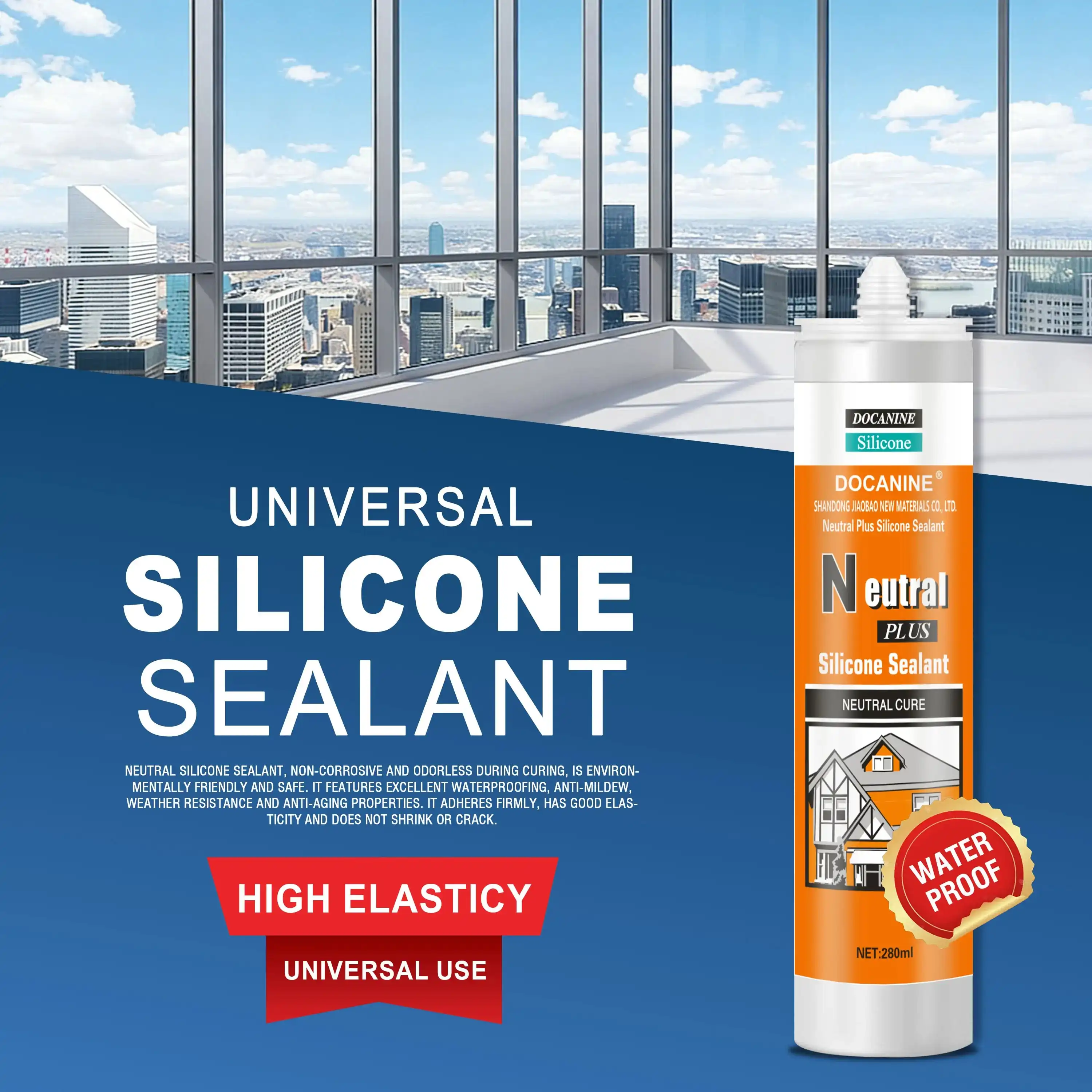
Acid cure silicone sealants give off acetic acid, which smells like vinegar, as they cure, which speeds up the formation of the skin on the surface and lowers the cost of the material. However, this acidity greatly limits the range of uses. The corrosive fumes harm copper, brass, zinc, and the silver backing on mirrors, leaving black spots and delamination that can't be fixed. These compatibility problems can be solved with neutral cure clear silicone sealant alternatives, which means that sensitive substrates can be used without having to use complex primer systems or isolation measures.
Even though the materials are about 15 to 20 percent more expensive than acid-cure alternatives, manufacturers who care about quality can justify the cost by the fact that they can use more substrates and don't have to make as many callback repairs. Because it doesn't smell bad, it can be installed in places that are already occupied or that need to keep a low temperature, like clean rooms for making electronics where acidic fumes would damage sensitive parts.
Polyurethane sealants are good for some construction joints because they don't wear down easily and can be painted over. However, UV stability is much worse than in silicone formulations. Polyurethane breaks down over time when exposed to UV light, becoming weak and losing its stickiness. This type of failure is not acceptable in glass situations where the seal must remain strong for years. Polyurethane products can also break down in environments that are always wet because of the way their chemicals are structured.
When it comes to thermal cycle, silicone is better than polyurethane because it is more flexible across a wider temperature range. Glass display cabinets that are heated by inner lighting and cooled down when the lights go out are subject to cyclic pressures that neutral cure silicone can handle because it is elastic. Polyurethane formulations, on the other hand, wear out and crack over time in the same circumstances.
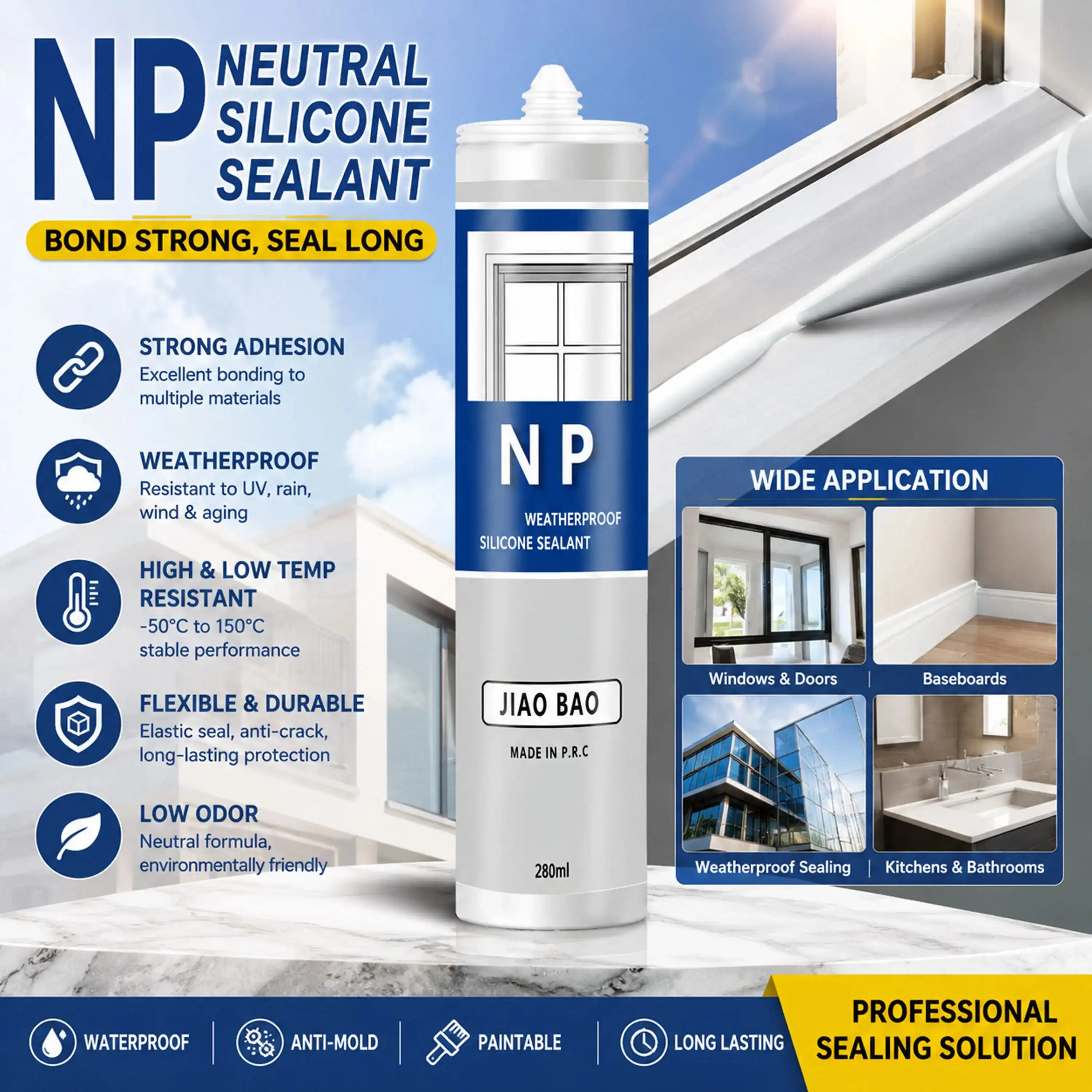
To get the strongest bond possible, the surface must be carefully prepared by getting rid of any contaminants that might be getting in the way of adhesion. To get rid of oils, dust, and release agents from manufacturing processes, clean all substrates with isopropyl alcohol or approved solvents. Let surfaces dry all the way through because water at the bonding contact stops chemicals from sticking, even though water fixes the sealant. The difference is important: atmospheric moisture starts the curing process inside the neutral cure clear silicone sealant bead, while surface moisture stops molecules from sticking to the substrate.
Joint design has just as much of an effect on long-term performance as the choice of material. Keep the width-to-depth ratio at 2:1 for even stress distribution. Closed-cell backer rod can be used to control the depth and stop three-sided bonding, which concentrates stress. Use even pressure when applying sealant so that air bubbles don't get trapped and cause weak spots in the cured joint. To get smooth outlines without pulling partially cured material, tooling should happen during the skin-over time, which is usually 10 to 20 minutes.
When it comes to high-performance uses, structural glass and curtain wall systems are where neutral cure clear silicone sealant comes in handy. These installations attach large glass panels directly to aluminum framing without using mechanical fasteners. This creates clean lines that look good and allows for different thermal movement between materials that are not the same. The glue needs to stay in place even when the wind speed is over 1.5 kPa, and it also needs to be able to expand and contract with the temperature, which can happen over big panels.
For commercial and residential mirror installation, you need chemicals that don't corrode and protect the silver or aluminum backing that reflects light. When acid gets into the protected backing layer and oxidizes the shiny metal, it causes desilvering, which looks like black spots that get darker over time. Neutral cure alternatives stick strongly to the mirror backing and mounting surfaces without damaging them chemically. Aquarium manufacturing also shows that these sealants can waterproof and are safe for use around animals, protecting aquatic life from corrosive emissions.
For sourcing to work, samples must be tested in settings that are similar to those that will be used in production. Ask for samples that come in the exact type of package that works with your serving equipment, such as 300ml or 600ml cartridges or sausages. To test for transparency, place samples between glass plates and let them cure completely. Then, check the optical clarity after the full cure, and again after accelerated UV exposure to make sure the stability. Adhesion should be tested on float glass, tempered glass, anodized metal, or powder-coated steel.
Structures for volume prices encourage smart buying while keeping store costs low. When manufacturers buy between 20,000 and 80,000 RMB worth of sealant a year, they can usually get better prices that cut the cost of each unit by 10 to 18%. Negotiating supply plans that are in line with production forecasts keeps working capital from getting stuck in inventory to a minimum and keeps lines from stopping while making sure materials are available. Reliable sources keep wait times between one and two weeks.
When you get ISO 9001 approval, it means that you have a method for managing quality that makes sure that each batch is the same. This is very important when you need to match colors or keep adhesion performance across multiple production runs. Check the scope of the certificate by looking beyond the certificate itself to ensure it covers the specific factory that is making your order. Putting a CE mark on goods shows that they meet standards for health, safety, and the environment, lowering legal risks in foreign trade.
Compliance testing at the product level provides objective proof of performance. As part of normal test procedures, the ASTM C920 classification describes how the neutral cure clear silicone sealant can move, stick to other things, and prevent weathering. Suppliers who include test reports from recognized labs show they are committed to openness and provide proof to back up claims of performance. Make sure that the testing includes your specific substrate combinations, since the adhesion performance of different metal finishes and glass coatings can vary a lot.
When suppliers offer quick technical support, they become partners who share their knowledge during product development and production optimization. During the evaluation process, look at the suppliers' contact routes and reaction times. Suppliers who answer all technical questions fully within 24 hours of the first inquiry are likely to keep up that level of responsiveness after orders start. Having access to technical data sheets and application guides in the language you use for work lowers the barriers to adoption and makes sure that your team uses goods properly.
The quality guarantee from Jiaobao shows how confident well-known manufacturers are in their products. Products that meet the shelf life requirements but have quality problems are replaced or refunded, which keeps buyers from having to pay for bad materials. This promise is especially helpful when starting up new product lines, since material uniformity has a direct effect on yield rates. The 12-month shelf life, as long as it is stored properly at a controlled temperature and humidity, gives you enough planning freedom without causing you to turn over your inventory too quickly.
Allocation problems that happen during times of high demand can be avoided if your production capacity matches your number needs. Companies that make more than a million cartridges a year keep a buffer on hand in case the number of orders changes without having to extend lead times. Packaging that is flexible, with 300ml and 600ml sizes available in cartridge or sausage shapes, makes sure that it works with the dispensing equipment you already have and lowers the cost of buying new application systems.
Since 2013, our company, Shandong Jiaobao New Material Co., Ltd., has been making silicone sealants. In that time, we've learned a lot about how to make them and how to make them better. Because of this knowledge, methods are now stable and always produce the right properties across production batches. Short lead times of one to two weeks help with strategies for keeping inventory low and allow for flexible production schedules. With OEM and ODM capabilities, you can change the color, packing, and performance of your goods to make them stand out.
When choosing professional glass sealants, you have to weigh the benefits of clarity, adhesion, substrate compatibility, and long-term durability against the costs and dependability of the supplier. In a wide range of situations, from aquariums to architectural glazing, neutral cure clear silicone sealant has proven to be the best choice for manufacturers who care about both safety and aesthetics.
The technical benefits—unfading from UV light, non-corrosive chemistry, waterproof integrity, and resistance to changes in temperature—directly address the problems that lower the quality of products and lead to expensive warranty claims. Strategic partnerships with suppliers based on licenses, quick response times, and reliable delivery turn procurement from a transactional relationship into a competitive benefit that lets makers guarantee the performance of their products all the way through the supply chain.
When neutral cure clear silicone sealant hardens, it gives off alcohol or oxime compounds. These compounds have a light smell and don't corrode anything else. Different types of acetoxy cures release acetic acid, which gives the product its vinegar smell and corrosive vapors that damage metals, mirrors, and alkaline surfaces like natural stone or concrete. This chemistry difference tells us what substrates are compatible and where the product can be used.
Premium neutral cure formulas stick well to polycarbonate, acrylic, and many industrial plastics; they don't cause stress cracks like acetoxy types do. Surface energy varies between types of plastic, so substrate-specific adhesion testing is still needed. Some low-surface-energy plastics, like polyethylene or polypropylene, need a primer to form strong bonds.
At 25°C and 50% relative humidity, skin forms on the surface in 30 minutes. About 2 to 3 mm of depth are cured every 24 hours, which means that a 10 mm thick bead needs 7 to 14 days to cure all the way through the cross-section. It takes longer to cure when it's cooler or less humid, but the process can go faster if it's warmer and more humid.
Jiaobao's wide range of products and strong support systems make it easy for manufacturers to find a trustworthy neutral cure clear silicone sealant provider. Our formulas give premium glass products the crystal-clear clarity and UV stability that doesn't fade that they need. They are backed by ISO certifications and strict quality control that meets international standards. We can help you get what you need quickly and easily, so your production schedule can be met. Our production wait times are only one to two weeks, and we offer flexible packaging choices in 300ml and 600ml sizes. Email our technical team at dorashen@cnjiaobao.com to get samples to try or to talk about ways to make the product fit your specific bonding needs and market requirements.
1. ASTM International. (2018). Standard Specification for Elastomeric Joint Sealants. ASTM C920-18, West Conshohocken, PA.
2. Klosowski, J.M. & Wolf, A.T. (2012). Silicone Sealants in Construction: Properties, Performance and Applications. Dow Corning Corporation Technical Papers.
3. Beech, J.C. (2002). The Chemistry and Technology of Silicones and Sealants. Journal of Building Appraisal, Vol. 3, Issue 2, pp. 145-162.
4. ISO 11600:2002. Building Construction - Jointing Products - Classification and Requirements for Sealants. International Organization for Standardization, Geneva.
5. Wolf, A.T. (2006). Durability of Silicone Sealants. Proceedings of the International Conference on Durability of Building Materials and Components, Lyon, France.
6. Panek, J.R. & Cook, J.P. (1991). Construction Sealants and Adhesives, 3rd Edition. John Wiley & Sons, New York.
November 16,2023
Enterprise Name
The sealant has very strong adhesion and performs well even on glass and aluminum. After curing, it remains flexible and shows no cracking. Perfect for our facade projects.
November 16,2023
Enterprise Name
Stable quality across batches. Our customers especially like the smooth application and consistent extrusion. It helps reduce installation time on site.
November 16,2023
Enterprise Name
I used it for bathroom sealing. Excellent waterproof performance and no mold issues so far. It's been holding up very well in humid conditions.
November 16,2023
Enterprise Name
The neutral silicone works well on sensitive materials without corrosion. Very suitable for industrial applications requiring stable performance.
_1779347426672.webp)