November 16,2023
Enterprise Name
The sealant has very strong adhesion and performs well even on glass and aluminum. After curing, it remains flexible and shows no cracking. Perfect for our facade projects.
Jul 30, 2026
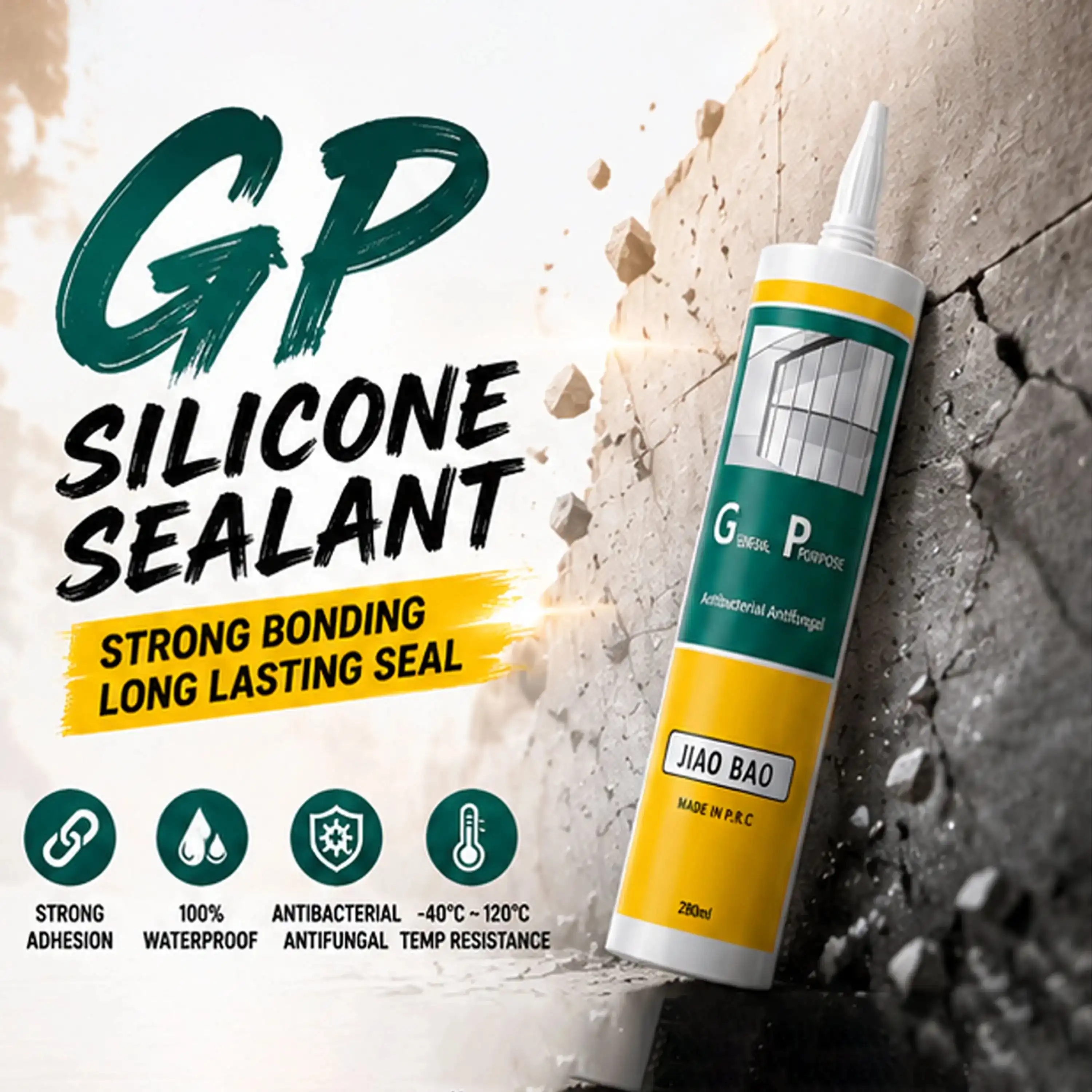
When managing high-volume curtain wall projects or custom window fabrication, choosing the right sealing material determines whether your installations withstand decades of thermal cycling and weather exposure or fail prematurely. GP silicone sealant for glass and aluminum stands out as the preferred solution for B2B professionals across construction, manufacturing, and distribution sectors. This one-part, moisture-curing acetoxy formula delivers reliable adhesion to both glass and aluminum substrates while maintaining flexibility across temperature extremes from -50°C to +150°C. Its rapid 15-minute tack-free time accelerates production workflows, making it indispensable for door and window processing plants requiring consistent output without compromising seal integrity.
The chemistry behind sealing windows well depends on using formulas that were made to work with non-porous glass and thermally active aluminum profiles. Room Temperature Vulcanization (RTV) is how GP Silicone Sealant for Glass and Aluminum does this. They react with moisture in the air to form strong elastomeric bonds that don't need heat or special tools.
Acetoxy cure silicones give off acetic acid when they polymerize, which lets them stick strongly to clean glass surfaces and harden quickly in normal room temperatures. Due to this feature, they work very well in high-throughput fabrication settings where quick handling times directly lead to higher operational efficiency. The chemical structure lets it stretch more than 300%, so it can handle the different rates of heat expansion between the aluminum frames and the glass panes without breaking.
There are other neutral cure options for uses with copper or untreated aluminum that are more sensitive, but acetoxy formulations like GP Silicone Sealant for Glass and Aluminum are still the best for anodized or powder-coated aluminum window systems. This difference is very important when choosing materials for curtain wall systems, since chemicals that don't work well together with GP Silicone Sealant for Glass and Aluminum can cause rusting under painted surfaces.
When you compare silicone to polyurethane or plastic options, you can see why procurement managers always choose silicone for fenestration projects. Polyurethane seals can be painted on, but they break down when exposed to UV light for a long time. After 5 to 7 years in full sunlight, they turn yellow and lose their flexibility. Acrylic mixtures are cheap and good at filling gaps, but they can't move around like aluminum does because of its high coefficient of temperature expansion.
Silicone works well in building glazing uses for more than 30 years and doesn't change. The substance doesn't chalk or thicken when exposed to ozone, acid rain, or UV light. According to ASTM C920 standards, silicone recovers better from cycle compression than organic polymer options, which get permanently set and eventually fail as a seal.
Not only technical specs must be looked at when making a procurement choice, but also the total cost of ownership over the span of the project. Knowing what makes one material perform better than another helps technical managers and purchasing agents choose materials that meet the needs of the project and stay within the budget.
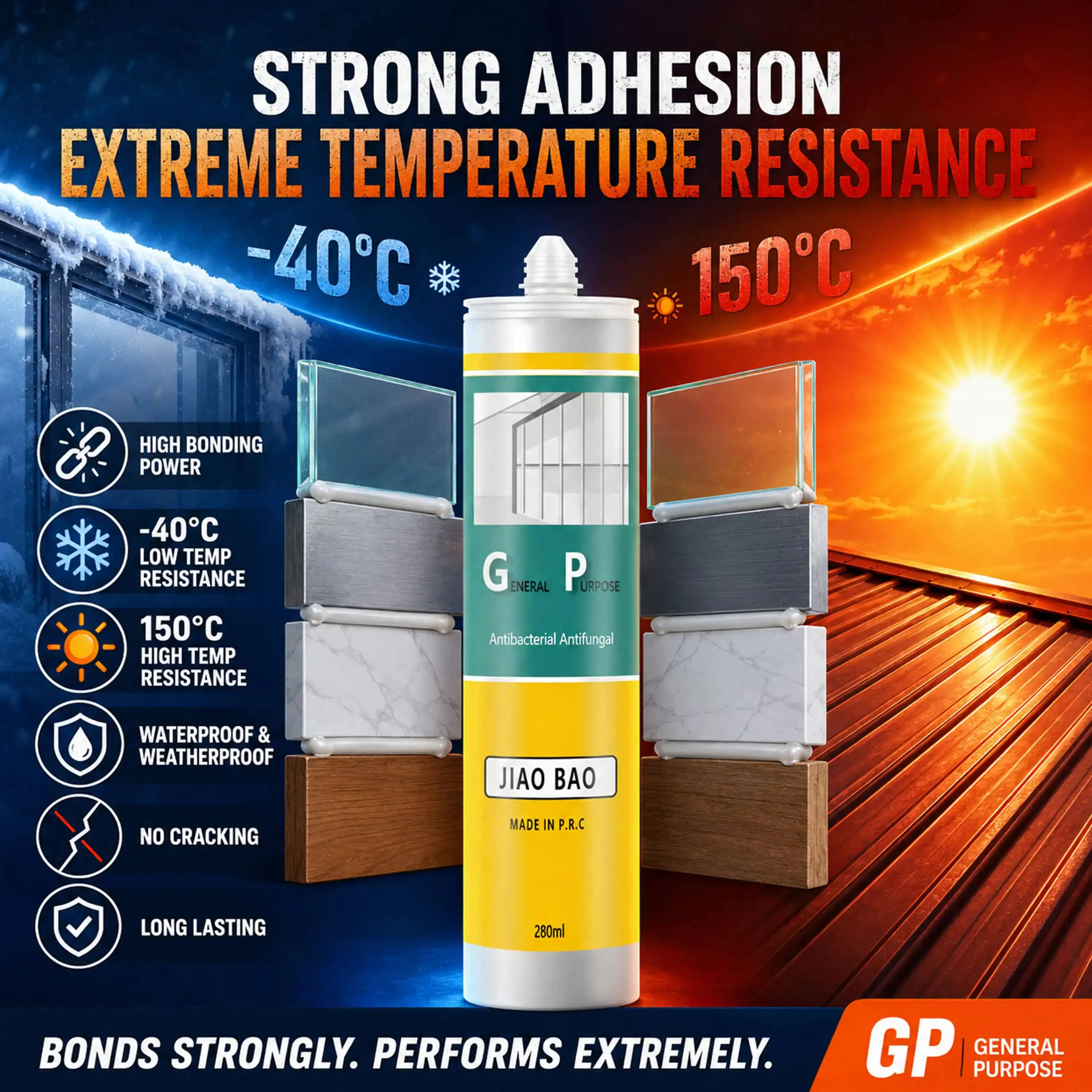
Measuring the strength of a bond shows important differences. After the surface is properly prepared, good GP Silicone Sealant for Glass and Aluminum seals can stick to glass and aluminum substrates with tension adhesion greater than 1.5 MPa. When paired with a Shore A hardness of about 18, this bonding force makes seals that bend instead of breaking when the building moves.
The ability to extend is just as important. A lot of building coatings can stretch 100 to 150 percent, but silicone formulas can often stretch over 300 percent. This ability to stretch takes into account the changes in size that happen when summer temperatures rise and aluminum window frames expand by 2 to 3 millimeters per linear meter. If rigid sealants can't move enough, they crack where the glass meets the metal, making ways for water to get in.
Field performance data from business sites is more reliable than tests done in a lab. When quality silicone sealants are used on curtain walls near the coast, they don't break down much after 15 to 20 years of being exposed to salt spray and UV light. Curing silicone doesn't let water in, which stops mold growth and bond failure in materials that soak up water more easily.
Temperature cycling tests play out decades of yearly growth and shrinkage. When samples are heated from -30°C to +80°C several times, they keep their flexibility and stickiness, while polyurethane competitors become brittle and separate. This means that there are fewer warranty claims and callbacks, which is important for general builders and window system makers who are handling projects that span more than one year.
Paying attention to how the surface is prepared and how the seal is applied is necessary for getting the best performance. Even the best silicones don't work when they're put on dirty substrates or joints that weren't made correctly.
The two-cloth method is still the usual way to clean aluminum surfaces. Isopropyl alcohol wipes away fabrication oils, cutting fluids, and handling residues that stop chemicals from bonding. The important part is getting rid of the liquid before evaporation puts contaminants back on the surface. The same care needs to be taken when cleaning glass, especially when it comes to low-emissivity films, where surface treatments can make it harder for them to stick.
Anodized aluminum surfaces can usually handle acetoxy silicone without primers, but this has been tested on real project materials to make sure it works. Aluminum with a mill finish might need to be changed to a powder-coated or anodized finish to keep it from corroding when acidic cure leftovers come into contact with it. By testing substrate compatibility, expensive fails in the field during full-scale installation can be avoided.
Seal life depends on both the material choice and the way the joints are designed. A width-to-depth ratio of 2:1 is best for distributing stress evenly when the joint moves. Backing rods or bond breaker tape stop three-sided adhesion, which builds up stress and speeds up failure. Consistent flow rates in cartridge guns make sure that the bead shapes are all the same, with no holes or spaces.
The curing process is affected by the environment during the treatment. The best wetness for starting the cure is between 40 and 60% relative humidity, without surface skinning that traps solvents. Temperatures below 5°C greatly slow down the curing process, and temperatures above 40°C may cause skinning to happen before the right tooling is done. Scheduling setups for times when the weather is good makes the materials work better and the installers more productive.
Real-world validation comes from keeping an eye on how well installed systems like GP Silicone Sealant for Glass and Aluminum work in a range of climates and building types. Because of the large amount of glass and exposure to extreme weather, commercial curtain wall projects are especially hard to test with GP Silicone Sealant for Glass and Aluminum. Quality silicone formulations like GP Silicone Sealant for Glass and Aluminum contain anti-ultraviolet stabilizers that stop the chain scission that breaks down organic polymers in the sun. When GP Silicone Sealant for Glass and Aluminum is properly made, accelerated weathering that is the same as 20 or more years of contact to the elements outside doesn't change its mechanical features much. This security means that seals made with GP Silicone Sealant for Glass and Aluminum put in today will keep the building waterproof and structurally sound for a long time.
Certification fulfillment gives buyers peace of mind. ISO-certified production methods ensure stability from batch to batch, which gets rid of the quality variation that comes with regular sealants. Products that meet the ASTM C920 Class 25 standards can move ±25% without losing their adhesion or cohesiveness. This is the standard for high-end building glazing uses.
To get around in supply networks, you need to know how to check quality and how to distribute goods. In commodity markets, there are a lot of fake and low-quality sealants, so choosing the right seller is very important for the success of the project.
Well-known manufacturers offer sample programs that let you check out their technical quality before you commit to buying the whole thing. Testing methods should be the same as they would be in real life, like applying the material to project-specific substrates and keeping an eye on how it cures, how well it sticks, and how strong it is in the end. This checks for mismatches early on, when making changes to the specifications is cheaper than fixing problems in the field.
There are more benefits to buying in bulk than just lower unit prices. Because of volume agreements, colors can be customized to meet architectural finishes, and RAL color chart standards are becoming more and more important for high-end business projects. Setting up relationships with chosen suppliers makes sure that supplies aren't wasted during supply disruptions and that shipping times are aligned with building plans.
Ocean freight rates are best for purchasing things internationally in container loads, but consolidation services can handle smaller amounts as well. Lead times from Asian factories to North American ports are usually between 4 and 6 weeks, so it's important to plan ahead and make sure that your plans are in line with the project schedule. When products are stored in the United States through networks of distributors, delivery times are cut down to one to two weeks for standard items.
Technical help is what sets top providers apart from commodity vendors. Having access to application engineers who know how to design curtain walls and fix problems in the field is very valuable, even if the materials are cheaper. Warranty systems that cover material flaws reduce risk even more, but it is still the installer's job to make sure the right techniques are used.
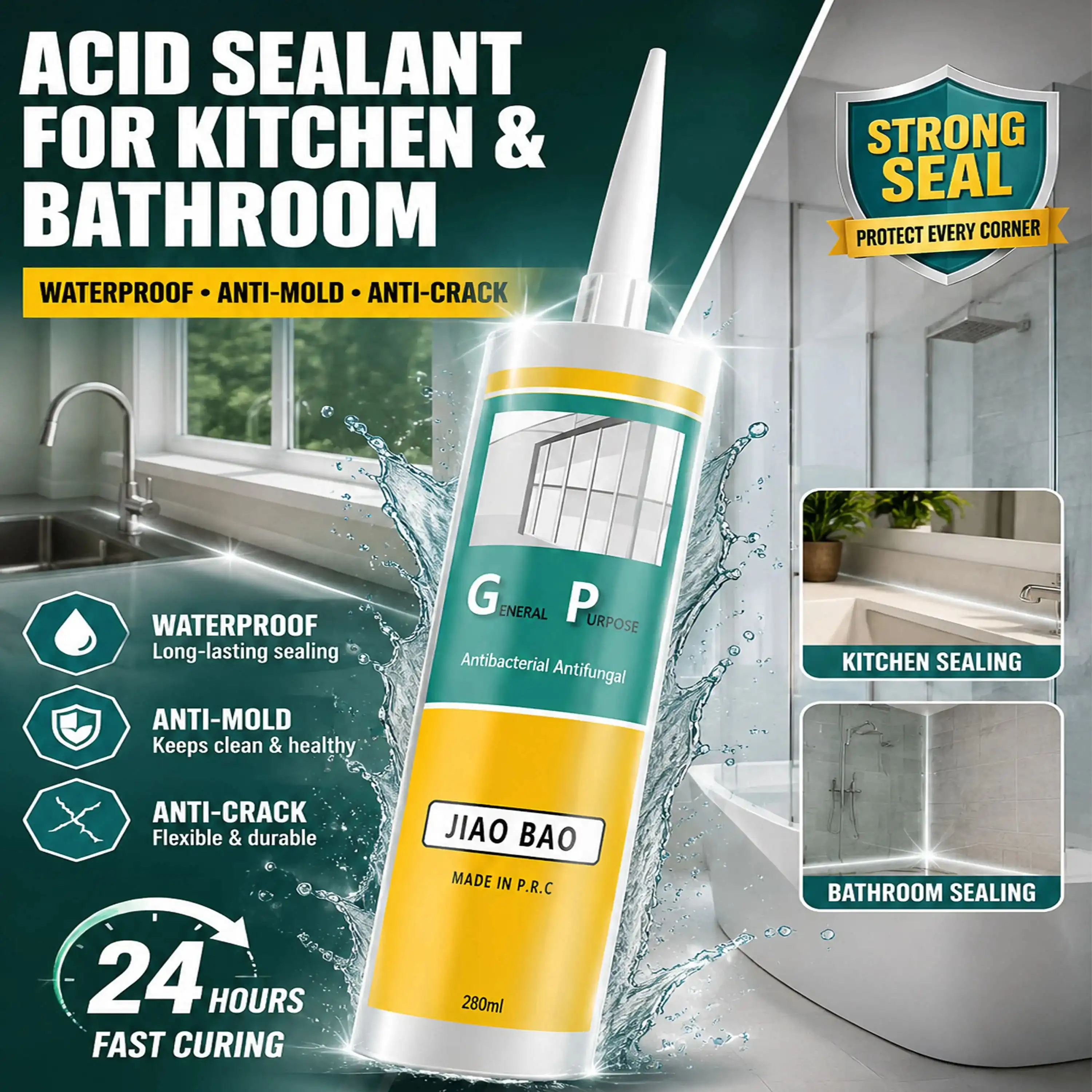
Finding the best sealing materials for glass and aluminum window assemblies like GP Silicone Sealant for Glass and Aluminum means finding a balance between performance needs, application limitations, and the cost of getting them. Acetoxy cure silicone sealants like GP Silicone Sealant for Glass and Aluminum give industrial fenestration uses the adhesion strength, movement capability, and weather protection they need while still being cost-effective for mass production.
The 15-minute tack-free time of GP Silicone Sealant for Glass and Aluminum speeds up production, and the service range of -50°C to +150°C makes sure it works reliably in all climates in North America. Proper surface preparation and application method are still very important for success with GP Silicone Sealant for Glass and Aluminum. This shows why access to expert help should be considered when choosing a provider for GP Silicone Sealant for Glass and Aluminum, along with price.
When acetoxy cure chemistry cures, it releases acetic acid, which can react with mill-finish aluminum that hasn't been treated. Anodized and powder-coated aluminum surfaces are very good at keeping this from happening. By testing real frame samples before the full specification is made public, compatibility is confirmed and problems with corrosion in the field are avoided.
If you use silicone sealants correctly, they will stay waterproof for 20 to 30 years in outdoor glazing uses. UV stabilizers keep the material from breaking down when it's exposed to sunlight, and the material's natural flexibility lets it move without cracking. Inspections done on a regular basis find rare problems before they cause water damage to the inside finishes.
Surface curing can be slowed down by not enough air, dirty substrates, or materials that have passed their expiration date. For proper polymerization, moisture-curing silicones need 30 to 50 percent relative humidity. Most problems with delayed cure can be fixed by checking batch dates and the environment during the application.
Shandong Jiaobao New Material Co., Ltd. has been making specialized materials for 13 years and can help you with your window closing problems. As a top provider of GP Silicone Sealant for Glass and Aluminum, we keep our production facilities ISO-certified to make sure that the quality of every batch is the same. Our acetoxy silicone one-part formula gives you the 15-minute tack-free time and >300% elongation your fabrication operations need. It comes in 300ml and 600ml cartridge and sausage packaging. Purchasing managers like that we can start making your products in one to two weeks and that we can make changes to them based on OEM/ODM needs, such as matching RAL colors to meet design requirements. Contact our technical team at dorashen@cnjiaobao.com for sample evaluation and volume pricing tailored to your project requirements.
1. American Society for Testing and Materials. Standard Specification for Elastomeric Joint Sealants. ASTM C920-18, West Conshohocken, PA, 2018.
2. Wolf, A.T. "Durability of Building Sealants: State of the Art." Building Research & Information 32.6 (2004): 504-518.
3. Klosowski, J.M., and J.D. Rancourt. Sealants in Construction. 2nd ed. Boca Raton: CRC Press, 2015.
4. International Organization for Standardization. Building Construction—Sealants—Determination of Adhesion/Cohesion Properties. ISO 11600:2019, Geneva, Switzerland, 2019.
5. Panek, J.R., and J.P. Cook. Construction Sealants and Adhesives. 3rd ed. New York: John Wiley & Sons, 1991.
6. Lacasse, M.A., and D.J. Vanier. "Durability of Building Materials and Components 8: Service Life and Asset Management." Institute for Research in Construction (1999): 1273-1284.
November 16,2023
Enterprise Name
The sealant has very strong adhesion and performs well even on glass and aluminum. After curing, it remains flexible and shows no cracking. Perfect for our facade projects.
November 16,2023
Enterprise Name
Stable quality across batches. Our customers especially like the smooth application and consistent extrusion. It helps reduce installation time on site.
November 16,2023
Enterprise Name
I used it for bathroom sealing. Excellent waterproof performance and no mold issues so far. It's been holding up very well in humid conditions.
November 16,2023
Enterprise Name
The neutral silicone works well on sensitive materials without corrosion. Very suitable for industrial applications requiring stable performance.
_1779347426672.webp)