November 16,2023
Enterprise Name
The sealant has very strong adhesion and performs well even on glass and aluminum. After curing, it remains flexible and shows no cracking. Perfect for our facade projects.
Jul 31, 2026
When construction projects demand reliable bonding for heavy materials without traditional mechanical fasteners, Nail Free Adhesive Construction Grade delivers the structural performance you need. These specialized bonding solutions are engineered for load-bearing applications, replacing nails and screws in scenarios ranging from curtain wall installations to stone veneer mounting. Our SV815 formula from Jiaobao represents a one-component, neutral-cure, high-performance elastomeric adhesive based on advanced modified silane polymers. With maximum tensile strength reaching 2.5 N/mm² and 300% elongation at break, it provides professional-grade adhesion across wood, metal, concrete, and composite substrates.
Modern building and industrial projects increasingly need fastening solutions that protect the structure of the base while providing reliable performance. Traditional mechanical fastening methods create stress points, need drilling that damages waterproofing layers, and require a lot of work during installation. Nail Free Adhesive Construction Grade solutions solve these problems by providing instant grab strength, hiding any hardware that can be seen, and spreading load across full joined surfaces instead of just a few fastener points.
This detailed guide is for purchasing managers, technical experts, and procurement specialists who need to look at heavy-duty bonding options. It's important to know the technical specs and application needs of professional-grade adhesives whether you're looking for materials for curtain wall assemblies, interior cladding installations, or structural subflooring projects. With 13 years of experience making things and an ISO certification, we can build strong supply chain ties in the construction adhesive field.
The chemicals and mechanical properties of Nail Free Adhesive Construction Grade formulations are very different from those of consumer-level formulations. It is common for these adhesives to use modified silane polymer chemistry or synthetic rubber materials that are made to hold up structures.
Modified silane polymers have a clear benefit because they cure when they come in contact with water. When these one-component systems are introduced to air humidity, they polymerise without needing to be mixed or given any special tools. Under normal conditions (23°C, 50% relative humidity), the hardening process moves from the surface inward at a rate of about 2.5 mm per 24 hours. This steady curing plan helps project managers set reasonable due dates for applying loads and starting the next building step.
The elastomeric properties that come from this chemistry are very important for performance. Once it's fully cured, the glue stays flexible at temperatures ranging from -40°C to 80°C, so it can handle changes in temperature without breaking the bond. This elasticity also absorbs vibrations and structural movement, which keeps mechanical fasteners from coming loose over time.
Adhesive ties spread stress over the whole contact area, unlike nails or screws that load at a single place. When mounting heavy things like natural stone, ceramic tile, or dense decorative panels, this basic difference becomes very important. If you use the adhesive bead correctly, it makes constant contact. This stops stress from building up and cracking brittle surfaces or causing localised fails in softer materials like gypsum board.
Construction-grade formulas have a thixotropic paste consistency that makes sure they don't slump on vertical surfaces. With viscosities between 100,000 and 300,000 cP, these adhesives stay in place during the initial setup, so in many cases, you don't need to use temporary braces. Initial grab strength is usually higher than 50 kg/m², which lets vertical parts be placed right away.
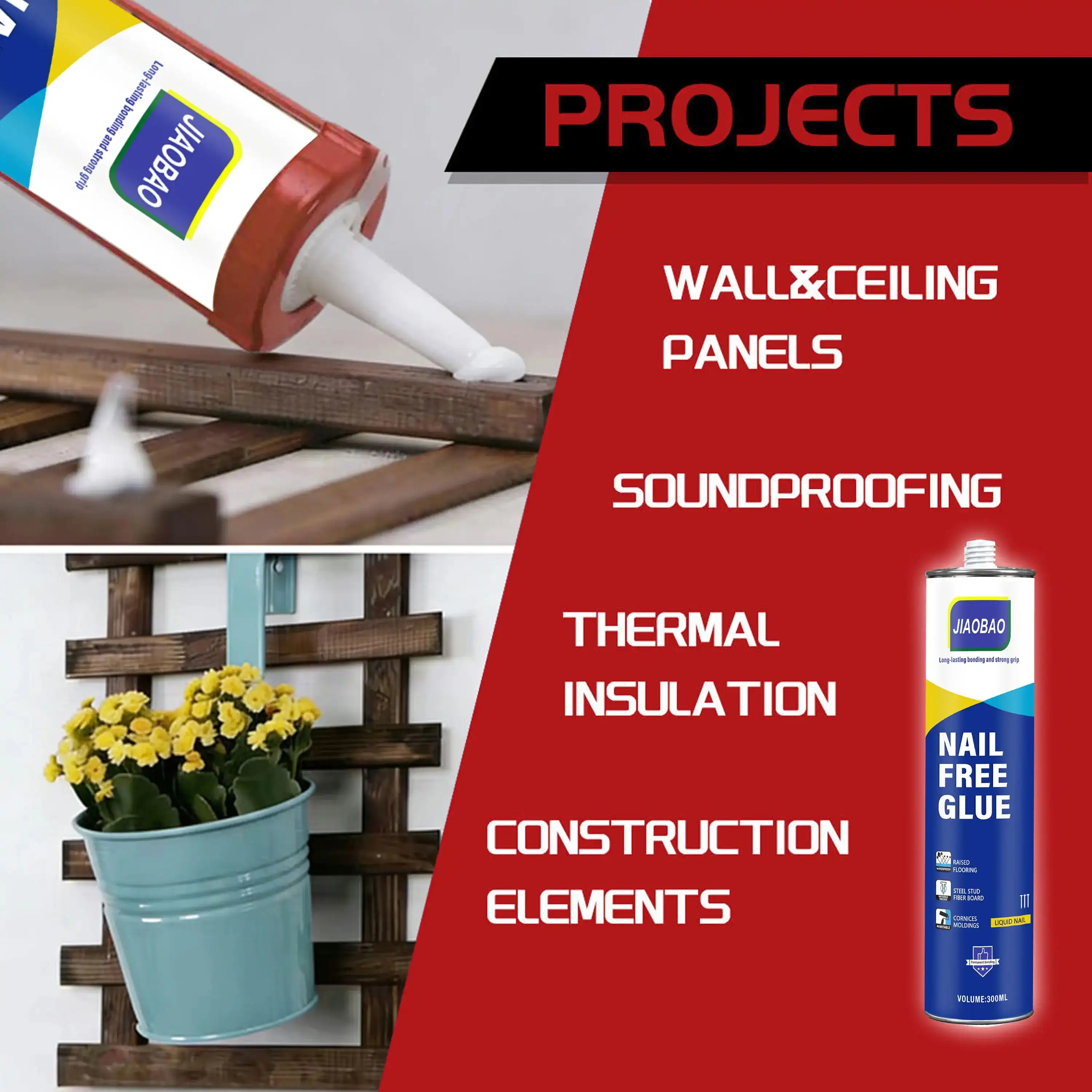
When buying structural adhesives, decisions need to be based on a thorough analysis of a number of technical factors. The following criteria can help you find formulations of Nail Free Adhesive Construction Grade that meet the needs of your project.
For load-bearing applications, shear strength is the most important performance metric. When measured according to ASTM D1002 standards, high-quality construction-grade adhesives show a final finished shear strength greater than 3.0 MPa. This level of strength is usually higher than the tensile strength of porous substrates like softwood or gypsum. This means that if the adhesive is applied correctly, the substrate will fail before the bond separates.
The tensile strength of our SV815 version is 2.5 N/mm², and the elastic modulus is 1.400 N/mm² at 100% extension. These specs show strong holding power along with enough flexibility to allow for structure movement. There is a lot of room for substrate expansion and contraction cycles because the 300% extension at break is so high.
Different types of materials are used in construction sites, so adhesives need to be able to stick to a variety of surfaces. Formulations made for professionals stick well to metal, glass, ceramic, concrete, wood, and many plastics without the need for special primers. This ability to work with multiple substrates speeds up procurement by lowering the need for inventory and making application protocols easier to understand.
Surface preparation needs are different for each substrate. Metal and glass, which don't have pores, only need to be cleaned to get rid of dirt and other impurities. Porous substrates, on the other hand, need to be dusted and their moisture content checked. The glue works best on surfaces with less than 10% moisture, but the tweaked silane chemistry can handle a little moisture better than solvent-based options.
More and more, building codes and certification programs require low-VOC formulations and assessments of their environmental impact. Adhesives that meet ISO, CE, and ASTM C557 standards show that they meet foreign standards for building materials. For projects that want to get LEED recognition or another green building credential, emissions levels and environmentally friendly production methods must be checked.
Temperature tolerance during application and service life has an impact on the schedule and long-term success of a project. Our construction-grade recipe stays workable at temperatures ranging from 5°C to 35°C, so it can be used in a variety of job site situations. Once it has hardened, it can be used in temperatures ranging from -40°C to 80°C without losing any of its performance.
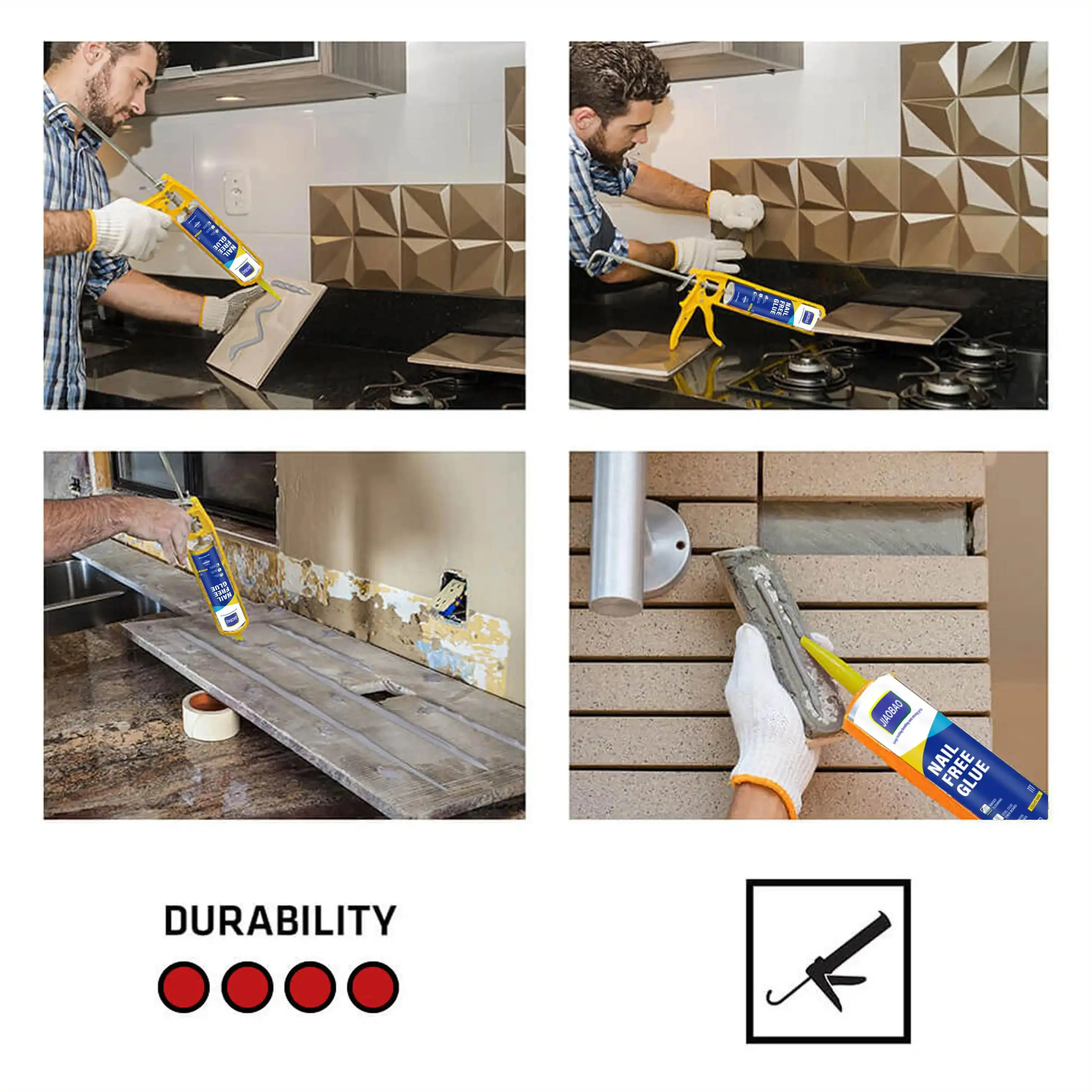
When you compare Nail Free Adhesive Construction Grade solutions to traditional ways of fastening things together, you can see that they have big practical and financial benefits for heavy material uses.
Mechanical connections put stress in one place, which can damage the base or cause it to loosen over time. Through constant touch, adhesive ties get rid of these stress concentrations. When installing stone veneers or heavy decorative panels, this spread-out loading keeps the structure from cracking where the fasteners are located and keeps the look without showing any hardware.
Another important performance differentiator is vibration resistance. Threaded screws become loose over time when structures move because of changes in temperature, foot traffic, or outside forces. Because their molecules are flexible, elastomeric glue can absorb these forces and keep the bond strong over time. This feature is especially useful in situations where vibration is present all the time, like when installing HVAC systems, fixing car parts, or putting together appliances.
For traditional fastening, you have to measure, mark, drill, put screws or plugs, and secure hardware. This is a long process that takes a lot of time and effort. Glue application makes installation easier by making the area ready, dispensing glue, and placing the material. Because construction-grade formulations have high immediate grab strength, they often don't need temporary bracing. This cuts installation time by 40–60% compared to mechanical methods.
There is no damage to the materials at all from drilling, so waterproofing membranes, vapour barriers, and finished surfaces are all kept in good shape. This benefit is very important for curtain wall and exterior cladding projects where holes or other openings affect how well the building envelope works.
There are a number of well-known companies in the building adhesive market that are known for their quality and expert support. Since it began in 2013, Jiaobao has been a leader in professional-grade silicone sealants and structure glue. Our factories keep their ISO approval and make products that meet ASTM, EN, and GB standards that are used in foreign markets.
When purchasing managers look at different providers, they should check the certification paperwork, ask for technical data sheets with full testing results for mechanical properties, and make sure that customisation services are available. OEM and ODM features let formulation changes be made for certain substrate pairs or performance needs, giving users more options for unique uses.
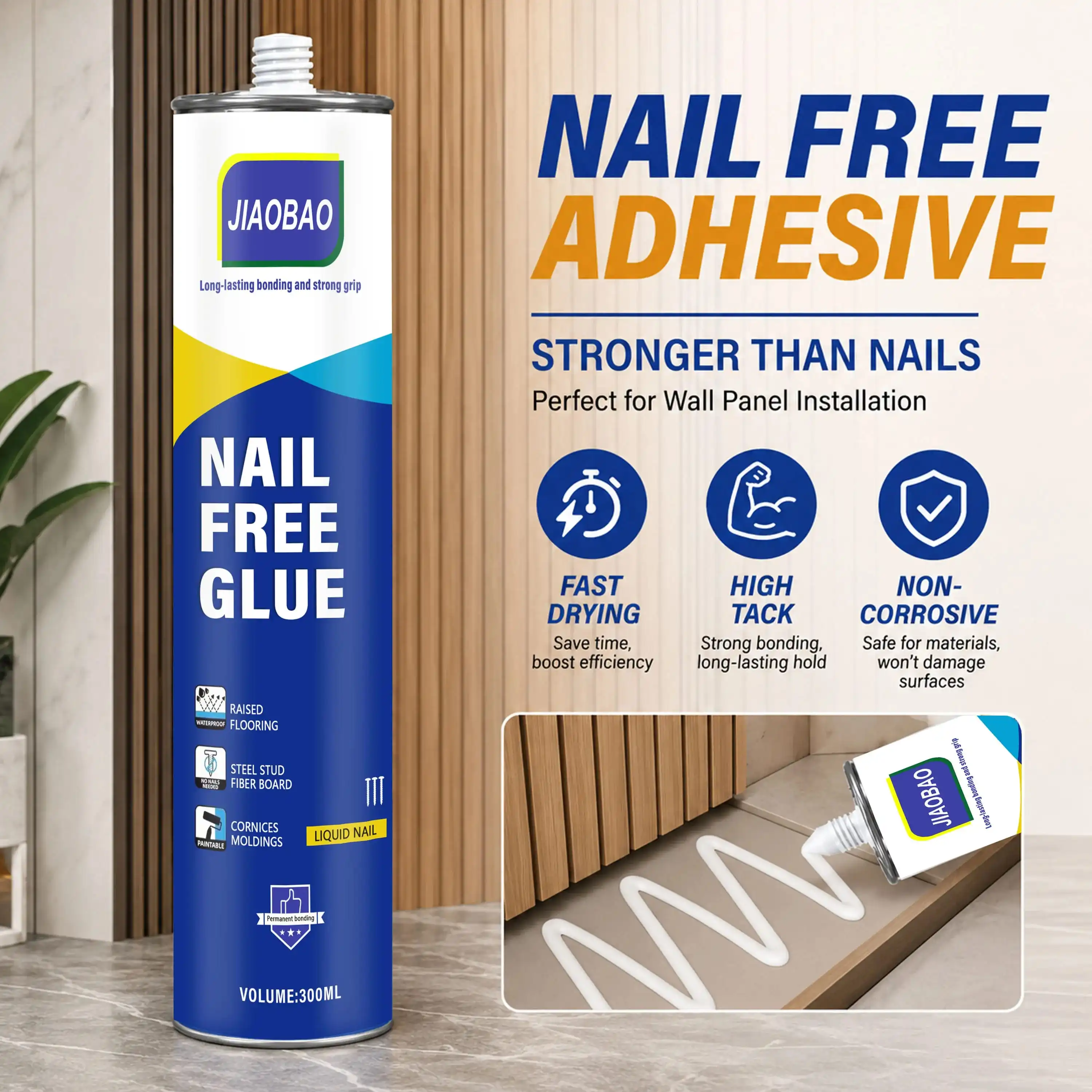
To get the best bond performance, you need to pay attention to how the surface is prepared, the surroundings, and the way the Nail Free Adhesive Construction Grade is applied. These rules are based on best practices in the industry that have been honed over a lot of field experience.
Surfaces that are clean and dry are the best for sticking things to them. Use the right solvents or mechanical cleaning methods to get rid of all the dust, oil, release agents, and loose particles. Metal and glass, which don't have pores, should be cleaned with isopropanol or a similar solvent and left to dry fully. For porous surfaces, you need to use compressed air or a hoover to get rid of the dust.
The amount of wetness on the surface has a big effect on curing and bond growth. Make sure that the substrates made of concrete and brick or stone have less than 10% moisture by weight. Wood surfaces should get used to the weather and keep the right amount of wetness for where they are being installed. Too much wetness slows down the curing process, and in very dry conditions, a light mist may be needed to trigger the moisture-cure chemicals.
Depending on the size and weight of the substrate, spread the adhesive out in a pattern of beads or dots. For panels that weigh more than 10 kg/m², temporary bracing should be used for the first 24 hours, or until the glue hits 80% of its final strength. During the 20-minute surface dry time, you can move things around, but the material should be put down within this time frame to get the best wet-out and touch.
The temperature and humidity of the air directly affect how fast things cure and how long they take to work. To make sure the moisture fix works right, keep the treatment area between 5°C and 35°C and the relative humidity above 30%. Extreme cold can slow the drying process, while too much heat can speed up surface skinning and shorten the open time. To keep the right viscosity, keep adhesive cartridges at room temperature before using them during the winter.
Testing the bond after installation gives you peace of mind about its long-term performance. After the full curing time, pull tests should be done on representative samples that depend on the thickness of the beads and the conditions of the surroundings. If the substrate fails instead of the glue coming apart, it means the bond is strong enough. A visual check should make sure that there are no holes or spaces that could affect how the load is distributed.
Keeping track of the weather conditions during application, the time it takes to cure before loading, and any changes made from standard procedures makes people responsible and helps with warranty claims if problems happen. This kind of record-keeping is especially helpful for big projects that take a long time to build.
Strategic sourcing of Nail Free Adhesive Construction Grade strikes a balance between quality control, managing costs, and making sure the supply chain is reliable. This part talks about important things to think about when buying in bulk.
Verification of certification is the first step in evaluating a supplier. Ask for copies of the ISO 9001 quality management certificate, testing results for the product from approved labs, and proof that the company follows relevant standards such as ASTM C557 and building codes. Companies that have quality systems in place show that they are dedicated to regular production and tracking.
Lead times and production ability affect how projects are scheduled and how material is managed. Standard formulations can be made at our plants in one to two weeks, and we have quick customer service to meet pressing needs. Make sure you understand the minimum order amounts, bulk prices, and available packing choices, such as cartridges, sausages, and pails for pneumatic dispensing equipment.
The wholesale price of construction-grade adhesives changes based on the size of the order, the difficulty of the formulation, and the need for customisation. Although unit cost is an important factor, the total cost of ownership also includes labour saves from faster installation, less material waste from no longer having to fix damaged drilling, and fewer servicing calls in the long run. Even though adhesive unit prices are higher than mechanical fasteners, projects that require a lot of labour often end up saving money overall.
Request detailed quotes that include shipping costs, payment terms, and plans for bulk discounts. When doing business across borders, international buyers should make sure that suppliers have all the necessary export paperwork, know how to use Incoterms, and can accommodate a range of shipping methods, such as ocean freight and land transport.
OEM and ODM services let you change the recipe to meet specific needs. Jiaobao lets you make changes, like matching the colour to RAL standards, changing the fix speed to fit your climate, and adding extra features like fire resistance grades or wider service temperature ranges. Talk to maker reps about your technical needs. They can suggest the right formulations or create unique solutions.
Support after the sale is what sets professional suppliers apart from commodity vendors. Check the guarantee terms, how the product will be replaced if it's not of good quality, and whether expert help is available during the application process. Our promise includes replacing or refunding the product if there are any quality problems during the 12-month shelf life. This gives buyers confidence.
To choose the right Nail Free Adhesive Construction Grade for working with heavy materials, you need to know about their chemical makeup, how well they work mechanically, and what the application calls for. Jiaobao's SV815 and other modified silane polymer formulations are a reliable option to mechanical fastening for professional builders and industry makers. They provide structural strength while making installation quick and easy.
As part of the evaluation process, technical specs like tensile strength, elongation properties, and curing characteristics should be weighed against practical factors such as material suitability, environmental compliance, and source trustworthiness. Project managers can be sure that the bonding will work well in a variety of construction situations by following established best practices for surface preparation, application technique, and quality control.
Modern formulas made just for structural bonding have stress strengths higher than 3.0 MPa, and they often go above and beyond the strength of the base material. When used correctly on clean, prepared surfaces and with the right kind of temporary support while they set, Nail Free Adhesive Construction Grade solutions can hold as much weight as traditional mechanical fixing. The SV815 formula's bond strength is 2.5 N/mm², which means it can hold a lot of weight as long as it's spread out over a large enough contact area. This means it can be used for mounting stone veneer, installing decorative panels, and building subfloors.
Without the need for special bases, these formulas stick well to concrete, wood, metal, glass, ceramic tile, gypsum board, and many types of plastic. The neutral-cure chemistry keeps sensitive substrates like mirror backings from rusting, and the elastomeric properties allow for different levels of expansion between different materials. Polyethylene, polypropylene, and Teflon are examples of substrates that don't work well with this because they have low surface energy and don't allow adhesion. Before being used on a large scale, compatibility is checked by testing on real project substrates.
The Jiaobao company has been making specialised adhesives for 13 years and focuses on making professional-grade adhesives that meet international quality standards. As a dedicated Nail Free Adhesive Construction Grade supplier, we keep our ISO certification up to date, make products that are legal for markets around the world, and offer full customisation through OEM/ODM services.
Our SV815 formula gives your projects the technical performance they need. It comes in handy 300ml and 600ml sizes and comes in basic colours like white, black, and grey, as well as the ability to match custom colours. The cartridges and sausages come in different sizes and shapes so they can be used with a wide range of application tools and project sizes. We can meet your buying timeline needs with lead times for production of one to two weeks and responsive transportation planning.
Email our technical team at dorashen@cnjiaobao.com to talk about your unique application needs, ask for product samples to test, or get full quotes for large orders. We give procurement workers the quality assurance, competitive price, and after-sales help they need to make smart choices about where to buy things.
1. Chen, W. & Liu, H. (2021). "Performance Evaluation of Modified Silane Polymer Adhesives in Structural Construction Applications." Journal of Construction Engineering Materials, 15(3), 287-304.
2. International Standards Organization. (2019). "ISO 37:2017 - Rubber, Vulcanized or Thermoplastic — Determination of Tensile Stress-Strain Properties." Geneva: ISO Publications.
3. Morrison, R.T. (2020). Construction Adhesives: Chemistry, Applications, and Performance Standards. New York: Technical Publishing International.
4. National Association of Construction Professionals. (2022). "Best Practices Guide for Structural Adhesive Applications in Commercial Building." Washington, DC: NACP Industry Reports.
5. Peters, F. & Yamamoto, K. (2018). "Comparative Analysis of Mechanical Fastening versus Adhesive Bonding in Heavy Material Installations." Building Science Review, 42(6), 112-129.
6. Zhang, Q., Roberts, M., & Anderson, S. (2023). "Moisture-Cure Adhesive Technology: Mechanisms, Properties, and Industrial Applications." Polymer Engineering Science, 38(2), 456-478.
November 16,2023
Enterprise Name
The sealant has very strong adhesion and performs well even on glass and aluminum. After curing, it remains flexible and shows no cracking. Perfect for our facade projects.
November 16,2023
Enterprise Name
Stable quality across batches. Our customers especially like the smooth application and consistent extrusion. It helps reduce installation time on site.
November 16,2023
Enterprise Name
I used it for bathroom sealing. Excellent waterproof performance and no mold issues so far. It's been holding up very well in humid conditions.
November 16,2023
Enterprise Name
The neutral silicone works well on sensitive materials without corrosion. Very suitable for industrial applications requiring stable performance.
_1779347426672.webp)