November 16,2023
Enterprise Name
The sealant has very strong adhesion and performs well even on glass and aluminum. After curing, it remains flexible and shows no cracking. Perfect for our facade projects.
Sep 16, 2026
PU automotive glass adhesive sealant provides strong structural bonding that does more than just fill gaps.It is a one-component, moisture-curing polyurethane that chemically bonds with both glass and metal surfaces, creating a bond that can handle loads and helps make the vehicle more rigid and safer for the people inside.Whether it's keeping the windshield in place during a front-end crash or reducing noise on the highway, the benefits are clear and have been shown through research.For car part makers and original equipment manufacturers, choosing the right adhesive for bonding windshields is a key quality decision—not just a regular purchase.
At its core, this material is an isocyanate-terminated prepolymer that reacts with ambient moisture to cure into a durable elastomer. Once fully cured, it behaves less like a simple sealant and more like a structural component. Research published in the International Journal of Adhesion and Adhesives confirms that PU automotive glass adhesive sealants add up to 30% to the torsional stiffness of modern unibody platforms. That figure matters enormously to automotive engineers evaluating chassis integrity.
Formulations vary by application. High-modulus grades are used in OEM assembly lines where structural rigidity is non-negotiable. Standard-modulus grades serve aftermarket glass replacement (AGR) technicians who need workable open times and reliable Safe Drive-Away performance under variable shop conditions.
Because polyurethane systems are moisture-sensitive, packaging integrity is a procurement-level quality checkpoint. Aluminum cartridges and sausage packs prevent premature skin formation during storage. Suppliers operating under IATF 16949 quality management systems document shelf-life stability and batch traceability as part of their PPAP submission packages—requirements that any serious PU automotive glass adhesive sealant manufacturer must fulfill before entering OEM supply chains.
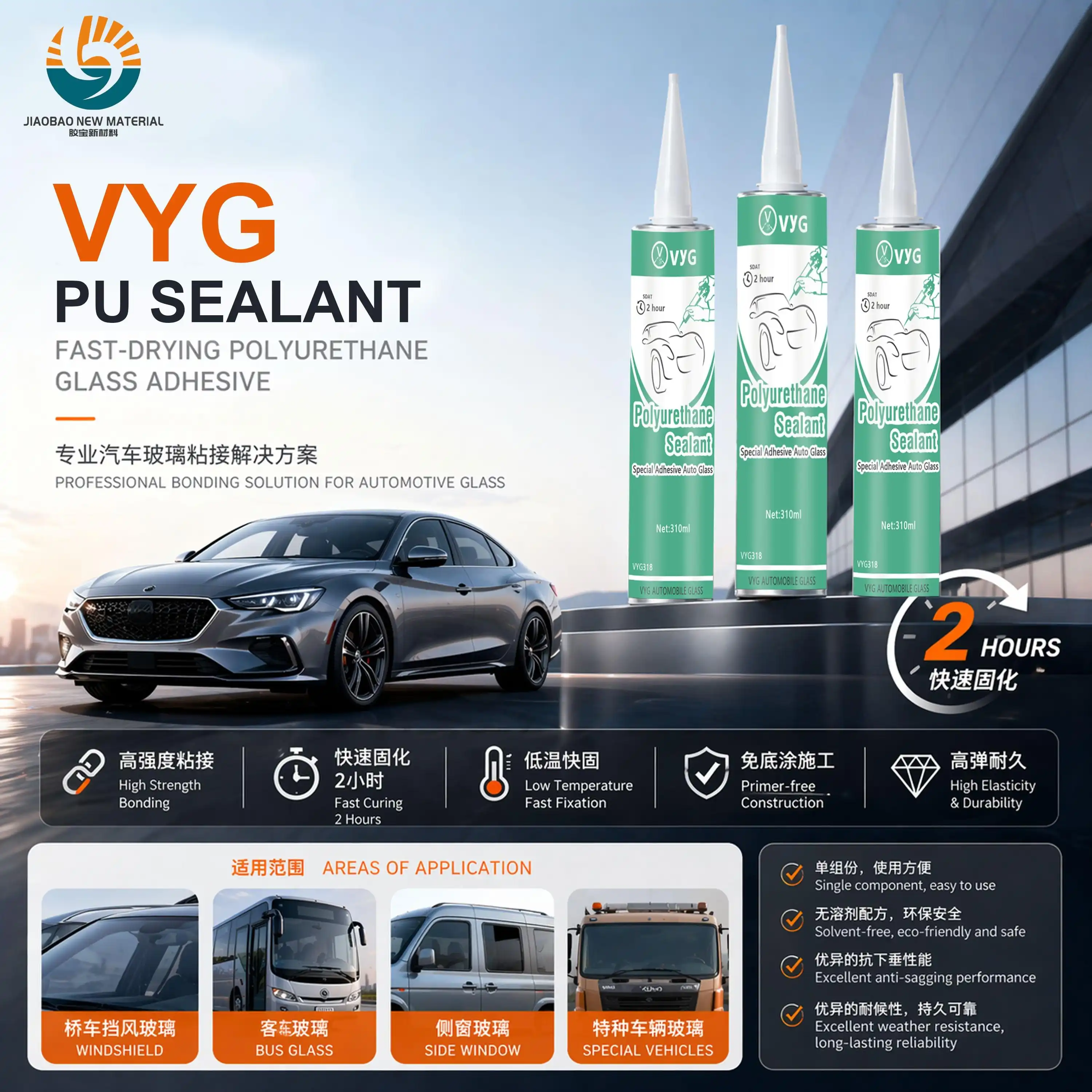
The value proposition for PU automotive glass adhesive sealant extends across safety, production efficiency, and long-term durability. Here are the core performance advantages that procurement engineers consistently validate during supplier qualification:
These advantages translate into lower warranty return rates and fewer production-line quality escapes—outcomes that supply chain directors and SQE engineers track as key performance indicators.
The right windshield bonding compound does not just hold glass in place. It actively participates in the vehicle's safety architecture, which is why batch consistency and certified performance data matter as much as the adhesive chemistry itself.
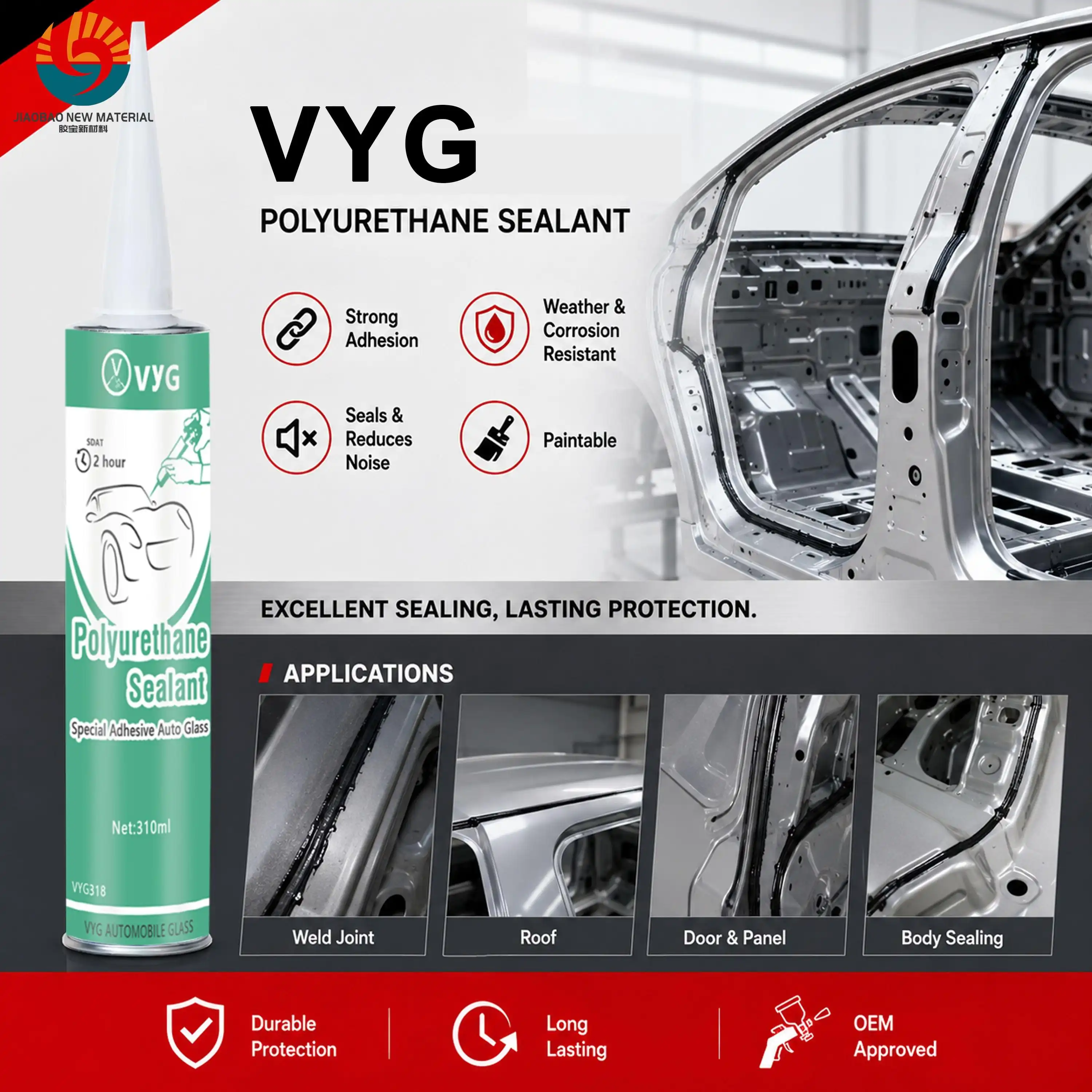
Silicone sealants are good at resisting UV light and extreme temperatures, but they can't be painted over and don't have the right strength for attaching glass directly.MS polymer adhesives stick well without needing a primer and don't smell much, so they work well for sealing inside the car, but they don't have enough strength or flexibility for installing windshields as manufacturers require.
Epoxy adhesives are very stiff, but they break easily and don't stretch much, which makes them not good for large glass panels that move with the car's frame.
PU automotive glass adhesive sealant is the best choice because it has strong tensile strength, can stretch a lot, and meets important safety standards like FMVSS 212 and ECE R43.
For automotive glass installations, PU adhesive sealant is still the standard in the industry because no other type of adhesive comes close to matching its performance, ease of use, and approval from safety regulations.
Clean, dry, and properly primed surfaces are non-negotiable. The pinch-weld flange must be free of rust, oil, and loose paint. For the glass side, a compatible glass cleaner followed by a black primer on the ceramic frit ensures cohesive bond formation. Some modern silane-modified formulations offer primerless adhesion to clean glass surfaces, reducing process steps without compromising bond quality.
Apply a continuous triangular bead without gaps or overlaps. Zero-sag performance—confirmed via ASTM D2202 slump testing—keeps the bead geometry intact before glass installation. The rate of curing runs approximately 3.5 mm per day under standard conditions (23°C, 50% relative humidity). PU automotive glass adhesive sealant tack-free time ranges from 15 to 40 minutes depending on seasonal temperature, which directly affects Safe Drive-Away Time calculations on the production floor.
Incoming inspection should include adhesion peel testing per ASTM C794, viscosity verification per ASTM C1183, and package integrity checks. Under IATF 16949 frameworks, statistical process control (SPC) data and PPM-level defect tracking are standard supplier deliverables—not optional extras.
Qualifying a new PU automotive glass adhesive sealant supplier is an 8–16 week process for most automotive parts manufacturers. The evaluation sequence typically runs from document review (IATF 16949 certificate, PPAP package) through laboratory sample testing, factory audit, small-batch trial production, and final PPAP approval before volume supply begins.
When choosing a supplier, important factors to consider include having a certified IATF 16949, complete PPAP documents, a tensile strength of at least 2.2 MPa, proof of consistent quality across batches through SPC records, and having enough safety stock to avoid problems on the production line.
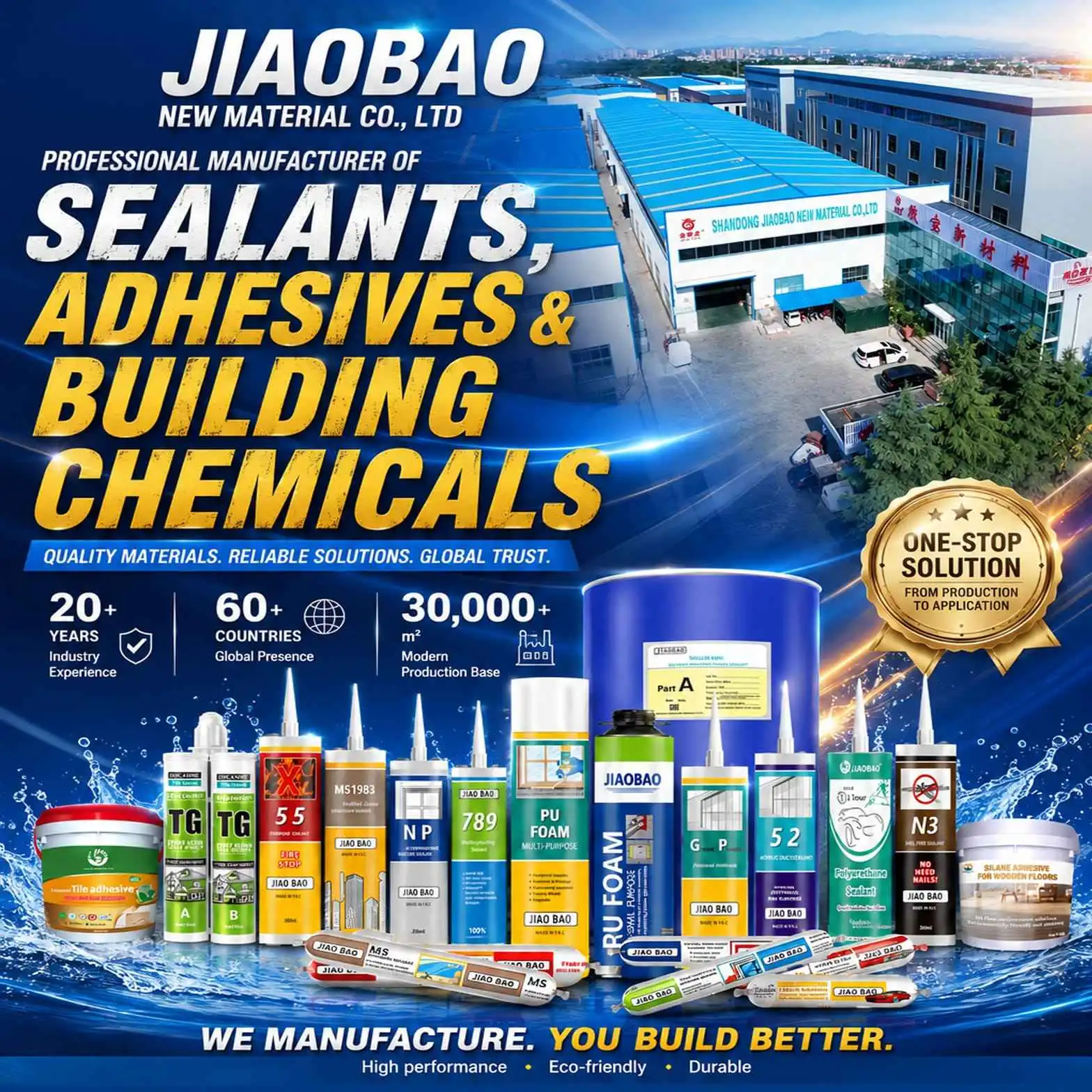
Jiaobao has more than 13 years of experience making high-performance sealants and serves customers both inside and outside the country.
Their products come in 300 ml and 600 ml sizes, and are available in both sausage and cartridge packaging to fit different dispensing systems on automated and manual assembly lines.They also offer OEM and ODM customization, quick lead times of 1 to 2 weeks, and flexible shipping options by sea or land to help procurement teams handle tight schedules.
PU automotive glass adhesive sealant is not a background material—it is an active safety and structural component in every vehicle it bonds. Its contributions to crashworthiness, NVH performance, thermal stability, and production efficiency make it the default choice for OEM glazing and AGR applications worldwide. For procurement professionals evaluating suppliers, the combination of certified quality systems, complete technical documentation, and reliable supply chains separates capable partners from commodity vendors. Investing time in proper supplier qualification protects both production continuity and end-user safety.
Full through-cure depends on bead thickness, temperature, and ambient humidity. At 23°C and 50% relative humidity, cure progresses at approximately 3.5 mm per day. Tack-free time is reached within 15–40 minutes. Low-temperature or low-humidity environments extend these times, so production scheduling must account for seasonal variation when establishing Safe Drive-Away windows.
Yes. Standard-modulus formulations suit aftermarket replacement scenarios where technicians work in variable conditions. High-modulus grades are designed for robotic OEM assembly lines that require immediate green strength after glass decking. Confirm the grade specification with your supplier before committing to a production trial.
IATF 16949 certification is the hard threshold for entering automotive supply chains. A complete PPAP documentation package, including material safety data, dimensional reports, and SPC data, is required before production approval. ISO 9001 certification and compliance with relevant regional safety standards (FMVSS 212, ECE R43) are additional markers of supplier credibility.
Some advanced silane-modified formulations offer primerless capability on clean, intact painted surfaces. However, bare metal or scratched paint areas require a dedicated primer to prevent corrosion and ensure adhesion longevity. Always verify substrate compatibility with the supplier's technical data sheet.
Jiaobao brings 13+ years of manufacturing expertise and IATF-aligned quality practices to every order. As a trusted PU automotive glass adhesive sealant manufacturer, we offer complete PPAP documentation, batch-consistent product, and 1–2 week lead times that keep your production lines running. Reach our technical team at dorashen@cnjiaobao.com to request samples and begin your supplier qualification process today.
1. International Journal of Adhesion and Adhesives – Volume 45, 2013.
2. SAE International Journal of Materials and Manufacturing – Volume 9, Issue 1, 2016.
3. Adhesives & Sealants Industry Magazine – Annual Market Report, 2022.
4. Journal of Applied Polymer Science – Volume 134, Issue 12, 2017.
5. Automotive Engineering International (SAE Media) – Structural Glazing Technology Feature, 2020.
6. Progress in Organic Coatings – Volume 125, 2018
November 16,2023
Enterprise Name
The sealant has very strong adhesion and performs well even on glass and aluminum. After curing, it remains flexible and shows no cracking. Perfect for our facade projects.
November 16,2023
Enterprise Name
Stable quality across batches. Our customers especially like the smooth application and consistent extrusion. It helps reduce installation time on site.
November 16,2023
Enterprise Name
I used it for bathroom sealing. Excellent waterproof performance and no mold issues so far. It's been holding up very well in humid conditions.
November 16,2023
Enterprise Name
The neutral silicone works well on sensitive materials without corrosion. Very suitable for industrial applications requiring stable performance.
_1779347426672.webp)