November 16,2023
Enterprise Name
The sealant has very strong adhesion and performs well even on glass and aluminum. After curing, it remains flexible and shows no cracking. Perfect for our facade projects.
Jun 16, 2026
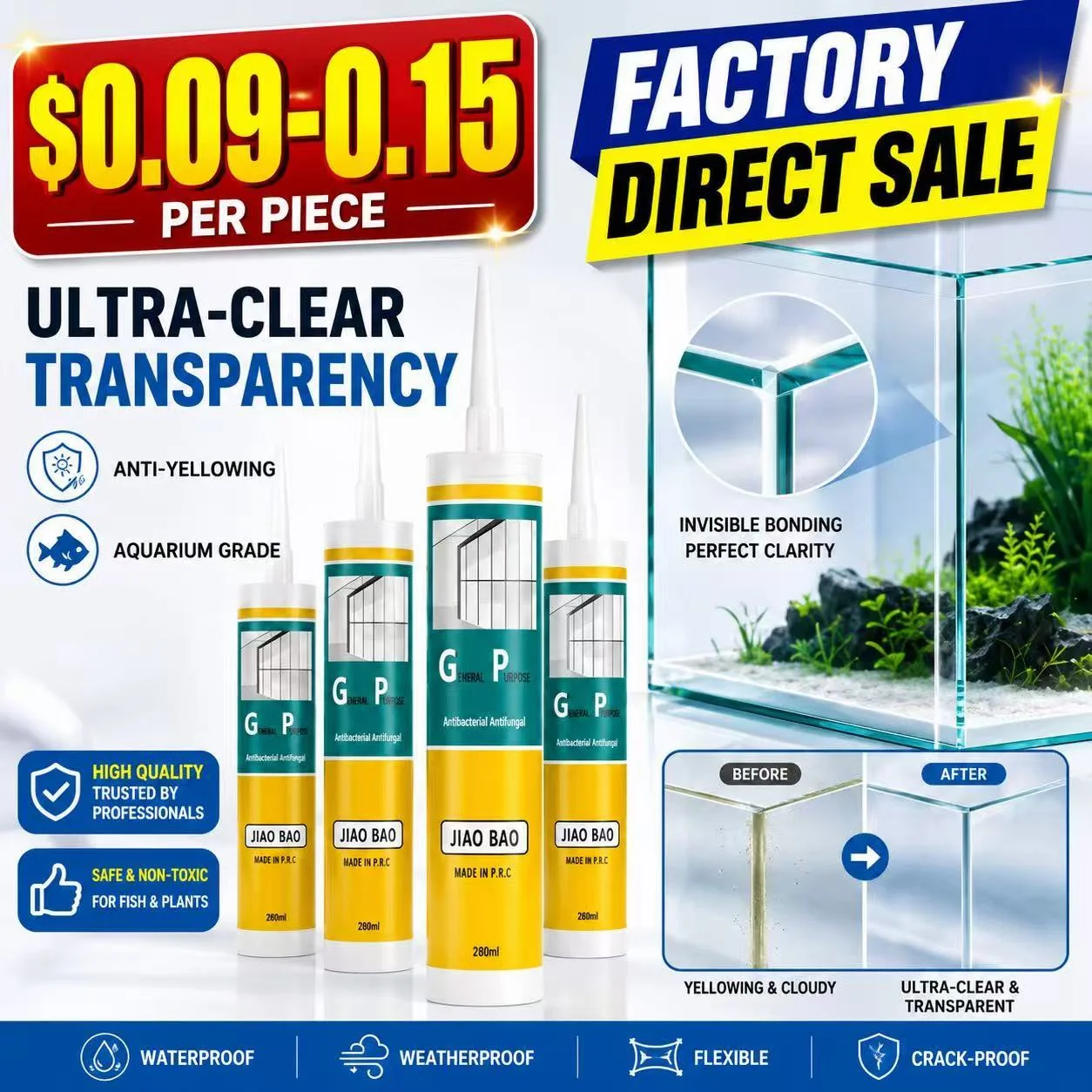
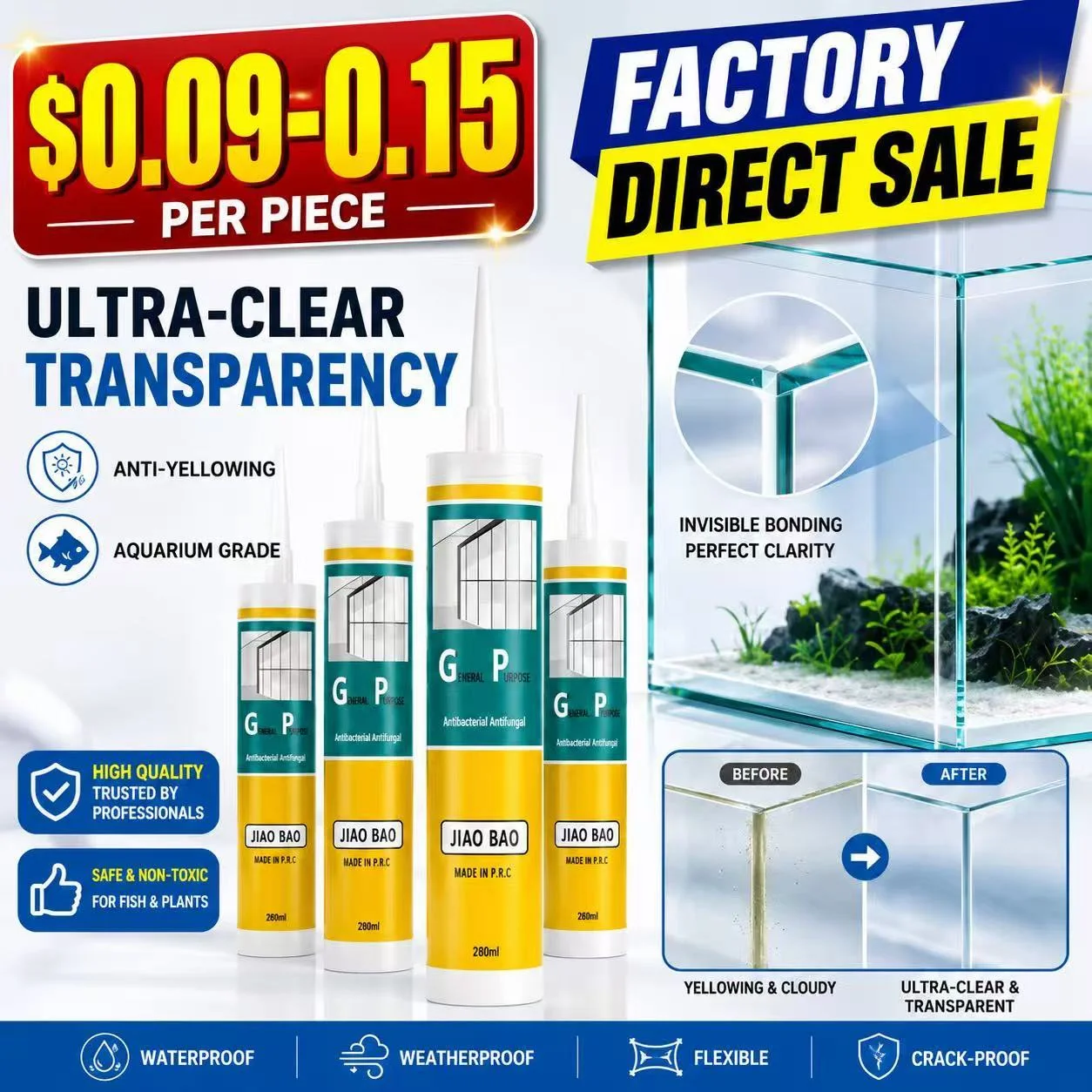
A one-component acetoxy silicone elastomer that cures when it comes in contact with wetness, GP General Purpose Silicone Sealant is made to seal, join, and protect against the weather in a wide range of building, industrial manufacturing, and creative glazing situations. RTV (Room Temperature Vulcanizing) glue doesn't need to be mixed with water like some structure glues do. Instead, it cures when it comes into touch with wet air. This makes a rubber seal that is always bendable and can handle big changes in temperature, UV light, and mechanical stress. Its main job is to fix important sealing issues like water getting through curtain walls, holes in HVAC systems that let heat expand, and joints that move in prefabricated building parts. This makes it an important tool for project managers who need to seal things quickly and cheaply.
General-purpose silicone seals are made of a high-performance rubber that is stable chemically and bend freely mechanically. These items are made from paste-like materials that come in basic colors like black, white, and gray, as well as shades that can be changed to match different building styles. As the acetoxy fix method works, it creates acetic acid. This is what gives the product its familiar vinegar-like smell when it's being used.
Polydimethylsiloxane polymers hold the blend together with methyl triacetoxy silane binding agents. When it comes in touch with water, it hydrolyzes, making silanol groups that pack together into three-dimensional networks. As you can see, this response starts on the outside and moves inside. It generally stops being sticky in 15 minutes when the temperature and humidity are normal (23°C and 50%). It takes about 24 hours for the full fix depth to reach 3 mm, but for the best results, the treatment depth should not go over 12 mm.
GP General Purpose Silicone Sealant doesn't break down or flow when temperatures range from -50°C to +150°C. It also doesn't get hard in cold weather. Because the rubber has been hardened, it can stretch more than 300%. This means that joints can move up to 25% of their original size. This is enough to handle cycles of heat expansion in curtain walls made of metal and expansion joints in buildings made of concrete. The substance is 18 Shore A hard, which means it is both bendable and stable in its shape. In other words, it doesn't move too much when it's hit by wind or vibrations, which often happen in high-rise buildings.
It's easy to extrude with normal pneumatic guns because the specific gravity is 0.87, and the consistency rate is 0.88, which keeps the material from falling apart, which is important for vertical windows. The best bond strength is 1.5 MPa on materials that don't have pores, like tempered glass and anodized metal. As per ASTM C920 Type S, Grade NS, Class 25, this is good enough for industrial glass jobs.
There are three main types of seals that buyers see: those that are made of silicone, polyurethane, and acrylic. Based on how well it works with the base, how much it's visible to the world, and how it looks, each material has its own pros and cons.
When used on non-porous surfaces like glass, painted pots, and powder-coated metals, acetoxy cure systems form strong covalent bonds. This is where silicone seals work best. But surfaces that are alkaline, like new concrete or natural stone, can cut down on the acidic waste. This makes it harder for the layers to stick together. Polyurethanes stick to open materials better than chemically joining ones because they physically connect instead. Because of this, they work better for expansion joints in brick walls.
Acrylic sealants offer paintability advantages since their water-based chemistry allows topcoat adhesion, unlike silicone's hydrophobic surface. This characteristic makes acrylics suitable for interior trim work where aesthetic integration requires matching paint finishes. However, acrylics lack the UV stability and elastic recovery of silicones, often cracking within 3-5 years under exterior exposure.
Because acrylic seals are water-based, paint sticks better to them than to silicone seals, which don't like water on their surface. Because of this, acrylics can be used for trim work inside where paint treatments need to match for looks' sake. Acrylics, on the other hand, don't hold up well to UV light or stretch back like silicones do. After three to five years outside, they often break.
When our silicones are exposed to ozone or UV light, they don't chalk or turn yellow, which is a common way for cheaper products with too many plasticizers to break. After 2,000 hours of QUV-A exposure, which is about 10 years of natural weathering in mild areas, silicones that were made correctly keep more than 90% of their original tensile strength. This is shown by independent tests that speed up the aging process.
When polyurethanes are first put together, they have a higher tensile strength (up to 2.5 MPa), but the urethane bonds break down after being in water for a long time. GP General Purpose Silicone Sealant, on the other hand, will always stay strong in places that stay wet for a long time, like bathroom walls or sealing below grade.
Most of the time, acetoxy silicones cost 15–20% less per volume than neutral-cure silicones. This makes them a good choice for big glass projects where they can be put on surfaces that work with them. Polyurethanes are in the middle of the price range, but many materials need to be prepped first, which makes the job more expensive. The least expensive material is acrylic, but it needs to be changed more often because it doesn't last long. This makes the project more expensive when it's outside.
To pick the best sealer, you need to match the product's features to the job, thinking about things like how it will look, how exposed it is, and any safety requirements.
For use outside, you need solutions that are stable against UV light and have been tested to work well in rough circumstances. The UV screens and antioxidants in our acetoxy silicones keep the polymer chains from breaking when they are in the sun. As long as it stays below 27°C, the shelf life is 12 months. This makes sure that the material stays in good shape during usual project timelines.
Things like GP General Purpose Silicone Sealant dry faster when used inside, where humidity is generally lower. In bathrooms and kitchens, sealants with added fungicides are needed to keep mold from growing on the sealant—something GP General Purpose Silicone Sealant may not be formulated for. People who work for handmade furniture shops and interior design firms doing high-end home jobs should remember this.
For curtain wall makers, making walls that are easy to move is important so that the walls can handle weather and wind changes on the outside of tall buildings. Our sealant can stretch by more than 300 percent. This means that seams can keep getting bigger without cohesive tearing, which happens when materials aren't strong enough and makes things less waterproof. To speed up production, door and window makers need short skin-over times so that the goods can be handled 30 minutes after they are put on.
The people who make HVAC equipment have to be able to keep temperatures steady in a lot of different working circumstances. Standard versions work well up to +150°C, while specialized variants can handle steady touch up to +200°C and are good for sealing car engine chambers and boiler flues.
Manufacturing that is ISO 9001-certified makes sure that the quality is stable from batch to batch, which is important for color matching in building projects that are done in stages. The CE mark means that the item meets safety standards in Europe. This makes it easier to sell in other countries. Material safety data sheets and test results from outside sources show that our goods meet ASTM C920 and ISO 11600 standards. These are given to builders and professional engineers. This helps them agree with our requirements.
When samples are tested before big amounts are bought, there is less chance of quality problems. On-site binding tests are done on 300ml cartridge samples that we send. These steps help technical managers be sure that the cartridges will work with the materials and settings of a certain project before they agree to buy a lot of 600ml sausages or bigger packing forms.
Silicone seals are used in lots of different places, and each one has its own technical challenges and needs for success.
In curtain wall systems, weatherproof sealants are used to keep the building shell together. Not only does our product hold metal mullions to glass panels, but it also lets different materials expand and contract at different rates. The 15-minute tack-free time means that sealed units can be worked on right away, which speeds up the process of making pre-made panels.
The people who make metal windows in Broken Bridge use colored paints to make the frames look good with the coats. Custom color matching to RAL standards gets rid of the ugly lines of sealant that make low-end goods look cheap. This is a big difference in high-end home markets.
Silicone seals are used by electronics companies to keep dust and water out of control panel systems. The material has an insulation strength of more than 20 kV/mm, which means it keeps out energy and the weather. Silicone is used to seal the door gaskets on refrigerators and the joints between range hoods because it doesn't mix with cooking oils or cleaners.
One way that car suppliers use GP General Purpose Silicone Sealant for vibration damping is to bond window trim and seal body panel joints, cutting down on noise transfer. Even when the road shakes, this sealant stays flexible, meaning it doesn't crack like rigid epoxy bonds do.
Regular checks should be done, once a year for outdoor use and every two years for indoor use, to look for early signs of wear and tear like cracks in the surface or loss of adhesive. Simply take off any broken parts and prepare the joints again before putting them back on. This is because silicone doesn't stick to itself. When you clean the area with isopropyl alcohol, you get rid of dirt and other things that make it hard to bond. People often skip this important step when setting up the field.
Joint design rules say that the amount of width to depth should be 2:1 for the best load distribution. Three-sided bonding stops when backing bars are put in place. This slows down elastic movement and speeds up solid failure. When you tool right away after application, you make sure that the base touch and surface shape are correct. This increases the bond area and makes the look better.
When making strategic buying decisions, you look at both how much something costs and how stable the supply chain is. This is very important for buying processes that are based on projects.
We recommend that you look at makers through a number of different lenses, such as their production skills, quality certifications, and professional support services. Jiaobao has been making colored silicone mixes for more than 13 years and was started in 2013. The company is ISO approved and has all the tools needed for tests. The one to two weeks it takes to make something works with just-in-time shipping plans. This saves suppliers and builders money because they don't have to pay as much to store goods.
When you look over the certificate of analysis for each batch of GP General Purpose Silicone Sealant to make sure it is regular, specification drift stops on projects that last more than a year. If this product breaks during its shelf life, you can get your money back or a new one. This shows that the company trusts you and makes you less likely to return the item.
Containers can be used to ship large orders, and the 600ml sausage packaging takes up less room than individual cartridges. We offer a range of shipping choices, such as sea freight for orders going to other countries or land travel for deliveries in your own area. We can change the means of shipping based on how quickly the order needs to be delivered and how much it will cost.
Low-VOC products are becoming more popular because of environmental rules. This is making more people want water-based neutral-cure silicones, even though they cost more. Through research and development, we were able to make combination formulas that meet the needs of new markets. These formulas combine the speed of acetoxy cure with the flexibility of neutral fix substrates.
There is a growing market for multifunctional sealants that have antibiotic and thermal protection added to them. This is especially true for healthcare facilities being built and old buildings being made to use less energy. Purchasing professionals who stay up to date on these changes will have an advantage in new areas of application.
GP General Purpose Silicone Sealant is very useful in many building, industry, and design settings. This is because they are weatherproof, have a lot of mechanical flexibility, and stick to a lot of different types of surfaces. The acetoxy recipe with only one component cures fast and has been shown to last a long time. This is why curtain wall builders, window makers, and people who install HVAC systems choose it. To pick the right material, you need to know the substrate's limits, the surroundings it will be exposed to, and the performance standards that are unique to each use case. Working with certified makers that offer expert support, quality certification, and flexible operations can help procurement managers lower the total cost of ownership of a project while keeping it on track and meeting all the requirements.
Acetoxy silicones make acetic acid when they harden. Marble, limestone, travertine, and other calcium-based stones can get etched or stained by this acid. Stone working plants should use neutral-cure recipes so that these materials don't change color or get surface damage. Our expert team gives help on which material to use based on the fit of the substrate.
In warmer and more wet places, the drying process goes faster. If it's 30°C and 70% relative humidity, the time it takes to be tacky may drop to 10 minutes. When used below 5°C, fix time can be extended by a lot. When it's cold outside, installs need more time to handle and tool before the joints are put under stress.
Silicone and polyurethane scraps don't stick well together. Before applying again, the old sealant must be fully taken off and a cleaner must be used to clean the joint areas. Some restoration projects need chemical strippers or mechanical abrasion to fully prepare the base. This adds to the cost of the job.
The acetoxy and neutral-cure silicone seals that Shandong Jiaobao New Material Co., Ltd. makes are of high quality and great for tough industry and building uses. We have been making recipes for 13 years and follow ISO-certified production standards to make sure that the quality of every batch is the same. As a leading GP General Purpose Silicone Sealant supplier, we can match RAL colors, make OEM packages, and change the recipe so that each project gets the performance it needs.
In order to help buying managers, we offer quick samples, one- to two-week production times, and full scientific paperwork that includes ASTM C920 compliance certificates. Our team helps with application planning to make sure that the best goods are picked out and put in place, whether it's for a curtain wall project, a line for making windows, or a care contract for the industry. You can talk to us about your sealing needs, get examples, or set up a long-term supply relationship with us at dorashen@cnjiaobao.com.
1. American Society for Testing and Materials. (2018). Standard Specification for Elastomeric Joint Sealants. ASTM C920-18, West Conshohocken, PA.
2. International Organization for Standardization. (2016). Building Construction – Jointing Products – Classification and Requirements for Sealants. ISO 11600:2016, Geneva, Switzerland.
3. Beers, M. D., & Sealants Technology Council. (2020). Silicone Sealants in Modern Architecture: Performance and Application Guidelines. Construction Specifier Press.
4. Zhang, L., & Polymer Science Institute. (2019). Moisture-Cure Mechanisms in Acetoxy Silicone Elastomers: A Technical Review. Journal of Applied Polymer Technology, 45(3), 287-301.
5. National Glass Association. (2021). Glazing Manual: Standards and Best Practices for Architectural Glass Installation. Vienna, VA: NGA Publications.
6. European Sealant and Adhesive Manufacturers Association. (2017). Technical Guide to Silicone Sealant Selection for Building Facades. Brussels, Belgium: ESAMA Technical Committee.
November 16,2023
Enterprise Name
The sealant has very strong adhesion and performs well even on glass and aluminum. After curing, it remains flexible and shows no cracking. Perfect for our facade projects.
November 16,2023
Enterprise Name
Stable quality across batches. Our customers especially like the smooth application and consistent extrusion. It helps reduce installation time on site.
November 16,2023
Enterprise Name
I used it for bathroom sealing. Excellent waterproof performance and no mold issues so far. It's been holding up very well in humid conditions.
November 16,2023
Enterprise Name
The neutral silicone works well on sensitive materials without corrosion. Very suitable for industrial applications requiring stable performance.
_1779347426672.webp)