November 16,2023
Enterprise Name
The sealant has very strong adhesion and performs well even on glass and aluminum. After curing, it remains flexible and shows no cracking. Perfect for our facade projects.
Jul 24, 2026
Construction grade acrylic sealant serves as a water-based sealing solution specifically engineered for demanding construction environments where paintability and adhesion to porous substrates are essential. Unlike general-purpose fillers, Acrylic Sealant Construction Grade features higher solid content—typically 75-85%—and enhanced flexibility to accommodate structural movements in doors, windows, and joints. This specialized formulation meets industry standards such as ASTM C834, addressing critical needs in commercial and residential projects where aesthetic finishing and environmental compliance drive material selection. The superior performance characteristics make it indispensable for curtain wall installations, interior partitioning, and perimeter sealing applications across the construction sector.
The main difference between normal acrylic products and Acrylic Sealant Construction Grade is how they are made and how well they work. This difference has a direct effect on how the project turns out and how long it lasts.
Premium acrylic resins and carefully chosen artificial fillers are mixed to make Acrylic Sealant Construction Grade coatings. This mix makes a plasto-elastic emulsion that works better than most do-it-yourself products in a number of ways that can be measured. The solid content is between 80% and 85%, which makes it much less likely that the volume will shrink during drying, which is a usual problem with lower grades. When we look at the technical specs, we see that Acrylic Sealant Construction Grade versions have elongation at break values higher than 200%. This means that the material can bend without breaking when it goes through rounds of thermal expansion and contraction. This flexibility is very important for building facades, where changes in temperature put steady stress on parts that are sealed.
Which grade specification is best for your project depends on the application environment. Interior-grade formulas focus on a quick skin formation time (usually 10 to 20 minutes), which speeds up work in climate-controlled areas. Exterior grades have better protection to UV light and to weathering, which is usually proven by Weather-Ometer tests that show they can last over 500 hours without yellowing or chalking. Both types can work in temperatures ranging from -20°C to +80°C, but exterior formulations do better at the higher and lower temperatures. Movement ranges from ±12.5% to ±25%, depending on the formulation, and it meets the requirements of ASTM C920 Class when it applies.
Environmental duty and technical efficiency are becoming more and more important in modern building. Green building certifications like LEED and BREEAM can be met with low-VOC acrylic sealants that keep the structure strong. These mixtures give off very few volatile organic compounds, which makes working in tight areas and crowded buildings safer. The water-based chemistry gets rid of all solvent smells, which is a big plus for interior applications where traditional mastics aren't as useful. Specialty types come with fire-resistant mixes that make compartmentalised buildings safer from fire by adding to the minimum fire resistance ratings without lowering the effectiveness of the sealing.
One-part RTV acrylic coatings made by companies like Shandong Jiaobao New Material Co., Ltd. are of Acrylic Sealant Construction Grade quality. Their formula gets a sag degree of 0mm in vertical applications, which is higher than the 3mm norm and guarantees stability in size before curing. The extrusion rate of 163 ml/min is higher than the standard of 80 ml/min, which makes it useful for large-scale projects. With a tensile strength of 0.64 MPa at 23°C and a surface that dries in just 0.5 hours, these goods work well for professional builders who are on a tight schedule.
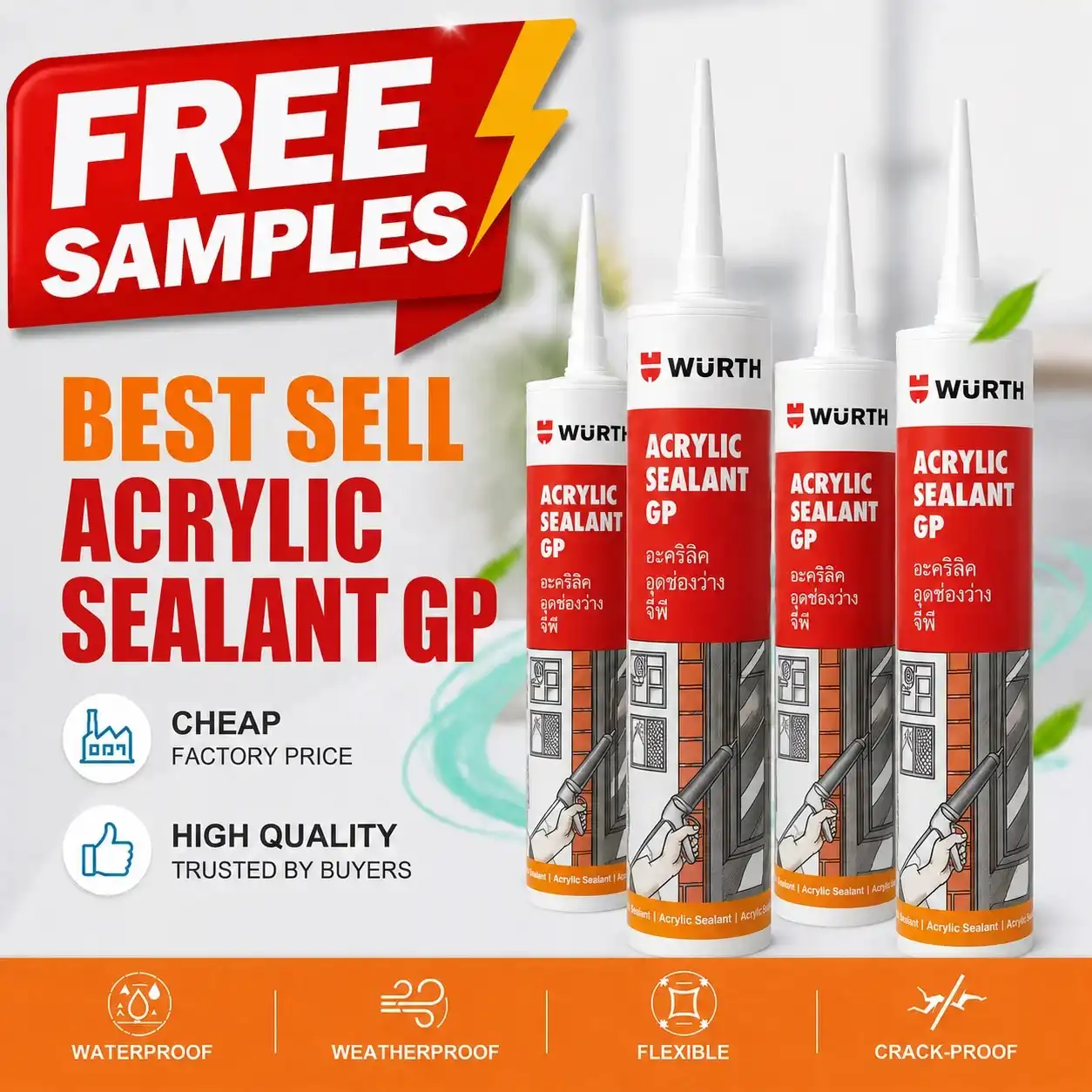
The right way to apply the seal has a direct effect on how long it lasts and how well the project turns out. Common installation mistakes can be avoided by knowing how to prepare the surface and taking weather factors into account.
Carefully preparing the surface is the first step to good adhesion. No matter if it's metal, concrete, plasterboard, wood, or plaster, the substrate must be clean, dry, and free of oil, dust, and other loose particles. Because acrylic formulas naturally stick to porous surfaces like brick and concrete, they usually bond without the need for a primer. But materials that are dense or don't have pores may need light abrading to make a mechanical key for the best adhesion. Joint sizes should be based on best practices in the business. For example, a depth-to-width ratio of 1:2 is best for distributing stress evenly. Installing backing rods makes sure that the joint geometry is correct and stops three-sided adhesion, which can make movement less possible.
Put cartridges or sausages into the right dispensing guns and make sure the extrusion goes smoothly without any air pockets. For precise bead placement, cut the tips of the nozzles at 45-degree angles to the width of the joint. To get a regular bead shape, keep the gun moving steadily and apply the same amount of pressure. Use wet spatulas or finishing tools to work on the surface during the skin formation window, which lasts for about 10 to 20 minutes. This step makes sure that the base is properly wet and gets rid of any gaps that could weaken the seal. Quality Acrylic Sealant Construction Grade products have a 30-minute surface drying time, which means that painting or finishing work can continue without long delays. This makes use of workers more efficiently on busy job sites.
The response to temperature changes the rate of healing and the workability of the material. Ambient temperatures below 5°C slow the cure process, while too much heat speeds up skin formation, which cuts down on the time needed for tooling. The rate at which water evaporates in these water-based systems is affected by humidity. Low humidity conditions may cause the surface to crack before it should.
To lessen these problems, try to plan applications for times when the weather isn't too bad. If extreme weather is unavoidable, change the pace of work and think about controlling the environment with things like temporary heating or ventilation. Moving joints while the glue cures can cause the glue to come apart, so make sure that the structure stays fixed for the first 24 hours. High-quality formulas that don't shrink much, like those that keep volume loss below 15%, make them much less sensitive to changes in the environment.
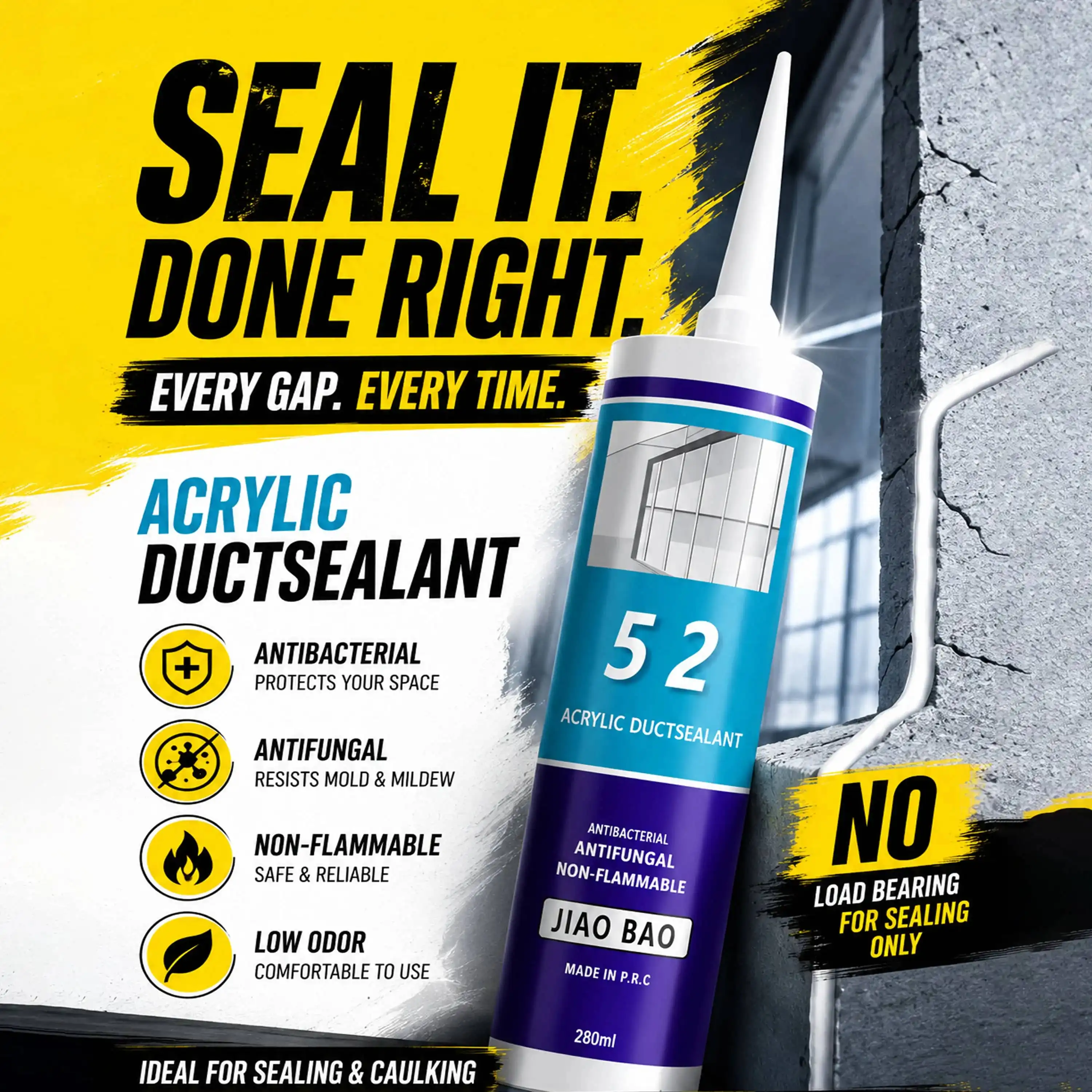
The choice of material affects both the success of the application right away and the cost of maintenance in the long run. When you compare different types of sealants, you can see which ones are best for different types of building projects.
Most of the differences between these groups have to do with how paintable and compatible the substrate is. Latex paint and coatings can be used directly on acrylic formulations after they have dried, so there are no shine lines or paint crawling problems like there are with silicone products. This quality is very important for physically visible uses where maintaining a consistent look is important. Because silicone is more flexible (it can often bend ±50%) and chemically resistant, it is better for joints that move a lot and are exposed to harsh environments. On the other hand, silicone needs primers on many porous surfaces, while acrylic sticks to itself naturally. When it comes to cost, acrylic sealants usually offer better value for large-volume uses because they use fewer raw materials. This is especially important for procurement managers who have to balance performance with limited budgets.
Polyurethane sealants are very strong and don't wear down easily, which makes them great for high-traffic horizontal parts like floor-to-wall changes. Polyurethanes are better at withstanding chemicals than acrylics, which means they can be used in industrial settings where solvents or fuels are present. The cons are that it's harder to paint, it takes longer to cure, and the isocyanate chemistry needs to be handled carefully. Acrylic products harden by evaporating water, so they don't need chemical cross-linking reactions to cure. This makes them safer to use in occupied areas. A good Acrylic Sealant Construction Grade usually has a shelf life of 12 months, which is longer than many polyurethane formulas. This means that less material is wasted on old stock. For standard door and window perimeter sealing where some movement is acceptable, acrylic solutions are the most cost-effective option without the complexity of polyurethane.
Instead of general tastes, project-specific factors should be used to choose materials. Expected joint movement, substrate types, exposure conditions, and finishing needs all play a role in making the best choice. Acrylic's ±12.5% to ±15% ability works well with connection joints that can't bend too much, like pre-cast concrete elements or HVAC ducting flanges. Acrylic is better at sticking to other coatings, which is needed for projects that need to be painted over or color-matched. Acrylic is priced reasonably, especially when bought in 300ml and 600ml quantities directly from the maker, which is good for projects that need to stay within a budget. Acrylic Sealant Construction Grades come in white, black, grey, and unique colours, so they can meet a wide range of stylistic needs without having to wait for special orders.
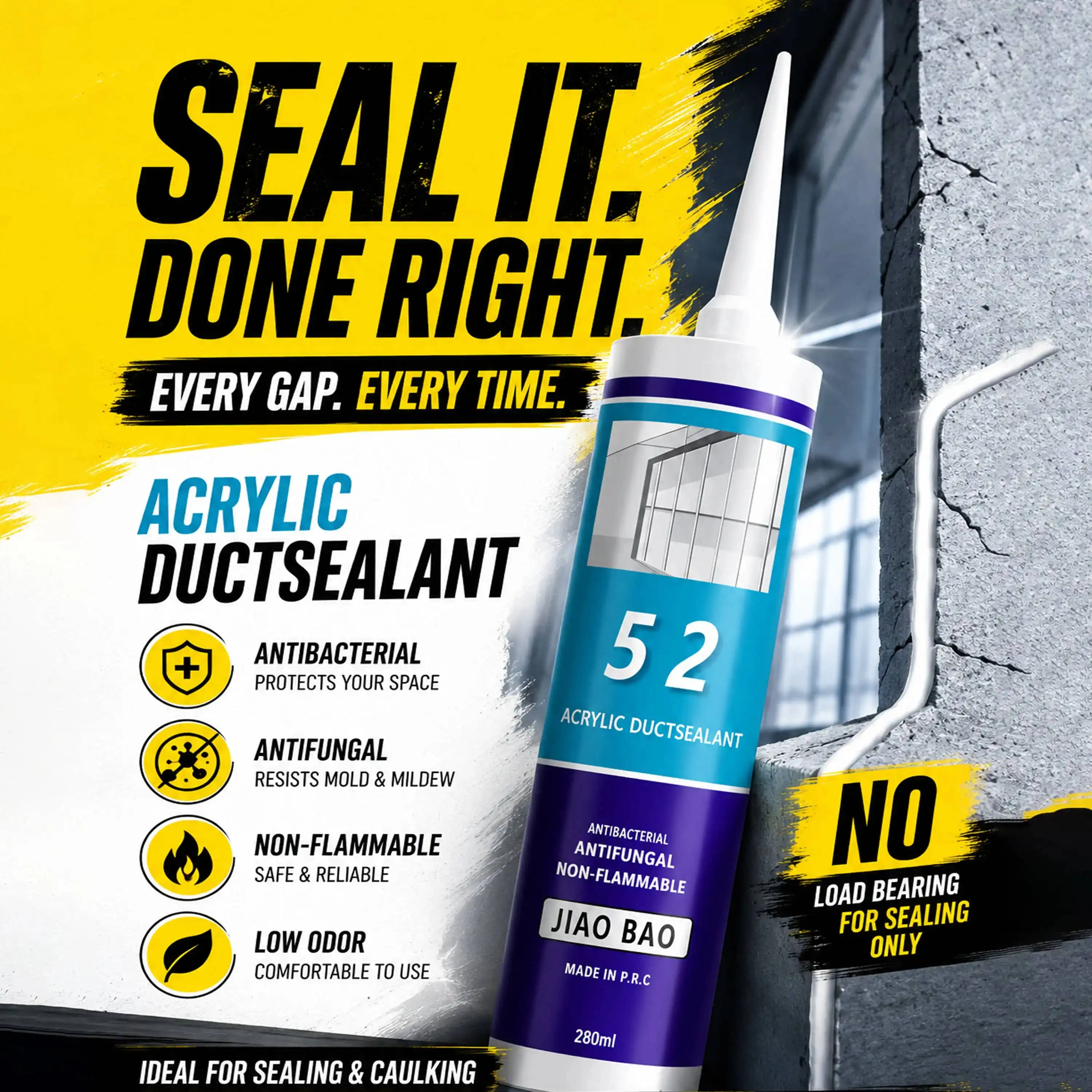
Strategic sourcing keeps the standard of materials constant and keeps project costs as low as possible. Understanding the factors used to evaluate suppliers and the methods of procurement can help lower risk.
ISO certification and proof of product-specific testing are ways that reputable makers show they follow international standards. Make sure that providers give you technical data sheets that list performance factors like elongation values, sag resistance, extrusion rates, and tensile strength. Companies that have been making things for a long time, like those that have been around for 13 years, usually have mature quality control systems and stable formulation consistency. When working on big projects, production ability is important. Make sure you know lead times and volume limits before signing a supply deal. Manufacturers who offer shipping windows of one to two weeks give project planners more freedom, and those who offer a range of packaging choices, such as cartridges and sausages in 300ml and 600ml sizes, can work with a wide range of application tools on job sites.
Working directly with makers like Shandong Jiaobao New Material Co., Ltd. has a number of benefits for buying Acrylic Sealant Construction Grades. Customisation options through OEM and ODM agreements let you change the specifications to meet regional standards or the needs of a specific project. When markups for middlemen are taken away, volume price becomes more attractive. This is especially true for general contractors who are managing multiple jobs at once.
It's easier to get technical help when you work directly with engineering teams that know about the recipe details. Distributors add value by keeping goods in stock locally, letting you place smaller orders, and using well-established transportation networks. The best route relies on the size of the order, the need for customisation, and the location. Setting up relationships with manufacturers for big projects and keeping accounts with distributors for short-term needs are examples of hybrid approaches that balance cost-effectiveness with operational flexibility.
In addition to unit pricing, you should also look at the total cost of ownership, which includes logistics costs, storage needs, and waste from products that don't last long enough. Products that stay stable for 12 months lower inventory change costs and cut down on lost outdated goods. Warranty terms that say problems with quality will be fixed or money will be refunded within the shelf life show that the maker trusts you and lower the risk of buying from you.
Different markets have different certification needs, so make sure that the goods you buy have the right approvals, like ASTM compliance for U.S. projects. Shipping plans that are flexible, like sea and land choices, let you get the best deal based on urgency and location. When choosing a supplier, things like payment terms, minimum order quantities, and the availability of samples for pre-qualification testing are all taken into account. Before committing to big quantities, procurement workers should ask for performance samples to make sure the product will work with certain substrates and application conditions.
Acrylic Sealant Construction Grades provide important closing properties for a wide range of building uses. They stick better to porous surfaces and are easier to paint than silicone options. When used correctly, the technical requirements—which include a high solid content, controlled shrinking, and dependable movement—ensure that the joint will stay solid for a long time. Matching the product's properties to the needs of the project is part of material selection. Things like joint movement, weather exposure, and finishing needs must all be taken into account. Buying from manufacturers with proven quality systems and certification compliance lowers the risk of the project and keeps costs down by maximising material purchases. As building techniques and environmental rules change, water-based acrylic products will still be able to meet future performance and green standards.
Surface drying takes between 30 minutes and 3 hours, based on the mix and the conditions outside. Complete curing requires 24 to 48 hours, but you can paint on it after it has made a dry skin. The rate of curing is greatly affected by temperature and humidity. For example, water evaporates fastest when it is warm and damp.
Exterior-grade formulations are very resistant to UV light and weathering, and they stay flexible and stick together even when the temperature changes from -20°C to +80°C. Products that meet ASTM C834 standards work reliably for closing around doors and windows outside. But silicone options may be better for joints that move a lot or get wet a lot.
Because Acrylic Sealant Construction Grade is hydrophilic, it bonds well with most porous surfaces, like concrete, brick, drywall, and wood, without a primer. Dense, non-porous materials like glazed tile or some plastics may need to have their surfaces prepared or primed. Before using on a big scale, you should always try the adhesion on important material to make sure it works well.
Shandong Jiaobao New Material Co., Ltd. is a reliable supplier of Acrylic Sealant Construction Grade that procurement managers should look to when they need sealing materials that are made to the highest standards. Our one-part RTV formulation has measured performance benefits, such as no sag in vertical uses, fast surface drying in 30 minutes, and excellent extrusion efficiency of 163 ml/min. With over 13 years of experience in specialised production, we have strict quality control that makes sure each batch is the same and that we meet all international standards, such as ISO and CE certifications. Flexible delivery times of one to two weeks, colour options that can be changed to fit your needs, and full OEM capabilities support projects of all sizes.
Our dedication goes beyond delivering the goods; if there are any quality problems within 12 months, you will either get a replacement or a refund, which protects your procurement investment. You can email our technical team at dorashen@cnjiaobao.com to talk about the specifics of your project, get performance samples, or look into group prices for your future building projects.
1. American Society for Testing and Materials. "Standard Specification for Latex Sealing Compounds." ASTM C834-17, Construction Sealants and Waterproofing Standards, 2017.
2. Chen, William and Roberts, Patricia. "Comparative Performance Analysis of Water-Based Construction Sealants in Commercial Applications." Journal of Building Materials Science, Vol. 42, Issue 3, 2022, pp. 287-304.
3. International Organization for Standardization. "Building Construction - Jointing Products - Classification and Requirements for Sealants." ISO 11600:2021, Construction Materials Standards, 2021.
4. Martinez, Eduardo. "Evolution of Acrylic Polymer Technology in Construction Sealing Applications." Construction Materials Quarterly, Spring 2023 Edition, pp. 56-71.
5. Thompson, Jennifer L. "Environmental Compliance and Low-VOC Formulations in Modern Construction Sealants." Green Building Materials Review, Vol. 18, No. 2, 2023, pp. 112-128.
6. Wilson, David R. and Chang, Michelle. "Best Practices for Procurement and Application of Construction-Grade Sealants in Large-Scale Projects." Professional Builder's Technical Guide, 8th Edition, 2024, Chapter 12.
November 16,2023
Enterprise Name
The sealant has very strong adhesion and performs well even on glass and aluminum. After curing, it remains flexible and shows no cracking. Perfect for our facade projects.
November 16,2023
Enterprise Name
Stable quality across batches. Our customers especially like the smooth application and consistent extrusion. It helps reduce installation time on site.
November 16,2023
Enterprise Name
I used it for bathroom sealing. Excellent waterproof performance and no mold issues so far. It's been holding up very well in humid conditions.
November 16,2023
Enterprise Name
The neutral silicone works well on sensitive materials without corrosion. Very suitable for industrial applications requiring stable performance.
_1779347426672.webp)