November 16,2023
Enterprise Name
The sealant has very strong adhesion and performs well even on glass and aluminum. After curing, it remains flexible and shows no cracking. Perfect for our facade projects.
Sep 16, 2026
When managing a commercial fleet, every maintenance decision carries operational weight. PU windshield auto glass sealant is a one-component, moisture-curing polyurethane adhesive engineered specifically for structural glass bonding in vehicles. Unlike silicone or generic urethane products, it delivers a combination of mechanical strength, thermal flexibility, and chemical durability that fleet environments demand. Whether you operate 20 trucks or 200 service vehicles, choosing the right windshield adhesive directly impacts safety compliance, replacement frequency, and your bottom line.
When PU windshield auto glass sealant comes in contact with wetness, it hardens and forms a thick, stretchy network of polymers between the glass and the metal pinchweld on the car. This chemistry makes a bond that is both stiff enough to support the weight of an airbag release and bendable enough to handle frame torsion while it's in use. FMVSS 212 standards say that an automotive glass adhesive that has properly cured must keep the windshield in place during a frontal crash. This is a requirement that generic sealants rarely meet. This compliance detail can't be changed for fleet managers.
Knowing the average performance helps buying teams decide if a company is a good fit. Here are the main features of a PU windshield auto glass sealant made for business use:
These numbers should be used as a standard by fleet procurement managers when comparing any supplier's technical data sheet.
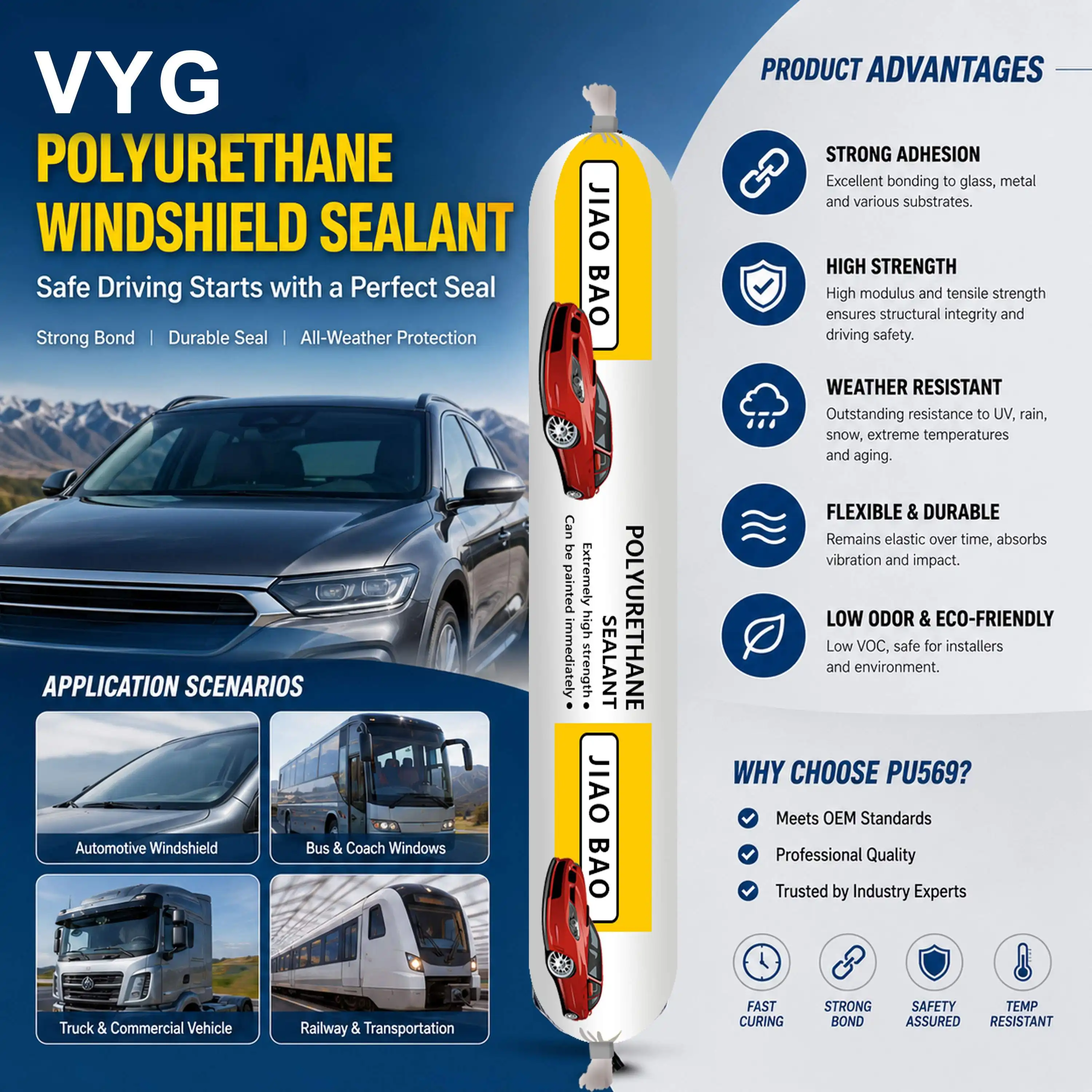
Fleet operators have to deal with problems that individual car owners don't have to: high daily miles, weather that changes from place to place, and the risk of a single glue failure spreading to hundreds of units. A structural PU windshield auto glass sealant needs to work the same way on all of them.
Here are the main reasons why polyurethane sealer is the best choice for maintaining business fleets:
Because of these benefits, you will have fewer warranty claims, less downtime for vehicles, and lower maintenance costs per unit across your whole fleet. In a 2019 study published in the International Journal of Adhesion and Adhesives, it was confirmed that high-elongation polyurethane formulations did better in cyclic fatigue testing under simulated road vibration conditions than silicone alternatives.
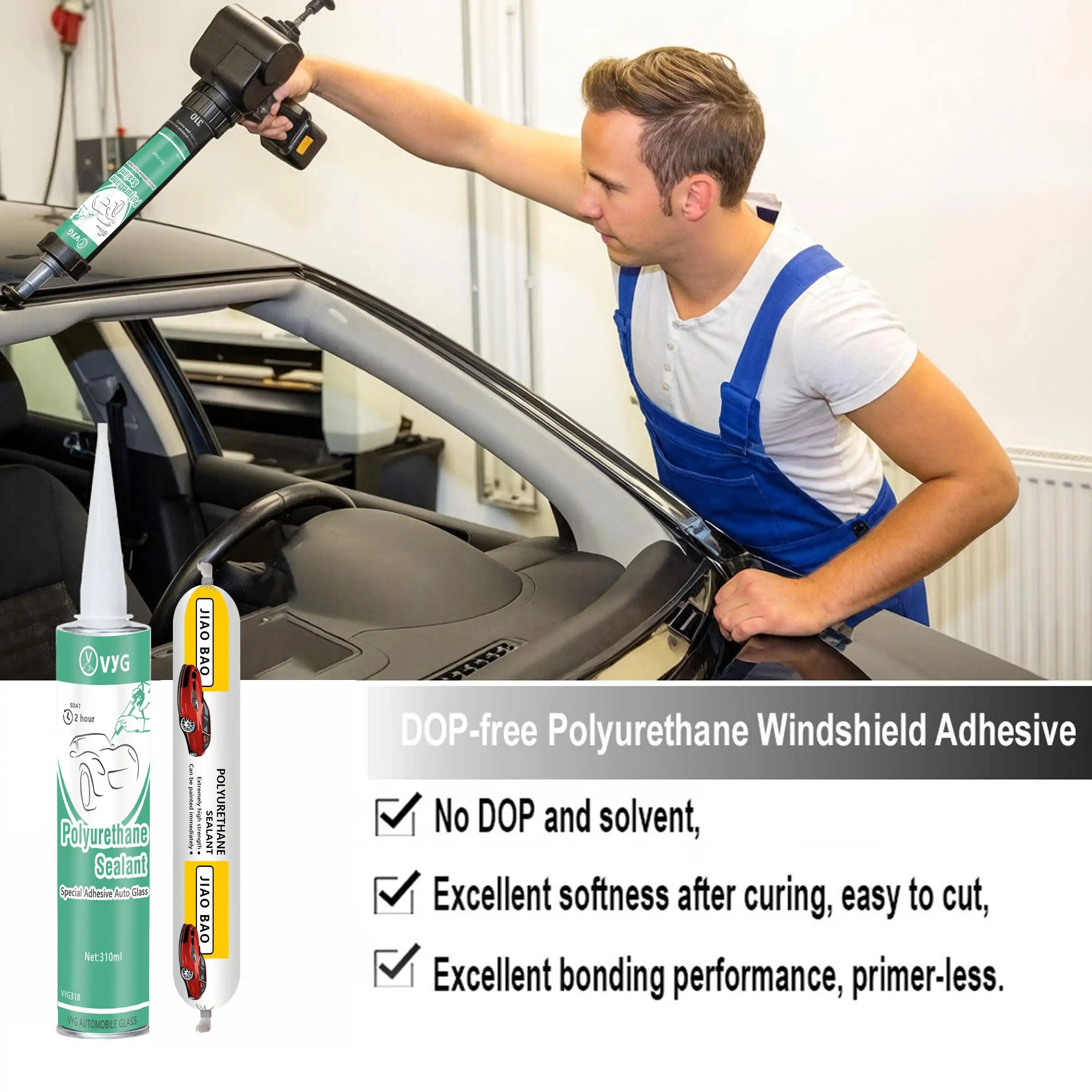
Silicone sealants are still commonly used in building and HVAC, but they are not exactly right for bonding structural car glass. Additionally, silicone doesn't stick well to automotive primer systems, and silicone overspray can damage future PU windshield auto glass sealant bonds on the same surface in a way that can't be fixed. Standard urethane goods stick to surfaces better than silicone, but they don't always have the right mix of elongation and stiffness that current car bodies need.
PU windshield auto glass sealant is in a different technical group because it is a safety-critical structural part and not just a sealant. High-modulus changes bring back torsional stiffness to OEM standards. This is especially important for electric vehicles (EVs) and new unibody platforms, where the window makes up to 30% of the roof's crush resistance.
When fleet procurement teams compare products, they should look at more than just price per cartridge. They should also look at verified adhesion peel test results (cohesive failure mode is required), extrudability consistency close to the end of the shelf life, and batch traceability documentation.
When buying PU windshield auto glass sealant on a large scale for a fleet, there are quality and logistics issues that can't be seen when buying in smaller amounts. Whether your standard installation SOP works in 50 or 500 locations depends on how well the supplier can keep the viscosity the same from batch to batch, support OEM private-label packaging, and handle split-warehouse distribution to regional depots.
When looking at suppliers, it's important to make sure they have ISO-certified production, data from accelerated aging tests that show how stable the product is over time, and a clear batch naming system that lets you find out why there is an issue with adhesion in a certain area. Volume prices, production wait times of one to two weeks, and the ability to ship by sea or land all make it easier for businesses that operate in more than one area to buy what they need. Before signing a supply agreement, ask for technical data sheets, application guides, and sample cartridges. The installation test in 3–5 pilot sites will show problems with consistency that datasheets alone can't see.
Most of the time, commercial fleet adhesion problems are caused by contaminated surfaces, bad curing conditions, or products that have passed their expiration dates. Before putting on a PU windshield auto glass sealant bead, the pinchweld surface needs to be clean, dry, and free of silicone residue. Technicians who work in cold places should know that curing slows down below 10°C. The winter tack-free time of 15–30 minutes reflects this, and safe drive-away schedules should be changed to reflect this.
Using expired sealer is very dangerous. Even if a cartridge extrudes smoothly after its 12-month shelf life, cross-linking agents that aren't working properly can cause the bond to weaken or not cure at all, which is a risk that no fleet operator should take. Use first-in, first-out (FIFO) inventory movement and write down batch numbers on car service records to keep full tracking. Because uncured isocyanate compounds need standard industrial hygiene measures, technicians should also wear chemical-resistant gloves and make sure there is enough air flow while applying them.
PU windshield auto glass sealant is not a common consumable. It is an important structural safety component that has a direct impact on the crashworthiness, noise and vibration performance, and brand risk of every car in your fleet. The provider you choose should be able to provide regular batch quality, OEM-compatible packaging, professional training tools, and reliable logistics support. This is just as important as the product specification itself. When your fleet operations are spread out across multiple regions, using a single, tested formulation eliminates differences in installation and makes your maintenance program stronger from the start.
In normal settings (23°C, 50% RH), a full mechanical fix takes about 5–7 days. But the safe drive-away time—the point at which the car can be moved without risk—is reached in 30 minutes to several hours, based on the mixture and the temperature outside.
Yes. When replacing auto glass, PU windshield auto glass sealant sticks well to PU cut-back surfaces that have dried. The main risks to watch out for before application are surface contamination and silicone remains.
Of course. It can stretch 400% and stay stable at temperatures between -40°C to +90°C, which makes it perfect for heavy-duty uses where frame twisting and high or low temperatures are common.
Standard formulations that contain carbon black can change the conductivity near antennas that are built in. Check with your provider to see if a low-conductive version is available for cars that have electronics built into the glass.
The product comes in 300ml and 600ml cartridges, as well as sausage packaging. Chain owners who need branded presentation can choose from OEM private-label choices.
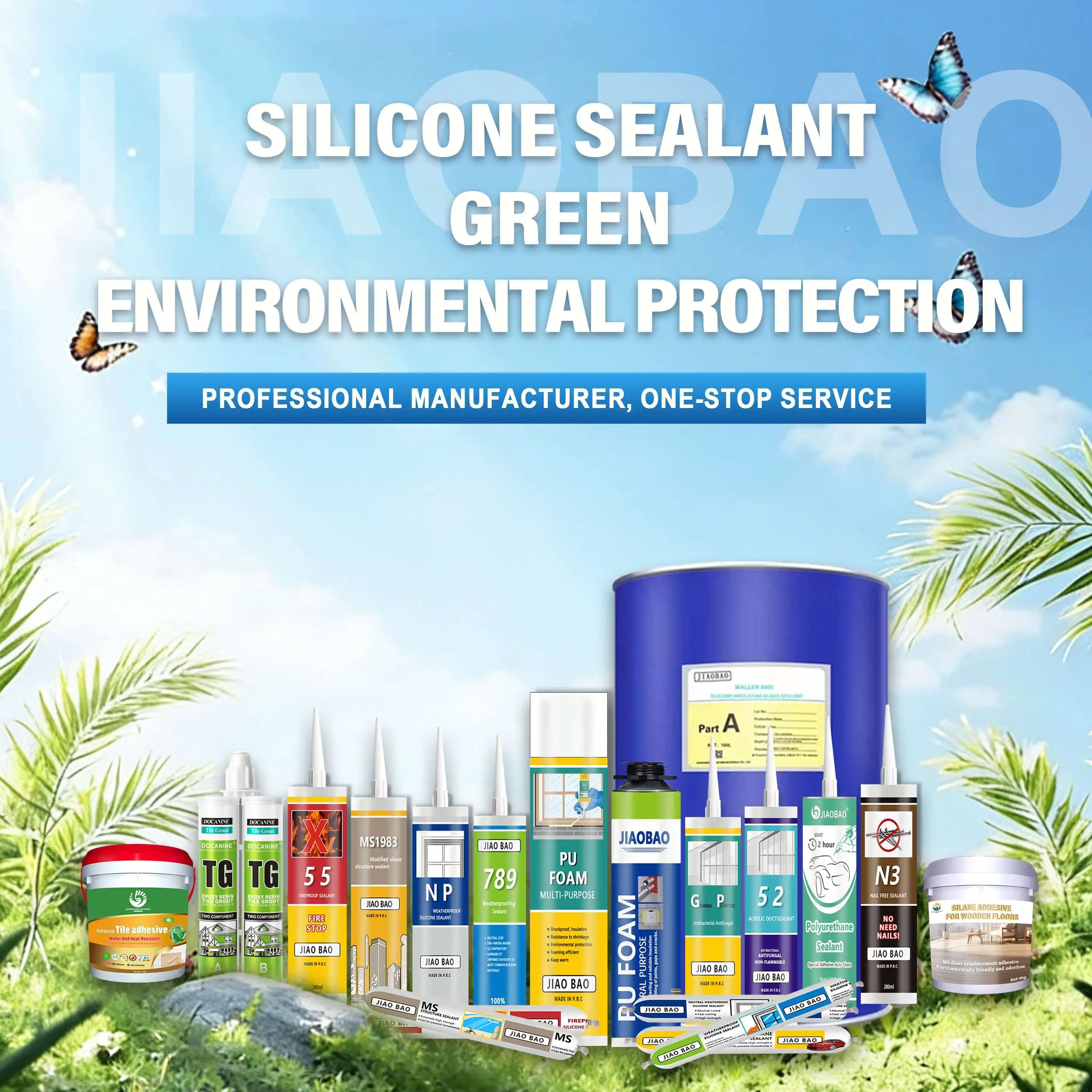
Jiaobao has been providing certified sealant options to business customers in both local and foreign markets since 2013. We are a reliable company that makes PU windshield auto glass sealant. To meet your chain's quality standards, we offer ISO-compliant formulas, OEM custom packaging, lead times of 1–2 weeks, and full batch tracking. You can email our team at dorashen@cnjiaobao.com to get samples and a custom supply proposal.
1. International Journal of Adhesion and Adhesives — Vol. 89, 2019
2. SAE International Journal of Materials and Manufacturing — Vol. 12, 2019
3. FMVSS 212: Windshield Mounting Standard — National Highway Traffic Safety Administration, 2021
4. IIHS Roof Strength Testing Methodology — Insurance Institute for Highway Safety, 2022
5. Journal of Polymer Science: Polymer Chemistry — Vol. 58, 2020
6. Automotive Body Repair News (ABRN) — Fleet Maintenance and Glass Adhesive Standards Overview, 202
November 16,2023
Enterprise Name
The sealant has very strong adhesion and performs well even on glass and aluminum. After curing, it remains flexible and shows no cracking. Perfect for our facade projects.
November 16,2023
Enterprise Name
Stable quality across batches. Our customers especially like the smooth application and consistent extrusion. It helps reduce installation time on site.
November 16,2023
Enterprise Name
I used it for bathroom sealing. Excellent waterproof performance and no mold issues so far. It's been holding up very well in humid conditions.
November 16,2023
Enterprise Name
The neutral silicone works well on sensitive materials without corrosion. Very suitable for industrial applications requiring stable performance.
_1779347426672.webp)