November 16,2023
Enterprise Name
The sealant has very strong adhesion and performs well even on glass and aluminum. After curing, it remains flexible and shows no cracking. Perfect for our facade projects.
Jul 15, 2026
When managing large-scale construction or industrial projects, procurement managers face a critical decision: how to ensure fire safety without compromising on structural flexibility and durability. Fireproof Building Silicone Sealant solves this problem by providing a unique covering solution that stops the spread of fire while allowing the building to move. This one-component RTV silicone sealant is different from other sealants because it combines flame-retardant technology with high flexibility. This makes it perfect for curtain walls, door and window joints, and entry seals. It can stay strong in high temperatures and still meet international fire safety standards. This makes it a smart choice for global B2B buyers who want reliable, cost-effective protection in a variety of settings.
Passive fire prevention systems have a special group for fire-rated silicone seals. These materials are made to cover linear holes and gaps in fire-rated systems. This keeps flames, hot gases, and harmful smoke from moving from one area to another during a fire. They are different from regular building sealants because they are made with heat-stabilized silicone polymers and flame retardants that don't contain halogens. When sealer is heated to high temperatures, it makes a char layer that is resistant to heat and keeps the joint from coming apart.
A fire barrier sealant's main job is to keep compartmentation, which means keeping the fire in the area where it started. Buildings have a lot of penetrations and expansion joints that can let fires spread if they are not covered properly or are left open. This effect, called the chimney effect in tall buildings, can make fires spread quickly up and down. When fire sealer is put in correctly, it forms a shield that keeps the fire rating of walls, floors, and ceilings. The sealant needs to stick to a lot of different surfaces, like metal, glass, concrete, and gypsum board. It also needs to be bendable enough to bend and crack when temperature changes and structures move.
The working temperature range is an important characteristic that procurement pros need to know. Good fire coatings keep working from -50℃ to +150℃, and some special formulas can go above 200℃. This range makes sure that the material stays flexible in the winter and doesn't get soft or lose its stickiness in the summer heat or around a fire. Movement ability is also very important, and is usually measured as ±20% to ±50% joint motion. Because it is malleable, the sealer can stretch and contract with the building in response to wind loads, earthquakes, and changes in temperature. This keeps the seal intact throughout the life of the structure.
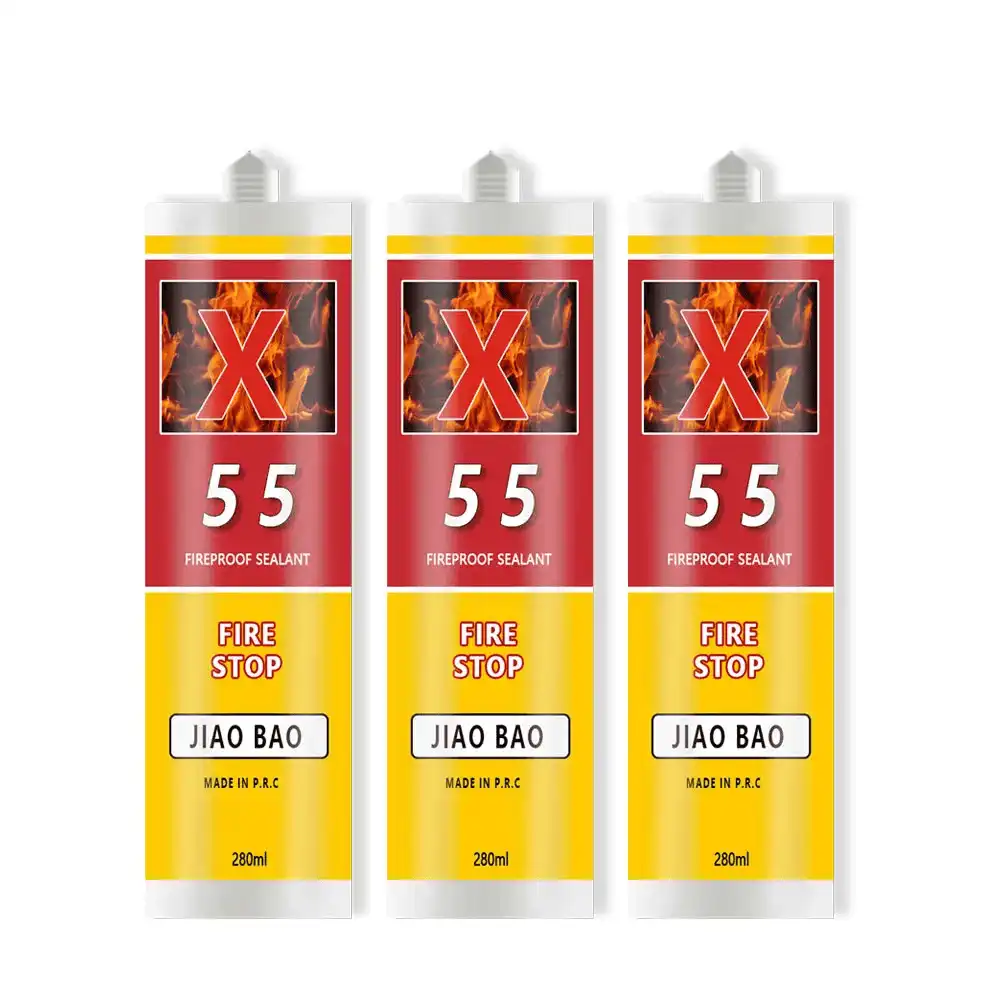
Knowing how fire-resistant silicone sealants are put together technically helps buying teams judge the quality and fit of the products they buy. The formula usually has a specific gravity of 1.30 to 1.50 g/cm³, which makes sure it has the right mass for good fire defense without adding too much weight. Whether it's acetoxy-based or neutral oxime-based, the curing method changes how well it works with different materials. Neutral-cure versions don't corrode, so they can be used on metal frames and delicate stone. Acetoxy types, on the other hand, fix faster but give off acetic acid as they do so.
Procurement managers should check a number of key performance factors when analyzing suppliers. The tack-free time, which is usually 45 to 60 minutes at normal conditions (25℃, 50% relative humidity), shows how fast the surface skins over, which can slow down work on the job site. How long it takes for the Fireproof Building Silicone Sealant to reach full strength is based on its curing depth, which is usually 3 mm every 24 hours. Shore A hardness between 20 and 35 makes sure that the sealer stays flexible while still being physically sound. It is important that the material doesn't sag or slump when it's applied vertically or overhead. This is especially important for curtain wall uses where both looks and performance are important.
Following well-known testing standards is a sure way to make sure that a product is reliable. We need seals that meet ASTM E814 (UL 1479) for firestops that go all the way through and ASTM E1966 (UL 2079) for joint systems that don't catch on fire. The F-Ratings (length of time the material will not catch fire) and T-Ratings (lowest temperature that the material can transfer) set by these standards must match the fire rating of the building assembly.
For European markets, agreement with the EN 1366 series is usually needed, while ISO 11600 grades (F and G classes) say if something is suitable for use on the outside of buildings and in glazing. To make sure the product meets the specific safety standards of their target market, procurement teams should ask for third-party test results and approval lists.
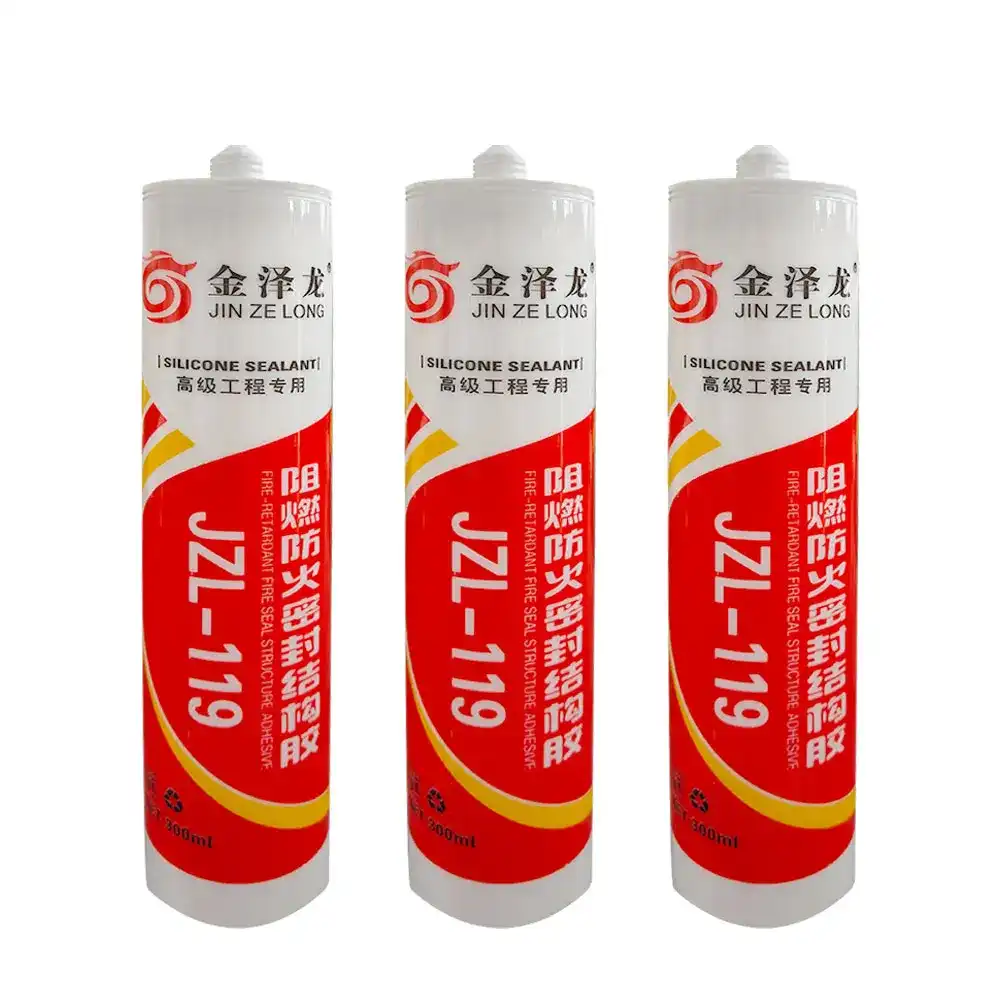
Because fire-rated silicone seals are so flexible, they offer unique benefits in a number of different industries. Knowing about these benefits helps procurement workers choose products that meet the needs of the project and the organization's goals.
Curtain wall companies have to keep fire compartmentation at the edge, where the outside cladding meets the floor slabs. This is not an easy task. This head-of-wall joint moves a lot because of wind pressure, temperature changes, and inter-story drift during earthquakes. In this situation, a good fire sealer needs to keep out the weather, allow for movement of up to 50 percent, and keep the fire safe.
Because colors can be custom-matched to white, black, grey, or RAL-specified shades, standard red firestop materials don't have to make sacrifices when it comes to looks. This ability to change colors is especially helpful for architectural glass surfaces where the sealant lines must match the design while still passing strict fire codes.
For a general builder, product dependability has a direct effect on project schedules and the amount of risk they are exposed to. A fire sealant that can be stored for 12 months and has uniform batch quality makes it less likely that the material will fail during installation or inspection. There are 300ml and 600ml packaging choices in cartridge or sausage shapes, so there is flexibility for different application sizes and equipment tastes.
Because the joints dry quickly and don't shrink much, they can be inspected and cleared more quickly, saving time and money. The most important thing is that if a sealer has ISO certification and a lot of technical information, it makes it easier to get permission from building officials and insurance companies that look closely at passive fire protection measures.
When pipes, wires, and ducts go through fire-rated barriers, they are called penetrations. These happen in factories and with mechanical, electrical, and plumbing (MEP) workers. Rigid firestopping materials often break when pipes move or grow, which makes the seal less effective. In these changing conditions, Fireproof Building Silicone Sealant products keep their flexibility and stickiness. Silicone is immune to fuels, oils, and cleaning agents that are common in industrial settings because it is chemically stable. This means that it lasts much longer than acrylic or polyurethane options. It's especially useful in HVAC systems where pipe moves hot or cold air, and in freezer plants where freezing temperatures can weaken sealants that aren't made well.
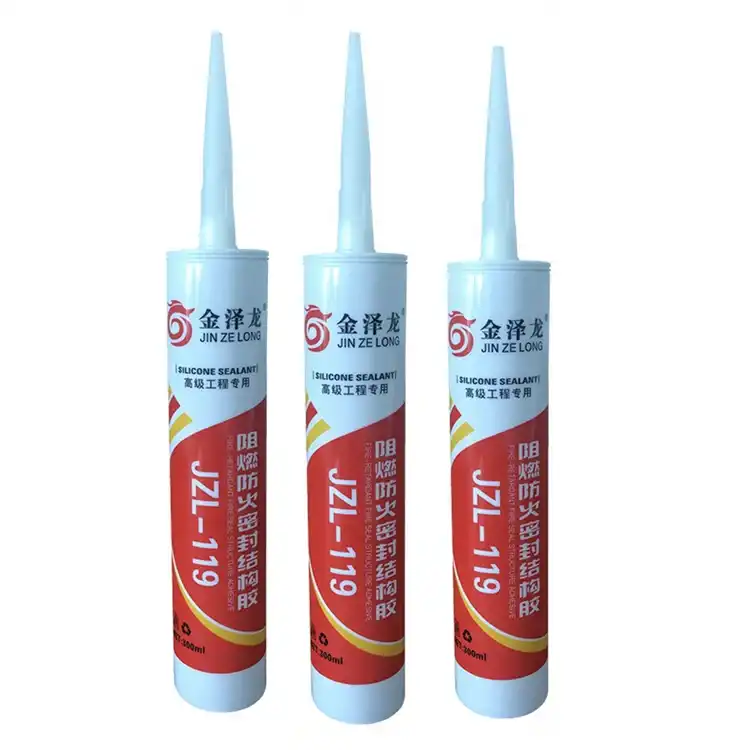
To successfully buy fire-rated seals around the world, you need a methodical way to evaluate suppliers and make sure quality. Choosing a seller is a very important task because of the complicated nature of foreign standards, the importance of fire safety, and the need for long-term performance.
First, look at how experienced the maker is in making things and how they handle quality. A provider that has been making things for more than 13 years, like well-known manufacturers, usually has better formulations and more regular batch control. ISO 9001 certification shows that you handle quality in a planned way, and ISO 14001 certification shows that you care about the environment, which is becoming more and more important as green building standards spread around the world.
For big projects, production ability is important. Make sure the supplier can handle your order number within the time frame you need. Normal lead times are one to two weeks, but small businesses can have trouble with rush orders or seasonal demand spikes. Ask for examples from projects that are similar to yours and check the supplier's history with curtain wall contractors, general contractors, or industrial clients, based on what you need.
Don't commit to buying in bulk until you've tested samples thoroughly first. Ask for samples of the product along with full technical data sheets and test reports from a third party that show the product meets the standards that matter. Test sample materials in the field, where they will be used on the job site. Check to see how well it sticks to the materials in your project.
For example, different types of metal, glass coats, concrete mixes, and stone finishes can affect how well it sticks. Check how easy it is to work with. Does the sealant spread smoothly at room temperature? Is it easy to tool to get the joint shape right? How fast does it skin over, and does the success against the cure meet the requirements? With this hands-on approval, there is less chance of finding problems with compatibility after the big delivery.
Buying things from other countries can make transportation more complicated, which can delay projects and increase costs. Make sure the seller gives you a choice of sending methods, such as sea freight for big orders with longer wait times or fast land/air transport for urgent needs. If you want to escape extra costs or delays at customs, make sure you understand Incoterms well. There is a wide range of minimum order numbers (MOQs).
Some providers allow new customers to place smaller orders at first, while others demand commitments for full containers. Support after the sale is just as important: Does the seller offer expert help during application? What is the guarantee policy if there are major problems? For procurement managers whose reputations depend on material performance, a promise to pay or replace the Fireproof Building Silicone Sealant if there are quality problems within the shelf life time is an important way to protect against risk.
If it's not used correctly, even the best fire sealer won't work as well as it should. By following the right installation steps, you can be sure that the product meets all code compliance requirements and protects as well as it could.
Preparing the area correctly is a must if you want a strong bond. Every surface needs to be dry, clean, and free of frost, oil, dust, and other small things that could fall off. Porous surfaces, like concrete, may need to be primed to keep sealant from absorbing too much and make sure the bond is strong enough. When designing a joint, the width should usually be twice as big as the movement that is expected, and the depth should be between 6mm and 12mm, based on the fire rating that is needed.
The fire certification is null and void if less than the tested depth is used. This is a regular compliance failure found during checks. Closed-cell polyethylene backer rod can be used to control the depth of the joint and act as a bondbreaker at the back of the joint, letting the glue stretch and contract freely. Never put sealant on top of holes that haven't been fixed; this "bridge" method fails quickly when the building moves.
Conditions of application have a big effect on healing and function. It should be between 5 and 40 degrees Celsius, and the humidity should be about 75%. Conditions below freezing stop the proper bonding, and too much heat can cause skinning too soon, which traps solvents and stops the full fix. For vertical and overhead uses that are popular in curtain wall work, use formulas that don't slump and keep the shape of the beads without sagging.
Make sure that the cartridge holes are cut at the right angle to fit the joint width, and keep the tool pressure constant to get a stable bead size. Tooling the surface right away after application makes sure that the edges of the base are properly connected and the finish is smooth. Do not use too many tools, as this can create air spaces or spread the sealer too thin. When applying sealer outside, keep it out of the rain for at least 24 hours so that it doesn't wash off before a good skin forms.
A number of mistakes can affect how well fire sealer works. Three-sided adhesion, in which the sealer sticks to the back, the sides, and the bondbreaker, makes it hard to move and eventually breaks the glue. When you install the backer rod too deeply, the Fireproof Building Silicone Sealant beads get too thick and take too long to cure, which can cause holes to appear. On the other hand, not enough depth doesn't meet the standards for fire rating.
Adhesion loss happens when oils, silicone residue from old sealants, or form release agents get in the way. If you mix sealer types that don't work well together, like putting neutral-cure on top of acetoxy, the sealant might not dry properly. Lastly, the fire rating isn't good if you don't check that the exact joint configuration fits the tested assembly. Always look at the installation directions and test lists provided by the maker to make sure that your application works the same way as the certified system.
The global fire defense business is always changing because of new technologies, stricter rules, and the need to be more environmentally friendly. If people who work in procurement know about these trends, they can make decisions that will increase long-term value.
Concerns about the environment are having a bigger effect on product specs. Many old sealants had a lot of volatile organic compounds (VOCs) in them, which are bad for the environment and for the air quality inside homes. These days, VOC levels are less than 50 g/L, which means they meet LEED v4 and other green building standards without lowering efficiency. Some companies are looking into bio-based silicone intermediates as a way to use less petroleum, but these are still in the early stages of research.
Because people want recyclable packaging and less plastic waste, providers are starting to offer bulk sausage packaging that makes less cartridge waste on big jobs. B2B buyers who are committed to their companies' sustainable goals should give more weight to providers who provide clear data on the environment and show that they are always improving the way they make things.
Fire safety rules are getting stricter around the world, which is both a problem and an opportunity. Newer building codes require compartmentation to happen at shorter times, which means that firestop work has to cover more areas. Because of the terrible lessons learned from high-rise fires, inactive fire protection systems are now closely inspected and documented by the government more often.
Because of this trend, it's more important than ever to work with providers who keep their certifications up to date and can offer full technical help during inspections and plan reviews. As codes change, procurement teams should expect that Fireproof Building Silicone Sealant products that meet today's standards may need to be reformulated or tested again. This makes the technical ability and response of suppliers very important when choosing suppliers.
There are some interesting options when fire safety and building technology come together. Sensors placed in key fireproofing areas can check the stability of joints and find damage before they break. This new way of doing predictive maintenance could change fire safety from an inactive system to a building function that is constantly watched. Using photographs and GPS-tagged inspection records for IoT-enabled quality control during installation creates auditable compliance trails that meet stricter regulatory requirements. People who work in procurement should work with providers who are investing in these kinds of technologies. This will put their companies at the top of smart building safety management.
When choosing the right Fireproof Building Silicone Sealant, you need to find a balance between technical performance, provider stability, and following the rules. The unique benefits of high-quality formulations—great temperature flexibility, better movement accommodation, and suitability with multiple substrates—make them useful in building, industry, and infrastructure.
Fire safety systems that work reliably for their whole lives will be bought by procurement professionals who know the subtle differences between goods, carefully check the credentials of suppliers, and make sure that the right methods are used. As sustainability standards rise and building codes get stricter, it becomes more important for projects to work with makers who can show they have technical knowledge, steady quality, and forward-thinking new ideas.
No, these items are not the same. They have different uses. When silicone seals are heated, they slowly burn off but don't really get any bigger. When heated, intumescent sealants get bigger, actively crushing and closing around plastic lines that are melting. Most of the time, intumescent acrylic sealants are needed to keep the fire rating when flammable penetrants like PVC or CPVC tubes burn away.
The joint depth is very important and needs to meet the design of the tried assembly. To get a 2-hour fire rating, you usually need a minimum depth of 6mm to 12mm, but this depends on the width of the joint. If you put a thin bead over a gap, even if it covers the whole width, the fire certification is null and void because the proven thermal mass and char formation rely on there being enough material volume.
Not just certificates, but full third-party test results should be asked for. Check that the tests were done by reputable labs that followed the right guidelines (ASTM E814, ASTM E1966, EN 1366). Make sure that the way your joints are set up and the materials they're made of match the tested building conditions. Make sure the certifications are up-to-date and cover the Fireproof Building Silicone Sealant formulation of the product you will receive. Manufacturers sometimes change the recipe without changing all the paperwork.
Jiaobao New Material Co., Ltd. is the only company that can meet the specific needs of complicated projects when purchasing managers are looking for a reliable Fireproof Building Silicone Sealant provider. With more than 13 years of experience in specialized manufacturing, we've come up with formulations that are both fire-resistant and flexible enough for modern curtain wall and industrial uses. Our production center is ISO certified and can make batches of high quality with wait times of only one to two weeks.
Through OEM/ODM services, we can fully customize your order, including matching RAL colors for building projects and making changes to the formula to meet specific performance needs. Our MOQs are open enough to work for both big contractors and distributors who are just starting to sell in new markets. You can email our team at dorashen@cnjiaobao.com to get technical specs, test samples, or talk about how our fire-rated sealant options can help your next project be safer and more compliant.
1. Smith, J. and Williams, R. (2021). Passive Fire Protection in Modern Building Design: Materials, Standards, and Best Practices. Construction Safety Press.
2. International Code Council (2022). Fire Resistance Testing and Certification Requirements for Building Sealants. ICC Technical Report Series.
3. Anderson, M. (2020). "Silicone Sealant Chemistry and Performance in High-Temperature Applications." Journal of Construction Materials Science, 45(3), 287-304.
4. National Fire Protection Association (2023). NFPA 285 and Exterior Wall Assembly Testing: Implications for Sealant Selection. NFPA Guidelines.
5. Chen, L. and Roberts, K. (2022). "Comparative Analysis of Fire-Rated Joint Systems in Curtain Wall Construction." International Journal of Building Technology, 38(2), 156-173.
6. European Association for Passive Fire Protection (2021). Best Practice Guide for Firestop Systems: Installation, Inspection, and Maintenance. EAPFP Technical Manual.
November 16,2023
Enterprise Name
The sealant has very strong adhesion and performs well even on glass and aluminum. After curing, it remains flexible and shows no cracking. Perfect for our facade projects.
November 16,2023
Enterprise Name
Stable quality across batches. Our customers especially like the smooth application and consistent extrusion. It helps reduce installation time on site.
November 16,2023
Enterprise Name
I used it for bathroom sealing. Excellent waterproof performance and no mold issues so far. It's been holding up very well in humid conditions.
November 16,2023
Enterprise Name
The neutral silicone works well on sensitive materials without corrosion. Very suitable for industrial applications requiring stable performance.
_1779347426672.webp)