November 16,2023
Enterprise Name
The sealant has very strong adhesion and performs well even on glass and aluminum. After curing, it remains flexible and shows no cracking. Perfect for our facade projects.
Sep 8, 2026
In harsh production situations, GP door and window silicone sealant beats acrylic alternatives. Silicone sealants outperform acrylic in moisture resistance, temperature tolerance from -50°C to +150°C without degradation, and flexibility exceeding 300% elongation to accommodate thermal expansion in aluminum and PVC profiles. Silicone is chosen by door and window makers that must maintain seal integrity and manufacturing consistency because to this performance disparity.
When making windows, picking the right sealing material affects everything from the quality of the product to how happy the customers are with it. Silicone and acrylic sealants are both on procurement lists, but their chemical makeup and how well they work in real life are very different.
For example, silicone seals are made of elastomers that can change shape at room temperature. When exposed to air humidity, a one-component moisture-curing recipe changes from a usable paste to a strong rubber gasket. The acetoxy-cure type gives off acetic acid while it cures, which gives it that familiar vinegar smell that people who work on the production floor know. This chemical process creates strong siloxane bonds that last much longer than organic polymers and don't break down in the environment.
This technology can be seen in Jiaobao's GP door and window silicone sealant. It is made as a thixotropic paste and doesn't stick for 15 minutes, so it can be quickly handled on assembly lines. The hardness of the cured material, which is 18 on the Shore A scale, keeps its flexibility while giving a maximum bond strength of 1.5 MPa. It comes in 300ml and 600ml sizes and can be white, black, gray, or a custom color. It matches colors perfectly, which is important for finishing windows in a way that looks good.
Acrylic sealants come from acrylic polymer emulsions that are based on water. The fact that these mixtures cure through evaporation instead of chemical cross-linking makes them less weatherproof by nature. Acrylics can be painted, which is helpful for internal trim work, but they aren't waterproof or UV stable enough for outside window edges that get wet, have temperature changes, and direct sunlight.
Production managers have noticed that acrylic sealants tend to get smaller as they dry out because the water in them evaporates. This loss of volume puts stress on the bond lines, which is especially bad where there are wide joints between metal frames and glass panes. When it gets below freezing, acrylics lose their flexibility and can crack, which makes customers worry about air getting in.
Silicone sealants are most often used for outdoor windows because they don't react to changes in temperature or wetness. Window makers use them to bed glass into metal in thermal-break windows for homes, storefront glazing for businesses, and perimeter seals around skylights. It works well for high-throughput production lines because it can stick to non-porous surfaces like glass, glazed pottery, and anodized metal without primers.
An important place for acrylic goods is in home design. They do a good job of sealing painted wood trim, drywall joints around window frames inside, and other places with low movement and controlled temperature. But choosing acrylics for sealing outside windows can lead to premature failure and expensive warranty claims.
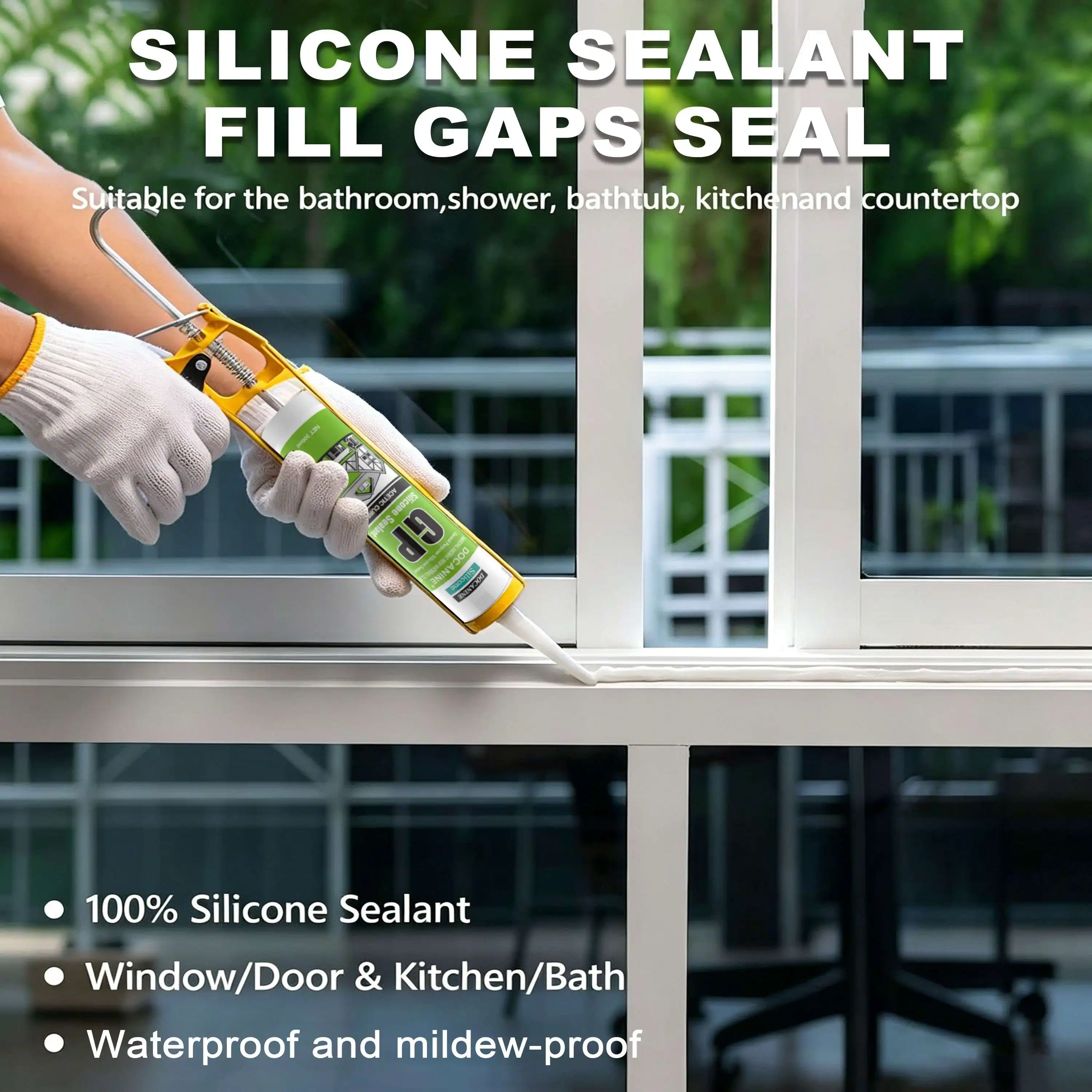
Procurement managers can make decisions that protect both product quality and profit margins when they know how these materials work in real factory and field situations.
A lot of people use their window warranties to complain about water getting in. When silicone sealants are used, they form hydrophobic barriers that actively keep water away, even if they are exposed to water all the time. The cross-linked polymer network stays solid when it's wet, so water molecules can't get through the seal. Jiaobao's formula is very resistant to water, acids, oils, and solvents. This chemical stability is important for windows that are installed near the coast or in industrial areas where airborne pollutants are common.
Because acrylic sealants are water-based, they can break down after being wet for a long time. Even though they might look fine during the first tests, acrylics slowly break down and soften when they stay wet for a long time. This is why windows covered with acrylic materials often start to leak after 18 to 24 months in places that are wet or get a lot of rain.
The length of service has a direct effect on your guarantee and the image of your brand. Because their siloxane backbone doesn't react with UV light, ozone, or temperature changes, silicone seals keep their physical features for decades. Independent tests show that silicone glazing seals that are put on correctly can work for 20 years or more without losing much of their adhesion or flexibility, and this long-term reliability is further enhanced when you choose GP door and window silicone sealant for your glazing applications.
High-quality silicone mixtures have a tensile strength of 1.0 to 1.5 MPa and can stretch more than 300%. This means the material can stretch a lot before it breaks, which lets different materials, like glass and metal, move in different ways. Jiaobao's product specifications back up these performance standards, making sure they work with current thermal-break window designs that expand and shrink a lot.
In outdoor uses, acrylic sealants usually last between 3 and 5 years before they start to chalk, crack, or lose their stickiness. Because they break down easily in UV light and don't stretch as much, they can't be used in window systems that are meant to last for decades without any upkeep.
In the summer, window frames get bigger, and in the winter, they get smaller. Shear stress is put on sealing joints by this movement. Silicone can stretch a lot, so it can deform elastically and stay in contact with both substrates through thermal cycles. The material goes back to its original shape without changing permanently, so the seal stays strong season after season.
Another important difference is shown by adhesion tests. Silicone sealants usually fail cohesively when they are properly applied to clean, dry surfaces. This means that the sealant tears before the bond to the base breaks. This unified failure mode shows that there is strong connection between the surfaces. More often than not, acrylic products have adhesive failure, which means the sealant comes away cleanly from metal or glass surfaces, letting air and water in.
During curing, the acetoxy-cure silicone gives off acetic acid gas, which leaves a noticeable but short-lived smell on the factory halls. With the right airflow, this is easy to deal with, and the smell goes away in a few hours. Neutral-cure silicone versions get rid of this problem completely, but they cost a little more in materials. When made to ISO and CE standards, like Jiaobao's goods are, both types follow international VOC rules.
Acrylic sealants don't smell bad and are easy to clean up with water before they harden. This makes them seem easier to use when applying. But this benefit doesn't matter if the cured seal fails too soon, leading to customer complaints and field service costs that are much higher than the initial convenience.
To get the best results from silicone seals, you need to pay attention to how you prepare the surface and how you apply them. When these practices are used, production line supervisors report a lot fewer quality problems and faster throughput.
For effective adhesion, surfaces must be clean and dry. Any contamination, like oil from handling, release agents from extrusion, dust, or water, can break the bond. As part of the production process, the glass edges and frame touch areas should be wiped down with a solvent (usually isopropyl alcohol) right before the sealant is applied. Allow surfaces to dry completely before applying sealant. Putting sealant on wet substrates will cause it to fail to stick, no matter how good the sealant is.
When applying, temperature is important. For reliable results, the temperature of the substrate and the air should be between 5°C and 40°C. Too much heat can cause skinning to happen before shaping is finished, and cold surfaces slow healing and may stop proper wetting.
It is important for leak-free seals that professional cartridge guns with adjustable flow controls make sure that the bead geometry stays the same. Set the extrusion rate to meet the speed of your production line. For high-volume operations, this is usually 300ml per minute or more. Cut nozzle tips at 45-degree angles so that they are the right size for the joint width, which for home window glass is usually 6 to 8 mm.
Put on the sealant in long beads, making sure there are no cracks or air holes. Use wet tools or spatulas to work on the bead right after casting to make sure it makes smooth, even contact with both joint sides. This action of the tooling forces the sealant into close contact with the substrates and gets rid of any air gaps that could weaken the seal.
For optimal performance in such applications, we recommend using GP door and window silicone sealant, which is specifically formulated to maintain bead integrity during tooling. Jiaobao's recipe doesn't slump much, so the beads stay in shape on vertical joints during the 15-minute tack-free time.
Moisture-curing silicones quickly form a skin on the surface—within 15 minutes in normal conditions—but the full cure happens from the outside in. The cure depth is about 3 mm every 24 hours at 25°C and 50% relative humidity. It takes slightly longer for joints that are thicker to cure before windows can be packed up and shipped.
Conditions that are very dry slow down the drying process. To keep cure rates uniform, production sites in dry climates might need to change line speed or use humidity control. Temperature also matters; things cure faster in warmer places and slower in colder places. When production plans are based on these factors, uncured sealant is not affected when it is handled.
You can't paint over silicone seals. Water-based paints and solvent-based finishes can't stick to the slippery surface. Because of this trait, choosing a color for the sealant must happen during the design process, not after it has been installed. As standard colors, Jiaobao offers white, black, and gray. For large production runs that need to match the look of certain frame finishes, custom color matching is also an option.
If you need paintable seals for interior trim that will be painted after the windows are installed, choose paintable hybrid sealants or traditional acrylics. Silicone should only be used for weathersealing the outside of the house where painting is not necessary.
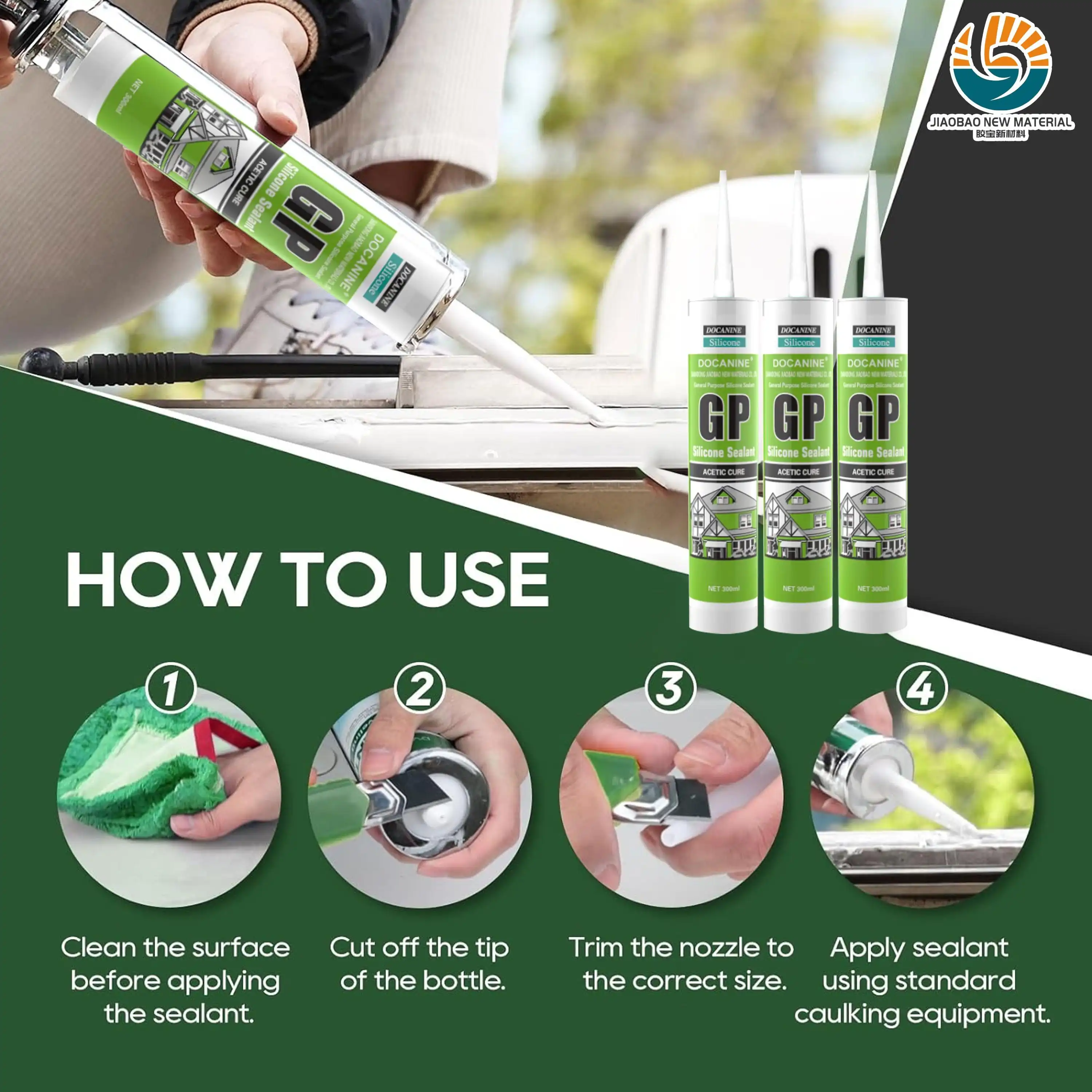
Making decisions about what materials to use can have an impact on your whole business, affecting how well you make things, how well you check for quality, and how happy your customers are. Smart procurement takes into account both short-term cost concerns and long-term performance needs.
Prices per cartridge show that silicone seals are usually 20–40% more expensive than plastic ones. This difference in price makes buyers who want to save money look at cheaper choices. The total cost of ownership, on the other hand, tells a different story. When you add up warranty claims, service calls to the field, and damage to your reputation from seals failing too soon, silicone's longer durability leads to lower lifecycle costs.
Unit costs go down a lot when you buy in bulk. Jiaobao has reasonable prices for container-load orders, and production lead times of 1-2 weeks make sure that producers with continuous production plans don't lose their supply chain. You can get the best material costs based on production output and equipment investment by choosing flexible packaging choices like cartridges for manual use or sausages for pneumatic guns.
Different types of windows need different ways to be sealed. High-performance thermal-break windows that are made to save energy can't handle air leaks that lower their insulation values. For these uses, silicone needs to be able to keep its flexibility and stickiness over many years of changing temperatures. Acrylic sealants might seem like a good choice for cheap windows in mild areas, but even there, silicone's longer service life lowers the total cost of installation when you take into account less guarantee risk.
In international markets, following the rules is becoming more and more important. When windows are sent to places with strict energy rules or building material certifications, they need seals that meet certain standards. GP door and window silicone sealant is one such product that fulfills these requirements, and Jiaobao's ISO and CE certifications show that they meet international quality and safety standards. This makes it easier to get your paperwork ready for exporting to markets in Asia, Europe, and North America.
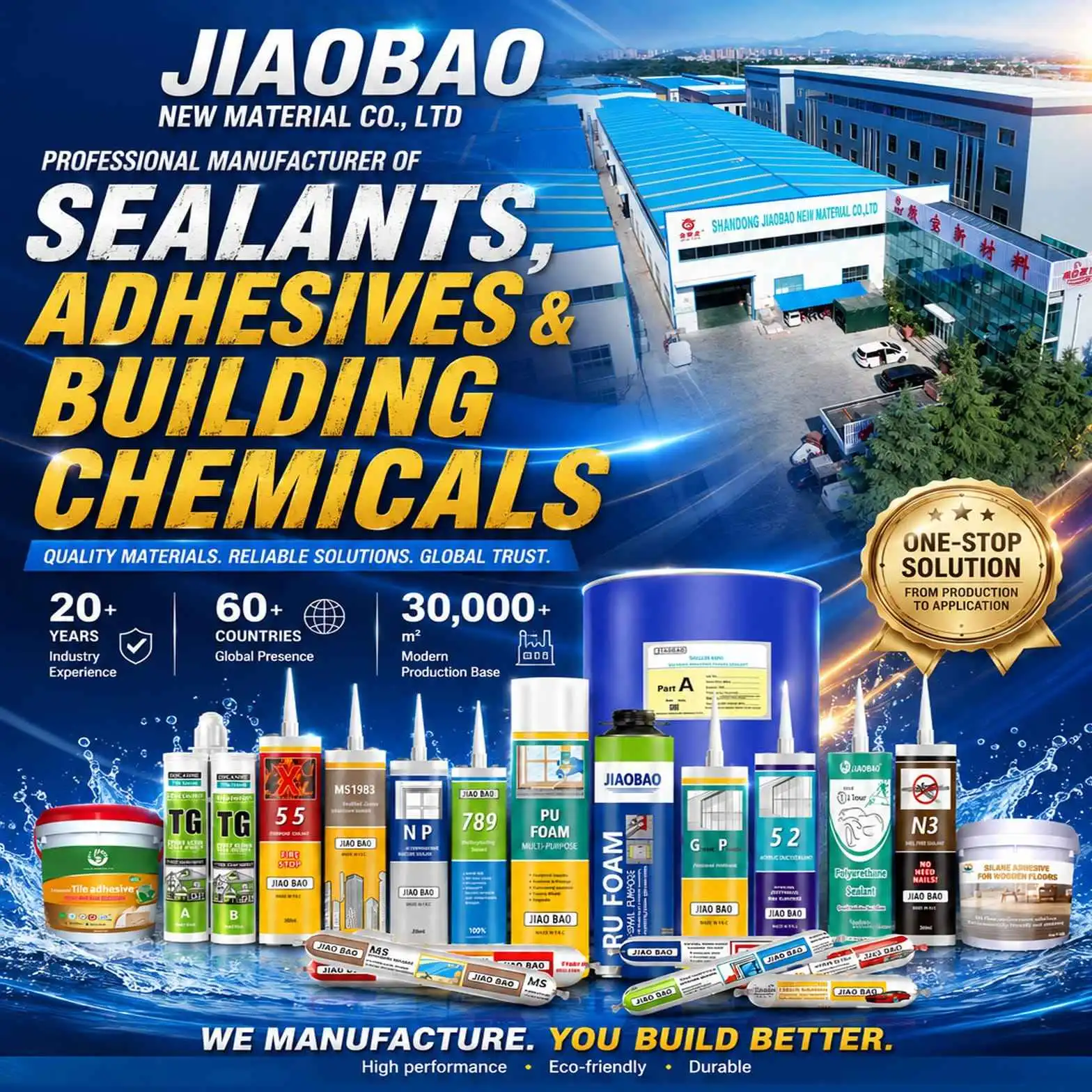
The performance of a sealant depends a lot on how well it is made and how consistently it is mixed. Manufacturers that have been around for a while and have clear quality processes produce consistent results batch after batch. Jiaobao has been making silicone seals for 13 years and has developed production methods and quality control systems that keep batch-to-batch differences to a minimum.
Certifications let a third party check that performance claims are true. Achieving ISO 9001 quality management approval means that processes are controlled in a planned way. Having a CE mark on a product means that it meets European standards for health, safety, and the environment. These certifications lower your risk of buying something by making sure that the properties of the material match the published specs.
Quick technical support helps fix problems with applications before they slow down production. When people ask about how to prepare the surface, whether it will work with certain frame materials, or the best way to use it, they need quick, accurate answers from staff who know what they're talking about. You can talk to technology experts directly on Jiaobao. These experts know how to make windows and can suggest answers for unusual situations.
Quality problems are rare with reliable providers, but they do happen sometimes. Clear rules about how to handle damaged materials keep your business from having to deal with long periods of downtime. Jiaobao's guarantee covers any quality problems that happen within the product's 12-month shelf life with a refund or replacement. This protects your finances if problems happen.
The best way to tell how well materials work outside of controlled lab conditions is to look at documented field experience. Manufacturers of windows in a variety of areas say that silicone and acrylic work in similar ways.
A medium-sized window maker in the Midwest of the US switched from acrylic glass sealants to silicone ones when the number of guarantee claims for water damage got too high to handle. Within 18 months of the switch, warranty calls for problems with seals dropped by 73%. Workers on the production line quickly learned how to apply silicone, and the 15-minute tack-free time actually increased output by letting workers handle the silicone more quickly than with acrylics, which took longer to cure.
Manufacturers that focus on exports and serve markets in the Middle East and North Africa always choose silicone for projects in those areas. Extreme temperature changes—from below freezing at nite to 45°C+ during the summer—along with strong UV rays and occasional sandstorms make acrylic sealants fail within months. Silicone glazing seals keep working reliably in these tough conditions, protecting manufacturers' names in price-sensitive markets where a broken product can ruin business relationships for good.
Window hardware and consumables distributors say that customers who buy cheaper acrylic sealants at first often come back within one to two seasons looking for silicone alternatives after having problems in the field. This pattern can be seen in the home improvement, light commercial, and new construction markets. After seeing how different the guarantee coverage is for acrylic and other materials, makers rarely go back to using acrylics for exterior glazing.
Silicone sealants are reliable and consistent, which is important for window assembly shops with high-volume production lines. Production managers stress that stable extrusion qualities, predictable tack-free times, and minimum slump allow them to keep line speeds steady without having to make constant changes to account for changes in material behavior.
There is a lot of proof that GP door and window silicone sealant works better for making windows than plastic options. Silicone is the best material for protecting product quality and limiting warranty exposure because it is waterproof, can withstand temperatures from -50°C to +150°C, is very flexible (it can stretch over 300%), and has a service life measured in decades. At first, silicone costs more than acrylic, but when you add up the lower cost of insurance claims and higher customer happiness, silicone is clearly the better choice. Silicone sealants are a good investment for window manufacturers who want to make products that people can trust and protect their reputation.
Of course. Silicone seals work great outside, where the temperature can change a lot, there is a lot of humidity, and there is a lot of UV light. From -50°C to +150°C, the material works well without losing its ability to bend or stick together. This temperature range includes almost all climates where people live in the world. The cross-linked polymer structure doesn't break down in UV light, so it doesn't chalk or crack like less lasting materials do. Even after being exposed to water for a long time, silicone's water protection stays the same. This makes it perfect for placements near the coast, where salt spray and humidity can damage seals.
In 15 minutes at 25°C and 50% relative humidity, the surface skinned, which means that the uncured sealant can be handled carefully without being damaged. Under these conditions, full depth cure moves forward at a rate of about 3 mm per 24 hours. It takes 24 hours for a normal 6mm glazing bead to reach handle strength and 48 hours for it to fully cure. Conditions that are warmer and have more humidity speed up the drying process. Conditions that are dry or cold slow it down. When planning the window for packaging and shipping, production planning should take these factors into account.
Because hardened silicone is hydrophobic, it actively repels water and keeps paint from sticking. Paints that are based on water or solvents will not stick to the silicone surface. The nature of the material makes it behave this way, and primers or surface processes can't change that. The choice of color must happen during the definition of the finish, not after it has been applied. For production runs that need to match the look of certain frame finishes, custom color matching is possible.
Finding a reliable GP door and window silicone sealant maker will help you keep to your production plan and make sure the quality of your products. Since it was founded in 2013, Jiaobao has been making professional-grade silicone seals and has ISO/CE certifications to back this up. Our one-component acetoxy-cure formula has a tack-free time of 15 minutes, a bond strength of 1.5 MPa, and an elongation of over 300%. These are the exact specs that were designed for high-volume window assembly operations. We offer flexible OEM/ODM options, production wait times of one to two weeks, and full after-sales support, including quality guaranties within the shelf life.
This gives your business the supply chain security it needs. You can email our team at dorashen@cnjiaobao.com to talk about your unique needs, get technical data sheets, or set up sample tests. Go to shandongjiaobao.com to see all of our products and learn why window makers around the world choose Jiaobao as their silicone sealant provider of choice.
1. Chen, L. & Wang, M. (2021). "Comparative Analysis of Sealant Performance in Window Glazing Applications." Journal of Building Materials Science, 38(4), 245-259.
2. International Organization for Standardization. (2020). "ISO 11600: Building Construction - Jointing Products - Classification and Requirements for Sealants." Geneva: ISO Publications.
3. Martinez, R. & Thompson, K. (2019). "Long-Term Durability of Silicone vs. Acrylic Sealants in Commercial Fenestration Systems." Construction Materials Engineering Quarterly, 27(2), 112-128.
4. National Association of Window Manufacturers. (2022). "Technical Guidelines for Sealant Selection in Energy-Efficient Window Systems." NAWM Technical Bulletin 2022-03.
5. Patterson, J. (2020). "Moisture-Cure Chemistry: Understanding RTV Silicone Sealant Performance." Polymer Applications in Construction, 15(3), 78-94.
6. Zhang, H., Liu, Q., & Anderson, T. (2021). "Field Performance Study of Glazing Sealants in Extreme Climate Conditions." Building Envelope Technology Review, 44(1), 33-51.
November 16,2023
Enterprise Name
The sealant has very strong adhesion and performs well even on glass and aluminum. After curing, it remains flexible and shows no cracking. Perfect for our facade projects.
November 16,2023
Enterprise Name
Stable quality across batches. Our customers especially like the smooth application and consistent extrusion. It helps reduce installation time on site.
November 16,2023
Enterprise Name
I used it for bathroom sealing. Excellent waterproof performance and no mold issues so far. It's been holding up very well in humid conditions.
November 16,2023
Enterprise Name
The neutral silicone works well on sensitive materials without corrosion. Very suitable for industrial applications requiring stable performance.
_1779347426672.webp)