November 16,2023
Enterprise Name
The sealant has very strong adhesion and performs well even on glass and aluminum. After curing, it remains flexible and shows no cracking. Perfect for our facade projects.
Jul 2, 2026
Interior designers know that sealing materials are key to perfect finishes. Wall ceiling acrylic sealant is essential for fixing joint gaps, cracks, and surface flaws in homes and businesses. Modern acrylic sealants are paintable, dry quickly, and adhere well to porous substrates including drywall, plaster, concrete, and wood. This water-based sealer cures by moisture evaporation rather than chemical cross-linking, making it ideal for confined spaces with low odor and VOC emissions. Curtain wall installations, bespoke cabinets, door and window framing, and general finishing contractors use these goods to produce professional finishes that meet aesthetic and performance requirements.
One-component, plasto-elastic dispersion acrylic sealants are designed for low-movement interior joints. Acrylic polymer emulsions in water are mixed with fillers, plasticizers, and stabilizers to improve workability and durability. The sealant turns from paste to solid plasto-elastic rubber as water evaporates, forming a flexible but robust bond.
Technical requirements determine product quality. High-quality formulations retain solid content between 80-85% and reduce volume shrinkage to 15% or less per ASTM C733. This avoids economy-grade items' ugly concave retraction. Elongation at break is usually 100% to over 300%, allowing thermal expansion and contraction in regulated indoor conditions. Movement accommodation factors typically range from ±7.5% to ±12.5%, per ISO 11600 F 12.5 P standards.
Silicone sealants dominate external applications, whereas acrylics solve important internal issues silicones cannot. Paintability is acrylic sealants' biggest benefit—they take latex and alkyd paints without crawling or adhesion failure. Silicones' non-porous, hydrophobic surface chemistry repels most coatings.
Adhesion profiles vary greatly. Acrylics generate mechanical interlocks on porous materials including gypsum board, plaster, brick, and concrete when water evaporates. On porous surfaces, silicones require primers for chemical attachment. Acrylics' low-VOC, water-cleanup properties make them ideal for inhabited environments since they eliminate strong chemical smells from solvent-based or neutral-cure silicone systems.
Sealant longevity depends on surface pretreatment. Clean, dry joints without dust, oil, old coatings, or loose particles. Remove dirt from cracks and crevices using a stiff brush or vacuum. Scrub away flaking or peeling paint from painted surfaces. Acrylics are designed for joints with minimal movement, thus mend structural cracks above 6mm before sealing.
Temperature and humidity impact curing. For optimal results, use 40°F to 100°F (5°C to 38°C) with relative humidity below 80%. Skinning can retain uncured material beneath the surface, and extreme cold reduces water evaporation, lengthening cure time.
A basic caulking gun accepts cartridges or sausage packs. Smaller apertures help regulate tight gaps, thus cut the nozzle at 45 degrees to match the joint width. Create a continuous bead slightly overfilling the junction with constant pressure. Use a moist finger, plastic spatula, or profiling tool to push the sealant into the seam and produce a smooth, slightly concave surface.
In 30 minutes at 23°C and 50% relative humidity, wall ceiling acrylic sealant exhibits skin-over time, but complete cure takes 24-72 hours depending on joint depth and environmental circumstances. When water migrates from deeper layers, thicker coatings cure slower. Once a firm skin forms, painting can begin within one to three hours, but waiting for complete cure guarantees excellent adhesion and prevents paint film splitting as leftover water evaporates.
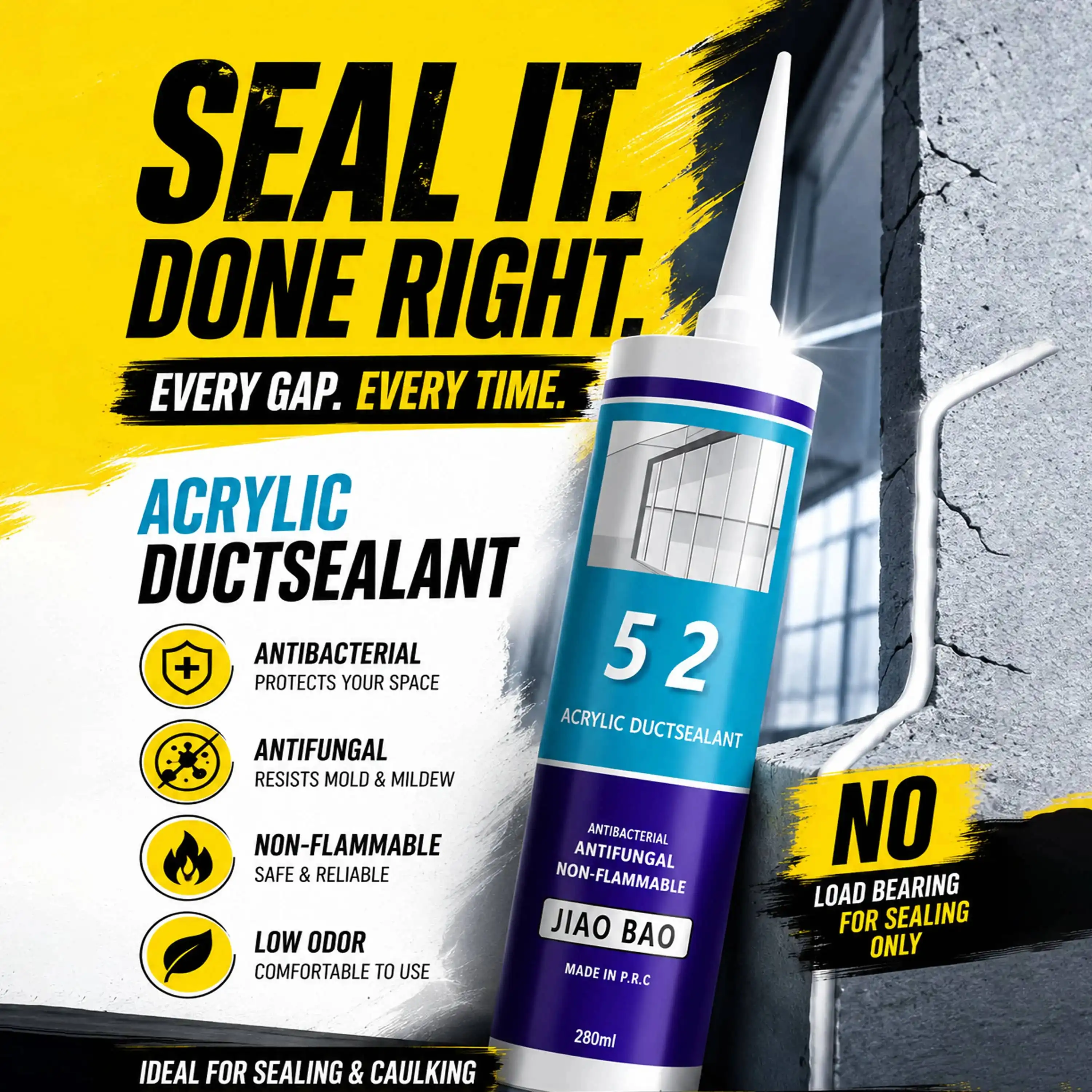
Hairline fractures in drywall and plaster are frequent interior flaws. Stress fractures result from building subsidence, temperature changes, or vibration. Acrylic sealants create a flexible bridge that absorbs mild movement without affecting the beautiful finish. The material's plasto-elastic characteristics allow it to stretch while adhering to surfaces.
Decorative and practical issues arise from door and window frame perimeter gaps. These joints move differently when materials expand at various speeds. A correctly designed acrylic sealant dampens sound and excludes drafts while accommodating this movement. The key is joint dimensioning—depth should equal half the width to improve stress distribution and minimize stress concentration.
In a high-rise commercial office restoration, ceiling cornice-to-wall joints cracked. As temperature cycles stressed the structure, hard filler compound fixes deteriorated within months. The project team requested a 250%-elongation acrylic sealant. Proper joint preparation and application kept the installation crack-free for two years, showing how material selection overcomes maintenance issues.
Prefabricated building contractors must seal panel seams to maintain the painted surface. Acrylic formulas for various applications cure quickly enough to keep projects on schedule while meeting architectural criteria for seamless look.
Purchasing specialists assessing sealing solutions must consider many variables. Acrylic sealants adhere very well to porous surfaces, 0.4-0.6 MPa without primers. Although stronger, silicones require surface care. For interior applications, acrylics can accept ±12.5% joint movement, whereas polyurethane and silicone systems can handle ±25% to ±50% movement, making them ideal for exterior or high-stress areas.
Interior cost analysis supports acrylics. Material costs are 30-50% cheaper than silicone products, and primer removal lowers installation costs. Water cleanup enhances labor efficiency by cleaning instruments and surplus material using moist towels instead of solvent. Environmental impact assessments increasingly affect specification decisions, and low-VOC acrylic formulations fulfill LEED certification and indoor air quality criteria that solvent-based alternatives cannot.
Technical datasheets aid product comparison. Examine extrusion rates—quality materials should dispense at rates over 80 ml/min at standard pressure (usually 163 for professional formulas) to maximize installation productivity. Verify slump resistance by ASTM D2202 compliance to ensure product stability in vertical and overhead applications. Check shelf stability—reputable manufactures promise 12-month shelf life between 40°F and 80°F.
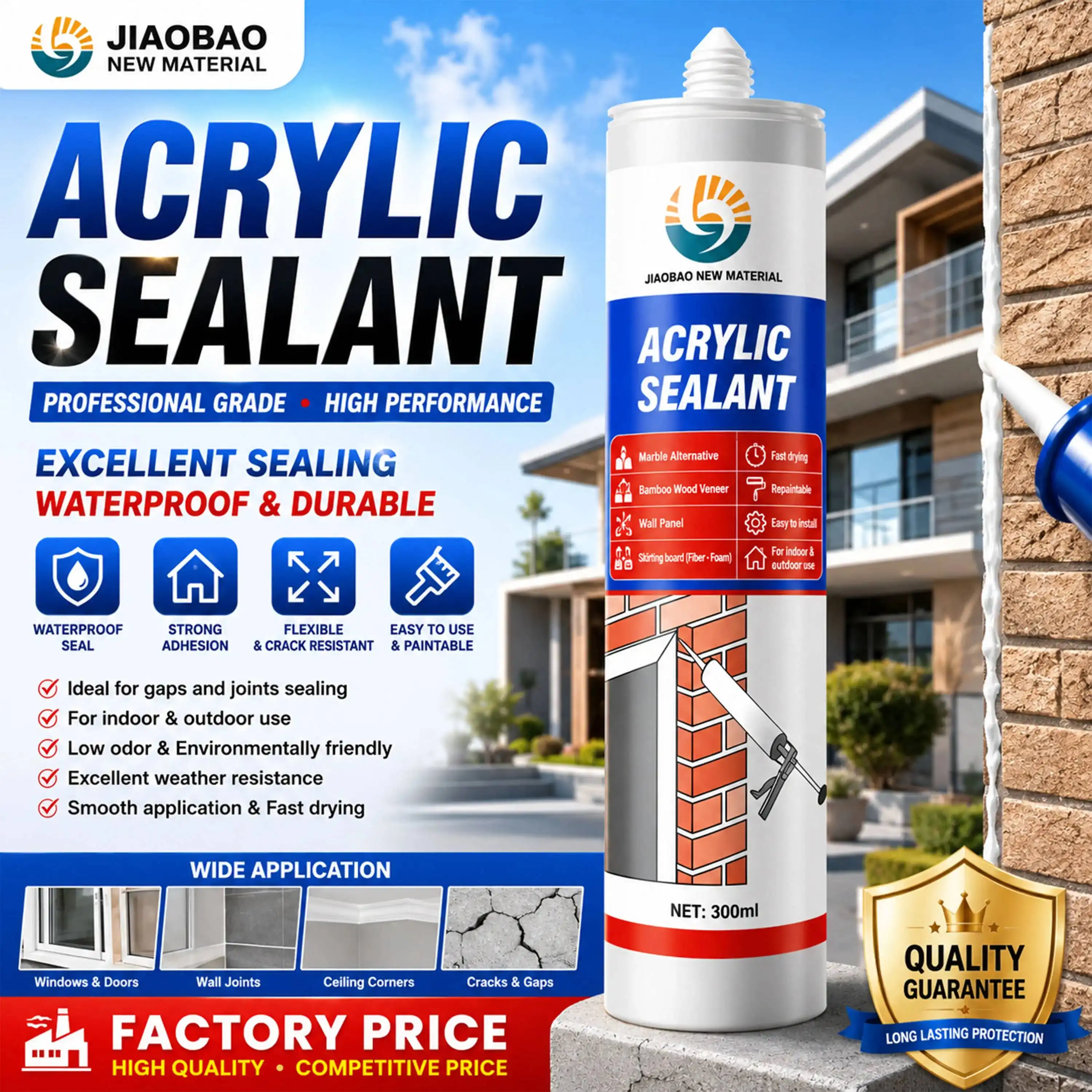
Wall ceiling acrylic sealant packaging impacts logistics and job site efficiency. Cartridges are ideal for smaller projects and offer fine dispensing control, whereas sausage packs save money and packaging for high-volume applications. In architectural projects with obvious seams, color availability is crucial. Look for providers who supply white, black, gray, and custom RAL or comparable color matching. Curtain wall contractors and high-end home finishers who need concealed repairs benefit from this modification.
Sample testing eliminates costly procurement errors. Request samples of your substrate mix and test on site. Your coating system's skin-over time, ultimate hardness, adhesion, and paintability should be assessed. This verification phase is essential when moving suppliers or adding new goods to processes. Testing before bulk orders protects project times and expenditures by revealing compatibility concerns.
Cost savings result from volume commitments. Manufacturers usually give discounts for 500, 1,000, and 5,000+ cartridges. Building materials distributors seeking competitive advantages could arrange yearly purchasing agreements that ensure supply during peak building seasons at advantageous prices. Domestic manufacturers in established markets supply within one to two weeks, whereas overseas sourcing extends lead times but may save money for price-sensitive applications.
Certification criteria vary by market. Products entering the US market must meet ASTM requirements, including latex sealant C834. ISO 9001 certifies quality management systems. Institutional and commercial projects increasingly demand low-emission promises verified by GreenGuard or CARB compliance.
Supplier dependability transcends product quality. Look for manufacturers with knowledgeable application engineers to help solve field issues. Reputable vendors provide replacement assurances for material problems found throughout the shelf life. These service features distinguish commodity vendors from project-supporting strategic partners.
Excessive shrinkage, cohesive cracking, and adhesive separation cause failure. Wall ceiling acrylic sealant applied too deep for curing produces shrinkage failures because water trapped in thick areas progressively evaporates, causing volume loss. Limit depth to 6-8mm or use backer rod in deeper joints to manage sealant shape. Cohesive cracking indicates movement beyond the material's elongation capability, requiring a more flexible product or redesigned joints.
Clean separation from one or both substrates indicates adhesive failure. This is caused by polluted surfaces, unsuitable primers, or application wetness. Avoid moist or cold substrates and follow stringent surface preparation measures to prevent. Rapid drying with low humidity might induce peeling, whereas excessive moisture hinders adherence.
Innovation improves acrylic sealants. In sun-exposed interior spaces like atriums and broad window perimeters, new UV stabilizers prevent yellowing and chalking, increasing service life. Rapid-cure methods cut skin-over time to 10-15 minutes, speeding project completion without sacrificing characteristics. Blends of acrylic polymers and modest quantities of silane-modified polymers increase elasticity and paintability, spanning the performance gap between classic acrylics and higher-movement-capacity alternatives.
Sustainability drives another development path. Manufacturers are adding recyclable material, bio-based polymers, and zero-VOC compositions that surpass regulations. These developments allow forward-thinking contractors and facility managers to fulfill stricter environmental criteria while preserving acrylic sealants' performance and cost-effectiveness.
Acrylic sealants function well in residential, commercial, and institutional interior décor. Their paintability, porous substrate adherence, low odor, and cost-effectiveness provide them an edge over other sealing systems. Contractors, specialty furniture makers, and building materials processors need wall ceiling acrylic sealant for its speedy skin-over time, flexibility for low-movement joints, and compatibility with common architectural coatings. Strategic procurement based on validated technical data, supplier reliability, and application procedures promotes project success and longevity.
Acrylic sealants work for hairline cracks and 6mm ceiling plaster gaps. Thermal cycles and construction settling cause small movement in the material. Clean the crack, enlarge it if needed for sealant penetration, then apply the product using correct tools. Cure and paint merge the repair into surrounding surfaces. Larger structural cracks above 10mm need mending materials before sealing.
Depending on temperature, humidity, and application thickness, painting can begin 30 minutes to three hours after the sealant solidifies. Touching the surface lightly tests ready; if substance transfers to your finger, extend drying time. Full cure takes 24-72 hours, although paint adherence is good on well skinned material. Most suitable are latex paints, which adhere without primers.
Acrylic paints attach to drywall, plaster, wood, brick, and concrete without primers. As water evaporates into porous surfaces, mechanical interlocking forms adhesion. Light abrasion can increase mechanical grip on non-porous materials like glass, glazed tile, and metal, but at least one substrate should be porous for water evaporation and curing.
Since 2013, Shandong Jiaobao New Material Co., Ltd. has made sealing solutions for North American and international construction builders, bespoke furniture manufacturing, and building materials distributors. Our ASTM-compliant one-part RTV acrylic sealer has 30-minute skin-over time, 0.64 MPa tensile strength, and zero-sag. Our 300ml and 600ml products facilitate curtain wall installations and precision cabinet production in white, black, gray, and bespoke colors.
ISO and CE certifications verify our quality management systems, while 1-2 week production lead times and flexible logistics assure supply continuity. Request technical datasheets and samples from our engineering staff at dorashen@cnjiaobao.com to assess our acrylic sealant maker capabilities for your procurement needs. We provide refunds or replacements for quality faults within 12 months, eliminating sourcing risk.
1. American Society for Testing and Materials. (2019). ASTM C834-19: Standard Specification for Latex Sealing Compounds. West Conshohocken, PA: ASTM International.
2. International Organization for Standardization. (2015). ISO 11600:2002 Building Construction – Jointing Products – Classification and Requirements for Sealants. Geneva: ISO.
3. Klosowski, J.M., & Wolf, A.T. (2016). Sealants in Construction: Second Edition. Boca Raton: CRC Press.
4. Panek, J.R., & Cook, J.P. (2012). Construction Sealants and Adhesives: Fourth Edition. Hoboken: John Wiley & Sons.
5. Woolman, R.D. (2018). Architectural Sealants: Performance-Based Design, Specification, and Application. Philadelphia: American Society for Testing and Materials.
6. Building Research Establishment. (2017). Selection and Application of Sealants for Interior Building Applications: Technical Guidance Document. Watford: BRE Press.
November 16,2023
Enterprise Name
The sealant has very strong adhesion and performs well even on glass and aluminum. After curing, it remains flexible and shows no cracking. Perfect for our facade projects.
November 16,2023
Enterprise Name
Stable quality across batches. Our customers especially like the smooth application and consistent extrusion. It helps reduce installation time on site.
November 16,2023
Enterprise Name
I used it for bathroom sealing. Excellent waterproof performance and no mold issues so far. It's been holding up very well in humid conditions.
November 16,2023
Enterprise Name
The neutral silicone works well on sensitive materials without corrosion. Very suitable for industrial applications requiring stable performance.
_1779347426672.webp)