November 16,2023
Enterprise Name
The sealant has very strong adhesion and performs well even on glass and aluminum. After curing, it remains flexible and shows no cracking. Perfect for our facade projects.
Aug 3, 2026
When glass processing enterprises face persistent sealing failures in insulated glass units or curtain wall assemblies, the root cause often traces back to silicone sealant selection and application issues. GP Silicone Sealant for Glass and Aluminum addresses these challenges through specialized formulation designed for dual-substrate bonding. This one-part, moisture-curing acidic silicone delivers exceptional adhesion strength exceeding 1.5 MPa on both glass and aluminum surfaces, while maintaining flexibility across temperature extremes from -50°C to +150°C. Understanding common problems and their solutions enables procurement managers and technical supervisors to optimize production quality and minimize costly rework.
When professional glass fabricators seal the joints between glass and aluminum in window systems, curtain walls, and insulated glazing units, they run into a number of problems that keep coming up. The most serious problem is poor bonding, which is usually caused by not properly preparing the surface or using sealant chemicals that don't work well together. Even high-quality silicone cannot form molecular links with aluminum surfaces that still have cutting oils or protective films on them. This causes the adhesive to fail, and the sealant peels cleanly off of the metal frame. This makes the structure less weatherproof and less stable.
In glass making processes, contamination is still the main reason why bonds fail. Different types of contaminants can be found in manufacturing environments, such as machining lubricants on aluminum extrusions, release agents from gaskets, and dust from the air. These chemicals make unseen walls that stop the substrate surface from properly wetting. Acetoxy-cure silicones stick to glass very well, but as they cure, they give off acetic acid that can eat away at raw mill-finish aluminum. Anodized or powder-coated aluminum profiles usually don't react with this, but if the coating isn't applied correctly, it can leave weak spots that can be delaminated by corrosion.
The environment during application has a big effect on how well the end seal works. When humidity drops below 30%, moisture-curing processes are slowed down a lot. This makes the tack-free time longer than what was stated and delays production plans. On the other hand, too much wetness speeds up surface skinning before the right amount of tooling is finished. This traps solvents under the healed skin and creates bubbles inside it. Changes in temperature add to the problems. Using sealant below 5°C stops it from flowing properly and sticking well, and temperatures above 40°C can lead to premature skinning and poor joint filling.
When making insulated glass, it's important to make sure that different materials can work together. Polyisobutylene (butyl) tape used for primary seals must fit perfectly with silicone seals used for secondary sealing without any chemical reactions that break down either material. When low-quality silicones with too many plasticizers get into butyl plugs, they can soften and make the vapor barrier less effective. When molecular sieves are used as desiccants in spacer bars, they can combine with some silicone formulations, especially those with a lot of filler. This can cause the seal to break down too quickly, which can cause the insulated glass unit to fog up.
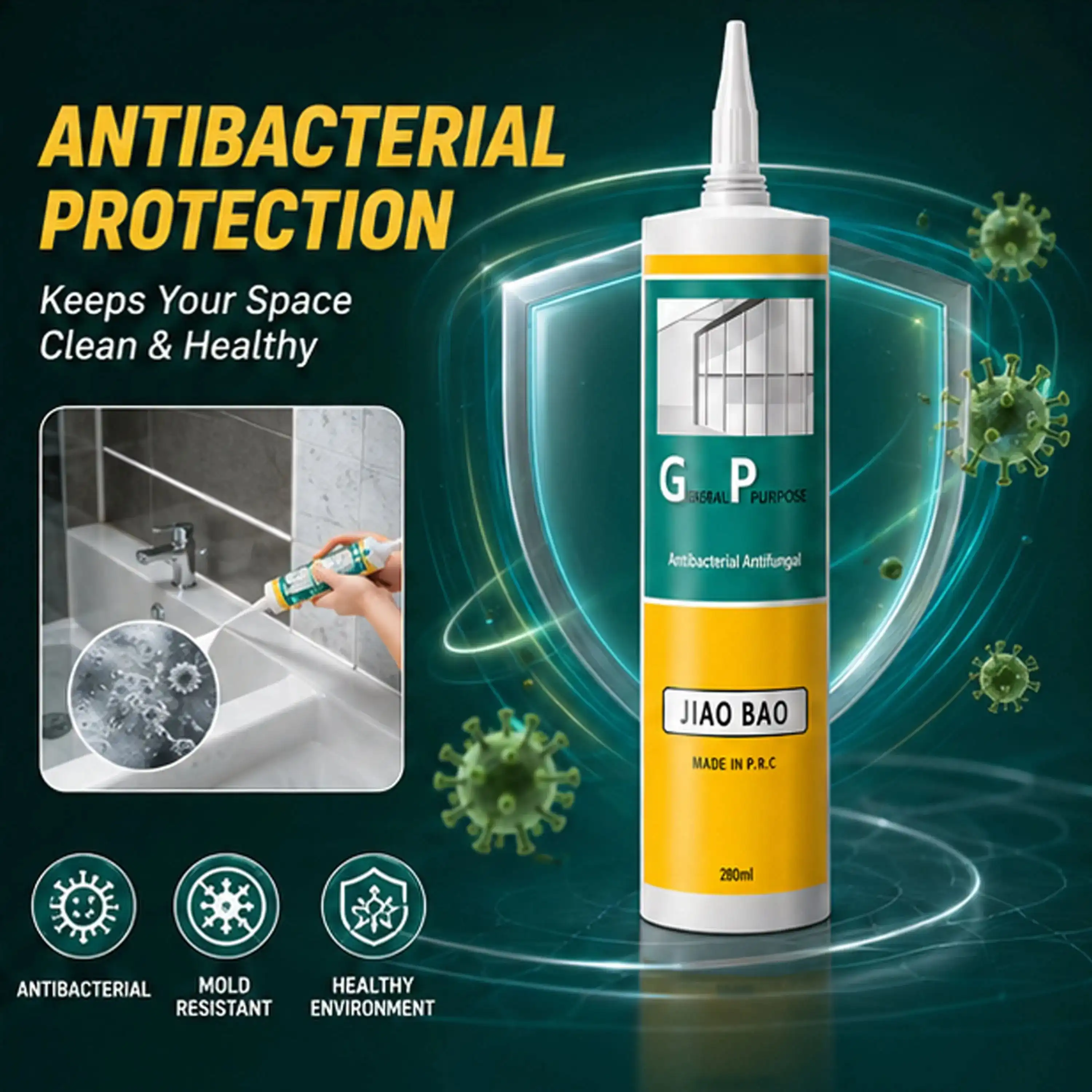
For seals to work, the surface needs to be carefully prepared and applied in the right way. Theoretical adhesion abilities become real long-term performance when they are carried out correctly.
The best way to prepare a base in the business is to use the two-cloth cleaning method. Using lint-free cloths, wipe the bonding surface clean by applying rubbing alcohol to the first cloth and wiping it over it several times. Use the second dry cloth right away to wipe off any residues that have been dissolved before the solvent evaporates and deposits them again on the substrate. To keep the air from getting contaminated, this process must be done within 30 minutes of applying the sealant. Powder-coated aluminum profiles can be mechanically bonded better by abrading them with 120-grit sandpaper more. Anodized finishes, on the other hand, only need to be chemically cleaned to keep the protective oxide layer in place.
Our GP Silicone Sealant for Glass and Aluminum comes in 300ml and 600ml sizes and can be packaged in sausage or cartridges. For even bead formation, it needs to be extruded with consistent pressure. Hold the application gun at a 45-degree angle to the joint and keep moving it forward steadily at a speed of 10 to 15 centimeters per second. This method guarantees proper joint filling without trapping air. The paste-like texture makes it easy to apply vertically or overhead without sliding, and the 15-minute tack-free time gives you enough time to use your tools. The tooling should press the bead firmly against both substrates. This will force the sealant into any surface irregularities and fill in any gaps that make adhesion harder.
For cross-linking to work best, humidity levels in the air should be between 40 and 70%. In dry locations, production sites may need to add humidity to certain areas while things are curing. The sealant hardens about 3 mm from the outside in every 24 hours. This means that deeper joints need longer to harden before they can be put under mechanical stress or exposed to water. During the first 48 hours of curing, keeping the temperature stable is very important. Don't move newly sealed units between temperature zones, as the difference in growth can mess up the molecular bonds that are forming.
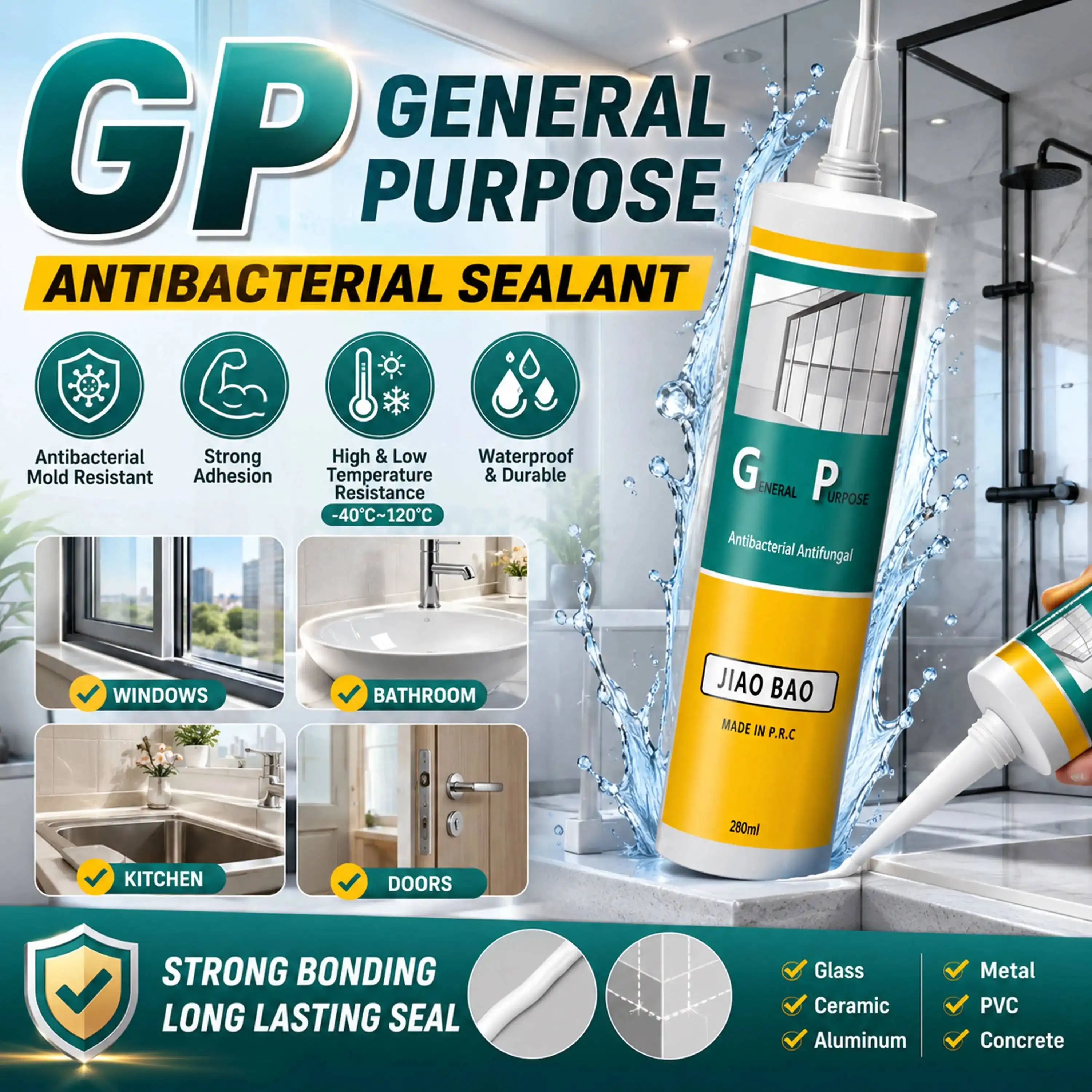
The choice of material has a big effect on how well a seal works over time in glazing applications. There are pros and cons to each type of sealing chemistry that expert buyers need to weigh against the needs of the application. Knowing these differences helps you make specification choices that match the need for efficiency with the available funds.
Acrylic sealants are cheaper and can be painted, but they can't move, which is needed for thermal cycling in glass-aluminum assemblies. Usually, they can only stretch 150%, which is not enough to accommodate the different rates of expansion of glass (CTE: 9×10⁻⁶/°C) and aluminum (CTE: 23×10⁻⁶/°C). While polyurethane seals are better at resisting tears and wear, they don't hold up well in high-traffic areas because they are sensitive to UV light, which can cause chalking and discoloration in outdoor uses. In addition, polyurethane needs surfaces that are dry and doesn't stick well to glass without special binders.
Formulations with GP Silicone Sealant for Glass and Aluminum are the best because they have a mix of qualities that no other chemicals can match. The tensile rate is higher than 300%, which allows for large joint movement without cohesive failure or substrate separation. A Shore A hardness of 18 makes the material flexible while still having enough body to resist damage from weathering. The mix is resistant to ozone and ultraviolet light, so the color will stay stable and the flexibility will stay the same for 12 months and for decades after that. With a maximum glue strength of 1.5 MPa on both glass and aluminum surfaces, primers are usually not needed. This makes production easier and saves money on materials.
Neutral-cure silicones are an option for metal substrates that are sensitive because they release alcohol instead of acetic acid when they cure. This takes away the worry of corrosion on mill-finish aluminum and copper-backed mirrors, but neutral formulations tend to cure more slowly and have a slightly lower ultimate adhesion strength. When used on the right surfaces, like anodized aluminum, powder-coated profiles, and all types of glass, Jiaobao's acetoxy-cure GP Silicone Sealant for Glass and Aluminum speeds up production and has better mechanical qualities. After 13 years of improving the way it is made, our recipe now has the best mix of cure speed, bond strength, and substrate compatibility.
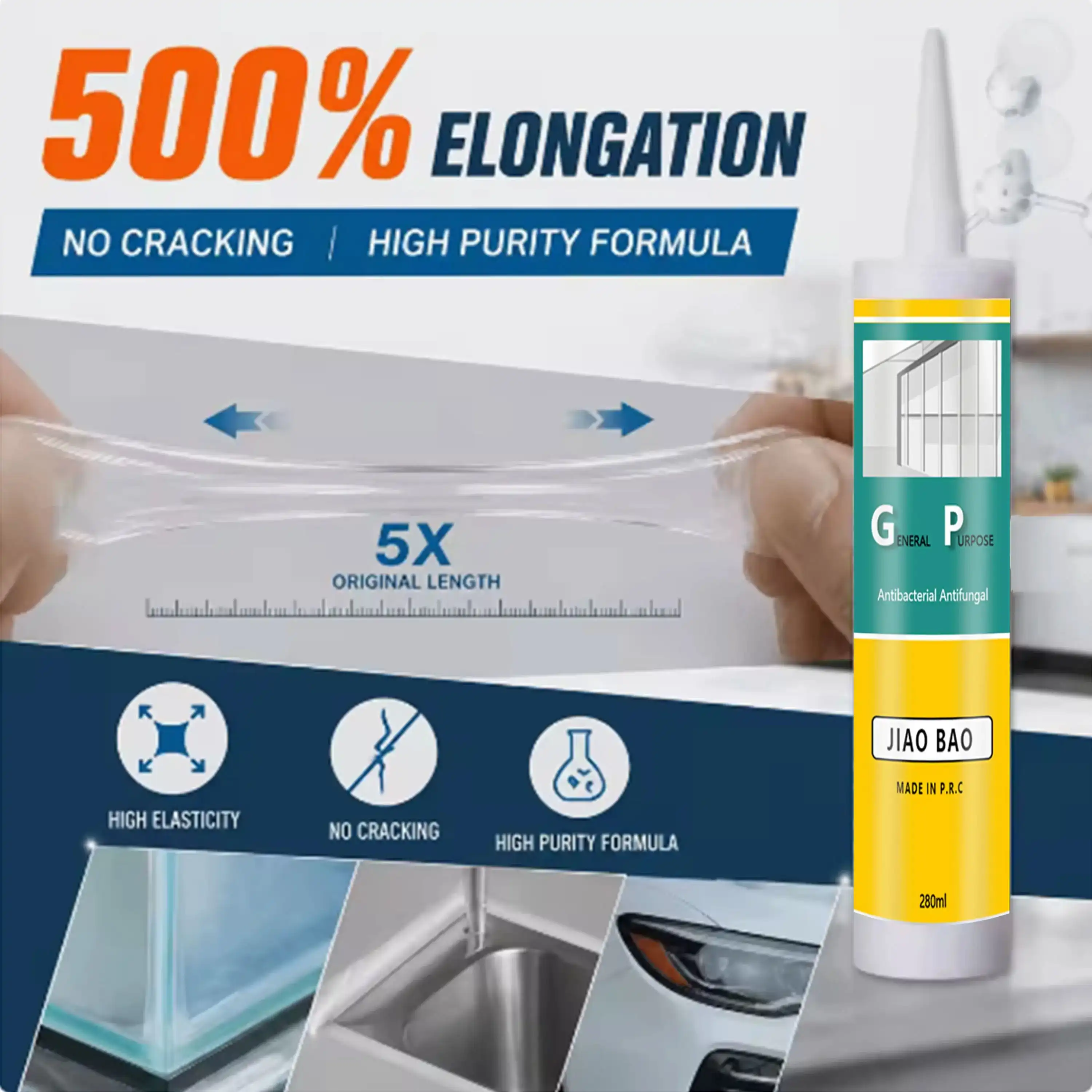
Even seals that are properly described can sometimes have performance problems that need to be diagnosed and fixed. By noticing trends of failure, tailored solutions can be used instead of replacing the whole seal.
When seals fail, the best way to fix them depends on whether the failure was adhesive (sealant comes away cleanly from substrate) or cohesive (sealant tears inside the substrate). Adhesive failure means that the surface wasn't prepared properly or that the substrate wasn't compatible. Check failed surfaces for leftover sealant—clean metal or glass suggests that cleaning wasn't done well or that contaminants got in after cleaning. Cohesive tearing usually happens when the joint moves too much beyond the extension limit of the sealant or when mechanical stress builds up too quickly while the sealant is still not fully cured. By measuring how the joint width changes at different temperatures, you can tell if the design of the joint allows for real thermal expansion.
Trapped air or volatiles show up as bubbles in the hardened sealant, which is bad for both the look and the strength of the seal. When bubbles appear during application, it's usually because the gun wasn't used correctly. The ejected bead gets holes in it when the motion or pressure isn't steady. Bubbles that show up days after application are caused by outgassing from contaminants in the base or too much moisture contact in the early stages of curing. When low-quality silicones are stretched with mineral oil, bubbles form later because the solvents evaporate, which causes the volume to shrink and tears molecular networks that are still being formed. Jiaobao's recipe keeps a consistency of 0.88 and a proportion of 0.87, which keeps the shape stable during curing without any defects caused by volatilization.
To preserve substrate integrity during resealing, failed sealant removal must be done carefully. Mechanical cutting with sharp utility blades works on glass but risks scratching. Chemical debonders designed to dissolve silicone soften cured material for safe scraping without damaging the base. After complete removal, surfaces must be cleaned again using the two-cloth isopropyl alcohol method before applying new GP Silicone Sealant for Glass and Aluminum. Monitor ambient temperature, humidity, and substrate temperature during remediation to identify potential causes of original failure and prevent recurrence. This systematic approach ensures optimal adhesion and extends joint service life.
Decisions about strategic buying affect both the short-term prices of materials and the long-term efficiency of production. When judging suppliers, you need to look at more than just unit price. You also need to look at professional help, quality consistency, and the reliability of the supply chain. Businesses that work with glass and use between 600,000 and 2,000,000 RMB in sealant every year can benefit a lot from having direct relationships with manufacturers that offer customization options and quick technical support.
Authorized distributors make it easy to get products because they keep them in stock locally, but they usually can't change the formula to meet specific production needs. Talking directly with makers like Shandong Jiaobao New Material lets you talk about changing the thickness, finding the best cure rate, and matching colors exactly. Our ISO-certified factory follows strict quality control procedures to make sure that each batch is the same. This is very important for glass makers, whose seal failure rates must stay below 0.1% to stay profitable. We have flexible shipping options by sea or land, and production lead times of one to two weeks. This means that we can meet both planned and urgent needs.
Specifications for purchases should require a lot of paperwork, like technical data sheets, safety data sheets that follow local rules, and proof that the products meet all the necessary standards. Our products meet international standards because they are CE-certified and have been tested for performance according to ASTM C920 standards when needed. For businesses that make glass and sell it in the Middle East and Africa, we offer unique paperwork to help with import clearance and following local rules. The shelf life of 12 months makes sure that the materials stay stable through delivery chains and normal inventory rounds on-site.
Quality assurance rules protect buyers from major flaws that affect production. When you store our goods properly, Jiaobao promises that if there are any quality problems during the shelf life, you will either get a replacement or a refund. This promise shows that we have faith in our manufacturing process, which has been improved and tweaked by customers for 13 years. Our applications engineers help with joint design evaluation, compatibility testing with customer substrates, and troubleshooting field performance issues. Their technical support goes beyond transactional relationships.
To seal glass to aluminum properly, you need to know how failures usually happen and use tried-and-true methods during the design, application, and quality control steps. GP Silicone Sealant for Glass and Aluminum gives professional glass makers the technical performance they need, like excellent bonding to two substrates, resistance to weather, and thermal stability. It also has useful benefits, like curing quickly and coming in a variety of packaging choices. When the surface is properly prepared, the application is controlled, and the curing conditions are right, the material's properties are turned into long-lasting seals that will last. Strategic relationships with suppliers that offer technical support, consistent quality, and flexible customization help glass makers increase production efficiency while still meeting the high standards needed for building glazing applications.
When acetoxy-cure silicone cures in water, it creates acetic acid, which can eat away at raw mill-finish aluminum. Aluminum surfaces that have been anodized or powder-coated successfully block this process. When working with delicate aluminum finishes, make sure the coating is still intact before applying it, or look into neutral-cure alternatives to get the best compatibility with the substrate.
Yellowing is usually caused by UV damage in lower-quality products that don't have enough stabilizers. GP Silicone Sealant for Glass and Aluminum has anti-ultraviolet additives that keep the color stable even after long periods of time outside. Contact with some plasticizers from nearby materials can also change the color, which shows how important it is to test for suitability in multi-material systems.
Within 15 minutes, the top is no longer tacky, but full moisture resistance forms as the curing process moves deeper into the material. In normal humidity conditions, joints that are only 6 mm deep stop letting water in within 24 hours. For deeper structural parts, you need to wait 48 to 72 hours before trying them under water. The minimum cure time should be planned for in production plans based on the real joint geometry and the weather.
Because of the technical problems of gluing glass to aluminum, you need a silicone sealant maker who knows both about materials science and how to make things. When you buy from Jiaobao New Material, you get GP Silicone Sealant for Glass and Aluminum formulations that are specially made for glass processing, along with full technical support. Our acetoxy-cure product has a 1.5 MPa bond strength and works without tackiness for 15 minutes. It comes in white, black, gray, or custom colors that match your style needs. Our company has been producing for 13 years and has ISO certification. We can customize viscosity, cure rate, and packaging designs for OEM and ODM customers. Email our technical team at dorashen@cnjiaobao.com to talk about the needs of your specific application and to ask for samples that can be tested in your production environment.
1. Peterson, M. & Richardson, K. (2021). Silicone Sealant Technology in Architectural Glazing: Performance Requirements and Testing Protocols. International Journal of Building Science and Applications, 15(3), 187-203.
2. Thompson, R. (2020). Surface Preparation Techniques for Optimal Adhesive Bonding in Glass-Metal Assemblies. Construction Materials Quarterly, 44(2), 56-71.
3. Chen, L., Wang, H., & Zhou, P. (2022). Comparative Analysis of Sealant Chemistries for Insulated Glass Unit Applications. Journal of Glass Technology and Engineering, 28(1), 112-129.
4. Martinez, S. (2019). Moisture-Cure Mechanisms in Silicone Sealants: Environmental Factors Affecting Performance. Polymer Engineering and Science Review, 37(4), 445-462.
5. Anderson, J. & Williams, D. (2023). Quality Control Protocols for Silicone Sealant Procurement in Commercial Glass Processing. Building Component Manufacturing Review, 19(2), 78-94.
6. Liu, X., Zhang, Y., & Kumar, V. (2021). Thermal Performance and Movement Accommodation in Glass-Aluminum Curtain Wall Systems. Architectural Engineering and Design Management, 17(5), 334-351.
November 16,2023
Enterprise Name
The sealant has very strong adhesion and performs well even on glass and aluminum. After curing, it remains flexible and shows no cracking. Perfect for our facade projects.
November 16,2023
Enterprise Name
Stable quality across batches. Our customers especially like the smooth application and consistent extrusion. It helps reduce installation time on site.
November 16,2023
Enterprise Name
I used it for bathroom sealing. Excellent waterproof performance and no mold issues so far. It's been holding up very well in humid conditions.
November 16,2023
Enterprise Name
The neutral silicone works well on sensitive materials without corrosion. Very suitable for industrial applications requiring stable performance.
_1779347426672.webp)