November 16,2023
Enterprise Name
The sealant has very strong adhesion and performs well even on glass and aluminum. After curing, it remains flexible and shows no cracking. Perfect for our facade projects.
Aug 3, 2026
When it comes to sealing aluminum doors and glass windows, the choice of sealant directly impacts product longevity, weatherproofing performance, and production efficiency. GP door and window silicone sealant has emerged as a reliable solution for manufacturers and contractors seeking a balance between professional sealing quality and production line compatibility. This one-component acetic RTV silicone sealant delivers fast tack-free time, excellent adhesion to non-porous surfaces, and durability under temperature extremes, making it particularly suitable for window and door assembly operations where consistent quality and rapid curing matter most.
GP door and window silicone sealant is a type of vulcanising elastomer that can be used at room temperature and is specially made for glazing and weatherproofing in construction. In contrast to structural silicones that are used in curtain wall systems, this all-purpose type is designed to provide cost-effective performance for home and small business projects. When the material is exposed to moisture in the air, it changes from a thixotropic paste to a flexible rubber gasket. This makes a strong barrier against air and water entering.
A one-component acetic cure system is used in the mixture we make at Jiaobao. This system has a number of benefits for production settings. With a tack-free time of only 15 minutes, assembly lines can keep up their fast throughput without having to wait for long periods of time. After fully curing, the sealant has a Shore A hardness of 18, which is just the right amount of rigidity and flexibility. The strongest bond strength is 1.5 MPa, which is stronger than what is usually needed for glass-to-aluminum bonding in standard window assemblies.
When making things, where consistency directly affects product quality, material performance is very important. Our silicone caulk has a tensile strength of more than 300%, which means it can handle changes in temperature between different materials, like glass and metal frames. This ability to stretch keeps unified failure from happening when differences in temperature cause window parts to change sizes.
The working temperature range is from -50℃ to +150℃, which covers almost all of the weather situations that can be found in North America and Europe. Chemical stability against water, oils, and common solvents makes sure that the seal stays strong even when it comes in contact with cleaning products or environmental pollutants. The material's proportion of 0.87 and consistency of 0.88 make it easy to extrude, which keeps operators from getting tired when applying it by hand and makes sure that beads form consistently in automated systems.
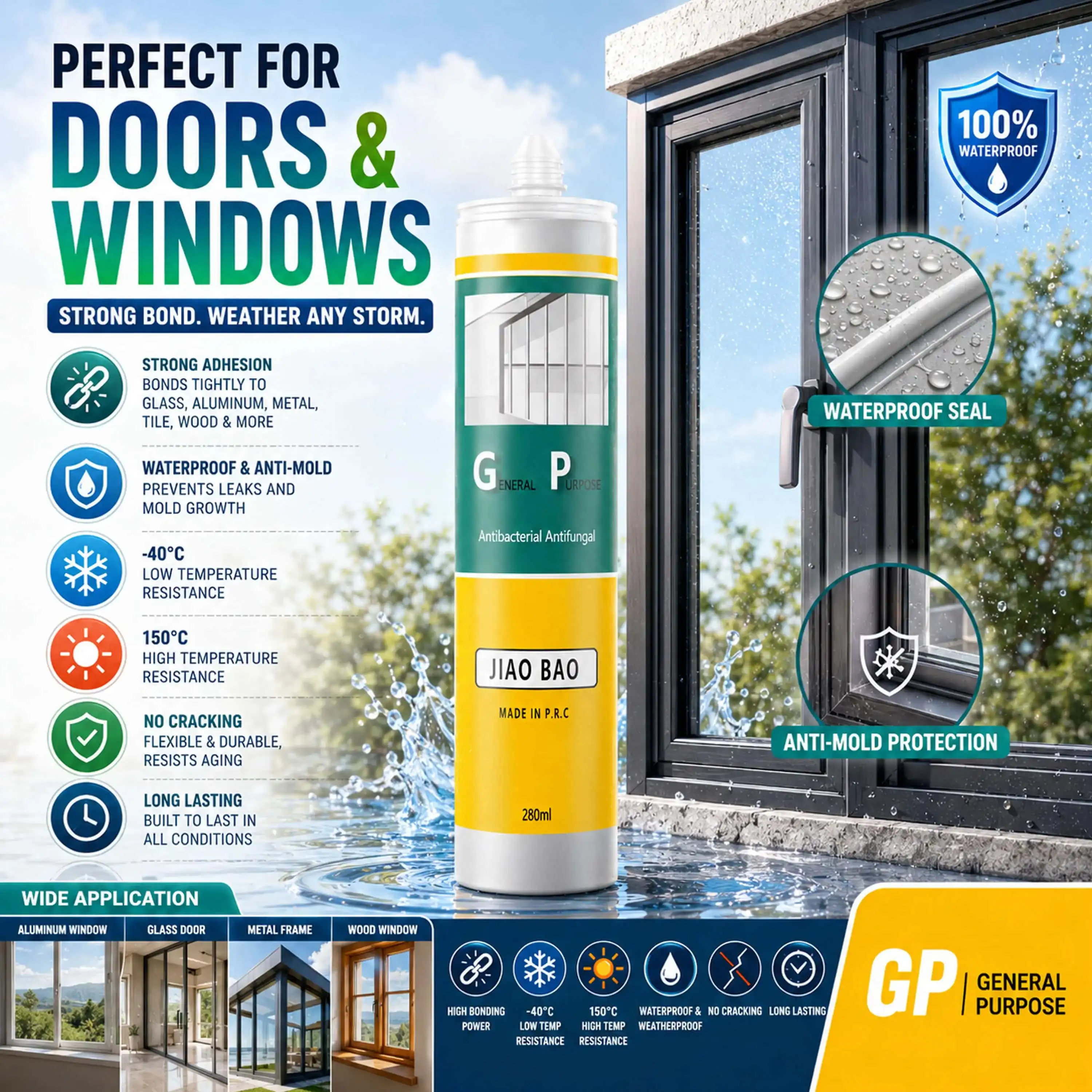
A well-prepared surface is the first step to good adhesion. Frames made of aluminium and glass must be fully clean, dry, and free of any oil, dust, or release agents. Before applying sealer, we suggest wiping down surfaces with rubbing alcohol or a cleaner made just for that purpose and then waiting for them to dry completely. Any water present during application breaks the bond between the silicone and the substrate, stopping it from properly wetting out and forming a chemical bond.
Check the finish on anodised aluminium or powder-coated frames to make sure it is solid. To make sure the sealant sticks directly to the base material, damaged coats should be taken off of the area that needs to be bonded. The same care needs to be taken with glass surfaces—fingerprints, manufacturing leftovers, or storage dust can make it hard to stick things together. Temperature also matters. For the best curing conditions, the substrate temperature should be between 5°C and 40°C.
There is no special gear needed to load the cartridge into a regular caulking gun. Cut the tip of the cartridge at a 45-degree angle to make an opening that is the right size for your joint width, which is usually between 5 and 8 mm for most door and window applications. Keep the pressure on the bead to make it smooth and without any air holes or cracks. The thixotropic quality of the material keeps the shape of the beads while they cure, so the joints don't sag.
Tooling the bead of GP door and window silicone sealant within 5 to 10 minutes of application ensures proper surface finish and edge contact. Smooth the surface using a wet spatula or finger, pressing sealant firmly into the joint to eliminate air voids. Avoid over-tooling, which can pull sealant away from substrate edges. With 15 minutes of tack-free time, assemblies can be moved to the next production step without concern for dust pickup or surface contamination—maintaining workflow efficiency while ensuring optimal bond formation.
The amount of humidity has a direct effect on how fast moisture-curing silicones fix. The best conditions are when the relative humidity is between 40% and 80%. Lower humidity slows down the process, and too much wetness can cause the surface to bubble. Ambient temperature changes both the rate of curing and the final properties. Curing at temperatures below 5℃ takes a lot longer and may not finish the cross-linking process. On the other hand, temperatures above 40℃ can cause skinning to happen too quickly, which traps solvents in the sealant mass.
The full healing time is affected by the depth of the joint. The surface skinning process is done in 15 minutes, and the curing process moves inward at a rate of about 3 mm per 24 hours from the uncovered areas. Plan your production schedules so that you give assemblies enough time to cure before you put them under stress or move them. If the joint is deeper than 12 mm, you might need to apply the sealant more than once to make sure it cures all the way through the cross-section.
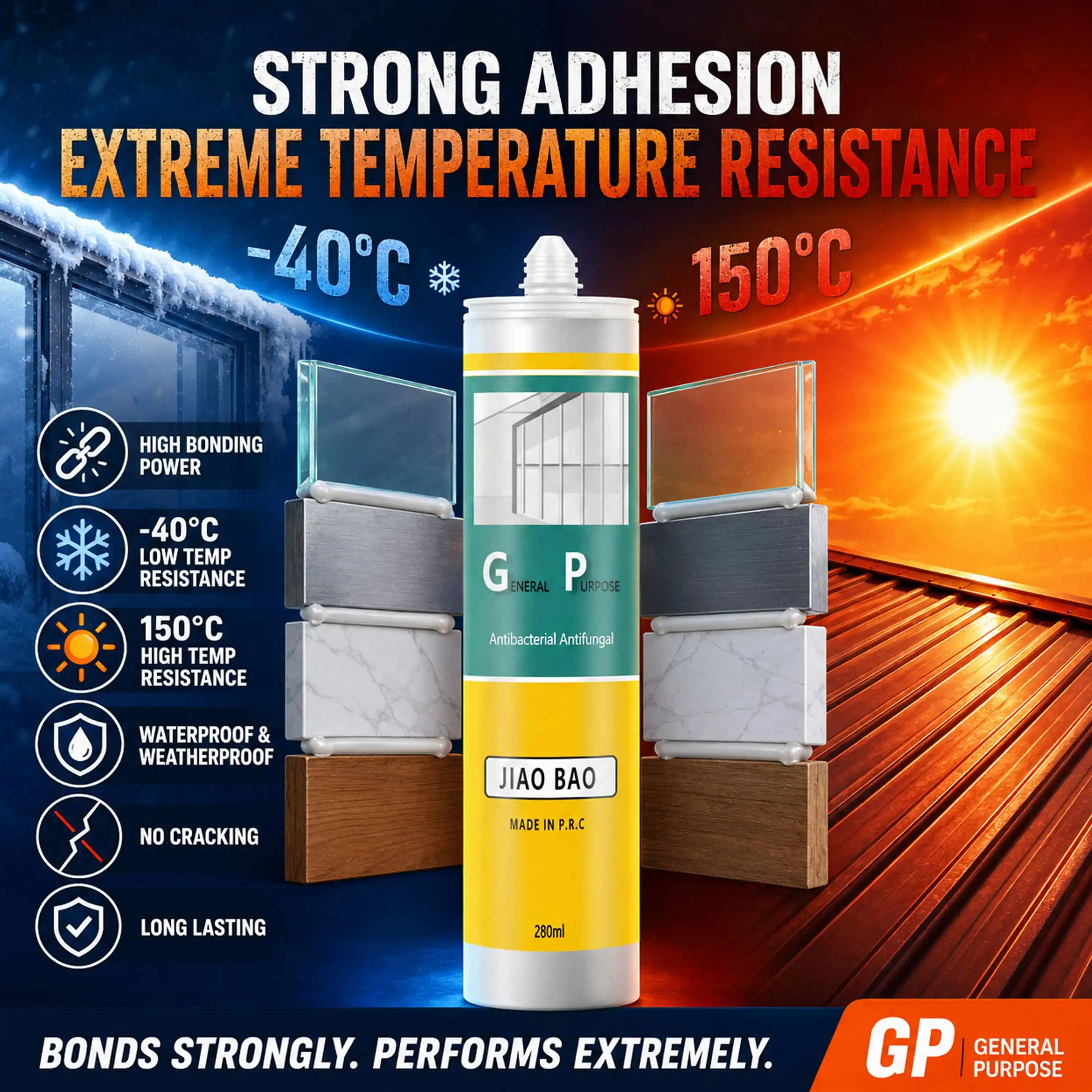
When looking at different types of sealants for making windows and doors, acrylic latex and polyurethane formulations are often shown as options. Acrylic rubber sealants are cheaper and can be painted, but they don't stretch or hold up against the weather like other sealants do. Because they can only move a small amount (usually less than 25%), they can't be used in metal-to-glass joints that will be heated and cooled many times.
Polyurethane seals stick well to porous surfaces and surfaces that can be painted, which makes them useful in some building tasks. Their longer cure times and susceptibility to moisture during application, on the other hand, make them hard to use in high-volume production settings. Silicone formulations work the same in a wider range of temperatures and are more resistant to UV light, so they don't chalk or break down after being in the sun for a long time like polyurethane goods do.
In the family of silicones, neutral cure silicone is another choice. These mixtures don't release acetic acid and can be used on more surfaces, like concrete and sensitive metals. However, they usually take longer to cure and cost more to make. An acetic fix GP door and window silicone sealant offers the best speed, cost, and performance for companies that focus on glueing glass to aluminium and need to get things made quickly.
The cost of materials is only one factor that goes into choices about what to buy. The 12-month shelf life of our silicone sealant cuts down on waste from old stock, which is especially important for businesses that handle multiple product lines. The short tack-free time means that more can be made because assemblies move through the manufacturing process faster, which means that less work-in-process inventory is needed and less space is needed.
Durability has a direct effect on how much a warranty costs and how happy the customer is. When sealer fails too soon, it costs a lot to take things apart, reseal them, and put them back together again. These risks are kept to a minimum by the high stretch, temperature resistance, and UV stability. Manufacturers say that failure rates are much lower than with economy-grade sealants. This lowers the total cost of ownership, even though the initial cost of the materials is a little higher.
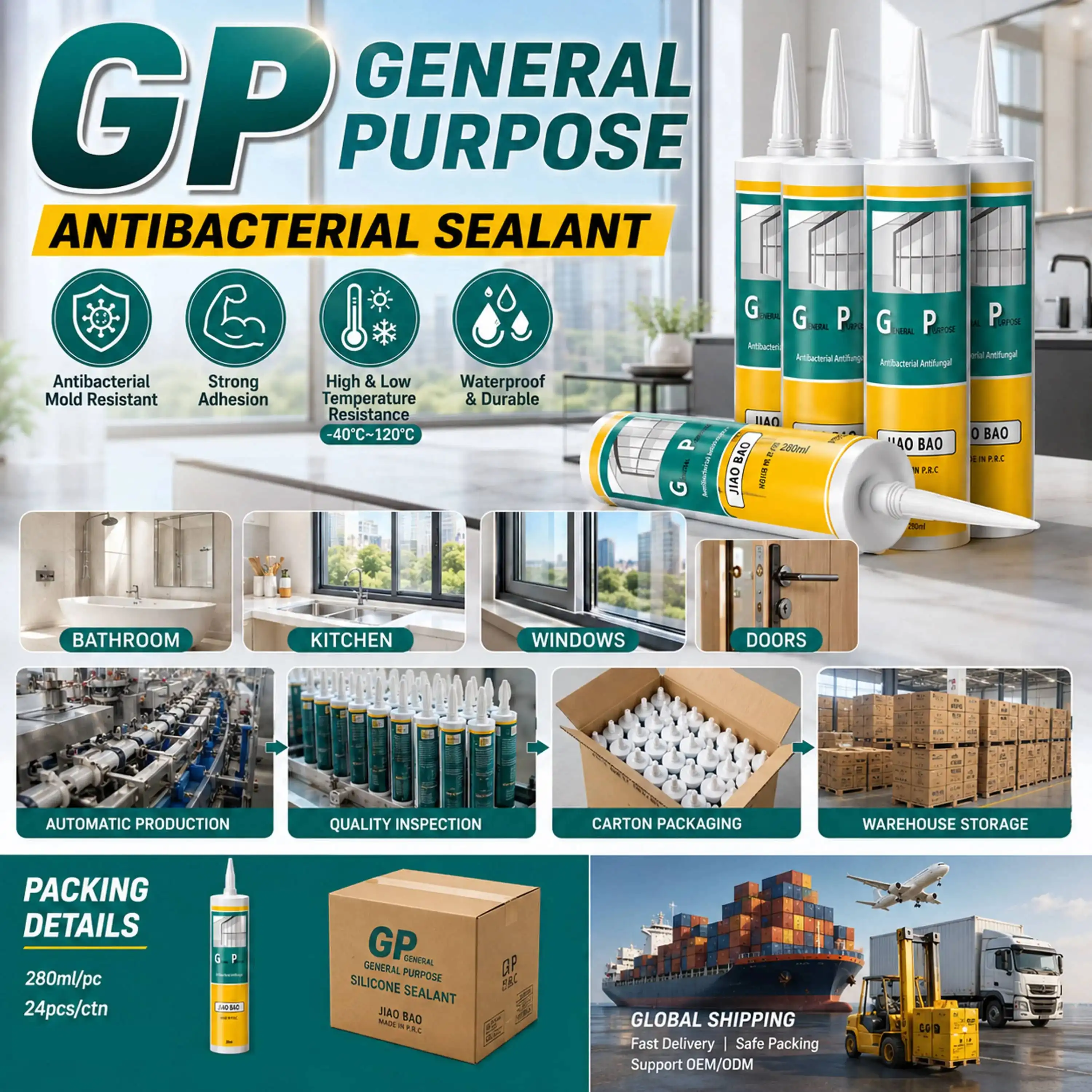
To find trusted silicone sealant providers, you need to look at more than just the unit price. When a manufacturer needs to make more and more, production capacity is important. Suppliers should be able to show that they can increase delivery quantities as your business grows. Consistency in lead times affects your ability to stick to production plans without keeping too much safety stock on hand. Our normal shipping time of one to two weeks from the time an order is confirmed helps producers keep their inventory levels low.
Certification compliance makes sure that the material meets the rules in the area. ISO certification shows that a process is consistent and that there are quality control methods in place. A CE mark means that a product meets the standards of the European Union, which is important for companies that want to sell their products in those countries. Ask for test reports that are specific to each batch and list important properties like tensile strength, elongation, and cure characteristics. This paperwork is helpful for making sure that supplies meet the needs of certain projects or customers.
Buying in bulk usually saves you money because you get discounts for buying more. When comparing quotes from suppliers, don't just look at the per-unit prices; also look at the total landing cost, which includes freight charges. The best prices are for container load sizes, but you need to have enough storage space and a way to keep track of your goods. Smaller makers can get better prices and keep offering a wide range of products by using mixed container choices.
The type of packaging affects both the cost of materials and how well they work in the application. Cartridge packaging is easy to use and makes little waste because it can be used by hand and in smaller quantities. When using pneumatic dispensing equipment for higher volumes, sausage packaging in 600ml sizes saves money on materials. Talk to your suppliers about your unique production rate and how the products will be used to find the most cost-effective packing configuration for your business.
During their entire service life, window and door components face harsh weather exposure. UV radiation degrades polymer chains in many sealants, causing surface chalking, cracking, and loss of elasticity. GP door and window silicone sealant maintains its properties even under prolonged UV exposure—properly applied seals typically last 15–20 years in most outdoor applications. The polymer backbone resists ozone and atmospheric pollutants, retaining flexibility after years of exterior exposure. This long-term durability reduces maintenance cycles and ensures reliable weatherproofing performance throughout the building's operational lifetime.
When temperatures change, metal frames expand and contract at different rates than glass panels, which causes changes in the size of window systems. Silicone seals can stretch a lot, so they can handle this movement without putting too much stress on the bond line. When it gets cold in the winter (-50℃), the material doesn't get hard like some organic sealants do. Instead, it stays flexible. When dark frames are heated to +70℃ in the summer, they don't soften or flow in a way that would mess up the seal geometry.
Regular eye checking can find signs of seal degradation before water gets in and does damage. Look for cracks in the sealant body, separation at base surfaces, or too much hardening, which means the sealant has lost its elasticity. Peel adhesion testing on sample joints during quality control in manufacturing makes sure that the bonding is correct. The sealant should fail cohesively within its body instead of peeling cleanly from either substrate.
If you need to replace the sealant, make sure the old one is completely removed so the new one sticks well. The majority of the broken sealant is removed by mechanical scraping. Residues are then removed by solvent cleaning. When removing the base, be careful not to damage the surface finish. This is especially important for anodised aluminium, where the finish affects both how it looks and how well it resists rust. To apply a new sealant, follow the same steps for preparing the surface and applying the old sealer. This will restore the full weatherproofing performance.
When making aluminium doors and windows with glass, choosing the right silicone sealant means finding a balance between technical performance, production efficiency, and long-term dependability. GP door and window silicone sealant meets the main needs of this application by sealing quickly, sticking well to non-porous surfaces, and lasting through a wide range of temperatures. The acetic recipe with only one component makes mixing easier and gives the elongation and bond strength needed for heat cycle resistance. Rapid tack-free performance cuts down on production cycle times for manufacturers, and weathertight seals that stay in place throughout the product's lifecycle are good for end users. To get the best results, you still need to use the right application technique and prepare the surface.
Of course. The formula is designed to work with door and window applications, including those that are fully exposed to the outside. Because it doesn't fade in UV light and stays stable at temperatures from -50°F to +150°F, it can be used in any region. The material doesn't let water through, so the seal doesn't break and leaks happen. But make sure the bases are non-porous materials, like metal and glass. Porous surfaces, like raw wood or concrete, need a different type of sealant to stick properly.
Within 15 minutes, the surface skinning happens, which lets you handle it carefully and keeps dust from getting on it. From the outside in, full depth curing moves at a rate of about 3 mm per 24 hours. A normal 6mm deep joint heals completely in 48 hours when everything is normal. Higher humidity and temperatures that are within the recommended ranges speed up the curing process. Plan your production schedules so that you give assemblies enough time to cure before putting them through mechanical stress or packing them up to ship.
During curing, the acetic cure system gives off small amounts of acetic acid, which can damage some delicate materials. Corrosion can happen to raw aluminium, copper, brass, and mirror silvering. Aluminium frames that have been anodised or powder-coated usually don't rust. When working with delicate substrates, neutral cure silicone formulations work better with a wider range of materials. Before committing to full-scale use, you should always try adhesion and suitability on real production materials.
As a skilled silicone sealant maker for 13 years, Jiaobao has a lot of knowledge in the door and window business. With a 15-minute tack-free time, 300% stretch, and 1.5 MPa bond strength, our GP door and window silicone sealant gives your production line the technical performance it needs. It also comes with ISO and CE standards for global compliance. Our OEM/ODM services can be tailored to your needs, whether you need regular colours or formulas that are made to match the finish on your frame. We keep our prices low without lowering the quality of our work, and our flexible delivery times of one to two weeks keep your production running smoothly.
In addition to selling products, we also offer full expert support to help you make the most of your closing processes. Our team helps you figure out how to solve problems with applications, suggests ways to prepare surfaces, and helps with quality control testing. Our policy on refunds and replacements protects your investment if there are any quality issues during the shelf life period. Contact our team at dorashen@cnjiaobao.com to talk about bulk price for GP door and window silicone sealant supplier partnerships, get technical data sheets, or set up shipments of samples for you to test.
1. ASTM International. (2020). Standard Specification for Elastomeric Joint Sealants. ASTM C920-18, West Conshohocken, PA.
2. Glass Association of North America. (2019). Glazing Manual: Glass Design and Installation Guidelines. GANA Publications, Topeka, Kansas.
3. International Organization for Standardization. (2018). Building Construction — Sealants — Part 1: Classification and Requirements. ISO 11600-1:2018, Geneva, Switzerland.
4. Klosowski, J.M. & Wolf, A.T. (2016). Sealants in Construction, Second Edition. CRC Press, Boca Raton, Florida.
5. National Fenestration Rating Council. (2021). Technical Guidelines for Fenestration Product Certification. NFRC 100-2020, Silver Spring, Maryland.
6. Panek, J.R. & Cook, J.P. (2017). Construction Sealants and Adhesives: Chemistry, Technology, and Application. John Wiley & Sons, Hoboken, New Jersey.
November 16,2023
Enterprise Name
The sealant has very strong adhesion and performs well even on glass and aluminum. After curing, it remains flexible and shows no cracking. Perfect for our facade projects.
November 16,2023
Enterprise Name
Stable quality across batches. Our customers especially like the smooth application and consistent extrusion. It helps reduce installation time on site.
November 16,2023
Enterprise Name
I used it for bathroom sealing. Excellent waterproof performance and no mold issues so far. It's been holding up very well in humid conditions.
November 16,2023
Enterprise Name
The neutral silicone works well on sensitive materials without corrosion. Very suitable for industrial applications requiring stable performance.
_1779347426672.webp)