November 16,2023
Enterprise Name
The sealant has very strong adhesion and performs well even on glass and aluminum. After curing, it remains flexible and shows no cracking. Perfect for our facade projects.
Jul 24, 2026
When construction professionals and procurement managers search for reliable bonding solutions, Nail Free Glue Heavy Duty emerges as a transformative alternative to traditional mechanical fasteners. This advanced adhesive technology eliminates drilling, reduces installation time, and preserves surface integrity across diverse materials. Our comprehensive guide explores the technical fundamentals, application best practices, and procurement strategies essential for maximizing project outcomes with this innovative bonding solution that delivers both structural reliability and aesthetic excellence.
Modern construction demands adhesive solutions that balance performance with efficiency. Advanced bonding technology has evolved beyond simple convenience to become a structural necessity across commercial and industrial applications.
High-performance structural adhesives represent a significant advancement in construction chemistry. In these mixtures, modified silane polymers are used to make molecular links through curing processes that are triggered by wetness. Instead of relying on friction and tension like mechanical fasteners do, these adhesives form chemical bonds at the substrate level. This spreads stress across the whole bound surface instead of just focusing it on a few fastener points.
This technology is shown by the Jiaobao one-component RTV system, which uses modified silane polymers that harden at 2.5 mm per 24 hours when they are introduced to airborne wetness. This mixture has a maximum tensile strength of 2.5 N/mm² and 300% elongation at break. This means that the bond can handle changes in temperature and structure without breaking. The paste form stays solid while it's being used, and the surface dries in about 20 minutes under normal conditions.
To make an application work, you need to know how to make the substrate compatible. Professional-grade adhesives can stick things together that aren't easy to join with regular fasteners. Wood and manufactured timber stick together strongly because the glue goes through porous surfaces and sets up both chemical and mechanical bonding. The flexible cure works well for PVC and plastic because it can handle changes in temperature growth without causing stress cracks.
Natural stone and ceramic tiles don't have pores, so molecular adhesion is very important. Formulations that stop galvanic rusting and keep the flexibility of metal surfaces, like aluminium, are needed. For uses involving plasterboard and plasterboard, adhesives must harden without shrinking too much, which could show on final surfaces. At the bondlines, glass and mirrors need to be clear enough for visual purposes and strong enough to hold vertical loads. Because of these different needs, single-component moisture-cure systems are now the most popular choice for professional use.
The switch from mechanical connections to improved adhesives solves a number of problems in modern building. Point loads from regular nails and screws can break weak materials or make them open over time because they vibrate. When you drill, you weaken protective barriers and make ways for water to get in, which causes corrosion and material degradation.
Adhesive bonding spreads loads across the whole joint area, making it much stronger while keeping the purity of the material. The installation goes on without making any noise, which is very important in occupied buildings or places that are sensitive to noise. Because there are no obvious screws, there are clear sightlines, which is important for architectural glass and high-end interior finishes. Operating temperatures between -40°C and 80°C make it reliable in all climates, and the Shore A hardness of 50±5 makes it flexible enough to handle building movement without breaking the bond.
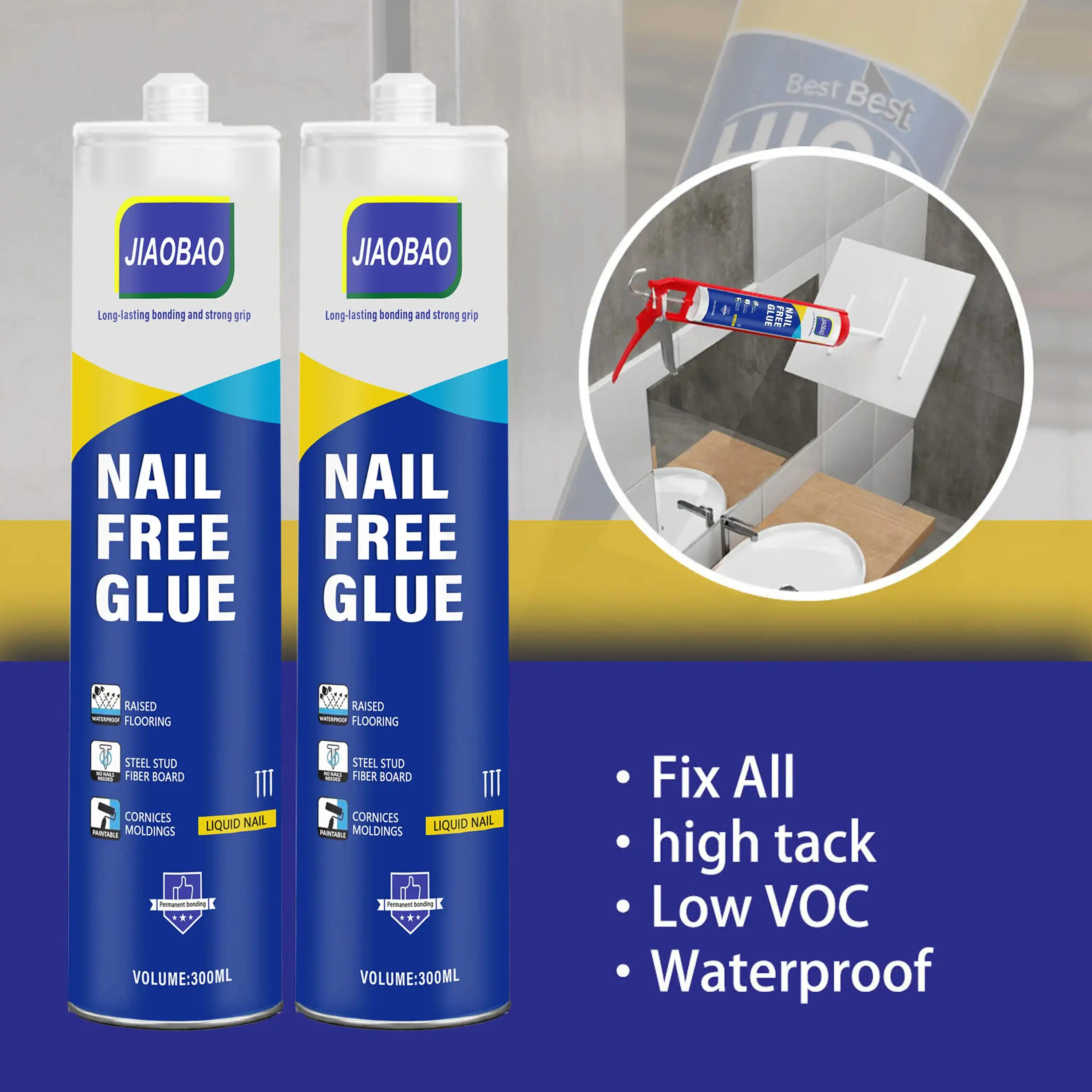
The success of the project rests on choosing materials that meet certain performance needs. Knowing the differences between adhesive types can help you avoid expensive mistakes and rework during the application process.
Mechanical clamps hold things together right away, but they hurt the material in a way that can't be fixed. Screws and nails put a lot of stress on the places where they are inserted, which could cause brittle materials to crack. Surfaces are damaged during removal, and repair marks can be seen. Installation of mechanical fasteners needs special tools, makes noise, and creates dust that can get into cleanrooms or areas that are already occupied—problems that Nail Free Glue Heavy Duty avoids entirely as a non-mechanical bonding solution.
These problems can no longer happen with modern glueing methods, which also offer better long-term performance. The continuous bondline spreads the loads out evenly, which stops the buildup of stress that leads to fastener failure. Using standard caulking guns, the installation goes smoothly, with no damage to the substrate and little cleanup. As time goes on, vibrations and changes in temperature that would normally loosen mechanical links are absorbed by the healed bond. Premium formulations can hold up to 30 kg/cm² of weight, which is enough to place big fixtures, cabinets, and building elements.
For each job, a different type of glue chemistry is best. Cyanoacrylate super glues can quickly join things together, but they can't fill in gaps very well and don't hold up well against impact. Epoxy systems are very strong, but they need to be mixed, they make heat when they set, and they are not flexible. Traditional building mastics take a long time to dry and may have solvents that give off volatile chemical compounds.
Modified silane polymer technology takes the best parts of different chemical approaches and makes them work better together. Moisture-cure devices get rid of the need to mix and give the material an endless amount of time to open before it is shaped. The elastic cure lets the substrate move without breaking. Formulations that don't use solvents meet strict VOC rules and environmental approvals. These adhesives come in White, Black, Grey, and custom colours, so they can meet your needs for style while still doing their job. Different application scales and dispensing equipment can use the 300ml and 600ml volume options in both sausage and cartridge packaging.
When used outside or in wet places, adhesives need to keep working even after being exposed to water. When standard building sealants come in contact with water for a long time, they may soften or separate. Not enough UV resistance leads to yellowing and breaking, which hurts both the look and the strength of the structure.
Formulations made for professionals that are designed to work in tough situations keep their bond power over time. Hydrolytic stability stops degradation caused by water, which is important for bathroom installs, outdoor cladding, and naval uses. Photodegradation, which leads to chalking and breaking, can't happen because of UV protection. Temperature switching from -40°C to 80°C makes sure that the product will work reliably through all four seasons without losing its stickiness or flexibility. Because of these features, moisture-cure silane systems are perfect for sealing curtain walls, expansion joints, and exterior trim jobs where poor performance leads to pricey warranty claims.
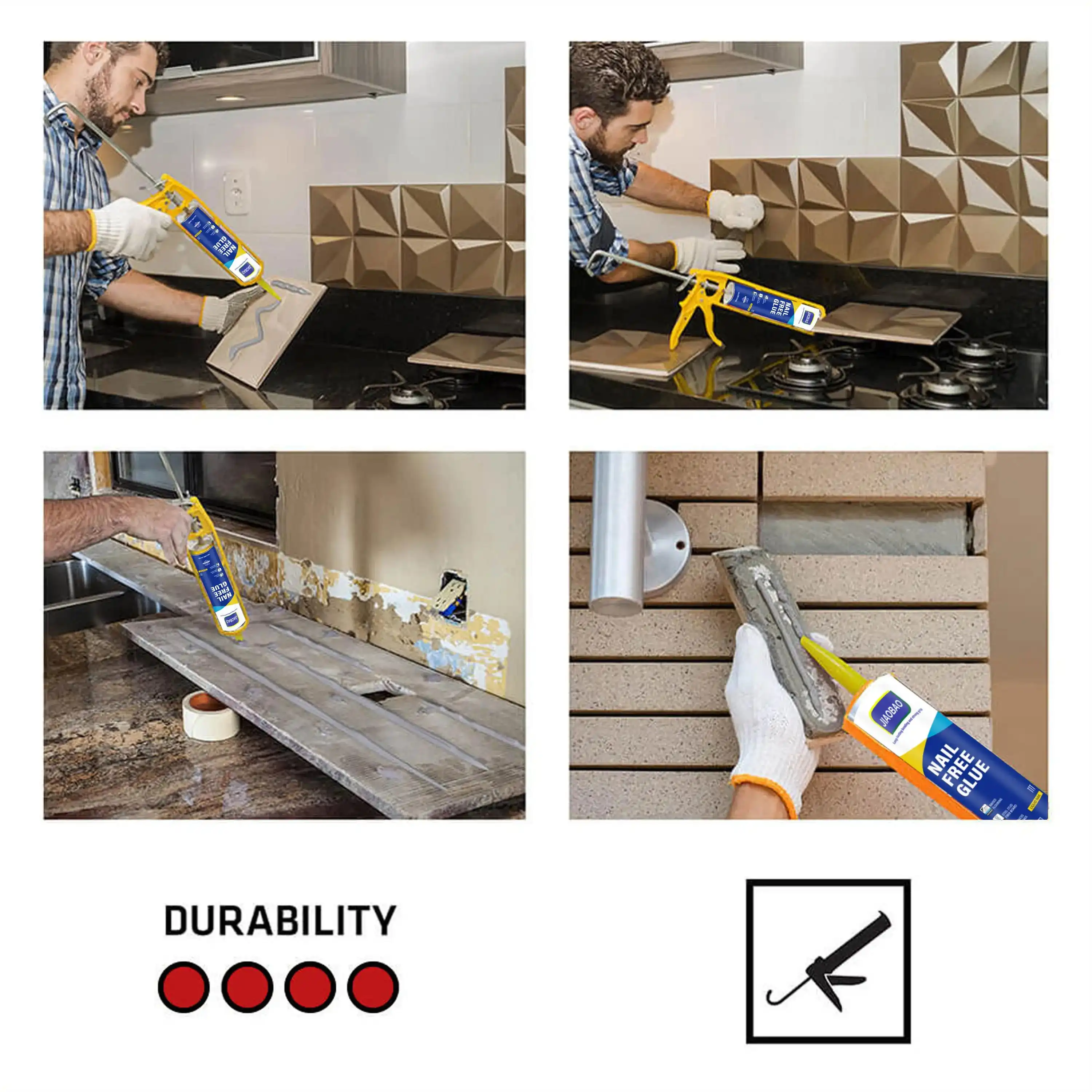
To choose a strategic glue, you need to match the product's specs to the needs of the application. Systematic evaluation stops performance problems and makes the most of a project's economics.
Clearly stating the technology needs is the first step to a successful purchase. When you list the bond strength, you need to include the safe factors, impact forces, and long-term loads that are right for the job. To get rid of temporary bracing, vertical installations need a high initial grab strength. Cure time affects project scheduling, especially when other steps depend on full adhesion being achieved first. Material compatibility is more than just binding; it also includes things like how plasticisers move through vinyl surfaces or how reactive metals react to galvanic contact.
The standards for temperature and weather resistance match the conditions of work. For interior uses, mild temperature stability may be enough, but for outdoor facades, they need to be able to handle changes in temperature and UV light. Application windows are affected by construction temperature ranges, especially for jobs that will be done in cold weather. Following safety rules, such as VOC limits, fire ratings, and material certifications, is important for getting regulatory approval and may be required for government or institutional projects.
The choice of manufacturer has a big effect on how consistent the products like Nail Free Glue Heavy Duty are and how reliable the supply is. Established manufacturers with a lot of knowledge keep strict quality control that makes sure stability from batch to batch for Nail Free Glue Heavy Duty. Getting ISO certification shows that you are dedicated to documented quality systems and constant improvement. Products like Nail Free Glue Heavy Duty that are marked with the CE mark and that meet international standards like ASTM and EN specifications are guaranteed to work as claimed.
Jiaobao New Material Co., Ltd. is a good example of the kind of seller that makes buying go smoothly. The company was started in 2013 and has more than 13 years of experience making specialised goods. It is ISO certified and makes adhesives that meet international quality standards. With production wait times of just one to two weeks, orders can be filled quickly, and there are a lot of different shipping choices to choose from. The 12-month shelf life gives you enough inventory flexibility without having to worry about spoilage.
Because OEM and ODM are available, glue specs can be changed to fit the needs of each project. Custom colour matching makes it possible for architectural finishes to fit in without being noticeable. This is especially helpful for curtain wall and glazing uses where sealant lines need to mix in with the other materials. For certain uses, changes to the formula can improve the speed at which it cures, the end stiffness, or its resistance to chemicals. Private labelling helps distributors and companies build their own systems by letting them differentiate their brands.
Before committing to large-scale procurement, adhesive performance is confirmed by testing a sample. The tensile strength, elongation, and cure characteristics were checked in the lab and found to meet the technical data files. Field tests make sure that the product works with real substrates and under real application conditions. Long-term longevity under UV exposure and temperature cycling can be predicted by tests that speed up the ageing process. This method based on evidence lowers the chance of design mistakes that cause applications to fail and require expensive rework.
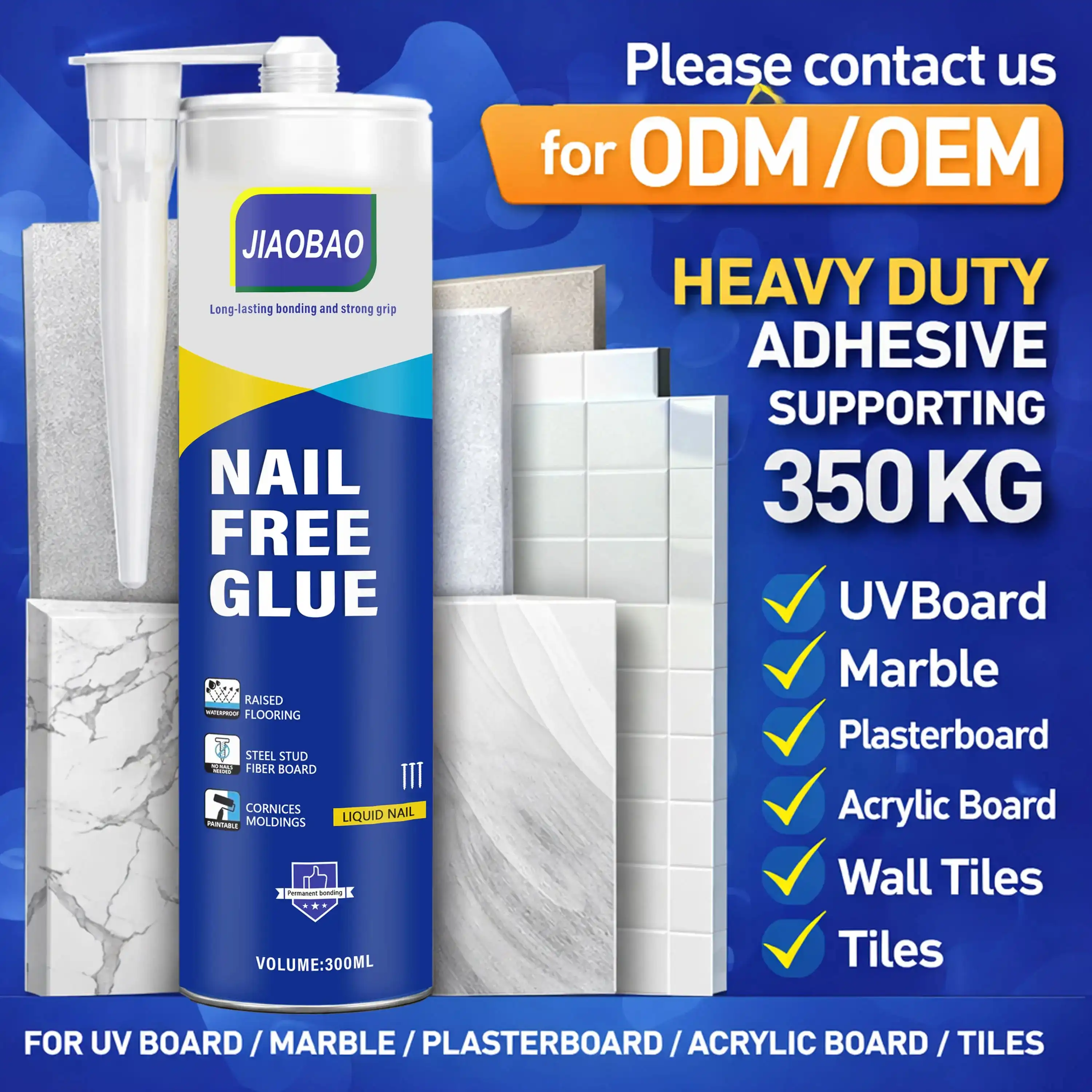
To get rated bond performance, you must use the right application technique. Systematic planning and execution stop the common mistakes that lead to glue failure too soon.
Preparing the substrate correctly is the first step to successful bonding. Surfaces need to be clean, dry, and free of anything that could get in the way of bonding. Wetting is stopped by oil, grease, and release agents, which should be removed with the right solvents. Loose dust and particles make boundary layers that are weak and break when they are loaded. If non-porous surfaces are wet, they can't make good touch, which can lead to bubbling during the fix.
Temperatures in the construction zone between 5°C and 35°C allow materials to flow properly and start to cure. Around 50% relative humidity is the best level for moisture-activated systems to cure quickly without skinning too soon. Solvent evaporation can happen with enough air flow, but moisture-cure silane systems don't need much airflow. These controlled settings make sure that the glue works the way it's supposed to.
Different types of dispensing tools can fit in different types of cartridge and sausage packing. Standard caulking guns are good for small jobs and let you control the bead precisely. When installing a lot of beads, pneumatic carriers make the job go faster while keeping the beads the same size. The shape of the beads affects how strong the bond is. For most uses, triangular profiles offer the best combination of cost-effectiveness and flexibility in the joint.
At normal conditions, the surface dry time is about 20 minutes. This gives you a few minutes to make changes before the glue skins over. Putting things in place during this window makes sure they are lined up correctly without messing up the bond that is still forming. At a rate of 2.5 mm per 24 hours, full cure happens, and the final strength grows as water moves deeper into the bondline. It might take a few days for thick parts to fully fix, but surface bonding gets strong enough in just a few hours for light handling.
Even experienced applicators sometimes have trouble with bonding. When surfaces are dirty or there isn't enough touch pressure during the first application, binding problems usually happen. Uneven healing could mean that the environment is not in the right range or that the joints are too thick, which makes it hard for water to get through. Moving the bondline while it cures makes weak spots, which should be stopped by properly fixing the piece until it sets.
Successful case studies demonstrate proper technique across applications. Woodworking installations achieve invisible glue lines that eliminate visible fasteners in cabinetry and trim work. For metal fabrication projects, aluminium composite panels can be bonded to structural frames without the heat distortion that comes from welding. When building outside, expansion joints in concrete and masonry are sealed with flexible bonds that can bend with the seasons. These real-world examples validate the technology when applied according to best practices.
Efficient procurement balances cost optimisation, quality assurance, and supply reliability. Strategic buying methods make sure that products work well while lowering the total cost of ownership.
Having more than one way to buy Nail Free Glue Heavy Duty meets the needs of different organisations. Online B2B marketplaces let you find a lot of suppliers of Nail Free Glue Heavy Duty and see their prices all at once. This makes them useful for researching the market and buying small amounts at first of Nail Free Glue Heavy Duty. When you buy from a wholesale wholesaler, you can get better deals on shipping and credit terms for Nail Free Glue Heavy Duty. When you deal directly with the maker of Nail Free Glue Heavy Duty, you get the lowest unit costs for large orders and can make changes that you can't make through other routes of distribution.
Jiaobao's direct sales approach shows how manufacturer agreements can be helpful. Technical help makes sure that the right product is chosen and that the right application is used. This stops design mistakes. When you order in bulk, competitive price cuts down on material costs by a lot compared to retail outlets. The minimum order quantity can be changed to fit projects ranging from small runs of prototypes to large-scale production. This direct relationship makes it easier to talk to each other and solve problems faster when they come up.
Testing a sample of a product before buying a lot of it makes sure that it meets the specifications and works with the way things are done now. Before making big purchases, small-quantity trials show any problems with the application or differences in performance. During this testing process, the package is also checked to make sure it works with the current storage and dispensing systems.
Logistics planning makes sure that things get where they need to go on time and don't cost too much to store. Just-in-time delivery, which reduces the need for stock space, is possible with short production wait times of one to two weeks. Different project schedules can be accommodated by a variety of shipping options, such as sea freight for large quantities and fast land transport for urgent needs. The purity of the product is maintained throughout its shelf life by storing it properly. For premium formulas, temperature-controlled storage is suggested.
Building good ties with suppliers creates long-term value that goes beyond the price you pay at first. Regular contact with sellers lets them know about changing needs and lets them suggest ways to make products better or come up with new solutions. Reliable suppliers keep the supply going, which keeps projects from being held up, and quick technical support answers application questions. These aspects of the relationship are often more useful than small differences in cost, especially for difficult or important tasks.
Professional structural adhesives like Nail Free Glue Heavy Duty have changed the way construction and manufacturing are done by providing strong bonding without the problems that come with mechanical fasteners. The technology of Fire Rated Silicone Sealant for Joints meets strict performance standards while also meeting important industry needs like surface preservation, installation speed, and aesthetic quality. Professionals can get the most out of Fire Rated Silicone Sealant for Joints by learning about glue basics, the right way to apply it, and smart ways to buy it. The moisture-cure silane polymer formulation from Jiaobao is a great example of the quality and performance standards that are needed for projects to be successful in difficult industrial and business settings, just like Fire Rated Silicone Sealant for Joints.
When the temperature is 23°C and the humidity is 50%, moisture-cure silane polymer bonds fix at a rate of about 2.5 mm per 24 hours. The surface dries in about 20 minutes, which gives you time to adjust the material. Handling strength is reached in 24 hours for bondlines that are 3 to 5 mm thick. Curing times for thicker applications are proportionally longer. As wetness gets deeper into the joint, the full mechanical qualities start to form.
High-quality formulas keep working at temperatures from -40°C to 80°C, which makes them ideal for most climate zones. Photodegradation, which turns things yellow and breaks them, can't happen if they are UV stable. Hydrolytic stability makes sure that water doesn't weaken the bond. Because of these features, professional adhesives can be used for weather protection, outdoor covering, and expansion joints. Environmental stress tests that speed up the ageing process prove that something will last for a long time.
Vapour can build up if there isn't enough air flow, but moisture-cure systems don't give off many volatiles. When wearing nitrile gloves, you should avoid touching your skin because glue that hasn't set yet can cause allergic reactions. Wearing eye protection stops splashes while dispensing. Material safety data sheets give thorough instructions on how to handle things. Because cured glue is chemically inert and doesn't pose any long-term risks, these goods are safer than solvent-based options.
Jiaobao New Material Co., Ltd. is ready to help you with your structure bonding needs with its extensive technical knowledge and years of experience in making. Our modified silane polymer adhesive gives building and industrial uses the performance, dependability, and customisation choices they need. Our responsive 1-2 week wait times and flexible operations keep your projects on schedule, and our ISO-certified production makes sure that the quality is always the same. Our experienced team can help you with technical advice and after-sales support that lowers risk and improves results, whether you're looking for standard formulas or custom-colored solutions for architectural uses. You can email our team at dorashen@cnjiaobao.com to talk about your specific needs, get technical data sheets, or set up sample testing. As an established Nail Free Glue Heavy Duty manufacturer, we combine competitive pricing with the reliability and service that long-term partnerships demand.
1. Chen, W., & Martinez, R. (2022). Advanced Structural Adhesives in Modern Construction: Technology and Applications. Construction Materials Press.
2. Thompson, J. K. (2021). "Moisture-Cure Silane Polymers: Bonding Mechanisms and Performance Characteristics." Journal of Applied Polymer Science, 138(12), 51-68.
3. International Organization for Standardization. (2020). ISO 37:2017 - Rubber, Vulcanized or Thermoplastic: Determination of Tensile Stress-Strain Properties. Geneva: ISO Press.
4. Anderson, P. L., & Wu, S. (2023). B2B Procurement Strategies for Industrial Adhesives. Supply Chain Management Publications.
5. Roberts, D. M. (2021). "Comparative Performance Analysis of Mechanical Fasteners versus Structural Adhesives in Building Envelope Applications." Building Science Review, 45(3), 112-129.
6. National Institute of Building Sciences. (2022). Best Practices Guide for Adhesive Selection and Application in Commercial Construction. Washington, DC: NIBS Technical Publications.
November 16,2023
Enterprise Name
The sealant has very strong adhesion and performs well even on glass and aluminum. After curing, it remains flexible and shows no cracking. Perfect for our facade projects.
November 16,2023
Enterprise Name
Stable quality across batches. Our customers especially like the smooth application and consistent extrusion. It helps reduce installation time on site.
November 16,2023
Enterprise Name
I used it for bathroom sealing. Excellent waterproof performance and no mold issues so far. It's been holding up very well in humid conditions.
November 16,2023
Enterprise Name
The neutral silicone works well on sensitive materials without corrosion. Very suitable for industrial applications requiring stable performance.
_1779347426672.webp)