November 16,2023
Enterprise Name
The sealant has very strong adhesion and performs well even on glass and aluminum. After curing, it remains flexible and shows no cracking. Perfect for our facade projects.
Jul 14, 2026
It's easy to use a Nail Free Adhesive Strong Bond if you know the right way to do it. First, clean the area really well to get rid of dust, grease, and water. Cut the nozzle in half at a 45-degree angle. Then, based on the weight of the material, spread the glue in long beads or dots. Firmly press the surfaces together and hold them there for 20 to 30 seconds to let the glue set. The top layer dries in about 20 minutes, but it takes 24 hours for the whole thing to fully cure. This method makes sure that the bond is as strong and long-lasting as possible on a wide range of materials.
Today's production and building need bonding solutions that are faster, cleaner, and more reliable. Nail Free Adhesive Strong Bonds have changed the game, taking the place of traditional mechanical fixings in a wide range of situations, from installing curtain walls to putting together custom furniture. Knowing how to use these adhesives correctly can directly lead to lower labour costs, better looks, and stronger structures for procurement managers in charge of big projects and engineers who are in charge of selecting materials. This guide shows B2B clients in the construction, industrial manufacturing, and building materials sectors the most important steps, technical things to think about, and buying tips.
The move away from nails and screws is due to rising demand for fitting methods that don't damage the base and still give professional results. Whether you are in charge of door and window factories, prefabricated building projects or selling materials to general builders, learning the right way to apply adhesives will help you get regular results and build stronger relationships with clients based on trust.
Nail Free Adhesive Strong Bonds are a type of high-performance glue that is meant to stick things together forever without causing mechanical damage. These adhesives spread the load evenly across the joined surface, unlike screws or nails that need to be pre-drilled and create stress concentration spots. Usually, this technology uses modified silane polymers or polyurethane mixtures that harden when they come into contact with water. This makes ties that are flexible but strong.
Broken things like glass, clay tiles, and marble are hurt by traditional fixings. They also leave holes that can be seen and hurt the look of high-end home and business projects. Adhesive bonding fixes these issues and provides extra benefits such as lowering noise and vibrations, which are important for HVAC installs and putting together car parts.
Professional-grade formulas are mostly made with modified silane polymer technology. These polymers combine with water vapour in the air to make networks that are cross-linked and chemically connect to the surfaces of substrates. The hardening process starts on the outside and moves inward at a rate of about 2.5 mm per 24 hours in normal conditions (23°C, 50% relative humidity). The stabilised paste consistency lets it be applied vertically without sliding, which is a problem that often comes up when installing door frames and hanging wall panels. The bond has a Shore A hardness of 50±5 when it's fully set, which is just the right amount of stiffness and flexibility. This flexibility lets curtain wall systems expand with temperature changes and takes in small structure movements in prefabricated buildings.
For different manufacturing uses, the adhesive qualities need to be just right. For exterior facade work, construction-grade goods put weather protection and UV stability at the top of their list of priorities. For finished interiors, it's important that the surface drys quickly and doesn't smell bad in occupied areas. Customers in the industrial manufacturing sector often need special formulas that are more resistant to chemicals or work better at certain temperatures. Procurement experts can choose the right product for each stage of a project when they know these differences. Gap-filling is useful for stone processing plants when they need to put heavy countertops, and electronics makers look for low-VOC formulas that won't give off gases near sensitive parts.
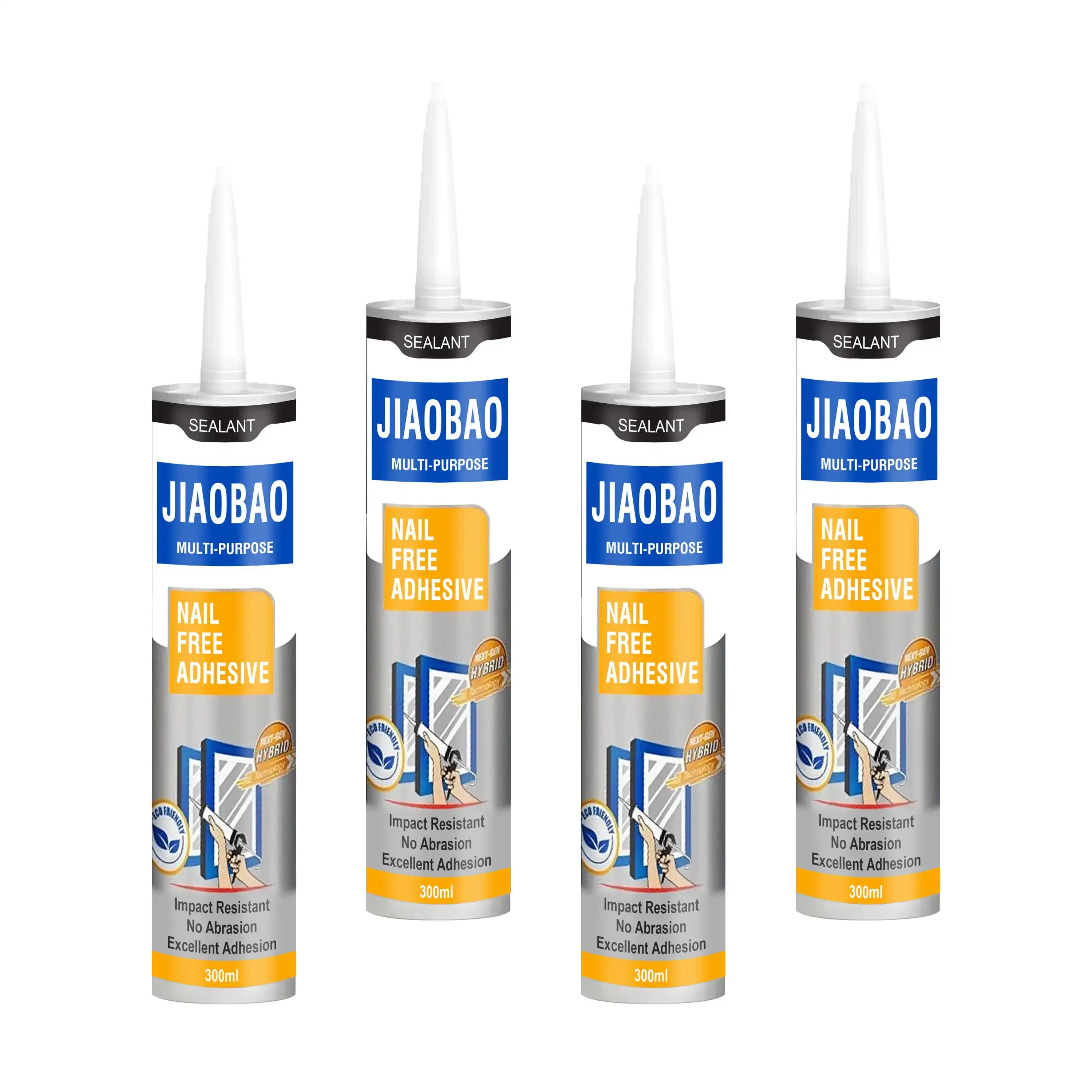
80% of bond strength depends on how well the surface is prepared. There should be nothing on the base other than clean, dry, and pure material. Wipe down the metal parts of HVAC ducts with isopropyl alcohol to get rid of the oils that come from cutting. In curtain wall projects, the concrete and brick surfaces should be clean of dust and have been dry for at least 28 days before the adhesive is put on them. Wood used in custom furniture companies may need a light cleaning to open up the grain structure and make it easier for the pieces to fit together mechanically. Deep-processing glass plants should use acetone or special glass cleaning to make sure areas are grease-free. It's also important that the glue and the material are both within the building temperature range of 5°C to 35°C for the best bonding.
To change the size of the beads, cut the cartridge opening at a 45-degree angle. When sticking heavy things together with a Nail Free Adhesive Strong Bond, like stone veneer or aluminium composite panels, do it in straight strips that are 10 to 15 cm apart. Lighter materials such as PVC trim or stairs need only a zigzag design or dot application every 20 cm. Use strong, even pressure to press the things together. Within 20 minutes, the original grab power builds up. During this time, don't put any stress on the bond. For projects above 5 kg or that are upright, you should use temporary mechanical support until the glue dries to 50% of its full strength, which usually takes 12 hours.
For the chemical process to finish, moisture-curing sealants need humidity in the air. In climate-controlled factories with low humidity (below 30%), cure times may be 30 to 50 percent longer. High-humidity areas, on the other hand, like installing bathroom fixtures, speed up the drying process but may cause skinning to happen too soon if the extra glue isn't tooled off quickly.
Temperature has a big effect on performance. When it's below 5°C, the sealing reaction slows down and stickiness rises, which makes it hard to extrude the cartridge. When installing things in the winter, project managers should keep the glue in a warm place and wait for the materials to hit the lowest temperature needed for building before putting them on. When it's hotter than 35°C, the open time (the time the glue can be used before it turns over) shortens, which means that installation tasks have to be done faster.
Bond failure is usually caused by surfaces that are dirty or not enough touch pressure. If the materials split while curing, it could be because there isn't enough glue or it's not spread out evenly. If there are bubbles or holes in the bond line, it means that air is stuck because of the way the adhesive was applied. Use steady pressure to smooth the adhesive into thin, even layers. For colour-sensitive tasks like matching curtain wall paints to architectural finishes, make sure that the batch numbers stay the same throughout the job. Different production runs of adhesive can have slightly different colours, which can make high-visibility placements look less consistent.
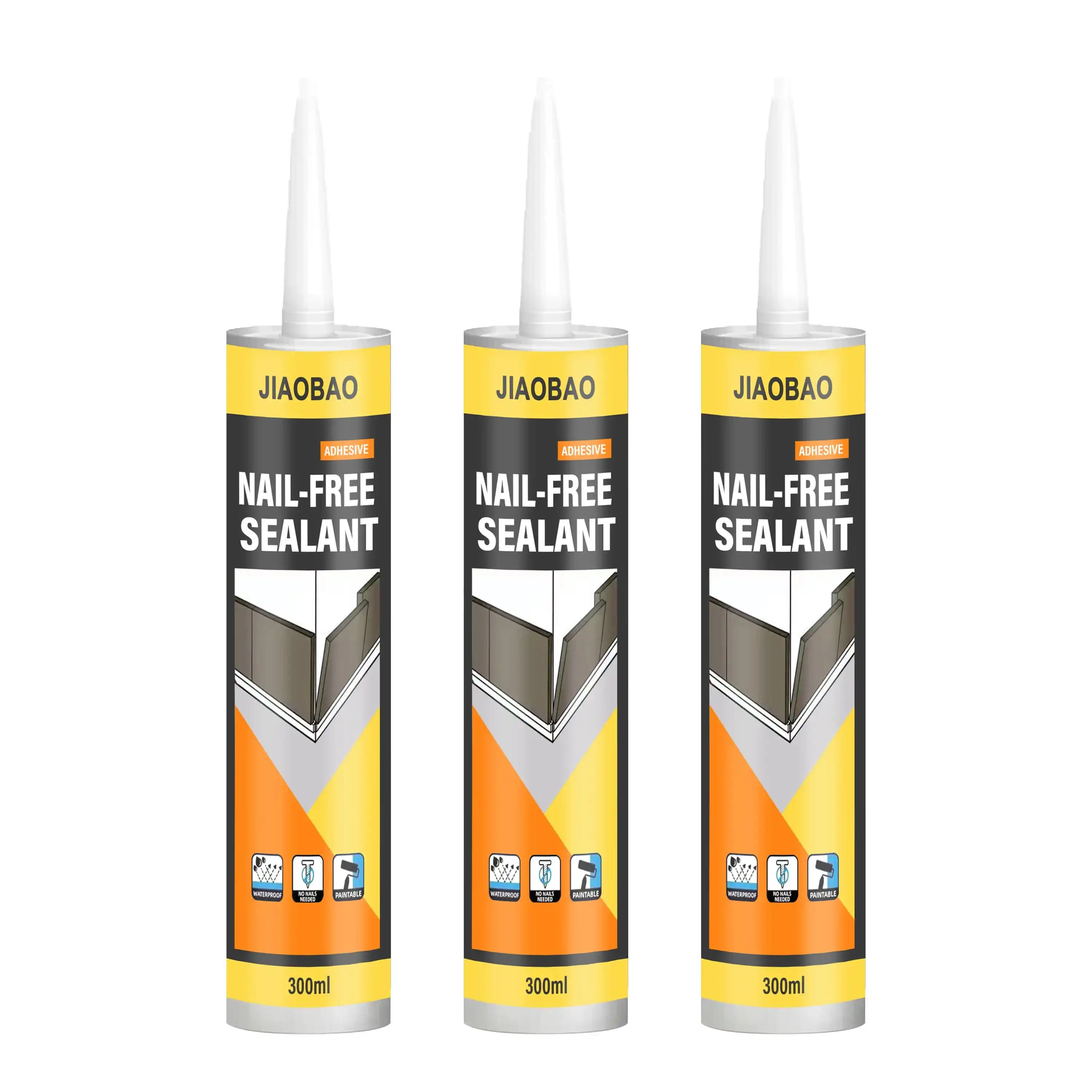
When you use mechanical fasteners, they put point loads on materials, which can break weak materials and make them weaker over time through shaking and temperature changing. Nail Free Adhesive Strong Bonds spread stress over the whole touch area, which makes them better at supporting weight for the same surface area. Quality adhesive ties have shear values above 2.5 MPa, which is about the same as many welded parts in light structural uses.
Another benefit is that installation is quick. When door and window making plants switch from screw-based methods to adhesive bonding, assembly times go down by 40%. General builders like that air equipment is no longer needed, which means less noise pollution and less need for electricity on the job site. But mechanical fasteners are still needed for tasks that need to be taken apart or that need to be fully loaded right away. Some prefabricated building parts use mixed systems that combine glue for sealing and bolts for main structural link. This improves both speed and performance.
When properly placed, adhesive ties stay strong for decades as long as they are kept away from direct UV light and extreme temperatures. Because modified silane polymers are elastic, they can stretch 300% before breaking. This makes them good for making movements that would loosen mechanical connections. In curtain wall systems, where aluminium framing stretches and shrinks with changes in temperature, this flexibility is very important. Because glue bonding is waterproof, it works great in wet places. When fitting bathroom vanities and kitchen cabinets, custom furniture companies use mildew-resistant formulas that keep the bond strong even when exposed to water all the time. Metal bolts corrode, but good sealants don't break down when cleaned with chemicals or exposed to moisture.
When labour costs are taken into account, adhesives are usually cheaper than standard fastening methods when it comes to material costs per square metre. Even though quality adhesives may cost more up front than bulk fasteners, the fact that they don't need to be drilled, patched, or finished cuts down on installation costs by 20–30% in most business settings. These savings are increased by buying in bulk. When building material wholesalers buy by the pallet, they get bulk discounts and can keep their inventory low because the materials have a 12-month shelf life. Companies that trade across borders like that the items they ship are lighter than metal fastener stocks, which lowers the costs of shipping to export markets.
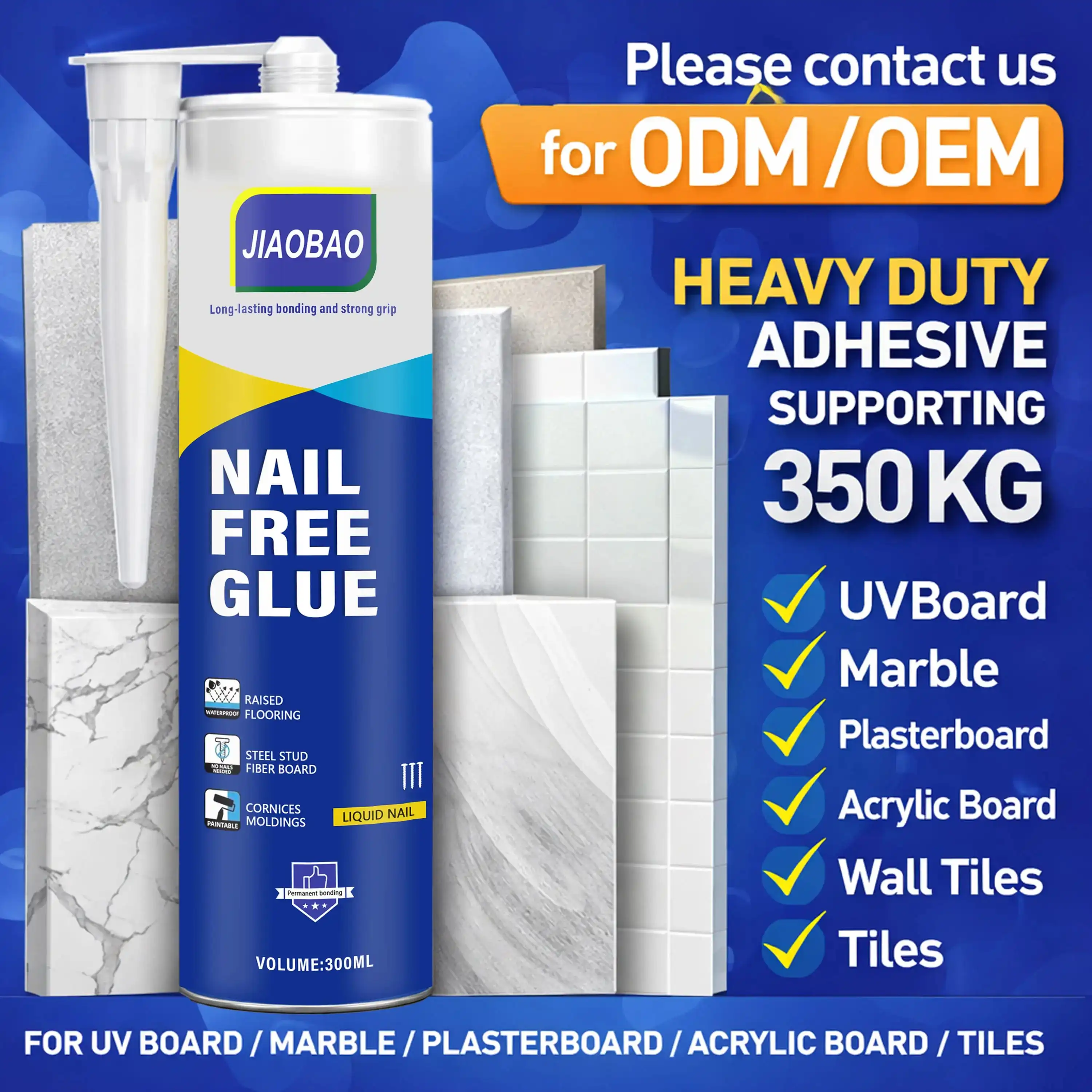
Performance data that can be measured is needed for industrial uses. Nail Free Adhesive Strong Bonds have a tensile strength of 2.5 N/mm² and an elastic stiffness of 1.400 N/mm² at 100% extension. These specs support the structural needs of curtain walls and the placement of heavy mirrors in business buildings. The temperature range of -40°C to 80°C makes the product reliable in a wide range of climates, which is important for wholesalers who work with both cold-weather building markets and hot-weather industrial facilities. Automobile parts companies like it when the bonding works well even when the temperature changes a lot, like in engine rooms and HVAC systems.
Adhesive choice needs to take base material qualities into account. Standard formulas stick well to non-porous surfaces like metal, glass, and polished tile. Concrete, wood, and unglazed pottery are all porous bases that might need primers or special mixtures that get through the surface roughness to allow for mechanical interlocking. Material fit is more than just sticking together physically. To keep natural stone from staining or etching, stone handling plants should make sure that the pH of the glue is normal. Electronics makers need goods that don't give off a lot of gases and won't damage sensitive parts while they're fixing.
Professionals in procurement should evaluate providers based on more than just the price per unit. Production wait times are important. Just-in-time inventory management is possible with producers who offer 1-2 week turnaround. Certification paperwork (ISO and ASTM compliance) makes it easier to get project specifications approved and follow the rules.
Sample testing programs lower the chance of buying something. Before agreeing to bulk sales, ask for small amounts in colours that are specific to the job. This method works especially well for curtain wall companies that have to match exact RAL colour specs, since batch uniformity can break up the visual flow. The ability to customise things adds value to a strategy. OEM/ODM relationships let distributors build brand loyalty through private labelling, and they also let formulators make changes to meet the specific needs of industrial production environments.
Even though Nail Free Adhesive Strong Bonds are safer than solvent-based options, workers should still follow the right steps to handle them safely and make sure the product works well. Wear nitrile gloves to keep the glue from touching your skin, as it can cause slight discomfort. If cartridges are lost or broken, safety glasses keep you from accidentally releasing pressure. It's important to have enough air even with low-VOC formulas. As the polymer chains combine with wetness during curing, small amounts of gas are released. OSHA rules say that air exchange rates in factories should meet certain levels. This is especially important in small areas like lift shafts and mechanical rooms.
If you keep unopened cartridges between 5°C and 25°C in a dry place, they will work perfectly for 12 months. Wholesalers of building materials should use first-in, first-out inventory movement to keep their goods from going bad before they're used up. Freezing temperatures can change the rheology of adhesives, and too much heat speeds up the bonding process inside sealed cartridges. A moisture shield should be put around refills that have only been partially used. Take off the pouring tube, push out a small amount to make a skin, and then put the cap back on tightly. This method keeps things usable for an extra two to three weeks, which cuts down on waste in places that make custom furniture and small batches.
Buying choices in the building and manufacturing sectors are influenced by concern for the environment. Zero-VOC formulations meet the standards for LEED approval for green building projects. Cleanups that use water and science that doesn't use solvents are in line with stricter environmental laws in the US and Europe. Product approvals are different for each use. Commercial buildings that need fire-rated systems may need adhesives that have been checked for flame spread ratings. Accelerated weathering tests must be used to prove UV protection for outdoor uses. During the seller qualification process, procurement managers should ask for relevant test results that match the project requirements.
Visual inspection right after application finds problems before they fully fix. Check for uniform bead designs, full substrate contact, and no holes or bubbles. For important structural uses like attaching curtain wall panels, destructive testing of sample ties makes sure the right way to place them is used before they are used on a large scale. For long-term upkeep, bond lines in high-stress places need to be looked at every so often. Adhesive ties that are properly applied almost never fail, but if you notice edge lifting or material delamination early on, you can fix the problem before it affects the assembly's performance. To keep quality consistent, plants that make doors and windows should teach assembly teams how to do inspections.
Learning the right way to use Nail Free Adhesive Strong Bonds has a direct effect on the success of the job, how much it costs, and how long it lasts. Thoroughly cleaning the surface, using the right amount of glue, letting it cure in the right conditions, and checking for quality are the most important steps to make sure the best bond performance in manufacturing, building, and other industries. In fast-paced B2B markets, procurement workers can gain a competitive edge by choosing suppliers that offer stable product quality, expert support, and flexible customisation. Engineers and project managers can safely recommend bonding solutions when they know about the chemical properties, performance characteristics, and application requirements of these adhesives. This cuts down on installation time and improves the look and structure of the final product.
A: When applied properly, quality Nail Free Adhesive Strong Bond formulas achieve shear strengths greater than 2.5 MPa, which are sufficient for most ornamental stone veneer installs. It turns out that surface area and properly preparing the base are more important than adhesive power alone. Stone processing plants should figure out how to distribute the load. A safety cushion of 1 kg per 10–15 cm² of bonded area is usually enough. Putting temporary artificial support on the links during the 24-hour cure time keeps them from being stressed.
A: When temperatures drop below 10°C, the normal time for an area to dry goes up to 40 to 60 minutes. In cold weather, the full repair rate slows down by the same amount—expect 3–4 mm per 24 hours instead of the usual 2.5 mm. Plants that make doors and windows that are planning to put things in the winter should keep their materials in warm areas and let the glue reach a minimum temperature of 5°C before using it.
A: Modern modified silane polymer glue are naturally low-VOC and don't contain any solvents, so they meet LEED standards for indoor air quality. Green building standards for business construction are met by the water-based cleanup and lack of harmful curing leftovers. When asking for certified sustainable projects, make sure that providers give you specific VOC emission data and certification paperwork.
Jiaobao is a reliable company that makes professional-grade glueing products, such as our high-performance Nail Free Adhesive Strong Bond formulas. We've been making things for more than 13 years and work with building companies, furniture makers, and industrial clients all over North America to provide them with reliable supply lines and quick technical support. Our modified silane polymer adhesives come in 300ml and 600ml cartridge and sausage packing. They come in basic colours like white, black and grey, or you can have a colour match made just for your project.
We know what's important for B2B buyers: consistent quality that can be checked with ISO certification, low volume pricing that doesn't break the bank, and short production wait times of one to two weeks that work with your project plans. Our OEM/ODM skills let distributors build their market position through private labelling. You can email our procurement experts at dorashen@cnjiaobao.com to get technical data sheets, set up sample tests, or talk about bulk prices for your next project. Jiaobao gives corporate clients the reliable products and flexible service they need to get things done.
1. Smith, J. and Anderson, K. (2021). Adhesive Bonding in Modern Construction: Performance Standards and Application Techniques. Building Materials Press.
2. Chen, L. (2020). "Modified Silane Polymer Chemistry: Curing Mechanisms and Substrate Interactions." Journal of Industrial Adhesives, 45(3), 234-251.
3. Thompson, R. (2022). B2B Procurement Strategies for Construction Materials: Cost Analysis and Supplier Evaluation. Professional Purchasing Institute.
4. Martinez, P. and Williams, D. (2019). "Comparative Performance of Mechanical Fasteners versus Adhesive Bonding in Curtain Wall Systems." Architectural Engineering Quarterly, 12(2), 78-94.
5. Green Building Council. (2023). LEED v4.1 Material Selection Guidelines: Adhesives and Sealants Criteria. US Green Building Council Publications.
6. Industrial Safety Standards Committee. (2021). Safe Handling Protocols for Construction Adhesives: OSHA Compliance and Best Practices. Occupational Safety Reference Manual.
November 16,2023
Enterprise Name
The sealant has very strong adhesion and performs well even on glass and aluminum. After curing, it remains flexible and shows no cracking. Perfect for our facade projects.
November 16,2023
Enterprise Name
Stable quality across batches. Our customers especially like the smooth application and consistent extrusion. It helps reduce installation time on site.
November 16,2023
Enterprise Name
I used it for bathroom sealing. Excellent waterproof performance and no mold issues so far. It's been holding up very well in humid conditions.
November 16,2023
Enterprise Name
The neutral silicone works well on sensitive materials without corrosion. Very suitable for industrial applications requiring stable performance.
_1779347426672.webp)