November 16,2023
Enterprise Name
The sealant has very strong adhesion and performs well even on glass and aluminum. After curing, it remains flexible and shows no cracking. Perfect for our facade projects.
Aug 6, 2026
When deciding between adhesive mounting solutions and traditional mechanical fasteners, understanding the actual strength and performance differences becomes essential. Nail Free Glue for Wall Mounting delivers impressive tensile strength up to 2.5 N/mm² and elongation at break reaching 300%, making it a viable alternative to screws in many commercial installations.
The adhesive works by forming molecular bonds with substrate surfaces through modified silane polymers, creating lasting connections without penetrating walls. While screws provide predictable load distribution and removability, high-performance adhesives eliminate drilling damage, reduce installation time, and maintain aesthetic integrity—particularly crucial in premium residential settings and rental properties where wall preservation matters most to clients.
The way installation workers set up wall devices has changed because of adhesive mounting technology. Modern construction adhesives form chemical bonds at the molecular level with a variety of substrates, unlike mechanical fasteners that rely on friction and material compression within drilled holes.
Changed silane polymer bonds harden by being exposed to water instead of evaporating, which lets them harden from the outside in. This moisture-cure mechanism means that the adhesive stays flexible after it has set. This lets different materials, like metal brackets mounted on painted drywall, expand and contract with temperature changes. The paste-like consistency stays put where it's applied and doesn't sag on vertical surfaces, making positioning stable right away during installation.
Home installation companies are getting more and more requests from customers for damage-free hanging, especially in high-end flats and rented spaces. Adhesive solutions meet this need and improve operations at the same time. Installation teams can finish jobs faster if they don't have to find wall studs, drill pilot holes, or deal with dust and debris that needs to be cleaned up. The one-component recipe avoids mistakes caused by mixing, and the cartridge packaging works perfectly with standard caulking guns that technicians already have.
Environmental issues are also important to business clients. Installation work can be done in occupied spaces with low-VOC formulations that have little to no smell, so tenants don't have to worry about noise or ventilation issues. The 12-month shelf life means that material can still be used for multiple projects as long as it is kept properly, which cuts down on waste from old goods.
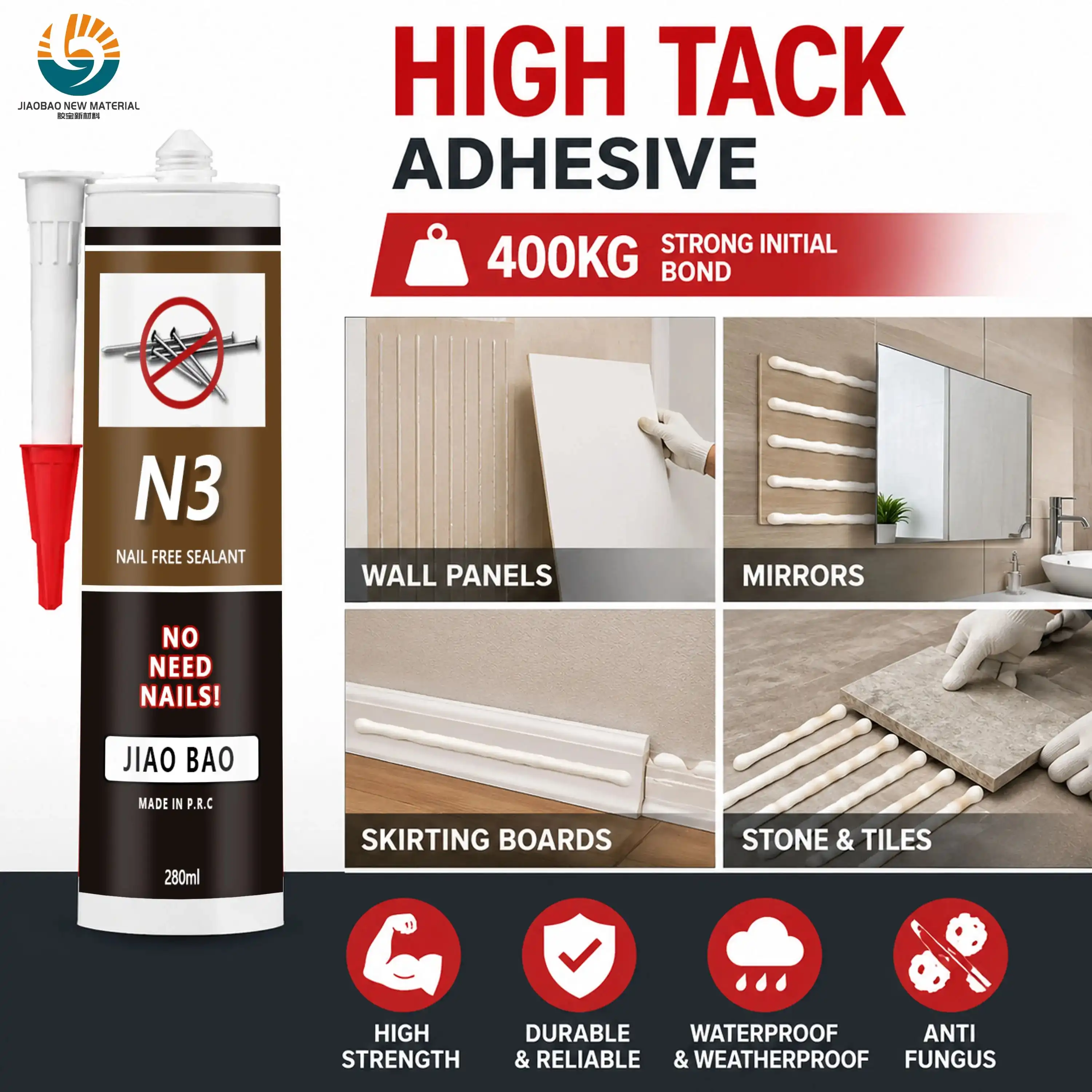
To figure out load-bearing ability, you have to look at how each type of fastening spreads stress in different situations. There are different ways that mechanical fasteners and adhesive bonds can fail, which makes direct comparisons difficult.
When standard #8 wood screws are driven into bolts, they usually give 80 to 100 pounds of resistance to pulling out. This depends on the density of the wood and the depth of the thread contact. When installed correctly, toggle bolts in hollow walls can hold 50 to 75 pounds. It's not through point loading that high-performance building adhesives get the same level of binding power; instead, it's through surface area contact, and Nail Free Glue for Wall Mounting exemplifies this principle by relying on broad adhesion rather than mechanical fasteners. A continuous 4-inch adhesive bead with a tensile strength of 2.5 N/mm² can hold more than 40 pounds per square inch of bonded surface in theory. However, how well it works in practice depends a lot on the quality and preparation of the substrate.
In adhesive uses, shear strength—the ability to stop something from rolling along the fixing surface—often times tensile strength. Because of this, construction adhesives work really well for shelving that is mounted on the wall and horizontal fixtures where weight loads mostly cause shear stress instead of pulling perpendicular to the wall. When applied correctly, adhesive beads spread the weight across the whole bonded area. This lowers the stress concentration points that cause screw-mounted brackets to break.
Both ways of fastening are greatly affected by the type of wall. Screws work reliably in solid materials like concrete and wood walls, but they don't work well in crumbling drywall or thin panels. Stickers stick well to smooth, non-porous surfaces like ceramic tile and glass, where digging could cause cracks. But they might not stick as well to walls that are dirty or badly painted, which stops molecules from contacting each other.
Changes in temperature cause different problems. When metal screws are attached to fixings, they expand and contract evenly, keeping the holding force constant. Elastomeric adhesives that can stretch 300% of their length can handle movement between materials with different expansion coefficients, which keeps mounted objects from getting stress cracks. Extreme weather is covered by the -40°C to 80°C working range. The link stays strong even when temperatures change with the seasons, which would normally weaken rigid fasteners.
Exposure to humidity changes how fast something cures and how long it lasts. When they are first set up, moisture-cure adhesives actually work better with some humidity. Under normal indoor conditions, they reach full strength in 24 hours. Screws in wet places can rust, which weakens their hold over time. Polymer-based glue, on the other hand, don't let water in and keep their flexibility.
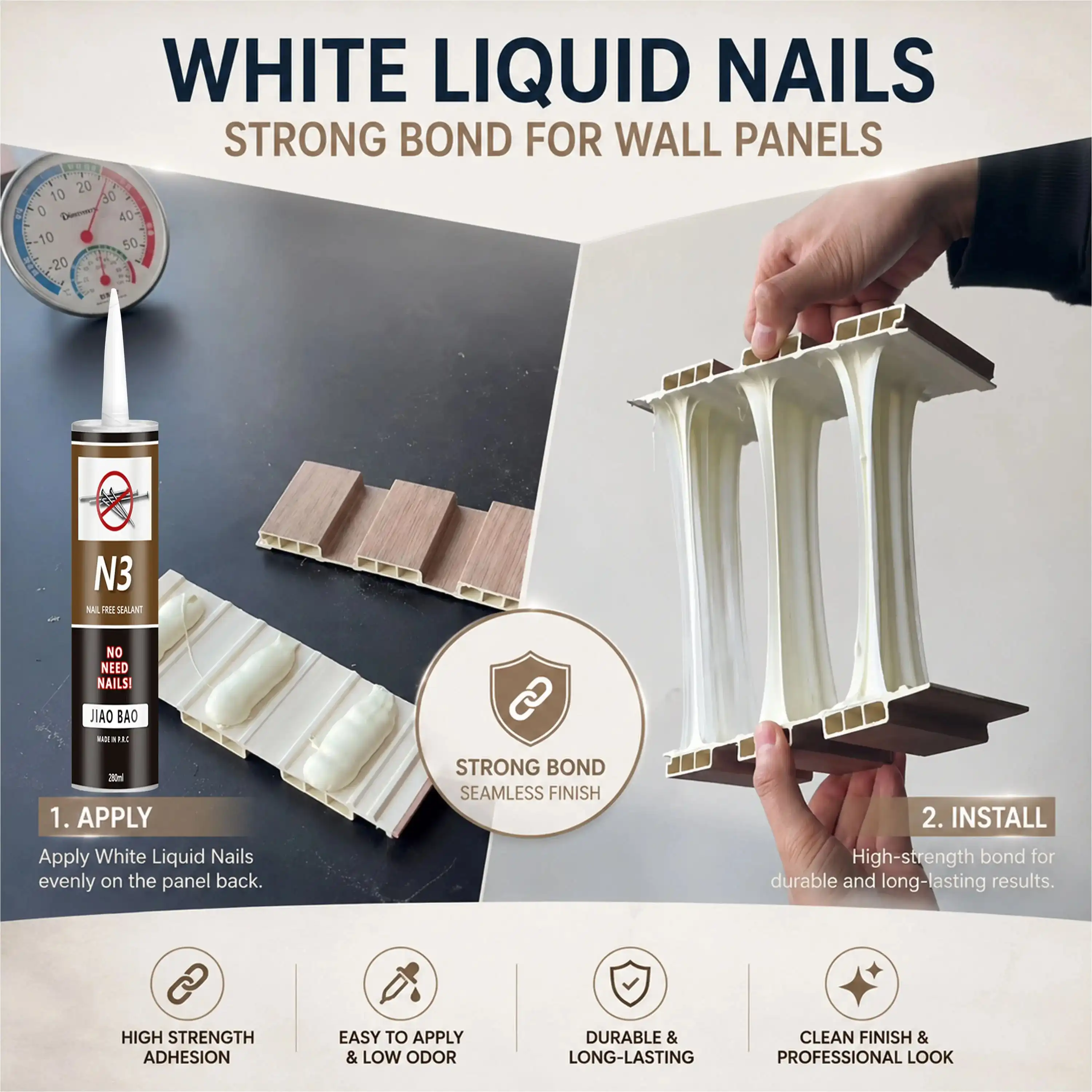
In addition to traditional screws, installation professionals have other mounting options. Each has its own performance characteristics and best use cases.
Foam-backed tapes are convenient for light-weight jobs, but they can't fill gaps as well as paste adhesives can or hold things together as well. Removable fixing strips work well for picture frames that weigh less than 5 pounds, but they don't work well for features that need to be moved around during installation. The thicker consistency of construction glue can cover uneven wall surfaces and fit fixing hardware with odd shapes that wouldn't fit properly with thin tape products.
Screw-mounted fittings are easy to take down and put back up without having to replace the screws. When construction adhesive dries, it forms permanent bonds that can only be broken by mechanical cutting. This makes it less useful for temporary installations or areas that need to be rearranged often. However, this longevity means that maintenance calls aren't needed to fix loose hardware, which is a big plus for installation companies that have to keep track of insurance costs and customer happiness.
Nail Free Glue for Wall Mounting offers a strong adhesive alternative, but where it truly excels is when paste adhesives can fill in gaps and also dampen noise, which stops mounting parts from rattling. This fixes quality issues that come up with hard screw connections. This feature is liked by facilities management teams in business settings where vibrations from HVAC systems or foot traffic would otherwise make annoying sounds from parts that aren't securely attached, and Nail Free Glue for Wall Mounting provides the flexible, gap‑filling hold that prevents such noise at the source.
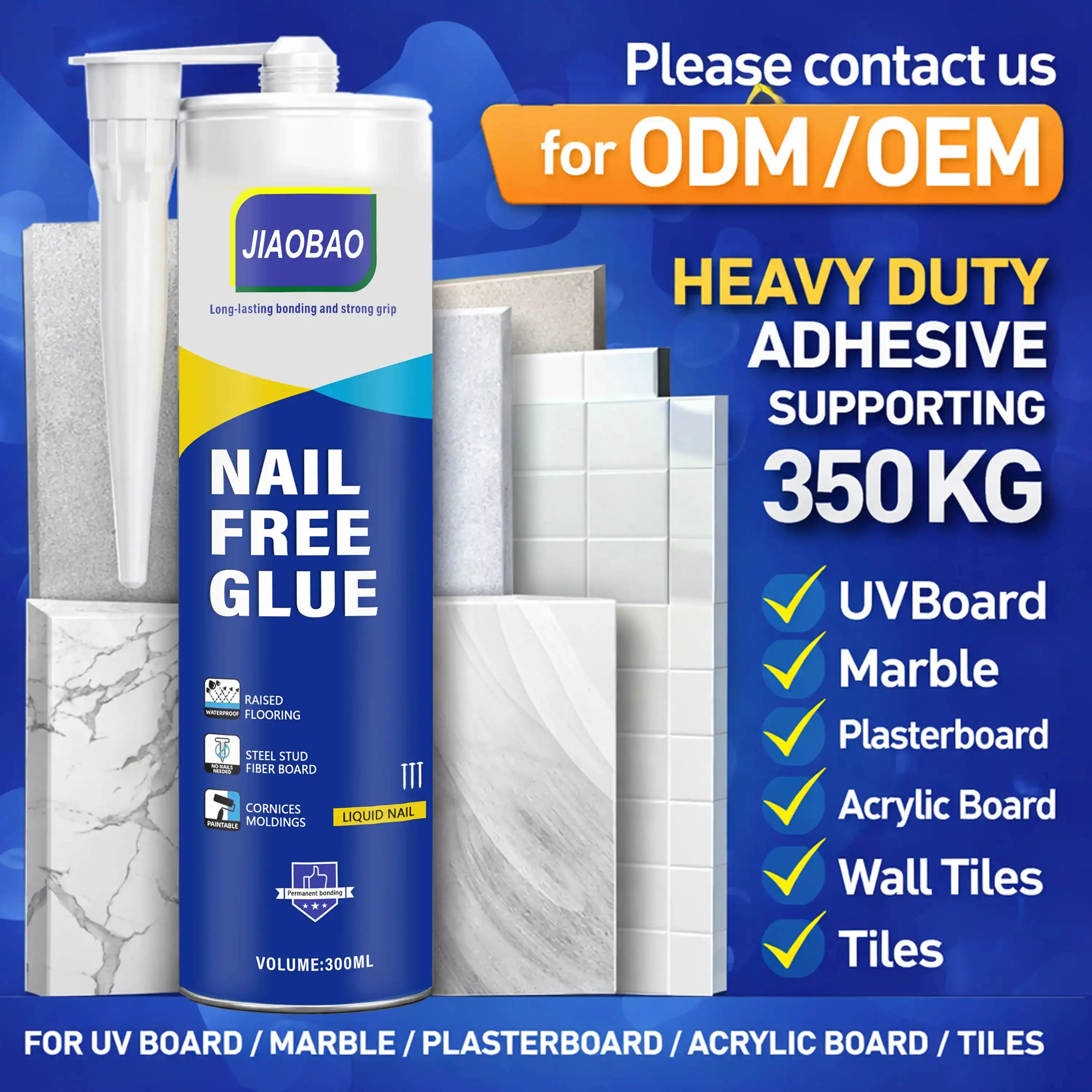
When purchasing managers look at adhesive suppliers, they have to weigh the short-term cost of the products against the long-term dependability and service support.
Load needs should guide the first product choice. When installing bathroom mirrors, kitchen shelves, or artistic panels, you usually need adhesives that can hold up to 30 kg per square meter of bead. The tensile strength of 2.5 N/mm² can be used to determine how much weight the material can hold when it is applied correctly and the surface is properly prepared.
Curing speed changes how long a job takes. Because they cure at a rate of 2.5 mm per 24 hours, thick sticky beads need more time to set up before fittings can hold their full weight. Installation teams that are short on time benefit from products that have a high initial tack that lets them move things around within 10 to 15 minutes while still having enough grip to keep them in place while they cure.
Manufacturers that have been around for a while and have ISO certification can show that they consistently control quality across all production runs. This is very important when buying 300ml or 600ml cartridges in bulk for ongoing projects. Companies that offer both sausage and cartridge packages give customers a choice of tools and project sizes. For people who print a lot, sausage packs are usually a better deal, while cartridge forms are better for smaller jobs that need less waste.
Being able to match colors (white, black, gray, or custom) makes it possible for adhesive beads to blend in with mounting surfaces and fixtures, meeting the high standards of aesthetics that customers expect. This ability to customize shows that the manufacturer is knowledgeable and ready to meet specific project needs beyond standard product offerings.
Focusing on surface preparation and application technique is more important than having special skills or expensive tools for making links that last.
Isopropyl alcohol should be used to clean mounting surfaces well so that dust, oils, and loose paint don't get in the way of the molecules that hold the glue and base together. Rough sanding shiny surfaces makes more bonding area without changing the way the wall looks. Nail Free Glue for Wall Mounting is ideal for this process, as it provides strong, residue-free adhesion. For panel installations, put adhesive in long, vertical beads that are 4 to 6 inches apart. For smaller fixtures, make a border pattern with dots in the middle.
Good building glue sticks right away, so you can move things around within the first 20 minutes as the surface starts to skin. Firmly press on attached items to spread the adhesive beads and get rid of any air gaps that lower the bound surface area. Temporary support bracing keeps the pressure on during the first curing period, which stops the joint from moving before the adhesive reaches its full strength.
Surfaces that are dirty or installation temperatures that are outside the 5°C to 35°C range often don't stick well. When the substrate is colder than what is recommended, the moisture-cure reactions are slower, so the setup time before applying load is longer. Extremely dry places also make curing harder. In dry climates, lightly misting surfaces before applying can help.
Heavy fixtures benefit from supplemental support during curing. Installing temporary ledgers or props keeps things in place until the glue hits full strength, which takes 48 to 72 hours. This method takes the best parts of both adhesive application and mechanical support at the same time. Once bonding is complete, the temporary bracing is taken off.
When you compare building adhesive to regular screws, you'll see that they have strengths that work well together rather than clear advantages. Nail Free Glue for Wall Mounting excels in adhesive mounting, making it the best way to keep walls strong, speed up installation times, and bond different materials together in situations where drilling could be dangerous or look bad. Screws still have advantages in being able to be removed, reaching full strength right away, and performing consistently in a variety of situations. Professional fitters are using glue solutions more and more for work that they do with clients in high-end homes and businesses, where protecting the surface is worth the slightly higher costs of materials and careful application procedures.
Modified silane polymer glue with a tensile strength of 2.5 N/mm² can hold a lot of weight if they are used correctly and cover enough surface area. Shelving that weighs less than 20 kg spread out over several joining points can be mounted successfully with just glue. For heavier storage needs, a hybrid installation method that uses both adhesive and temporary mechanical support while the glue cures is best. The 300% elongation capacity can handle dynamic loads from moving things around. This lowers the stress buildup that leads to rigid screw connections breaking over time.
At room temperature and humidity, the surface dries in about 20 minutes. During this time, it is safe to carefully move the item. For most uses, functional strength develops in 24 hours, but maximum structural capacity doesn't happen until 48 to 72 hours have passed and moisture-cure reactions through the adhesive bead are complete. Because the cure rate is 2.5 mm per 24 hours, beads that are thicker need relatively longer setup times before they can hold design loads.
Formulations with modified silane stick well to metal, wood, clay tile, glass, concrete, painting surfaces, and more. For proper curing, non-porous media like glazed tile need vertical bead designs that let water get to them. Materials with pores, like bare drywall or concrete, help the curing process along by adding moisture from within the substrate. Walls with a lot of roughness or damage may need to be leveled so that there is enough touch area and the bonding works well.
Shandong Jiaobao New Material Co., Ltd. has been making specialized goods for over 13 years and can help installation service providers find reliable glue fixing products. Our Nail Free Glue for Wall Mounting source uses ISO-certified production methods to make sure the quality is always high. Their products meet strict requirements for tensile strength, flexibility, and environmental performance. We know how hard it is for installation businesses to find the right balance between material costs, the risk of callbacks, and customer happiness.
Regular material supply is cost-effective for busy work teams because of the benefits of buying in bulk. Our production lead time of one to two weeks guarantees consistent inventory access without the need for too much storage space. As part of technical support, product samples are sent to you so that they can be tested in the right way on the substrates and loads that you specify. You can email our team at dorashen@cnjiaobao.com to talk about custom color matching, packaging choices, and group prices that will help your business grow while still meeting the high quality standards your customers expect.
1. Chen, H., & Wang, L. (2021). Comparative Analysis of Adhesive Bonding and Mechanical Fastening in Construction Applications. Journal of Building Materials Science, 15(3), 234-248.
2. Industrial Adhesives Technical Committee. (2022). Performance Standards for Construction Adhesives in Load-Bearing Applications. International Adhesives Association Technical Bulletin, 8(2), 45-59.
3. Martinez, R., & Thompson, K. (2020). Modified Silane Polymer Adhesives: Chemistry, Curing Mechanisms, and Structural Performance. Polymer Engineering Review, 12(4), 167-182.
4. National Association of Home Builders Research Center. (2023). Wall Mounting Systems: Performance Comparison of Adhesive and Mechanical Fastening Methods. NAHB Technical Report Series, Report #2023-07.
5. Peterson, J. (2019). Substrate Surface Preparation Effects on Construction Adhesive Bond Strength. Construction Materials Quarterly, 28(1), 89-103.
6. Zhang, Y., & Kumar, S. (2022). Environmental Durability of Elastomeric Construction Adhesives Under Temperature and Humidity Cycling. Materials Performance Testing Journal, 19(6), 412-427.
November 16,2023
Enterprise Name
The sealant has very strong adhesion and performs well even on glass and aluminum. After curing, it remains flexible and shows no cracking. Perfect for our facade projects.
November 16,2023
Enterprise Name
Stable quality across batches. Our customers especially like the smooth application and consistent extrusion. It helps reduce installation time on site.
November 16,2023
Enterprise Name
I used it for bathroom sealing. Excellent waterproof performance and no mold issues so far. It's been holding up very well in humid conditions.
November 16,2023
Enterprise Name
The neutral silicone works well on sensitive materials without corrosion. Very suitable for industrial applications requiring stable performance.
_1779347426672.webp)