November 16,2023
Enterprise Name
The sealant has very strong adhesion and performs well even on glass and aluminum. After curing, it remains flexible and shows no cracking. Perfect for our facade projects.
Sep 7, 2026
Selecting the right paintable acrylic sealant involves understanding technical specifications that directly impact project quality and long-term durability. This buying guide walks you through essential considerations for achieving professional results, from chemical composition and curing mechanisms to supplier evaluation criteria. Acrylic Sealant Paintable Type is a key product category that bridges the gap between basic caulking and high-performance finishing, so it deserves focused attention when comparing grades and formulations.
Whether you're a paint distributor bundling products with latex coatings, a renovation contractor managing interior finishing projects, or an OEM partner seeking private label solutions, understanding what defines quality paintable caulk ensures your procurement decisions align with performance expectations and customer satisfaction goals.
Paintable acrylic sealants are water-based mixtures made from acrylic resin polymers that are made to accept paint coatings without rejecting them or changing the color. These products make a hydrophilic surface that sticks well to both water-based latex paints and oil-based alkyd paints, unlike silicone seals that don't let paint stick because they have low surface energy. The science behind this compatibility comes from the polar molecular structure of the formulation, which lets paint films mechanically join with it while it dries.
Acrylic acid esters are mixed with water and rheology modifiers, plasticizers, and adhesion boosters to make the parent polymer. Premium formulas have solid contents of more than 75–85%. This keeps the volume from shrinking too much during drying and stops the formation of concave joints that show up after painting. Professional-grade products have a high solid ratio, which sets them apart from basic fillers that may shrink too much and crack within months of being used.
Good paintable sealants dry by evaporating water instead of reacting chemically, changing from a paste to a bendable rubber. The fixing system allows for tack-free times that are usually between 10 and 30 minutes, which speeds up the work process. Movement usually meets ASTM C834 standards, with ±7.5% to ±12.5% joint adjustment. This makes it good for static internal connections, but it's not the same as high-movement silicone options that are rated under ASTM C920. The rheological shape makes sure that the material doesn't slump on vertical surfaces, so the joint stays strong even when temperatures are high.
Most of the time, these sealants are used in interior trim carpentry to fill expansion gaps between baseboards, door casings, crown moldings, and wall surfaces. Most of the time, the material sticks well to gypsum board, wood, concrete, and brick media without a primer. Filling non-structural cracks in old plaster or masonry walls is a great way to help renovation projects because it stabilizes surfaces before painting without having to take off the whole substrate. In prefabricated building parts, these products are also used to seal low-movement joints in aerated concrete panels before spray plaster is applied. They do this by blocking air flow and noise below finish coatings.
With VOC levels usually less than 50 g/L and silent application, these sealants are good for LEED-certified projects because they are good for the environment. This is very different from solvent-based options, which can harm the air quality inside during the application and drying stages.
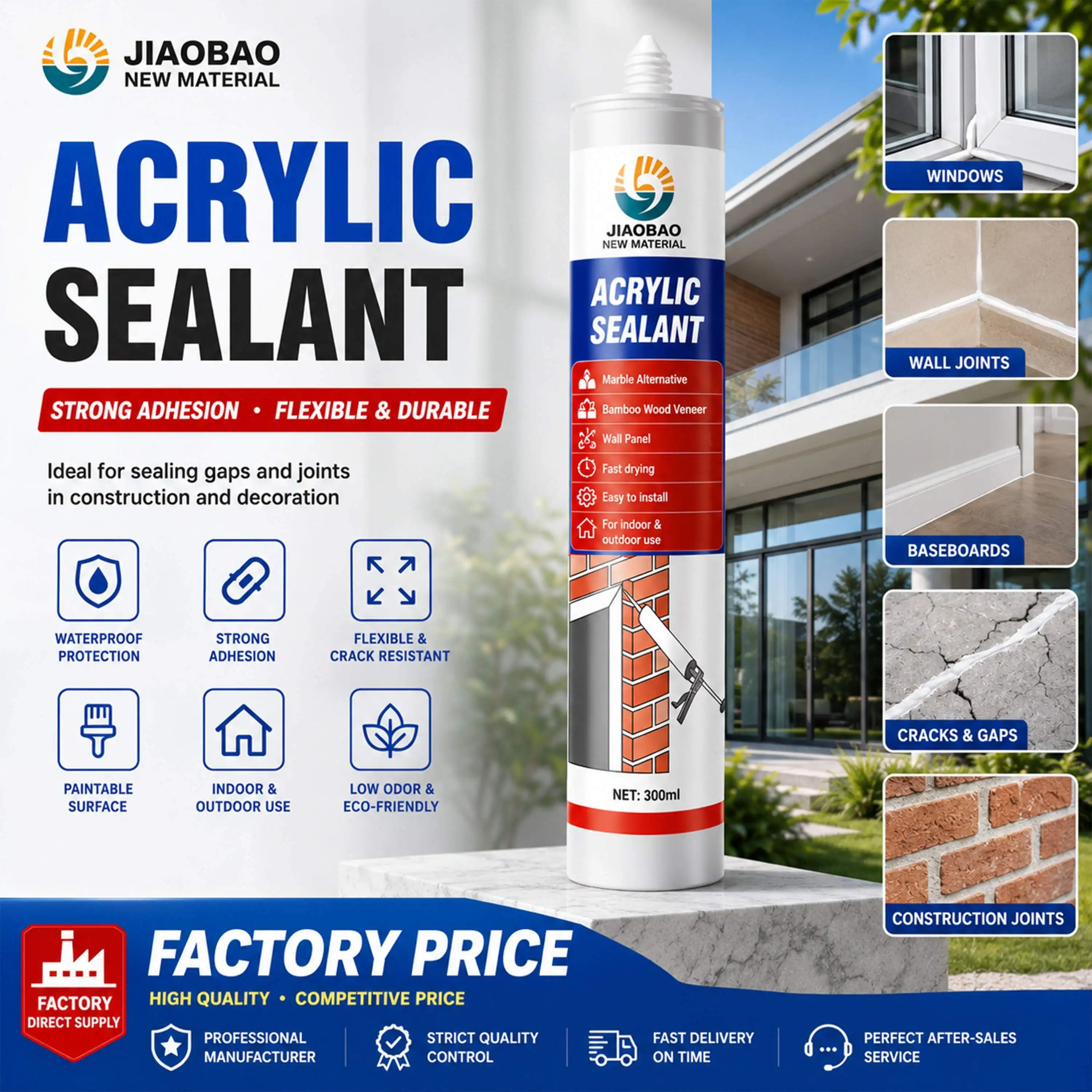
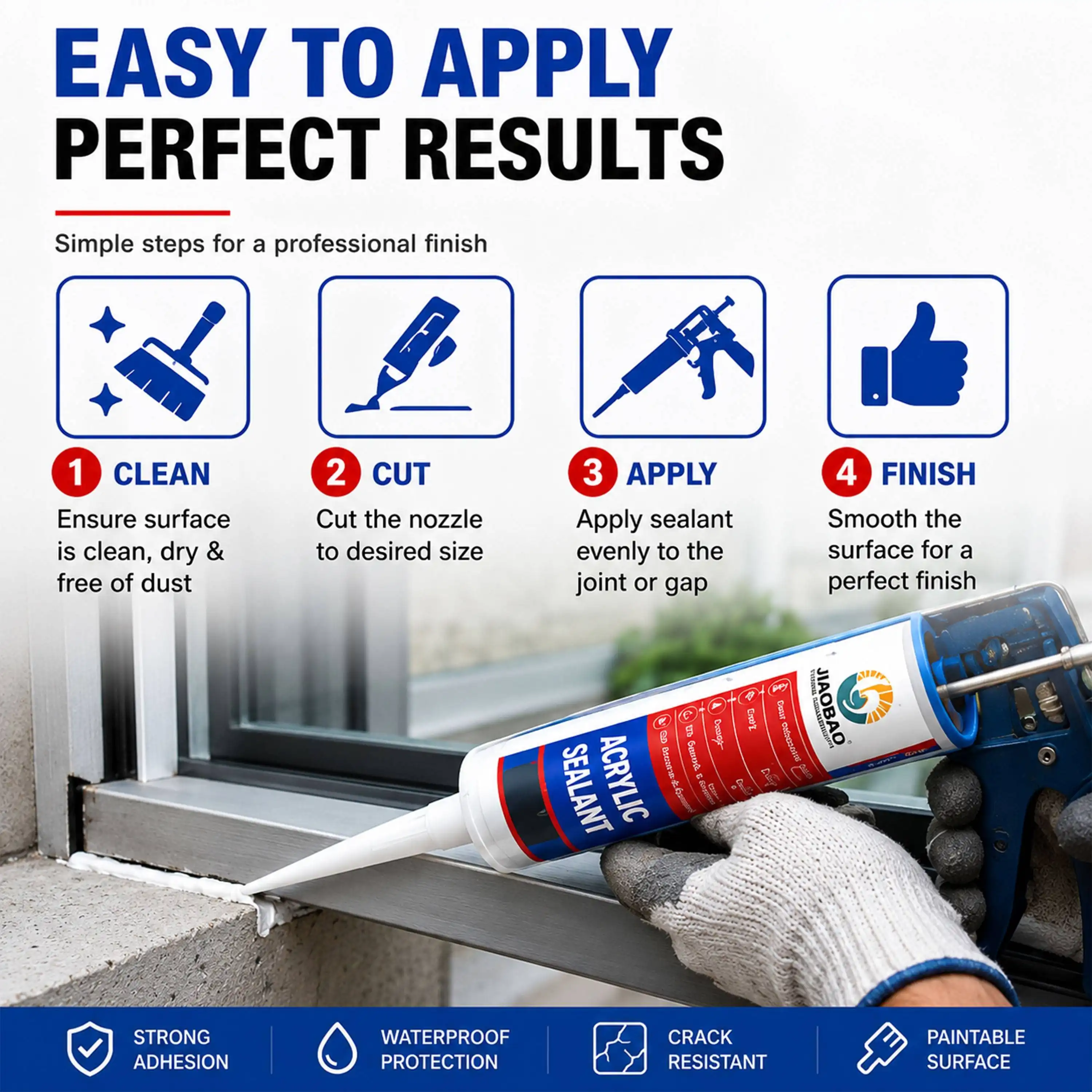
The right way to apply the sealant directly affects whether the joints stay hidden after painting or become flaws that need expensive repairs. Preparing the surface is the first step in a good installation. The next step is using the right product and knowing when to cover.
To get rid of dust, oil, old caulk residue, and other small particles that make bonding harder, clean all the surfaces of the joints very well. To get rid of dust, use a hard brush or vacuum instead of a wet cloth, which can push dirt deeper into porous surfaces. Use a utility knife to cleanly cut away any old sealant that has failed and scrape the bond surfaces to reveal new material.
For best results with Acrylic Sealant Paintable Type, ensure the surface is completely dry before application, as this type accepts paint evenly only when fully cured. Porous surfaces, like drywall that hasn't been primed or bare wood, may benefit from a light misting of water to keep the fresh sealant from losing too much moisture, which can cause the surface to crack.
You can use a manual or pneumatic caulking gun. To match the joint width, cut the nozzle at a 45-degree angle. Keep the pressure on the joint steady while moving the gun along it at a steady speed. Fill in the gap a little too much. Right away, use a wet finger, a silicone spatula, or a profiled tool to press the material firmly against both bond surfaces and make the profile a little less flat. Using the right tools gets rid of air holes and makes sure there is the most surface area for adhesion to form.
In normal conditions (23°C, 50% relative humidity), Jiaobao's mixture dries the surface in half an hour. This is a lot faster than the three hours that the industry standard takes. This fast skinning lets you paint with a spray gun within one to two hours of applying it. For heavier paints that are applied with a brush or roller, waiting 24 hours makes sure that the paint has completely dried and stops the paint film from holding wetness that can cause crazing.
Temperature and humidity have a big effect on healing rates. Places that are cold or wet make drying take longer, while places that are warm and dry speed up the evaporation process. Do not use when the substrate temperature is below 5℃ or above 40℃, as these extremes will hurt the quality of the cure and the final performance.
Cracking after curing usually means that the joint moved more than the elastomeric product could handle or that the sealant wasn't put on thick enough. If the paint peels off the sealant surface, it means that the paint was overcoated too soon, before the skin had a chance to form properly, or that certain paint formulations and sealant surfactants don't work well together. Adhesion failure at one substrate is usually a sign of a poorly prepared surface or application to materials that don't stick well, like oil-contaminated surfaces or some treated woods. By testing a small part of the application before the whole thing, interface problems can be found before they affect the whole project.
When purchasing professionals know how paintable acrylic stacks up against other coating chemicals, they can better match goods to the needs and performance goals of each project.
Silicone seals are very flexible (they can move ±50% of the way) and resistant to weather, but paint won't stick to their non-polar surface chemistry, leaving lasting gaps that can be seen. While polyurethane seals are very durable and don't wear down easily, they are not as easy to paint. They also tend to cost 40–60% more than acrylics and give off isocyanate vapors when they fix. Standard latex caulks can be painted just as easily, but they have less solids, so they shrink 15 to 25 percent, which makes the joints look depressed after painting.
Paintable acrylics are the best choice for finishing inside, where looks are more important than being able to move around a lot. The recipe strikes a good balance between low shrinking, good paint adhesion, enough flexibility for normal building movement, and a reasonable price. For outdoor uses that are constantly wet or go through big changes in temperature, siliconized acrylic hybrids combine the paintability of acrylic with better weather resistance, but they cost more.
Some acrylic formulations have more plasticizers to make them more flexible, but this makes them less paintable because the plasticizers move through paint films and change the color. Acrylic Sealant Paintable Type addresses this issue by using a modified plasticizer system that reduces migration, allowing for reliable overcoating. Non-paintable versions cost 15–20% less, but you can't finish them in any way. Renovation workers should mention paintable grades even if painting isn't planned right away. This way, there is still a lot of freedom in the future without a big cost penalty.
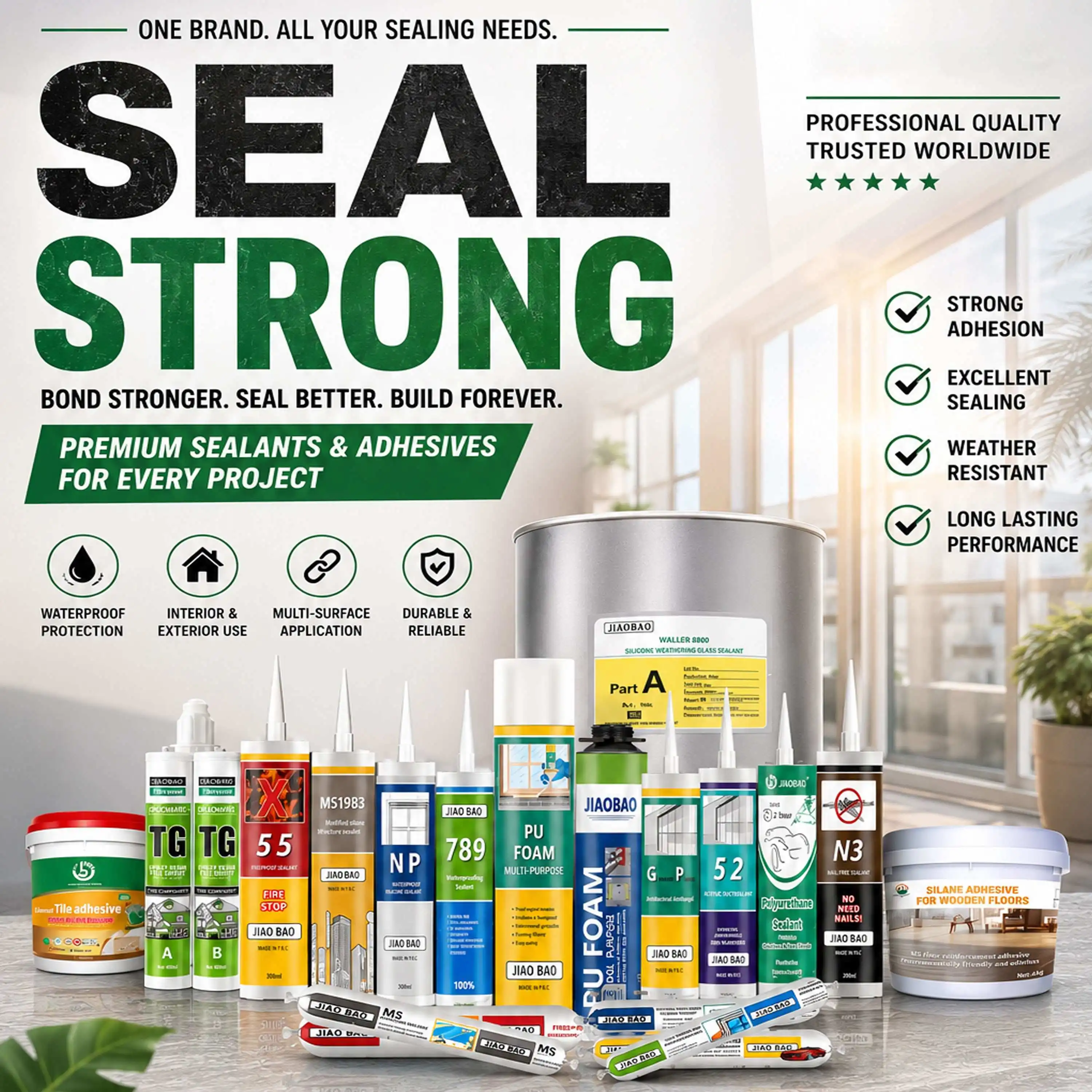
On the global market, well-known names like Sika, Henkel, and DAP offer high-quality goods through distribution networks. There are also specialized makers like Jiaobao that offer the benefits of direct sourcing. Procurement managers should check that suppliers have ISO 9001 certification for quality management, ask for Technical Data Sheets that compare actual test results to standards, and get samples to test for compatibility with the paint systems being used in the projects.
When you buy paintable caulk strategically, you need to do more than just compare unit prices. Long-term buying success depends on looking at the total cost of ownership, how reliable the source is, and how consistent the product is.
The first step in quality assurance is to ask for test results that show agreement with relevant standards, such as ASTM C834 for internal sealants. Make sure the slump resistance meets the requirements (≤3mm), the tensile strength is higher than 0.4 MPa, and the surface dry time fits your work needs. Jiaobao's formulation has a 0mm slump and a tensile strength of 0.64 MPa, which are higher than typical standards. It also has an extrusion rate of 163 ml/min, which is faster than products that only meet the minimum 80 ml/min standard and takes less work to apply.
Before placing a large order, ask for a sample of the goods. During testing, the paint should be applied to real substrates, the behavior of the tools should be studied, and the paint should be overcoated with the paint systems you specify. Write down how long it takes to fix in the normal conditions of your space, and after seven days, look for any color shifts or problems with bonding. This quality check keeps expensive batch rejects from happening after a purchase has been made.
Buying in bulk usually saves you 12 to 25 percent on the price compared to ordering in small amounts, but you have to be careful with your inventory because water-based formulations only last 12 months. Figure out how much you'll need each month based on the projects you have planned and the orders that will come in within six months. Leave some extra space for the product to last longer. To get bulk discounts while keeping your inventory flexible, negotiate prices based on annual commitment amounts instead of individual order sizes.
Professional sellers can be told apart from opportunistic sources by their production capacity and lead time trustworthiness. Jiaobao has normal color lead times of one to two weeks for white, gray, and black. They offer flexible shipping choices, such as sea freight for big orders or fast land transfer for urgent orders. Check to see if the supplier can increase production during your busiest times without affecting delivery times. Improving the speed of loading containers is important. A provider that offers a range of packing choices, such as 300ml and 600ml cartridges and sausage packs, lets you get the best shipping density and handling flexibility.
Manufacturers you can trust offer Technical Data Sheets, Safety Data Sheets, and application advice documents in English. Check to see if expert support is available to help you fix problems with applications or find answers to questions about compatibility. For products like Acrylic Sealant Paintable Type, the warranty should cover any problems with the product during the stated shelf life, and there should be clear rules for returning or replacing the item if it doesn't meet the requirements. This promise made after the sale shows that the supplier trusts the quality control systems and consistency of the products.
Beside knowing how to apply the sealant correctly, you also need to pay attention to things like the substrate's properties, the surroundings, and how to store it properly in order to get the best results.
Temperature and humidity have a big effect on both how the application works and how well it cures. The best temperatures and humidity levels are 15–25°C and 40–60%, respectively. Higher humidity makes it take longer for water to evaporate, which means surfaces may not be dry until the next day, which delays painting plans.
Very low humidity can lead to surface skinning before the tooling is fully finished, which traps air pockets that later show up as flaws. Keep an eye on the weather at the job site and change your work plan as needed. For example, applying in the morning often works better than in the afternoon during hot, dry summers when rapid skinning makes tooling hard.
Different materials have different porosity, surface roughness, and physical stability, all of which affect how well sealants work. Gypsum board easily soaks up water from new sealant, which could lead to surface cracking if the sealant is applied too thickly or if the board itself is still damp from recent plaster work.
Some types of wood that have a lot of natural oil may need to be lightly wiped down with a cleaner before the sealant is applied to make sure it sticks well. When sealing joints between different types of materials, like wood trim against plaster walls, put the sealant on the more stable substrate first. This will keep stress from building up where it doesn't belong because the materials move at different speeds.
For projects that need to get LEED approval or meet certain health and environmental standards, VOC content must be checked to make sure it is below area limits. In Europe, testing must usually be done according to EN 15651 standards, while in North America, testing must be done according to ASTM standards. Make sure that your seller gives you the test paperwork that your target markets need. Jiaobao keeps its ISO 9001 and CE certifications up to date to help its foreign OEM partners meet the export requirements of controlled markets.
Real-life examples show that when contractors use specification-grade paintable acrylics, callbacks for visible joint lines are 60–75% lower than when economy-grade latex caulks are used. The small price increase is worth it because the higher solid content and lower shrinkage traits remove the need for extra work and make customers happier. When paint distributors bundle quality sealant with latex paint systems, they make their products stand out and make money on both of them instead of just competing on price.
To choose the right paintable acrylic sealant, you have to weigh the technical performance requirements, the difficulties of getting it, and the total cost. Quality products like Jiaobao's formulation have the fast cure times, low shrinkage, and reliable paint compatibility that professionals need. They also have low prices because they work directly with manufacturers. For procurement to go well, it's important to check the reliability of lead times, get samples from suppliers, and look at their technical support skills along with unit prices.
Acrylic Sealant Paintable Type is the specific category that meets these criteria, and by learning about the best ways to use a product of this type, you can be sure that it will do its best job, leaving behind no obvious joints that are a sign of good interior finishing work and avoiding costly callbacks.
Surface dry time depends on the formulation and the weather. Professional-grade products dry to a smooth, tack-free surface in 30 minutes to two hours, so you can start spray painting right away. If you use a brush or roller to apply thicker paints, you should wait 24 hours to make sure the paint has completely dried and the paint film doesn't crack as the trapped wetness escapes. Wait times are much longer when it's cold or hot outside.
Standard acrylic paints are made for use inside or in outside areas that are kept dry and don't get a lot of water or extreme temperature changes. Immersion in water for a long time breaks down water-based formulas over time. When exterior window edges are exposed to the weather, they need silicone or siliconeized acrylic hybrid products that are made for that environment. These products may not be as easy to paint, but they last longer.
When a joint cracks, it usually means that the movement went beyond the product's elastic limit, which for most acrylics is between 7.5% and 12.5%. Seasonal changes in temperature cause building materials to expand and shrink. Joints that didn't seem to move much when they were installed may move a lot each year. Applying a bead that is too thin or not sticking well to both substrates can also cause the sealant to fail too soon because stress builds up in one area instead of being spread out through the mass.
Jiaobao has been making specialized products for more than 13 years and works with paint distributors, renovation contractors, and OEM partners all over the world. Our paintable acrylic glue has a surface dry time of half an hour, a tensile strength of 0.64 MPa, and no slump. These specs go above and beyond industry standards, and our prices are still reasonable. Order sizes start at container loads, production wait times are solid at one to two weeks, and colors other than white, gray, and black can be changed to fit your needs. ISO and CE standards help you meet the requirements for both local and international markets.
Our technical team offers full support, including help with compatibility testing, fixing problems with applications, and creating custom formulations for private label programs. You can email our procurement specialist at dorashen@cnjiaobao.com to get product samples, technical datasheets, and bulk pricing that fit the needs of your project. Please go to shandongjiaobao.com to see our full selection of professional sealing options made for tough business uses.
1. Johnson, M.R., "Comparative Analysis of Acrylic and Silicone Sealants in Architectural Applications," Journal of Building Materials Science, Vol. 34, No. 2, 2022, pp. 145-162.
2. American Society for Testing and Materials, "ASTM C834-20: Standard Specification for Latex Sealing Compounds," ASTM International Standards, West Conshohocken, PA, 2020.
3. Williams, T.H. and Chen, L., "Surface Chemistry and Paint Adhesion on Acrylic Sealants," Construction Materials Quarterly, Vol. 18, No. 4, 2021, pp. 89-104.
4. European Committee for Standardization, "EN 15651-1:2017: Sealants for Non-Structural Use in Joints in Buildings and Pedestrian Walkways," Brussels, Belgium, 2017.
5. Patterson, K.D., "Moisture Cure Mechanisms in Water-Based Sealant Systems," Polymer Engineering Technology Handbook, 3rd Edition, McGraw-Hill Professional, 2023, Chapter 12.
6. Zhang, W. and Rodriguez, A.M., "Life Cycle Cost Analysis of Interior Finishing Materials in Commercial Construction," Building Economics Research Institute, Technical Report 2021-08, University of Construction Studies, 2021.
November 16,2023
Enterprise Name
The sealant has very strong adhesion and performs well even on glass and aluminum. After curing, it remains flexible and shows no cracking. Perfect for our facade projects.
November 16,2023
Enterprise Name
Stable quality across batches. Our customers especially like the smooth application and consistent extrusion. It helps reduce installation time on site.
November 16,2023
Enterprise Name
I used it for bathroom sealing. Excellent waterproof performance and no mold issues so far. It's been holding up very well in humid conditions.
November 16,2023
Enterprise Name
The neutral silicone works well on sensitive materials without corrosion. Very suitable for industrial applications requiring stable performance.
_1779347426672.webp)