November 16,2023
Enterprise Name
The sealant has very strong adhesion and performs well even on glass and aluminum. After curing, it remains flexible and shows no cracking. Perfect for our facade projects.
Sep 16, 2026
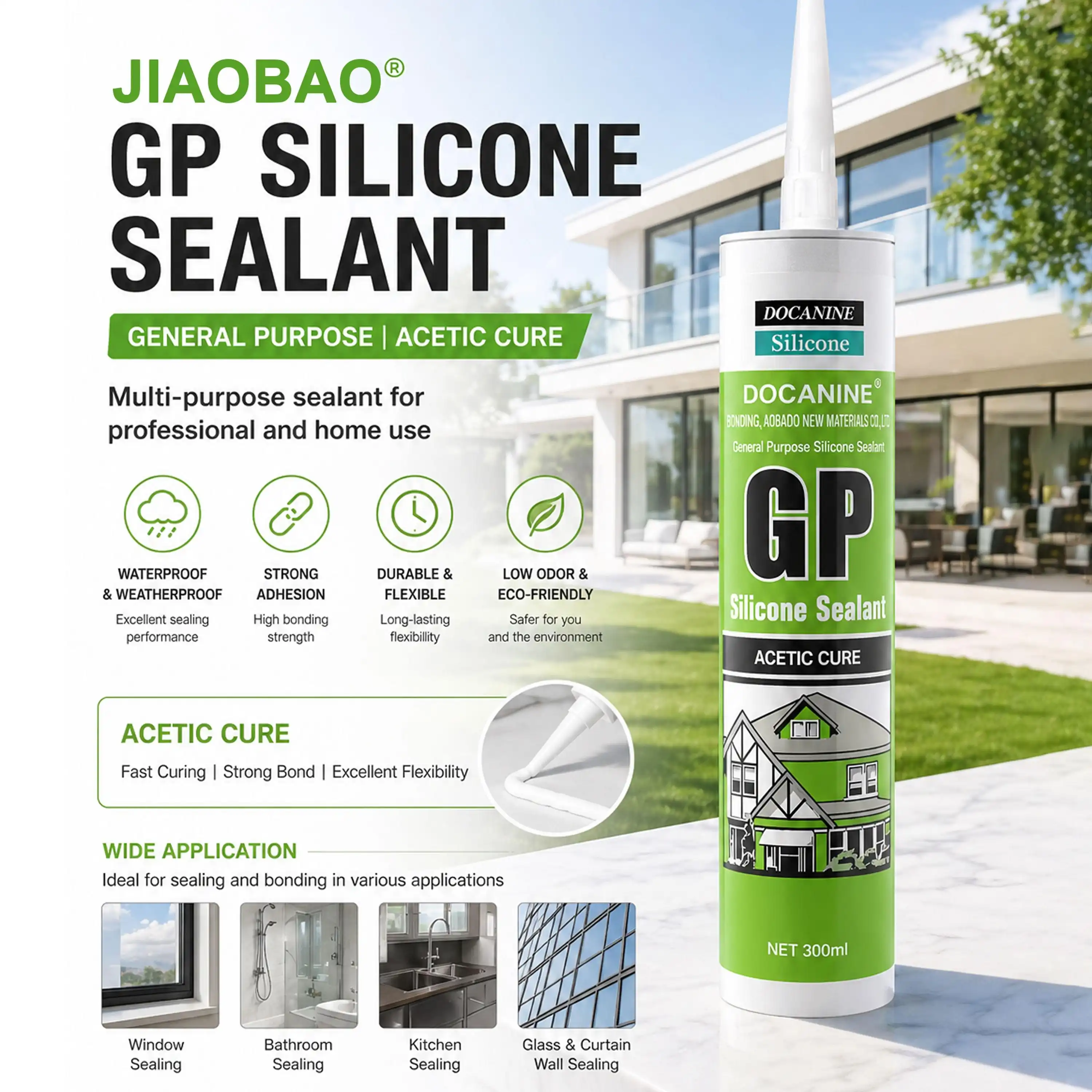
When it comes to sealing windows, doors, and exterior facades, material choice directly determines long-term performance. GP acetic silicone sealant for construction is a one-component, moisture-curing acetoxy sealant that cures to a permanently flexible rubber within minutes of exposure to ambient air. Manufactured by Jiaobao with over 13 years of production expertise, it delivers a maximum bond strength of 1.5 MPa, a tack-free time of just 15 minutes, and a tensile elongation exceeding 300% — making it one of the most reliable general-purpose sealing compounds available for non-porous building substrates.
This glue is a one-part RTV (Room Temperature Vulcanizing) silicone that comes in paste form. When the acetoxy fixing system comes in contact with water in the air, it breaks down into a durable silicone rubber and acetic acid, which can be identified by a short-lived vinegar smell. Once the drying is done, which usually takes 24 hours at 23°C and 50% relative humidity, the smell goes away totally.
The product sticks very well to things that don't have pores, like fiberglass, anodized aluminum, glazed ceramics, and glass. Its Shore A hardness levels off at 18, which is a good mix between being stiff and being flexible. It can be used in temperatures from -40°C to +150°C, and it doesn't chalk or break down like some organic-based sealants do when exposed to UV light. It comes in white, black, gray, and unique colors, and in 300 ml refills or 600 ml sausage packs, so it can be used on a variety of job sites without stopping work.
Because of these chemical and physical properties, it can be used in glazing systems, storefront assemblies, door surround sealing, and curtain wall facade joints—anywhere that needs a waterproof, flexible glue on a smooth surface.
Teams in charge of buying things often compare acetic silicone to neutral-cure silicone and compounds made from polyurethane. Each category has a clear job to do, and knowing the differences between them keeps you from making mistakes that cost a lot of money.
When neutral-cure silicone cures, it gives off oxime or alcohol byproducts instead of acetic acid. This means that it can be used on alkaline surfaces like concrete, natural stone, and copper. Acetic silicone, on the other hand, cures faster on surfaces that don't have pores and sticks better to glass and metal at first, which are the main materials used in window and exterior parts. Polyurethane sealants can be painted on and stick to porous materials, but they don't hold up well against UV light and changing temperatures for long periods of time.
Here is a short review of the three types that are most important for buying windows and facades:
If buying managers understand this matrix, they can choose the right compound for each area of a building project. For example, acetic silicone is best for glazed panels and metal frames, while neutral silicone is best for concrete surrounds.
Before applying the sealant, the surface must be clean, dry, and free of dust, oils, and old sealer leftovers. Any wetness on the surface that is being bonded can mess up the adhesion process and cause the bond to fail right away. It is common practice to wipe aluminum profiles down with isopropyl alcohol.
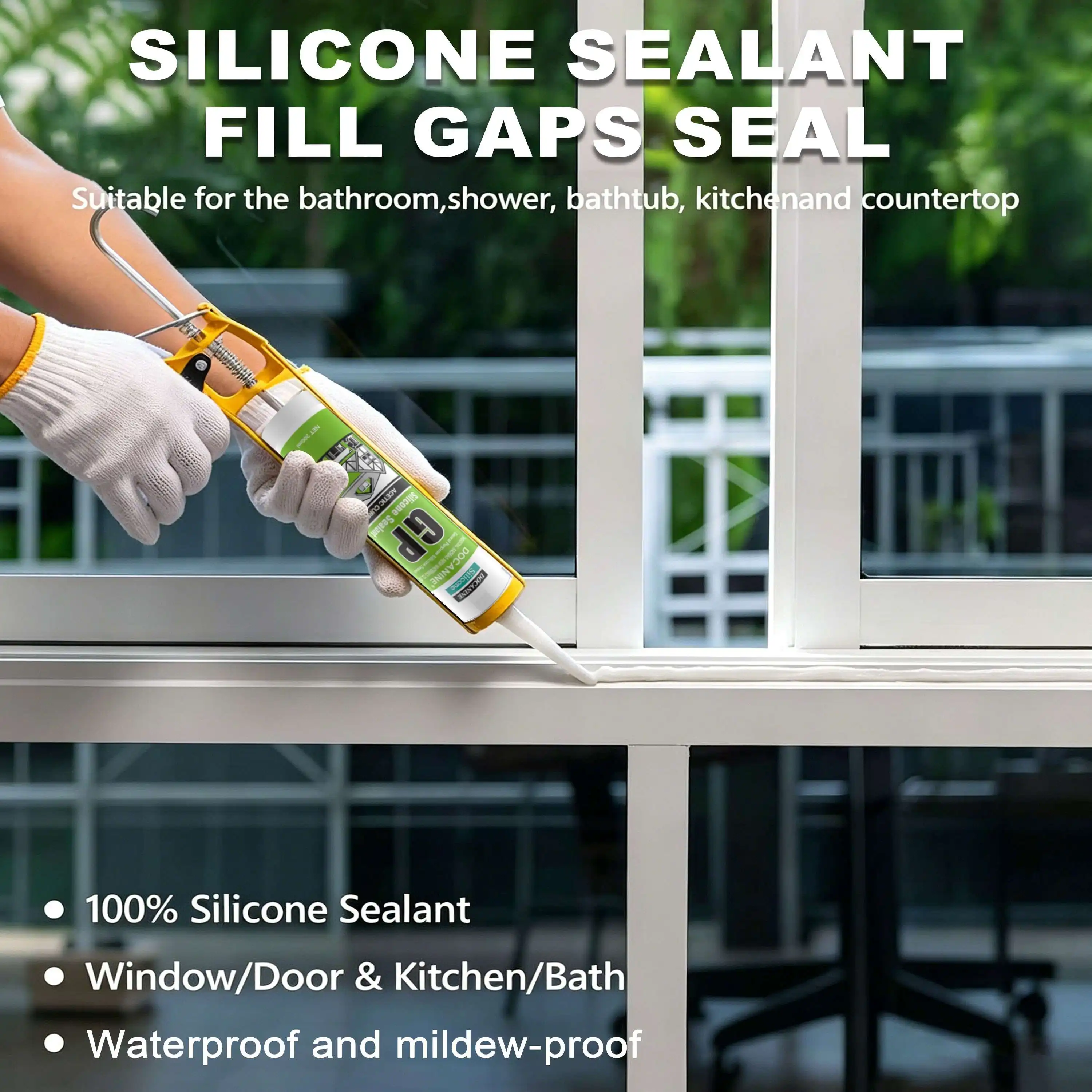
Use a regular caulking gun to put the sealant on. Cut the cartridge nozzle so that it is 45 degrees and the same width as the joint. Fill the joint all the way through in one continuous pass using GP acetic silicone sealant for construction, and then use a tool to make sure that the surface is fully in touch with both joint faces during the working time window. When the air temperature is 23°C and the relative humidity is 50%, the sealant dries to a smooth surface in 15 minutes. This means that the next step can be done right away.
Temperature and humidity control how fast something cures. When it's cold and dry, drying takes longer. When it's warm and wet, it happens faster. Do not apply below 5°C or above 40°C, and never apply to wet surfaces, no matter what the temperature is outside.
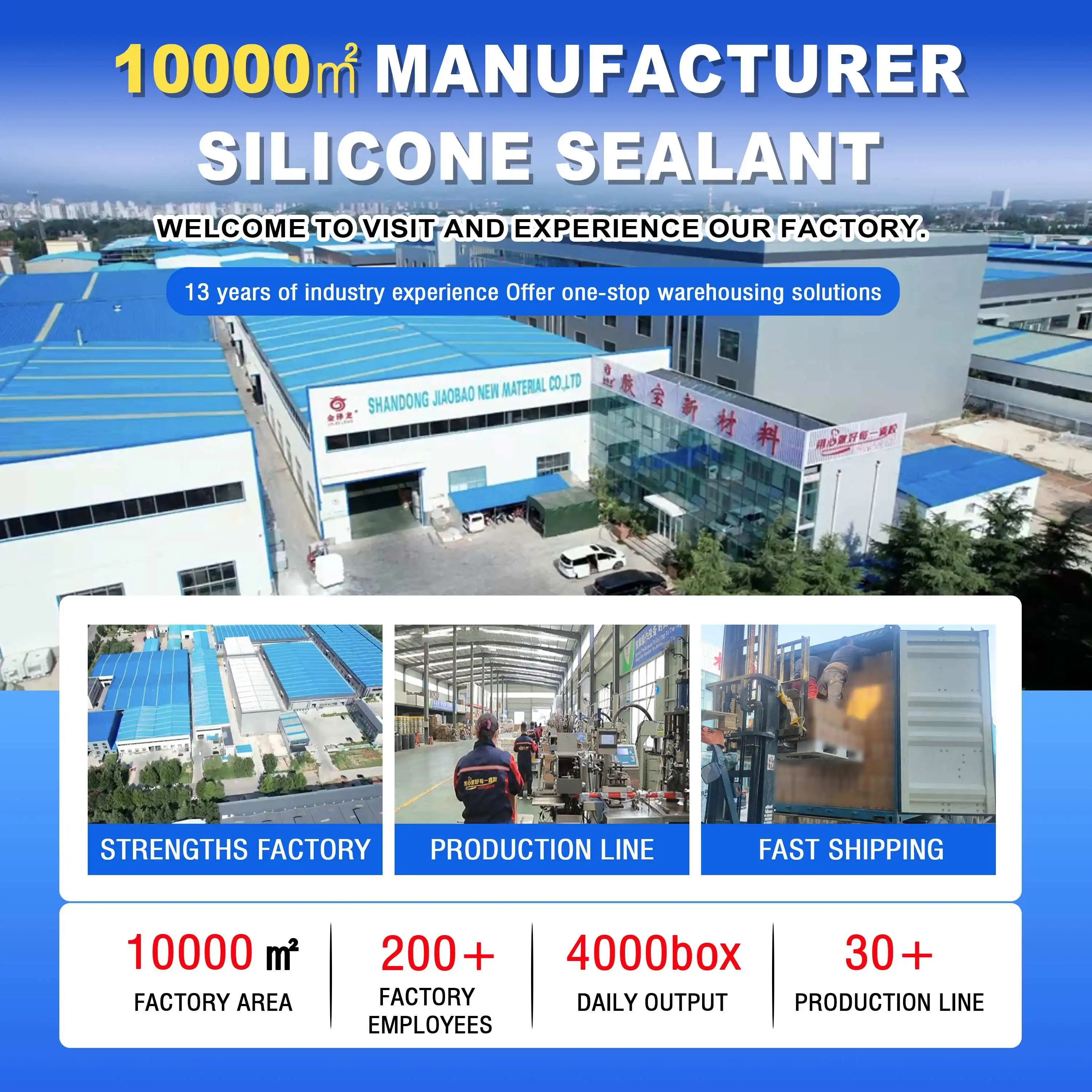
When it comes to B2B sellers, building material traders, and OEM brand owners, buying choices are about a lot more than just unit price. With a production lead time of 1–2 weeks, Jiaobao can handle both small trial orders and large-volume bulk purchases. This lowers the risk of project delays caused by supply gaps.
Jiaobao offers OEM and ODM services that let importers and regional brand owners change the label design, color formulation, and packaging format to meet the needs of their local markets. Products meet the requirements for ISO and CE certification, which makes it easier to clear customs and follow regulations in many export markets. Different needs in the region can be met by flexible logistics plans that can be carried out by sea or land, whether the destination is Southeast Asia, the Middle East, or domestic distribution hubs.
When looking for a company that makes GP acetic silicone sealant for construction, buyers should make sure that the consistency of each batch is checked by a third party, that the shrinkage rate is less than 5% (as high a shrinkage rate means there is too much plasticizer in the product), and that they request adhesion-in-peel data according to ASTM C794 or an equivalent standard before placing large orders.
A glazing contractor who worked on a number of commercial renovation projects said that switching to Jiaobao's acetic silicone cut the number of re-sealing calls by a significant amount. They said that this was due to the consistent batch quality and the fast tack-free time, which kept open joints clean during busy site days.
A building materials distributor in charge of a regional wholesale network pointed out that mixed-color shipments are an easy way to save time and money. Instead of keeping single-color pallets in stock, the distributor put together an order of white, black, and gray units. This cut down on the size of the warehouse without limiting the range of products that contractors could use.
An OEM client who was importing for a Southeast Asian brand said that Jiaobao's help with paperwork, such as test reports, safety data sheets, and English copies of certificates, cut the time it took to clear imports by a lot compared to other suppliers. These real-world results show what happens in real supply lines when factory standards are followed and communication is quick and clear.
For non-porous window, door, and façade uses, GP acetic silicone sealant for construction is still one of the most useful and cost-effective sealing compounds. It doesn't stick for 15 minutes, has a bond strength of 1.5 MPa, and can stretch more than 300%. These are the main mechanical needs of modern glazing and joinery work. It can be a trusted part of any buying plan if it comes from a maker with quality systems that have been checked, OEM capabilities, and consistent lead times. This is true whether it's for a regional distribution network or an international private-label program.
Not at all. When something cures, acetic acid is released into the air. This acid reacts with alkaline substrates like concrete and mortar, breaking down the bond and possibly damaging the substrate. For those things, use a neutral-cure silicone caulk.
Acetic acid is a result of the acetoxy fixing process. The smell is only there for a short time. It goes away completely when the sealant cures completely, which usually happens within 24 hours under normal conditions.
If the formulation has a lot of solvents or plasticizer extenders, it will shrink too much. A good acetic silicone sealant should be very close to being made of 100% silicone polymer. This will keep the joint's volume and ensure the seal stays strong over time.
No, standard silicone rubber doesn't let finish stick to it. Any painting should be done before the sealant is put on, or if more painting is needed, a modified polymer sealant should be specified.
Jiaobao can help you with your sourcing needs because they have been making things for more than 13 years, have ISO and CE certifications, and can do flexible OEM/ODM production. Whether you are a brand owner who needs private-label packaging or a distributor looking for a reliable acetic silicone sealant supplier, we can get it to you with a lead time of one to two weeks. You can email us at dorashen@cnjiaobao.com right now to get samples or talk about bulk prices.
1. ASTM International. ASTM C920: Standard Specification for Elastomeric Joint Sealants. ASTM International, 2022.
2. ISO. ISO 11600: Building Construction — Jointing Products — Classification and Requirements for Sealants. International Organization for Standardization, 2018.
3. Petrie, Edward M. Handbook of Adhesives and Sealants. McGraw-Hill, 2007.
4. Dow Corning Corporation. Silicone Sealants: Fundamentals of Cure Chemistry and Substrate Adhesion. Dow Corning Technical Report, 2015.
5. Wolf, Andrew T. Durability of Building Sealants. RILEM Publications, 1999.
6. Construction Sealants and Adhesives Council (CSAC). Guide to Sealant Selection for Glazing and Facade Applications. CSAC Technical Bulletin, 2020.
November 16,2023
Enterprise Name
The sealant has very strong adhesion and performs well even on glass and aluminum. After curing, it remains flexible and shows no cracking. Perfect for our facade projects.
November 16,2023
Enterprise Name
Stable quality across batches. Our customers especially like the smooth application and consistent extrusion. It helps reduce installation time on site.
November 16,2023
Enterprise Name
I used it for bathroom sealing. Excellent waterproof performance and no mold issues so far. It's been holding up very well in humid conditions.
November 16,2023
Enterprise Name
The neutral silicone works well on sensitive materials without corrosion. Very suitable for industrial applications requiring stable performance.
_1779347426672.webp)