November 16,2023
Enterprise Name
The sealant has very strong adhesion and performs well even on glass and aluminum. After curing, it remains flexible and shows no cracking. Perfect for our facade projects.
Sep 16, 2026
Yes — acrylic sealant for interior use can absolutely be painted, and it performs exceptionally well at scale. Water-based acrylic sealants cure through moisture evaporation, leaving a flexible, paintable surface fully compatible with latex and water-based wall paints. Unlike silicone, which repels paint, interior acrylic sealants bond directly with topcoats, eliminating color-inconsistency complaints that plague large renovation projects. For procurement managers overseeing multi-unit residential builds or commercial fit-outs, this paintability is not a bonus — it is a core specification requirement that directly reduces rework costs and protects project timelines.
Acrylic sealant for interior use hardens physically: as the water evaporates from the polymer dispersion, the compound changes from a paste that can be worked with to a strong, flexible seal. They are different from silicone (moisture-cure) and polyurethane (chemical-cure) options because of this process, which is also what makes them paintable.
In most normal internal situations, the acrylic polymer matrix bonds well with porous surfaces like gypsum board, MDF trim, concrete, and wood, and doesn't need a primer. A solid content of about 80–85% means that the volume won't shrink much after it cures. This is very important when sealing long joints like door architraves or runs of skirting boards. When cheaper options shrink a lot, the joints become concave and crack. They need to be reapplied before they can be painted, which adds to the cost of labor over time.
Low VOC makeup is also very important. Quality interior acrylics meet ASTM C834 and ISO 11600 F-class standards, which mean that their VOC levels stay well below LEED and GREENGUARD levels. This protects workers in enclosed renovation areas and meets the needs of North American and European markets' stricter import rules.
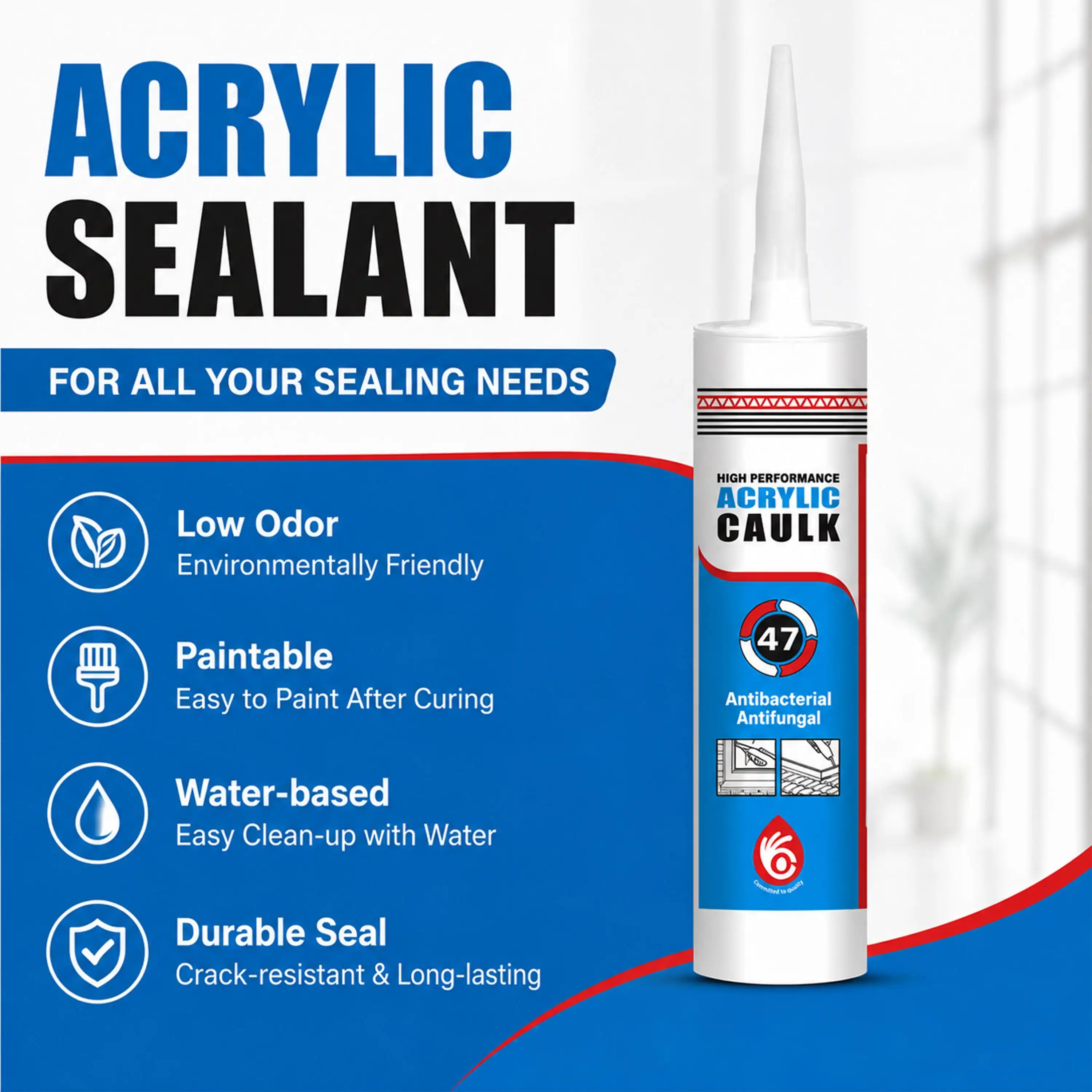
The short answer is yes, but the result depends on when it happens and how good the acrylic sealant for interior use is. If you put paint on too early, before the skin has had a chance to form properly, it can crack or fail to stick. Most professional products need the skin to be dry for a certain amount of time before they can be applied again.
Jiaobao's one-part RTV acrylic sealant dries on the skin in just 0.5 hours at standard conditions (23°C, 50% RH), which is a lot faster than the standard time in the industry of 3 hours. This means that a painter can seal the trim joints and then come back to topcoat all in the same work cycle. This cuts down on the time gaps between jobs that drive up the cost of labor on projects with more than one room. The sealant can hold latex, acrylic emulsion, and alkyd paints without losing its ability to stick. This has been tested and is supported by ISO/CE certification.
At 23°C, the tensile strength is 0.64 MPa, which is a little above the normal range of 0.4–0.6 MPa. This gives the structure the flexibility it needs to handle small changes in the substrate without showing cracks through the paint film. When applied standing, zero sag (0 mm vs. the normal 3 mm) makes sure that the joints stay straight before the topcoat is put on.
Purchasing teams often have to choose between rubber and plastic. The price of acrylic sealant for interior use is set to be competitive for bulk purchases, and it can be painted. It also has low volatile organic compound (VOC) levels and works with porous surfaces. It is still the industry standard for dry or semi-dry internal parts like skirting boards, door frames, gypsum board seams, and window reveal trims because it meets all three requirements for cost, compliance, and appearance.
Because silicone sealants are better at keeping water out and allowing for movement (>25% MAF), they should be used for clean parts in wet rooms. But you can't paint them with regular latex or water-based paints. Any silicone used in a painted finish line needs to be covered, taken off, and replaced. This is a big hidden cost in big renovation projects.
Polyurethane sealants are very strong and flexible, but they can release VOCs that are higher than what is allowed by GREENGUARD Gold and LEED v4 standards. This can make commercial interiors in the US and EU less compliant with low-VOC acrylic sealant for interior use requirements.
To get consistent results on hundreds of joints, you need to follow strict steps for preparation and application of the acrylic sealant for interior use. Here are the main things that project managers with a lot of knowledge do:
These practices directly lead to fewer callbacks, lower touch-up labor budgets, and consistent client happiness scores. These are measured procurement outcomes that show why it's better to choose a proven product over a generic one.
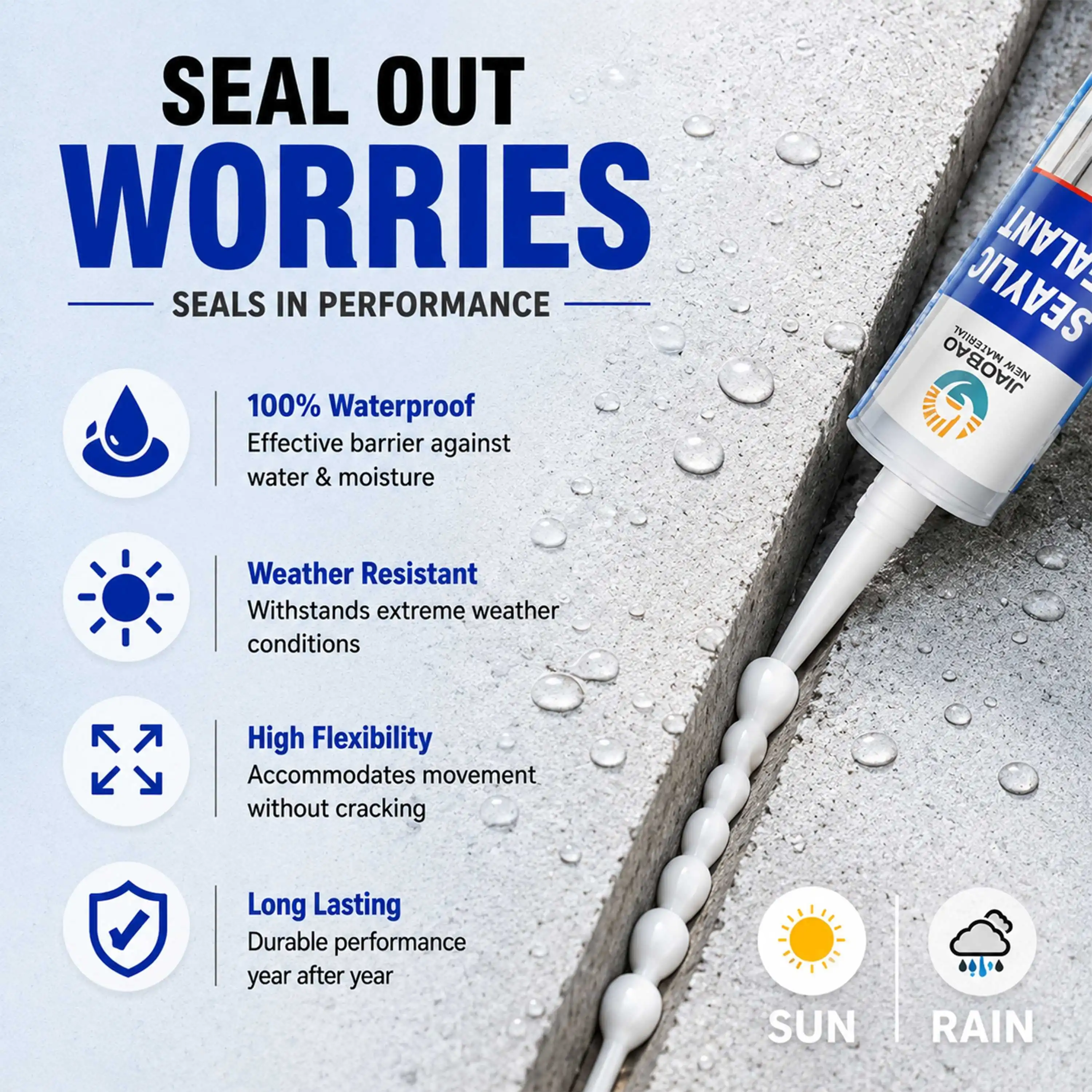
When buying a lot of acrylic sealant for interior use, choosing a supplier comes with more risk than the unit price alone would suggest. Consistency from batch to batch, dependable wait times, and compliance with documentation (SDS, technical data sheets, and export certificates) all have an impact on how the project is carried out.
For entry into the U.S. market, qualified suppliers for business interior sealant programs should show that their manufacturing is ISO 9001-certified, that their products are CE marked if needed, and that they have GREENGUARD or a similar low-VOC certification for acrylic sealant for interior use. ASTM C731 says that products shipping by ocean freight to North American distribution centers during the winter must go through freeze-thaw stability testing. This is because emulsion breakage creates non-functional material that can't be fixed.
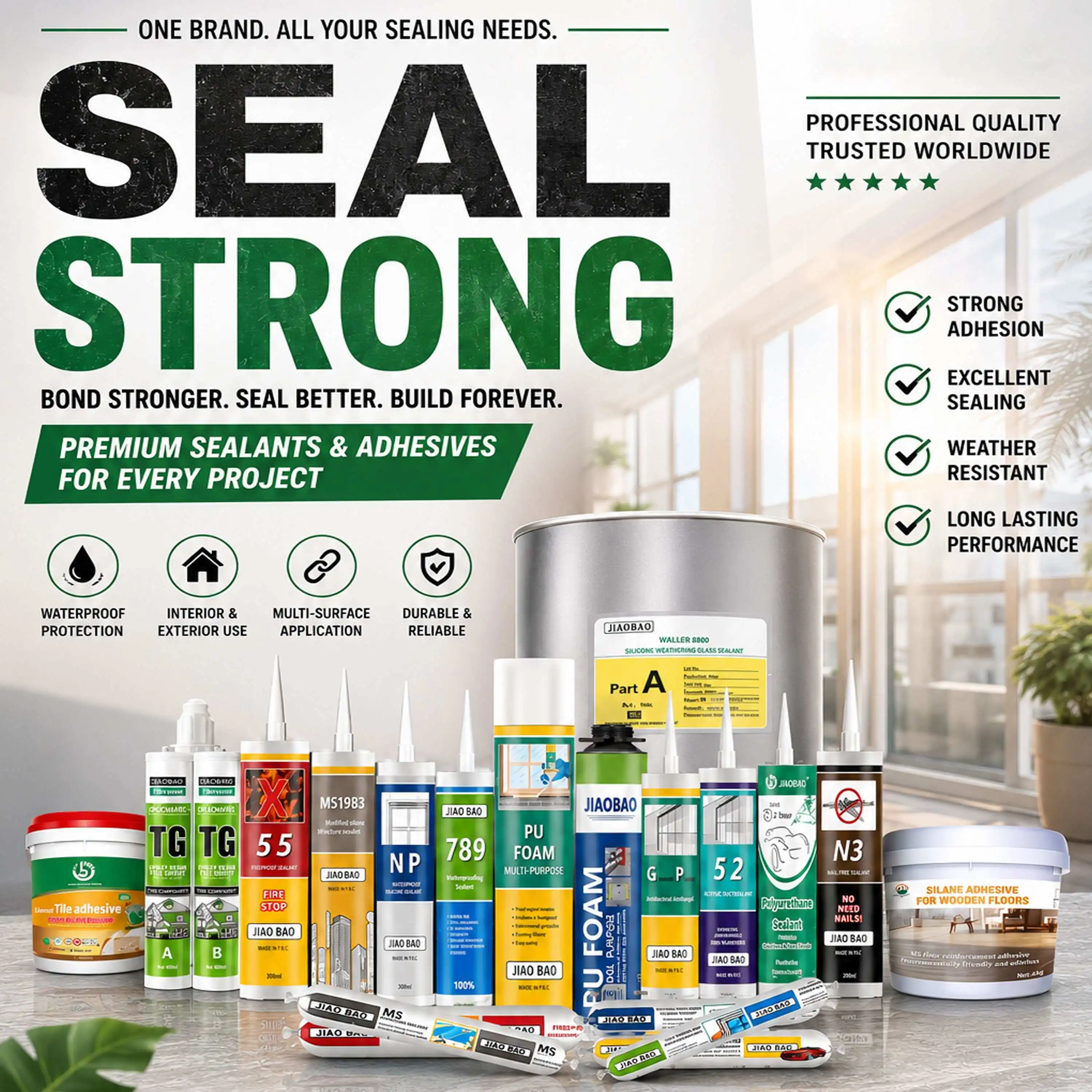
Jiaobao's acrylic sealant for interior use comes in 300ml cartridges for contractors and market use and 600ml sausage packs for professionals who need to use a lot of it. A 12-month shelf life lets you buy in advance without having to worry about having to write off your goods. Private-label retail programs and branded contractor supply arrangements can both use OEM/ODM packaging that comes in custom colors like White, Black, Gray, or tones that are chosen by the customer. After an order is confirmed, production takes one to two weeks. Shipping can be done by sea or land to serve distribution networks in North America and Europe.
Acrylic sealant for interior use isn't just a handy item; it's also a precise tool for finishing large areas of the inside. The three most common quality problems in big repair projects are color mismatches at trim joints, projects that take longer than planned, and indoor air quality that doesn't meet standards. This product's water-based fix, low VOC profile, and direct paint compatibility solve all three. If you buy it from a company that has performance data on file and approved production methods, you can be sure that it will have the smooth finish that sets professional work apart.
Skin formation takes about half an hour in normal conditions (23°C, 50% relative humidity). However, it is safer to wait one to two hours before using latex paint, especially in damp rooms. 24 hours are needed for a full mechanical cure. If you paint too early, the top could crack.
Standard formulations of acrylic sealant for interior use are hydrophilic, which means they don't work well for joints that are constantly wet or submerged. Areas that are used for hygiene need neutral-cure silicone. Acrylic can be used in dry areas next to these rooms, like the joints between door frames.
Cracking usually happens when the joint moves more than the sealant can handle (usually between 7.5 and 12.5% for acrylic), when the application layer is too thin, or when the paint is applied before the full skin forms.
Important signs include a solid content of at least 80%, little shrinking after curing, an extrusion rate well above the minimum of 80 ml/min, and no sagging when used vertically. Batch-to-batch consistency, which is backed by ISO-certified manufacturing, tells you which sources you can trust and which ones you can't.
Jiaobao can help you with your acrylic sealant for interior use procurement program with their 13+ years of manufacturing experience, ISO/CE-certified production, and flexible OEM/ODM options. Our lead times of one to two weeks, bulk discounts, and private-label packaging choices are all set up to meet the needs of serious B2B buyers. Contact our team directly to request samples or a custom quotation: dorashen@cnjiaobao.com.
1. ASTM International. ASTM C834: Standard Specification for Latex Sealants. ASTM International, 2023.
2. ASTM International. ASTM C731: Standard Test Method for Extrudability, After Package Freeze-Thaw Cycling, of Latex Sealants. ASTM International, 2021.
3. International Organization for Standardization. ISO 11600: Building Construction — Jointing Products — Classification and Requirements for Sealants. ISO, 2020.
4. U.S. Green Building Council. LEED v4 Reference Guide for Building Design and Construction: Indoor Environmental Quality Credits. USGBC, 2023.
5. Babbitt, C., et al. Volatile Organic Compound Emissions from Building Materials and Their Impact on Indoor Air Quality. Building and Environment, Vol. 198, 2021.
6. Petrie, E. M. Handbook of Adhesives and Sealants. McGraw-Hill, 2nd ed., 2007.

November 16,2023
Enterprise Name
The sealant has very strong adhesion and performs well even on glass and aluminum. After curing, it remains flexible and shows no cracking. Perfect for our facade projects.
November 16,2023
Enterprise Name
Stable quality across batches. Our customers especially like the smooth application and consistent extrusion. It helps reduce installation time on site.
November 16,2023
Enterprise Name
I used it for bathroom sealing. Excellent waterproof performance and no mold issues so far. It's been holding up very well in humid conditions.
November 16,2023
Enterprise Name
The neutral silicone works well on sensitive materials without corrosion. Very suitable for industrial applications requiring stable performance.
_1779347426672.webp)