November 16,2023
Enterprise Name
The sealant has very strong adhesion and performs well even on glass and aluminum. After curing, it remains flexible and shows no cracking. Perfect for our facade projects.
Aug 4, 2026
Selecting the right Nail Free Adhesive Construction Grade involves evaluating bonding strength, substrate compatibility, and curing characteristics. This guide helps B2B procurement professionals navigate the technical specifications required for demanding construction applications—from load-bearing requirements to environmental compliance. Modified silane polymer formulations deliver robust adhesion without mechanical fasteners, providing superior stress distribution, faster installation, and enhanced aesthetics across wood, metal, concrete, and composite substrates.
As time goes on, the building industry keeps moving toward bonding solutions that are faster, cleaner, and more reliable. Even though traditional mechanical fasteners are common, they hurt the base, take a lot of work, and often break when they are vibrated or heated and cooled. This guide gives you a thorough look at construction-grade glues that completely get rid of nails and screws and replace them with strong chemical ties.
If B2B procurement professionals want to get the best results from their projects, they need to know how to choose the right adhesive. We look at the qualities of adhesives, how to use them, how to compare markets, how to buy them, and other useful information that will help you make choices that are in line with your business needs and your sustainability goals. This resource gives you the technical knowledge to evaluate suppliers, negotiate channel policies, and put in place adhesive solutions that deliver measurable value across your downstream retail and contractor networks, whether you are in charge of a large-scale construction procurement or a regional network for distributing building materials.
General-purpose bonding agents are not the same as construction-grade adhesives. These specially made products are made to meet the strict structural needs of professional building settings. Construction adhesives, on the other hand, use improved polymer matrices, like modified silane polymers or synthetic rubber compounds, that give them great shear strength and long-lasting longevity.
The science behind Nail Free Adhesive Construction Grade is based on moisture-curing systems that transform paste into elastic bonds. Modified silane polymers react with atmospheric humidity to form cross-linked networks, penetrating substrate pores and creating mechanical interlocking at the molecular level. This mechanism distributes stress evenly across the bonded surface rather than concentrating it at discrete fastener points, resulting in stronger, more durable assemblies without visible screw or nail marks.
Formulations with a high solid content (usually between 65% and 75%) shrink less when they cure, which is important for filling holes in substrates that aren't level. The thixotropic paste consistency makes sure that there is no slump on vertical surfaces. This means that heavy materials can be placed right away without needing temporary support in many situations.
Installation of panels is one of the most popular uses. Decorative wall panels, ceiling tiles and architectural trim can be attached directly to wood frames, concrete or plasterboard without any obvious screws or bolts. This gets rid of the need for putty, sanding, and touch-up painting, which cuts down on the cost of finishing by a lot.
Heavy-duty bonding is used to attach subflooring to floor joists, place mirrors in business bathrooms, and put in kitchen backsplashes. Elastomeric adhesives stop floors from squeaking because they dampen vibrations. This is a problem that keeps happening with nail-only installation methods. For structural uses, it can be used to join insulation panels together, seal door and window frames and put together premade building parts.
Immediate and measurable safety gains are made. Getting rid of power tools lowers noise levels and eliminates the risk of getting hurt while working with fasteners. A clean installation doesn't make any dust, which is very helpful in occupied buildings or sensitive areas.
Installation speed goes up by a huge amount. Skilled applicators can glue down meters of skirting or moulding in the time it takes to manually measure, drill, and attach a few pieces. This efficiency in labour directly leads to shorter project timelines and lower costs for installation.
Aesthetic benefits are just as strong. With seamless ties, you can't see the heads of the fasteners, which makes for clean sight lines that meet high-end building standards. There are no holes in the substrate that would damage the stability of waterproofing coatings, vapour barriers, or decorative finishes.
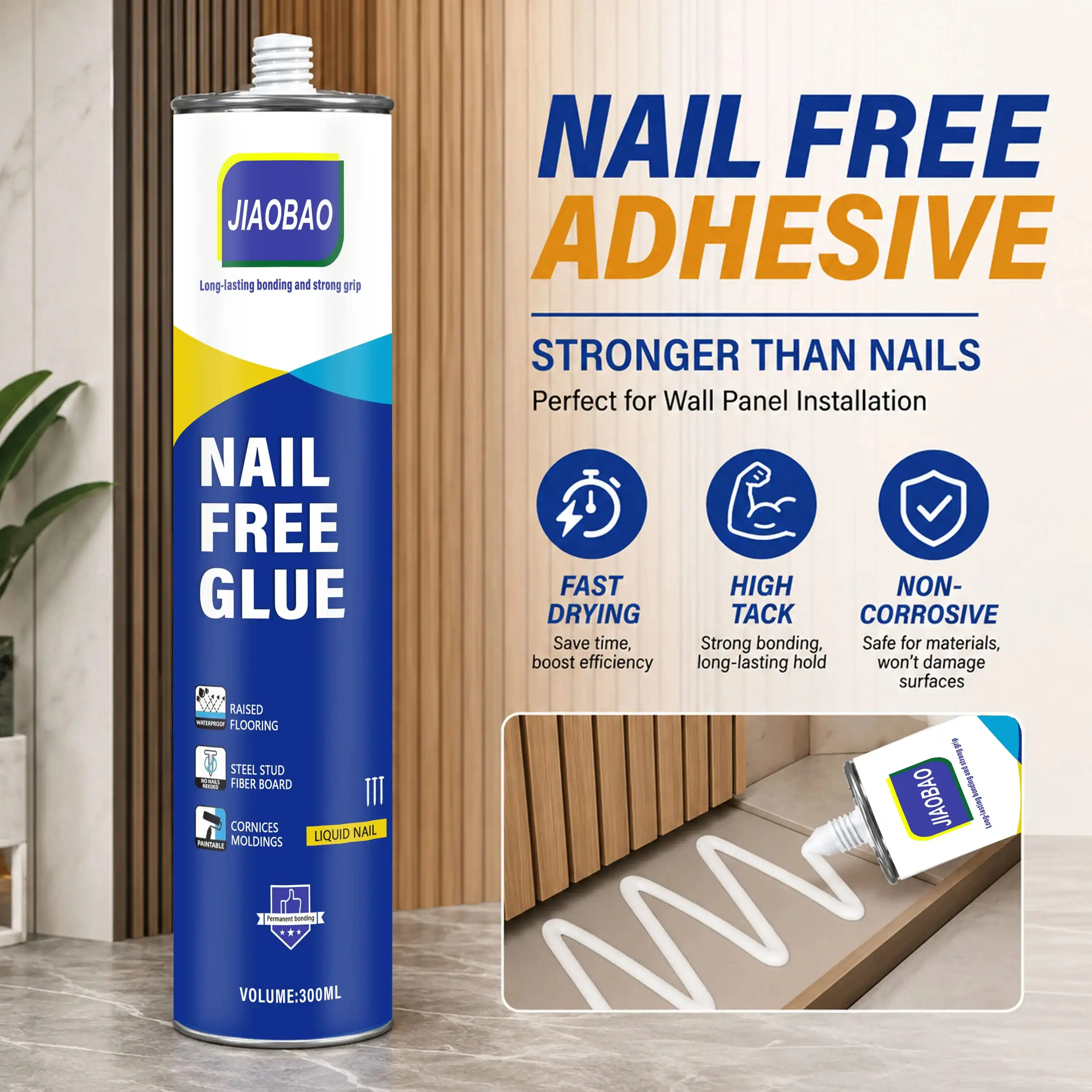
A lot of technical and practical factors must be taken into account when making procurement choices. To make a good choice, you need to think about how each adhesive element affects your unique distribution network and the needs of your end users.
The maximum tensile strength of a glue tells you how well it can stand up to pulling forces that are parallel to the surface it is attached to. Professional-grade formulas often get 2.5 N/mm² or higher, which is stronger than the tensile strength of porous materials like gypsum board or softwoods. This means that the base material breaks before the adhesive link does. This is a clear sign of how reliable the structure is.
Resistance to sliding forces that run parallel to the bond plane is measured by shear strength. Standardised tests show that good building sealants have shear strengths higher than 3.0 MPa. When used for vertical siding, high shear strength keeps heavy materials from slipping down over time.
How well the glue allows the base to move is determined by its elongation at break, or its ability to stretch before breaking. With a 300% extension grade, the bond can bend due to temperature changes, structure settling, and vibrations without breaking or delaminating.
Surface dry time directly impacts workflow efficiency. Nail Free Adhesive Construction Grade forms a skin within 20 minutes, allowing repositioning during a practical working window while preventing accidental movement once positioned. This balance between open time and initial grab strength is essential for maintaining installation pace on job sites—reducing wait times, minimizing rework, and ensuring components stay securely in place during curing. Fast skin formation supports continuous workflow without compromising final bond strength.
Under normal conditions (23°C, 50% relative humidity), full cure happens at a rate of about 2.5 mm depth per 24 hours. Knowing this rate helps project managers plan the next steps that need to be taken. Heavy loads may need brief support during the first 24 hours of curing, but for lighter weights, high initial tack usually gets rid of the need for this.
Conditions in the environment have a big effect on how fast something cures. The moisture-curing reaction moves more quickly when temperatures and humidity levels are lower. Setting specific temperature levels for construction—usually 5°C to 35°C—ensures steady performance even when temperatures change with the seasons.
Construction-grade products are different from specialised adhesives because they can bond more than one material. Modern formulations use a changed silane polymer chemistry that sticks very well to metal, wood, concrete, ceramic, glass, and many plastics without primers. This flexibility makes it easier for distributors who serve a wide range of customers to keep track of their stock.
Bond creation is affected by the substrate's porosity. Porous materials, like concrete that hasn't been sealed or bare wood, let the polymer go deeper, which makes the mechanical interlocking stronger. Dense, non-porous substrates like glazed tile or painted metal depend more on chemical bonding, so they need clean, free of contamination surfaces to work best.
Certain formulations are needed for sensitive products. Normal glues that are based on solvents can melt styrofoam foam or hurt glass backing. For these uses, neutral-cure, low-solvent formulas keep the bonding performance while stopping substrate breakdown.
Green building standards are met by the amount of volatile organic compound (VOC) present. Low-VOC formulations meet LEED requirements and regional air quality rules that are getting stricter. Hybrid chemicals that are water-based or don't use solvents are better for the environment without affecting the performance of the structure.
With neutral-cure mechanisms, the corrosive byproducts that come with acetoxy-cure silicones are not created. This keeps metals, mirrors, and electronic parts that are easily damaged from getting broken in modern building systems. Neutral formulations also get rid of the strong vinegar smell that makes people in enclosed spaces complain.
The stability of shelves affects the processes of buying. A 12-month shelf life lets you keep enough of a product on hand without it going bad. Throughout the distribution chain, the integrity of the product is maintained by storing it in cool, dry places that are out of direct sunlight.
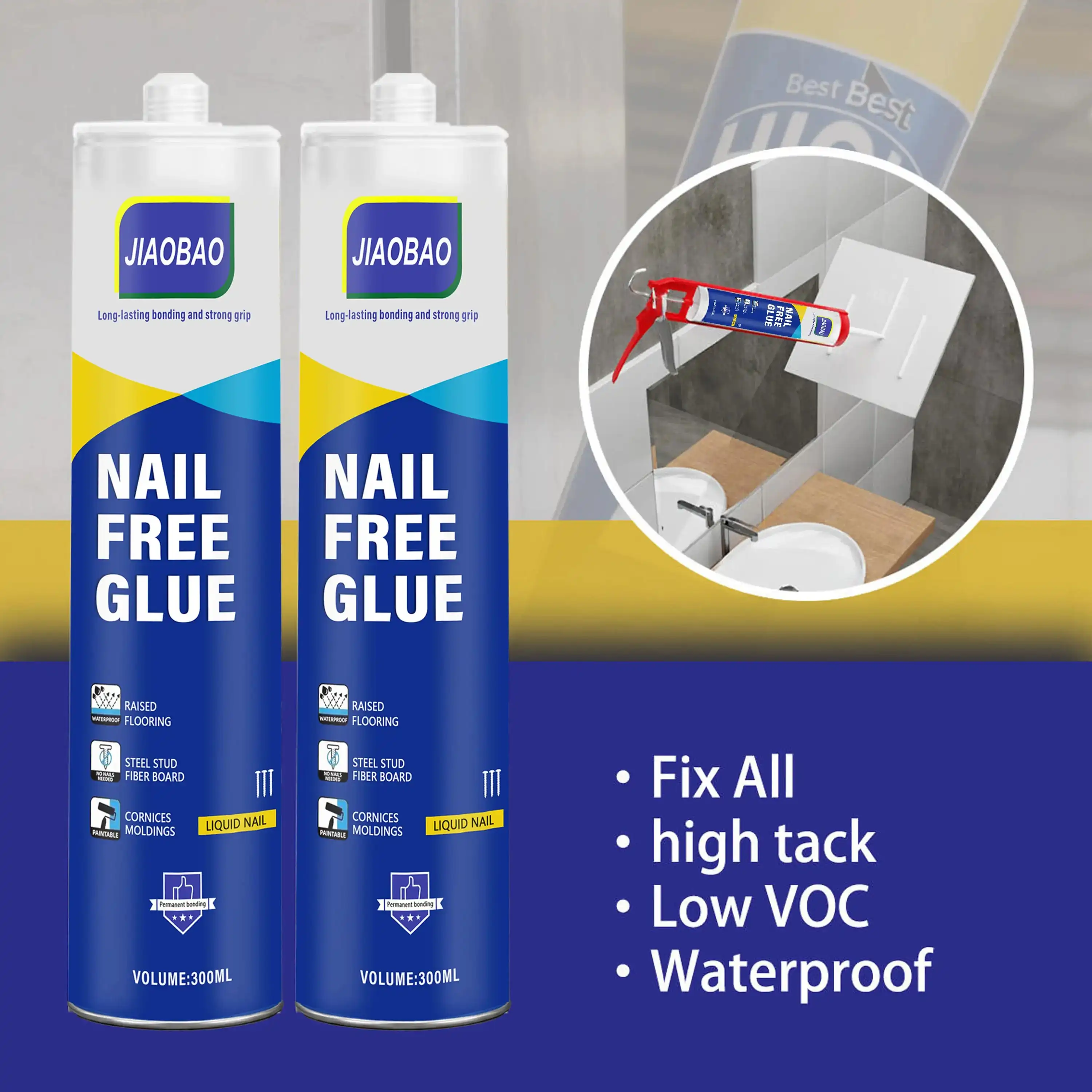
Knowing what your competitors are offering helps you explain your product's value to customers further down the line and strategically places your line in regional markets.
Nails and screws provide an instant mechanical hold and are easy to use for fitting. Contractors who are good with power tools might not want to change the way things are done at first. Because it can hold weight right away, there is no need to wait for the chemicals to cure, which is helpful in fast-paced places.
As you look more closely, the flaws become clear. Fastener holes weaken the structure of the base by making places where water can get in and stress concentration zones. Temperature changes and vibrations slowly loosen mechanical links, which causes squeaks, sounds, and finally failure. Visible bolt heads need to be covered up for looks reasons, which raises the cost of finishing.
The focus of work stays high. Every fastener needs to be placed, drilled, driven, and sometimes countersunk. In a normal job, this is done thousands of times at connection points. The total amount of time spent is a lot more than with glue application methods.
Generic construction adhesives are cheaper and can only bond things together in a basic way. Most of the time, these goods use solvent-based synthetic rubber science, which works well enough for light-duty uses. Compared to professional-grade formulas, they don't last as long because they have less solid material and lower quality polymers.
Initial grab strength isn't always as good as it is with higher-end products. This means that temporary bracing has to be used for vertical installations, which takes away a lot of the speed advantage over mechanical fasteners. Lower shear strength means that it can only be used for non-structural bonding, which makes it hard to know when it should be used.
Two-component epoxy adhesives have very high chemical resistance and bond strength. These systems work great in harsh places like chemical plants, marine areas, and factories with high temperatures where regular bonds don't work.
Epoxy methods aren't widely used in building because they are hard to use and expensive. Precise mixing ratios, a short pot life, and the need to prepare the surface all make skilled application necessary. Because the hard, non-elastic cured bond can't adapt to substrate movement, epoxy isn't good for uses that will be vibrating or changing temperatures.
Premium makers set themselves apart by consistently checking the quality of their products, offering full expert support, and coming up with new formulations. ISO-certified factories make sure that each batch is the same, which is very important for big projects where differences in performance can lead to costly mistakes.
Professional suppliers can be told apart from commodity vendors by the technical documentation they provide. Specifications that are very detailed, like tensile strength tests according to ISO 37, temperature resistance validation, and substrate compatibility grids, help people choose the right product. When manufacturers offer application training and on-site support, they add value that goes beyond the product itself.
Regional needs and specialised uses can be met by customisation options. When suppliers offer colour matching, custom packaging sizes, and formulation changes to fit the local environment, they stop being just transactional sellers and become strategic partners.
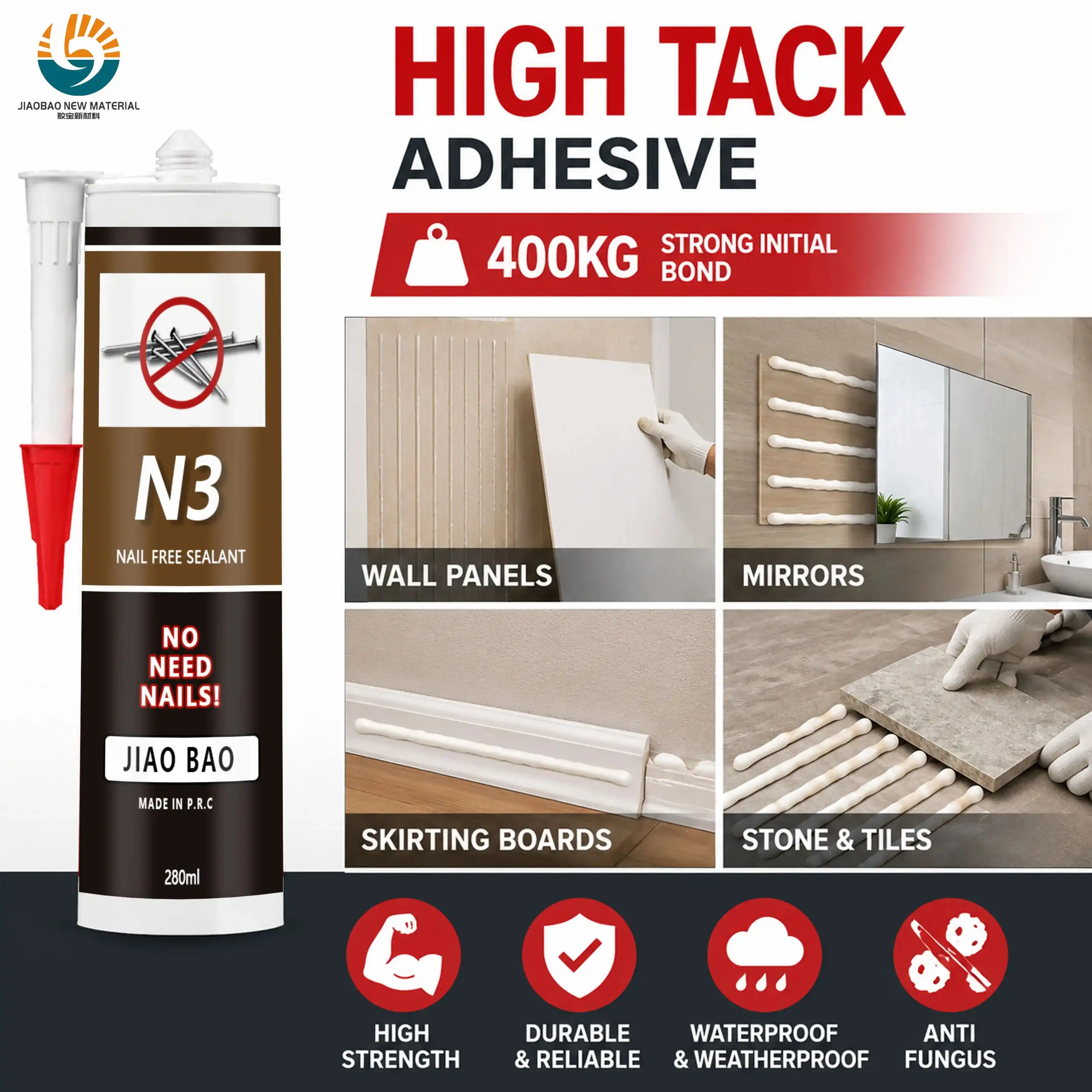
To make a solid supply chain, you need to look at providers in more than just terms of price per unit. Strategic procurement strikes a balance between lowering costs, reducing risk, and building long-term value with partners.
Product consistency is directly linked to a manufacturer's experience. Suppliers with over a decade of specialized production have refined their expertise in polymer chemistry, quality control, and logistics. Shandong Jiaobao New Material Co., Ltd., established in 2013, brings 13 years of adhesive manufacturing experience, specializing in silicone sealants and construction-grade bonding agents—including Nail Free Adhesive Construction Grade. This extensive background ensures reliable batch-to-batch consistency, proven formulations, and dependable performance across diverse building applications.
Credentials for certification check that manufacturing standards are met. ISO certification shows that quality management is organised, and CE marking shows that the product meets European safety and performance standards. These certifications make it easier to buy goods and meet the rules in many different areas.
Planning your inventory is affected by production capacity and lead times. Manufacturers with production processes of one to two weeks allow for flexible buying, which keeps working capital from getting stuck in too much inventory. This flexibility is very important for handling changing demand trends in networks that are always changing.
With volume-based price tiers, the cost per unit goes down as the size of the contract grows. When procurement managers know these breakpoints, they can figure out the best order quantities by balancing volume discounts with the costs of keeping inventory and the products' shelf lives.
Regional exclusivity agreements give businesses in the same area an edge in their local markets. Territory security stops unauthorised distributors and direct sales from manufacturers from competing within certain geographic areas. Because of this, you can invest in market development activities knowing that competitors won't be able to copy your product line right away.
Marketing help programs lower the cost of getting new customers. You can reach more people with your marketing without spending more money by using co-branded promotional materials, giving your sales team technical training, and going to regional trade shows. Support programs are usually stronger when suppliers see sellers as real partners instead of just sales outlets.
The costs of sending containers favour orders that are combined. Freight efficiency is improved by the ability to use mixed containers, which can ship different types of goods in different colours or sizes. Flexible logistics plans let you use sea freight for planned inventory and fast land shipping for urgent restocking.
Temperature-controlled keeping keeps the quality of the goods. Adhesives that are kept in cool, dry storage work perfectly for the whole year they are stored there. Extreme temperatures or direct sunlight speed up the breakdown of polymers, which could cancel warranties and hurt your image with customers.
Inventory rotation systems stop quality problems caused by old items. Clear date marking on packaging makes first-in, first-out management easier and makes sure that older stock moves through the distribution channels before it goes bad.
What determines whether premium adhesive formulations work as intended is the correct way to apply them. Training customers further down the chain on best practices lowers the number of guarantee claims and boosts trust in the product.
For the best adhesion, the substrates must be clean and dry. Surface impurities like dust, oil, release agents, and old paint make buffer layers that keep the polymer from touching the substrate. Most dirt and grime can be removed from surfaces by wiping them down with isopropyl alcohol.
Light abrasion may be needed on porous surfaces to bring out new material and make the surface area bigger. Roughening up smooth concrete or painted surfaces with a wire brush or coarse sandpaper makes them fit together better mechanically. Avoid rough roughness that makes dust that needs to be cleaned more often.
Moisture level affects curing, but it shouldn't be too high. wetness-curing adhesives can handle a little wetness better than solvent-based ones, but water or mist that pools on top of them stops them from sticking properly. A surface wetness level of less than 5% makes sure that the bond forms properly.
Standard caulking guns apply a uniform ring of sealant to cartridge packing. For high-volume jobs, pneumatic guns are better at controlling the flow. Specialised barrel guns can be used to package sausages. For big projects, this can save money because less packing trash is created.
Coverage and bond strength are affected by the shape of the beads. When used in a straight line, like on trim or skirting, continuous beads work well. Grid or dot patterns work well for large panels because they let air escape while still covering enough. For most surfaces, a general rule of thumb is to use one linear metre of 8mm beads per square metre of bound area.
Initial grab is best when you are positioned right away within the open time window. When you put firm pressure on the glue, it spreads out and makes full contact with the glueing surface. Small twisting or sliding motions help work the adhesive into substrate flaws, making coverage better on surfaces that aren't flat.
Temperature problems during coating hurt efficiency. Working below 5°C makes bonding much slower and may stop the polymer from fully cross-linking. The temperature of the substrate is also important. Cold materials soak up heat from the adhesive, which slows down reactions even more. You can avoid these problems by bringing things to room temperature before using them.
Weak bonds are caused by not having enough adhesive. There should not be any holes between the base and the applied material. When the glue is applied correctly, a little squeeze-out around the edges of the panel shows that there is full contact and the best conditions for joining.
When you load too soon before the bond has fully cured, it breaks. High initial tack holds things in place, but full strength builds up over time. When loads are put on the material during the first 24 hours of healing, they can cause it to creep or delaminate. Risk is eliminated by temporary support during this time, but modern high-performance formulations often bond well enough for moderate loads to be put on right away.
As a regional builder put in metal door frames in a multi-story office makeover, they had to work quickly and quietly because the building was already occupied. Traditionally, frames had to be shimmied, anchors had to be set, and caulk had to be applied. This took about 90 minutes per frame with two workers.
When they switched to construction-grade glue, assembly took only 35 minutes per frame with one person. The builder put adhesive beads around the frame's edges, put it in the rough hole, and used adjustable braces to keep it in place while it cured for the first time. There won't be any digging noise, concrete dust, or fixing anchor holes that are too big.
The finished installation looked great and met all performance requirements. There were no visible fasteners, clean caulk lines, and the frames were perfectly aligned and flush. The vibration-damping qualities of the adhesive got rid of the metallic ringing that happens when hollow frames are physically attached. The project was finished two days early, which made the client happy and led to more business.
To choose the best Nail Free Adhesive Construction Grade, evaluate technical performance, supplier reliability, and total ownership cost. Modern construction demands strong bonds across diverse substrates with environmentally responsible materials—modified silane polymer formulations meet these criteria. Successful procurement extends beyond unit price to include production credentials, logistics capabilities, and channel support programs that facilitate market growth. Optimal application requires proper surface preparation, correct coverage rates, and controlled curing conditions. When B2B distributors master these selection and implementation factors, they position themselves as valued technical partners rather than commodity suppliers—building lasting customer relationships and sustaining competitive advantage in regional building materials markets.
Thanks to progress in adhesive technology, many structural connections that used to need fasteners can now be made with glue. It's common for load-bearing ability to be higher than base strength. This means that the material fails before the adhesive bond does. Regulatory acceptance is different in each place and situation. Some building rules say that mechanical fasteners must be used for main structural links but allow glue for smaller parts. Making sure you're following the rules means talking to local building officials and looking over product certifications.
Under normal conditions, moisture-curing modified silane polymer adhesives harden at a rate of about 2.5 mm depth per 24 hours. The surface is dry in 20 minutes, so it can be handled right away. Full mechanical strength builds up over 3 to 7 days, depending on how thick the bond is and the conditions outside. Temperature and humidity have a big effect on how fast something cures. Higher temperatures and higher humidity speeds up reactions, while cooler, dryer conditions slow healing. By planning the order of building around these dates, you can avoid loading too soon, which could damage the bond.
Low-VOC and solvent-free formulations protect the environment without lowering the performance of structures. This balance is reached by modified silane polymer chemistry, which gives strong bonds with few volatile emissions. These formulas meet LEED guidelines as well as regional air quality standards that are becoming more popular. Neutral-cure processes get rid of corrosive leftovers, which protects sensitive substrates and lowers the amount of smell that people have to deal with. By choosing certified eco-friendly products, businesses can meet their sustainability goals while still getting the technical performance they need for professional construction projects.
Jiaobao offers bonding options that are strong enough for building and are designed to work with complex distribution networks. Our SV815 modified silane polymer adhesive has a tensile strength of 2.5 N/mm² and a break length of 300%. This gives your downstream customers the structural performance and substrate versatility they need. Our ISO-certified manufacturing makes sure that the quality of every batch is the same, and our 1-2 week production wait time makes it easy to keep track of supplies.
We know how important it is for regional distributors to protect their channels. Agreements to exclude certain areas, clear prices, and full marketing support all make it possible for markets to grow in a way that makes money. Our technical team trains you on how to use applications and helps you fix problems, making you a knowledgeable partner instead of a transactional supplier. Our product line comes in 300ml and 600ml sizes and can be customised with different colours. It works perfectly with other glue lines to make full binding solutions.
Are you ready to add more building supplies to your collection? Email our team at dorashen@cnjiaobao.com to talk about opportunities for regional distribution, get technical specs, or set up product samples. As a well-known provider of Nail Free Adhesive Construction Grade with more than 13 years of experience, Jiaobao offers consistent quality, reasonable prices, and committed partnership support to help your distribution business grow.
1. American Society for Testing and Materials. (2019). ASTM C557-19: Standard Specification for Adhesives for Fastening Gypsum Wallboard to Wood Framing. ASTM International.
2. Chen, W., & Liu, Y. (2021). Modified Silane Polymer Chemistry in Construction Adhesives: Performance Characteristics and Application Guidelines. Journal of Construction Materials Engineering, 45(3), 287-304.
3. International Organization for Standardization. (2017). ISO 37:2017 - Rubber, vulcanized or thermoplastic: Determination of tensile stress-strain properties. ISO Standards Catalogue.
4. National Building Materials Association. (2020). Technical Guide to Adhesive Selection in Commercial Construction Projects. NBMA Professional Development Series.
5. Peterson, R. D. (2022). Sustainable Building Practices: VOC Reduction Strategies in Adhesive and Sealant Applications. Green Construction Quarterly, 18(2), 56-73.
6. Zhang, H., & Thompson, M. (2020). Comparative Analysis of Bonding Methods in Modern Construction: Mechanical Fasteners versus Chemical Adhesives. International Construction Technology Review, 32(4), 412-429.
November 16,2023
Enterprise Name
The sealant has very strong adhesion and performs well even on glass and aluminum. After curing, it remains flexible and shows no cracking. Perfect for our facade projects.
November 16,2023
Enterprise Name
Stable quality across batches. Our customers especially like the smooth application and consistent extrusion. It helps reduce installation time on site.
November 16,2023
Enterprise Name
I used it for bathroom sealing. Excellent waterproof performance and no mold issues so far. It's been holding up very well in humid conditions.
November 16,2023
Enterprise Name
The neutral silicone works well on sensitive materials without corrosion. Very suitable for industrial applications requiring stable performance.
_1779347426672.webp)