November 16,2023
Enterprise Name
The sealant has very strong adhesion and performs well even on glass and aluminum. After curing, it remains flexible and shows no cracking. Perfect for our facade projects.
Jul 29, 2026
To choose the best glue for building, remodelling, or manufacturing projects, you need to carefully look at the product's performance specs, how it should be applied, and how reliable the seller is. When looking for a Nail Free Adhesive Strong Bond, you need to know that your choice will affect how long the job takes, how well it holds together, and how long it lasts. The best building glue gets rid of the need for mechanical fasteners and has great holding power on a wide range of surfaces. Modern mixtures made from changed silane polymers have moisture-curing systems that make bonds that last without affecting the way the finish looks. This guide goes over five important things that builders, project engineers, and procurement managers should think about before choosing an adhesive solution for doors, windows, curtain walls, internal finishes, or industrial assemblies.
Each building or industrial job has its own problems that need to be solved with a certain kind of adhesive. Before you choose a bonding solution, you need to carefully consider the materials you'll be using and the circumstances they will be exposed to during their service life.
Which recipe will work successfully depends on how much weight and stress your adhesive needs to hold up. For heavy curtain wall panels, stone veneer installs, and metal fixings, you need adhesives with tensile strengths higher than 2.5 N/mm² so they don't break down over time when they're constantly loaded. Standard formulas can be used for lighter jobs like artistic trim or PVC mouldings. Modified silane polymer adhesives work really well in structural applications because they spread stress evenly across the bound area. This gets rid of the stress concentration points that cause cracks around mechanical fasteners.
Most buying teams don't realise how much material fit affects the strength of a bond. Materials that don't have pores, like glass, metal, or painted ceramics, don't bond the same way as porous ones, like concrete, wood, and gypsum board. To make molecular-level bonding, the glue you pick must chemically wet both surfaces. Moisture-curing products work really well on a wide range of substrates because they don't depend on solvent release, which can go wrong on surfaces that don't have pores. To join things that expand at different rates, like aluminium window frames to concrete walls, you need a glue that has a high elongation at break (ideally 300% or more) so that the materials can move without coming apart.
Problems are different for indoor setups compared to outdoor ones. In bathrooms and kitchens, waterproof formulas that don't grow mould are needed. For outdoor curtain wall parts, UV stability and temperature tolerance from -40°C to 80°C are needed. The weather window for building is also very important. When compared to goods that need warm conditions, adhesives that cure consistently between 5°C and 35°C give you more schedule options. Moisture-curing silane-based adhesives work the same way no matter what the temperature is because the hardening process is controlled by wetness rather than heat. Knowing these basic needs will help you avoid making mistakes that cost a lot of money and make sure that the glue you choose meets the specific needs of your project and the conditions of the work site.
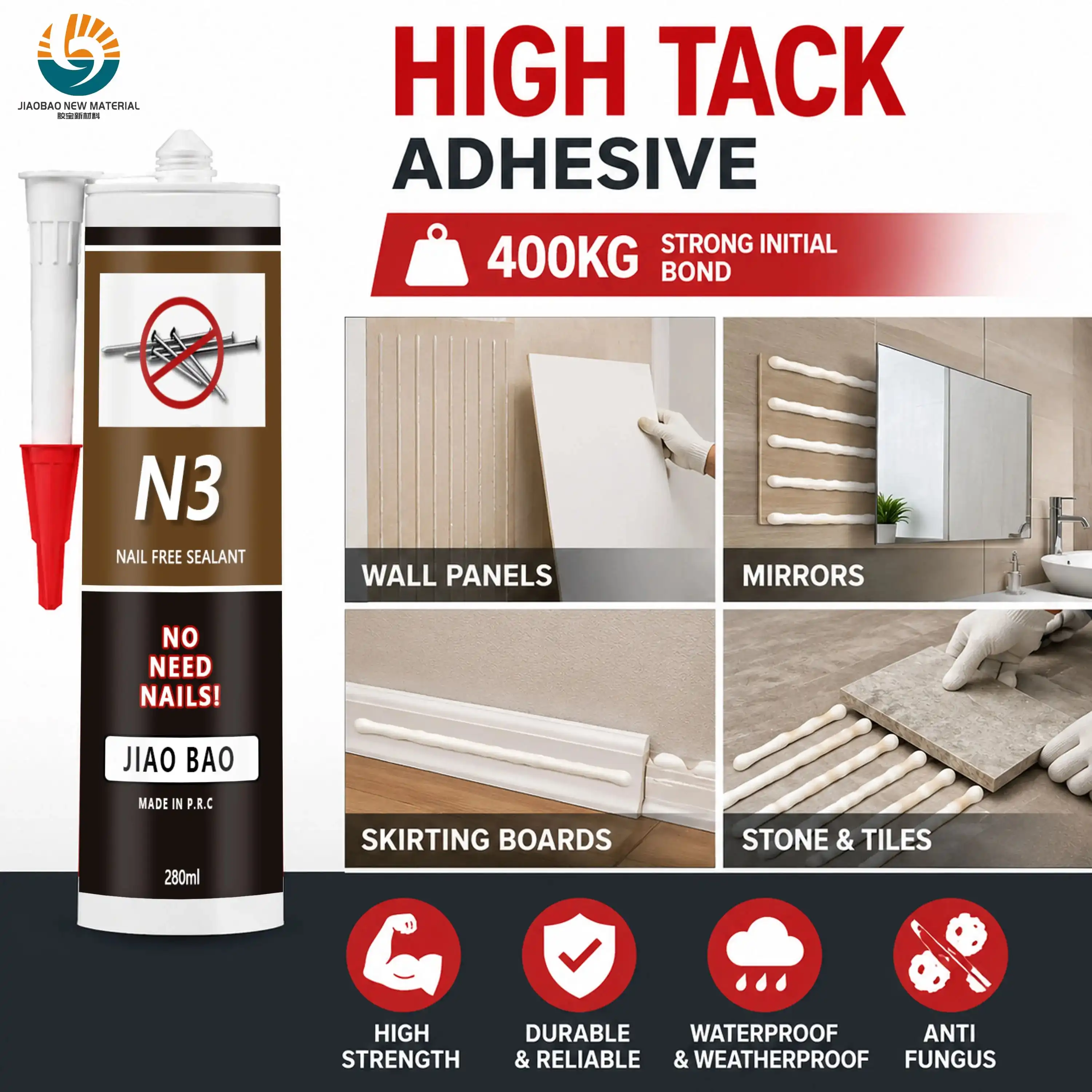
There are a lot of different kinds of adhesives on the market, and each one is made to do a certain job. Knowing the detailed differences between these choices helps you find the right product for the job.
This advanced chemistry is a big step forward for Nail Free Adhesive Strong Bond. Changed silane polymers make hybrid solutions that work better than regular ones because they mix the flexibility of silicone with the hardness of polyurethane. These mixtures harden when they come in contact with water. At normal temperatures (23°C and 50% relative humidity), they reach their full strength in 24 hours. Due to its curing speed of 2.5 mm per 24 hours, a standard bead quickly meets its useful strength while still being easy to work with. The stable paste consistency keeps upright surfaces from sliding, which is especially helpful for installing windows and doors where moving them around isn't possible.
Technical datasheets show what a glue product can really do. The bond's maximum tensile strength tells you how much pulling force it can handle before breaking. The elastic modulus at 100% extension, which is usually around 1.400 N/mm², tells you how strong the cured glue is, finding the right balance between stiffness and flexibility. If the Shore A hardness is between 50 and 55, it means that the bond is somewhat rigid and can absorb shocks and allow the base to move. After about 20 minutes of drying on the surface, it can be handled right away. Over the next few days, it will become stronger as it fully cures. These specs are a direct reflection of how well the product works in challenging situations.
Low-VOC (volatile organic compound) formulations that meet LEED approval standards and regional environmental laws are becoming more and more important in modern buying. Adhesives that are based on silane chemistry don't release dangerous chemicals when they are being used or when they cure, which protects both the workers and the people who live or work in the building. Not having isocyanates and liquids also makes safety rules easier to follow and lowers the need for personal protective equipment.
Products that come in sausage and capsule shapes cause less waste and allow for exact application control, which lowers the cost of materials and the damage they do to the environment. Quality products have a 12-month shelf life, which means that large purchases can be made without worrying about going bad. Proper keeping in temperature-controlled areas keeps the integrity of the product, and clear labels that list building temperature ranges stop mistakes in application that weaken the bond.
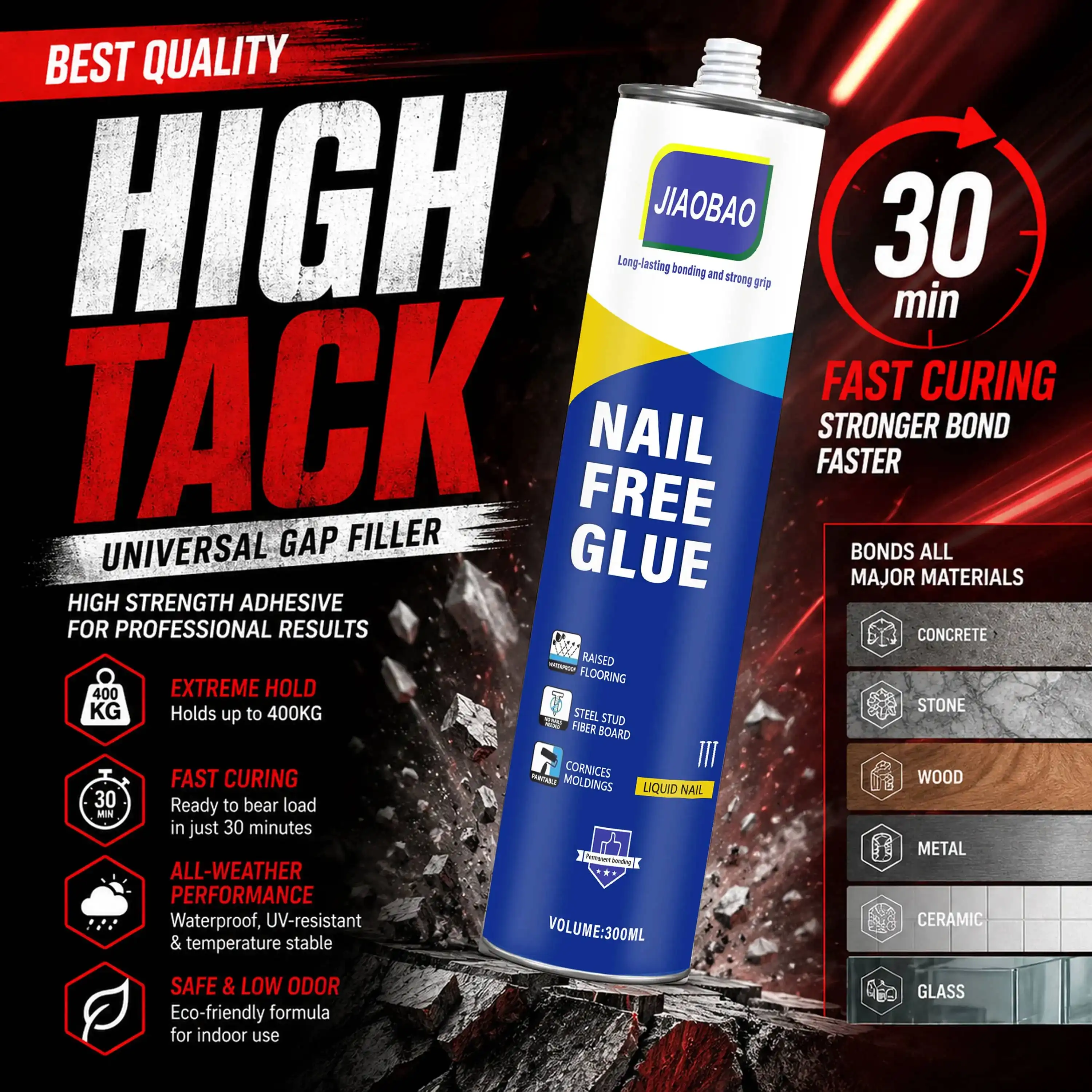
More and more, people who work in construction are realising that modern adhesives are much better than traditional mechanical fixing systems in many situations.
When you use regular screws and nails, you create stress points that can break fragile materials like ceramic tile, toughened glass, or natural stone. These screws also make sealing less effective because they go through surfaces, letting water in and allowing corrosion and mould growth. Nail Free Adhesive Strong Bond spreads loads across the whole contact area. This makes the holding power stronger while keeping the purity of the base. When compared to drilling, the installation process makes much less noise and dust, which is important in occupied buildings or places where noise is a problem. Labour costs go down because using glue takes fewer tools and less technical know-how than using mechanical fasteners correctly. Also, workers can finish jobs faster since they don't have to measure, drill, and secure as many fasteners.
There are big changes in how well different types of glue work. Hot melt glue guns stick quickly at first, but they aren't strong enough or resistant to the elements to be used for lasting building projects. Double-sided foam tapes are good for attaching light decorative items, but they can't handle the weight of curtain wall systems or heavy fixtures. Traditional building mastics and liquid nails dry by evaporating the solvent. This process can take days for thick layers and may never finish in places that are sealed. These problems can be fixed with modified silane adhesives that work consistently in gap-filling situations up to 10 mm, building up the same level of strength no matter how thick the joint is.
Manufacturers of doors and windows have cut production time by a large amount by switching from mechanical fastening to glue bonding in frame building steps. The flexible bond allows for thermal growth without putting stress on the glass panels, which lowers the number of guarantee claims linked to seal failure. Contractors who work on curtain walls say that using adhesive to place them eliminates the chance of damaging hidden water or electrical lines or pipes.
Interior finish builders like how adhesive-mounted trim and mouldings look because they hide the fastener heads, which means they don't have to be filled in and painted over. The gap-filling qualities also smooth out small surface flaws that would need to be fixed with shimming or base preparation otherwise. These useful benefits directly lead to lower project costs, shorter finishing times, and better long-term performance.
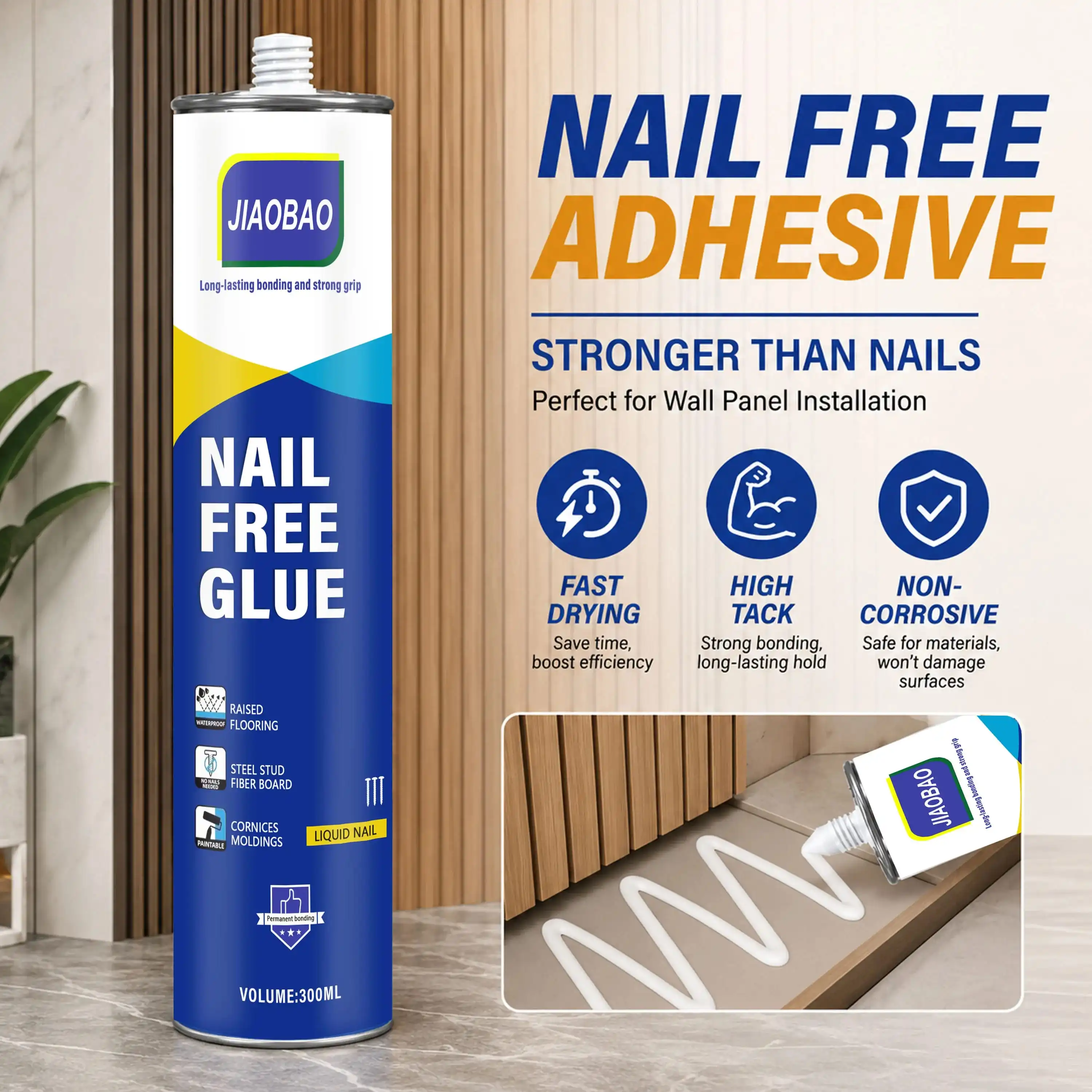
Choosing a supplier is one of the most important parts of buying adhesive because it has a direct effect on the consistency of the product, the availability of expert help, and the trustworthiness of the supply chain.
Companies that have been around for a while put a lot of money into things like research and development, quality control, and approval methods that make sure their products like Nail Free Adhesive Strong Bond work. Companies that have ISO 9001 quality management certification show that they are committed to uniform manufacturing standards. Companies that have ISO 14001 environmental certification show that they are producing in an environmentally responsible way.
Objective proof of performance claims can be found in product-specific certifications like ASTM standard compliance and fire resistance scores (if relevant). Experience in manufacturing is very important. Suppliers who have been making things for more than ten years have improved their formulas through real-world feedback and gained the technical know-how to support complex applications.
Professional-grade glues come with detailed technical datasheets that list all the important details, such as the chemicals they contain, their physical and chemical qualities, how they cure, the temperature ranges they work best at, and how they should be used. These papers make it possible to directly compare how well different goods work. Pay close attention to the test methods that are mentioned, like ISO 37 for tensile properties.
These show that claims are based on standard measurements and not just marketing claims. The manufacturer's knowledge of the field conditions and dedication to successful installations can be seen in the detailed application directions. Safety data sheets (SDS) are very important because they tell you about things like how to handle dangerous materials safely, how to give first aid, and how to protect the environment.
Aesthetic integration is becoming more and more important in projects, especially high-end home, business, and leisure settings. Suppliers that offer unique colour formulations make it possible to match perfectly with building finishes, so sealant gaps that don't match don't stand out visually. Being able to buy specific RAL colours or give custom colour samples for matching shows that the company is flexible and focused on customer service.
When projects cover multiple procurement rounds, batch consistency is very important. Reliable providers keep formulation stability, which makes sure that colours are the same across orders that come in at different times of the year. This product comes in white, black, grey, and unique colours to meet most design needs. It also comes in 300ml and 600ml cartridge volumes to suit different project sizes. Packaging in both sausage and cartridge shapes makes it compatible with common handling equipment, which means you don't have to buy as many tools.
Strategic buying takes into account the needs of the project at hand as well as the long-term needs of the supply chain, the total cost of ownership, and the sustainability goals of the company.
When you commit to buying Nail Free Adhesive Strong Bond in bulk, you can get better prices that have a big effect on your project budget. Suppliers usually use tiered pricing, which means that the cost of each unit drops a lot as you buy more. When planning projects with multiple stages or overseeing ongoing upkeep, buying more glue in bulk lets you get the biggest discounts. When you place a bigger order, you can also negotiate the payment terms. Longer payment terms help you handle your cash flow, and early payment discounts lower the actual cost of the materials. The key is to accurately predict demand in a way that weighs price benefits against the costs of keeping and the expiration dates of products. Products with 12-month stability windows give you some options for buying in bulk without worrying about loss.
Partnering up with responsive makers has benefits that go beyond unit price. When compared to multi-tier distribution methods, direct manufacturer relationships usually have shorter lead times (1-2 weeks). This is very important when project plans are tight or unexpected material needs come up. Working closely with production teams that know about formulation chemistry and application techniques makes it a lot easier to get technical help. Customisation services, like OEM/ODM production, become available. This lets builders build their own brands or make special formulas that meet the specific needs of each job. Quality promises are more meaningful when providers offer refund or replacement policies for goods that go bad during their shelf life. This shows that they are confident in the consistency of their making.
Environmental laws are changing and companies are making green promises that make choosing eco-friendly products more important. Low-VOC sealants are compatible with green building standards like LEED, which can give businesses an edge when bidding on contracts. Solvent-free versions lower the risks of exposure in the workplace and make it easier to follow safety rules. This could lower insurance costs and lawsuit exposure. As rules get stricter around the world, building supply chains with companies that already make goods that follow the rules will help avoid problems in the future when older formulas are limited.
This forward-looking method is shown by the switch to moisture-curing silane technology, which provides better performance while also meeting strict environmental standards. Flexible transportation options, such as shipping by sea or land, make sure that materials are always available in all areas of the world. This keeps expensive project delays from happening because of supply problems.
To choose the best building adhesive like Nail Free Adhesive Strong Bond, you have to balance technical performance needs with supplier skills and your buying strategy. Contemporary building and industrial projects need materials that are strong, don't harm the environment, and can be used in a lot of different ways. Modified silane polymer formulations meet these needs. You can make sure your projects are successful by carefully checking substrate compatibility, knowing key performance specs, comparing different fastening methods, making sure the manufacturer is legitimate, and finding the best ways to buy things. Switching from mechanical fixings to advanced glue solutions does more than just save money; it also makes things look better, speeds up installation, makes things last longer, and makes the workplace safer. The long-term success of the project and the resilience of the supply chain will depend on the strategic buying decisions made today.
A: Different types of materials, like wood, concrete, metal, glass, ceramics, plastics, and composite panels, stick together strongly when you use modified silane polymer glue. The moisture-curing process works well on both porous and non-porous surfaces. Adhesion is best when the surface is properly prepared by getting rid of dust, oil, and other small particles. Plastics with low surface energy, like polyethylene and polypropylene, need different starters or formulas most of the time. For new materials, the best way to make sure they work together is to test them on a small area before applying them all over.
A: At normal conditions (23°C and 50% relative humidity), the surface dries in about 20 minutes, so it can be handled right away. The glue hardens at a rate of 2.5 mm every 24 hours. This means that a 5 mm bead takes about 48 hours to fully dry. Changes in temperature and humidity affect how fast something cures. The process takes longer when it's cooler and less humid, and shorter when it's warmer and more humid. For load-bearing uses, ties should be fully cured before they are put under the most stress.
A: Weather resistance is very good for high-quality mixtures made for building use in temperatures ranging from -40°C to 80°C. Sunlight doesn't break down UV-stabilized materials, and waterproofing keeps the bond strong when it's wet. Because finished glue is flexible, it can handle changes in temperature without cracking or peeling. Product specifications should make it clear if the glue can be used outside. Before selecting adhesives for outdoor use, check the technical documentation for temperature ranges and weather resistance claims.
A: Modified silane technology takes the best qualities of several types of adhesives and combines them into one. It combines the flexibility and weather protection of silicones with the structural strength of polyurethanes, without any of the problems that come with either one. Because these combination products don't use any solvents, they don't give off VOCs, which are bad for your health. They consistently cure through a moisture reaction, no matter how thick the joint is. This is different from solvent-based solutions, which may never fully cure in sealed uses. The end result is better at filling gaps, reducing vibrations, and lasting longer than other kinds of materials.
When it comes to making high-performance building adhesives and silicone seals, Shandong Jiaobao New Material Co., Ltd. has more than 13 years of experience in specialised manufacturing. We've built our name as a top Nail Free Adhesive Strong Bond manufacturer on steady product quality, technical innovation, and helpful customer service. Our tweaked silane polymer formulas are fully certified by ISO and CE to meet international standards. This makes sure that they are in line with regulations in all global markets. With production wait times of only 1-2 weeks, we can quickly meet the needs of your projects.
Plus, our OEM/ODM skills let you make changes exactly the way you want them, including private labelling and custom colour matching. We stand behind every product we sell with full quality promises. If any problems happen during the shelf life, we'll return or replace it right away. Contact our team at dorashen@cnjiaobao.com to discuss your specific project requirements and discover how our mix of reliable quality, reasonable pricing, and dependable supply chain support reduces your buying risks while elevating project outcomes.
1. American Society for Testing and Materials. (2021). Standard Test Methods for Tensile Properties of Plastics. ASTM D638-14, West Conshohocken, PA.
2. Construction Specifications Institute. (2020). Sealants and Waterproofing Systems: Selection and Application Guidelines. CSI Technical Report Series, Alexandria, VA.
3. European Organisation for Technical Assessment. (2019). Assessment and Verification of Constancy of Performance for Construction Adhesives. EOTA Technical Report TR-005, Brussels, Belgium.
4. International Organization for Standardization. (2018). Adhesives – Determination of Tensile Lap-Shear Strength of Bonded Assemblies. ISO 4587:2003, Geneva, Switzerland.
5. National Institute of Building Sciences. (2022). Structural Glazing and Sealant Applications in Modern Construction. NIBS Building Enclosure Technology Symposium Proceedings, Washington, DC.
6. Petrie, Edward M. (2020). Handbook of Adhesives and Sealants in Construction. McGraw-Hill Professional Engineering Series, Third Edition, New York, NY.
November 16,2023
Enterprise Name
The sealant has very strong adhesion and performs well even on glass and aluminum. After curing, it remains flexible and shows no cracking. Perfect for our facade projects.
November 16,2023
Enterprise Name
Stable quality across batches. Our customers especially like the smooth application and consistent extrusion. It helps reduce installation time on site.
November 16,2023
Enterprise Name
I used it for bathroom sealing. Excellent waterproof performance and no mold issues so far. It's been holding up very well in humid conditions.
November 16,2023
Enterprise Name
The neutral silicone works well on sensitive materials without corrosion. Very suitable for industrial applications requiring stable performance.
_1779347426672.webp)