November 16,2023
Enterprise Name
The sealant has very strong adhesion and performs well even on glass and aluminum. After curing, it remains flexible and shows no cracking. Perfect for our facade projects.
Sep 15, 2026
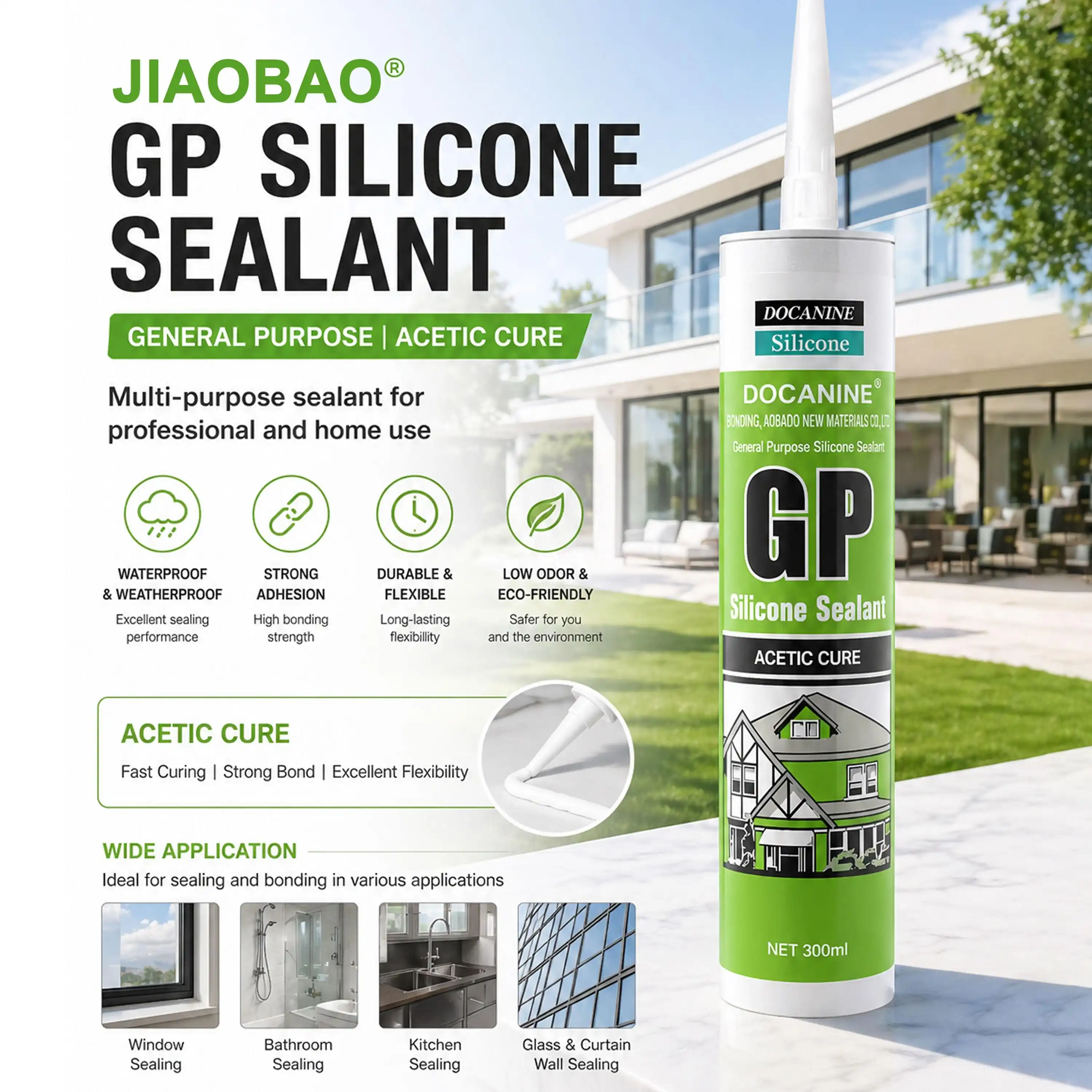
When your production line depends on consistent sealing quality, choosing the wrong sealant can mean costly rework, client complaints, and halted assembly. The best GP door and window silicone sealant for harsh climates and heat delivers a precisely engineered balance of flexibility, adhesion, and thermal resistance that generic alternatives cannot match. Jiaobao's one-component acetic RTV silicone sealant achieves a tack-free time of just 15 minutes, withstands temperatures from -50°C to +150°C, and maintains bond strength up to 1.5 MPa—making it a dependable choice for high-volume door and window manufacturing facilities operating in demanding environments.
When put under stress, not all silicone sealants work the same way. There is a special group of one-component, room-temperature-vulcanizing (RTV) elastomers called GP door and window silicone sealants that are made for glazing and weatherproofing jobs in construction and windows. When the paste-like compound comes into contact with water in the air, it crosslinks into a strong rubber gasket that sticks firmly to glass, anodized aluminum, and glazed ceramics.
Standard sealants often use cheap plasticizer extenders that evaporate over time, causing the sealer to shrink below the 5% level and eventually crack. GP door and window silicone sealant formulations, on the other hand, keep their volume after they have fully cured. According to ASTM D412 standards, Jiaobao's recipe gets a tensile stretch rate of more than 300%, a Shore A hardness of 18, and a specific gravity of 0.87. Because of these qualities, the cured bead can handle the different thermal movement between the glass and metal profiles without breaking. This is very important for companies that send goods to Central Asia and Africa, where temperature changes are big.
| Property | Value |
|---|---|
| Type | One-component, Acetic RTV |
| Tack-Free Time | 15 minutes |
| Shore Hardness | 18 |
| Maximum Bond Strength | 1.5 MPa |
| Tensile Rate | >300% |
| Temperature Range | -50°C to +150°C |
| Shelf Life | 12 months |
| Volume Options | 300ml / 600ml |
| Packaging | Sausage or Cartridge |
| Available Colors | White, Black, Grey, Custom |
When purchasing managers look at different types of sealants, they often compare silicone to acrylic and polyurethane alternatives. There is a clear range of performance for each type of material, and knowing where each one falls short is very important for the efficiency of the factory line.
If you let acrylic seals dry, the solvent will evaporate, which means they will naturally shrink over time. Also, they get soft above 70°C and aren't stable enough against UV light for outdoor glazing parts. When polyurethane seals are first applied, they stick well, but they break down over time when exposed to UV light and can become weak in cold weather. Neither of these materials can reliably handle the -50°C to +150°C temperature range that GP door and window silicone sealant does all the time.
Correct application technique is as important as product quality. Even a high-quality acetic GP door and window silicone sealant will underperform if the substrate is improperly prepared. Here is a professional setup process that works well for factory lines:
Before the application starts, the substrate needs to be clean, dry, and free of frost. If there is any grease, dust, or wetness left on the surface, it breaks the bond between the sealant and the base chemically. Before sealing, clean the glass and metal features with isopropyl alcohol or a cleaner that comes highly suggested to degrease glass and aluminum profiles prior to sealing.
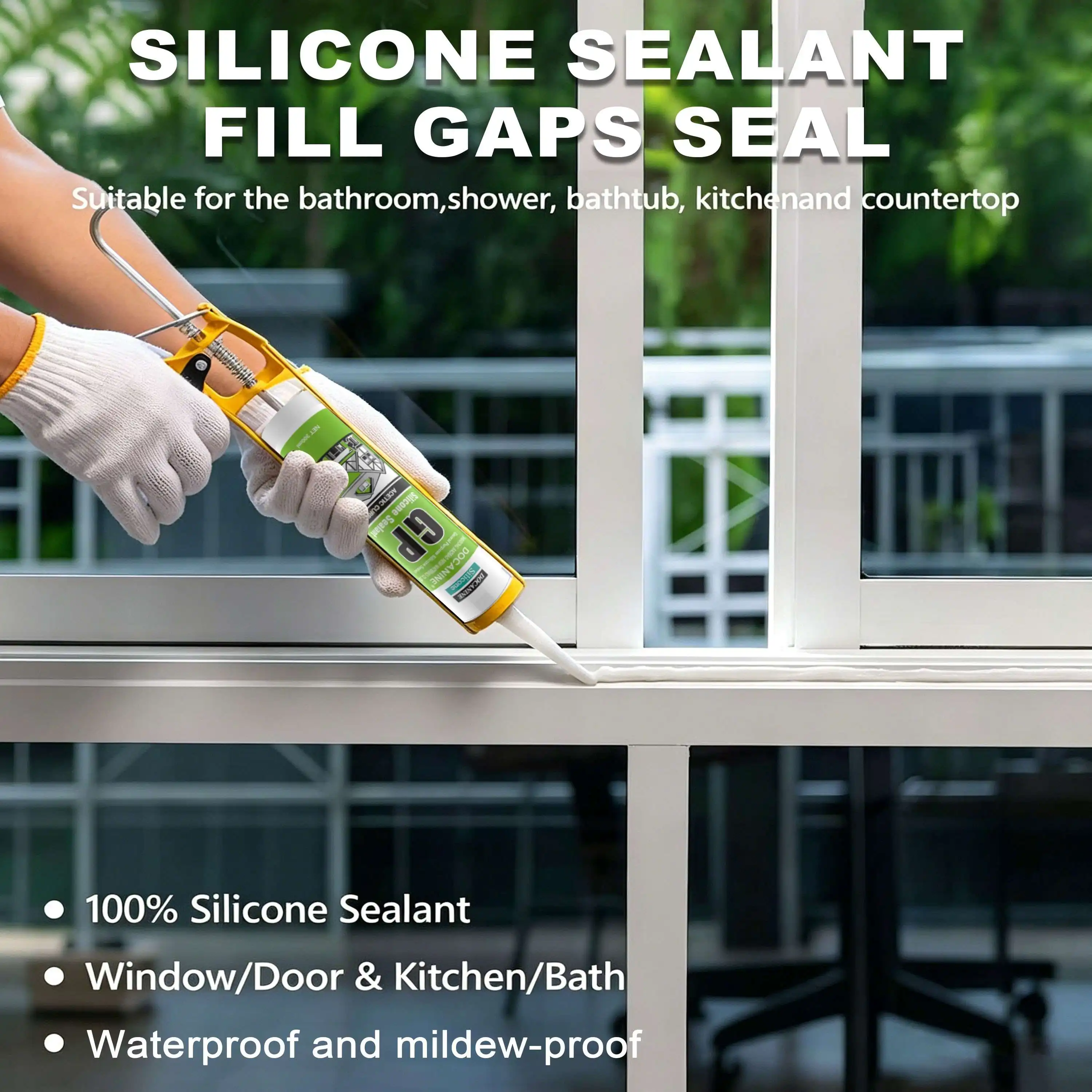
Put the 300ml or 600ml cartridge into a standard pneumatic or manual caulking gun. Extrude at a steady, even speed to make a bead that is smooth and has no holes in it. At 25°C and 50% relative humidity, the GP door and window silicone sealant hardens in 15 minutes, which is about the same amount of time it takes for a standard door and window assembly line to work. When the temperature is above 35°C, skin formation speeds up. To keep the joint shape, tool the bead right after extrusion. Do not apply to wet surfaces or when it is raining, as the wetness on the surface stops the adhesive from sticking properly and slows down the curing process.
When buying in bulk, choices go beyond the unit price. For production managers who run continuous assembly lines, figuring out the cost per cartridge is just as important as figuring out how reliable the supply chain is and how predictable the lead time is.
Here are the core procurement factors that experienced buyers prioritize when sourcing a GP door and window silicone sealant manufacturer:
All of these benefits of buying things lower the risk of sourcing and help production managers keep assembly plans that don't get thrown off. Factories that use Jiaobao's silicone sealant consistently say that the consistency between batches is better, which directly lowers the number of rework jobs that need to be done on the production floor.
Extreme heat, UV radiation, and wetness are the three variables that most frequently cause premature sealant failure in construction and manufacturing. Jiaobao's GP door and window silicone sealant takes care of all three at the same time because of the way its chemicals are structured, instead of using additives as stopgaps.
The cured elastomer doesn't break down slowly when exposed to water, acids, oils, and common solvents. This means that it can last longer than competing products. Because it doesn't conduct electricity, it can also be used to seal electronic appliances when dual-purpose performance is valued. With more than 13 years of experience making things and a well-established quality control system, Jiaobao has improved this recipe so that it produces the same results every time. This is a quality standard that buying managers can confirm through independent lab testing before ordering on a large scale.
Choosing the right window glass sealant for harsh regions isn't just a matter of taste; it's also a matter of production quality. Jiaobao's GP door and window silicone sealant has been shown to have good thermal resistance, quick skin formation, and long-term elasticity, which helps keep output steady in high-volume manufacturing settings. It meets all the requirements that experienced factory managers look for in a long-term sealant supplier: steady supply logistics, foreign certifications, and custom color choices. Based on the facts, one conclusion can be drawn: your GP door and window silicone sealant should be able to handle tough weather just as well.
Silicone surfaces are hydrophobic, meaning conventional water-based or oil-based paints will not bond to the cured bead. Before applying GP door and window silicone sealant, all the painting must be done, or a paintable blend sealant should be chosen instead.
Jiaobao's formulation keeps the structure strong over a temperature range of -50°C to +150°C. Properly applied silicone sealants usually keep working for 10 to 20 years under normal external glazing conditions. This depends on how well the base is prepared and how much UV exposure there is.
Acetoxy-cure types give off acetic acid as they cure, so they shouldn't be used on copper, brass, raw aluminum that hasn't been coated, or mirror-backed glass. A neutral-cure GP door and window silicone sealant is a better choice for surfaces that are easily damaged.
It can be kept for 12 months from the date it was made as long as it is kept below 27°C in containers that have not been opened and are sealed. Crosslinkers may break down over time, which means that an expired product may cure slowly or not at all.
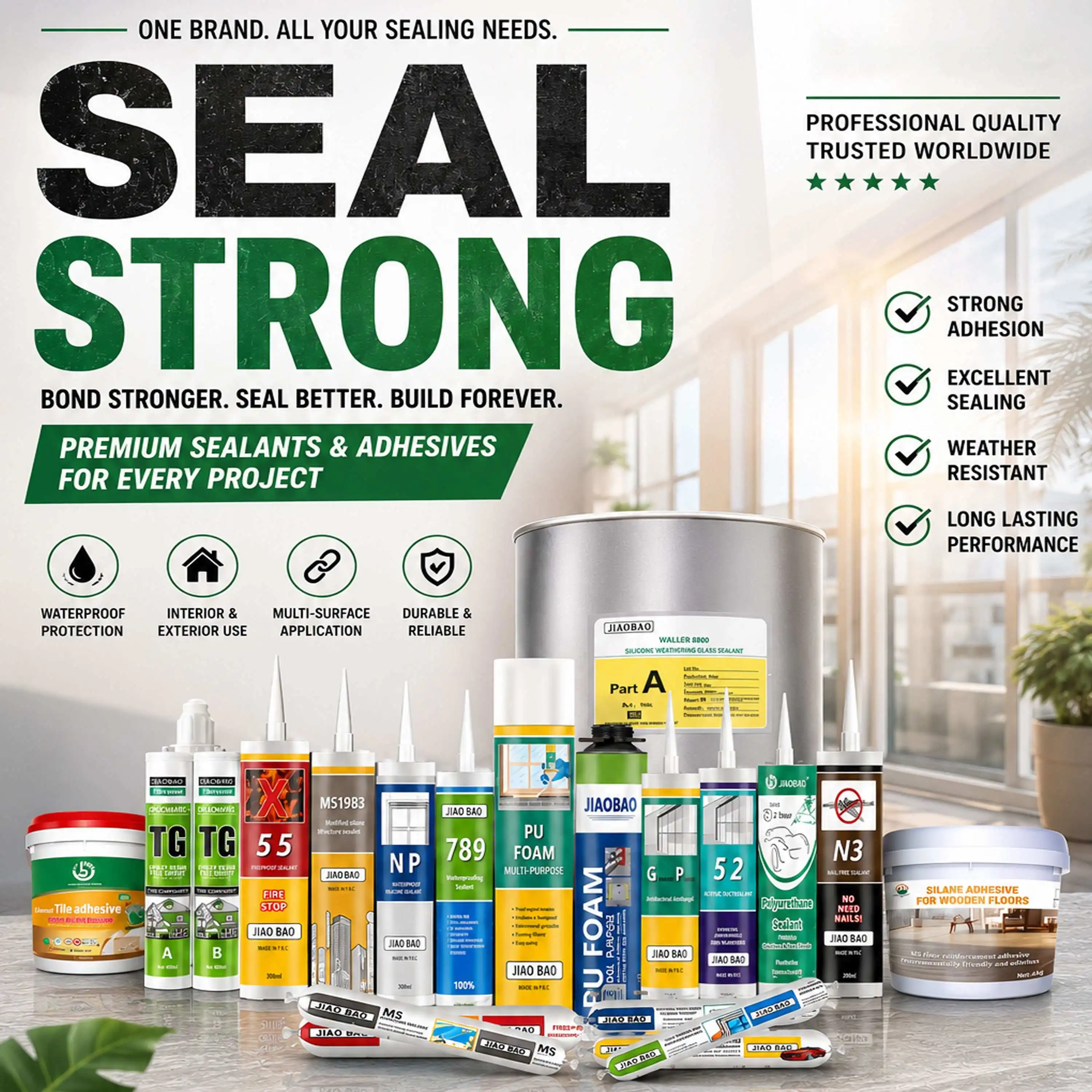
Yes. Jiaobao can do OEM/ODM production in any color you want, and they can offer both 300ml cartridges and 600ml sausage packs to fit the tools on your production line.
Jiaobao helps procurement managers lower sourcing risk by offering solid quality, low prices, and short wait times. As a reliable provider of GP door and window silicone sealant, we back up every package with ISO and CE approval, a 12-month quality guarantee, and quick technical support. Ask for a sample batch right now and test how well it works on your own assembly line before ordering a lot of it. To talk about bulk pricing and OEM options, email us at dorashen@cnjiaobao.com.
1. Construction and Building Materials – "Durability of silicone and polyurethane sealants under accelerated weathering conditions," Elsevier, 2019.
2. ASTM C920 Standard Specification for Elastomeric Joint Sealants – ASTM International, 2022.
3. ISO 11600 Building Construction – Jointing Products – Classification and Requirements for Sealants – International Organization for Standardization, 2021.
4. Journal of Adhesion Science and Technology – "Adhesion performance of acetoxy-cure silicone on anodized aluminum substrates," Taylor & Francis, 2020.
5. ASTM C794 Standard Test Method for Adhesion-in-Peel of Elastomeric Joint Sealants – ASTM International, 2018.
6. Progress in Organic Coatings – "UV aging behavior and mechanical degradation of polydimethylsiloxane-based elastomers in outdoor glazing applications," Elsevier, 2021
November 16,2023
Enterprise Name
The sealant has very strong adhesion and performs well even on glass and aluminum. After curing, it remains flexible and shows no cracking. Perfect for our facade projects.
November 16,2023
Enterprise Name
Stable quality across batches. Our customers especially like the smooth application and consistent extrusion. It helps reduce installation time on site.
November 16,2023
Enterprise Name
I used it for bathroom sealing. Excellent waterproof performance and no mold issues so far. It's been holding up very well in humid conditions.
November 16,2023
Enterprise Name
The neutral silicone works well on sensitive materials without corrosion. Very suitable for industrial applications requiring stable performance.
_1779347426672.webp)