November 16,2023
Enterprise Name
The sealant has very strong adhesion and performs well even on glass and aluminum. After curing, it remains flexible and shows no cracking. Perfect for our facade projects.
Oct 1, 2026
When contractors and procurement managers ask about the best NP building grade silicone sealant for exterior joint sealing, the answer comes down to three things: certified performance, batch consistency, and supply reliability. Jiaobao's one-part RTV acidic silicone sealant meets ASTM C679 (zero sag), achieves a tack-free surface in 30 minutes, and delivers a movement capability of 25% after full cure. With a service temperature range of -50°C to +150°C and VOC content below 80 g/L, it satisfies both domestic building codes and international project specifications—making it a practical, cost-competitive alternative to premium import brands.
That's what "NP" stands for: neutral-cure, non-priming. Acidic-cure versions of silicone have the same polysiloxane backbone that makes it flexible forever. The room-temperature vulcanizing (RTV) method cures by combining with moisture in the air, making a waterproof, elastic seal that doesn't need to be heated or mixed. The healed joint has a Shore A hardness of 30, which means it is soft enough to bend without breaking but strong enough to survive wear and tear.
The exterior-grade silicone sealant from Jiaobao has the following confirmed information from GB 13477 and ASTM test protocols:
These numbers aren't just marketing hype; they come from normal lab procedures that can be repeated by third-party inspectors when the project is turned in.
On most non-porous surfaces, the glue sticks to glass, anodized aluminum, ceramic tile, concrete, and plastic steel shapes without the need for a primer. Sealing the edges of curtain walls, metal covering joints, door and window frames, roofing seams, and expansion joints in pre-cast concrete panels are all examples of real-world uses. It can be stored for 12 months and comes in 300 ml cartridges and 600 ml sausage packs, which makes it easy to move around on the job site for both small retrofits and big multi-building projects.
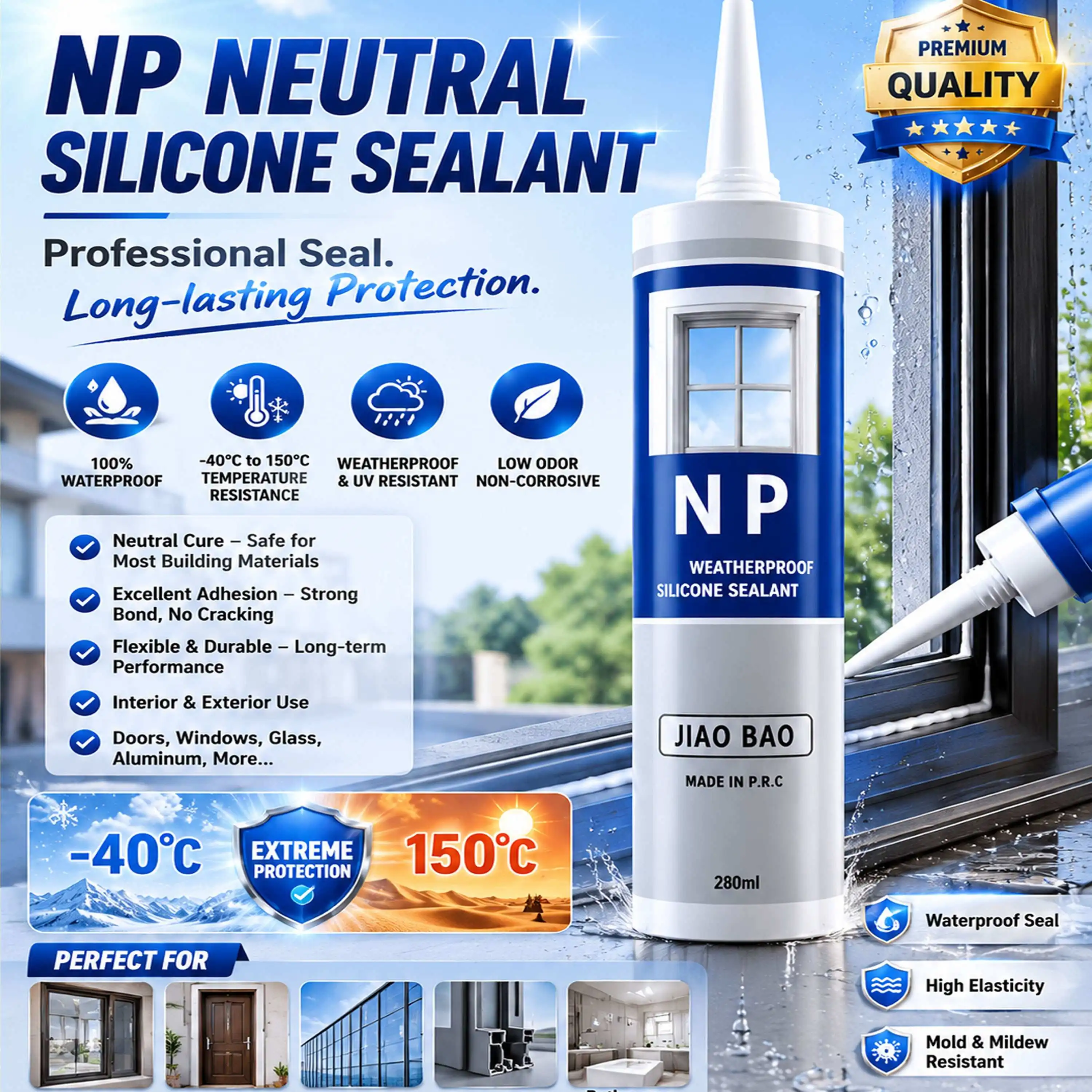
Clean the faces of all the joints very well. Take off the grease, dust, paint that is coming off, and water. NP building grade silicone sealant should only be applied after this preparation work. If the surface is porous, like concrete or natural stone, use a suitable primer and let it flash off before applying the sealant. The most common reason why adhesive fails in field inspections is a dirty surface (ASTM C1521 peel tests confirm this).
Cut the cartridge nozzle so that it fits the joint width by 45 degrees. Put the caulk into a regular caulking gun and press down steadily and evenly. To get a smooth, curved outline, shape the bead inside the skin-over window before the surface tacks. For the best movement performance, keep the joint depth-to-width ratio at 1:2. Work in a room with good air flow; the acidic fix chemistry gives off acetic acid vapor during the first part of curing.
At 23°C and 50% relative humidity, it takes about 30 minutes for the surface to dry. Full mechanical healing takes between 7 and 14 days, based on how deep the joint is, the temperature, and the humidity. Higher humidity speeds up the curing process, while cold, dry conditions slow it down. Once the joint is hard, check it once a year for cohesive cracks or bond-line split. It's easy to fix small damage: just take off the damaged part, clean it, and put on new glue.
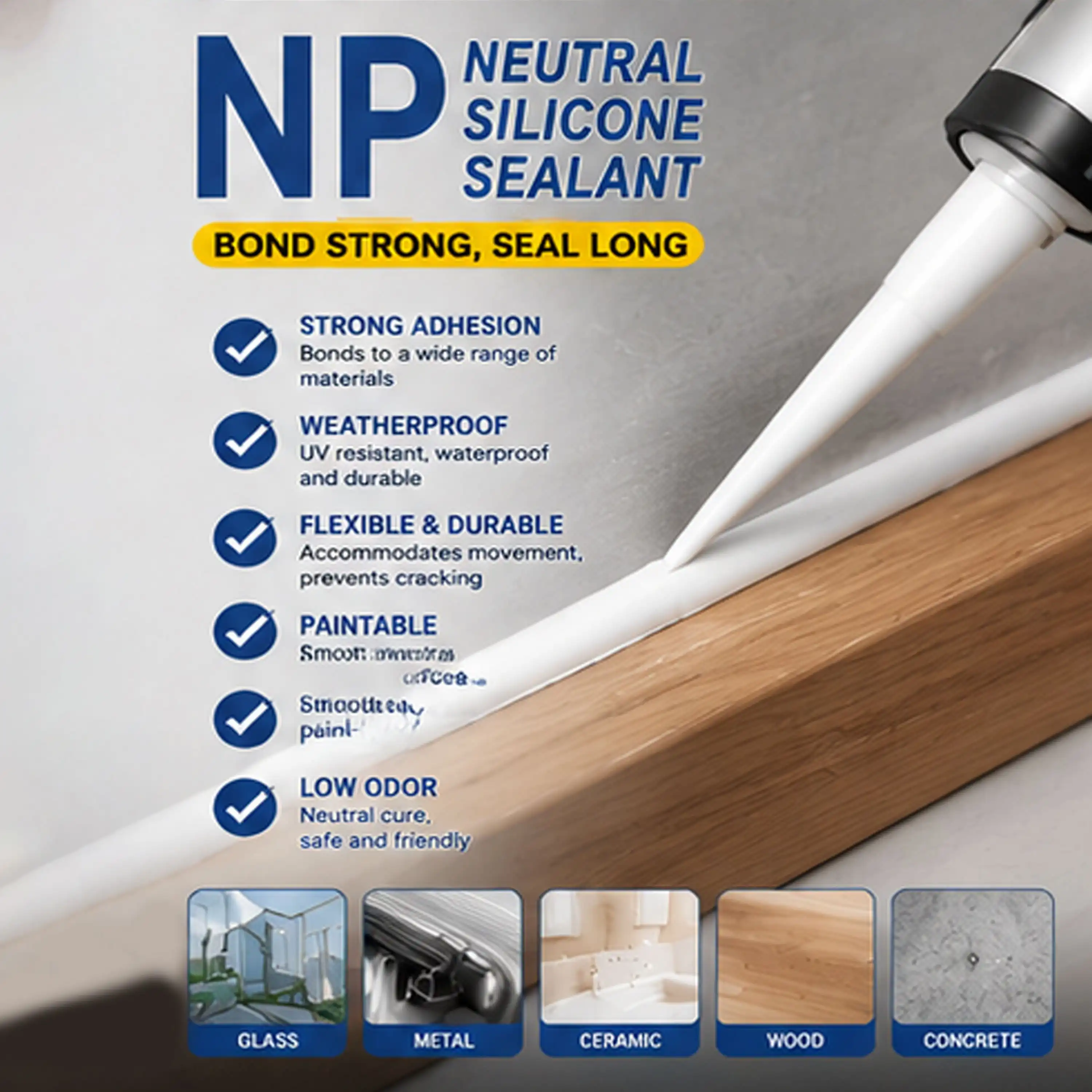
Polyurethane sealants are popular for use inside or on painted exteriors because they are tear-resistant and easy to paint. But UV light slowly makes polyurethane chalk and crack, which is a known way for south-facing curtain walls to fail. The polysiloxane backbone of silicone doesn't break down in UV light over many years. This is why ASTM C920 Class 25 and ISO 11600 F/G 25LM standards are often used in requirements for external glazing projects.
Acrylic seals don't cost much, are water-based, and are easy to paint over. When they break, they rarely stretch past 200%, while rubber usually does 400%+. NP building grade silicone sealant delivers such superior elastic performance. For exterior joints that see changes in temperature, like those on aluminum-framed facades in places where the temperature changes by 40°C or more every day, acrylic joints crack after two to three seasons. Silicone can take those moves over and over again without losing its shape.
It's not true that all silicone sealants are the same. High-modulus structural silicone keeps glass units in place when there is wind. This product is an example of exterior weatherseal silicone, a low- to medium-modulus material made for sealing against water and allowing for movement rather than structural joining. If you choose the wrong modulus class, you will make an expensive mistake that will cause joints to fail or glass to break. The technical team at Jiaobao can help you figure out the right specifications for your project.
Any sealant that is going to be used on a formal building job needs to be certified in writing. Ask for at least an ISO and CE certificate, a current test report from a third party against ASTM C920 or ISO 11600, and a Safety Data Sheet (SDS). For projects in the Middle East or Southeast Asia, you may also need paperwork from the local government to get permission. Jiaobao includes a full certification package with every order, which makes it easy to submit projects and get them inspected right away.
Curtain wall builders who are working on multiple projects at the same time need a source that can guaranty consistency from batch to batch. The Shore A hardness, color, and cure rate must not change from one production lot to the next. Jiaobao's production lead time of one to two weeks and shipping options by sea or land help keep projects on schedule. Bulk orders also come with bulk discounts that usually cut the cost of materials by 20–30% compared to buying named imports from local distributors.
If there are any quality problems during the shelf life, you can get your money back or get a new one. NP building grade silicone sealant comes with this quality guarantee. This is important in building because if a bad batch is found in the middle of a project, it can lead to rework costs and contractual fines that are much higher than the cost of the sealant itself. One big risk of buying something is taken away when you know the supplier stands behind the product.
A medium-sized curtain wall company working on a commercial tower in a coastal area with a lot of UV light switched to Jiaobao's exterior silicone sealant after testing samples in their own lab. The third-party ASTM C794 adhesion peel test showed cohesive failure, which means the sealant tore inside the metal substrate instead of pulling off. This showed that the bond was strong. No joint problems were recorded two seasons after the installation.
This sealant was chosen by a building builder to fill in expansion gaps between pre-cast concrete panels on a storage facility because it sticks to concrete without a primer and allows for 25% movement. Because the joints went up and down a 15-meter wall face, the 0 mm sag finding under ASTM C679 was especially important. At 28 days, measures of post-cure hardness were consistent across all tested cartridges, falling within the Shore A 28–32 range. This proved that the batch was consistent.
A procurement director who was in charge of three projects at the same time said that the full certification package cut down on the time spent corresponding with project managers while materials were being sent in. "The test reports matched what was in the spec," she replied. "That saved us at least a week on the approval cycle."
When sealing joints on the outside, you shouldn't skimp. Using the wrong sealant can lead to water getting in, damage to the facade, structural repairs, and missed inspections, all of which cost a lot more than the sealer itself. Jiaobao's exterior-grade silicone sealant has been tested for technical performance and comes with a full certification package.
It also has stable batch quality and 13 years of production experience to back it up. NP building grade silicone sealant benefits from these strengths. When purchasing teams are looking at domestic and imported options, the specification choice that meets standards, has short lead times, and offers after-sales support makes sense and can be defended.
Three hours at 23°C and 50% RH is the time for the surface to not stick. It takes 7–14 days for a metal to fully cure to a depth of 7 mm. Under normal settings, the depth of cure is about 2–3 mm per 24 hours. It takes longer for deep joints to cure than for thin beads.
Not at all. The surface of a pure silicone product that has been dried has low surface energy and will not stick to normal latex or oil-based paint. An MS polymer blend glue is better if you need to paint the finish.
Primer is usually not needed on materials that don't have pores, like glass, anodized metal, and glazed pottery. A stabilizing primer should be used on weak or crumbling concrete.
Yes. From -50°C to +150°C, the joint that has been cured stays stable. This range includes both hot summers in the Middle East and cold winters in the north.
12 months from the date of production if kept cool and dry, out of the sun and away from freezing temperatures.
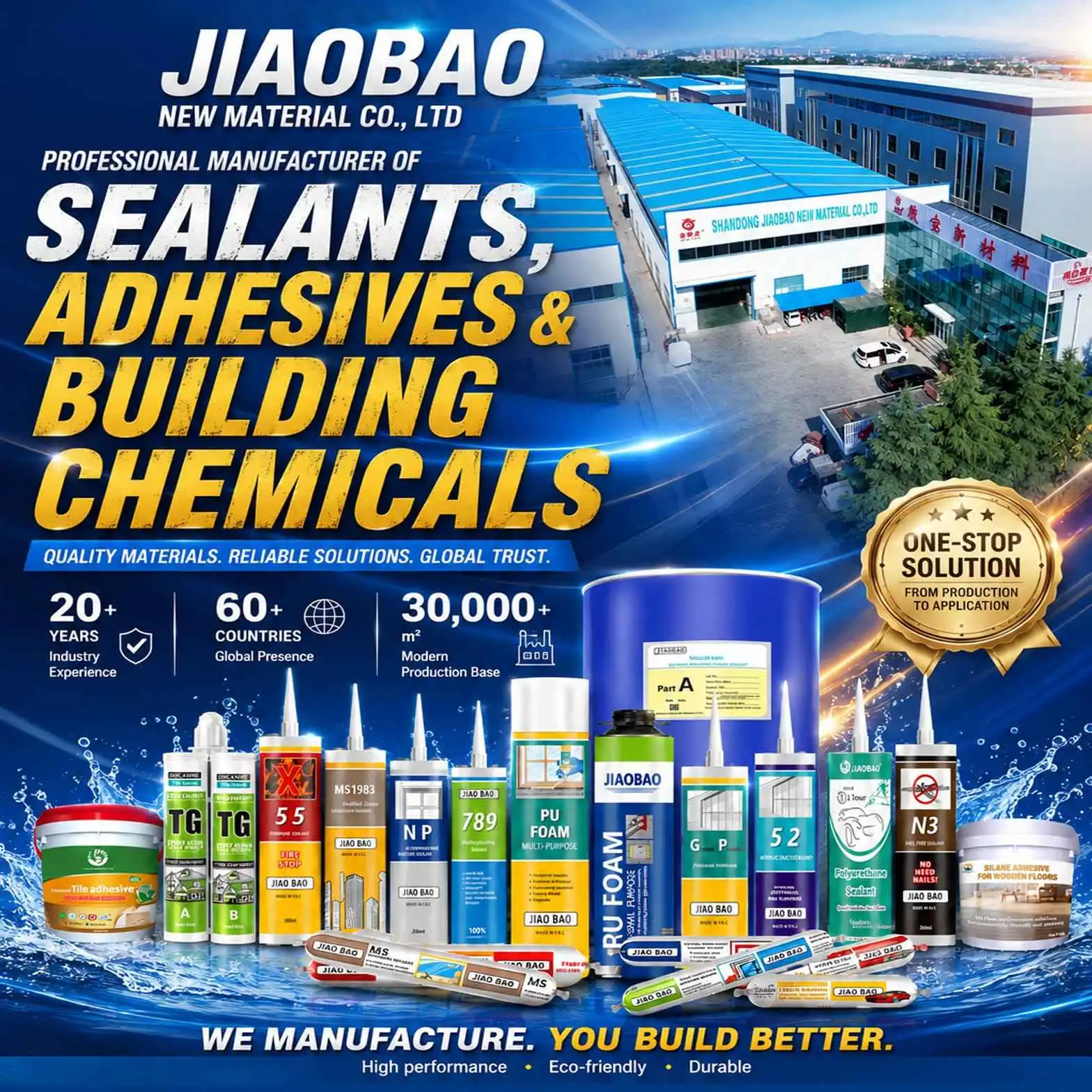
Since 2013, Jiaobao has sold approved outdoor silicone sealant to building projects and curtain wall builders in Asia, the Middle East, and other places. Today, ask for a sample, a price quote for a lot of copies, or a full certification package. Within one business day, our team gets back to you. To start the buying process with confidence, go to shandongjiaobao.com or email us at dorashen@cnjiaobao.com.
1. ASTM International. ASTM C920: Standard Specification for Elastomeric Joint Sealants. ASTM International, 2022.
2. International Organization for Standardization. ISO 11600: Building Construction — Jointing Products — Classification and Requirements for Sealants. ISO, 2002.
3. ASTM International. ASTM C679: Standard Test Method for Tack-Free Time of Elastomeric Sealants. ASTM International, 2019.
4. Petrie, Edward M. Handbook of Adhesives and Sealants. McGraw-Hill, 2007.
5. Wolf, Alan T. "Durability of Silicone Sealants." Construction and Building Materials, Elsevier, 2010.
6. ASTM International. ASTM C1248: Standard Test Method for Staining of Porous Substrate by Joint Sealants. ASTM International, 2018.
November 16,2023
Enterprise Name
The sealant has very strong adhesion and performs well even on glass and aluminum. After curing, it remains flexible and shows no cracking. Perfect for our facade projects.
November 16,2023
Enterprise Name
Stable quality across batches. Our customers especially like the smooth application and consistent extrusion. It helps reduce installation time on site.
November 16,2023
Enterprise Name
I used it for bathroom sealing. Excellent waterproof performance and no mold issues so far. It's been holding up very well in humid conditions.
November 16,2023
Enterprise Name
The neutral silicone works well on sensitive materials without corrosion. Very suitable for industrial applications requiring stable performance.
_1779347426672.webp)